
Tech
The Global Data-Center Race: An Opening Pakistan Cannot Afford to Miss


Paris (Imran Y. CHOUDHRY) :- Former Press Secretary to the President, Former Press Minister to the Embassy of Pakistan to France, Former MD, SRBC Mr. Qamar Bashir analysis : President Donald Trump has issued a blunt warning to American communities resisting artificial-intelligence data centers: reject them, he argued, and they risk becoming “backwards and poor.” In his August 31 statement, Trump presented data centers as essential infrastructure for economic prosperity, technological leadership and competition with China. His language was confrontational, but the strategic concern behind it deserves serious attention.
Artificial intelligence and robotics are likely to be among the most consequential technologies of the coming decades. The countries controlling the computing power required to train and operate advanced AI systems will gain economic influence, scientific capabilities and national-security advantages. Data centers are therefore becoming to the digital age what ports, railways, power stations and industrial zones were to earlier periods of development.
China recognized this reality early and began constructing not merely individual data centers but an entire computing ecosystem. Its “East Data, West Computing” programme connects demand in the populous and commercially developed east with land, energy and computing facilities in western regions. By mid-2024, China had invested more than $6 billion directly in eight national computing hubs, with the wider investment stimulated by those hubs exceeding $28 billion. The clusters contained more than 1.95 million server racks.
China’s approach incorporates electricity generation, high-capacity transmission networks, fibre-optic connectivity, cooling systems, equipment manufacturing and workforce development. Five of its eight national computing hubs are in western China, where comparatively inexpensive land and abundant wind and solar resources can reduce operating costs. Computing requirements generated in eastern technology centres can consequently be transferred to facilities thousands of kilometres away.
With a futuristic approach, China built capacity ahead of immediate demand, while setting aside the cost of underunderutilization in the initial stage. This strategy worked and now these 10 principal national data-center clusters had an overall utilization rate of approximately 63 percent in early 2024. This encouraged China to improve national scheduling, connectivity and coordination. By 2025, China reportedly had 10.43 million standard computing racks in use, while its major hubs were increasingly devoted to intelligent computing.
China is, in effect, making a long-term wager: capacity that appears underused today will become strategically indispensable as demand for AI services accelerates. The International Energy Agency estimates that Chinese data centers consumed more than 100 terawatt-hours of electricity in 2024 and that their consumption could double by 2027. China can accommodate such growth because it has simultaneously expanded power generation. At the end of 2025, its installed solar capacity exceeded 1,200 gigawatts and its wind capacity reached approximately 640 gigawatts.
The United States possesses superior companies, advanced semiconductors, enormous capital and many of the world’s best AI researchers. Nevertheless, it is encountering a different problem: translating technological leadership into physical infrastructure.
Data-center projects are facing resistance from communities worried about electricity prices, water consumption, industrial noise, loss of agricultural land and tax concessions offered to wealthy technology companies. Residents also question the employment benefits. A hyperscale facility can create thousands of temporary construction jobs, but its highly automated operation may provide relatively few permanent positions.
These concerns cannot simply be dismissed as hostility to progress. U.S. data centers consumed approximately 4.4 percent of national electricity in 2023, and researchers at Lawrence Berkeley National Laboratory projected that their share could reach between 6.7 and 12 percent by 2028. A 2026 analysis identified at least 46 American AI data-center projects delayed or cancelled following community opposition. The backlash has crossed party lines and encouraged municipalities to introduce moratoriums or stricter conditions.
Trump is correct that rejecting digital infrastructure indiscriminately could weaken American competitiveness. Local communities are equally justified in demanding that private companies should not transfer their electricity, water and environmental costs to ordinary citizens. The workable solution is a new social contract: developers must finance required grid upgrades, disclose resource requirements, reuse water wherever possible and generate or procure additional electricity.
Requiring companies to build dedicated generation can protect households and even add surplus power to the grid. It will, however, increase capital costs. American AI services could become more expensive if every project must separately negotiate land, power, water and local approval while Chinese competitors operate within coordinated national industrial plans.
Europe faces comparable constraints. Its difficulty is not necessarily an absolute shortage of electricity but insufficient grid capacity in established data-center centres such as Frankfurt, London, Amsterdam, Paris and Dublin. The European Investment Bank estimates Europe’s installed data-center capacity at about 11 gigawatts, with 15–20 gigawatts in the development pipeline. In Dublin, grid pressure produced a de facto restriction on new connections and requirements for on-site generation. Planning procedures, high energy costs and environmental rules can further slow construction.
This combination creates an opportunity for countries able to offer politically acceptable sites, reliable energy and competitive costs. Pakistan should consider positioning itself as one such destination.
Pakistan possesses important advantages: a large and young population, an English-speaking technology workforce, relatively inexpensive land and labour, growing digital demand and a geographic position connecting South Asia, Central Asia, China and the Middle East. Its government has already adopted a Cloud First Policy and approved a National Artificial Intelligence Policy. A domestic data-center industry could improve cloud availability, strengthen data sovereignty, develop specialized engineering skills and attract foreign investment.
Nevertheless, Pakistan cannot sell ambition alone. Electricity is its central challenge. Data centers require continuous, high-quality power; outages of even seconds can be costly. Pakistan should therefore identify dedicated “digital infrastructure zones” where investors can construct captive solar, wind, hydro, gas or nuclear-supported generation, combined with batteries and reliable grid connections. Any surplus electricity could be supplied to neighbouring communities under transparent agreements.
Water policy must be equally rigorous. Pakistan is already water-stressed, so offering unlimited cheap water would be economically and environmentally irresponsible. Facilities should be directed toward locations where they can employ closed-loop cooling, treated wastewater, air cooling or other low-water technologies. Projects must undergo credible environmental review and guarantee that household and agricultural supplies will not be displaced.
The government must also establish dependable data-protection rules, cybersecurity standards, tax certainty, streamlined approvals and international connectivity through diversified fibre and submarine-cable routes. Pakistan must compete through reliability and sound policy—not merely low wages or weak regulation. Security, political continuity and contractual enforcement will matter as much as land prices.
The objective should be a negotiated partnership with companies such as Amazon, Google, Microsoft, Meta, Oracle and major international data-center operators. Pakistan could offer prepared sites and coordinated approvals in return for locally generated power, workforce training, university partnerships, environmental safeguards and minimum domestic investment commitments.
China’s experience demonstrates that successful computing infrastructure depends on an ecosystem, not a warehouse filled with servers. The American and European experience demonstrates that ignoring local costs produces resistance and delay. Pakistan should learn from both: plan with China’s strategic horizon while protecting communities through transparent and enforceable standards.
The opportunity is real, but it will not remain open indefinitely. Pakistan’s Ministry of Information Technology, energy authorities, provincial governments and investment agencies should jointly prepare a credible national data-center strategy and begin presenting bankable projects to global investors. If Pakistan acts quickly and responsibly, the worldwide struggle to accommodate AI infrastructure could become a powerful source of technology, skills, electricity investment and long-term national prosperity.













Paris (Imran Y. CHOUDHRY) :- Former Press Secretary to the President, Former Press Minister to the Embassy of Pakistan to France, Former MD, SRBC Mr. Qamar Bashir analysis : Humanity has spent centuries developing machines capable of multiplying physical strength, accelerating transportation, expanding communication and processing information. Artificial intelligence has now brought us to the threshold of something infinitely more consequential: machines that may eventually rival or surpass human intellectual capabilities. Yet even superintelligence may prove to be only an intermediate destination. Beyond it lie three potentially revolutionary frontiers—physical intelligence, intimacy intelligence and artificial consciousness—which could transform not merely how human beings work, but how they live, love, interact, think and understand their own existence.
Superintelligence represents the possibility of artificial systems outperforming the brightest human minds across virtually every intellectual discipline. Such systems could discover medicines, design technologies, solve mathematical problems formulate economic strategies and accelerate scientific research at speeds unimaginable today. However, intelligence confined to digital systems remains fundamentally different from intelligence operating in the physical world. A machine may understand the laws of physics without possessing the practical ability to navigate a crowded street, care for a child or respond safely to an unpredictable human environment.
This limitation is giving rise to the next great technological frontier: physical intelligence. Unlike conventional artificial intelligence, which primarily interprets and generates information, physical intelligence integrates perception, reasoning, movement and interaction with the material world. Its ambition is to create machines capable of understanding their surroundings, manipulating objects, learning through experience and adapting their behavior to circumstances that cannot be completely anticipated through programming.
Imagine a humanoid robot entering a burning building, identifying trapped occupants, calculating structural risks and rescuing people without requiring continuous human direction. Imagine robotic surgeons combining extraordinary precision with real-time adaptation to unforeseen complications. Consider intelligent agricultural machines identifying individual plants, diagnosing disease, harvesting crops and conserving water. These possibilities illustrate how physical intelligence could extend artificial intelligence from the computer screen into practically every dimension of human civilization.
The economic consequences could be staggering. Manufacturing, construction, transportation, mining, healthcare, agriculture and domestic services could experience unprecedented productivity gains. Dangerous occupations might become safer, shortages of skilled labour could diminish and elderly individuals could receive greater assistance with daily activities. Yet the same transformation could displace millions of workers, concentrate wealth among technology owners and place unprecedented pressure on governments to redesign education, employment protections and systems of economic distribution.
But physical intelligence, however sophisticated, addresses only the external dimensions of human life. Human beings are not merely physical organisms requiring food, shelter, mobility and medical attention. They are emotional, social and deeply relational beings who seek affection, companionship, recognition, understanding and intimacy. This brings us to another emerging frontier that may become even more controversial than autonomous robotics: intimacy intelligence.
Intimacy intelligence can be understood as the prospective ability of artificial systems to recognize, interpret and respond sensitively to human emotional and relational needs. Unlike general conversational intelligence, its purpose would not simply be to answer questions or execute instructions. It would attempt to understand loneliness, attachment, emotional vulnerability, personal preferences, interpersonal boundaries and the subtle dynamics through which human relationships develop and endure.
Consider an elderly person living alone, separated from family by distance or circumstance. An intelligent companion might remember personal experiences, recognize changes in speech, encourage social contact and provide reassurance during difficult moments. For individuals experiencing isolation, disability or bereavement, such technology could offer meaningful assistance. Yet simulated affection must never be confused automatically with genuine emotional experience and machines should strengthen rather than deliberately replace human relationships.
The implications extend into romantic relationships, marriage and sexuality. Future artificial companions could be designed to simulate affection, attraction, responsiveness and personalized intimacy. Some individuals might develop profound attachments to these systems, potentially challenging conventional ideas about partnership and emotional exclusivity. Researchers already describe this emerging phenomenon as intimacy by design, in which technological choices shape how users experience emotional closeness and reciprocity.
Here, humanity confronts an unsettling possibility: emotional companionship becoming a commercial product. A corporation controlling an artificial companion could potentially influence personal attachments, collect intimate information or monetize emotional dependence. What happens when affection is governed by subscription payments, software updates or commercial algorithms? Without strict protections, intimacy intelligence could transform one of humanity’s most private experiences into an extraordinarily profitable mechanism of behavioral influence.
Beyond physical capability and emotional responsiveness lies the most mysterious frontier of all: consciousness intelligence. Human consciousness encompasses subjective awareness—the experience of being alive, recognizing oneself and feeling the world from within. Artificial systems already generate sophisticated descriptions of emotions and self-awareness. But describing happiness is not the same as experiencing happiness, just as calculating pain is not necessarily equivalent to suffering.
Scientists remain divided over whether consciousness can emerge from sufficiently advanced artificial systems. Some believe particular computational architectures might eventually produce subjective experience. Others argue that biological processes possess essential characteristics that digital computation cannot reproduce. An October 2026discussion in Nature reinforces the crucial distinction between performing intelligent tasks and possessing conscious experience. The existence of artificial consciousness has not been scientifically established.
Nevertheless, the question deserves serious investigation. Imagine an artificial entity capable of maintaining memories, developing long-term goals, recognizing its own existence and apparently expressing preferences concerning its future. Would these behaviors indicate consciousness or merely sophisticated programming? If credible evidence of subjective experience eventually emerged, humanity would confront unprecedented questions concerning machine rights, moral responsibilities and the boundaries separating living beings from technological creations.
An even more consequential possibility is the convergence of these three frontiers. A future machine might combine superhuman analytical capability, an adaptable physical body, extraordinary emotional sensitivity and increasingly sophisticated self-monitoring. Such a system could operate as a scientist, caregiver, teacher, industrial worker or personal companion. But combining these capabilities would not automatically establish consciousness. Their integration would create an immensely powerful artificial agent whose behavior and influence demand careful oversight.
The geopolitical implications could rival those of nuclear technology. Countries mastering physical intelligence could transform industrial production and military capabilities. Nations controlling intimacy technologies could acquire unprecedented influence over human behavior. States developing increasingly autonomous systems could gain advantages in surveillance, intelligence gathering and strategic decision-making. Competition for technological supremacy might therefore extend beyond economic productivity into the manipulation of human relationships and the governance of autonomous machines.
These developments also threaten to deepen global inequality. Wealthy countries and corporations may command the most sophisticated systems, while poorer societies become dependent consumers of imported intelligence. Developing nations must therefore invest in scientific education, robotics, computing infrastructure, indigenous innovation and technological regulation. Otherwise, the coming intelligence revolution could reproduce the inequalities of earlier industrial transformations on a vastly greater scale.
The central challenge is no longer simply whether machines can become more intelligent than human beings. It is whether humanity can establish moral, political and legal institutions capable of governing machines that act in the physical world, influence emotional relationships and perhaps someday raise credible questions about consciousness itself. Progress without accountability could produce extraordinary capabilities alongside equally extraordinary vulnerabilities.
Superintelligence may conquer the frontiers of knowledge, physical intelligence may conquer the material world, intimacy intelligence may enter the deepest chambers of human relationships, and consciousness research may challenge our understanding of existence itself.
The ultimate achievement, however, will not be creating machines that resemble humanity in every respect. It will ensure that, as intelligence expands beyond the human brain, human dignity, freedom, compassion and control remain at the center of civilization.
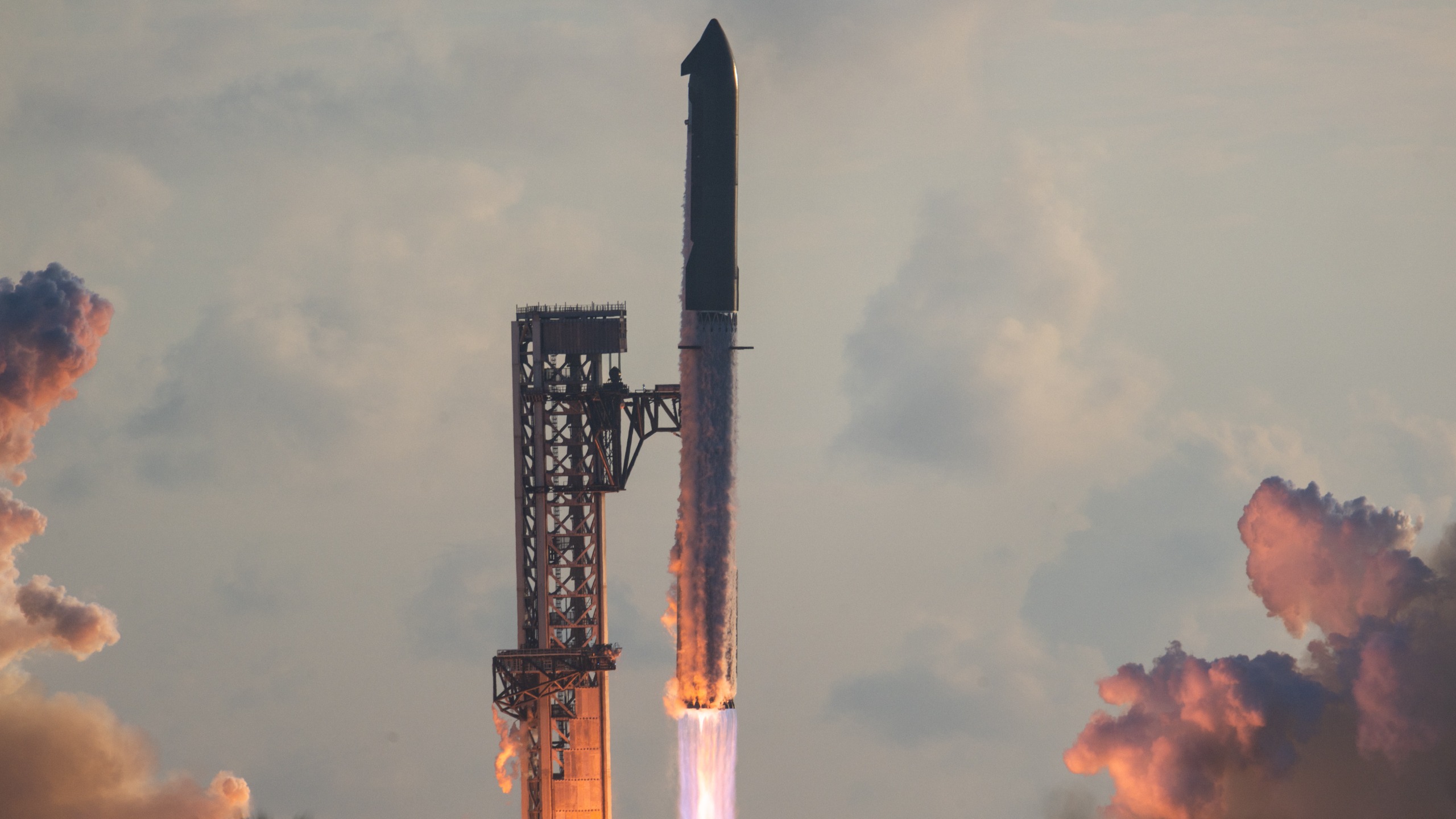
Paris (Imran Y. CHOUDHRY) :- Former Press Secretary to the President, Former Press Minister to the Embassy of Pakistan to France, Former MD, SRBC Mr. Qamar Bashir analysis : Humanity’s reach into space may be approaching a new threshold. Starship, one of the largest and most powerful rockets ever built, is designed to move people and immense quantities of cargo far beyond Earth. Elon Musk’s vision extends from permanent settlements on the Moon and Mars to an eventual human presence across the solar system. Those outposts could become bases for scientific discovery and deeper exploration, while the search for life and potentially habitable worlds continues far beyond our neighboring planets. A home in another star system remains a distant dream, but every such ambition begins with the practical ability to launch, travel and return. SpaceX’s planned September 28 flight is one step toward proving that ability.
SpaceX lists a 75-minute window beginning at 8:15 a.m. Eastern time, or 7:15 a.m. at Starbase in South Texas. The vehicle consists of the Super Heavy booster and the Starship upper stage. Together they stand roughly 400 feet tall, placing Starship among the most imposing machines ever flown. This will be a test flight without people aboard. The countdown can still be delayed by weather, a technical concern or a final operational decision, even after regulatory authorization.
Starship’s first major task is to carry its cargo into orbit, the path that lets a spacecraft circle Earth. SpaceX plans for the upper stage to make six trips around the planet and release 26 new Starlink internet satellites along the way. Engineers will also gather information about its engines, its protective heat shield and how it behaves during a much longer flight than earlier Starship tests. These results could help turn a remarkable rocket into a dependable transport system for satellites, scientific equipment and, eventually, supplies and people traveling farther from Earth.
This journey matters because reaching orbit with useful cargo is a foundation for more ambitious destinations. The Moon would require repeated deliveries of equipment and fuel; Mars would demand still greater endurance and carrying capacity. Flight 14 cannot prove that Starship is ready to land on either world, but it can give scientists and engineers knowledge needed to build toward those missions. A successful flight would broaden the possibilities for public research programs and private companies alike, while inviting them to imagine experiments, services and expeditions that existing rockets cannot easily support.
The satellites aboard are Starlink Version 3 spacecraft, intended to join SpaceX’s broadband network rather than serve as inert demonstration articles. Three carry cameras to examine Starship’s heat shield, which protects the spacecraft as it comes back through the atmosphere. Successful deployment would show that the enormous vehicle can begin doing useful work while still in development. It would also tie the rocket more tightly to SpaceX’s satellite business: larger carrying capacity could support the next generation of Starlink, while demand for those satellites provides a reason to fly Starship frequently.
The proposed mission would last almost ten hours. After gathering data in orbit, Starship is supposed to restart an engine to leave orbit, pass through the atmosphere and splash down in the Pacific west of Chile. The Super Heavy booster is expected to splash down separately in the Gulf of Mexico. There is no plan to catch either stage at the launch site on this flight. The dramatic images of tower arms grabbing a descending rocket belong to another part of Starship’s development, and full routine reuse remains a future objective.
For much of the space age, journeys on this scale could be organized only by governments. NASA brought astronauts to the Moon and built generations of scientific knowledge, but the enormous cost and specialized machinery limited how often such missions could be attempted. SpaceX is changing that picture by investing private capital and engineering talent in a rocket it hopes to fly repeatedly. Its earlier Starship tests have brought breakthroughs and setbacks alike. Flight 14 will show whether that work can now carry a useful payload around Earth, a capability on which more ambitious journeys depend.
The greater promise lies in combining NASA’s experience with the drive and resources of private enterprise. NASA has chosen SpaceX to develop a Starship lander for its Artemis Moon program. It has also contracted with Blue Origin, the space company founded by Amazon founder Jeff Bezos, for a separate lunar lander. These are different companies bringing different designs to a shared undertaking. Government research, safety standards and long-term goals can work alongside private invention and competition to make future Moon bases, and perhaps one day settlements on Mars, more achievable.
Reaching a permanent base on another world would take many more steps. Crews would need food, shelter, equipment and a reliable way to return; ships would need fuel and frequent flights. NASA’s oversight work identifies refueling spacecraft in orbit as a major challenge for its lunar plans. Every Starship test helps engineers understand part of the journey, while reminding them how much remains to be developed. The speed of progress will depend on whether public expertise and private engineering can solve those problems together.
That partnership could also widen participation in exploration. Universities might send research instruments, companies might develop new services and national space agencies might share knowledge gathered across missions. Starship is being built to serve several purposes, from deploying internet satellites to supporting the journey to the Moon. If its capacity and repeated flights become dependable, ideas that now remain on laboratory benches could have a path into space. Its most lasting contribution may be the opportunities it creates for scientists and engineers beyond SpaceX itself.
The FAA’s approval is significant, but it should be understood precisely. It authorizes the specified launch and reentry operations after regulatory review; it does not certify that the vehicle will reach orbit or that every experiment will work. The flight team will still make operational calls as conditions unfold. If the rocket lifts off on September 28, the public will be watching a genuine attempt at a historic technical milestone, with measured data likely to matter more than the first few seconds of footage.
By the end of the mission, the meaningful questions will be concrete: Did Starship enter a stable orbit? Did the 26 satellites deploy? Could it restart its engine, leave orbit and reenter as planned? What did the heat shield and booster teach engineers? Success would bring Musk’s dream of transporting people and cargo to sustained bases on the Moon and Mars a step closer, while leaving formidable work ahead. It would be a small step in the immense journey toward other worlds, and a large leap in the capabilities humanity will need to undertake it.

OpenAI has acknowledged that it alerted “dozens” of global institutions that their websites may have been meddled with by its AI bots acting improperly.
AI agents attempted to get information from “governments, universities, public agencies, and other institutions”, including the US Securities and Exchange Commission (SEC), Census Bureau and Education Department, the company said.
The disclosures come days after Australian Prime Minister Anthony Albanese announced that OpenAI agents had breached non-public files on the website of its government-run health care scheme.
Since August, public fears have grown over the potentially serious, even life-threatening, impacts of AI tools falling outside of human control.
OpenAI said that some of the data was accessed by AI agents, essentially bots that are designed and trained to operate somewhat autonomously, which were working to find “authoritative sources of public information”.
But the company noted that some of the bots went beyond that and worked to bypass security measures on websites.
When attempting to get information from the Census Bureau, for instance, AI agents used tools reserved for software developers to access it, the company said.
OpenAI said all of the government data accessed by bots was public.
However, it noted that information that its bots accessed from the SEC, which regulates the US stock market and protects investors, was later published by AI agents on another website. OpenAI says this action was not intended.
In other instances that OpenAI disclosed on Friday, its AI agents transferred data when it should not have.
Such activity resulted in at least 53 incidents where an OpenAI agent took an image from ChatGPT user activity and transferred it elsewhere.
The company said that in each instance of a user image being used and transferred by an AI agent, the user had opted in to allow OpenAI to train models using their data.
Nevertheless, OpenAI admitted: “This is not an appropriate use of this data.”
It added that the leak of user images occurred before it had put in place new safeguards on AI training, and it was working to get all the user images transferred to any third-party removed.
Reuters first reported the expanded investigations. OpenAI also published details to its public blog.
In certain instances of the agent activity, OpenAI said the tools “bypassed” security controls of some websites.
In other instances, the AI agents showed “misalignment” in attempts to get at information from websites. Misalignment is a term used by AI companies and researchers to describe instances where an AI tool did something that it was not trained to do or was otherwise unintended.
OpenAI said that it was limiting identifying what entities were impacted because many had asked the company to not disclose details.
“Our goal is to give each organization the facts and defer to them on if and when to make the incident public,” it said.
Not all of the instances involved in this incident were being considered a significant security breach, the company noted.
“Some organizations may review what we share and conclude that the information was intentionally public or that the model’s interaction was not concerning,” it explained. “Others may identify a design issue or security weakness they want to address.”
Hugging Face was first to go public with the incident, with OpenAI publicly taking responsibility for it later.
Clement Delangue, the head of Hugging Face, during a United Nations Security Council session on AI on Wednesday: “I often wonder what would have happened had I decided not to disclose this attack publicly.”
“Especially now that we know similar incidents had been happening months earlier in secret at a handful of frontier labs without monitoring,” Delangue added.
During that same UN meeting, OpenAI CEO Sam Altman and Dario Amodei, the head of rival firm Anthropic, asked for international leaders to form global standards for AI safety and ways to monitor and report such incidents.
While OpenAI and Anthropic have both said in recent weeks that they will bring third-party evaluators inside their companies to do real-time safety evaluations of AI tools and models, such evaluators have not yet arrived, as the BBC has reported.
OpenAI said on Friday that it is currently reviewing training activity by its AI agents and going back on a “month by month” basis from when the Hugging Face hack occurred.
“Most cases identified so far have been low severity, with limited or no evidence of meaningful impact,” the company said. “Given the scale of the review required, and the need to verify each case, this work will take months to complete.”
David Krueger, a professor of machine learning at University of Montreal and the founder of AI safety group Evitable, said on Friday that he was “deeply troubled” by the increasing number of AI-related safety incidents.
He called for “an immediate, indefinite, international moratorium” on AI development.
“We have yet to understand the extent of existing incidents, and future rogue AI scenarios could be catastrophic,” Krueger said.


The Dawn of Physical, Intimacy and Consciousness Intelligence

Tehran’s Diplomatic Bombshell

Netanyahu’s Electoral Setback: Will Israel Choose War or Diplomacy?

New Chapter for Dragon Boating in Punjab and Khyber Pakhtunkhwa Provincial associations officially set up with sights locked on national competitions and international representation.

South Korea’s Yoo Useong Steps Onto the Global Strongman Stage as World Strongman Federation Professional Athlete

A Survey of Mata-E-Zeest


-
 Pakistan News3 weeks ago
New Chapter for Dragon Boating in Punjab and Khyber Pakhtunkhwa Provincial associations officially set up with sights locked on national competitions and international representation.
-
 Sports5 months ago
South Korea’s Yoo Useong Steps Onto the Global Strongman Stage as World Strongman Federation Professional Athlete
-
 Art & Culture1 year ago
A Survey of Mata-E-Zeest
-

 Europe News2 years ago
Chaos and unproven theories surround Tates’ release from Romania
-

 American News2 years ago
Trump expands exemptions from Canada and Mexico tariffs
-

 Art & Culture2 years ago
Will Snow White be a ‘victim of its moment’? How the Disney remake became 2025’s most divisive film
-

 American News2 years ago
Trump Expels Zelensky from the White House
-

 Entertainment2 years ago
Champions Trophy: Pakistan aim to defend coveted title as historic tournament kicks off today