
World News
Can Civilisation Collapse in an Hour?

Paris (Imran Y. CHOUDHRY) :- Former Press Secretary to the President, Former Press Minister to the Embassy of Pakistan to France, Former MD, SRBC Mr Qamar Bashir analysis: For most of human history, civilisations did not die suddenly. They rose slowly, flourished over centuries, and declined through prolonged periods of decay, conquest, or exhaustion. The Roman Empire did not fall overnight. Pharaonic Egypt endured dynasties across millennia. Persian, Greek, and later imperial systems were replaced gradually by rival powers, often after decades of war, rebellion, and internal rot. Their foundations were physical—land, food, water, animals, metals, and manpower—and therefore their destruction required time, force, and mass mobilisation. That historical rhythm has now been broken.
Modern civilisation has entered a phase in which collapse is no longer necessarily slow or visible. For the first time in human history, the core operating system of society is not material but digital. Cities, institutions, economies, and even military power are no longer coordinated primarily by physical mechanisms, human judgment, or local redundancy, but by data. This shift has made modern civilisation extraordinarily efficient—and extraordinarily fragile.
In earlier eras, even when empires fell, daily life often continued. Farmers still tilled the land. Local markets still functioned. Water could still be drawn from wells. Authority might collapse, but society retained resilience because its foundations were decentralised and human-scale. Today, by contrast, modern cities function as tightly coupled machines. Their survival depends on uninterrupted flows of data that synchronise power grids, traffic systems, hospitals, supply chains, financial transactions, communications, and emergency services. When that coordination fails, the city does not merely slow down—it stops.
Electricity remains vital, whether generated by fossil fuels, nuclear plants, or renewable sources. Oil and gas still matter. But beneath energy lies something more fundamental: information. Data now directs how energy is produced, distributed, priced, and consumed. It governs logistics, storage, transportation, and payments. It manages air traffic, maritime shipping, rail networks, and road signals. It powers stock exchanges, banking systems, hospitals, and government services. Remove the data layer, and the physical infrastructure becomes blind and inert.
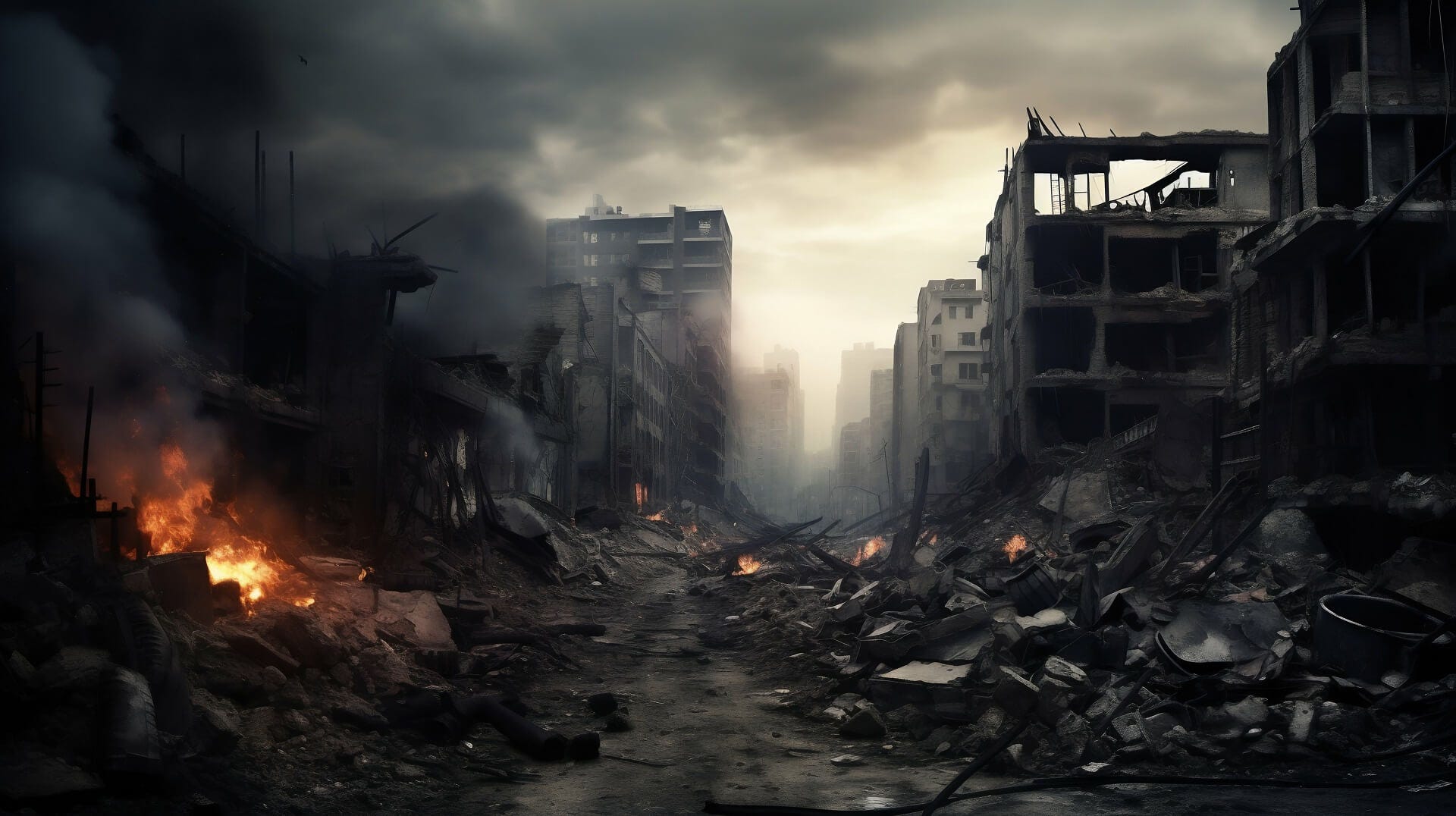
This is why the idea that civilisation could be crippled in an hour is no longer hypothetical. A severe disruption to critical data systems—whether through cyberattacks, malware, corrupted databases, sabotaged fibre-optic links, or compromised control software—could paralyse entire regions without a single shot being fired. The destruction would not come through explosions but through silence: dark screens, frozen systems, stalled traffic, grounded flights, empty fuel pumps, inaccessible bank accounts, and broken communication.
We have already witnessed partial versions of this vulnerability. Disruptions to energy distribution have plunged major cities into darkness. Failures in digital coordination have erased billions of dollars from financial markets in minutes. Interruptions in pipeline or logistics data have triggered fuel shortages and panic buying despite ample physical supply. These incidents reveal a sobering truth: scarcity today is often not material but informational.
The modern supply chain illustrates this danger most clearly. A grocery store shelf looks simple, but behind it lies a complex, data-driven choreography of procurement, warehousing, refrigeration, inventory forecasting, transport routing, fuel purchasing, and digital payment systems. Food does not disappear because farms stop producing; it disappears because coordination fails. When databases are corrupted or systems shut down, the entire chain collapses rapidly, even though physical goods still exist.
Transportation systems are even more exposed. Modern aviation is entirely dependent on data—navigation, scheduling, air traffic control, maintenance logs, and safety systems. Shipping relies on digital tracking, port scheduling, customs processing, and fuel optimisation. Trains and metros depend on automated signalling. Road traffic is governed by sensor-driven control systems. A serious digital failure would not only halt movement but risk catastrophic accidents across air, sea, and land.
Military power, once the domain of brute force, is now inseparable from data supremacy. Modern aircraft are flying computers. Naval fleets are networked command systems. Missile defence, surveillance, and early-warning systems rely on continuous data fusion. Even nuclear command-and-control structures are deeply digital. This reality transforms the nature of warfare. Victory no longer depends solely on destroying armies or occupying territory, but on disabling an adversary’s digital nervous system.
In such a world, resilience becomes the true measure of sovereignty. A country that cannot secure, isolate, and rapidly restore its critical data infrastructure can be defeated without ever engaging in conventional battle. Conversely, a state that masters digital defence—and offensive disruption—can neutralise rivals with minimal physical confrontation. Warfare thus shifts from mass killing to systemic paralysis.
This transformation carries grave ethical and political consequences. When cities are paralysed, civilians suffer first. Hospitals, water systems, emergency services, food distribution, and communications are all civilian infrastructures, yet they are increasingly vulnerable to digital attack. The traditional distinction between battlefield and home front dissolves. A cyber strike on data systems can harm millions of ordinary people instantly, without warning or visible aggression.
Despite this reality, global governance has not kept pace. Cybersecurity is still treated largely as a technical or national issue, addressed through firewalls, patches, and specialised units. These measures are necessary but insufficient. What is needed is a civilisational response. Data is no longer merely a commercial or strategic asset; it is the backbone of modern life. Its protection must be elevated to the level of international norms and collective responsibility.
Just as humanity eventually recognised rules governing chemical weapons, attacks on hospitals, and treatment of civilians, it must now establish clear red lines around digital infrastructure. There must be international agreements defining unacceptable attacks on civilian data systems, shared mechanisms for attribution and investigation, and credible consequences for violations. Without such frameworks, escalation will be silent, deniable, and destabilising.
At the national level, societies must rethink how they design systems. Extreme efficiency without redundancy is a recipe for collapse. Civilisation now requires layered resilience: segmented networks, offline fallbacks, manual override capacity, secure authentication, and decentralised control. Public institutions must be able to function, at least partially, when digital systems fail. Citizens must be educated to understand that convenience comes with vulnerability, and that resilience demands investment and restraint.
Elon Musk’s warning that future empires may fall not in years but in minutes is not exaggeration—it is a diagnosis. The danger is not that technology itself is destructive, but that civilisation has placed too much of its survival logic into fragile, interconnected systems without sufficient safeguards.
Humanity stands at a critical threshold. The same data-driven intelligence that has made cities cleaner, faster, and more productive could also become the instrument of unprecedented collapse. Civilisations will still rise and fall for familiar reasons—political failure, injustice, moral decay—but now they face an additional risk: sudden paralysis.
A civilisation that can be stopped in an hour must learn to protect what keeps it alive. The future will not be decided only by armies or economies, but by whether humanity can govern its own digital heartbeat. If it fails, the fall of empires will no longer be written over centuries—but logged in error reports, measured in minutes, and remembered as the moment when progress outpaced wisdom.









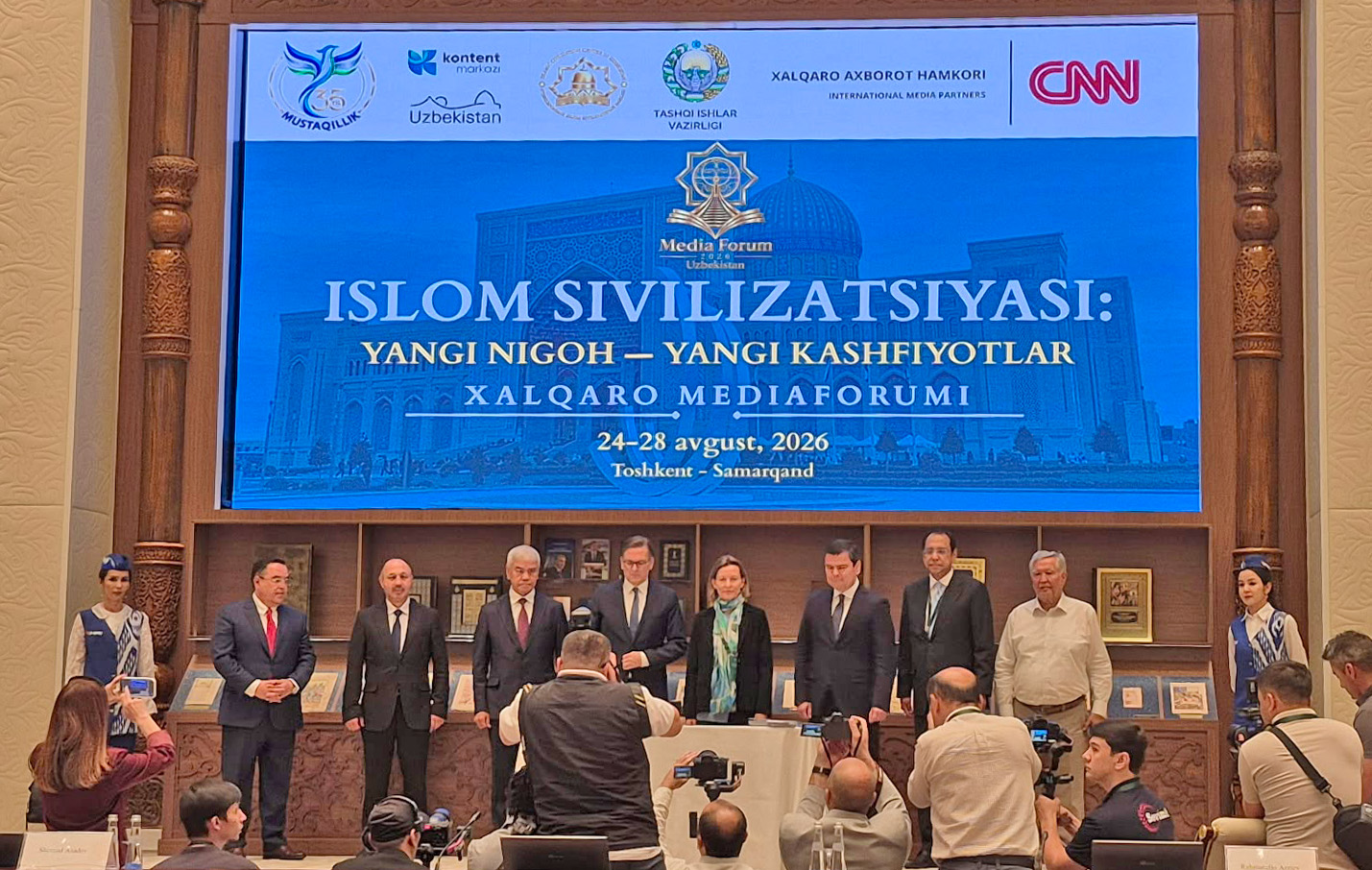
By Raza Syed (Tashkent ,Uzbekistan)
The International Media Forum 2026, organised by the Center for Islamic Civilization in Uzbekistan, comes at a significant moment for international journalism. In a world shaped by instant communication, digital platforms, artificial intelligence and competing narratives, the media has an increasingly important role in determining how countries, cultures and civilisations are understood.
The Tashkent forum brings together journalists, editors, media experts and cultural figures from around the world to explore the relationship between modern media and the rich historical and intellectual heritage of Uzbekistan and Central Asia.
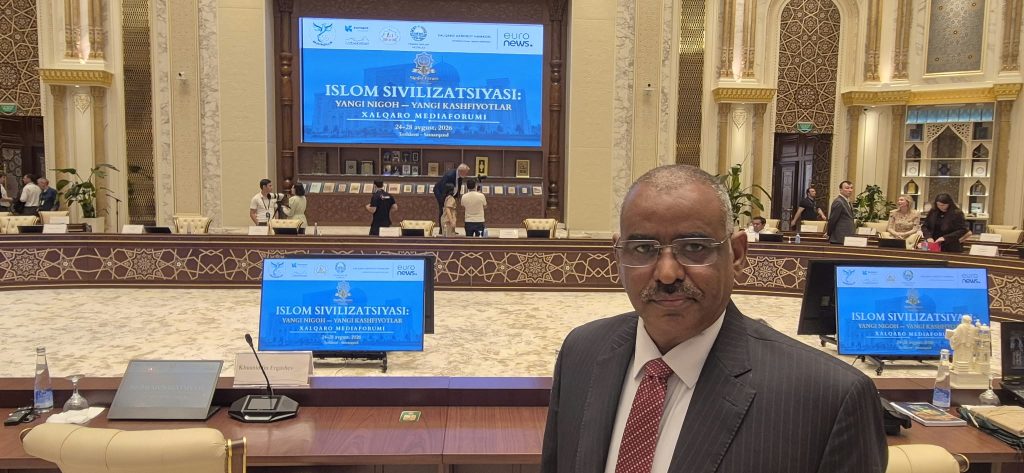
International media is particularly important to this discussion because the achievements of Islamic civilisation belong not to one country or region, but to the shared intellectual heritage of humanity. From medicine and mathematics to astronomy, philosophy and architecture, scholars of the Islamic world made contributions that influenced the development of knowledge across continents. Yet many of these stories remain insufficiently known to international audiences.
The media can help address this gap. Through journalism, documentaries, photography, digital storytelling and new technologies, historical knowledge can reach audiences far beyond museums, libraries and academic institutions. Responsible international journalism can also challenge stereotypes and offer a more balanced understanding of Islamic civilization.
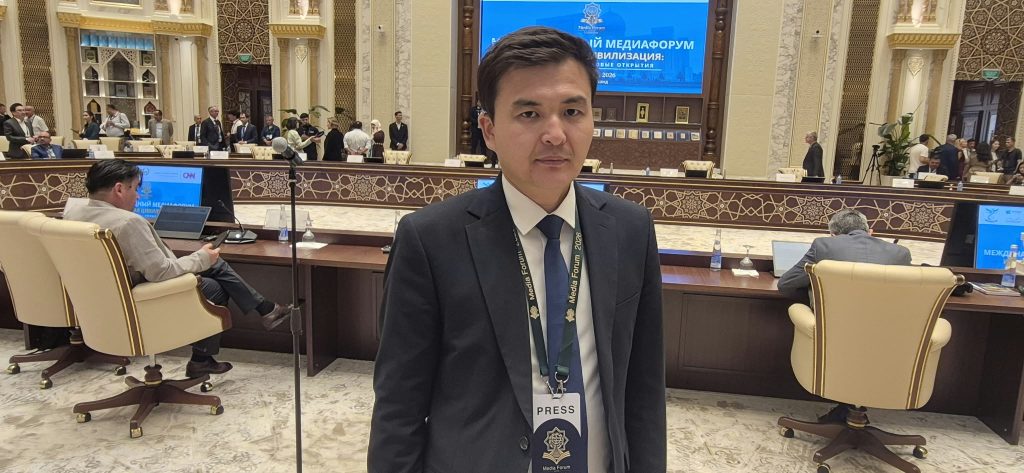
For younger generations, this responsibility is becoming even more important. Their understanding of history is increasingly shaped by social media, video platforms and digital content. The challenge, therefore, is not simply to preserve cultural heritage, but to tell its stories in ways that are credible, engaging and relevant to contemporary audiences.
Uzbekistan provides a particularly appropriate setting for such a discussion. The region has been home to some of the world’s most influential scholars, including Al Khwarizmi, Ibn Sina, Al Biruni, Imam Muhammad al Bukhari, Imam al Tirmidhi and Mirzo Ulugbek. Their intellectual legacy demonstrates the importance of knowledge exchange between cultures and civilisations.
Mohammad Osman, Managing Editor of The Peninsula in Qatar, described the forum as “timely and vital”, particularly given the growing influence of digital and international media in sharing knowledge with global audiences.
Speaking to The London Post, Osman said the forum provides an opportunity to highlight Uzbekistan’s historical heritage and Central Asia’s Islamic legacy while bringing journalists and experts together. He particularly highlighted Imam al Bukhari’s rigorous approach to collecting and authenticating Hadith, describing his methodology as an enduring example of careful research, source verification and intellectual discipline.
Osman said these principles have renewed relevance in the digital age, particularly as journalists confront misinformation and AI generated content. For him, the lesson is clear: accuracy, verification and responsible reporting must remain at the heart of journalism.
Mr Utrik Alimov, Editor of the Uzbekistan National News Agency, also stressed the significance of the gathering, describing it as particularly timely as Uzbekistan approaches the 35th anniversary of its independence.
“With nearly 300 media representatives from 50 countries gathered in Tashkent, this is a powerful statement of our growing role as a crossroads of civilisations,” Aliov told The London Post. He said Uzbekistan’s media environment is changing rapidly, with digital platforms creating new opportunities but also placing greater demands on journalists to maintain professional standards.
Aliov stressed that the forum should go beyond an exchange of information and encourage genuine partnerships capable of building trust between peoples. He also argued that the intellectual heritage of Samarkand and Bukhara should be viewed not simply as history, but as a living resource for contemporary storytellers.
“In this age of instant news, journalism must do more than report. It must preserve and pass on our shared cultural memory,” he said.
This broader purpose gives the Tashkent forum significance beyond its individual sessions. Its success should ultimately be measured by the partnerships, joint media projects, documentaries, professional exchanges and new international narratives that emerge from it.
At a time when misinformation, stereotypes and competing narratives can deepen divisions, international journalism has a choice. It can reinforce misunderstanding or help create greater awareness and dialogue.
The International Media Forum in Tashkent offers an opportunity to choose the latter. By bringing together the credibility of journalism, the depth of historical scholarship and the possibilities offered by modern technology, it can help present Islamic civilisation through a fresh and contemporary lens.
For international journalists attending the forum, the message is simple: come not only to report, but also to discover. Discover the untold stories, explore the intellectual legacy of the region and look beyond familiar narratives.
The real achievement of the forum will be if these stories travel beyond Tashkent and reach audiences around the world, helping a new generation understand that the history of Islamic civilisation is not merely a story of the past, but part of humanity’s continuing conversation about knowledge, culture and shared progress.

Paris (Imran Y. CHOUDHRY) :- Former Press Secretary to the President, Former Press Minister to the Embassy of Pakistan to France, Former MD, SRBC Mr. Qamar Bashir analysis : For centuries, humanity has treated the visible world as ultimate reality. A table appears solid, the human body seems physical, and mountains, oceans and buildings look independent of whoever observes them. Modern physics, however, has revealed that matter is far more mysterious than ordinary experience suggests. What appears solid consists mostly of space, while its subatomic constituents are described through fields, probabilities and wave-like behaviour.
The quantum physics has decisively challenged the old assumption that reality is simply composed of solid, separate and independently existing objects. It leaves humanity facing profound questions about observation, knowledge and existence.
Max Planck, a founder of quantum theory, reportedly spoke of a conscious and intelligent mind behind the forces sustaining matter. The statement expresses a powerful intuition: the visible universe may not be the whole of reality. What we experience as matter could be the outward manifestation of a deeper order that our senses cannot directly penetrate.
Our beliefs influence what we notice, how we interpret events, how we treat others and which possibilities we pursue. Thoughts can affect stress, behaviour, relationships and health. Change the mind, and one may not instantly change the universe, but one can certainly change one’s participation in it.
The world perceived by a human being is not identical to that perceived by every other creature. A blind person constructs spatial understanding without sight. A bat navigates largely through echolocation. Some animals detect ultraviolet or infrared wavelengths invisible to human eyes. Darkness transforms a familiar landscape, while light restores colours and shapes. The environment remains, yet every organism experiences only the portion its sensory system can receive and its nervous system can interpret.
Our perceived world is therefore a meeting between external reality and internal consciousness. We do not experience existence in its entirety; we experience a biologically filtered and mentally interpreted version of it. This recognition should produce humility. If no individual, culture or species possesses the complete picture, then differences of perception need not automatically become grounds for hatred.
In this context, the seven principles presented in The Kybalion—a modern work published in 1908 and attributed to “Three Initiates”—can be considered philosophical tools such as mentalism, correspondence, vibration, polarity, rhythm, cause and effect, and gender. These principles offer a framework for examining relationships among mind, nature and society. Their relevance lies not in pretending that ancient philosophy and quantum mechanics are identical, but in asking whether these principles can guide humanity toward harmony.
Mentalism reminds us that every human institution begins as an idea. Wars, borders, constitutions, systems of oppression and movements for liberation first take shape in consciousness. Hatred repeatedly cultivated in the mind can become discrimination and violence. Compassion, equally, can become reconciliation, justice and peace. Changing collective consciousness can consequently change political and social structures.
Correspondence—expressed through “as above, so below”—encourages us to see connections between the individual and the larger world. A society cannot expect peace while families are governed by cruelty, institutions by injustice and international relations by humiliation. The values cultivated within people eventually appear in the systems they construct.
Vibration can be interpreted metaphorically as the recognition that nothing remains completely static. Individuals, civilizations and relationships continually change. Despair should therefore never be treated as permanent, nor power as eternal. Humanity can move from hostility toward cooperation when ideas, emotions and institutions are consciously redirected.
Polarity teaches that apparent opposites may belong to a connected spectrum. Heat and cold describe degrees of temperature; light and darkness describe degrees of illumination. Political, religious and cultural conflicts are also frequently intensified by treating differences as absolute divisions. Recognizing gradations does not eliminate moral distinctions, but it creates room for dialogue and transformation.
Rhythm reminds us that life moves through recurring phases—growth and decline, activity and rest, peace and conflict. Understanding cycles helps communities avoid arrogance during prosperity and hopelessness during adversity. Wisdom lies not in denying change but in preparing for it and maintaining balance through it.
Cause and effect restores human responsibility. Thoughts alone do not guarantee outcomes, because circumstances, institutions and other people also exert influence. Yet actions have consequences. Violence generates trauma; injustice produces resentment; generosity builds trust. Harmony cannot be achieved merely through positive thinking. It requires deliberate conduct, fair institutions and accountability.
Gender, in the Hermetic sense, refers to complementary generative principles rather than a rigid scientific division between masculine intellect and feminine emotion. Modern neuroscience does not support reducing the brain’s hemispheres or human abilities to such stereotypes. The valuable lesson is complementarity: reason needs empathy, strength needs care, initiative needs receptivity, and creation requires cooperation.
Human spirituality long predates modern science and many organized religious institutions. Across civilizations, people have prayed, sought forgiveness, honoured the dead and appealed to a power greater than themselves. Different traditions have named and understood that ultimate reality differently, but their persistence reveals humanity’s enduring awareness of mystery, dependence and moral responsibility.
Ancient achievements, including the pyramids, deepen our admiration for earlier civilizations. Their magnificence still teaches an important lesson: technological modernity does not grant us a monopoly over intelligence, wisdom or imagination.
Humanity may never perceive reality exactly as it is in itself. Science continues to investigate the measurable universe, while philosophy and religion address meaning, purpose and moral direction. These paths need not destroy one another. Science can protect spirituality from superstition, and spirituality can remind science that knowledge without compassion may become destructive.
The continuing journey of human learning since The Kybalion was published in 1908 reinforces a timeless truth: harmony depends upon balance. When individuals, families, tribes, societies and nations resist destructive extremes and remain within the boundaries of patience, tolerance, perseverance, justice and compassion, conflict becomes manageable and peaceful coexistence becomes possible.
This middle way does not mean remaining neutral between justice and injustice, tolerating oppression or compromising with cruelty. It means pursuing justice without hatred, exercising power without arrogance, expressing disagreement without dehumanization and defending legitimate interests without destroying innocent human beings, animals or the natural world.
A family can escape the cycle of emotional distress, bitterness and feuds when its members restrain anger, listen to one another and refuse to cross the limits of dignity and mutual respect.
A society can reduce hunger, exclusion and instability when competition is balanced by compassion and individual freedom by collective responsibility.
Nations can avoid wars and atrocities when ambition is restrained by international law, dialogue and recognition of shared humanity.
This principle of balance is also central to religious wisdom. Islam particularly teaches wasatiyyah—the just and balanced path—and describes Muslims as a “middle community.” It discourages excess, commands justice even toward those whom one dislikes, and places mercy, patience and moderation at the centre of human conduct. Similar appeals to balance and compassion appear across the world’s spiritual traditions.
Harmony, therefore, is not passivity, weakness or the absence of disagreement. It is the disciplined ability to keep disagreement from becoming hatred, strength from tyranny, desire from greed and pain from becoming revenge.
If this consciousness is cultivated within individuals and families, it can rise through communities and institutions into national and international life. The world may then witness fewer wars, less hunger, reduced emotional suffering and greater respect for every form of life.
The deepest lesson is not that consciousness magically controls everything, but that consciousness carries immense responsibility. The pictures we hold in our minds influence the world we build together. The ultimate relevance of these principles is therefore practical: by restoring balance within ourselves, we help restore harmony in the world we collectively create.

Paris (Imran Y. CHOUDHRY) :- Former Press Secretary to the President, Former Press Minister to the Embassy of Pakistan to France, Former MD, SRBC Mr. Qamar Bashir analysis : For decades, a dark cloud has hung over the founding of the State of Israel—one that involves the systematic disappearance of thousands of children from immigrant families, primarily of Yemenite descent. This is the Yemenite Children Affair, a chapter of history so painful that its official records were sealed for seventy years, until 2071. The wound has been reopened by recent remarks attributed to Israeli National Security Minister Itamar Ben-Gvir, who has reportedly admitted that these children were abducted and sold to the United States for medical experimentation. His heartless statement has once again forced the world to revisit a humanitarian tragedy that has haunted thousands of families for more than seven decades.
This renewed attention comes at a time when Israeli National Security Minister Itamar Ben-Gvir has repeatedly drawn worldwide criticism for inflammatory public rhetoric. His verified statements calling for “all of Lebanon to burn,” declaring that “for every teardrop of an Israeli mother, a thousand Lebanese mothers need to cry,” and advocating overwhelming military force against Israel’s enemies have been condemned by governments, international organizations, and even political figures within Israel.
Reuters, The Times of Israel, the BBC, CNN, and other international media have extensively reported these remarks. Critics argue that such rhetoric reflects a broader political mindset that has increasingly alarmed much of the international community. Whether one agrees with that assessment or not, the renewed debate surrounding the Yemenite Children Affair has inevitably become part of that larger discussion.
The Yemenite Children Affair is not merely an Israeli controversy. It is a humanitarian tragedy whose consequences continue to devastate families to this day. Between 1948 and 1954, shortly after the establishment of the State of Israel, tens of thousands of Jewish immigrants from Yemen, along with immigrants from Iraq, Morocco, Libya, Tunisia and other Middle Eastern and North African countries, arrived in the new state under extremely difficult conditions. During those years, hundreds—and according to many families and researchers, possibly more than a thousand—babies and toddlers disappeared after being admitted to hospitals or immigration camps.
Parents consistently recounted strikingly similar experiences. They were told that their child had suddenly died, often without ever seeing the body. Many said they received no death certificate, no burial location, and no convincing explanation. Instead of closure, they were left with uncertainty that lasted not months or years, but generations.
Israeli governments established three major commissions of inquiry to investigate the affair. Those commissions generally concluded that the majority of the missing children had died from disease during the difficult conditions prevailing in the early years of the state. They also acknowledged that some cases could not be conclusively resolved because records were incomplete or missing. Many families, however, rejected those conclusions, arguing that the investigations failed to answer fundamental questions and left significant contradictions unresolved.
One of the most controversial aspects of the affair was the decision by the 2001 Kedmi Commission to seal large portions of its evidence until 2071. That extraordinary decision itself became a source of public suspicion. Many asked a simple question: if there was nothing to hide, why should crucial evidence remain inaccessible for seventy years?
Growing public pressure eventually led the Israeli government to reconsider. In 2016, the Knesset Constitution, Law and Justice Committee unanimously approved the release of hundreds of thousands of classified documents relating to the affair. Minister Tzachi Hanegbi, appointed by Prime Minister Benjamin Netanyahu to examine whether the archives should be opened, concluded that the authorities’ handling of the affair “did not reflect the values of the Jewish state.” He also acknowledged that he found it difficult to accept the bureaucratic explanations that had long been offered for many of the disappearances.
The release of documents represented an important step toward transparency, but it did not end the controversy. Instead, it reinforced the determination of many families to continue searching for answers.
In 2021, the Israeli government approved approximately NIS 162 million in compensation for eligible families affected by the affair. Prime Minister Benjamin Netanyahu acknowledged the suffering endured by the families and expressed hope that the compensation would provide at least some measure of recognition. Yet many recipients responded that they had never sought money. What they wanted was truth.
Some family representatives described the compensation as an attempt to close the chapter without fully addressing it. They insisted that financial payments could never replace knowledge of what happened to their children. They demanded access to every remaining document, every available DNA record, every adoption file permitted by law, and every piece of evidence capable of revealing the fate of their loved ones.
That demand is neither political nor ideological. It is profoundly human. Every parent possesses an inalienable right to know what happened to a missing child. If a child died, where is the grave? If a child was adopted, who authorized it? If records exist, why were they hidden? If mistakes were made, why were they never fully acknowledged? These questions transcend nationality, religion and politics.
The recent circulation of the video has once again intensified public debate. Supporters of the video’s interpretation argue that it confirms long-standing allegations surrounding the affair. The renewed attention demonstrates that the issue remains unresolved in the minds of countless families and observers around the world.
Meanwhile, Ben-Gvir’s own recent conduct has further fueled international concern. His call for Lebanon to “burn,” his celebration of controversial legislation introducing the death penalty for certain terrorism offenses tried in military courts—a law widely criticized by opponents as discriminatory because of its practical application—and his repeated inflammatory language toward Palestinians have generated condemnation from governments, human rights organizations and international media. His rhetoric has become, for many critics, symbolic of a political climate that warrants closer scrutiny of unresolved historical controversies.
History teaches an important lesson: societies become stronger, not weaker, when they confront difficult truths honestly. The Yemenite Children Affair deserves precisely such an approach. No democratic society should fear opening archives, encouraging independent historical research, facilitating DNA identification, or allowing families to learn the fate of their loved ones. Transparency strengthens public confidence; secrecy erodes it.
For this reason, the time has come for the international community to assist—not to prejudge, but to establish the fullest possible historical record. An independent commission under United Nations auspices, composed of internationally respected historians, forensic specialists, archivists, legal experts, and human rights professionals, should be invited to examine all available evidence, including previously classified records, adoption files where legally accessible, DNA evidence, and testimony from surviving families and witnesses. Its mandate should not be political. Its mandate should be truth.
If that independent inquiry establishes that individuals or institutions unlawfully removed children from their families or committed other crimes, those findings should also be made public, and accountability should follow in accordance with applicable law. Justice cannot be selective. It must be guided by evidence rather than ideology.
The greatest injustice is not merely that children disappeared. The greatest injustice is that so many parents died never knowing whether their sons or daughters lived or died. Some spent their entire lives waiting for a knock at the door that never came. Others carried photographs of missing children to their graves. Their suffering cannot be measured in financial compensation.
This is why the Yemenite Children Affair remains a burden on the conscience of humanity. Regardless of nationality, religion or political belief, every civilized society should stand with families seeking truth about missing children. That principle is universal.
The search for truth is not an act of hostility toward Israel or toward any nation. It is an act of respect for human dignity. History ultimately belongs not to governments but to the victims, the witnesses, and future generations who deserve an honest account of the past.
Only when every available archive has been opened, every credible lead investigated, every possible DNA match pursued, and every family given the fullest answers that history can provide, will this painful chapter begin to close. Until then, the Yemenite Children Affair will remain not merely a historical controversy, but an unfinished moral obligation owed to every parent who never stopped asking one simple question: What happened to my child?


Media As A Bridge between Civilizations

China’s Fusion Breakthrough: Death Knell for the Oil Age

A Nation’s Real Strength Rests in Spirituality, Not Military Might


-

 Sports2 months ago
South Korea’s Yoo Useong Steps Onto the Global Strongman Stage as World Strongman Federation Professional Athlete
-

 Art & Culture1 year ago
A Survey of Mata-E-Zeest
-

 Europe News1 year ago
Chaos and unproven theories surround Tates’ release from Romania
-

 American News1 year ago
Trump expands exemptions from Canada and Mexico tariffs
-

 American News1 year ago
Trump Expels Zelensky from the White House
-

 Art & Culture1 year ago
Will Snow White be a ‘victim of its moment’? How the Disney remake became 2025’s most divisive film
-

 Pakistan News1 year ago
Comprehensive Analysis Report-The Faranian National Conference on Maritime Affairs-By Kashif Firaz Ahmed
-

 Entertainment2 years ago
Champions Trophy: Pakistan aim to defend coveted title as historic tournament kicks off today