
Art & Culture
‘A very deep bond of friendship’: The surprising story of Van Gogh’s guardian angel

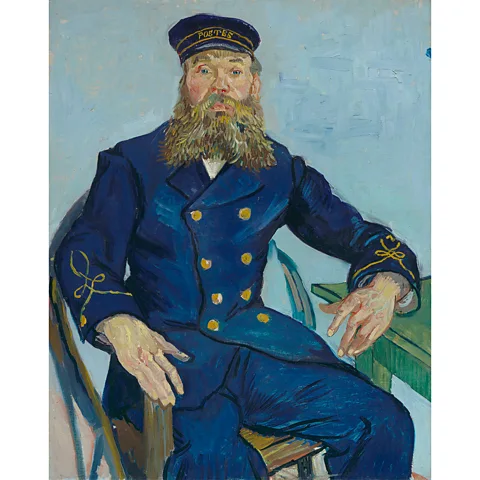
At the toughest, most turbulent time of his life, the Post-Impressionist painter was supported by an unlikely soulmate, Joseph Roulin, a postman in Arles. A new exhibition explores this close friendship, and how it benefited art history.
On 23 December, 1888, the day that Vincent van Gogh mutilated his ear and presented the severed portion to a sex worker, he was tended to by an unlikely soulmate: the postman Joseph Roulin.
A rare figure of stability during Van Gogh’s mentally turbulent two years in Arles, in the South of France, Roulin ensured that he received care in a psychiatric hospital, and visited him while he was there, writing to the artist’s brother Theo to update him on his condition. He paid Van Gogh’s rent while he was being cared for, and spent the entire day with him when he was discharged two weeks later. “Roulin… has a silent gravity and a tenderness for me as an old soldier might have for a young one,” Van Gogh wrote to Theo the following April, describing Roulin as “such a good soul and so wise and so full of feeling”.
Paying homage to this touching relationship is the exhibition Van Gogh: The Roulin Family Portraits, opening at the MFA Boston, USA, on 30 March, before moving on to its co-organiser, the Van Gogh Museum, Amsterdam, in October. This is the first exhibition devoted to portraits of all five members of the Roulin family. It features more than 20 paintings by Van Gogh, alongside works by important influences on the Dutch artist, including 17th-Century Dutch masters Rembrandt and Frans Hals, and the French artist Paul Gauguin, who lived for two months with Van Gogh in Arles.
Roulin wasn’t just a model for Van Gogh – this was someone with whom he developed a very deep bond of friendship – Katie Hanson
“So much of what I was hoping for with this exhibition is a human story,” co-curator Katie Hanson (MFA Boston) tells the BBC. “The exhibition really highlights that Roulin isn’t just a model for him – this was someone with whom he developed a very deep bond of friendship.” Van Gogh’s tumultuous relationship with Gauguin, and the fallout between them that most likely precipitated the ear incident, has tended to overshadow his narrative, but Roulin offered something more constant and uncomplicated. We see this in the portraits – the open honesty with which he returns Van Gogh’s stare, and the mutual respect and affection that radiate from the canvas.
A new life in Arles
Van Gogh moved from Paris to Arles in February 1888, believing the brighter light and intense colours would better his art, and that southerners were “more artistic” in appearance, and ideal subjects to paint. Hanson emphasises Van Gogh’s “openness to possibility” at this time, and his feeling, still relatable today, of being a new face in town. “We don’t have to hit on our life’s work on our first try; we might also be seeking and searching for our next direction, our next place,” she says. And it’s in this spirit that Van Gogh, a newcomer with “a big heart“, welcomed new connections.
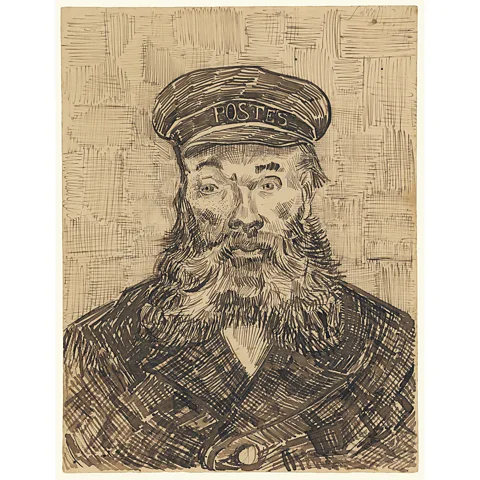
Before moving into the yellow house next door, now known so well inside and out, Van Gogh rented a room above the Café de la Gare. The bar was frequented by Joseph Roulin, who lived on the same street and worked at the nearby railway station supervising the loading and unloading of post. Feeling that his strength lay in portrait painting, but struggling to find people to pose for him, Van Gogh was delighted when the characterful postman, who drank a sizeable portion of his earnings at the café, agreed to pose for him, asking only to be paid in food and drink.
ADVERTISING
Between August 1888 and April 1889, Van Gogh made six portraits of Roulin, symbols of companionship and hope that contrast with the motifs of loneliness, despair and impending doom seen in some of his other works. In each, Roulin is dressed in his blue postal worker’s uniform, embellished with gold buttons and braid, the word “postes” proudly displayed on his cap. Roulin’s stubby nose and ruddy complexion, flushed with years of drinking, made him a fascinating muse for the painter, who described him as “a more interesting man than many people”.
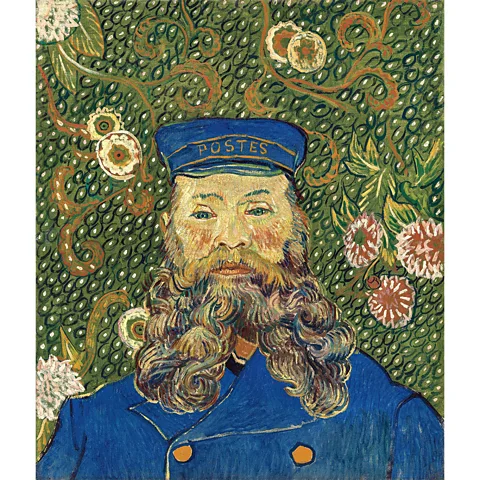
Roulin was just 12 years older than Van Gogh, but he became a guiding light and father figure to the lonely painter – on account of Roulin’s generous beard and apparent wisdom, Van Gogh nicknamed him Socrates. Born into a wealthy family, Van Gogh belonged to a very different social class from Roulin, but was taken with his “strong peasant nature” and forbearance when times were hard. Roulin was a proud and garrulous republican, and when Van Gogh saw him singing La Marseillaise, he noticed how painterly he was, “like something out of Delacroix, out of Daumier”. He saw in him the spirit of the working man, describing his voice as possessing “a distant echo of the clarion of revolutionary France”.
The friendship soon opened the door to four further sitters: Roulin’s wife, Augustine, and their three children. We meet their 17-year-old son Armand, an apprentice blacksmith wearing the traces of his first facial hair, and appearing uneasy with the painter’s attention; his younger brother, 11-year-old schoolboy Camille, described in the exhibition catalogue as “squirming in his chair”; and Marcelle, the couple’s chubby-cheeked baby, who, Roulin writes, “makes the whole house happy”. Each painting represents a different stage of life, and each sitter was gifted their portrait. In total, Van Gogh created 26 portraits of the Roulins, a significant output for one family, rarely seen in art history.
Van Gogh had once hoped to be a father and husband himself, and his relationship with the Roulin family let him experience some of that joy. In a letter to Theo, he described Roulin playing with baby Marcelle: “It was touching to see him with his children on the last day, above all with the very little one when he made her laugh and bounce on his knees and sang for her.” Outside these walls, Van Gogh often experienced hostility from the locals, who described him as “the redheaded madman”, and even petitioned for his confinement. By contrast, the Roulins accepted his mental illness, and their home offered a place of safety and understanding.
The relationship, however, was far from one-sided. This educated visitor with his unusual Dutch accent was unlike anyone Roulin had ever met, and offered “a different kind of interaction”, explains Hanson. “He’s new in town, new to Roulin’s stories and he’s going to have new stories to tell.” Roulin enjoys offering advice – on furnishing the yellow house for example – and when, in the summer of 1888, Madame Roulin returned to her home town to deliver Marcelle, Roulin, left alone, found Van Gogh welcome company.
Roulin also got the rare opportunity to have portraits painted for free, and when, the following year, he was away for work in Marseille, it comforted him that baby Marcelle could still see his portrait hanging above her cradle. His fondness for Van Gogh shines through their correspondence. “Continue to take good care of yourself, follow the advice of your good Doctor and you will see your complete recovery to the satisfaction of your relatives and your friends,” he wrote to him from Marseille, signing off: “Marcelle sends you a big kiss.”
Van Gogh lived a further 19 months, producing a staggering 70 paintings in his last 70 days, and leaving one of art history’s most treasured legacies
Van Gogh’s portraits placed him in the heart of the family home. In his five versions of La Berceuse, meaning both “lullaby” and “the woman who rocks the cradle”, Mme Roulin held a string device, fashioned by Van Gogh, that rocked the baby’s cradle beyond the canvas, permitting the pair the peace to complete the artwork. The joyful background colours – green, blue, yellow or red – vary from one family member to another. Exuberant floral backdrops, reserved for the parents, come later, conveying happiness and affection – a blooming that took place since the earlier, plainer portraits.
Art history has also greatly benefitted from the freedom this relationship granted Van Gogh to experiment with portraiture, and to develop his own style with its delineated shapes, bold, glowing colours, and thick wavy strokes that make the forms vibrate with life. In the security of this friendship, he overturned the conventions of portrait painting, prioritising an emotional response to his subject, resolving “not to render what I have before my eyes” but to “express myself forcefully”, and to paint Roulin, he told Theo, “as I feel him”.
Had Van Gogh not felt Roulin’s unwavering support, he may not have survived the series of devastating breakdowns that began in December 1888 when he took a razor to his ear. With the care of those close to him, he lived a further 19 months, producing a staggering 70 paintings in his last 70 days, and leaving one of art history’s most treasured legacies.
Like the intimate portraits he created in Arles, the exhibition courses with optimism. “I hope being with these works of art and exploring his creative process – and his ways of creating connection – will be a heartwarming story,” Hanson says. Far from “shying away from the sadness” of this period of Van Gogh’s life, she says, the exhibition bears witness to the power of supportive relationships and “the reality that sadness and hope can coexist”.
Van Gogh: The Roulin Family Portraits is at the Museum of Fine Arts, Boston from 30 March to 7 September 2025, and at the Van Gogh Museum, Amsterdam from 3 October 2025 to 11 January 2026.
—
If you liked this story, sign up for The Essential List newsletter – a handpicked selection of features, videos and can’t-miss news, delivered to your inbox twice a week.
For more Culture stories from the BBC, follow us on Facebook, X and Instagram.

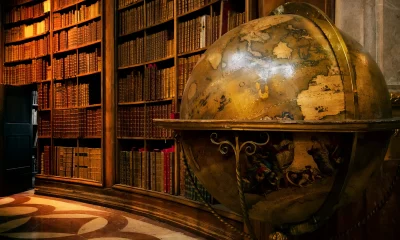



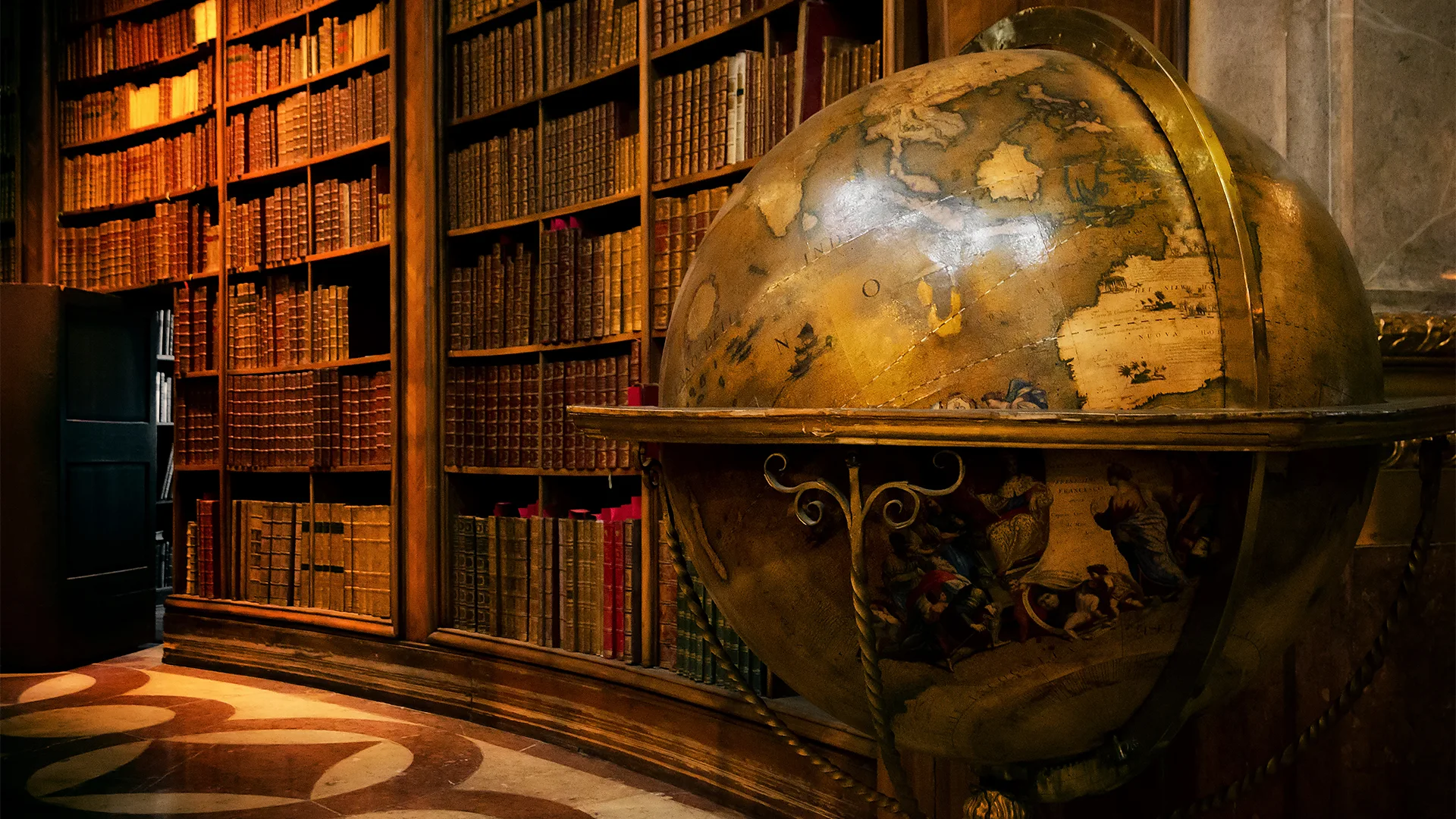
Beautiful, surreal and eerily empty, Vienna’s Globe Museum the only public museum on Earth dedicated to globes, and it – quite literally – tells the story of our world.
It’s a chilly afternoon in Vienna, and the line for the Austrian National Library has already spilled out the door, curling like a ribbon around the grand Josefsplatz square. I’m not in the mood to wait – I’ve already struck out at several crowded nearby attractions where timed-entry tickets were sold out.
Rather than join the queue, I walk down the street and stumble onto a smaller, somewhat hidden site: The Globe Museum. Tucked inside Vienna’s 17th-Century Palais Mollard, it’s the only public museum on Earth dedicated entirely to globes, and one of Vienna’s greatest surprises.
Different worlds
I soon realise that I’ve wandered into another world – or more accurately, many of them.
Just steps from some of the city’s most celebrated, crowded attractions, Vienna’s Globe Museum displays more than 220 rare and antique spheres, most created before 1850, ranging from towering Coronelli globes to tiny, foldable pocket orbs.
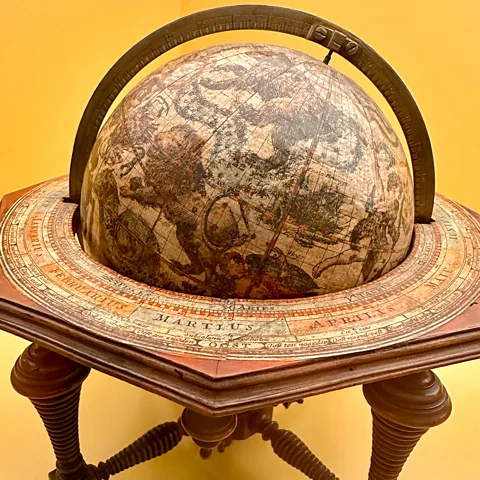
Beautiful and surreal, the museum’s extensive collection goes beyond geography to reveal how humanity has mapped and imagined the Earth and heavens above. It’s a chronicle of human curiosity, and – quite literally – the story of our world.
“Globes show the change in our imagination of our planet,” says Nikolaus Schobesberger, the director of museum. “And this is the only place in the world where you can see so many of them at the same time.”
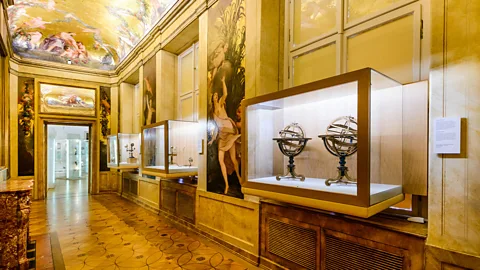
Visitors start by travelling through the Golden Cabinet, a lavish room with centuries-old frescoes depicting scenes from Greek mythology. It’s the backdrop for a stunning array of globe-related instruments, like telluriums, which illustrate the Earth’s orbit around the Sun, and armillary spheres, which use a framework of rings to visualise the movements of celestial bodies.
As I reach the museum’s four main galleries, I realise the whole place is pin-drop quiet. I shuffle slowly from one glass case to another, holding my breath to not disturb the stillness, even though I’m alone with centuries-old objects.
I find myself marvelling at two spherical worlds suspended in time. One is terrestrial, with oceans awash in vivid blues and squiggly brown coastlines. The other is celestial, where mythological creatures and constellations spill across a tea stain-coloured backdrop. Barely bigger than beach balls, these two time capsules were made by the same craftsman 10 years apart in the mid-1500s and preserve a world as it was still coming into focus.
In one, Europe, the Mediterranean and Africa’s coasts are filled with place names, while North America fades into the uncharted Arctic. Asia is distorted, a hypothetical southern continent stands in for Australia and Antarctica and the Pacific is populated by sea monsters instead of islands. In the other, Renaissance astrological observations exist alongside Pegasus taking flight and Perseus brandishing Medusa’s severed head.
“They’re some of the oldest globes we have in our collection,” says Schobesberger.
Moving from one globe to the next, I notice how these relics extend beyond geography and depict what people once believed. Many fill the space of unexplored oceans with dragons, while some confidently depict my home state of California as an island. Some pieces also preserve colonial-era prejudices with elaborately painted scenes depicting Indigenous people as cannibals. On one, African coastlines are dotted with Spanish and Portuguese flags, showing “ownership”.
“They’re a part of this colonial thinking. And so, they’re beautiful art, but you also have to think about the time they were created,” Schobesberger says, explaining that every globe is as much a record of what people knew as what they didn’t. That’s why he believes the museum resonates with all types of people, not just historians or cartography enthusiasts.
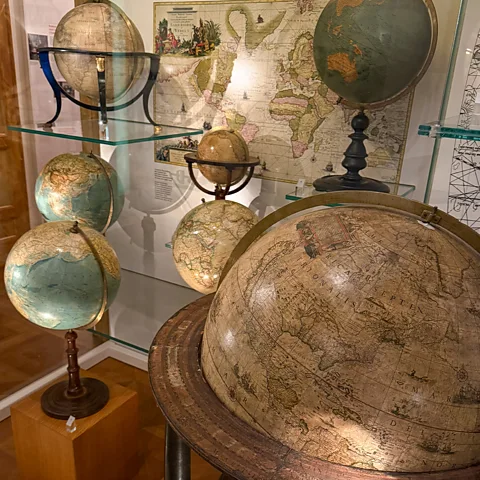
One of Schobesberger’s favourite objects is a lunar globe from 1961. The front portion of the Moon is meticulously mapped. The back, however, is a stark white strip, intentionally left blank because the far side of the Moon had not yet been seen. An updated lunar globe made two years later, also on display, contains the missing portion.
I can’t help but circle back to a showstopper in the front hall, a replica of the Behaim Globe – completed by Martin Behaim in 1492, the year Christopher Columbus sailed west – which shows a world without the Americas. There’s simply an expanse of ocean between Europe and Asia.
“A globe is such a great thing because it’s a small-scale model of our planet, so you can tell stories about the world on it,” he says. “Climate, geology, topography, trade routes, everything.”
From curios to cultural cornerstones
Walking through the museum, visitors can see the globe’s own journey unfold. The earliest examples were luxury objects reserved for aristocrats and wealthy merchants. Over time, globes lost their exclusivity, shrunk in size and became more affordable and popular. They entered schools, appeared in living rooms and even became playthings for children. Today, they are so commonplace that my son even won his desktop globe in a classroom raffle.
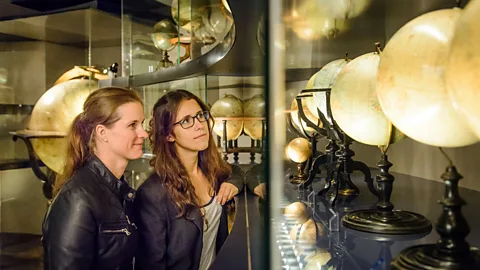
I entered the museum expecting to view globes as historic artefacts, but I’m surprised by how alive they still feel. Even with Google Earth at my fingertips, these tactile objects invite curiosity and imagination in a way that a screen doesn’t.
“It’s not just that the globe is a scientific instrument. It’s also an object which lets you dream of foreign countries,” says Schobesberger.
Globes in pop culture
Beginning 24 September 2026, the museum’s newest exhibition, Globes in Everyday Life, Art and Culture, will explore how globes evolved from a status symbol to a familiar fixture. It also showcases the globe’s enduring place in pop culture, from architecture to art and film, like Charlie Chaplin’s famous dance with an inflatable globe in The Great Dictator. “The main idea was to show that globes are almost everywhere as a part of everyday life,” Schobesberger says.
Schobesberger’s own fascination began as a young child, when he became captivated by the ships, sea monsters and mythical creatures that filled the blank spaces of historical maps and globes. He began to draw his own world maps when he was just six years old.
“You can think about what’s possible on the other side of the world, even when you’re sitting here in Europe,” he says. “Nothing else can capture the imagination quite like it.”
That sentiment resonates with author JF Penn, who stumbled onto the Globe Museum while researching her novel Spear of Destiny, based on a relic housed in Vienna’s Imperial Treasury. Like me, she ended up lingering far longer than planned.
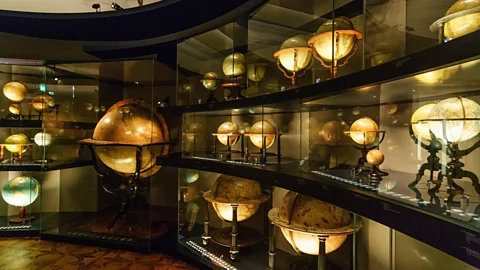
“I particularly loved the oversized antique globes with the patina of age and use,” she says. “I considered how many fingertips have turned them over generations and wondered if they thought of travelling to these far-off places that I do.”
Even after visitors leave Palais Mollard, the search continues. Across Vienna, some 50 globes are perched on rooftops and facades, hidden in plain sight. The museum even charts them on a virtual map in its new exhibit, encouraging people to look upward as they wander the city.
When I finally step back outside, the sky is dark and the streets are even more crowded. Earlier in the day, I had been seeking a quieter corner of Vienna. Instead, I was given a whole new way of seeing the world – a place that’s constantly being redrawn and reimagined.
—
If you liked this story, sign up for The Essential List newsletter – a handpicked selection of features, videos and can’t-miss news, delivered to your inbox twice a week.
This news is taken from BBC News
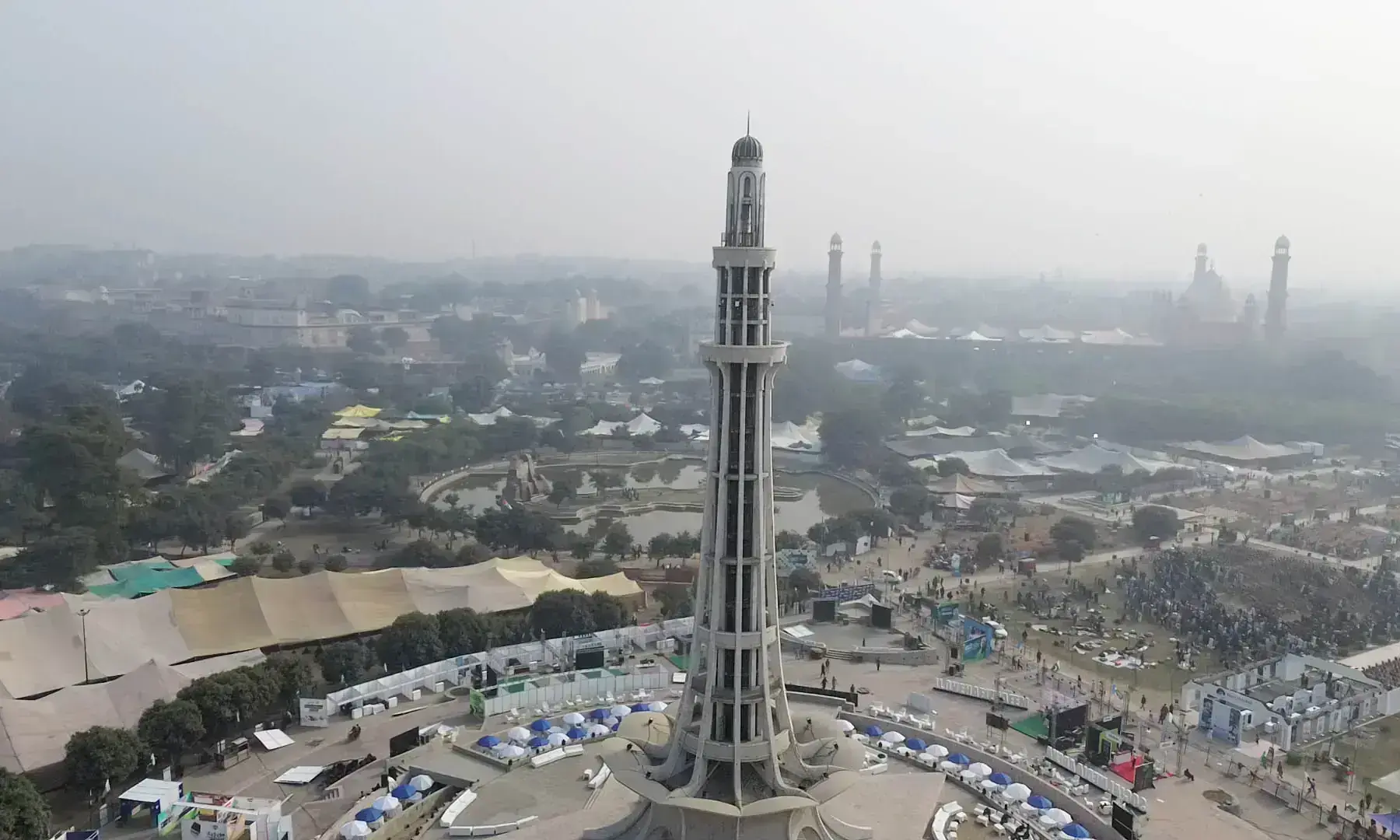
BISHKEK: The city of Lahore has been named the Tourism and Cultural Capital for 2026-27 by the Shanghai Cooperation Organisation (SCO).
The decision was announced at the 26th meeting of the SCO Council of Heads of State in the Kyrgyz capital, which was attended by PM Shehbaz Sharif.
The title of Tourism and Cultural Capital has been rotated annually among SCO member states since 2022, and the designation serves to highlight the prominence of a city that embodies the cultural heritage of the country that takes over the rotating presidency of the organisation.
This year, Pakistan assumed the SCO presidency, with PM Shehbaz defining the theme of the chairmanship as ‘Turning Vision into Action: Connectivity, Innovation and Shared Prosperity’.
Cities that have held the title in the past include Varanasi, India (2022-23), Almaty, Kazakhstan (2023-24), Qingdao, China (2024-25) and Cholpon-Ata, Kyrgyzstan (2025-26).
The decision to designate Lahore as the tourism and cultural capital was taken in April this year, when the heads of tourism administrations of SCO member states met in Bishkek.
The designation is designed to promote people-to-people contacts and tourism among the member states.
Published in Dawn, September 2nd, 2026
Art & Culture
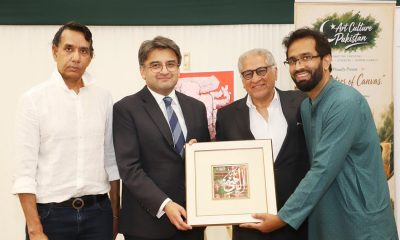
Deputy High Commissioner Haseeb Bin Aziz Inaugurates “Masters of Canvas” Art Exhibition at Pakistan High Commission London
PRESS RELEASE
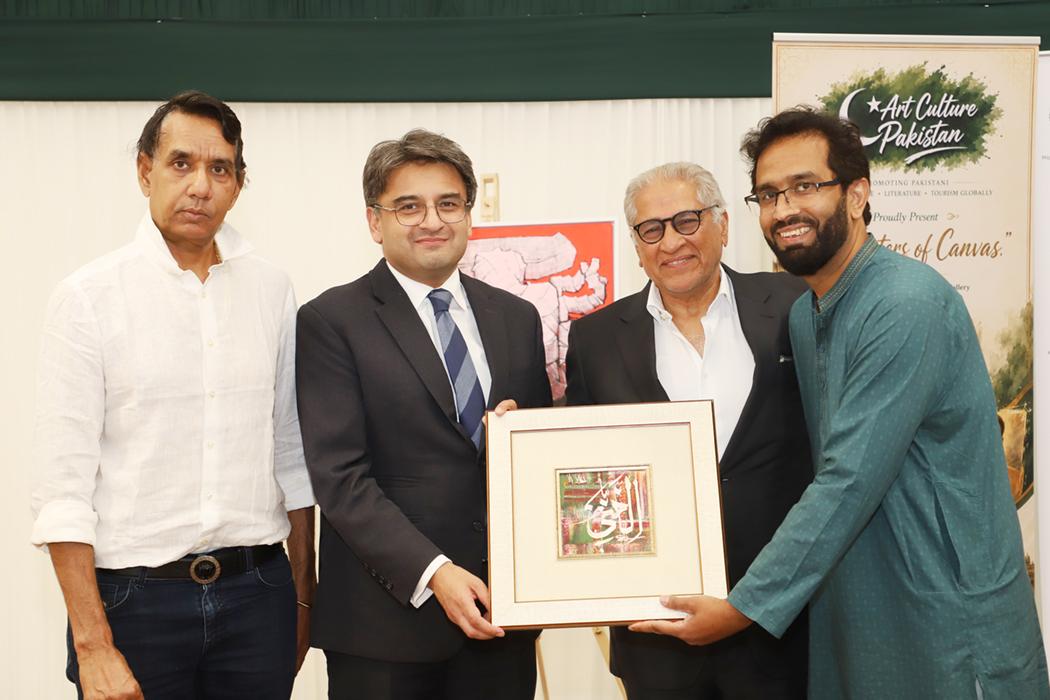
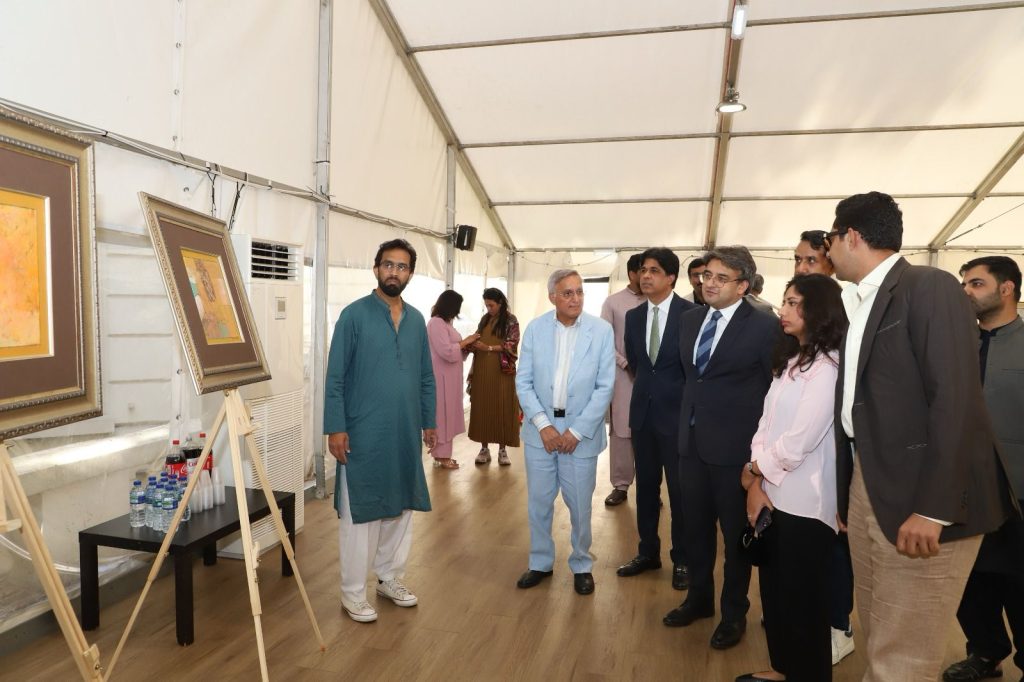
London, UK — Deputy High Commissioner of Pakistan, Mr. Haseeb Bin Aziz, inaugurated the prestigious art exhibition “Masters of Canvas” at the Pakistan High Commission in London, celebrating the exceptional talent, diversity and enduring legacy of Pakistan’s distinguished artists.
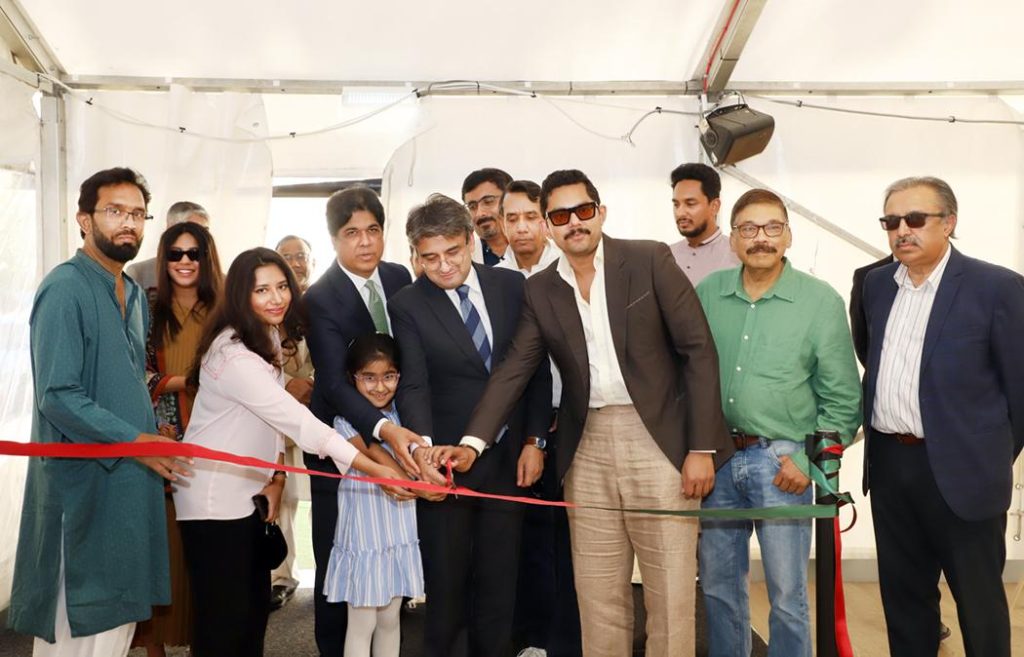
The exhibition brings together the works of renowned senior Pakistani artists and calligraphers Late Ahmed Khan, Late Mashkoor Raza, M.A. Bukhari, Chitra Pritam and Qamar Siddiqui, offering audiences in the United Kingdom a rare opportunity to experience original works of Pakistani art.
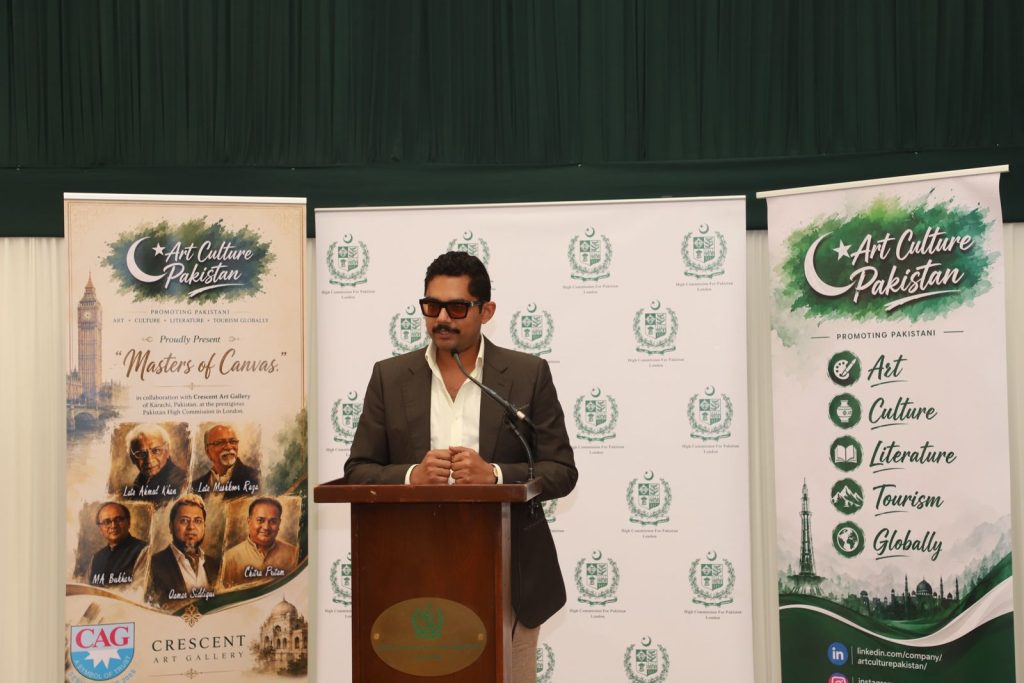
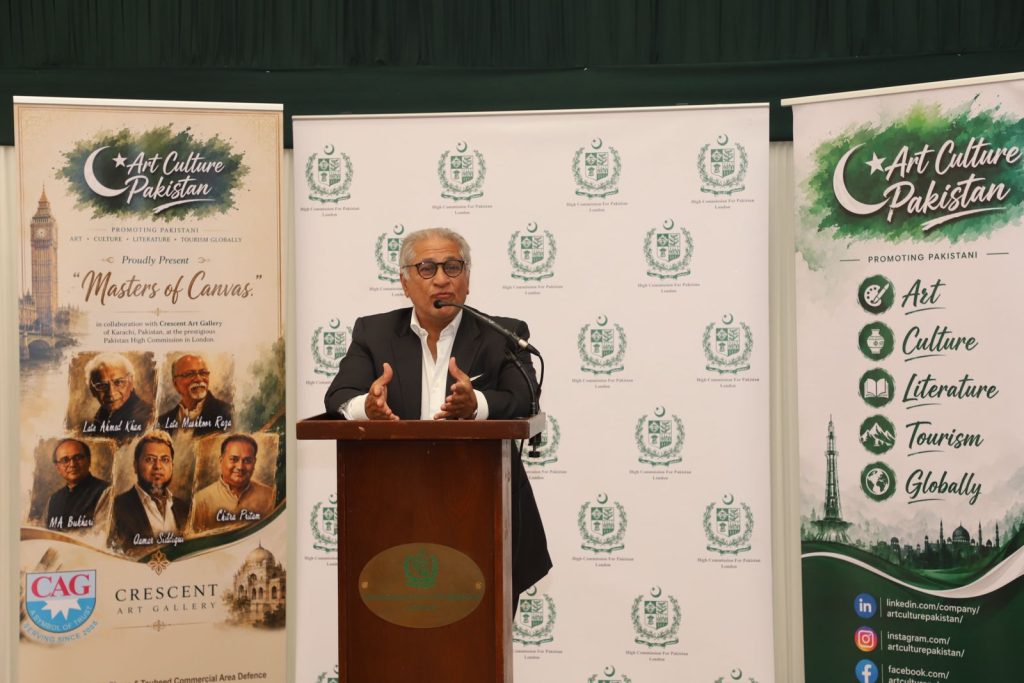
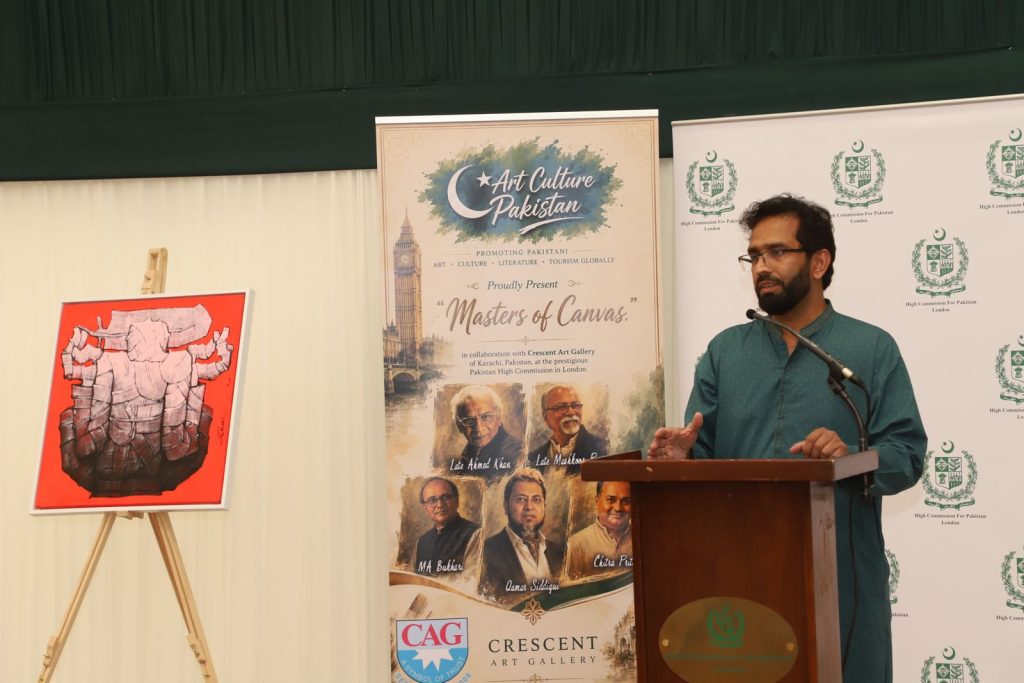
Speaking at the inauguration, Deputy High Commissioner Haseeb Bin Aziz paid tribute to the distinguished artists, appreciating their remarkable contributions to Pakistan’s artistic and cultural heritage. He also commended the efforts of Art Culture Pakistan and Crescent Art Gallery, Karachi, for bringing the work of these celebrated artists to the United Kingdom and providing an important platform for Pakistani art and culture to reach international audiences.
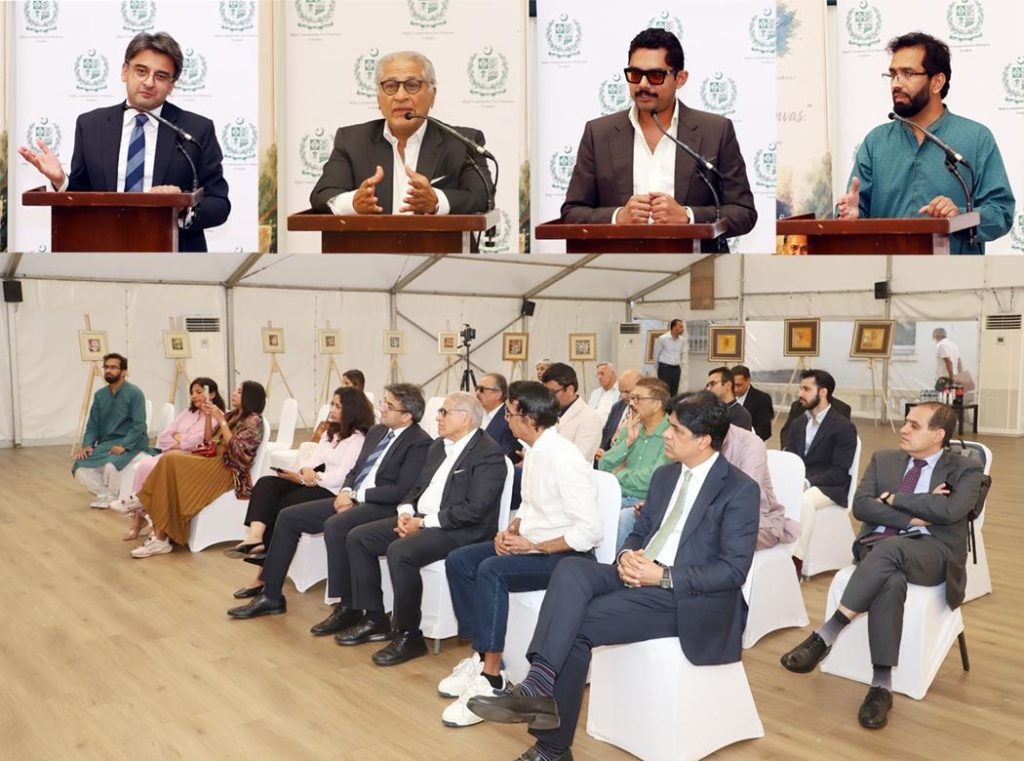
The exhibition is proudly presented by Art Culture Pakistan, an initiative founded by Mr. Akber Mehmood, in collaboration with Crescent Art Gallery, Karachi, founded by Mr. Nasir Javed, together with Mr. Sameer Nasir and curator Ms. Sidra Nasir. Through their continued commitment to the promotion of Pakistani art and culture, the organisations have worked to introduce outstanding Pakistani artists to audiences across Pakistan and internationally.
Addressing the gathering, Mr. Sameer Nasir of Crescent Art Gallery encouraged members of the audience to actively participate in and support cultural events of this nature. He emphasised that growing public interest in Pakistani art and culture can help create greater opportunities for cultural exchange and contribute to strengthening Pakistan’s soft image in the United Kingdom and beyond.
Mr. Asif Rangoonwala of the British Pakistan Foundation also congratulated the organisers for bringing such a prestigious selection of Pakistani artists to London. He described the exhibition as a rare cultural occasion, highlighting the significance of presenting original artworks from Pakistan to London audiences after a considerable period. He encouraged attendees to value and support such unique opportunities to engage directly with Pakistan’s rich artistic heritage.
The event also featured a special video presentation titled “Masters of Canvas,” presented by Mr. Akber Mehmood of Art Culture Pakistan. The presentation introduced the featured artists, showcasing their artworks and highlighting the distinctive genres and artistic approaches that have shaped their careers.
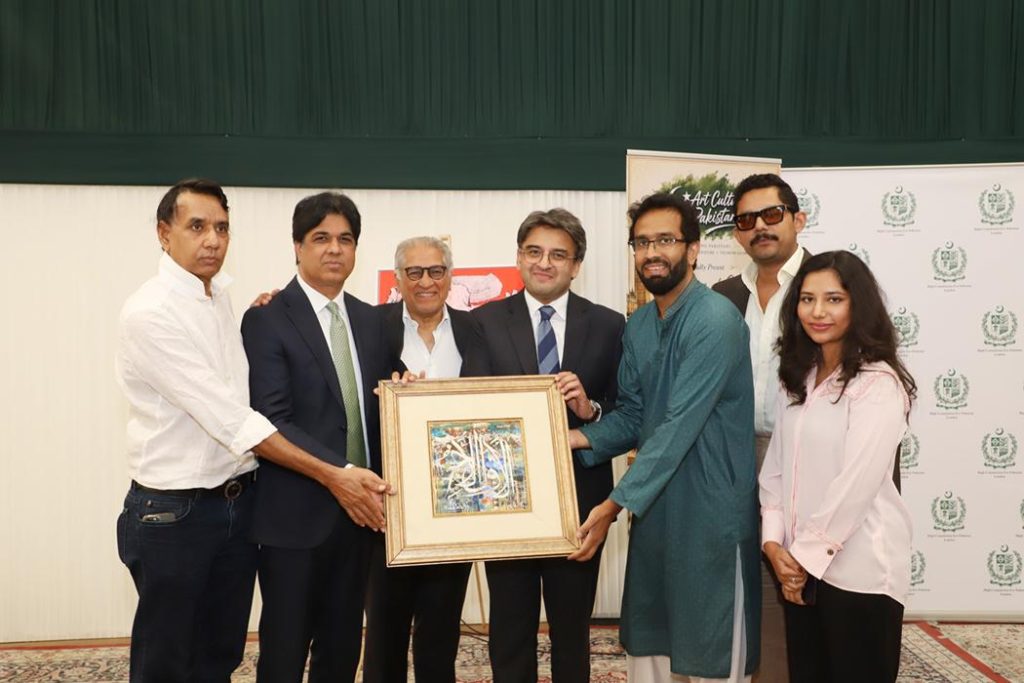
“To conclude the event, exquisite calligraphic masterpieces by the venerable maestro M.A. Bukhari were presented on behalf of Art Culture Pakistan to Deputy High Commissioner Haseeb bin Aziz, British Pakistani Foundation CEO Asif Rangoonwala, and Press Attaché Mr Ali Nawaz Malik.”


The museum charting how humans understand the world

Sexual crimes against women, kids: 80pc of offenders are people known to victims, says Punjab IGP

Shanghai Cooperation Organisation names Lahore as its ‘Tourism and Cultural capital’


-

 Sports3 months ago
South Korea’s Yoo Useong Steps Onto the Global Strongman Stage as World Strongman Federation Professional Athlete
-

 Art & Culture1 year ago
A Survey of Mata-E-Zeest
-

 Europe News2 years ago
Chaos and unproven theories surround Tates’ release from Romania
-

 American News1 year ago
Trump expands exemptions from Canada and Mexico tariffs
-

 American News2 years ago
Trump Expels Zelensky from the White House
-

 Art & Culture1 year ago
Will Snow White be a ‘victim of its moment’? How the Disney remake became 2025’s most divisive film
-

 Pakistan News1 year ago
Comprehensive Analysis Report-The Faranian National Conference on Maritime Affairs-By Kashif Firaz Ahmed
-

 Entertainment2 years ago
Champions Trophy: Pakistan aim to defend coveted title as historic tournament kicks off today