
Pakistan News
When Law Wears a Uniform


Paris (Imran Y. CHOUDHRY) :- Former Press Secretary to the President, Former Press Minister to the Embassy of Pakistan to France, Former MD, SRBC Mr. Qamar Bashir analysis : A state does not collapse the moment tanks roll into the capital or a general announces the suspension of the constitution. History shows that the most enduring and damaging forms of authoritarianism often emerge quietly, through legal amendments, institutional rearrangements, and the gradual subordination of civilian authority to military command. Pakistan today stands at precisely such a juncture. Without a formal declaration of martial law, the country exhibits nearly every substantive characteristic by which political scientists, constitutional scholars, and international legal bodies define military rule. The façade of civilian governance remains, but the substance of power has decisively shifted.
At the heart of this transformation is the structural reconfiguration of the state itself. Across established democracies, civil–military relations rest on a clear and universally accepted principle: the military serves under civilian supremacy, operates within defined constitutional limits, and remains institutionally subordinate to elected authority. Whether in the United States, the United Kingdom, France, or even semi-authoritarian systems, military chiefs hold fixed tenures, retire on schedule, and answer to civilian defense ministers and legislatures. There exists no precedent in functioning constitutional governance for a serving army chief, paid from the civilian treasury, to hold office indefinitely or for life.
Yet Pakistan has moved dangerously close to precisely this anomaly. Through constitutional amendments passed under conditions widely perceived as coercive, the tenure of the army chief has been repeatedly extended, while public discourse has been deliberately conditioned to normalize permanence in a role that, by its nature, must be temporary. When asked about retirement, the response is not institutional humility but visible irritation, coupled with claims of higher national missions that render accountability irrelevant. In comparative constitutional terms, this is not stability; it is personalization of power.
Even more striking is the concentration of military command itself. In established systems, the separation of services—army, navy, and air force—is not a matter of tradition alone, but a safeguard against absolute control. Joint coordination exists, but supremacy does not. No single uniformed officer simultaneously dominates all branches without civilian oversight. Such consolidation is historically associated not with national defense, but with military autocracy. Pakistan’s recent constitutional restructuring, which elevates one office above all armed services, represents not administrative efficiency but a profound distortion of command balance, extending martial dominance even within the military itself.
This internal militarization has been matched by an external economic takeover. Across the world, armed forces may execute infrastructure projects during emergencies or provide logistical support for development, but they do not own, manage, or monopolize the national economy. Pakistan’s experience diverges sharply from this norm. Military-controlled entities now dominate infrastructure development, often without competitive bidding, while strategic sectors such as agriculture, logistics, and industrial development—particularly under the second phase of the China–Pakistan Economic Corridor—have been effectively absorbed into a corporatized military ecosystem.
International development models recognize Special Economic Zones as civilian-led instruments for industrial growth, foreign investment, and employment generation. Their capture by military institutions transforms them from engines of inclusive development into closed systems of rent extraction. This shift does not merely distort markets; it entrenches a new political economy in which economic power reinforces coercive authority, and civilian institutions are hollowed out from within.
Equally consequential is the erosion of judicial independence. A functioning judiciary is not defined by the existence of courts, but by their capacity to restrain power. Where judges operate under intimidation, where constitutional amendments are insulated from challenge, and where prolonged detentions persist without due process, the rule of law becomes performative rather than real. International legal doctrine is unequivocal: when courts can no longer check the executive or the military, constitutional order has collapsed in substance, regardless of its textual survival.
Parliament, too, has been reduced to form. Comparative legislative studies demonstrate that assemblies lose legitimacy when they cease to deliberate freely and instead function as instruments for retroactive legal cover. When amendments are passed not through consensus but under duress, law itself becomes a weapon rather than a restraint. In such conditions, elections do not restore democracy; they merely legitimize its absence.
Control over media completes the architecture of undeclared martial rule. Authoritarian systems rarely silence all voices; instead, they curate narratives, elevate loyal platforms, and delegitimize dissent by branding it treasonous. The role of the military spokesperson in Pakistan has evolved from institutional communication to overt political arbitration, publicly condemning one political force while sanctifying another. This is not information management; it is narrative command.
Taken together, these developments satisfy every internationally recognized criterion of martial law as defined in political theory and comparative governance. Civilian supremacy has been replaced by military dominance. Economic control has shifted from elected institutions to uniformed management. Judicial independence has been neutralized. Parliamentary authority has been subordinated. Media freedom has been constrained. Political opposition has been criminalized. The absence of a formal proclamation does not negate these realities; it merely disguises them.
History offers a sobering warning. States that normalize indefinite military rule do not achieve stability; they accumulate fragility. Institutions decay, merit collapses, economic confidence erodes, and society internalizes fear as a governing principle. Even the armed forces suffer, as blocked promotion pathways and personalized command undermine professionalism and morale. What begins as control ends as corrosion.
Pakistan today stands not at the edge of a constitutional crisis, but deep within one. The question is no longer whether martial law exists, but whether the nation can reclaim civilian sovereignty before irreversible damage is done. Democracies are not destroyed in a single night; they are dismantled piece by piece, until law itself wears a uniform and authority answers to no one.
And history is unambiguous on one final point: no state can endure indefinitely when the gun replaces the constitution as the final arbiter of power.




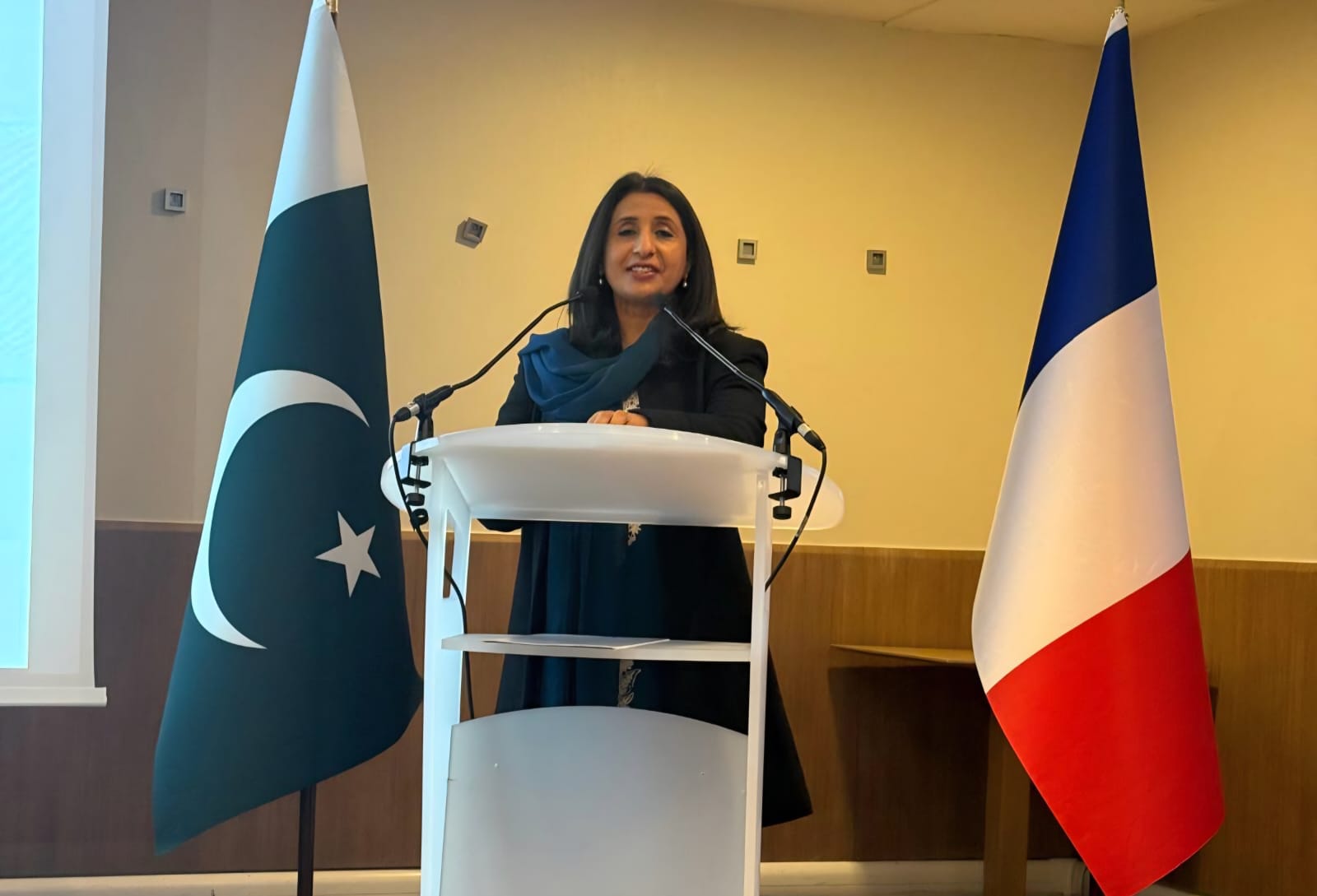
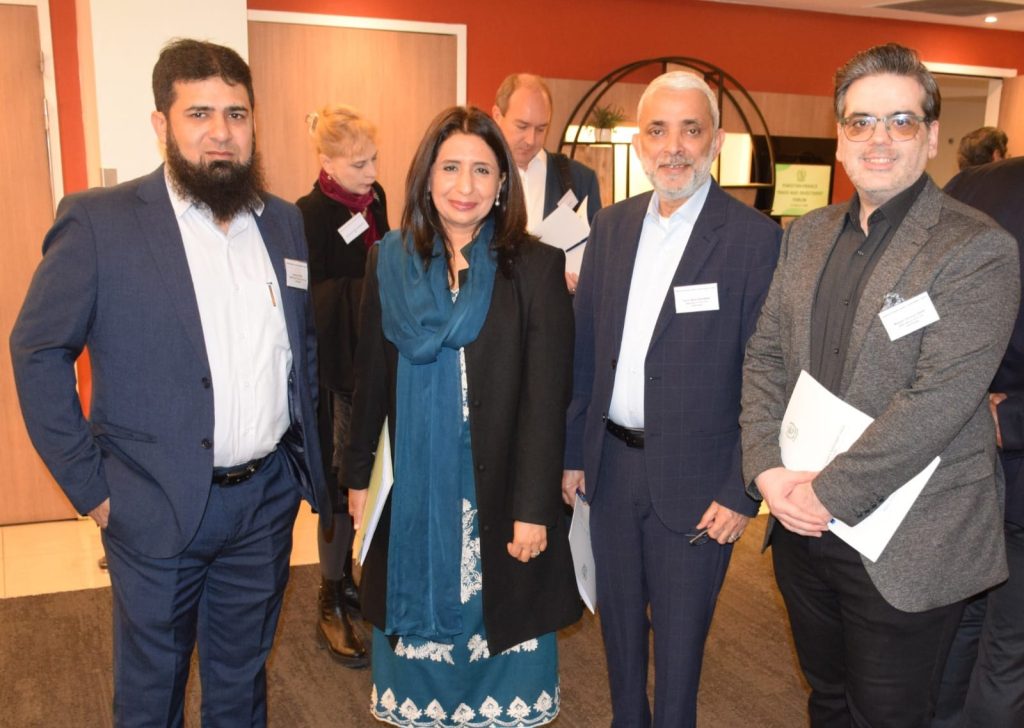
Paris ( Imran Y. CHOUDHRY):- A ‘Pakistan-France Trade and Investment Forum’ was held in Paris today, bringing together government officials, business leaders, industry experts and representatives of trade bodies of both countries.
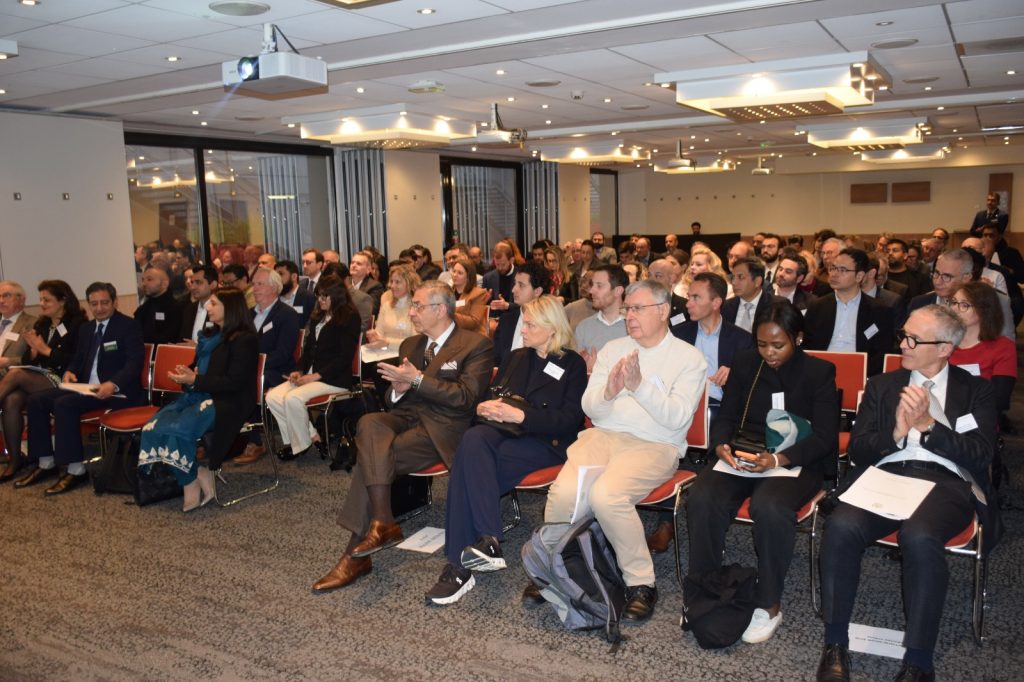
The Forum was held in implementation of an understanding reached between President Emmanuel Macron and Prime Minister Shehbaz Sharif in 2024, to build strong economic partnership between Pakistan and France. The objective of the Forum was to connect businesses, exchange ideas, explore new avenues of bilateral cooperation and showcase Pakistan’s trade and investment potential. It witnessed participation of over seventy French and Pakistani companies from diverse sectors including agriculture, information technology, textiles, energy and tourism.
Ambassador Mumtaz Zahra Baloch opened the Business Forum and highlighted Pakistan’s economic growth and potential as an attractive trade partner for France. She outlined investor-focused initiatives and institutional facilitation mechanisms in Pakistan to promote trade and investment. She encouraged Pakistani and French businesses to explore collaborative opportunities, and develop joint ventures and win-win partnerships.
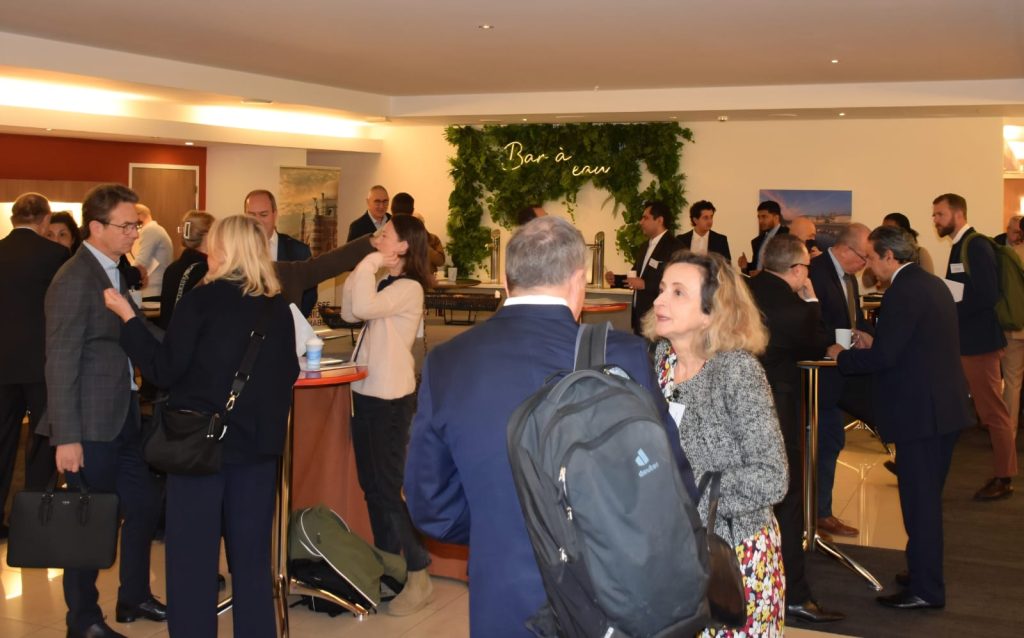
Speakers from the French side included Thierry Pflimlin, Chairman of the France-Pakistan Business Council at MEDEF International, Patricia Glasel, Vice President of the Conseillers du Commerce Extérieur de la France (CCEF) and Ardavan Amir-Aslani. They highlighted the growing momentum in France-Pakistan economic relations; identified the opportunities for trade and investment with Pakistan; and underscored the importance of strengthening private sector linkages to further facilitate bilateral trade and investment.
The plenary session was followed by ‘Breakout and Business-to-Business (B2B)’ sessions to discuss and identify tangible avenues for collaboration in textiles, agriculture and dairy, and Information Technology.
Pakistan News
Dr. Mohammad Faisal Joins Distinguished Quetta Association Event in London Gathering Reinforces Shared Military Heritage of Pakistan and Britain
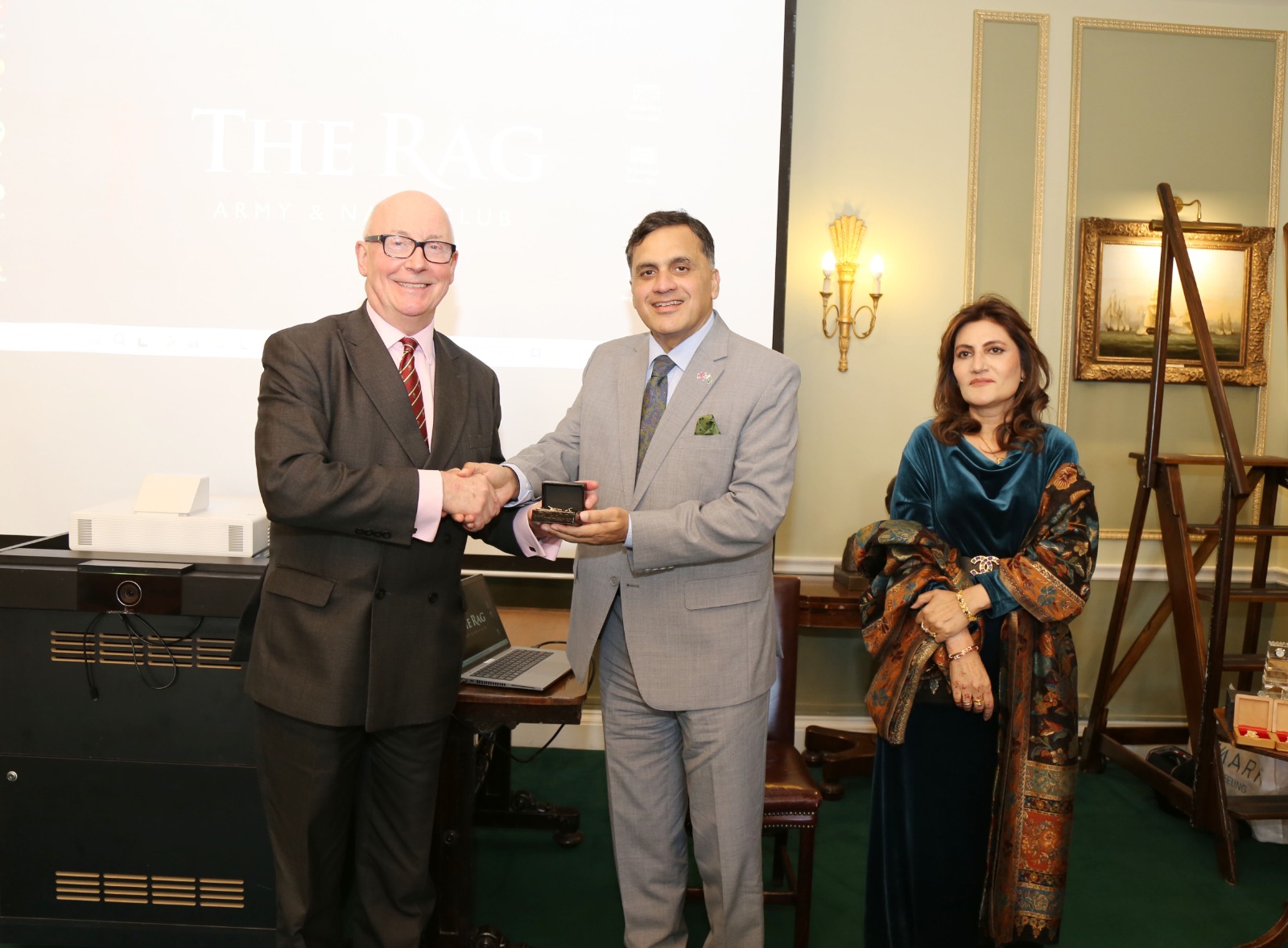
High Commissioner @DrMFaisal and his spouse @drsarahnaeem2 attended, as guests of honor, a distinguished gathering of the Quetta Association at the Army & Navy Club, London.
Military Officers from the Defence Wing of Pakistan High Commission, London, with their families also attended.
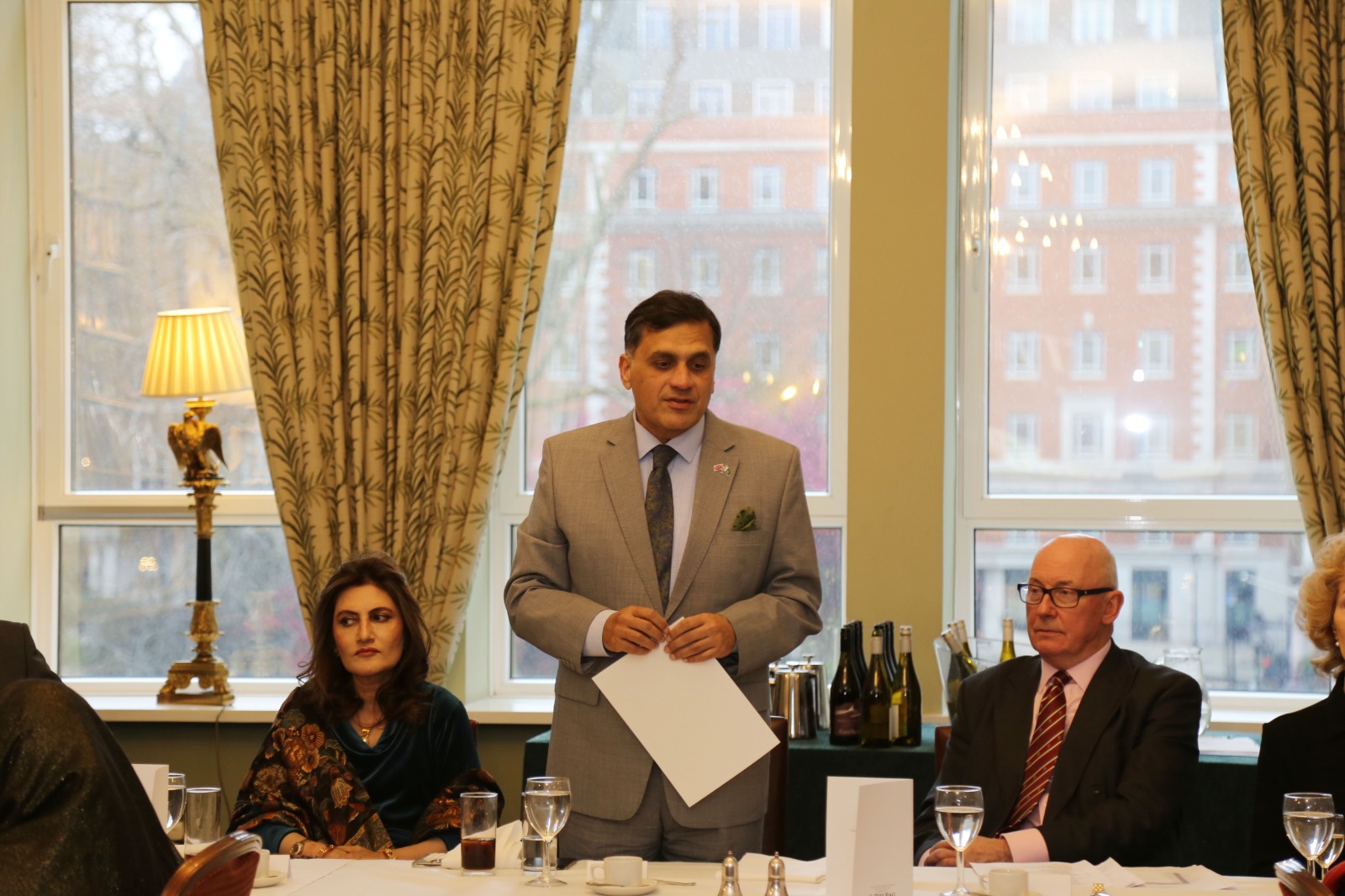
Quetta Association brings together British officers who graduated from the prestigious Command & Staff College, Quetta, Pakistan. The institution has produced outstanding military leaders, including British Field Marshals Sir Claude Auchinleck and Sir William Slim, whose leadership during the Second World War remains widely respected. Field Marshal Syed Asim Munir is also graduate of this prestigious institution.
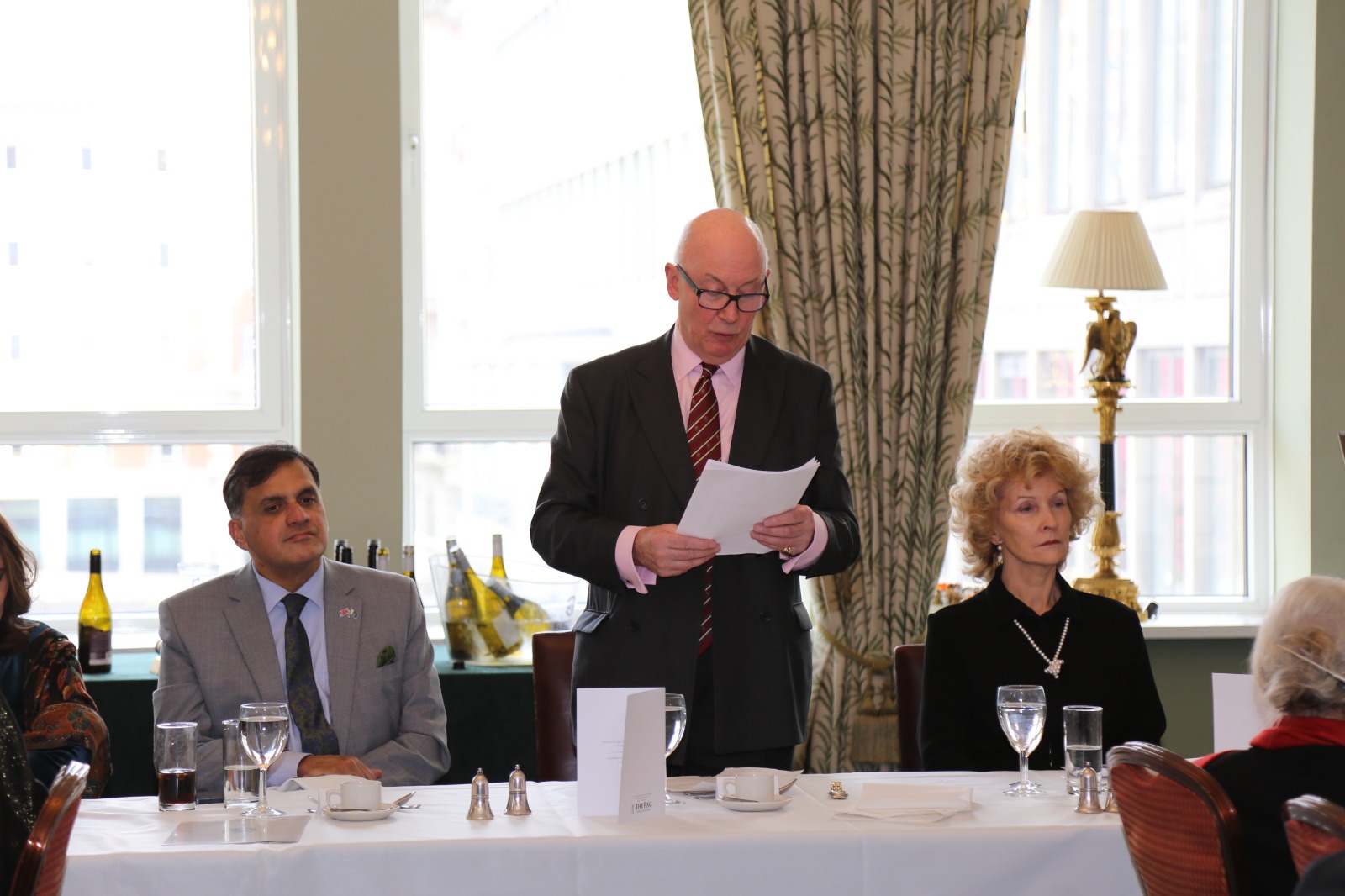
The High Commissioner appreciated the annual gathering that underscored the Association’s enduring role as a vital bridge linking the British Army and Pakistan Army through shared professional heritage and camaraderie.
Decorated British military officers and their families paid glowing tributes while referring to the hospitality accorded by Pakistan during their stay in Quetta.
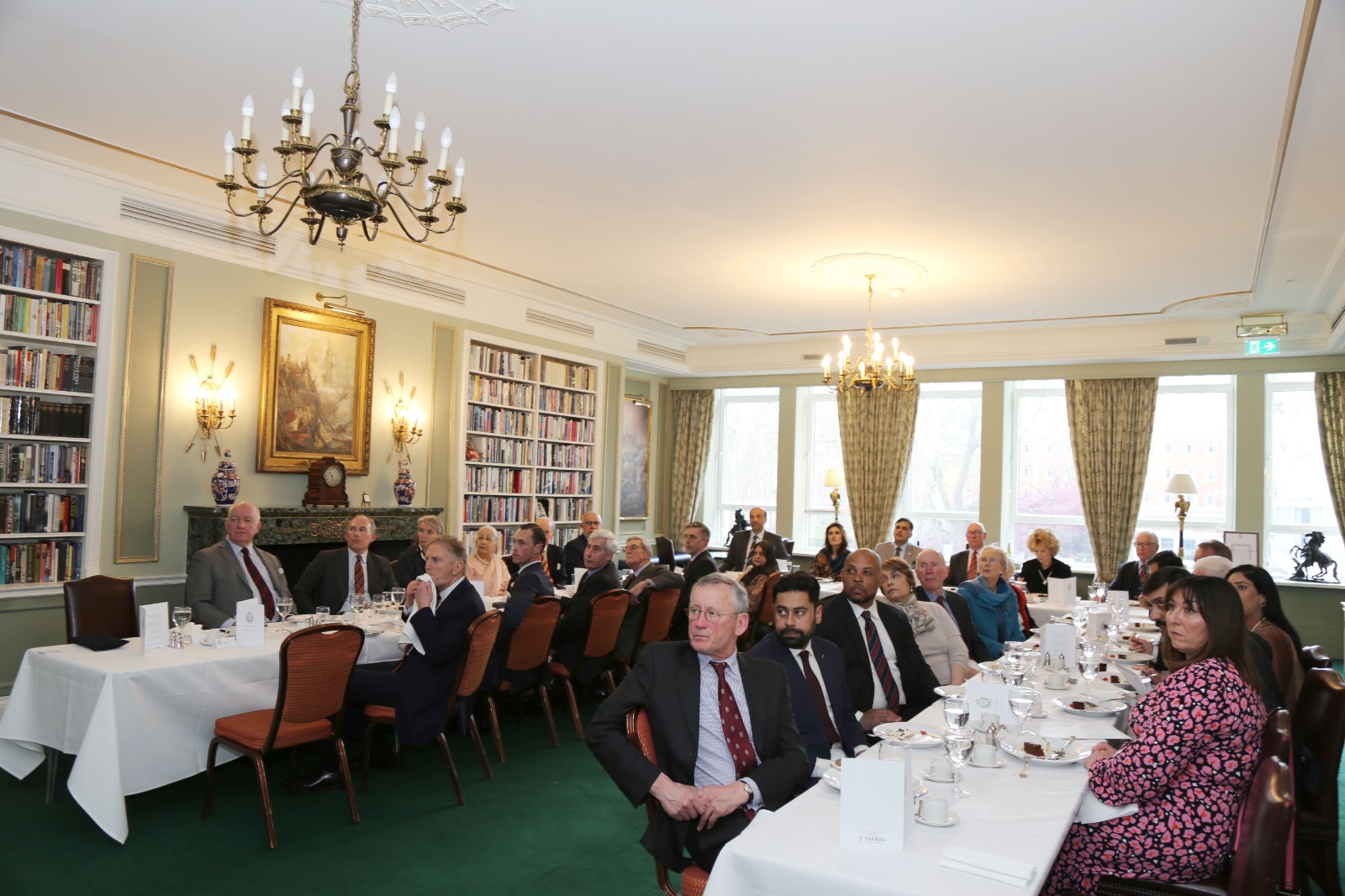
Graduate senior British Officers present at the gathering included Lt. Gen. Sir Alistair Irwin KCB CBE (1980) and Maj. Gen. Seumus Kerr CBE (1985).
Mementos were exchanged between the British officers and officers of @PakistaninUK.
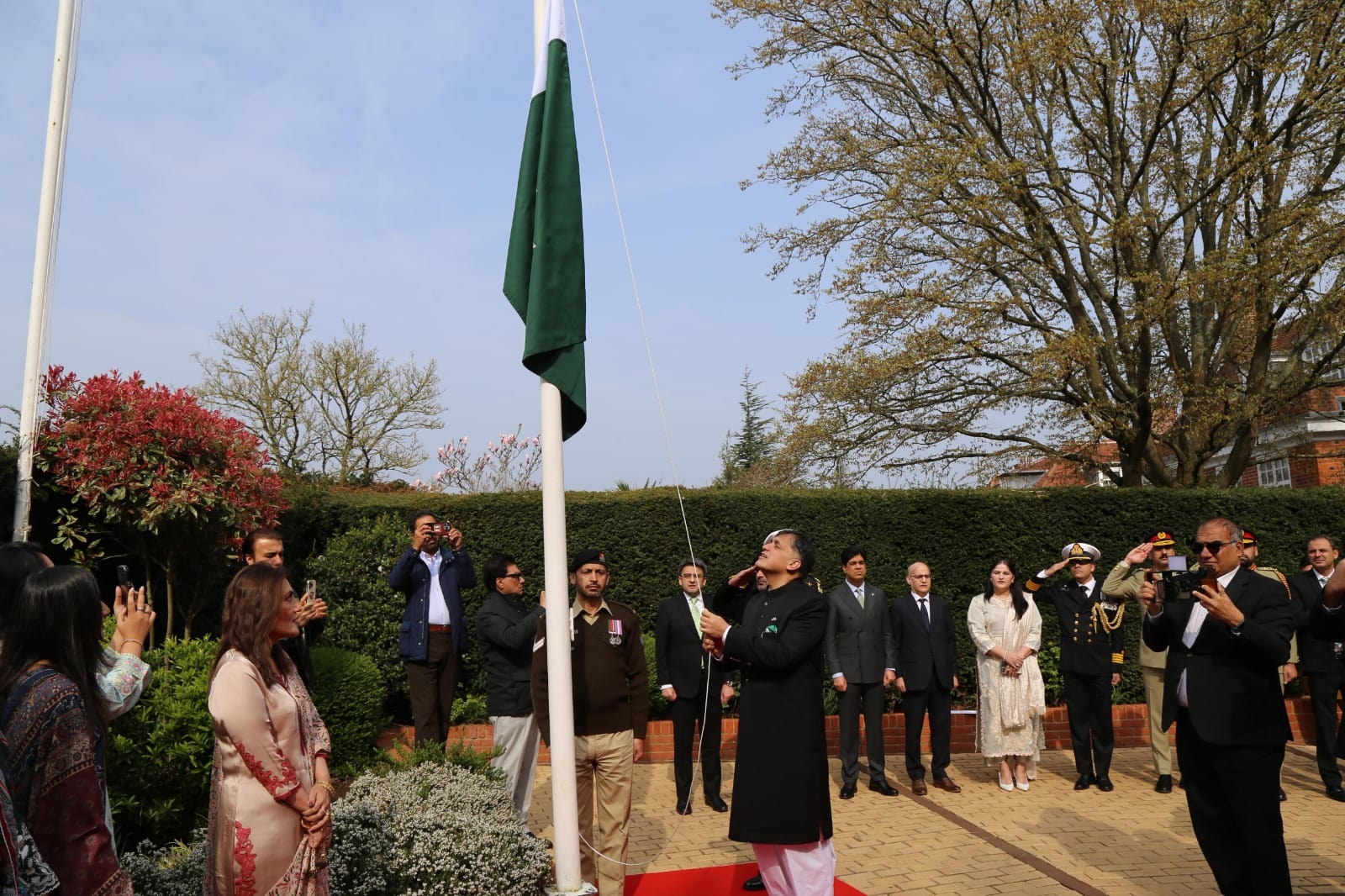
In a simple and dignified ceremony held at Pakistan House, London, the High Commissioner of Pakistan to UK Dr. Mohammad Faisal raised the Pakistan Flag on the occasion of Pakistan Day.
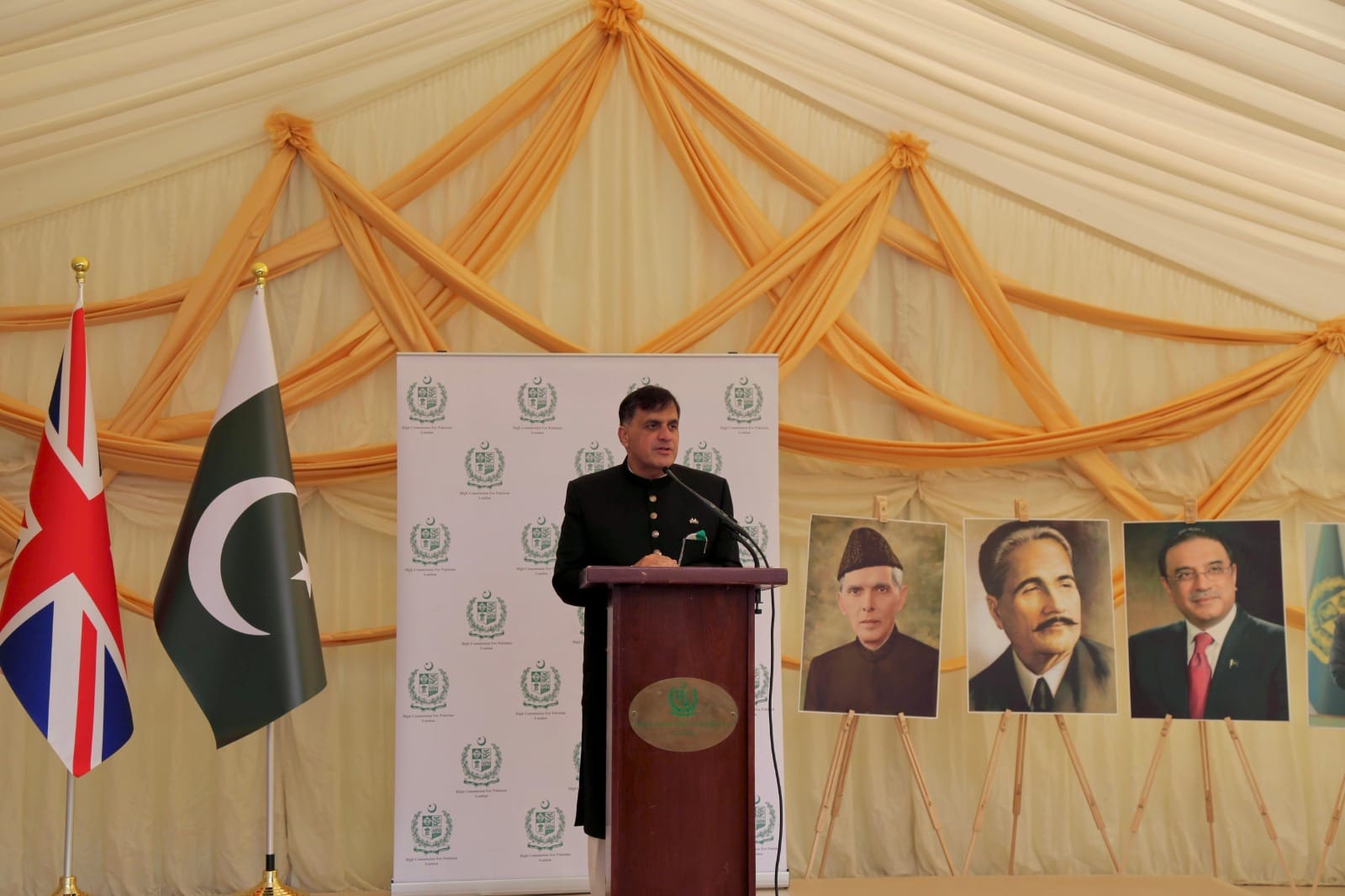
The ceremony was attended by Officials of the High Commission, British – Pakistanis and Media representatives.
Messages of the President, the Prime Minister and Deputy Prime Minister / Foreign Minister were read out.
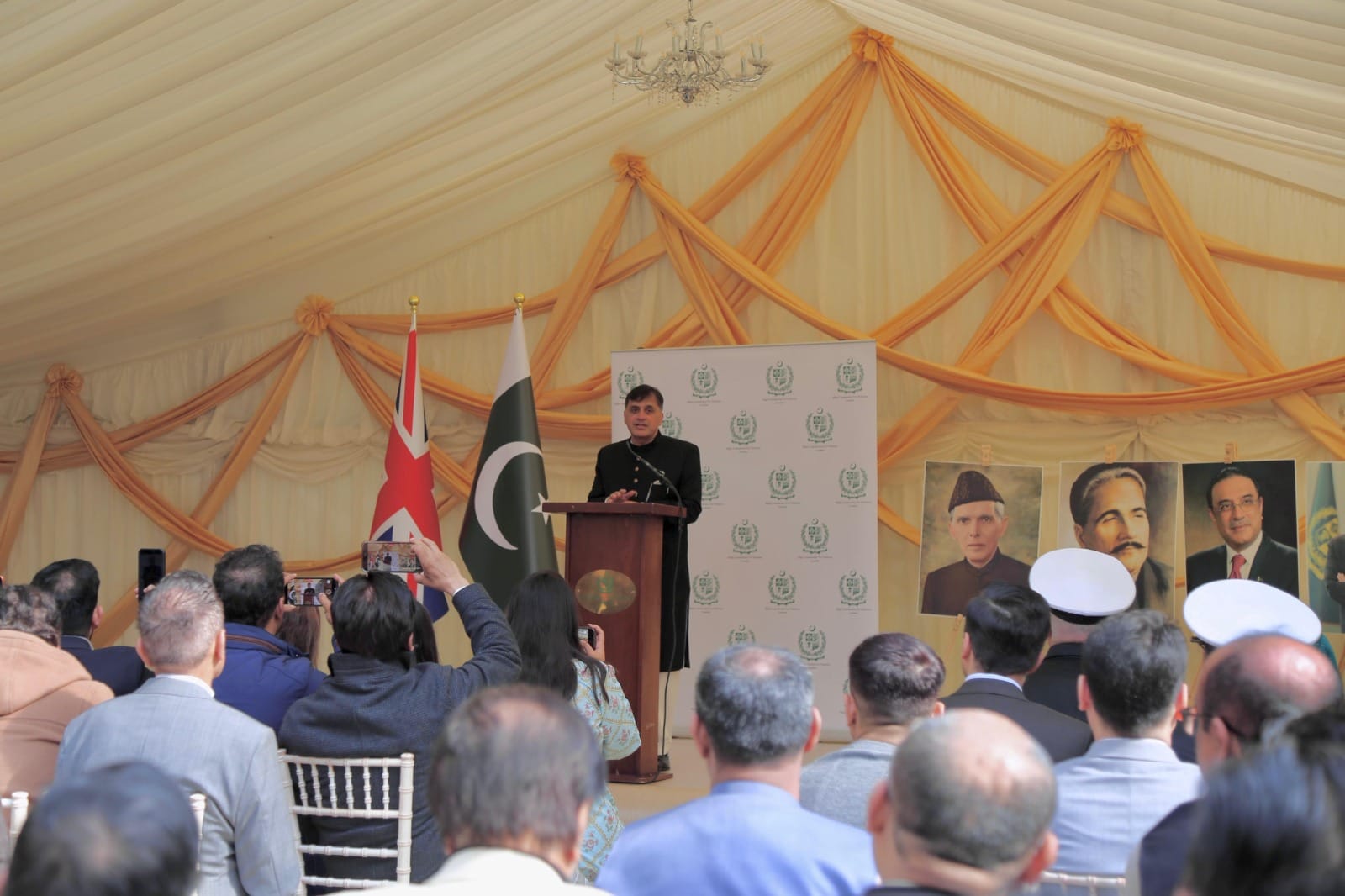
In his keynote address, the High Commissioner said that Pakistan Day was a tribute to our founding fathers who united the Muslims of Indian sub-continent where they could live independently as a Nation and live according to their customs & traditions.
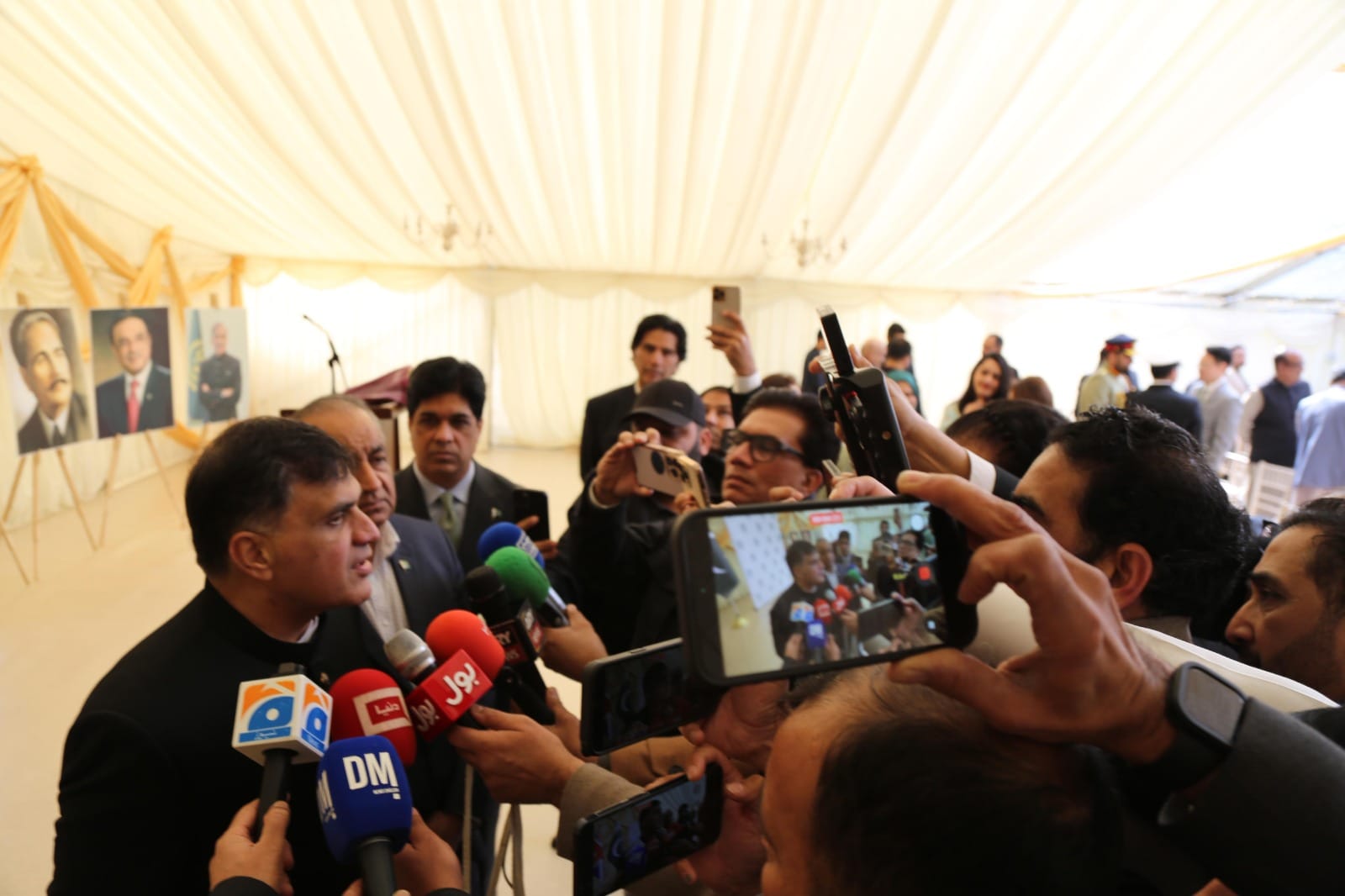
Dr. Faisal stated that Pakistan had always professed peace and stability in the region. However, Pakistan will not tolerate any aggression from neighbouring countries.
The High Commissioner said that Pakistani nation, despite the difficulties, remains resilient and demonstrates courage & perseverance.
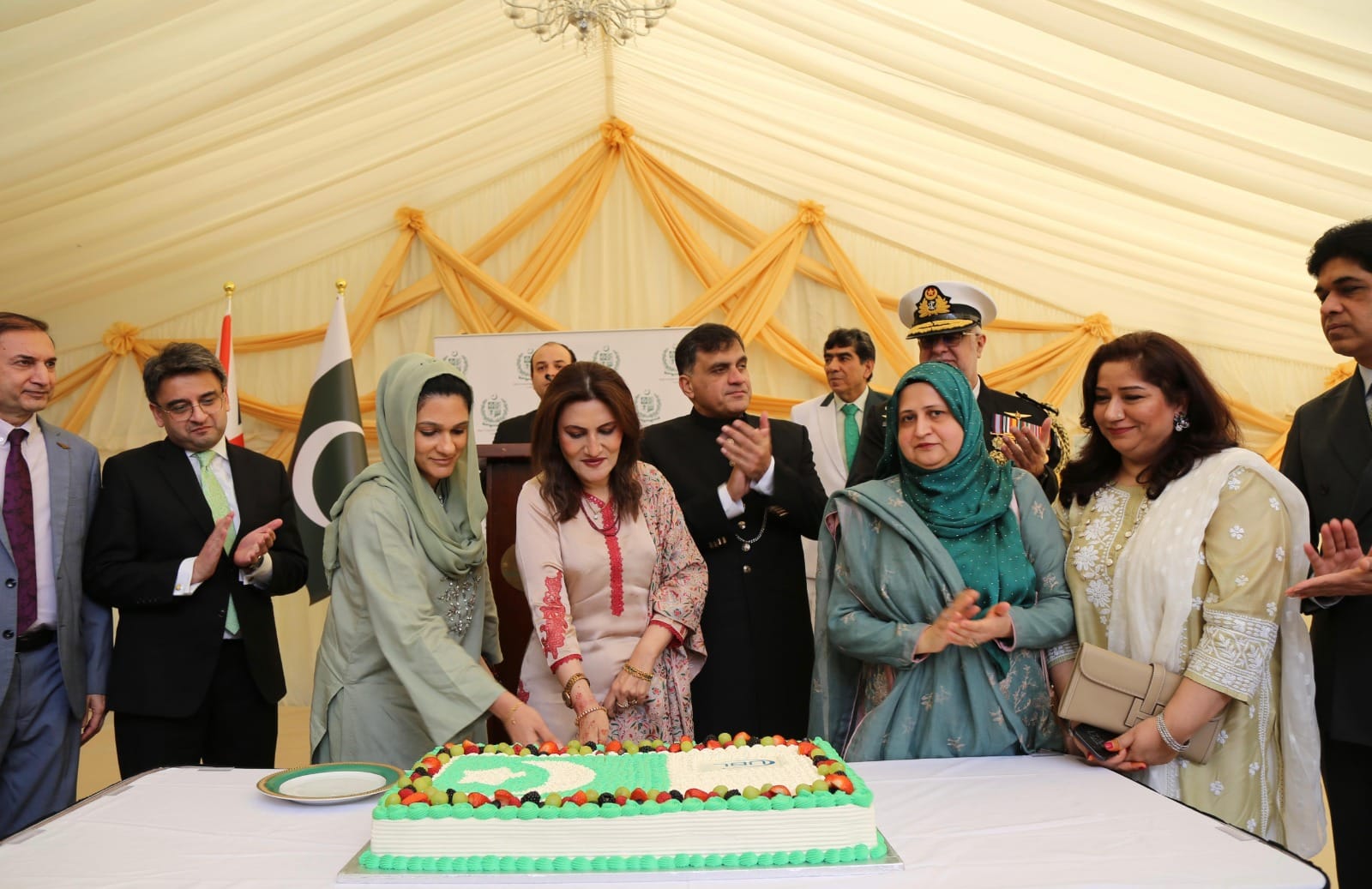
Dr. Mohammad Faisal stated that, in line with the instructions of the Prime Minister, the Deputy Prime Minister / Foreign Minister and the Federal Cabinet, Pakistan High Commission London is implementing strict austerity measures. However, these measures will not affect the performance & working of the High Commission.
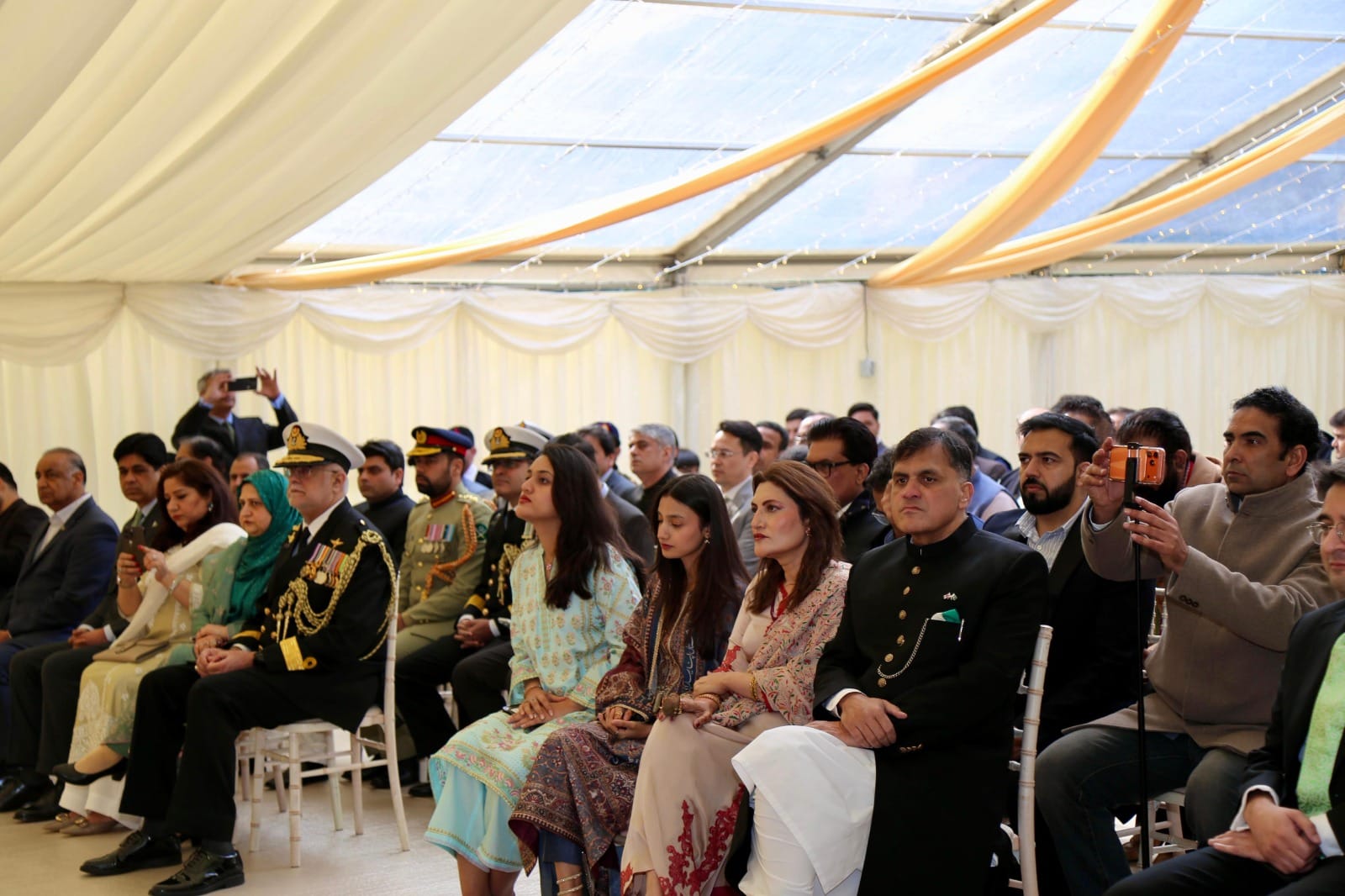
He acknowledged the remarkable contributions of Pakistani diaspora in UK and their extraordinary performance in various fields. He said that their achievements are a source of immense pride for Pakistan.
The High Commissioner expressed solidarity with the people of Indian Illegally Occupied Jammu and Kashmir and committed to continue diplomatic, moral and political support for their right to self determination under UN Resolutions.
London
23rd March, 2026


How the World Is Forced to Fund the Iran War

Scholars Urge UN to Protect Iran’s Scientific Sites Amid Airstrikes Global Academics Warn Attacks Threaten Research, Health, and Civilian Safety

How Iran Humiliated U.S. and Israeli Power


-

 Europe News1 year ago
Chaos and unproven theories surround Tates’ release from Romania
-

 American News1 year ago
Trump expands exemptions from Canada and Mexico tariffs
-

 American News1 year ago
Trump Expels Zelensky from the White House
-

 Pakistan News9 months ago
Comprehensive Analysis Report-The Faranian National Conference on Maritime Affairs-By Kashif Firaz Ahmed
-

 American News1 year ago
Zelensky bruised but upbeat after diplomatic whirlwind
-

 Art & Culture1 year ago
The Indian film showing the bride’s ‘humiliation’ in arranged marriage
-

 Pakistan News1 year ago
Can Pakistan be a Hard State?
-

 Art & Culture1 year ago
International Agriculture Exhibition held in Paris