
American News
Trump-Putin Alaska Talks: A Step Toward Peace or a Diplomatic Mirage?

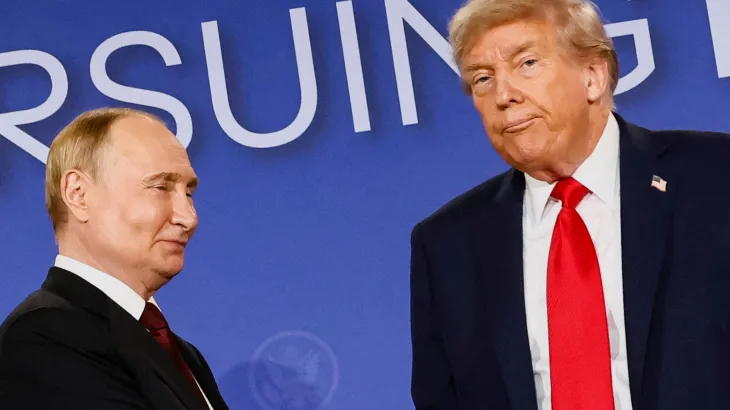
Paris (Imran Y. CHOUDHRY) :- Former Press Secretary to the President, Former Press Minister to the Embassy of Pakistan to France, Former MD, SRBC Mr. Qamar Bashir analysis : The world watched closely as two of the most powerful leaders, U.S. President Donald Trump and Russian President Vladimir Putin, met in Anchorage, Alaska, in a summit that carried the potential to alter the trajectory of one of the deadliest conflicts in Europe since World War II. Flying in from Moscow, Putin was received with a red-carpet welcome at Joint Base Elmendorf-Richardson, where U.S. military aircraft flew overhead in a symbolic display of American strength. The meeting, lasting nearly three hours, was billed by both leaders as “productive,” though the absence of concrete commitments or immediate breakthroughs has left the future of peace in Ukraine uncertain.
From the outset, the talks were historic. Not since Russia’s full-scale invasion of Ukraine in 2022 had a U.S. president sat down face-to-face with Putin. For Trump, the stakes were personal and political. He has repeatedly claimed credit for halting or preventing six major wars during his political career—citing his involvement in easing tensions between India and Pakistan, preventing escalation between Thailand and Cambodia, and defusing what could have been a catastrophic war between Israel and Iran. His record also includes brokering a ceasefire between Armenia and Azerbaijan, which earned him endorsements for the Nobel Peace Prize from leaders in both countries. Trump has made it clear: if he can secure even a significant step toward ending the Russia-Ukraine war, he believes he would be deserving of the Nobel Peace Prize.
Yet, despite the symbolism, the Alaska summit produced no agreement to resolve or pause Moscow’s war in Ukraine. Trump himself admitted, “There’s no deal until there’s a deal,” while adding that “many, many points” had been agreed upon, with “a couple of big ones” still unresolved. The “Pursuing Peace” backdrop behind the two leaders sent an optimistic message, but the details remained elusive. The Ukrainian leadership, notably absent from the meeting, has made it clear they will not concede territory or accept a settlement that legitimizes Russia’s control over nearly a fifth of their land. Ukrainian President Volodymyr Zelenskiy has also called for a U.S.-backed security guarantee, making any unilateral U.S.-Russia arrangement politically unviable without Kyiv’s buy-in.
This is where Trump’s approach diverged sharply from European and Ukrainian expectations. By engaging directly with Putin without the presence or consent of Ukraine or European allies, Trump assumed a mediating role that risked alienating key stakeholders. In his own words, he was “not here to negotiate for Ukraine” but to “get them at a table.” However, replacing one major party in a conflict with an external power—even one as influential as the United States—has rarely produced lasting peace without eventual multilateral engagement.
Putin, for his part, called the meeting a “reference point” for restoring pragmatic U.S.-Russia relations and insisted that the “root causes” of the conflict must be addressed for any long-term settlement. This language, familiar to anyone following the war, underscores Moscow’s unwillingness to agree to a ceasefire without substantial concessions. As the leaders spoke, the war raged on: air raid alerts blared across eastern Ukraine, and Russian governors in Rostov and Bryansk reported Ukrainian drone attacks. The optics of diplomacy were starkly undercut by the reality of ongoing violence.
For Europe, the meeting was an unsettling reminder that its security could be negotiated over without its direct involvement. European leaders, aligned with Zelenskiy in their opposition to any premature freeze of the conflict, were quick to express skepticism. Czech Foreign Minister Jan Lipavsky welcomed Trump’s efforts but doubted Putin’s sincerity, noting that Russian forces had continued attacking Ukraine even as the summit took place. The fear in European capitals is that Trump might seek a “quick fix” deal that sacrifices Ukraine’s territorial integrity for the sake of ending hostilities on paper.
Still, there is a pragmatic argument to be made for not dismissing the Alaska talks outright. If any understanding between Trump and Putin could lead to a verifiable ceasefire, guarantee Ukraine’s security, and offer Europe a stable security framework, it would be worth exploring. This would require Kyiv and European governments to set aside political pride and assess the proposals based on merit rather than the process by which they were reached. Given the deep divisions between Trump and Europe on other issues—including Gaza, where Europe has taken a markedly different stance from Washington—the temptation to reject any Trump-brokered deal is strong. Yet peace, if achievable, should transcend personal and political grievances.
Trump’s diplomatic résumé is as polarizing as it is unusual. While some credit him with preventing conflicts, others argue that his domestic policies—on immigration, healthcare, and U.S.-Canada relations—undermine his credibility as a global peacemaker. His handling of the Gaza conflict, where critics accuse him of enabling Israeli Prime Minister Benjamin Netanyahu’s military campaign, has drawn condemnation from much of the international community. In Gaza, thousands have been killed, with civilians—including children and the elderly—bearing the brunt of the violence. The region has been turned into what many describe as an “open prison” and a “death trap.”
If Trump were to use the same leverage he claims to have over Netanyahu to halt the Gaza war, his Nobel Peace Prize prospects would be significantly enhanced. Without that, his candidacy will remain a point of fierce debate. Nevertheless, the Alaska summit shows that Trump is willing to insert himself into high-stakes global conflicts, even at the risk of bypassing traditional diplomatic channels.
The reality, however, is that the Alaska meeting has so far delivered little tangible progress. No ceasefire, no formal commitments, and no agreed-upon next steps toward a trilateral summit involving Zelenskiy. Ukraine’s opposition figures, such as lawmaker Oleksiy Honcharenko, have already characterized the outcome as a win for Putin, arguing that the talks have simply bought Moscow more time. Without concrete deliverables, the meeting risks being remembered more for its optics than its outcomes.
That said, the possibility remains for Europe and Ukraine to engage later, should any framework emerge from Trump-Putin discussions that could realistically lead to peace. In such a scenario, setting aside ego and geopolitical point-scoring in favor of pragmatic diplomacy could save countless lives. The stakes are monumental—not only for Ukraine and Europe but for the credibility of international conflict resolution in an era when wars seem increasingly resistant to traditional diplomacy.
In the end, the Alaska summit may be less about the immediate cessation of hostilities and more about testing the waters for a new phase in the U.S.-Russia relationship. Whether this phase leads to a genuine peace process or simply becomes another chapter in the long list of failed mediation attempts will depend on whether all relevant parties—Ukraine, Europe, the U.S., and Russia—can find common ground. For now, the war grinds on, and the window for diplomacy remains precariously narrow.











Paris (Imran Y. CHOUDHRY) :- Former Press Secretary to the President, Former Press Minister to the Embassy of Pakistan to France, Former MD, SRBC Mr. Qamar Bashir analysis : Watching television in Michigan, I hear one election advertisement after another describe an opposing candidate as dangerous. The names change, the parties change, but the warning remains. Across the advertisements I encounter, nobody seems to be spared. If these campaigns are to be believed, Americans are preparing to send dangerous people into the House and Senate. What, then, will become of the country and the families whose future these representatives will decide?
Before coming to the United States, I associated such relentless mudslinging largely with developing countries. In Pakistan, I had watched political differences descend into insults, allegations of betrayal and character assassination. I expected greater restraint from an established democracy. Instead, I have encountered a familiar practice supported by an exceptionally powerful advertising industry.
One candidate appears as a threat to public safety, another as a servant of wealthy interests, another as fundamentally dishonest. Then the next commercial reverses the accusation. The person presented as the country’s protector becomes its supposed danger when the opponent’s advertisement begins.
The audience faces an unsettling dilemma. Accept these portrayals and distrust the people seeking office; reject them and question the honesty of those financing the messages. Either response can weaken confidence in politics. A candidate may win an election while helping destroy the credibility needed to govern afterwards.
The attacks extend into debates, rallies and social media. The Hill’s October 25 account of seven particularly bitter campaign moments documents exchanges across states and parties. In Ohio, Vivek Ramaswamy’s campaign featured Amy Acton’s estranged mother calling her daughter a liar. In Texas, attacks on James Talarico targeted his masculinity, former veganism and supposed sexuality. Such personal ridicule tells voters little about governing ability.
In Georgia, Jon Ossoff called Mike Collins a bigot and invoked Nazi imagery over his office’s staffing, amid controversy about antisemitic posts by people connected to Collins. Collins condemned racism and antisemitism. In Maine, Troy Jackson told Susan Collins to “shut up” after she attributed a debate interruption to one of his supporters; Jackson denied knowing the protester.
Michigan provided examples within and between parties. Mike Rogers sought to associate Abdul El-Sayed with the Muslim Brotherhood, which El-Sayed disavowed. During the Democratic primary, Haley Stevens faced online mockery of her appearance and voice. El-Sayed himself disparaged her speaking ability before later urging supporters to stop personal mockery and focus on issues.
In Ohio’s Senate contest, Sherrod Brown and Jon Husted each invoked the other’s donations from people linked, closely or loosely, to Jeffrey Epstein. FactCheck.org identified omissions in both presentations. Financial relationships merit scrutiny, but an insinuation of shared guilt can travel much further than the evidence supporting it.
These incidents are not interchangeable. Criticism of documented misconduct differs from religious insinuation; an insult differs from a criminal accusation. Nevertheless, responsibility for truthful, proportionate campaigning belongs to every party. The standard must follow the conduct, whoever engages in it.
Nor should genuine misconduct disappear behind complaints about mudslinging. The House Ethics Committee found inappropriate conduct by Republican Chuck Edwards towards female staff members and announced a review of allegations involving Republican Max Miller, who denies abuse accusations. Democratic politician Sheila Cherfilus-McCormick has faced charges over the alleged diversion of $5 million in disaster funds, including money allegedly used for campaigning. She has denied wrongdoing.
An ethics finding, an investigation and a criminal charge represent different stages of accountability. None should be misrepresented. Parties must resist both manufactured disgrace and the protection of misconduct. Faster, fairer investigations, safeguards against retaliation and clear public findings would help voters distinguish substantiated concerns from electoral insinuation.
The resources shaping public impressions are enormous. AdImpact data analysed by the Wesleyan Media Project recorded Senate advertising expenditure of $56.95 million in Michigan, $90.21 million in Ohio and $112.58 million in Texas between September 8 and 27. Outside groups supplied approximately 69, 77 and 83 percent respectively. These totals cover all advertising, not exclusively attacks, but demonstrate the scale of the contest for public attention.
Corporate interests, wealthy donors and advocacy organisations all deserve scrutiny. AIPAC and its affiliated United Democracy Project belong within that examination, alongside other influential groups. Voters should know who pays for political messages, what interests sponsors advance and whether candidates’ commitments serve their constituents.
The law must also be described accurately. Foreign governments cannot lawfully finance American election campaigns. Corporations generally cannot contribute treasury funds directly to federal candidates, although eligible corporate funding can support independent spending through super PACs. Foreign-agent registration does not override election-finance restrictions. Enforcing these rules and improving transparency are essential to meaningful public oversight.
My experience in public service suggests a troubling contrast. Military personnel, bureaucrats, lawyers and corporate leaders often protect their professions’ standing despite internal disagreements. Politicians repeatedly damage their collective reputation for individual advantage. Yet professional solidarity must never become a shield against accountability. What deserves protection is the integrity of public service, not immunity for those who abuse it.
Both major parties should adopt a public campaign code with meaningful internal consequences. Serious factual accusations should carry accessible evidence. Religious identity, appearance and family vulnerability should not become substitutes for evaluating public conduct. False claims should receive prominent corrections, and candidates should repudiate misleading outside advertisements supporting them.
Criticism cannot reasonably wait for a criminal conviction. Journalism and public scrutiny often uncover wrongdoing before courts act. The necessary discipline is accuracy: distinguish association from complicity, allegations from findings, and policy disagreement from hostility towards the nation. Congress should strengthen disclosure and enforcement within constitutional protections for political speech.
A vibrant democracy should continually refine its practices. Elections should test whether candidates understand the problems confronting their communities, states and country. Integrity is indispensable, but voters must also assess competence, judgement and the ability to turn promises into results. A clean reputation alone does not establish the capacity to govern.
Candidates should explain what they intend to accomplish, what it will cost, which powers their office actually provides and when citizens can expect progress. Plans for affordable healthcare, reliable infrastructure, safer neighbourhoods and stronger public services should include measurable goals and realistic deadlines. Legislators should specify the laws, funding and oversight they will pursue rather than promise outcomes they cannot deliver alone.
That is the standard a mature democracy should set for itself and offer to the world. Families deserve representatives who make their country stronger, safer and more prosperous, and who can be judged against commitments made before election day.
Calling every opponent dangerous cannot answer those needs. America’s candidates should tell voters how they will solve the country’s problems and accept responsibility for the results. The lasting measure of an election is not how thoroughly its contestants destroy one another, but how well its winners serve the people.

Paris (Imran Y. CHOUDHRY) :- Former Press Secretary to the President, Former Press Minister to the Embassy of Pakistan to France, Former MD, SRBC Mr. Qamar Bashir analysis : For households, however, both principal and interest still have to be found each month. Principal repayment may build ownership, but it cannot simultaneously buy groceries or meet an emergency. The family lives through cash flow, not accounting classifications.
Then comes the subscription economy. EMARKETER forecast $46.4 billion in U.S. paid retail membership fees for 2025. Shopping clubs sell access to savings; software sells continued access to tools; streaming platforms sell entertainment; newspapers and magazines sell information; security businesses sell monitoring and reassurance.
Our research identified approximately $56.66 billion in separately reported worldwide subscription revenue across just seven companies for their annual periods labelled 2025: Adobe, Disney’s entertainment streaming business, SiriusXM, Dropbox, Peloton, The New York Times’ digital products and Duolingo. Spotify separately reported €15.35 billion in Premium revenue.
Netflix reported $45.18 billion in worldwide revenue, predominantly from memberships but also including advertising and other sources. Amazon’s $49.62 billion subscription-services category combined Prime and other digital subscriptions. Newspapers beyond the Times, magazines, tabloids, other apps and private platforms add further charges. OnlyFans illustrates another variation: approximately $7.2 billion in worldwide customer payments in fiscal 2024 generated about $1.41 billion in platform revenue, with payments encompassing more than subscription fees.
These figures cannot honestly be added into a single measure of American household extraction. They cover different countries, reporting periods and revenue definitions, and some overlap. Their significance lies in the breadth of the business model: an increasing range of activities carries a continuing payment obligation.
The consequences of this structure became personal when my family moved from Pakistan to Michigan. In Pakistan, I could educate my children, meet household expenses, pay my dues and still save for the future. In the United States, several members of my family work, savings accumulated over a lifetime continue to supplement our earnings, and the month still ends with little room to breathe. The American dollar is stronger. Our household’s financial security feels weaker.
Since moving to the United States in 2025, I have experienced how a higher-earning economy can leave a working household with less financial breathing room.
After a career in public service, my income in Pakistan provided purchasing power that its dollar equivalent—roughly $1,500 to $1,800 a month by my recollection—fails to convey. I could meet an education bill of approximately Rs100,000 for my two children, buy groceries, obtain medical care and maintain a reserve for unforeseen expenses. Over the years, I also built assets intended to protect my wife, my children and myself.
Today, my wife works two jobs. I work, and our 18-year-old daughter and 16-year-old son also work. Yet the combined effort of our household, supplemented by savings brought from Pakistan, has not produced the financial comfort we expected.
Groceries, by my estimate, account for only about 10 to 15 percent of our spending. Our son attends public school, while our daughter’s education is being financed through a loan. That loan postpones a burden; it does not make education free. The remaining income is absorbed by housing, utilities, transportation, insurance, debt payments, memberships and other recurring charges. We are working to keep the account current, while the future waits.
My experience cannot represent every Pakistani or American household. My professional standing and accumulated assets mattered in Pakistan; migration created new costs in America. Pakistan’s lower-paid workers face severe hardship, and affordable care is neither universally available nor consistently adequate. But those differences do not invalidate the question our experience raises: why does a family require so many earners merely to maintain an ordinary life in a wealthy country?
My experience in Pakistan was different. Many routine medical consultations, medicines and vehicle repairs could be paid from ordinary savings. Lower wages and operating costs help explain that difference; it cannot all be attributed to corporate conduct. Still, the practical consequence matters: an affordable repair lets a household solve a problem directly. An unaffordable repair can turn the same problem into a financing agreement, a protection contract or another claim on future income.
An optional streaming service is not equivalent to necessary medical treatment. Cancelling subscriptions can help a budget. But cancelling entertainment cannot repair an unaffordable housing market, make a car-dependent commute disappear or bring hospital prices within reach. Advice to economize becomes inadequate when it treats small discretionary charges as the main explanation for structural costs.
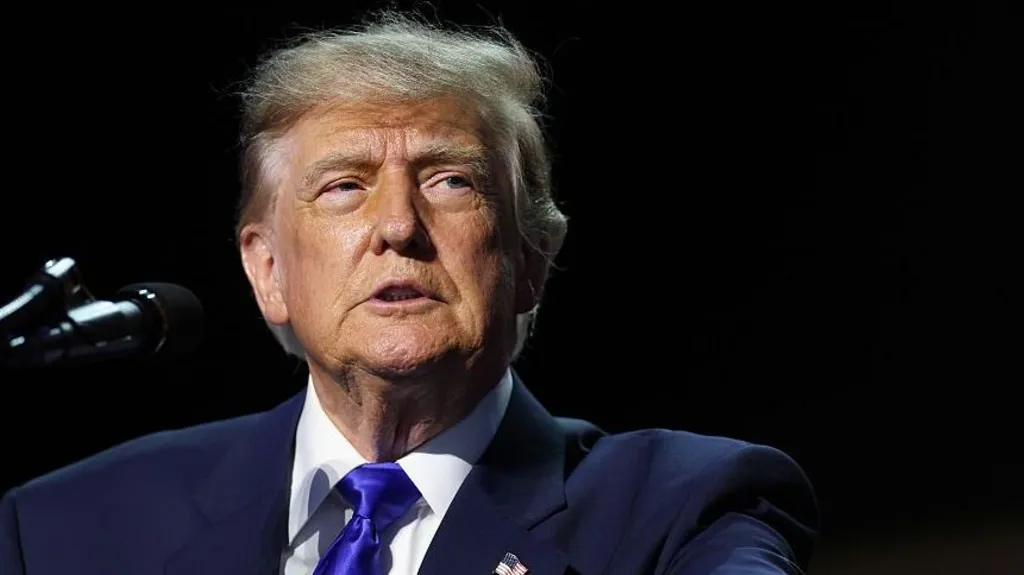
Donald Trump has recognized the political force of that pressure. In January 2026, his administration proposed a healthcare framework addressing drug prices, insurance accountability, middlemen and price transparency. Those proposals acknowledge that Americans face serious affordability problems. Announcing them, however, is different from delivering household relief.
The test of Trump’s economic leadership must be the money and security left with families after essential bills are paid. Corporate growth and rising asset values cannot substitute for that test. If several members of a household must work while long-accumulated savings are consumed simply to remain current, declarations of prosperity do not describe that household’s reality.
Discipline must begin where costs are largest: healthcare pricing, housing supply and financing, transportation, insurance and expensive consumer debt. Competition rules should confront abusive market power. Medical prices should be understandable before treatment where feasible. Insurance should provide clear coverage and fair claims handling. Repair markets should offer affordable alternatives. Subscription cancellation should be as straightforward as enrolment. Public transport should make employment possible without multiplying vehicle costs.
These reforms would preserve useful services while challenging prices and practices that leave families dependent and financially exposed. The objective should be a household capable of saving, choosing and planning.
I did not bring a lifetime of savings to America merely to watch it disappear between payment deadlines. I came with the hope that work would improve our security and give our children a stronger future.
A prosperous country should allow that hope to survive the monthly bills. When parents work, teenagers work and savings still shrink, the measure of success must extend beyond the balance sheets of the companies collecting the payments. The American promise must be judged by what remains in the household—and what that household can still hope to become.

Paris (Imran Y. CHOUDHRY) :- Former Press Secretary to the President, Former Press Minister to the Embassy of Pakistan to France, Former MD, SRBC Mr. Qamar Bashir analysis : Across America, millions of households are working to exhaustion while banks, insurers, lenders and corporate platforms collect their share before the family can put anything aside. The mortgage falls due. The car payment follows. Insurance premiums, utility bills, credit-card interest, protection plans and subscriptions arrive in succession. By the time the household has paid for the right to remain housed, mobile, connected and protected, little may remain for savings, a child’s education or a secure retirement. Work continues; financial freedom retreats.
At the other end of these payment chains, wealth accumulates on a scale almost impossible for an ordinary wage earner to imagine. The contrast is stark: families calculate which bill can wait, while the fortunes at the top expand by billions. America has become extraordinarily successful at creating immense private fortunes. Its greater failure is allowing so many people who sustain that prosperity to live with persistent financial insecurity.
Forbes’ March 2026 ranking placed 15 of the world’s 20 richest people in the United States. Its September assessment valued America’s 400 wealthiest people at a combined $8 trillion, up from $6.6 trillion a year earlier. The richest 20 Americans alone held approximately $4 trillion. Those estimates measure assets, not cash taken directly from households, but they reveal the extraordinary concentration of economic power at the summit.
Meanwhile, the Census Bureau counted 34.5 million Americans below the official poverty line in 2025, or 10.2 percent of the population. Its broader Supplemental Poverty Measure, which accounts for taxes, benefits and expenses including medical and work costs, put poverty at 13.1 percent. Financial insecurity extends beyond these thresholds. A household can earn too much to be classified as poor and still have too little left after essential bills to withstand illness, unemployment or a major repair.
That is the dividing line this article examines: the difference between earning an income and retaining enough of it to build a life. The Federal Reserve found that 91 percent of adults were concerned about prices in 2025. Only 63 percent said they could cover a $400 emergency entirely with cash or its equivalent, and 26 percent reported skipping medical care because of cost. A wealthy national economy can coexist with deeply insecure household budgets.
The pressure is cumulative. Housing ties income to rent or a long mortgage. Employment may require a car, which brings financing, insurance, fuel and repairs. High medical prices make protection indispensable, yet insurance itself requires premiums and may leave further out-of-pocket bills. Credit covers the shortfall and creates another interest charge. Subscriptions and service contracts then add smaller claims on what remains. Each institution sees its own transaction; the family must survive their combined demand.
The question is how much income a household can retain after buying the necessities of participation in American life. When essential services become increasingly expensive and access depends on continuing payments, corporate revenue can rise while the people supplying that revenue lose their capacity to save.
Housing is the first claim on income. According to the U.S. Census Bureau, median monthly owner costs for households with a mortgage reached $2,035 in 2024, including selected costs such as insurance, taxes and utilities. Median gross rent was $1,487. These are national figures; individual households can face much higher bills. Before a family purchases food or saves for a child, shelter has already taken a substantial share of its earnings.
Transportation creates another chain of obligations. Where we live and work in Michigan, available public transport does not adequately connect our family’s different workplaces and schedules. Four people travelling in different directions can create pressure for several vehicles. Each brings some combination of a purchase payment, fuel, registration, repairs and insurance. Transportation becomes part of the cost of holding a job.
Michigan requires no-fault insurance for vehicles driven legally. A lender may also require additional protection for a financed car. Homeowners insurance is generally a mortgage condition, while life insurance, extended warranties and shopping memberships are ordinarily optional. These distinctions matter. Nevertheless, the household experiences the cumulative bill, regardless of whether each component originates in legislation, a lending contract or a personal decision.
The Bureau of Labor Statistics offers a revealing national comparison. In 2024, housing accounted for 33.4 percent of average consumer expenditure and transportation another 17 percent. Together, they absorbed just over half of spending. Food accounted for 12.9 percent. Our experience of groceries being a relatively small part of the pressure is therefore entirely plausible: the larger burdens often arrive before the shopping begins.
Healthcare makes that pressure more formidable. KFF found that average annual premiums for employer-sponsored family health coverage reached $26,993 in 2025. Workers contributed $6,850 on average, with employers paying the balance. The entire premium does not come directly out of the worker’s paycheck, but the employer’s contribution remains part of the cost of employing that worker.
Even after coverage is purchased, deductibles, copayments and uncovered services may remain. Dental and vision benefits are frequently arranged separately. A family can therefore pay repeatedly for protection and still face a significant bill when it actually needs treatment.
Insurance provides real protection against losses that savings alone may not cover. A year without a claim does not mean the protection had no value. The deeper problem is that when treatment, repairs or replacement become prohibitively expensive, households become increasingly dependent on intermediaries to afford the underlying service. Lowering the price of care would strengthen both insured families and those struggling to obtain coverage.
The scale of the American financial machinery is enormous. The NAIC’s report covering 2024 recorded 6,228 domestic insurance companies and approximately $3.65 trillion in premiums and deposits. That figure includes commercial business, annuities and deposit-type funds; it is neither household spending alone nor industry profit. Yet it demonstrates how much economic activity passes through institutions selling financial protection.
Protection is then sold in additional layers. Industry estimates put U.S. home-warranty providers at 78 businesses and $4.3 billion in revenue in 2024. Auto extended-warranty providers numbered approximately 287 in 2024, with their market estimated at $22 billion in 2025. Appliance, electronics and phone protection plans extend the model further. Their prices may appear modest beside a mortgage, but each is another recurring commitment competing with savings.
Credit supplies relief today by reserving part of tomorrow’s earnings. At the end of 2025, 4,336 FDIC-insured banks and savings institutions and 4,287 federally insured credit unions operated in the United States. Their combined reported net income was approximately $314.4 billion. Their activities include business lending and other services, so this cannot be presented as profit extracted exclusively from households. But it establishes the scale of the institutions through which families finance major purchases and manage shortfalls.
Mortgages require the same accounting discipline. The latest official dataset covered 4,782 institutions reporting 2025 mortgage activity. The Mortgage Bankers Association’s October 2026 forecast put that year’s single-family mortgage originations at approximately $2.1 trillion. The principal advanced is not lenders’ revenue. Interest, fees, servicing and loan-sale income are the relevant earnings streams. United Wholesale Mortgage, for example, originated $163.4 billion in loans in 2025 and reported $3.16 billion in revenue.


The Dawn of Physical, Intimacy and Consciousness Intelligence

Tehran’s Diplomatic Bombshell

Netanyahu’s Electoral Setback: Will Israel Choose War or Diplomacy?

New Chapter for Dragon Boating in Punjab and Khyber Pakhtunkhwa Provincial associations officially set up with sights locked on national competitions and international representation.

South Korea’s Yoo Useong Steps Onto the Global Strongman Stage as World Strongman Federation Professional Athlete

A Survey of Mata-E-Zeest


-
 Pakistan News3 weeks ago
New Chapter for Dragon Boating in Punjab and Khyber Pakhtunkhwa Provincial associations officially set up with sights locked on national competitions and international representation.
-
 Sports5 months ago
South Korea’s Yoo Useong Steps Onto the Global Strongman Stage as World Strongman Federation Professional Athlete
-
 Art & Culture1 year ago
A Survey of Mata-E-Zeest
-

 Europe News2 years ago
Chaos and unproven theories surround Tates’ release from Romania
-

 American News2 years ago
Trump expands exemptions from Canada and Mexico tariffs
-

 Art & Culture2 years ago
Will Snow White be a ‘victim of its moment’? How the Disney remake became 2025’s most divisive film
-

 American News2 years ago
Trump Expels Zelensky from the White House
-

 Entertainment2 years ago
Champions Trophy: Pakistan aim to defend coveted title as historic tournament kicks off today