
war
The Iran War: US and Israel Face Global and Domestic Backlash


Paris (Imran Y. CHOUDHRY) :- Former Press Secretary to the President, Former Press Minister to the Embassy of Pakistan to France, Former MD, SRBC Mr. Qamar Bashir analysis : On June 13, 2025, the world witnessed a dangerous escalation in the Middle East when Israel launched an unprovoked and unilateral strike on Iran, using its advanced F-35 stealth aircraft to bomb high-profile military and civilian targets in Tehran. The attack claimed the lives of senior Iranian commanders, nuclear scientists, professors, and innocent civilians—including women, children, and the elderly. The justification? A vague and baseless accusation that Iran was imminently developing a nuclear weapon.
However, that claim collapsed swiftly. In a decisive response, the Director General of the International Atomic Energy Agency (IAEA) clarified that the attack bore no relation to any IAEA findings. He categorically stated that Iran had not violated its obligations under the Non-Proliferation Treaty (NPT), and that there was no evidence of uranium enrichment reaching weapons-grade levels or any sign of Iran building a nuclear bomb. While acknowledging transparency issues, he emphasized they were not extraordinary when compared to inspections in other countries. The IAEA ultimately declared the Israeli assault a political decision devoid of nuclear justification.
This revelation stripped away the mask. Israel’s motive was never disarmament—it was strategic domination. By dismantling Iran’s infrastructure and decapitating its command structure, Israel aims to replicate Gaza’s plight: a nation crippled, isolated, and humiliated. With unwavering backing from President Donald Trump, Israel seeks to erase Iran as a regional counterbalance once and for all.
President Trump’s role has been duplicitous. His public messaging fluctuates between boasts of “winning with Israel” and threats demanding Iran’s surrender within two weeks—or face annihilation. This erratic behavior is a textbook case of psychological warfare, meant to sow confusion and pressure Iran’s leadership into submission.
Yet no article of the UN Charter, no principle of international law, and no precedent in diplomacy legitimizes one sovereign nation threatening another with total destruction unless it complies. Trump’s threats are not merely provocative—they are imperial commands cloaked in strategic language, a stark violation of international norms.
In stark contrast, the European Union has opted for diplomacy. The UK, France, and Germany have engaged in discussions with Iran’s Foreign Minister, seeking a peaceful exit from the crisis. Iran, however, has drawn a firm red line: negotiations are off the table until Israel halts its aggression. Until then, Tehran vows to defend its sovereignty, dignity, and freedom with full force.
This divergence in response reflects a broader shift—power is no longer concentrated in Washington alone. New centers of global influence are emerging, and not all are aligned with U.S. militarism.
Russia, long a traditional ally of Iran, has opted for neutrality. Preoccupied with its prolonged war in Ukraine—a conflict sustained by NATO and U.S. support—Moscow cited the absence of any formal military pact with Iran as the reason for abstaining. This silence is significant: even Russia refuses to be dragged into a conflict ignited by Tel Aviv and fanned by Washington.
Meanwhile, China is executing a more calculated strategy. From Iraq to Libya, Syria to Afghanistan, Beijing has observed that every U.S.-led war depletes American economic, political, and military capital. The more America bleeds, the more China surges. Beijing’s neutrality is not weakness—it is strategic wisdom. Let Washington entangle itself in yet another endless war while China accelerates its rise as a global superpower.
In this unfolding geopolitical drama, China quietly emerges as the silent victor—building trade alliances, fostering diplomacy, and projecting power without firing a single shot.
In a significant yet understated development, President Trump held a closed-door meeting with Pakistan’s Army Chief, Field Marshal Asim Munir, bypassing civilian leadership. While the official statement was vague and devoid of substance, the timing speaks volumes. With the conflict expected to escalate, the U.S. may seek Pakistani cooperation—covertly or overtly—for ground operations in the region. Though deeply unpopular among Pakistanis, such decisions often lie with military and intelligence agencies, not public will. This potential alignment poses grave risks for Pakistan, as any role against Iran could invite retaliatory strikes on major Pakistani cities. In this context, it is Pakistan—not just the U.S.—that must tread with extreme caution.
Domestically both Israel and USA are faced with severe public backlash. Ironically, as Israel claims to be acting in the interest of Jewish security, many Jews around the world now feel that jews are more safe in rest of the world than in Israel. A prominent Jewish leader in the UK declared recently that he had always felt safe in Britain, but now views Israel as one of the most dangerous places on Earth for Jews.
Across American social media platforms—from X to Facebook to TikTok—citizens are loudly protesting the use of their tax dollars and military lives for what they perceive as an Israeli war, not an American one. There is no congressional consensus, no popular mandate, no NATO support, and no UN resolution. This war is unauthorized, unmandated, and unsupported.
Europe too has shown restraint. Its citizens are weary of endless wars waged under U.S. pressure and driven by Israeli regional ambitions. Governments across the continent are resisting involvement, recognizing the immense human, economic, and moral costs of yet another Middle Eastern quagmire.
As the fog of war thickens, one truth becomes undeniable: Israel and the United States are isolated. Trump’s reckless foreign policy has alienated Canada, fractured Europe, weakened U.S. credibility at the UN, and emboldened adversaries. Meanwhile, China remains the calm observer—watching America deplete itself in yet another unwinnable military adventure.
In a world where legitimacy hinges on law, consensus, and multilateral cooperation, this war has none. It is an illegal act of aggression, risking widespread destabilization across the Middle East and further eroding America’s standing on the global stage.
Let us hope against hope that sanity might still prevail. History is replete with lessons—lessons the United States seems determined to ignore. It invaded Afghanistan in 2001 to overthrow the Taliban and impose its own governance. After two decades of war, trillions of dollars spent, and thousands of lives lost, the U.S. withdrew—only to hand the reins back to the same Taliban it once ousted, departing in humiliation and disgrace.
If the U.S. and Israel now place their boots on Iranian soil, the result will be no different. Even after years—perhaps centuries—of warfare, the endgame will be the same: the Islamic Revolutionary Government will remain. The only difference will be the price paid. America and Israel will have lost more than just a war—they will have squandered legitimacy, global respect, and whatever moral authority they still possess. And with each such misadventure , they grow weaker, while those they sought to destroy grow more resilient.

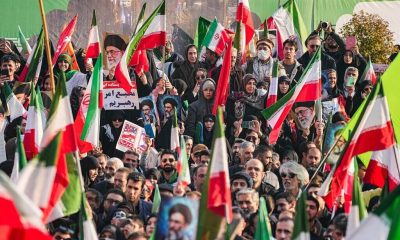
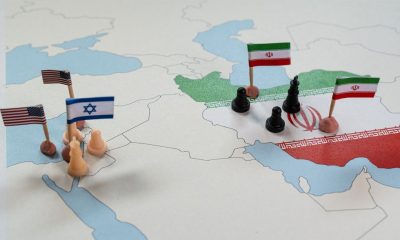



Paris (Imran Y. CHOUDHRY) :- Former Press Secretary to the President, Former Press Minister to the Embassy of Pakistan to France, Former MD, SRBC Mr. Qamar Bashir analysis : The most defining feature of the Iran War is not the missiles, the targets, or even the scale of destruction—it is the silent and systematic transfer of its cost to those who are not fighting it. In an extraordinary display of modern economic engineering, all three principal actors—Iran, United States, and Israel—have structured this conflict in a way that allows them to wage war without bearing its full financial burden. Instead, that burden is being shifted outward to global consumers, trade-dependent economies, and regional allies, transforming a regional conflict into a worldwide economic obligation.
This is what makes the Iran War fundamentally different from traditional wars. Historically, nations financed wars through taxation, borrowing, or internal sacrifice. Today, however, the interconnected nature of the global economy allows powerful states to externalize these costs. Oil prices rise, shipping costs surge, insurance premiums spike, and supply chains tighten—not as unintended consequences, but as embedded mechanisms through which the cost of war is distributed globally. The battlefield may be regional, but the bill is international.
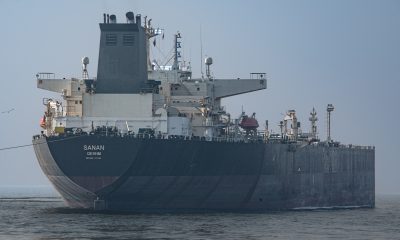
At the center of this economic and strategic equation lies the Strait of Hormuz, the most critical energy chokepoint in the world. A significant portion of global oil, liquefied natural gas, and commercial goods passes through this narrow corridor every day. Control over this passage offers not only military leverage but also unparalleled economic influence.
Current estimates suggest that approximately $1.2 trillion worth of trade flows through Hormuz annually, including around $800 billion in energy shipments and $400 billion in non-energy goods such as fertilizers, chemicals, metals, and manufactured products. A 10 percent toll on this trade would generate roughly $120 billion per year. Such a mechanism would allow Iran, in theory, to recoup the economic damage of war within a single year—not through aid or borrowing, but by leveraging its geographic position within the global trade system.
This is where the economic dimension of the war becomes unmistakably clear. Any increase in shipping costs through Hormuz would be passed on to importing countries, raising energy prices, increasing transportation costs, and fueling inflation worldwide. Consumers in distant nations, far removed from the battlefield, would ultimately bear the financial burden. In effect, the Iran War would be funded not just by those involved, but by the entire global economy.
At the same time, the United States operates within its own system of cost distribution. With daily war expenditures estimated at around $1 billion, a conflict lasting 60 to 70 days would cost approximately $60 to $70 billion. However, much of the U.S. military presence in the region is sustained through security arrangements with Gulf states. These host nations, dependent on American protection, often absorb a significant share of these costs. Thus, the United States projects power while redistributing its financial burden to its allies.
Israel follows a similar model. Its wartime expenditures, estimated in the tens of billions, are largely offset through extensive financial and military support from the United States and allied networks. This support ensures that Israel can sustain prolonged military operations without bearing the full economic impact domestically. In this way, Israel also participates in the broader system of cost externalization.
The result is a striking and deeply troubling paradox. The nations directly engaged in the Iran War are not the ones paying for it. Instead, the financial burden is transferred to a diffuse and largely uninvolved global audience. Energy-importing countries, trade-dependent economies, and ordinary consumers all become indirect financiers of the conflict. The war, in effect, is globalized—not only in its consequences but in its funding.
In addition, the indirect cost transfer is already visible across continents. The biggest burden of the war is not military spending—it is the imported economic shock spreading through energy markets, shipping routes, inflation, and financial systems. Nearly one-fifth of the world’s oil passes through the Strait of Hormuz, and any disruption instantly translates into higher fuel prices, increased freight costs, and cascading inflation worldwide. Countries far removed from the battlefield are paying through rising grocery bills, higher transport costs, and tightening monetary conditions.
The Middle East itself is already absorbing heavy indirect costs. Countries not directly involved in the war are facing fuel price shocks, subsidy burdens, and logistical disruptions. Pakistan, for instance, has raised diesel prices by over 50 percent and petrol by more than 40 percent, while struggling to sustain subsidy programs. India is considering trade restrictions to stabilize domestic markets as energy and freight costs surge. Across the Gulf and surrounding regions, shipping disruptions, stranded vessels, and rising insurance premiums are increasing the cost of doing business, effectively turning the war into a regional economic tax.
Europe is experiencing the same phenomenon through a renewed energy and inflation crisis. Oil prices have surged above $100 per barrel, forcing governments to cap fuel margins, cut taxes, and release reserves to protect consumers. At the same time, inflationary pressure is pushing borrowing costs higher, affecting mortgages, business financing, and household stability. The war’s economic shock is thus embedded not only in fuel prices but in the broader financial architecture of European economies.
For Asia and Africa, the impact is even more severe. Many countries in these regions depend heavily on Middle Eastern energy and trade flows. The war is functioning as a direct economic tax, triggering shortages, subsidy crises, and potential social unrest. African economies, already vulnerable, face slower growth due to rising food, fuel, and fertilizer costs, with projections showing measurable GDP losses if the conflict persists. Across the developing world, the cost of the Iran War is not theoretical—it is immediate, tangible, and deeply destabilizing.
The implications of this model extend far beyond the current conflict. If wars can be structured in such a way that their costs are borne by others, the traditional economic constraints on warfare begin to disappear. This lowers the threshold for conflict and increases the risk of prolonged and repeated wars. The deterrent effect of financial burden—once a powerful force for restraint—is weakened when that burden can be shifted outward.
In the end, the most important question is not who is winning on the battlefield, but who is paying for the war. And the answer is increasingly evident: it is the world at large. Through rising energy prices, disrupted trade, and cascading economic effects, the cost of the Iran War is being distributed across borders and societies, often without acknowledgment or consent.
This is the hidden economy of modern warfare—a system in which power is exercised, destruction is inflicted, and the bill is quietly passed on to others. In such a system, victory is no longer defined solely by military success, but by the ability to fight without paying. And by that measure, the Iran War reveals a profound and unsettling truth: those who wage war have learned how to make the world fund it.
war
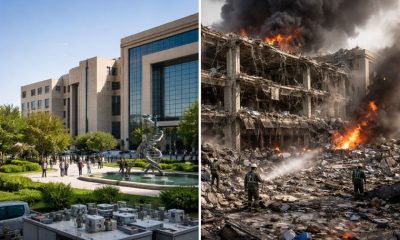
Scholars Urge UN to Protect Iran’s Scientific Sites Amid Airstrikes Global Academics Warn Attacks Threaten Research, Health, and Civilian Safety
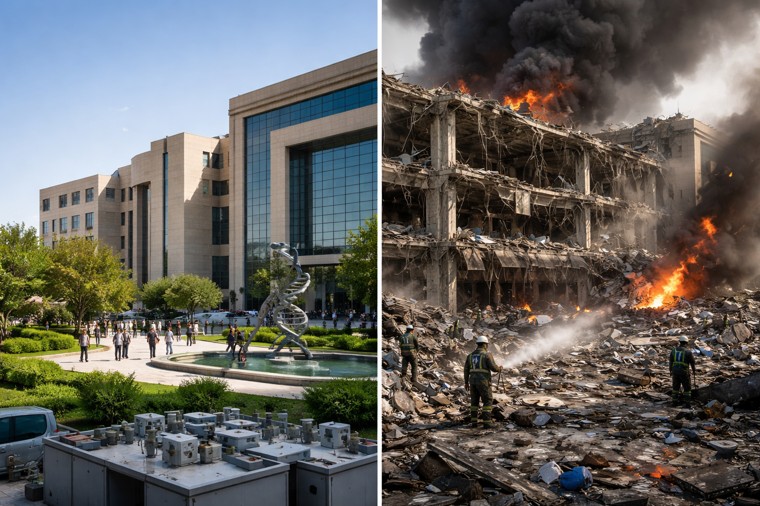
LONDON / GENEVA / PARIS / NEW YORK (Shabnam Delfani) — A broad coalition of academics, researchers, students, and members of the international scholarly community has issued a strongly worded open letter condemning a series of strikes on universities, laboratories, hospitals, and research facilities in Iran, urging immediate international action to safeguard civilian scientific infrastructure amid the ongoing U.S.-Israeli military operations against the country.
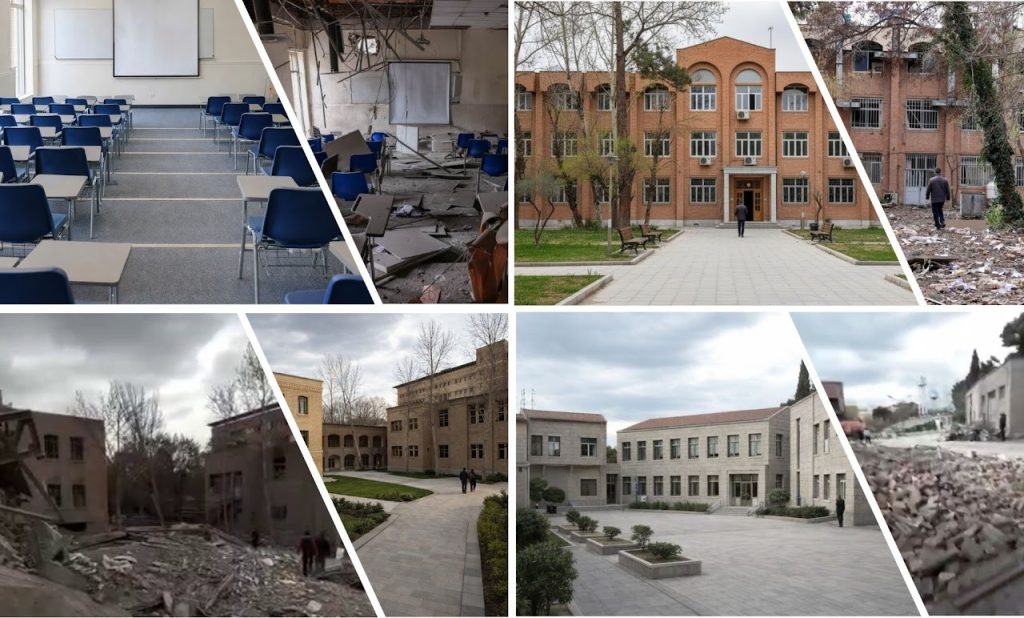
The letter, addressed to United Nations Secretary-General António Guterres, UNESCO Director-General Audrey Azoulay, UN High Commissioner for Human Rights Volker Türk, and the governments of all parties involved, highlights at least 21 reported attacks on scientific and educational institutions. It warns that such assaults endanger researchers, students, medical personnel, and the broader public while inflicting irreversible damage on scientific progress and societal well-being.
Recent strikes between March 28 and 31, 2026, have drawn particular alarm. Attacks targeted Isfahan University of Technology in Isfahan, as well as Iran University of Science and Technology and Amirkabir University of Technology in Tehran. On March 31, one of Iran’s largest pharmaceutical research and development centers, Tofigh Daru (also known as Tofiq Daru), was severely damaged. The facility is a major producer of anesthetics and critical treatments for multiple sclerosis and cancer.
“Scientific and educational institutions are civilian spaces essential to public health, knowledge, and human survival,” the open letter declares. “Their destruction endangers researchers, students, medical personnel, and the broader public, while causing lasting harm to science and society.”
The signatories issue a forceful call for all parties to the conflict to immediately cease attacks on civilian scientific and educational sites, including laboratories, universities, hospitals, research centers, libraries, and archives. They further demand that the United Nations, UNESCO, and other relevant international bodies take concrete steps: thoroughly document the damage inflicted on these institutions, provide protection and support to affected scholars and students, launch independent investigations into potential violations of international humanitarian law, and ensure that those responsible for unlawful strikes on protected civilian infrastructure are identified and held accountable through impartial legal mechanisms.
“Science is not a military target. Universities and laboratories must not become battlefields,” the letter asserts. It concludes with an urgent appeal to the international community to act decisively to protect scientific infrastructure, defend academic life, and uphold the fundamental principle that institutions dedicated to the advancement of knowledge must never be treated as expendable in times of war.
In response to the escalating strikes, Iranian officials have warned of possible retaliation against American and Israeli-linked academic campuses in the region, raising fears of a dangerous widening of the conflict into educational spheres.
The open letter, signed collectively by “academics, researchers, students, and members of the global scholarly community,” underscores the long-standing international consensus on preserving the sanctity of scientific and educational institutions even amid geopolitical tensions and armed conflict. It stresses that safeguarding academic freedom and scientific capacity serves the collective well-being of humanity and must be defended against future assaults.
This appeal comes as reports continue to emerge of significant material damage to Iranian academic and medical research facilities, with some accounts noting injuries among university staff. The global scholarly community’s unified stance reflects growing concern that the targeting of Iranian Scientists and knowledge-producing institutions threatens not only Iran but the broader fabric of international scientific cooperation.
Please Sign: https://docs.google.com/forms/d/e/1FAIpQLSd9yA3741PhNbeae-pWxiNU-buR5PJTgi5lYHXmvB11ZoMybA/viewform
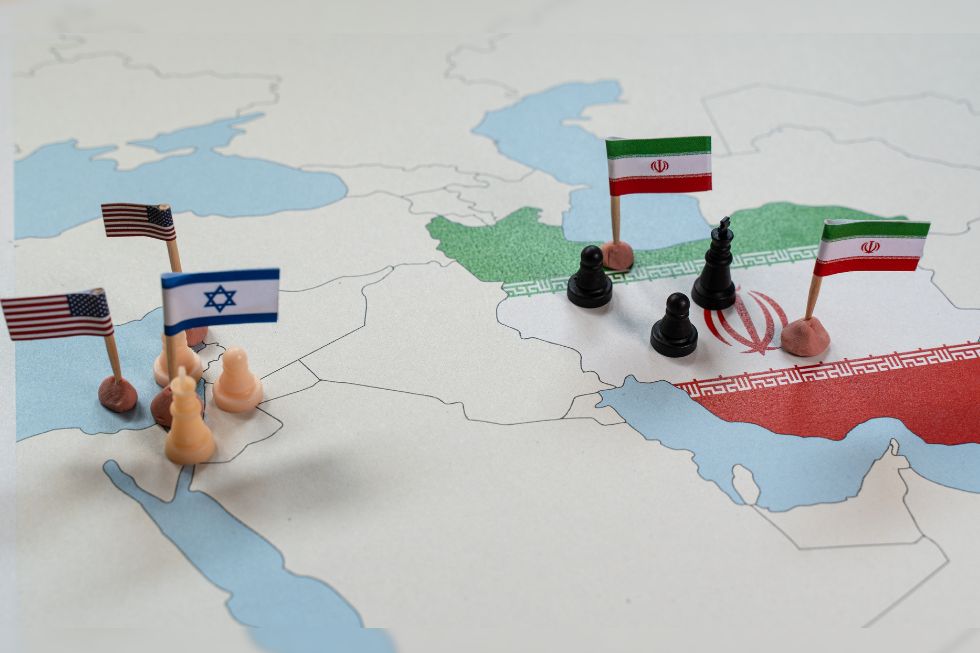
Paris (Imran Y. CHOUDHRY) :- Former Press Secretary to the President, Former Press Minister to the Embassy of Pakistan to France, Former MD, SRBC Mr. Qamar Bashir analysis : The synchronized declarations from Washington and Tel Aviv—that objectives have been achieved and the war is nearing its end—are being projected as victory. Yet the ground reality tells a harsher story. When a war concludes with one side still striking, still deterring, still shaping the battlefield, and still holding the world’s most critical energy artery at risk, declarations of success begin to sound less like triumph and more like an organized exit.
President Donald Trump’s announcement of a withdrawal within weeks, echoed by Benjamin Netanyahu’s claim that the Iranian threat has been neutralized, collides directly with what is unfolding across the region. Iran remains operationally active, strategically coherent, and economically consequential. The Strait of Hormuz remains under pressure, global markets remain unsettled, and U.S. and Israeli deterrence has been openly challenged.
This was a war launched to break Iran. Instead, it has exposed the limits of American and Israeli power. From the outset, the strategy was clear: decapitate leadership, shatter command and control, demoralize the military, and trigger internal collapse. But Iran did not behave like previous targets of such doctrine. It was prepared. Leadership was decentralized. Decision-making was distributed. Authority was layered. Even after successive eliminations of senior figures, the system did not collapse—it adapted. It continued. It responded with discipline and precision.
This was not survival by chance. It was survival by design. Instead of paralysis, there was continuity. Instead of panic, there was proportionate retaliation. Iranian forces did not wait for instructions from the top; they operated with clarity at multiple levels, responding in a coordinated and calculated manner. This single factor alone dismantled one of the core assumptions of the war—that Iran could be broken from the top down.
At the same time, Iran demonstrated a level of strategic reach that redefined the conflict. It struck where necessary, deterred where required, and maintained pressure across multiple fronts. It challenged U.S. positions, responded to Israeli actions, and signaled its ability to extend the battlefield beyond conventional limits. Even the perceived threat to maritime flows in the Strait of Hormuz was enough to shake global confidence, disrupt trade, and push major economies into
While Washington and Tel Aviv adjusted narratives, Iran maintained a consistent posture. It framed itself as resisting aggression, responding proportionally, and defending sovereignty. That narrative gained traction. In modern conflict, perception is power, and Iran captured that domain with striking effectiveness.
What, then, has this war actually produced? For Iran, the gains are unmistakable. It has shattered the myth of American military invincibility. It has broken the perception of Israeli untouchability. It has proven that a sanctioned nation can withstand and counter the most powerful military alliance in the world. It has elevated its status from a constrained regional actor to a central force capable of influencing global economics and geopolitics.
Most critically, it has turned geography into power. By demonstrating its ability to control or disrupt the Strait of Hormuz, Iran now holds leverage over a significant portion of the world’s energy supply. This changes everything. Countries that once supported sanctions must now consider their own survival. Their ships must pass through waters influenced by Iran. Their economies depend on uninterrupted flow.
Sanctions, in this new reality, begin to lose meaning. A country that can influence the movement of global trade cannot be easily isolated. On the contrary, nations may find themselves negotiating with Iran—not from a position of strength, but necessity. The possibility emerges that Iran could impose conditions: removal or dilution of sanctions, economic concessions, and even transit fees on shipping. In effect, the war may have handed Iran the very tool to recoup its losses—by monetizing the artery the world cannot avoid.
For Israel, the losses are equally significant. The aura of invincibility is gone. The ability to act without consequence has been challenged. The assumption of uncontested regional dominance has been exposed as fragile. Israel has not been destroyed, but it has been reduced to size—forced into a strategic reality where every action carries a cost and every escalation invites a response.
This has direct implications for the broader region. In Lebanon, Gaza, and the West Bank, the strategic environment has shifted. The space for unchecked expansion or unilateral military action is narrowing. The vision of dominance now faces a counterweight that is both capable and willing to respond.
For the United States, the implications are even broader. After decades of spending trillions to build the most powerful military machine in history, it now faces a sobering conclusion: superiority does not guarantee victory. A sanctioned nation, isolated for years, has not only survived but imposed costs and shaped outcomes. This is not merely a battlefield setback—it is a blow to credibility, deterrence, and global perception.
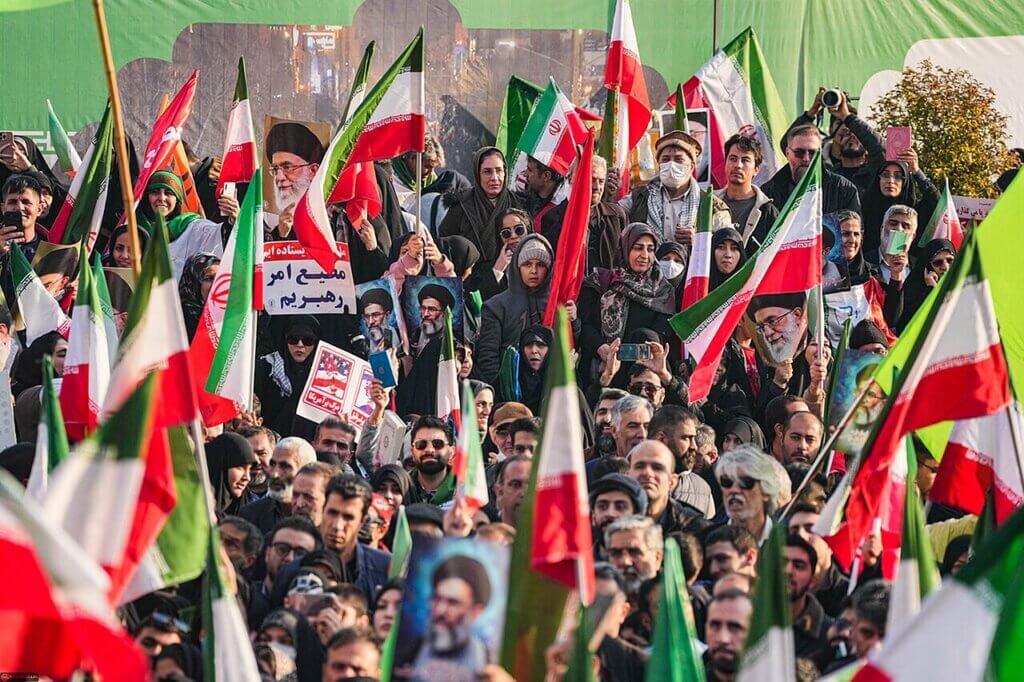
Yet beyond strategy, missiles, and geopolitics, the war has revealed something deeper about Iran itself. The strength of the Iranian system did not lie only in its weapons or its geography, but in its political cohesion and societal resolve. Despite sustained attacks, leadership losses, and economic pressure, the state did not fracture. Its constitutional structure held. Its political hierarchy remained intact. Most importantly, its people did not turn inward—they rallied.
Instead of division, there was unity. Instead of fatigue, there was resolve. Instead of collapse, there was collective resistance. This reflects a nation bound not only by institutions but by identity—by a shared commitment to sovereignty, independence, and the legacy of its revolution. In the face of external aggression, the Iranian population appears to have responded not with fear but with heightened patriotism, reinforcing loyalty to the state and its leadership.
Such moments often define nations. Rather than weakening the system, the war may have strengthened belief in it. Rather than undermining the revolution, it may have reaffirmed its relevance. And with that renewed confidence, a new possibility emerges: that Iran, secure in its strength, may now have both the space and the incentive to pursue internal political reforms while engaging more openly with the global economy—on its own terms, and from a position of power.
Yet even as declarations of withdrawal dominate headlines, the war itself may not be over. The possibility remains that these announcements are tactical—designed to calm global markets, stabilize oil prices, and ease domestic pressures—while leaving room for renewed escalation, including potential ground operations. The United States has, in past conflicts, shifted objectives even after signaling de-escalation. That pattern cannot be ignored.
Iran, for its part, appears prepared for that possibility. But if the withdrawal proves genuine—if escalation does not follow and hostilities truly subside—then the conclusion becomes unavoidable. In that case, the war stands as a strategic victory for Iran: a conflict in which it withstood the combined force of the United States and Israel, preserved its system, expanded its leverage, and reshaped the regional balance of power.
This was a war intended to break Iran. Instead, it has strengthened it. Strengthened its system. Strengthened its people. Strengthened its place in the world. And if this war truly ends here, history will not remember the declarations of victory—it will remember the reality that a nation under pressure did not break, did not bend, and instead emerged more united, more confident, and more powerful than before.


How the World Is Forced to Fund the Iran War

Scholars Urge UN to Protect Iran’s Scientific Sites Amid Airstrikes Global Academics Warn Attacks Threaten Research, Health, and Civilian Safety

How Iran Humiliated U.S. and Israeli Power


-

 Europe News1 year ago
Chaos and unproven theories surround Tates’ release from Romania
-

 American News1 year ago
Trump expands exemptions from Canada and Mexico tariffs
-

 American News1 year ago
Trump Expels Zelensky from the White House
-

 Pakistan News9 months ago
Comprehensive Analysis Report-The Faranian National Conference on Maritime Affairs-By Kashif Firaz Ahmed
-

 American News1 year ago
Zelensky bruised but upbeat after diplomatic whirlwind
-

 Art & Culture1 year ago
The Indian film showing the bride’s ‘humiliation’ in arranged marriage
-

 Pakistan News1 year ago
Can Pakistan be a Hard State?
-

 Entertainment1 year ago
Champions Trophy: Pakistan aim to defend coveted title as historic tournament kicks off today