
war
Israel Hijacks Global Oil Flow

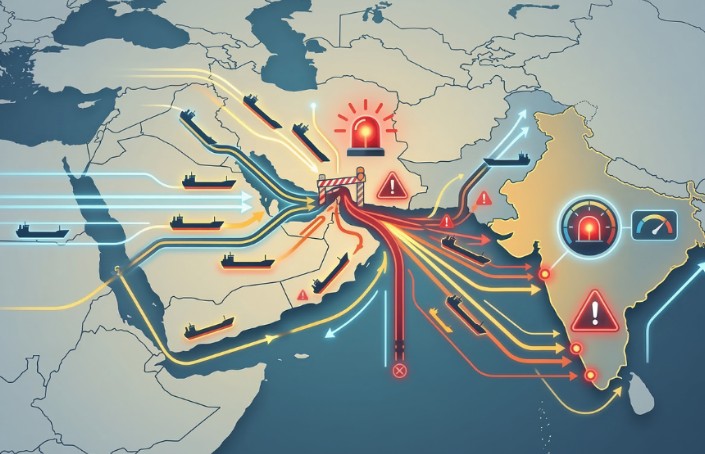
Paris (Imran Y. CHOUDHRY) :- Former Press Secretary to the President, Former Press Minister to the Embassy of Pakistan to France, Former MD, SRBC Mr. Qamar Bashir analysis : The war that has engulfed the Middle East over the past several weeks is no longer merely a confrontation of missiles, drones, and military doctrines. It is rapidly revealing itself as a deeper contest over geography, energy, and long-term global control. Beneath the smoke of bombed installations and the rhetoric of national security lies a far more consequential objective: the redrawing of the world’s most critical energy routes. What began as a campaign justified on the basis of an “imminent threat” from Iran is now unfolding into a strategic effort that could permanently alter how oil flows from the Gulf to the rest of the world.
At the heart of this transformation lies the Strait of Hormuz, the narrow maritime corridor through which nearly one-fifth of the world’s oil supply passes every day. For decades, this chokepoint has served as both a lifeline and a vulnerability for global energy markets. Any disruption here—whether through war, sanctions, or sabotage—immediately reverberates across continents, sending oil prices soaring and economies into instability. The current conflict has demonstrated just how fragile this artery truly is. Tanker attacks, rising insurance premiums, and rerouted shipping lanes have exposed the risks of relying on a single, narrow passage for such a massive share of global oil.
It is within this context that a striking and controversial vision has emerged. Israeli leadership, through a series of statements and strategic hints, has pointed toward the possibility of bypassing the Strait of Hormuz altogether. The idea is deceptively simple yet geopolitically profound: construct a pipeline that would transport oil from Gulf producers across the Arabian Peninsula and into Israel, where it could then be shipped via Mediterranean ports to Europe and beyond. Such a route would eliminate dependence on Hormuz, neutralize Iran’s ability to disrupt global energy flows, and reposition Israel as a central hub in the international oil trade.
While versions of this idea have existed in policy circles for years—most notably through discussions around the Eilat-Ashkelon pipeline—the present war appears to have injected new urgency into its consideration. What was once a theoretical infrastructure project is now being framed as a strategic necessity. The logic is clear: if Hormuz can be disrupted, then it must be bypassed. And if it is bypassed through Israeli territory, then Israel gains unprecedented leverage over the energy lifelines of both Europe and parts of Asia.
This raises a deeply uncomfortable question: was the war itself, at least in part, shaped by this long-term vision? The official justification centered on the notion of an imminent Iranian threat—particularly the fear that Iran might soon develop nuclear weapons and long-range missile capabilities capable of striking Europe or even the United States. Yet, as the conflict has progressed, cracks have begun to appear in this narrative. Statements from U.S. intelligence officials in congressional hearings have indicated that Iran neither possessed the immediate capability to strike the United States nor demonstrated an intent to do so in the near term.
Instead, the threat appears to have been framed in hypothetical terms—what Iran could become, rather than what it currently is. The argument shifted from “imminent danger” to “imagined future risk.” This distinction is not merely semantic; it raises serious questions about the legitimacy of the war itself. If the threat was not immediate, then the rationale for initiating such a large-scale conflict becomes far more questionable.
Against this backdrop, recent military actions take on a different meaning. Strikes on Iranian energy infrastructure, including major gas fields and oil facilities, appear less like isolated tactical operations and more like components of a broader strategic script. By provoking Iranian retaliation—particularly against regional oil installations and shipping routes—the conflict has effectively demonstrated the vulnerability of the Strait of Hormuz. In doing so, it has strengthened the case for alternative routes, including the proposed pipeline through Israel.
Iran, for its part, has responded in a manner that underscores its own strategic leverage. By targeting shipping lanes and signaling its ability to disrupt Hormuz, Tehran has shown that it can impose a global cost for any sustained aggression against it. The result is a paradox: every escalation that threatens global oil supply simultaneously reinforces the argument for bypassing the very chokepoint Iran influences.
Yet the conflict is not confined to economic and strategic calculations alone. It carries within it the risk of a far more dangerous escalation—one rooted in religion and symbolism. Reports of missile debris landing dangerously close to Jerusalem’s most sacred sites, including the Western Wall and the Dome of the Rock, serve as a stark reminder of how quickly this war could transcend geopolitics and ignite a broader global crisis. Had these sites been directly struck, the consequences would have been catastrophic, drawing in millions of believers and transforming a regional war into a wider religious confrontation.
Meanwhile, a subtle but significant divergence appears to be emerging between the United States and Israel. Washington has signaled, through public statements, that it believes major military objectives have already been achieved. Claims that Iran’s military capabilities have been severely degraded suggest a desire to declare victory and potentially de-escalate. Israel, however, has articulated a far more open-ended vision of the conflict. Its leadership continues to emphasize that multiple objectives remain unfulfilled, and that the endgame is still distant.
This divergence is critical. While the United States bears the overwhelming financial and reputational burden of the war—spending billions of dollars, straining alliances, and facing global criticism—Israel stands to gain the most if its long-term strategic goals are realized. The transformation of Israel into a central energy transit hub would not only enhance its economic position but also grant it leverage over countries dependent on Middle Eastern oil.
For the United States, the costs are mounting. Beyond the direct military expenditures, estimated at nearly a billion dollars per day, there is the erosion of credibility. Allies question Washington’s consistency, adversaries exploit its vulnerabilities, and neutral states grow increasingly wary of its intentions. The perception of having entered a war based on speculative threats rather than concrete evidence further undermines its standing.
In contrast, Israel’s potential gains are structural and enduring. Control over a major alternative energy corridor would place it at the center of global oil logistics, allowing it to influence supply, pricing, and strategic alignment. Such a shift would echo historical precedents, where control over key transit routes—whether the Suez Canal or the Strait of Malacca—translated into geopolitical dominance.
As the war continues, the world stands at a crossroads. If the Strait of Hormuz remains unstable and the pipeline vision gains momentum, we may be witnessing the beginning of a new global energy order. One in which traditional chokepoints are bypassed, new corridors are established, and power is redistributed accordingly.
The question is no longer who is winning on the battlefield. It is who will control the pathways through which the world’s lifeblood—its energy—flows. In that contest, the most decisive victories may not be measured in territory captured or enemies defeated, but in pipelines laid and routes redefined.

There is No Way to Peace, Peace is the Way
Akhtar Hussain Sandhu
Chicago (USA)
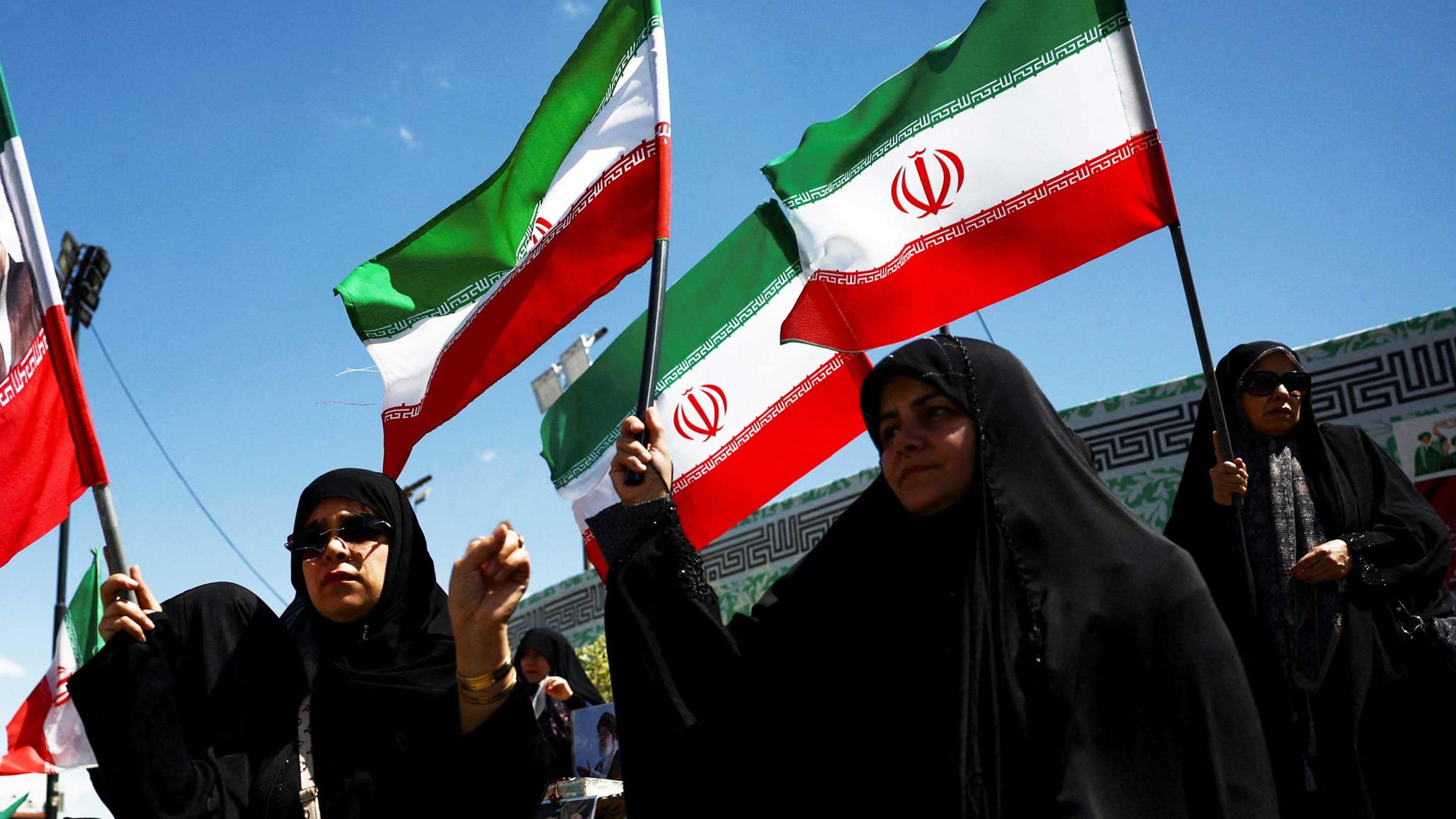
Iran-US War and Islamabad peace facilitation prompt me to recall the famous quotes of Abraham Johannes Muste, a US-based civil rights and anti-nuclear-weapons activist. To him, nothing can lead to peace, but peace, in fact, facilitates a positive change in relations therefore, not circumstances or ways, but ‘peace’ itself proves a nucleus of attention in the crisis-packed situation in a society or world. Social scientists usually count the factors and circumstances leading to peace in a conflict at the societal and international level, but A. J. Muste believes that ‘peace’ is the greatest force that attracts rival protagonists to create understanding and end conflict. A. J. Muste opposed World War I and the US-Vietnam War and also opposed nuclear weaponry. He worked zealously and nonviolently for labor rights and civil liberties in the United States. The US-Israel led war against Iran on 28 February 2026 caused a catastrophic results and the continuous bombing destroyed Iran’s civil infrastructure, and approximately 180 schoolgirls were killed in an aerial attack. It was condemned by the masses in the US and other countries. Iran closed the Strait of Hormuz as a war tactic, which created a global oil crisis, and all countries’ economies experienced an overnight major setback. The US President changed his initial war objectives and focused on the reopening of the Hormuz because multiple nations were bashing the US President for his unethical war mongering ambition, which caused the energy crisis. US President Donald Trump first decided to isolate the US from this dangerous drive and declared that the affected countries should send their troops to open this sea route for their vessels, but in April 2026, he issued a furious statement that if Iran did not open the Strait of Hormuz, it would be eliminated from the earth. It caused panic in the world because this message meant a nuclear attack on Iran. If it happened, any power could justify the use of nuclear weapons against the rival country, and the world could be an unsafe and hellish place. It could also convince every country, including Iran, to have nuclear weapons in future because having nuclear weaponry was to be left as the only option to survive against a rival nuclear power. However, Pakistan, China, Russia, Egypt, Turkey, and Saudi Arabia, enjoying cordial relations with the US and Iran, ultimately brought a truce of two weeks, and both countries consented to dialogue in Islamabad on 10 April. Army Chief Gen. Asim Munir, PM Mian Shahbaz Sharif, and Foreign Minister Ishaq Dar from Pakistan played a pivotal role in the ongoing parleys between the rival leaders. The ceasefire created an environment in which both camps claimed victory, and both seemed busy proving their military strength and muscles, but despite all, they are heading towards peace through dialogue. Threatening Statements by the US President even before a day before the negotiations is an evidence that the agreement (if it is concluded) would be presented as Iran’s surrender before the US might. A. J. Muste quotes that not circumstances, but ‘peace’ itself pushed the rival forces away from the battlefield. Once, a reporter questioned his presence as a protest in front of the White House: ” Can you change the White House? A. J. Muste replied. ‘I don’t do this to change the country. I do this so the country would not change me.’ The ruling elite always use the name of ‘state’ to change the people as it desires, but the state’s predilections change with the passage of time; therefore, to curb the citizens proves havoc for the social fabric. Dissatisfied masses can hardly produce a beneficial human resource that truly serves a nation. A. J. Must says that the problem after a war is that the victor shows the fight has brought a bright future, and war has paid the nation a lot. In their perception, the war was a new form of reform that would ensure prosperity and psychological pride for the people. Iran and the USA have both been claiming victories and asserting that the conflict has brought blessings. Both countries closed their eyes to the human sufferings and loss of innocent lives, wealth, economy, infrastructure, and hatred generated against each other. Peace proved its importance and motivated them to approach the neutral countries for a ceasefire, which means the war had crippled both the rivals to the extent that they were unable to talk even of ‘peace’, which shows the weakness and impotency of the so-called victors. A. J. Muste opines that no big power in the war accepts itself as an aggressor; instead, it is always the rival that is the aggressor.’ However, I think that every fighting country thinks of itself as a big force, therefore both become ‘big powers’ under their own justifications. Look at the arguments of the US and Iran that have been justifying their righteousness and aggression toward the rival according to their own national narratives. None of them is ready to accept any lapse on the side. Perhaps it happens amid internal and external threats to the political leadership, who twist events and arguments to secure their political position and national morale. This is another form of stress and aggression against peace, humanity, and righteousness. For example, many US military and other officials refused to attack Iran who must be consulted about their current thinking on their decision. A. J. Muste says that peace is impossible if people are only concerned with peace. A war is an outcome of different ways of life. If people desire to attack war, they have to attack that way of life.’ A. J. Muste here can be disagreed because way of life is always different, which does not mean to be in a battlefield all the time. I think he wants to say that if people dislike war, they should change their vision to one of living in societies with divergent ways of life. This quote reflects Muste’s desire that prosperity and civil liberties can change society, and by this, war maneuvering can be suffocated. AJ Must was a member of the Fellowship of Reconciliation in the US, which struggled against war hysteria and the violation of civil liberties and for labor rights. He delivered lectures in different universities on the nonviolent struggle for rights. He joined the Montgomery Bus Boycott, led by Martin Luther King, Jr., in 1955. A. J. Muste’s struggle is still admired by Americans and Europeans because he worked selflessly for humanity, peace, and the dignity of all races.
Writer is a US-based Historian & Colmunist
9 April 2026
war
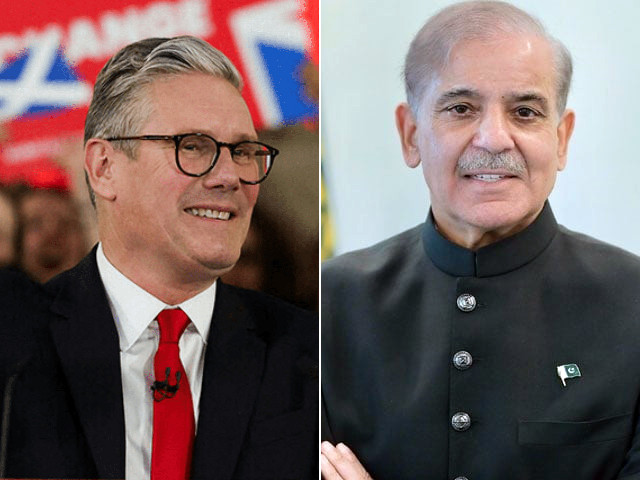
PM Shehbaz, Starmer Hold Key Call on Regional Security UK Backs Pakistan’s Peace Initiatives and Ceasefire Efforts
Prime Minister’s Office
Media Wing
ISLAMABAD: 10 April 2026.
Prime Minister’s Telephone Call with Prime Minister Keir Starmer of the United Kingdom
Prime Minister Muhammad Shehbaz Sharif received a telephone call from Prime Minister of the United Kingdom, His Excellency Keir Starmer, this evening.
Prime Minister Starmer deeply appreciated Pakistan’s effective diplomatic efforts in facilitating the U.S.-Iran ceasefire, and the resumption of dialogue. He felicitated Prime Minister Muhammad Shehbaz Sharif on hosting the peace negotiations in Islamabad and offered his best wishes for the success of this endeavor.
Reaffirming Pakistan’s sincere commitment to regional peace and stability, Prime Minister Muhammad Shehbaz Sharif welcomed the joint statement issued by key European and international leaders, including Prime Minister Starmer, endorsing Pakistan’s peace initiatives.
Both leaders emphasized the importance of ensuring that the ceasefire remains in place and creates the necessary conditions for lasting peace and stability in the region.
The two leaders agreed to work together to lend fresh impetus to the longstanding friendly ties between Pakistan and the United Kingdom, across all spheres of mutual interest.
The Prime Minister reiterated his cordial invitation to Prime Minister Starmer to undertake an official visit to Pakistan.
Paris (Imran Y. CHOUDHRY) :- Former Press Secretary to the President, Former Press Minister to the Embassy of Pakistan to France, Former MD, SRBC Mr. Qamar Bashir analysis : The most defining feature of the Iran War is not the missiles, the targets, or even the scale of destruction—it is the silent and systematic transfer of its cost to those who are not fighting it. In an extraordinary display of modern economic engineering, all three principal actors—Iran, United States, and Israel—have structured this conflict in a way that allows them to wage war without bearing its full financial burden. Instead, that burden is being shifted outward to global consumers, trade-dependent economies, and regional allies, transforming a regional conflict into a worldwide economic obligation.
This is what makes the Iran War fundamentally different from traditional wars. Historically, nations financed wars through taxation, borrowing, or internal sacrifice. Today, however, the interconnected nature of the global economy allows powerful states to externalize these costs. Oil prices rise, shipping costs surge, insurance premiums spike, and supply chains tighten—not as unintended consequences, but as embedded mechanisms through which the cost of war is distributed globally. The battlefield may be regional, but the bill is international.
At the center of this economic and strategic equation lies the Strait of Hormuz, the most critical energy chokepoint in the world. A significant portion of global oil, liquefied natural gas, and commercial goods passes through this narrow corridor every day. Control over this passage offers not only military leverage but also unparalleled economic influence.
Current estimates suggest that approximately $1.2 trillion worth of trade flows through Hormuz annually, including around $800 billion in energy shipments and $400 billion in non-energy goods such as fertilizers, chemicals, metals, and manufactured products. A 10 percent toll on this trade would generate roughly $120 billion per year. Such a mechanism would allow Iran, in theory, to recoup the economic damage of war within a single year—not through aid or borrowing, but by leveraging its geographic position within the global trade system.
This is where the economic dimension of the war becomes unmistakably clear. Any increase in shipping costs through Hormuz would be passed on to importing countries, raising energy prices, increasing transportation costs, and fueling inflation worldwide. Consumers in distant nations, far removed from the battlefield, would ultimately bear the financial burden. In effect, the Iran War would be funded not just by those involved, but by the entire global economy.
At the same time, the United States operates within its own system of cost distribution. With daily war expenditures estimated at around $1 billion, a conflict lasting 60 to 70 days would cost approximately $60 to $70 billion. However, much of the U.S. military presence in the region is sustained through security arrangements with Gulf states. These host nations, dependent on American protection, often absorb a significant share of these costs. Thus, the United States projects power while redistributing its financial burden to its allies.
Israel follows a similar model. Its wartime expenditures, estimated in the tens of billions, are largely offset through extensive financial and military support from the United States and allied networks. This support ensures that Israel can sustain prolonged military operations without bearing the full economic impact domestically. In this way, Israel also participates in the broader system of cost externalization.
The result is a striking and deeply troubling paradox. The nations directly engaged in the Iran War are not the ones paying for it. Instead, the financial burden is transferred to a diffuse and largely uninvolved global audience. Energy-importing countries, trade-dependent economies, and ordinary consumers all become indirect financiers of the conflict. The war, in effect, is globalized—not only in its consequences but in its funding.
In addition, the indirect cost transfer is already visible across continents. The biggest burden of the war is not military spending—it is the imported economic shock spreading through energy markets, shipping routes, inflation, and financial systems. Nearly one-fifth of the world’s oil passes through the Strait of Hormuz, and any disruption instantly translates into higher fuel prices, increased freight costs, and cascading inflation worldwide. Countries far removed from the battlefield are paying through rising grocery bills, higher transport costs, and tightening monetary conditions.
The Middle East itself is already absorbing heavy indirect costs. Countries not directly involved in the war are facing fuel price shocks, subsidy burdens, and logistical disruptions. Pakistan, for instance, has raised diesel prices by over 50 percent and petrol by more than 40 percent, while struggling to sustain subsidy programs. India is considering trade restrictions to stabilize domestic markets as energy and freight costs surge. Across the Gulf and surrounding regions, shipping disruptions, stranded vessels, and rising insurance premiums are increasing the cost of doing business, effectively turning the war into a regional economic tax.
Europe is experiencing the same phenomenon through a renewed energy and inflation crisis. Oil prices have surged above $100 per barrel, forcing governments to cap fuel margins, cut taxes, and release reserves to protect consumers. At the same time, inflationary pressure is pushing borrowing costs higher, affecting mortgages, business financing, and household stability. The war’s economic shock is thus embedded not only in fuel prices but in the broader financial architecture of European economies.
For Asia and Africa, the impact is even more severe. Many countries in these regions depend heavily on Middle Eastern energy and trade flows. The war is functioning as a direct economic tax, triggering shortages, subsidy crises, and potential social unrest. African economies, already vulnerable, face slower growth due to rising food, fuel, and fertilizer costs, with projections showing measurable GDP losses if the conflict persists. Across the developing world, the cost of the Iran War is not theoretical—it is immediate, tangible, and deeply destabilizing.
The implications of this model extend far beyond the current conflict. If wars can be structured in such a way that their costs are borne by others, the traditional economic constraints on warfare begin to disappear. This lowers the threshold for conflict and increases the risk of prolonged and repeated wars. The deterrent effect of financial burden—once a powerful force for restraint—is weakened when that burden can be shifted outward.
In the end, the most important question is not who is winning on the battlefield, but who is paying for the war. And the answer is increasingly evident: it is the world at large. Through rising energy prices, disrupted trade, and cascading economic effects, the cost of the Iran War is being distributed across borders and societies, often without acknowledgment or consent.
This is the hidden economy of modern warfare—a system in which power is exercised, destruction is inflicted, and the bill is quietly passed on to others. In such a system, victory is no longer defined solely by military success, but by the ability to fight without paying. And by that measure, the Iran War reveals a profound and unsettling truth: those who wage war have learned how to make the world fund it.


Pakistan High Commission Partners with Gerrys for UK Consular Services New Facilitation Centres to Enhance Access for Overseas Pakistanis

Aftermath of Iran-US War and A. J. Muste’s Quotes:

PM Shehbaz, Starmer Hold Key Call on Regional Security UK Backs Pakistan’s Peace Initiatives and Ceasefire Efforts


-

 Europe News1 year ago
Chaos and unproven theories surround Tates’ release from Romania
-

 American News1 year ago
Trump expands exemptions from Canada and Mexico tariffs
-

 American News1 year ago
Trump Expels Zelensky from the White House
-

 Pakistan News9 months ago
Comprehensive Analysis Report-The Faranian National Conference on Maritime Affairs-By Kashif Firaz Ahmed
-

 American News1 year ago
Zelensky bruised but upbeat after diplomatic whirlwind
-

 Art & Culture1 year ago
The Indian film showing the bride’s ‘humiliation’ in arranged marriage
-

 Pakistan News1 year ago
Can Pakistan be a Hard State?
-

 Entertainment1 year ago
Champions Trophy: Pakistan aim to defend coveted title as historic tournament kicks off today