
Pakistan News
Between Red Square and Pahalgam


WHEN dense smoke was billowing from deadly firings across the Line of Control on Friday, smartly turned out military columns from 23 countries were paying homage at Moscow’s Red Square to the 27 million fallen men and women of the USSR who defeated Nazi Germany, captured Berlin and forced Hitler to shoot himself. Had the South Asian neighbours been more agreeably engaged than pursuing a destructive campaign against each other, the thought is too enticing to ignore that Indian and Pakistani troops would perhaps be marching in lockstep with Chinese, Russian, Uzbek, Egyptian and other comrades to pursue a new world order for equitable peace and sustainable prosperity. There are powerful antibodies stalking the possibility, however.
Mercifully, the fires have been doused in South Asia at least for now even though they were doused by the world’s most incendiary nation that ever wielded the firehose. For all their macho victory cries over claims of damage they inflicted on each other amid a display of grief and valour, India and Pakistan found themselves leaning on foreign shoulders yet again to resolve an essentially bilateral issue, illustrating not for the first time that they have not quite attained adulthood to shepherd the destiny of over a billion souls. The brokered peace, nevertheless, links the tragedy in Pahalgam with a world of power politics.
Be sanguine that the pointless flare-up wasn’t triggered by some four mysterious hate-mongers who showed up to kill innocent men in Pahalgam only to disappear without trace (as yet) in one of the world’s most militarised and policed places. That the foursome called out their victims’ religion turned into a tool to profit from with the time-tested game of identity politics. Remember that in the 2002 communal carnage in Gujarat, after a train fire tragedy in Godhra, it was Pakistan that was first named as the accused; only later mobs were unleashed on unsuspecting Muslims.
Religious politics in South Asia of the Hindu-Muslim variety was nurtured into deep fault lines by colonialism as a protection against another 1857 uprising. ‘Divide et impera’ they called it. Saadat Hasan Manto captured religious frenzy in several short stories that accompanied the violent creation of India and Pakistan. ‘Mistake’ was a story about the murder of a wrong man, the error discovered when his dead body was stripped and revealed he belonged to the killer’s community. The popular Indian leader who plies identity politics to fetch electoral windfalls was not around at the time. But he has spoken of a simpler way whereby one could identify Muslims by their attire. (And thereby also figure out the non-Muslims.) The monsters of Pahalgam missed the trick or perhaps needed an audio track for their crime.
Moscow and Beijing have found growing numbers of applicants from across the world keen to join the coalition against Western hegemony.
Step back from Pahalgam, and you might find a clearer action-reaction pattern. Pahalgam spawned a third military stand-off to involve a BRICS member. It couldn’t be a coincidence that Iran and Russia, key pillars of the coming multipolar world, are in the crosshairs of the West. Unlike the military crisis facing Iran, which has risen as a powerful symbol for the Global South, or Russia, a founding leader of BRICS, which sees itself as a pivot to a multipolar future and therefore is sought to be ‘weakened’ by the West through a grinding proxy war, the South Asian conflict disrupts BRICS more diabolically. India, a founder member of BRICS, balks at the idea of its South Asian rival joining the immensely powerful group. India is a leading member of BRICS but is increasingly perceived as its weak link. Pakistan, on the other hand, being an ardent supporter of BRICS, can become a full member only if India doesn’t obstruct the path. The Pahalgam terror attack of April 22 therefore can be explored as a trigger to sow seeds of discord in the ranks of the Global South and thereby of BRICS.
The mesmeric Victory Day celebrations at Moscow’s Red Square marked a crucial moment for BRICS, the group that terrifies Donald Trump and which Russia and China are feverishly pressing on with. Moscow and Beijing have found unexpectedly large and growing numbers of applicants from across the world keen to join the coalition against Western hegemony controlling their political and economic lives. In attendance at the Red Square to cheer the spectacular pageantry were heavyweights from the rising Global South. Xi Jinping, of course, but not to be ignored were his comrades from Cuba, Venezuela, Brazil, Egypt, Belarus, practically the entire Central Asian lot, but also notably, Malaysia, Myanmar and Vietnam from the Southeast Asian flank. The heads of Serbia and Slovakia, which is a Nato member, broke ranks with their Western minders to attend.
African leaders rejoiced and cheered on as Vladimir Putin put on a memorable display of music and colour that gave a new cadence to the great coming together. Stanley Kubrick’s awe-inspiring military columns in the cinematic version of Howard Fast’s Spartacus come to mind. The movie was scripted by the former head of the US communist party as an ode to the uprising of slaves against the mighty Roman Empire. The similarity with Friday’s turnout was that these soldiers, too, were celebrating the defeat of a racist regime. Not to miss the smiling face of Vladimir Lenin printed on red flags in the march past. After a long time, the communist emblem of hammer and sickle shone through the marching columns.
Missing, not unpredictably, from the celebrations was Narendra Modi. He had made up his mind to forgo the event months before the shooting war with Pakistan would happen. With the rise of Donald Trump, India has been perceived as tardy in cementing BRICS as a challenge to the West. For this alone, Modi was the winner last week, even if Pakistan claims to have fought a better war.
The writer is Dawn’s correspondent in Delhi.







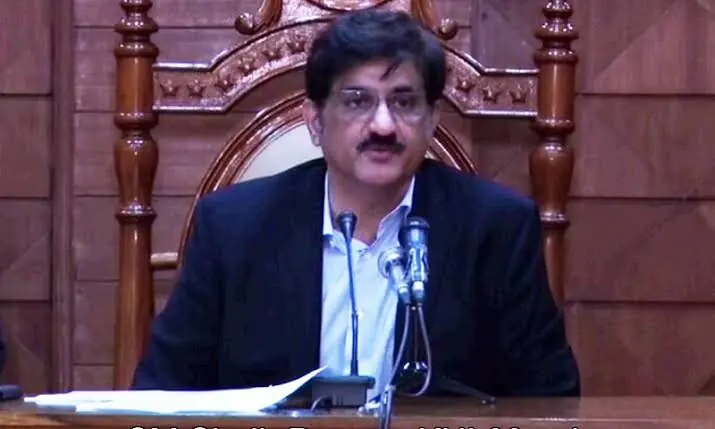
KARACHI: Sindh Chief Minister Syed Murad Ali Shah on Wednesday reviewed the progress against poliovirus, noting that Sindh had reduced its polio burden from 23 cases in 2024 and nine in 2025 to just one case so far in 2026. However, environmental surveillance showed that the virus is still present in a few high-risk areas.
Chairing a meeting of the Provincial Task Force (PTF) on Polio Eradication, the CM reaffirmed the government’s commitment to eliminating the disease and directed authorities to intensify vaccination, surveillance and community engagement efforts ahead of the September 21-27 Sub-National Immunisation Days (SNIDs) campaign.
“The progress achieved by Sindh is encouraging and reflects the hard work of our health workers, district administrations and partner organisations, but our mission will only be completed when every child is protected, and the virus is eliminated from every district,” said Murad Ali Shah.
“No child should remain unvaccinated due to negligence, weak supervision or lack of follow-up.”
Reviews preparations for week-long campaign beginning on 21st
The meeting, held at CM House, was attended by Health Minister Dr Azra Fazal Pechuho, chief secretary Asif Hyder Shah, Mayor of Karachi Murtaza Wahab, IG Police Sindh Javed Alam Odho, commissioner of Karachi Hassan Naqvi, provincial secretaries, provincial coordinator of Emergency Operations Centre (EOC) Shaharyar Gul, Sindh government partners, and deputy commissioners. From other districts, commissioners, DIGs, deputy commissioners and SSPs participated via video link.
Briefing the meeting, Health Minister Dr Azra Fazal Pechuho said Pakistan’s wild poliovirus (WPV1) cases have declined sharply from 74 in 2024 to 31 in 2025 and only three so far in 2026. Sindh has recorded a single case this year, reported from Sujawal on February 10, compared to nine cases last year and 23 in 2024.
In-charge of EOC Shaharyar Gul informed the chief minister that environmental surveillance data shows a significant reduction in virus circulation across the province. The number of positive environmental surveillance sites has fallen from a peak of 29 in March 2025 to only five in August 2026. Outside Karachi, all 14 surveillance sites are currently negative, while six of Karachi’s 15 sites remain positive, indicating that transmission is increasingly confined to limited pockets of the city.
The meeting participants were told that the absence of confirmed polio cases in Karachi during the 2025 high-transmission season, despite some positive environmental samples, reflects stronger population immunity achieved through routine immunisation and repeated vaccination campaigns.
Chief secretary Asif Hyder Shah said that sustained immunisation efforts have helped prevent clinical cases even where environmental surveillance continues to detect virus circulation.
Expressing satisfaction over the declining trend, the chief minister directed all commissioners, deputy commissioners and district health authorities to adopt a zero-tolerance approach towards missed children, refusals and operational gaps.
Reviewing surveillance findings, he ordered intensified vaccination and monitoring efforts in Karachi and other identified high-risk areas, full implementation of the Karachi Action Plan 2.0, stronger coordination among district administrations and health authorities, closer monitoring of migrant and mobile populations and improved routine immunisation coverage in underserved communities.
EOC coordinator Shaharyar Gul reported that nearly three million oral polio vaccine (OPV) doses and 2.89 million booster doses were administered in Karachi, while campaigns in other divisions delivered approximately 2.7 million OPV doses and 2.58 million booster doses. Expanded-age vaccination strategies helped reach older children through schools and community-based interventions.
The chief minister appreciated the efforts of frontline workers, teachers, community mobilisers and health staff working in remote and hard-to-reach areas, describing them as the backbone of the eradication programme.
The task force was informed that after the July 2026 SNIDs campaign, a special 10-day follow-up drive was launched to vaccinate children who had initially been missed. Of 146,149 missed children, more than 23,500 were subsequently vaccinated through targeted efforts focused on refusals and unavailable children.
Mr Shah directed district administrations to further reduce refusal rates through stronger community engagement and public awareness campaigns, emphasising that building trust with parents remains critical to the success of the programme.
The meeting reviewed preparations for the September 21-27 SNIDs campaign, during which nearly 10 million children under five will be vaccinated across Sindh. The campaign will cover 23 full districts and selected union councils in seven partial districts, with more than 80,000 frontline workers participating.
Officials said over 26,000 police personnel have been assigned security duties. The chief minister reiterated the provincial government’s financial support for the campaign and noted that incentives for frontline workers had been increased by 28 per cent.
He directed all districts to complete remaining preparedness measures, including vaccine supply, logistics, workforce deployment and supervision arrangements, before the campaign begins.
The chief minister also reviewed campaign quality indicators and was informed that Sindh has continued to maintain strong performance standards while pursuing key reforms in routine immunisation, surveillance, staffing and community engagement.
Published in Dawn, September 17th, 2026
• Petroleum dealers lament lack of clarity on payment mechanism, timeline
• PM wants facilitation desks to help people trying to buy subsidised fuel
• Ogra attributes hike to elevated crude prices despite decline in int’l rates
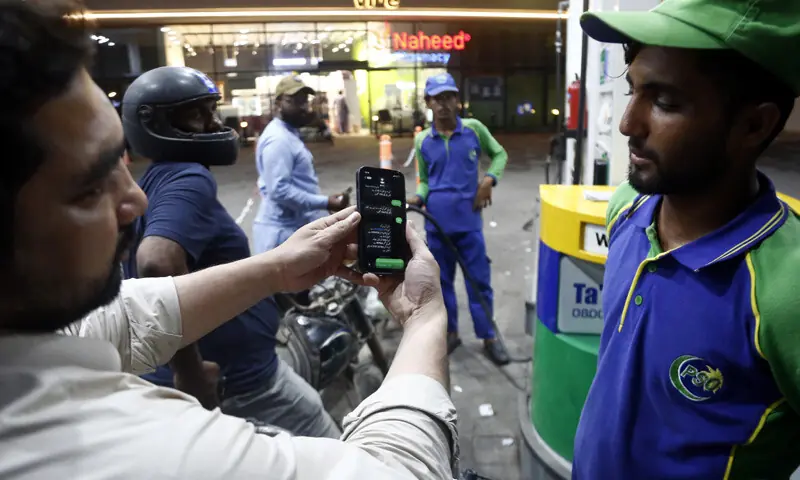
ISLAMABAD: Even as members of the public who have signed up for the PM’s Fuel Relief Scheme queued up at fuel pumps late on Wednesday night, petroleum dealers were still not clear about the mechanism whereby they would be compensated.
The concern was voiced by the Pakistan Petroleum Dealers Association (PPDA) during a presser in Karachi, where its chairman Malik Khuda Bakhsh said that no fuel pump could afford to bear a loss of Rs100 per litre without clarity on how they will be compensated.
He claimed that between the petroleum ministry, Oil and Gas Regulatory Authority (Ogra) and even the finance ministry, no one had been able to answer their questions.
“Officials from Ogra and oil marketing companies say that the petroleum ministry will possibly pay the subsidy amount, whereas ministry officials maintain that payments will be made by the finance ministry, while finance ministry officials assure us that the State Bank will release the funds in a day or two,“ Mr Bakhsh added.
A day earlier, the National Steering Committee on Fuel Subsidy — chaired by Deputy PM Ishaq Dar — had ordered that payments to fuel stations under the PM’s scheme be processed within 24 hours through the State Bank of Pakistan.
However, Mr Bakhsh said the federal government had assured dealers that they would be taken into confidence before the launch of the fuel relief package, but lamented that no such consultation took place.
”The government has to understand that if payments are not reimbursed in time, many dealers will stop participating in [the scheme], as many previous promises were also not fulfilled by the government,” he added.
PPDA Vice Chairman Tariq Hassan said that around 14,000 dealers across the country have been trying desperately to contact the government over the past three days, adding that whenever Islamabad wants to enforce something, it stops communication.
Another vice chairman, Anwar Kamal, said that if the scheme was to be successful, the government must negotiate with dealers, adding that dealers could not afford to have billions tied up for a long period under this scheme.
Mr Bakhsh later told Dawn they had been invited to a virtual meeting with the relevant federal secretary on Thursday morning.
He added that Ogra officials had also reached out to brief him, but he had asked for that information in writing, so he could relay that to the members of his association.
Facilitation desks
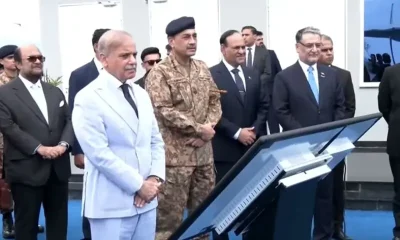
Earlier, Prime Minister Shehbaz Sharif ordered authorities to set up facilitation desks comprising administration officials, volunteers and petrol pump staff to assist citizens in easily obtaining fuel subsidy under the special relief scheme, which was rolled out across the country at Wednesday midnight, following the launch of the pilot phase in Islamabad.
Presiding over a meeting to review progress on the scheme, PM Shehbaz directed that personnel deployed at the facilitation desks should guide eligible citizens and provide them with all possible assistance in registration and other necessary procedures.
The prime minister also asked the relevant authorities to remain proactive in creating public awareness about the scheme, which will benefit people from all four provinces, Azad Jammu and Kashmir and Gilgit-Baltistan.
The meeting was informed that the scheme had been designed in a simple and easy-to-understand manner for the public. Only four pieces of information were required for registration: the applicant’s CNIC number, vehicle number plate, province of registration and vehicle registration date.
According to an official, the number of successful registrations was gradually rising, while provincial governments were extending “full cooperation” for nationwide implementation of the scheme.
Oil prices
Meanwhile, notifying fresh POL rates on Wednesday night, Ogra attributed the steep hikes to elevated international crude oil and petroleum product prices.
The price of high-speed diesel was increased by Rs5.62 per litre to Rs421.45, while petrol became costlier by Rs6.88 per litre, taking its new price to Rs391.22 per litre.
Brent crude futures fell $2.92, or 2.7 per cent, to settle at $105.83 a barrel. US West Texas Intermediate futures fell $3.40, or 3.2pc, to close at $102.43, Reuters reported.
Saudi Arabia is offering more loadings of crude oil to Asian refiners via ship-to-ship transfers off Oman’s Sohar port, people familiar with the matter said, blunting some of the hit to global supply from attacks on the country’s East-West pipeline to the Red Sea.
Oil prices had gained more than $3 in the previous session after shipping industry sources said crude loadings at Saudi Arabia’s Red Sea export hub of Yanbu had been suspended and Riyadh had cancelled some cargo deliveries to European customers.
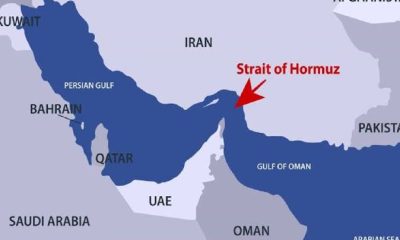
The suspension followed strikes on the East-West pipeline, which feeds the Saudi port of Yanbu. It became the main Saudi outlet for oil exports after Iran began blockading the Strait of Hormuz after US and Israeli attacks on the country.
Published in Dawn, September 17th, 2026
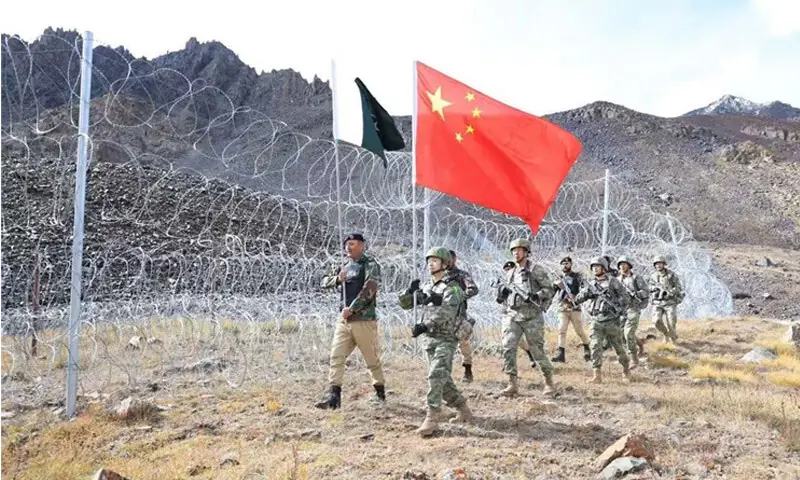
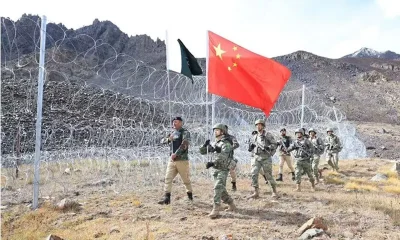
ISLAMABAD: Pakistan and China on Wednesday operationalised a long pending joint mechanism for managing their common border, with Islamabad describing the move as a significant milestone in bilateral relations and a step toward closer coordination on border management, trade and cross-border connectivity.
“The inaugural meeting of the Commission was held at the Ministry of Foreign Affairs in Islamabad,” the Foreign Office said in a statement.
The meeting was co-led by Li Ya, deputy director general of the Department of Boundary and Ocean Affairs at China’s Ministry of Foreign Affairs, and Bilal Mahmood Chaudhary, director general for China at Pakistan’s Foreign Office.
The FO described the operationalisation of the Pakistan-China Boundary Joint Commission as a “significant milestone for Pakistan-China relations”, saying it would set “the stage for enhanced cooperation in border management, joint border surveys, trade flows and people to people connectivity.”
The commission has its origins in the 2013 Agreement on the Boundary Management System signed during the visit of then Chinese Premier Li Keqiang to Islamabad. Article 45 of the agreement provides for establishment of the joint commission to oversee implementation of the border management arrangements.
The mechanism would provide an institutional framework for dealing with practical issues along the border, including maintenance and inspection of the boundary, joint surveys, boundary marker issues, management of cross-border facilities and handling of incidents involving the border.
Its activation also gives the two countries a mechanism for regular coordination on a border that is important for movement between Pakistan and China, including through the Khunjerab crossing, and for trade and connectivity linked to the China-Pakistan Economic Corridor (CPEC).
The new commission is distinct from the Joint Boundary Demarcation Commission that was established under the Sino-Pakistan Boundary Agreement of March 2, 1963. The earlier commission had a specific and essentially one time mandate to conduct surveys, establish boundary markers, prepare detailed maps and set out the alignment of the boundary.
Its work ended after the signing of the protocol and maps completing the demarcation process. The 1963 agreement was signed in Beijing by then-Pakistani foreign minister Zulfikar Ali Bhutto and his Chinese counterpart Chen Yi.
It also provided that, following a settlement of the Kashmir dispute between Pakistan and India, the relevant sovereign authority would reopen negotiations with China on the boundary.
The 2013 agreement, by contrast, established a continuing system for managing the already demarcated boundary, including provisions for dealing with boundary markers and cross-border infrastructure. The agreement says that if a marker cannot be restored at its original location, the joint commission can determine another suitable location, provided the boundary line itself is not altered.
India, which disputes the validity of the 1963 agreement and regards the territory covered by it as part of Occupied Jammu and Kashmir and Ladakh, rejected the new mechanism.
“We have seen reports in this regard. Our position on this matter is clear and consistent. There is no boundary between Pakistan and China. We reject the so-called Joint Commission, which is without any legal basis,” Indian Foreign Ministry spokesman Randhir Jaiswal said.
For Pakistan and China, however, the commission provides a new institutional arrangement for managing their border relationship and dealing with practical issues that have emerged since the 2013 agreement, while leaving the broader territorial positions of the parties unchanged.
Published in Dawn, September 17th, 2026


CM Murad asks authorities to boost polio vaccination across Sindh

Dealers await answers as fuel subsidy rollout begins

Islamabad, Beijing activate joint border commission


-

 Sports3 months ago
South Korea’s Yoo Useong Steps Onto the Global Strongman Stage as World Strongman Federation Professional Athlete
-

 Art & Culture1 year ago
A Survey of Mata-E-Zeest
-

 Europe News2 years ago
Chaos and unproven theories surround Tates’ release from Romania
-

 American News2 years ago
Trump expands exemptions from Canada and Mexico tariffs
-

 American News2 years ago
Trump Expels Zelensky from the White House
-

 Art & Culture2 years ago
Will Snow White be a ‘victim of its moment’? How the Disney remake became 2025’s most divisive film
-

 Pakistan News1 year ago
Comprehensive Analysis Report-The Faranian National Conference on Maritime Affairs-By Kashif Firaz Ahmed
-

 Entertainment2 years ago
Champions Trophy: Pakistan aim to defend coveted title as historic tournament kicks off today