
Art & Culture
Archaeological Seminar on Indus Valley Civilization of Pakistan in France


Paris ( Imran Y. CHOUDHRY):- The Embassy of Pakistan organized an event on the archeological studies of the 5000-year-old Indus Valley Civilization with Dr. Aurore Didier, Director of the French Archaeological Mission of the Indus Bassin.
Representatives of the UNESCO World Heritage Center, the Agha Khan Development Network (AKDN), archaeologists, historians and diplomats attended the event, which was organized with the support of the “Cercle des Amis du Pakistan”.
Dr. Didier briefed the audience on the history of the archeological excavations carried out by French archeologists in Pakistan. She gave an update on the latest research resulting from ten years of excavations at Chanhu-daro, one of the emblematic sites of the ancient Indus Valley Civilization. She also addressed how the adaptation of ancient populations to river and environmental fluctuations can be a key to understanding the current crises related to climate change and natural disasters that heavily impact South Asia today.
Addressing the audience, Ambassador Mumtaz Zahra Baloch noted the seventy years of cooperation between Pakistan and France in the domain of archeology. She appreciated the contributions made by the French Archeological Mission in Pakistan in research on the Indus Valley Civilization; and in promoting knowledge and competencies amongst local communities and scholars.
The Ambassador also reiterated her warm support for the “Cercle des Amis du Pakistan” for its initiatives in highlighting the cultural richness and diversity of Pakistan.

Art & Culture
‘A distinct Canadian character’: The 1920s paintings that changed how the world saw Canada
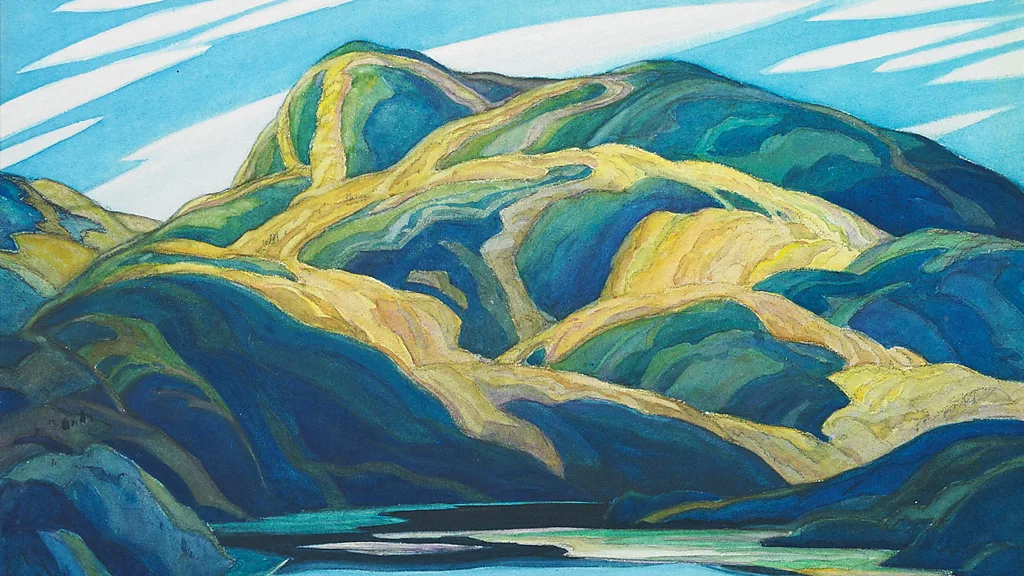
The Group of Seven was Canada’s first internationally recognised national art movement, and they helped create a distinct, modern Canadian identity in the 1920s. As the official Group of Seven Day is celebrated in Canada, what is their legacy – and are their ideas in harmony or conflict with the so-called “Indian Group of Seven”, founded later in the 1970s?
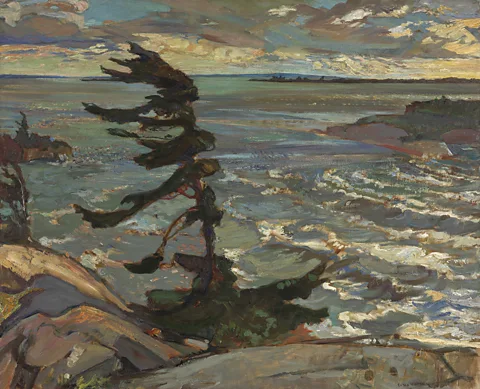
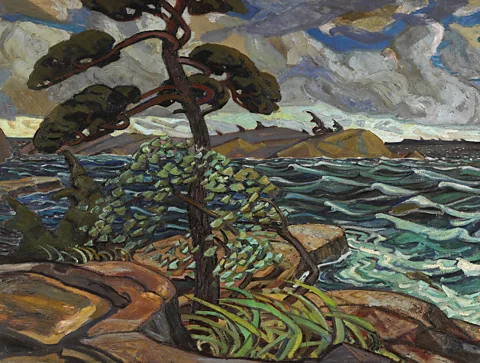
In the 1921 painting Stormy Weather, Georgian Bay, a lone tree perches perilously between a rocky outcrop and a vast, churning lake, buffeted by the elements yet refusing to yield to their force. Executed in rough brushstrokes and simplified lines, it celebrates not only the resilience of Canadian settlers and their ability to survive against all odds, but also the dramatic, untamed landscapes with which they joyfully communed.
The painting by FH Varley is one of the most iconic works by The Group of Seven, a groundbreaking art collective who broke with the dominant tradition of European academic painting to create a uniquely Canadian style that revelled in the country’s vast natural beauty.
The group’s most celebrated works are “almost like what the Statue of Liberty is for the United States,” says Katerina Atanassova, senior curator of Canadian art at The National Gallery of Canada. So beloved are they that 7 July is now celebrated as Group of Seven Day. What is it about their paintings that, for many, embody the Canadian spirit and identity? And where does the group’s work stand in relation to the country’s Indigenous art?
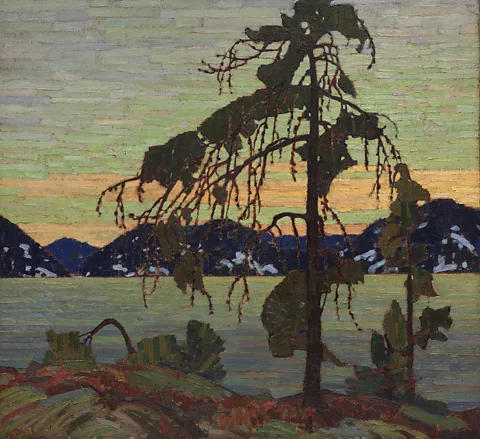
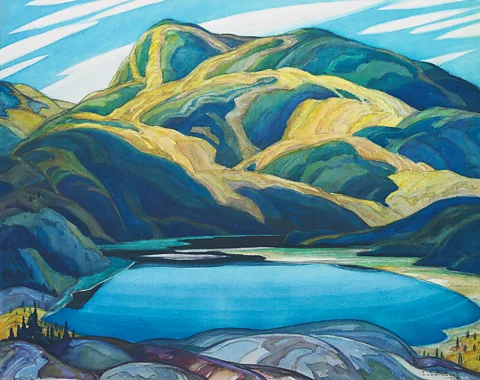
The group which – in addition to Varley – comprised Franklin Carmichael, Lawren Harris, AY Jackson, Franz Johnston, Arthur Lismer and JEH MacDonald remains hugely popular today, as does Tom Thomson, a major influence, who died before its official formation. Their most acclaimed paintings, which include Thomson’s The Jack Pine, The West Wind and Harris’s North Shore, Lake Superior, have become, for many, the national paintings of Canada – embodying the country’s spirit.
A turning point
They began painting in the 1910s, an era when Canada – a self-governing dominion of the British Empire since 1867 – was beginning to find its own social and political identity, but had yet to find an artistic voice. The nascent group was intent on providing just that. A turning point occurred when MacDonald and Harris visited a landmark exhibition of contemporary Scandinavian art in Buffalo, US, in 1913. Norway, Sweden and Finland were all forging their own independent paths at the time. In their sparse landscapes, vividly depicted in flat, bright colours, the two artists saw an expression of national identity that was unequivocally modern.
Their intention was not to portray what nature looked like, but how it made them feel, the emotional state created by the starry sky and the windswept pine – Katerina Atanassova
The aesthetic and intellectual inspiration they took from the Scandinavians was strengthened by the influence of Thomson, a self-taught artist and graphic designer who frequently embarked on lengthy trips into the wilderness, often by canoe, to paint and sketch. “He embodied that ideal, that direct experience that every artist wants to have,” Atanassova tells the BBC. It was Thomson who “started the images of the solitary tree”, and inspired the future Group of Seven artists to see that the Canadian wilderness “can be viewed as modern and painted as modern”, says Atanassova.
Thomson’s death in 1917, at the age of only 40, turned him into a cultural legend, and when the group officially formed in 1920, “the goal was defined that they ought to follow in his footsteps,” says Atanassova. Their intention “was not to portray what nature looked like, but how it made them feel, the emotional state created by the starry sky, the windswept pine or the barren coastal line on the north shore of Lake Superior.” The initial response to their innovative approach was anything but favourable. One review of their first exhibition compared their work to “the contents of a drunkard’s stomach”.
Somewhat ironically, it would take the approval of the very people from whom they were trying to distance themselves to change public opinion. The group’s work was selected for the British Empire Exhibition, held at Wembley in 1924, where it received a rapturous response with the British press praising its “distinct Canadian character. ” Recognition abroad meant that it “suddenly became popular in Canada”, explains Atanassova.
The fact that this “distinct Canadian character” excluded the Indigenous population has led to criticism of the group in some quarters, although Atanassova feels that this is unfair. “You don’t see any signs of civilisation in [the Group of Seven’s] paintings,” she says. They were “looking for untamed nature in the tradition of modern Scandinavian art”, which meant that they also excluded any sign of industrialisation.
While that may be true, we are now painfully aware that in the areas the group were travelling to, they could not have painted Indigenous populations if they had wanted to. The government’s brutal policies, begun in the late 19th Century, had seen them forcibly removed to reservations or residential schools where their movement was restricted and their cultural practices suppressed.
‘The Indian Group of Seven’
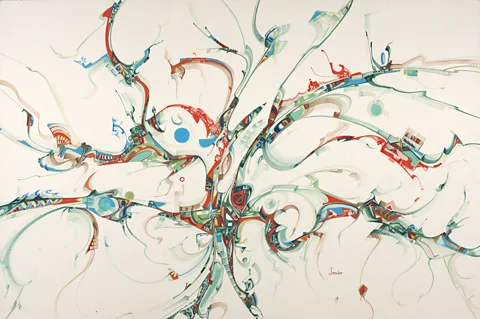
These policies had a devastating effect on all aspects of Indigenous life, including artistic production and recognition, a fact that led to the formation of another group of seven in the early 1970s, the Professional Native Indian Artists Incorporated (PNIAI). Jackson Beardy, Eddy Cobiness, Alex Janvier, Norval Morrisseau, Daphne Odjig, Carl Ray and Joseph Sanchez first started meeting in Odjig’s craft shop in Winnipeg.
“They were quite distinct in that they were the first self-organised Indigenous-artists-run arts advocacy group that was formally incorporated that ever existed in Canada,” says Michelle LaVallee, Director of the Indigenous Ways and Decolonization Department and Curatorial Initiatives of the National Gallery of Canada. She herself is Ojibway and a member of the Chippewas of Nawash Unceded First Nation.
Although they all had different styles and opinions, they wanted to band together to support other artists and challenge exclusionary practices and the narrow view of what “native” art actually was. “We had no one to show our work, so we had to do it ourselves. We acknowledged and supported each other as artists when the world of fine art refused us entry… Together we broke down barriers that would have been so much more difficult faced alone,” Odjig later said.
“At that time, there were no Indigenous curators, no Indigenous people working in institutions,” LaVallee tells the BBC. And where Indigenous art was collected it tended to be relegated to ethno-centric galleries rather than the contemporary fine art collections in which the artists felt they deserved to be exhibited. “It really wasn’t held in the same esteem as [work by their] non-Indigenous peers, even though it is the first and the most authentic art that can be and should be called Canadian,” says LaVallee.
The first art of this land was Indigenous, and the first people of these lands were Indigenous, and that needs to be recognised – Michelle LaVallee
Although the media soon dubbed them “the Indian Group of Seven”, LaVallee isn’t sure they would have appreciated the name. “They were very intentional about what they called themselves,” she says. It was very important for them to have “Professional” and “Native Indian” present in the name of the group.
While LaVallee herself likes the paintings of the Group of Seven, she points out that their approach to landscape is vastly different to the PNIAI. “A lot of the PNIAI’s works you would look at and not necessarily call it a landscape.” They are different ways of referencing the land”. Alex Janvier often incorporated maps in his works, while Norval Morrisseau “draws those connections between land and animals and spirits”. It is art by “somebody from the land versus settlers coming and appreciating the land”, she says.
Even if the Group of Seven weren’t conscious of doing so, they “would have contributed to the circumstances around how Indigenous people were being perceived and treated”, says LaVallee. This was largely down to the way their art was used to “create this popular narrative of Canada” which was picturesque but “excluded the Indigenous populations”, she says.
The PNIAI played a vital role in correcting that, and LaVallee credits her own position – as one of the senior management of the National Gallery of Canada – to their activism. “For me to get to a place like that would not have happened had these earlier artists not fought for these types of rights and opportunities and created avenues of support and camaraderie between Indigenous peoples,” she says.
The National Gallery now displays Indigenous and non-Indigenous art side by side in the same galleries. LaVallee emphasises that this is not meant to “erase or discredit any existing histories”.
“Part of the change we’re trying to assert is the idea that, yes, within Canada, it’s very multicultural, but the first art of this land was Indigenous, and the first people of these lands were Indigenous, and that needs to be acknowledged and respected and recognised.”
In the 1970s, the Group of Seven’s work may have been interpreted by some as exclusionary and colonial, but in the 21st Century it is largely viewed differently. For today’s outdoor-loving Canadians, the group’s art is a celebration of the country’s outstanding natural beauty. It embodies, says Atanassova, “that raw connection with nature – and it’s exactly the nature you see [in the paintings]. The lakes are the same, the skies are the same. It’s an expression of your own experience. What you see and what you feel and what you live.”
Art by the Group of Seven is displayed at the National Gallery of Canada, Ottawa.
—
If you liked this story, sign up for The Essential List newsletter – a handpicked selection of features, videos and can’t-miss news, delivered to your inbox twice a week.
Taken From BBC News
Art & Culture
‘Chest-thumping machismo’: The Bayeux Tapestry reveals the bloody, bawdy truth about the Middle Ages
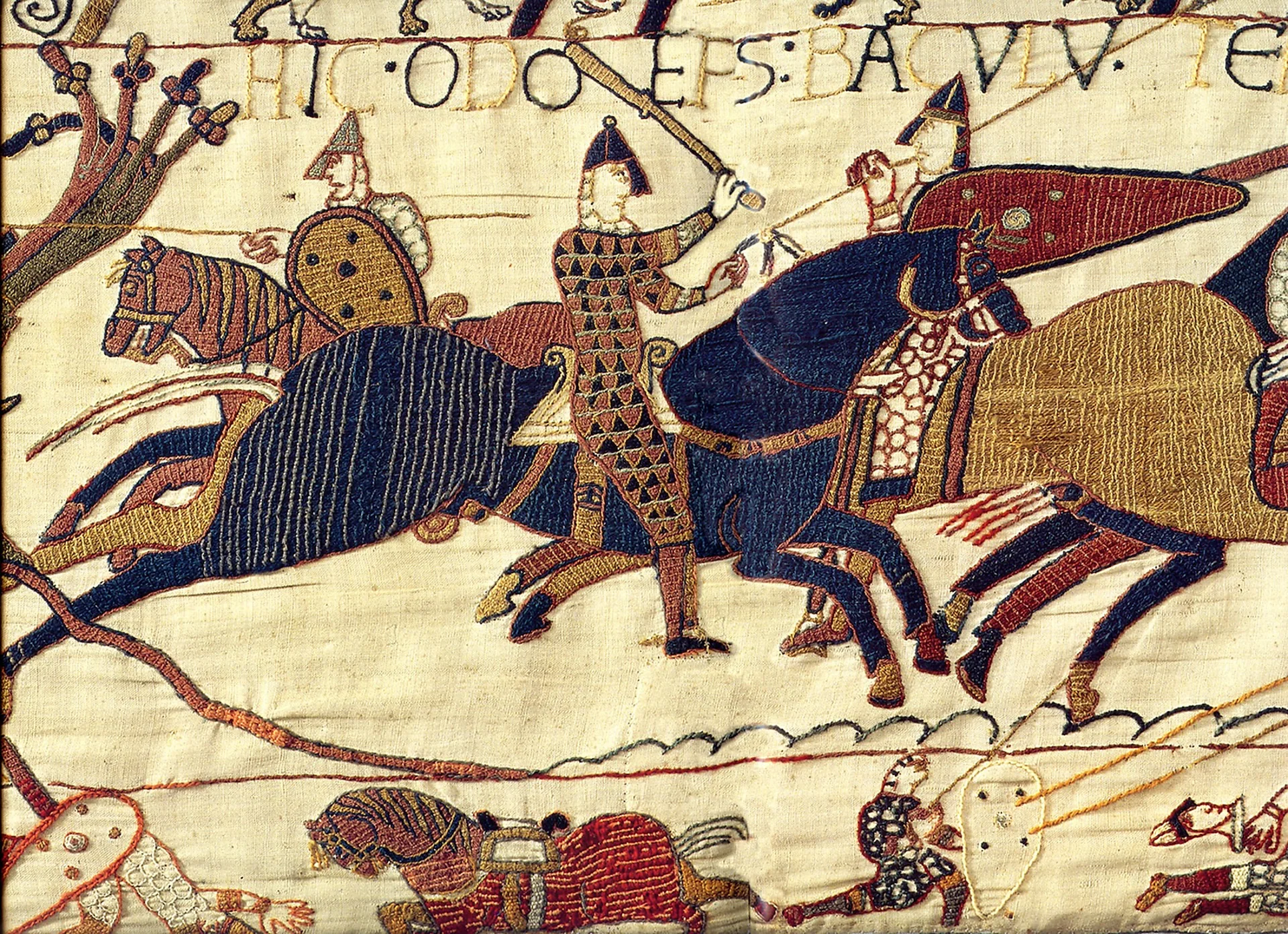
In the 11th-Century masterpiece’s tale of a contested throne, about to be exhibited in the UK, virility is equated to power – and the largest and proudest appendage. It tells a story that feels familiar today.
The Bayeux Tapestry tells a bloody − and occasionally bawdy − story of the Norman conquest of England. The intricate masterpiece is embroidered on to 70 metres (77 yards) of flax linen, and weaves a tale of broken promises, greed and aggression that culminates in the death of King Harold II at the Battle of Hastings.
After almost 1,000 years, the iconic artwork is returning from Normandy, France to England, where it was skilfully stitched in the 1070s, and from this September is to be exhibited at the British Museum.
It’s an artwork depicting a medieval version of today’s digital manosphere: an ideology and world centred on hypermasculinity and men’s experiences. And a world where size matters.
It is men’s contributions that form the focus of the 11th-Century society the tapestry portrays. A third of its men are armed, while others are vigorously engaged in tree-felling, boatbuilding and construction. A woodcutter straddling a length of timber readies his axe, while hunters wave large clubs about their heads as they pursue their quarry. All of this helps communicate the heightened atmosphere of an impending confrontation between two alpha males: William, Duke of Normandy and Harold Godwinson. “A more testosterone-soaked scene is hard to find,” Dr Christopher Monk, a cultural historian of medieval England, comments.
This suggestive display of chest-thumping machismo reveals a medieval society made for and by men, where violence settles disputes and laddish humour scores political points. Armed pillagers rampage through Hastings, and fallen soldiers in the lower margin are stripped nude for their armour, just as Harold, slain above them, is denuded of his royal claim.
The recurring penis
If there’s a recurrent motif in the iconic artwork, it’s the penis. In 2018, George Garnett, professor of medieval history at Oxford University in the UK, counted 93 – mostly tumescent – specimens in the embroidery. Eighty-eight belonged to horses, and another five to men, with a pendulous scabbard (which he rules out) causing considerable debate in academic circles.
The use of male genitalia, be it human or equine, is shorthand for political machismo – Dr Christopher Monk
“Size matters on the Bayeux Tapestry,” observes Janina Ramirez in Femina: A New History of the Middle Ages, Through the Women Written Out of It (2022). In the tapestry’s tale of a contested throne, virility is equated to power and the largest and proudest appendage, she notes, “belongs to the fine stallion William is presented with on the eve of the battle”. Second place goes to King Harold’s mount, “the implication being that he is a worthy opponent”.
Within the traditions of 11th-Century art, graphic nudity was commonplace, and it’s quite possible that these penises were stitched by nuns. “They reflect what was so evident more broadly in elite medieval society – by and large, men were the primary drivers of political sovereignty,” Monk tells the BBC. “The use of male genitalia, be it human or equine,” he says, is “shorthand for the political machismo within the context of the transition to the new Anglo-Norman world in medieval England.”
If women play a minor role in the tapestry, it’s primarily because “the narrative revolves around male action”, Dr Emily Joan Ward, a lecturer in medieval history at Edinburgh University in the UK, tells the BBC. “It’s largely depictions of militarily active men, and in those battle scenes we wouldn’t expect women.”
If a ratio of one to 100 still seems unbalanced, there may be a clue in who the artwork was intended for. Historians believe the tapestry’s likely patron is William’s half-brother, the Bishop Odo of Bayeux, who features prominently in it and may have used the tapestry to emphasise his important role in the campaign for William’s rightful rule.
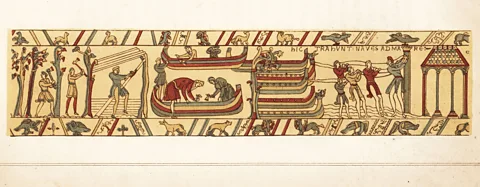
“The content is probably to resonate with him and his immediate social circle, which will largely be a homosocial circle of men,” says Ward. With a Norman sponsor, the messaging needed to be on brand. “Introducing too many women into the story is actually a bit risky,” she adds. “William’s attempts to stress his legitimacy to the throne through the female line may have made the designer or patron wary of drawing attention to this tenuous claim.”
The six women in the tapestry
The women in the central story mostly serve as what Monk calls “emotional punctuation”. Queen Edith, a highly influential figure in court politics, mops her tears with her scarf as her husband, Edward the Confessor, takes his final breaths; and a woman and her child flee as gigantic Norman soldiers casually torch their home. Bizarre expressions and proportions aside, it’s a scene that reminds us, says Ward, “that warfare is not just a male-dominated event, not just what’s happening on the battlefield.”
She references the historian Catherine Karkov, who observes that the women in the main register appear at moments of shifting power relations. “If we interpret it that way,” Ward remarks, “it gives them quite a powerful role in the tapestry.”
Others have been more dismissive. As one 20th-Century historian commented: “since it contributes nothing to the story, except a moment of confusion, we have felt justified in leaving it out”.
[The embroiderers] were no doubt working to a design but that does not mean that they were merely executors of another’s will – Dr Chirstopher Monk
Just as monks inserted illustrations in the margins of manuscripts, it’s possible that female embroiderers were permitted a little creative liberty with these cryptic comments on the central story. “They were no doubt working to a design,” Monk tells the BBC. “But that does not have to mean that they were merely executors of another’s will, or indeed that every detail was dictated.”
Perhaps in the border, the invisible women behind the artwork had the last laugh. “Was it a way of expressing despair at bellicose men, or at their own plight as subjugated English women? Is there any sense of mockery, particularly of William? Or were they indulging in playful, earthy humour to pass the time?” Monk asks.
“It’s impossible, perhaps, to answer these questions, but it should at the very least make us reflect on the fact that the Bayeux Tapestry only exists because of the skilled and intelligent labour of women.”
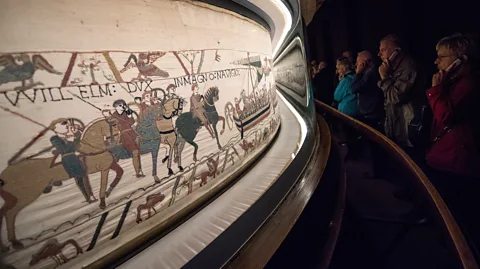
It was Victorian sensibilities that would eventually subdue some of the original tapestry’s machismo. In a faithful replica, created in 1885 by a group of 35 women belonging to the Leek Embroidery Society (currently on display at Reading Museum), the advancing armies are still full of men, but the horses’ oversized members have retreated. Unsurprisingly, the naked man with the outsized genitals who was mimicking the priest in the border is shown in the new version wearing shorts.
By Raza Syed
Diplomats, parliamentarians and cultural figures gathered in London as Tajikistan showcased its political progress, artistic heritage and deepening international partnerships
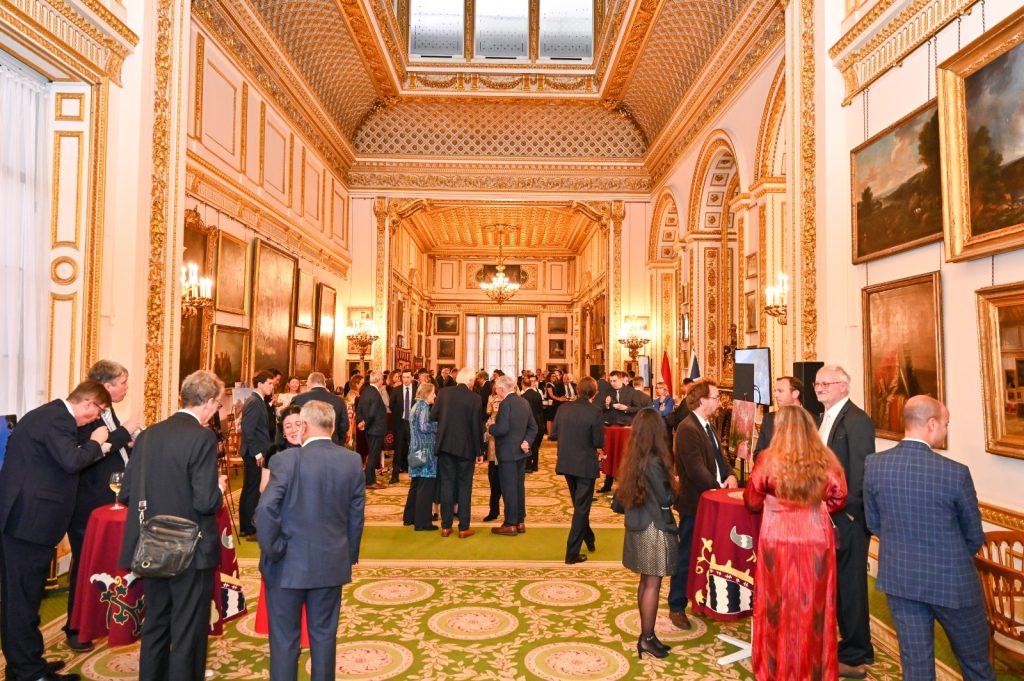
LONDON — The Embassy of the Republic of Tajikistan in United Kingdom hosted a solemn reception in London on September 4 to mark the 35th anniversary of Tajikistan’s State Independence, bringing together senior officials, diplomats, parliamentarians, and representatives of British political, business, academic, cultural, and media communities.
The event provided an opportunity to reflect on Tajikistan’s three and a half decades of independence, its political and socio-economic development, and the strengthening of its international partnerships.
Among the distinguished guests were representatives of British state institutions, heads of diplomatic missions accredited to the country, members of parliament, and prominent figures from the political, business, scientific, and cultural sectors, alongside representatives of the media.
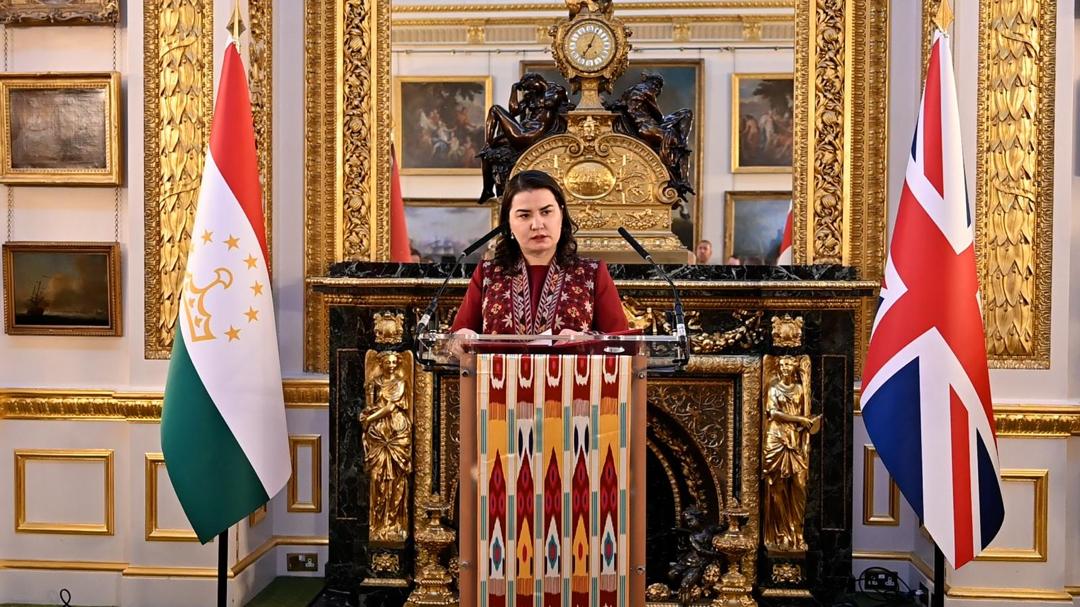
Welcoming the guests, Ambassador of Tajikistan to United Kingdom, H.E. Mrs Rukhshona Emomali, highlighted the country’s achievements since independence, particularly in the political, socio-economic, and cultural spheres.
In her remarks, the ambassador also underscored what she described as the pivotal role of Emomali Rahmon, President of Tajikistan and Leader of the Nation, in the consolidation of modern Tajik statehood, the establishment of peace and national unity, and the country’s continued development.
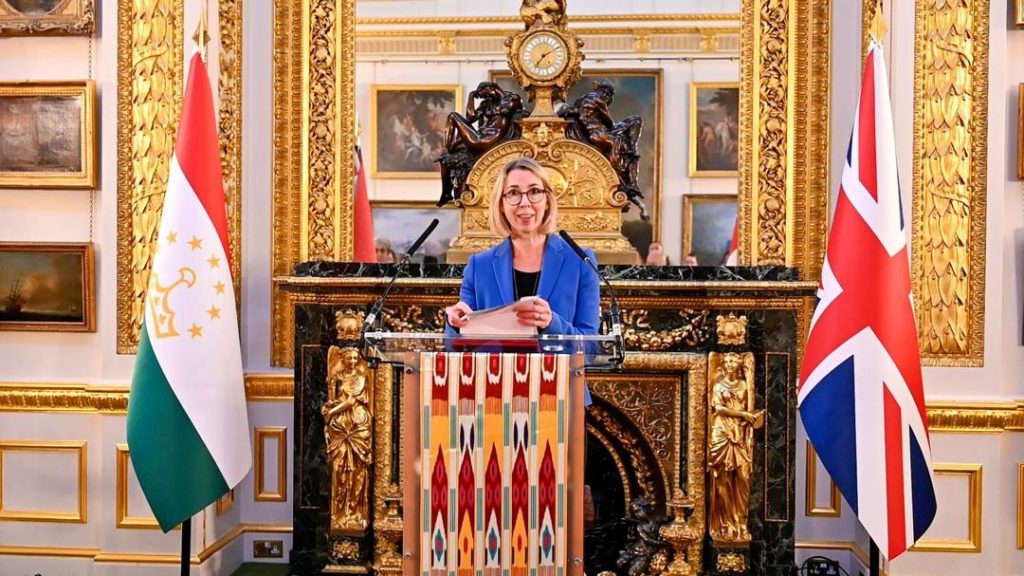
The guest of honour, Melinda Bohannon, Director General for Global Issues in FCDO, of United Kingdom, conveyed warm congratulations to the people and government of Tajikistan on the 35th anniversary of independence.
She also highlighted the positive trajectory of relations between London and Dushanbe, expressing confidence that the two countries would continue to deepen their friendly ties and strategic partnership across a range of areas.
The reception also offered guests an insight into Tajikistan’s rich cultural heritage. A concert programme featuring traditional Tajik songs and dances formed a central part of the celebrations, showcasing the country’s distinctive artistic traditions.
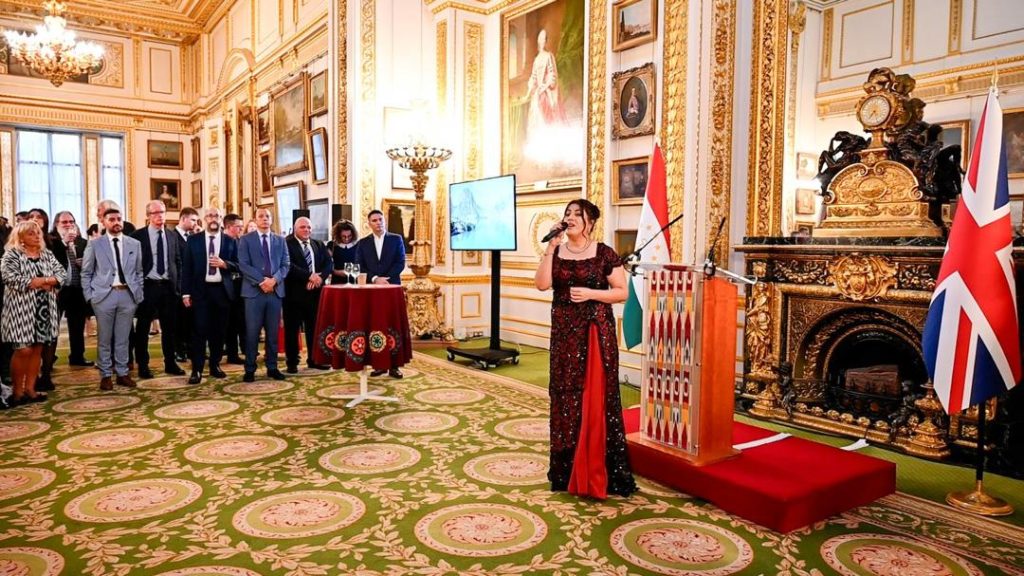
Tajikistan’s renowned vocalist Khujasta Mirzovali, who travelled to London specifically for the National Day celebrations, captivated the audience with her performance of traditional Tajik songs. Her melodious delivery earned a warm and sustained standing ovation from attendees.
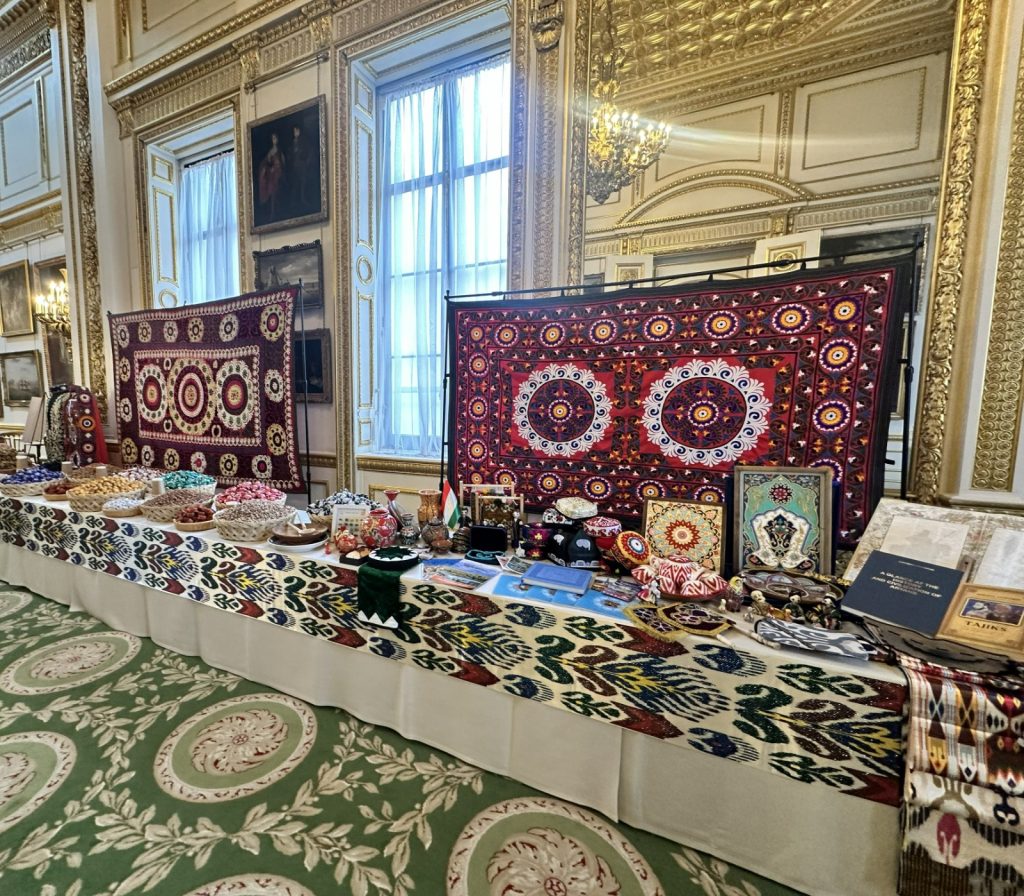
A national handicrafts and painting exhibition further enriched the event, presenting examples of Tajik folk art and craftsmanship. Visitors were able to view traditional national costumes and intricate examples of chakan, suzani, and popuri embroidery, alongside works created by Tajik artisans.
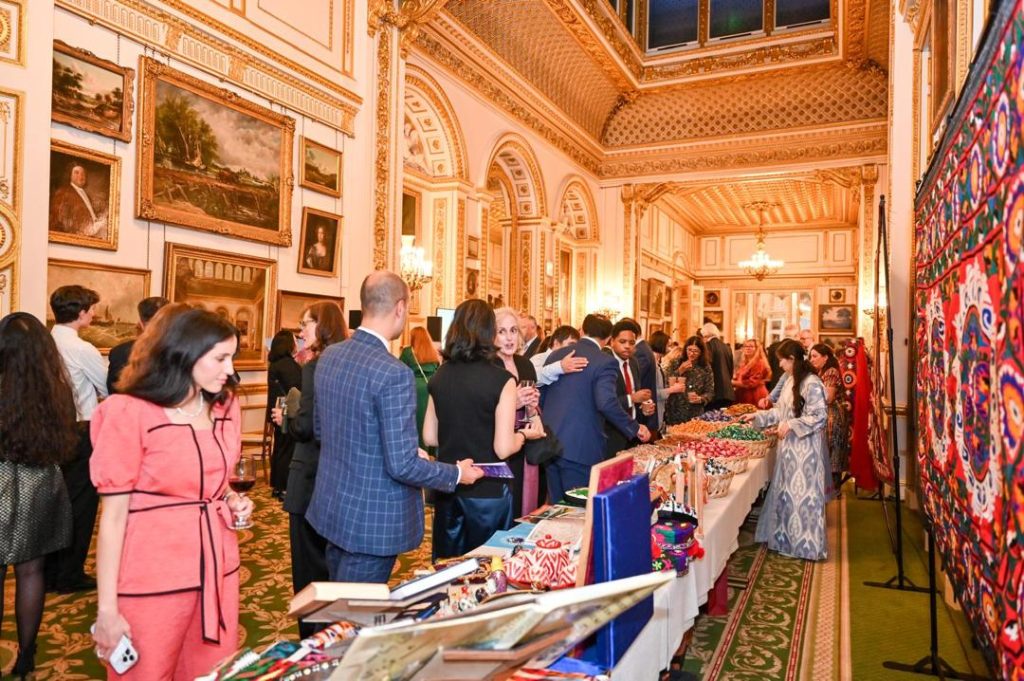
The cultural presentation extended to the traditional Tajik table, where guests were offered an assortment of fresh, locally grown fruit and nuts.
The event offered a rich cultural programme, including documentary screenings, traditional music, and performances that showcased the country’s heritage with remarkable depth and artistry.


CM Murad asks authorities to boost polio vaccination across Sindh

Dealers await answers as fuel subsidy rollout begins

Islamabad, Beijing activate joint border commission


-

 Sports3 months ago
South Korea’s Yoo Useong Steps Onto the Global Strongman Stage as World Strongman Federation Professional Athlete
-

 Art & Culture1 year ago
A Survey of Mata-E-Zeest
-

 Europe News2 years ago
Chaos and unproven theories surround Tates’ release from Romania
-

 American News2 years ago
Trump expands exemptions from Canada and Mexico tariffs
-

 American News2 years ago
Trump Expels Zelensky from the White House
-

 Art & Culture2 years ago
Will Snow White be a ‘victim of its moment’? How the Disney remake became 2025’s most divisive film
-

 Entertainment2 years ago
Champions Trophy: Pakistan aim to defend coveted title as historic tournament kicks off today
-

 Pakistan News1 year ago
Comprehensive Analysis Report-The Faranian National Conference on Maritime Affairs-By Kashif Firaz Ahmed