
Pakistan News
Xi Jinping’s Vision and the China–Pakistan Journey of 75 Years—Part II

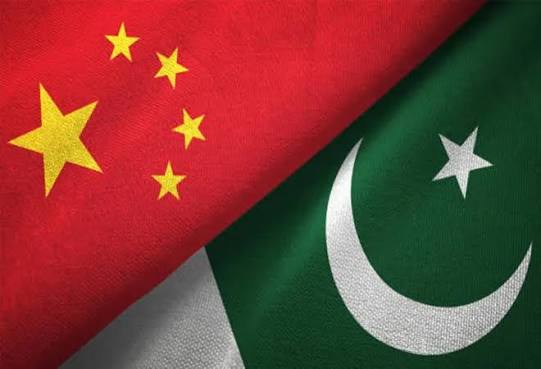
Paris (Imran Y. CHOUDHRY) :- Former Press Secretary to the President, Former Press Minister to the Embassy of Pakistan to France, Former MD, SRBC Mr. Qamar Bashir analysis : One defining feature of President Xi Jinping’s leadership has been his emphasis on discipline, merit and accountability. Soon after taking office in 2012, he launched an anti-corruption campaign targeting both senior “tigers” and junior “flies.” Millions of officials have since been investigated or disciplined, reinforcing the principle that public office is a public trust. This resolve reflects a central warning in Xi Jinping: The Governance of China: “We must uphold the principle that all are equal before discipline, that there are no privileges in observing discipline, and that no one is immune from its enforcement.”
For Xi, effective governance must ultimately improve people’s lives. Development is therefore measured not only by economic growth but also by better public services, education, healthcare, environmental protection and social stability. China’s ability to pursue these goals over decades reflects the policy continuity described throughout The Governance of China. As Xi declared on assuming the country’s leadership, “The people’s wish for a happy life is our mission.”
China’s infrastructure revolution demonstrates this long-term approach. By the end of 2024, its railway system extended 162,000 kilometres, including 48,000 kilometres of high-speed rail—the world’s largest network. China also had 5.49 million kilometres of roads, including 190,000 kilometres of expressways; 263 transport airports; 129,000 kilometres of navigable waterways; and 22,219 productive port berths. These networks have reduced travel times, lowered logistics costs, integrated inland and coastal markets and supported national modernization. They embody Xi’s instruction in The Governance of China to “promote coordinated development and foster synergy,” turning connectivity into shared economic opportunity.
My visit to Fujian Province in 2012 offered an early glimpse of this transformation. Roads linked industrial parks with ports, universities worked with research centres, and efficient public services coexisted with clean, carefully planned cities. What impressed me most was not any single project, but the integration of transport, industry, education, technology and the environment within a strategy measured in decades. It reflected Xi’s insistence that “strategic issues are fundamental to the success of a political party and a country,” and that long-term goals must be pursued with consistency.
China’s manufacturing sector has similarly advanced from low-cost assembly to sophisticated industrial production. By 2025, manufacturing generated about US$4.82 trillion in value added—roughly one-quarter of national GDP—while China produced nearly one-third of global manufacturing output. Its factories now make electric vehicles, batteries, solar panels, high-speed trains, telecommunications equipment, robots, medical devices and aerospace components. In 2026, high-technology manufacturing was growing by more than 13 percent and equipment manufacturing by about 8.7 percent. This ascent up the value chain reflects Xi’s conviction in The Governance of China that “innovation is the primary driving force for development.”
Scientific research supplies the foundation for this industrial upgrading. By 2026, China’s R&D spending had reached about 2.8 percent of GDP and, when adjusted for purchasing power, was estimated at more than US$1.1 trillion. China led the Nature Index in high-quality research output, while the Chinese Academy of Sciences ranked among the world’s foremost research institutions. Facilities such as the FAST radio telescope, EAST fusion reactor and advanced quantum laboratories illustrate the scale of investment. As Xi states, “Science and technology are our primary productive force, talent is our primary resource, and innovation is our primary driver of growth.”
China’s digital economy makes this transformation visible in everyday life. Mobile payments allow vendors and rural businesses to participate in modern commerce, while e-commerce, cloud computing, artificial intelligence and automated logistics connect producers with consumers nationwide. In 2026, integrated-circuit production reportedly approached 280 billion units in the first half of the year, while Chinese companies competed in generative AI, robotics, autonomous mobility and smart manufacturing. During my 2024 visit, I saw digital technology woven seamlessly into transport, banking, retail, tourism and public services. This is the practical expression of Xi’s call to “accelerate the building of a digital economy, a digital society and a digital government.”
Environmental protection has become another pillar of China’s development strategy. After decades of industrialization caused serious pollution, ecological conservation moved to the centre of national policy. The Ecological and Environmental Code, adopted in March 2026, consolidated rules on pollution, biodiversity, conservation and climate action. The 15th Five-Year Plan targets a 17 percent reduction in carbon intensity by 2030, alongside continued progress toward peaking emissions before 2030 and achieving carbon neutrality before 2060. This policy is rooted in Xi’s best-known ecological principle in The Governance of China: “Lucid waters and lush mountains are invaluable assets.”
China is now the world’s largest renewable-energy investor and leading manufacturer of solar panels, wind turbines, electric vehicles and batteries. By May 2026, its installed generating capacity had reached 4.01 terawatts, with renewables accounting for about 61 percent. Solar capacity exceeded 1,240 gigawatts and wind approached 660 gigawatts, supported by ultra-high-voltage transmission, smart grids and expanding battery storage. Electric buses, metro networks and new-energy vehicles have also transformed urban transport. During my 2024 visit, I was impressed by the cleaner air, widespread electric vehicles and integration of green spaces into cities. These achievements answer Xi’s call to “accelerate the formation of green development models and green ways of life.”
China’s ecological commitment extends beyond energy. Afforestation, desertification control, river and wetland restoration, water conservation, soil rehabilitation and industrial pollution control have become integral to modernization. China nevertheless remains the world’s largest carbon emitter and still depends heavily on coal, making the transition incomplete. Yet its scale of renewable deployment and ecological restoration shows how planning, investment and technology can reconcile growth with sustainability. In Xi’s words, “Protecting the environment is protecting productivity, and improving the environment is boosting productivity.”
China’s experience also demonstrates the strategic value of investing in people. By 2026, it operated the world’s largest education system, with about 470,000 institutions, 286 million students and 18.7 million full-time teachers. More than 48.5 million students attended over 3,160 higher-education institutions, while vocational colleges supplied much of the skilled workforce required by industry. Universities have increasingly introduced programmes in AI, robotics, intelligent manufacturing and advanced materials. This emphasis follows Xi’s directive: “We must give high priority to the development of education, build China’s self-reliance and strength in science and technology, and rely on talent to pioneer and propel development.”
For developing countries—especially Pakistan—China offers practical lessons. Sustainable progress requires more than money or isolated projects: it demands visionary leadership, institutional continuity, quality education, vocational skills, technological innovation and disciplined execution. Pakistan’s youthful population can become an economic asset only if equipped with relevant skills and opportunities, while national priorities must survive changes of government and be judged by measurable outcomes. This is the essence of the people-centred modernization presented in The Governance of China: “Development is for the people, by the people, and its fruits are shared by the people.” China’s experience shows that when leadership, institutions and human capability move toward a common national purpose, transformation on an extraordinary scale becomes possible.
(To be continued in Part III: The Belt and Road Initiative, CPEC, China’s Global Vision, and the Future of the China–Pakistan Partnership.)








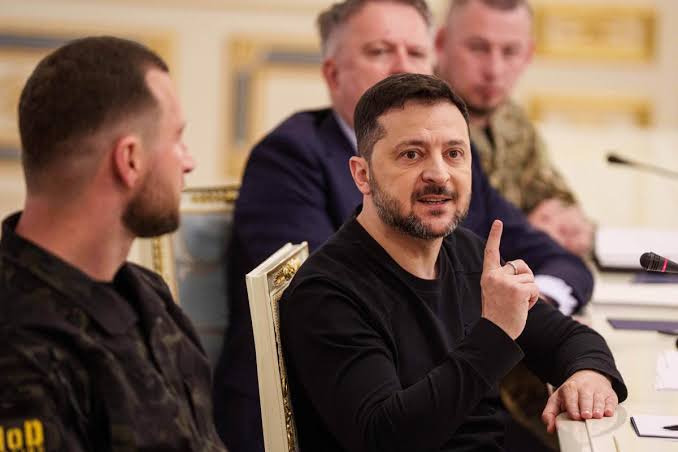
A Russian warship was sunk by Ukrainian drones at a port in Libya on Sunday, President Volodymyr Zelensky has said.
There was an explosion on the warship at the Benghazi naval base in the early morning, while it was docking for fuel and supplies ahead of its return to Russia, local authorities said.
Zelensky added that Ukraine’s attack hit a second Russian vessel, a cargo ship which he claimed was being used to transport weapons.
The local health ministry said it had received injured people from a commercial ship that was targeted off the coast of the port. It is not clear whether this is the same vessel as the one Ukraine has claimed responsibility for.
Following the strikes, the Kremlin warned of an “escalation of tensions in the region”, but declined to comment directly on the attacks in Libya.
Libya’s two governments – the UN-recognised government in the capital, Tripoli, and a rival administration in the east – have both condemned the attack.
The Tripoli foreign ministry said the country would not accept being drawn into the conflict.
It said foreign forces would not be allowed to use Libyan ports and civilian infrastructure for military purposes.
The eastern government, based in Benghazi, called it a violation of maritime safety and an attack on their sovereignty.
Seven naval drones were deployed to target and sink the corvette Merkury, one of Russia’s newest ships, Zelensky said in a statement on Monday. He added that a Ka-27 combat helicopter was also destroyed.
The Ukrainian president said the second ship was the MV ANGARA, a Russian container carrier.
The attack came the day after a Russian cargo vessel was hit by a drone attack in the eastern Gulf of Finland. The Sparta II had been bound for Russia’s Baltic exclave Kaliningrad when it was hit on Saturday morning.
Finnish defence forces said Ukraine was likely to be behind the attack. Kyiv has not commented.
Kremlin spokesman Dmitry Peskov told reporters on Monday that the “expansion of terrorist activity in the Baltic” was a “dangerous trend” and has said “it is, of course, leading to an escalation of tensions in the region.”
When questioned over the attacks in Libya, Peskov said information would be provided by the country’s defence ministry and added: “We paid attention to Zelensky’s statements about it”.
Peskov declined to comment on the strikes on Russian ships in Libya and said that that information would be provided by Russia’s Defence Ministry.
The UN mission in Libya expressed “serious concern” over the attacks on Sunday, calling for “an immediate, independent and transparent investigation”.
“Libya cannot afford, and must not become a battleground for foreign conflicts,” the UNSMIL wrote on X.
Videos posted on social media and geolocated by BBC Verify show the ship that was struck in the morning engulfed in flames and smoke. Satellite imagery from Planet Labs PBC also shows a boat on fire at 05:47 GMT at the Benghazi port.

US-based intelligence firm Vantor collected high-resolution images that it said showed Project 20380 Steregushchiy-class corvette (Merkury) – a Russian navy ship – moored in the port on Saturday, and on Sunday showed most of the same ship capsized and sunk with only the forward bow still visible.
https://flo.uri.sh/visualisation/31000694/embed?auto=1
Neither of Libya’s rival administrations has formally declared support for either side in the Russia-Ukraine war, but they have contrasting ties with Moscow and Kyiv.
The head of the Libyan National Army, which controls much of the east of the country, has longstanding links with Russia.
The eastern-based Government of National Stability (GNS) said the Russian ship – which it did not name or identify – was using the Benghazi port within the framework of an existing maritime agreement.
Sunday’s incident is under investigation, and authorities are coordinating with their Russian counterparts to determine the source of the suspected attack and who is responsible for it, GNS added.
It said Libya was not party to the Russia-Ukraine war, or any other conflict beyond its borders.
GNS has accused the Tripoli-based Government of National Unity (GNU) of hosting Ukrainian military personnel and allowing them to operate from Libyan territory against Russian targets.
Separately, the GNU warned against hosting foreign forces and allowing them to use facilities in a statement published by state media.
It said such activity raises “serious fears” about “risks that may result from involving ports and civilian facilities in activities related to external conflicts, and the resulting threat to the lives of citizens and the safety of national facilities and assets”.
Libya fractured into violence and instability after its leader Muammar Gaddafi was overthrown in 2011, leading to the opposing governments.
Benghazi is more than 2,000 km (1,243 miles) away from the Russian capital Moscow.

In March, Russia accused Ukraine of targeting the Russian tanker Arctic Metagaz in the Mediterranean between Libya and Malta with “uncrewed sea drones” launched from the Libyan coast.
As well as having an economic impact on Russia, hampering the ability of their so-called shadow fleet of tankers to export oil and gas, attacks like this are seen as humiliating to the Kremlin, according to Dr Jalel Harchaoui of the Royal United Services Institute (RUSI).
But it is not only Moscow that will want to react to this latest incident. The ship was in the region as part of a deal with the government of eastern Libya – allied with Khalifa Haftar, commander of the Libyan National Army.
Harchaoui said Haftar will take the attack as a personal slight. “You’re going to have a response by the Haftar family. They will ask questions about who is hosting the Ukrainians.”
Additional reporting by Benedict Garman and Shayan Sardarizadeh, BBC Verify and Basma El Atti
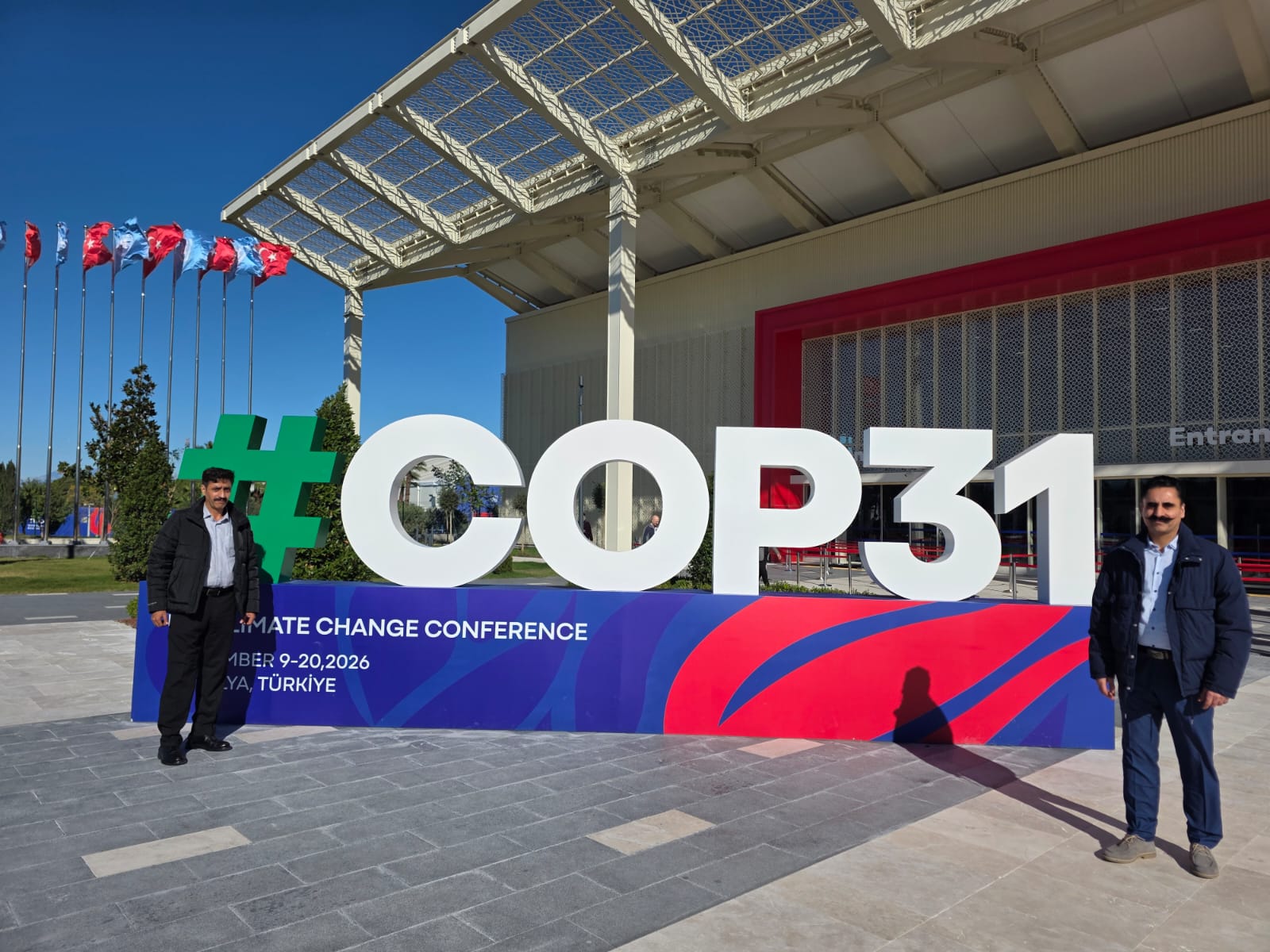
Antalya (Imran Y. CHOUDHRY):- Prime Minister Muhammad Shehbaz Sharif will visit Antalya, Republic of Türkiye, from 10–12 November 2026 to participate in the Leaders’ Summit of the 31st Conference of the Parties to the United Nations Framework Convention on Climate Change (UNFCCC).
Prime Minister will address the Leaders’ Summit on 11 November 2026, during which he will urge the global community to take concrete actions to address the threat posed by climate change to the planet. He will highlight Pakistan’s steps towards rapid solarization and expansion of its renewable energy capacity, as part of its transition towards a cleaner and more resilient economy, along with its efforts to strengthen disaster preparedness and early-warning systems.
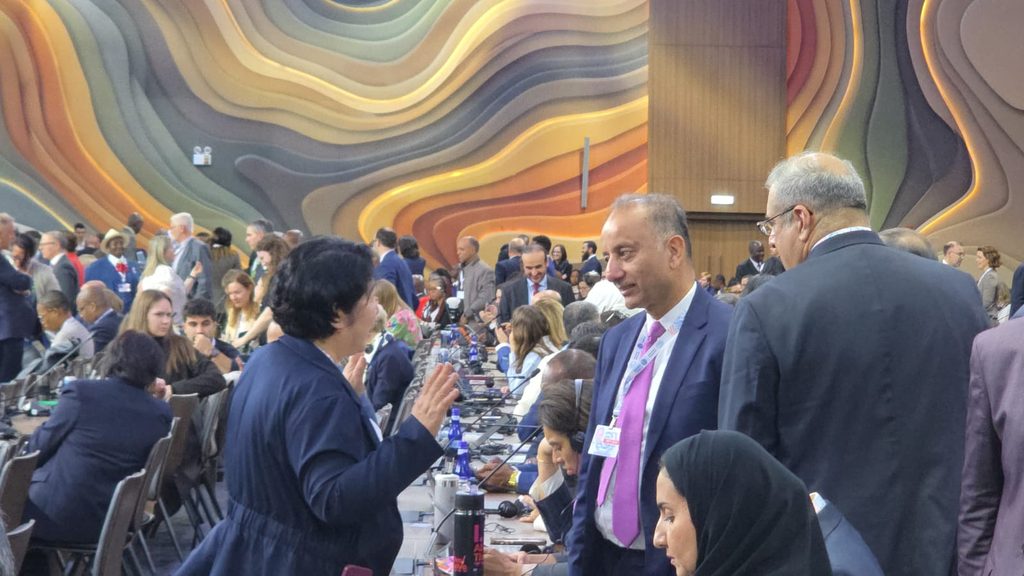
In addition, he will also call for predictable, adequate and accessible climate finance for developing countries to strengthen their resilience and pursue sustainable development.
The Prime Minister will also attend a High-Level Roundtable convened by the Presidency of the COP-31 on the sidelines of the Leaders’ Summit, and hold bilateral meetings with the Turkish leadership as well as several other world leaders.
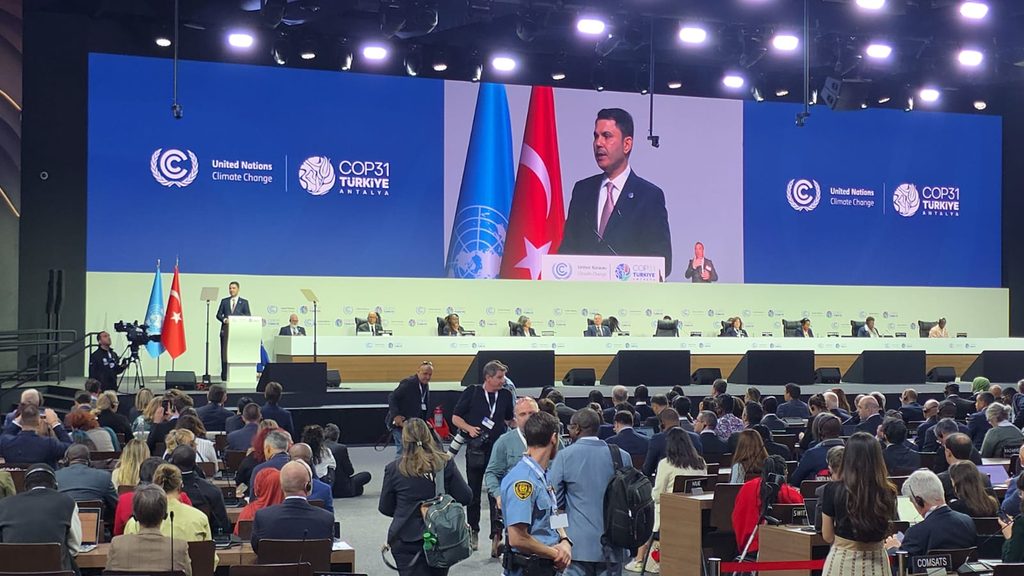
Prime Minister’s participation in the COP-31 Leaders’ Summit is an expression of Pakistan’s strong support for the climate agenda, and will provide Pakistan with an opportunity to reaffirm its commitment towards working closely with the international community to address the climate crisis.
COP 31 starting Yesterday, Minister Climate Change of Pakistan Mr. Tasadaq Malik attended the opening ceremony in Antalya, Türkiye.
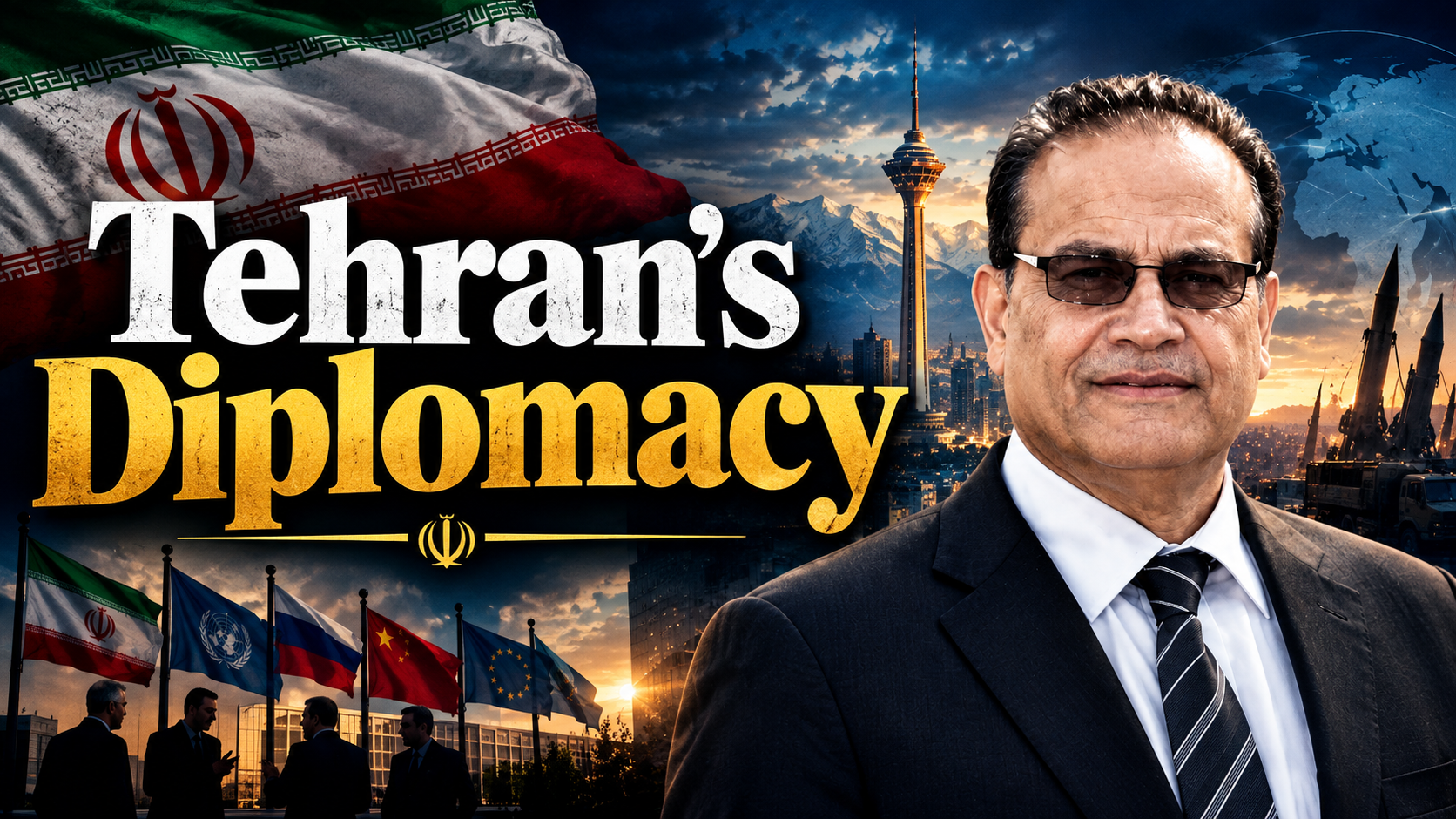
Paris (Imran Y. CHOUDHRY) :- Former Press Secretary to the President, Former Press Minister to the Embassy of Pakistan to France, Former MD, SRBC Mr. Qamar Bashir analysis : The arrival in Tehran of the defence minister of Saudi Arabia, the army chief of Pakistan and the intelligence chief ofTürkiye may prove more consequential than another round of American or Israeli military threats. Three powerfulMuslim countries, bound by the Makkah Joint Defence Agreement, sat across the table from Iran while Washington and Israel contemplated renewed military operations. The question is not merely what these leaders discussed, but what they may have quietly agreed to do—or refuse to do—when the next missiles begin flying.
The delegation was extraordinary in its composition. Saudi Defence Minister Prince Khalid bin Salman, Pakistan’s FieldMarshal Asim Munir and Turkish intelligence chief Ibrahim Kalin represented countries possessing enormous financial, military, diplomatic and strategic influence. Their collective appearance conveyed that Iran’s security could no longer be treated exclusively as a confrontation between Tehran, Washington and Tel Aviv. Regional powers were asserting their own interests in determining whether another devastating war would engulf their neighbourhood.
The war with Iran has transformed American military installations across the Gulf from instruments of deterrence into potential targets of retaliation. Reports and assessments of American military repositioning toward Israel, Jordan and other locations reflect this wider vulnerability. For Washington, geographic access remains a military advantage; for Gulf governments, that same access increasingly carries the possibility of devastating retaliation.
Saudi Arabia consequently faces an exceptionally difficult choice. American air defence systems, intelligence cooperation, maintenance arrangements and advanced weapons remain important to its security. Yet the presence ofAmerican forces can expose Saudi oil installations, airports, industrial infrastructure and civilian populations to Iranian orHouthi attacks. The attacks around Ras Tanura have demonstrated how rapidly regional warfare can threaten energy supplies and global economic stability. Riyadh must therefore calculate whether American protection is reducing its vulnerability or contributing to it.
Here lies the first possible hidden significance of the Tehran meeting. Iran may have sought assurances that Saudi Arabia,Pakistan and Türkiye would neither participate in renewed American-Israeli attacks nor facilitate them through military installations, airspace, intelligence or logistical support. No publicly disclosed agreement establishes that such promises were made. Nevertheless, the subject would be entirely consistent with Iran’s longstanding concern about foreign military infrastructure being used against it.
The second possibility points in the opposite direction. The Makkah Pact countries may have arrived not simply as sympathetic neighbours, but as a collective deterrent. Their defence agreement treats an attack against one member as a matter of common security. The presence of nuclear-armed Pakistan, NATO member Türkiye and economically powerful Saudi Arabia could therefore convey a warning that further Iranian or Houthi attacks against Saudi territory risk widening the conflict. Collective defence, however, does not automatically establish a commitment to join an American war.
This dual character makes the delegation particularly significant. It could simultaneously reassure Iran against foreign aggression and warn Tehran against attacking Saudi Arabia. Such diplomacy is not necessarily contradictory. It reflects an attempt to establish reciprocal restraint: regional states would avoid becoming launching platforms for attacks on Iran,while Iran would avoid retaliating against countries that remained outside the fighting. Whether such an understanding was actually reached remains undisclosed.
The third possibility concerns Qatar’s parallel diplomatic initiative. Unlike the three Makkah Pact countries, Qatar has maintained an intermediary role between Washington and Tehran. Its proposed seven-day confidence-building framework sought to bridge disagreements over nuclear activities, sanctions, maritime access and the wider conflict. Reports also indicate support for mediation from Pakistan, Saudi Arabia and Türkiye. Thus, the Tehran consultations could represent complementary diplomatic tracks rather than competing initiatives.
Iran’s response to the Qatari proposal was nevertheless uncompromising. Tehran objected to demands for nuclear concessions before meaningful economic relief, insisting that the American blockade of Iranian ports and restrictions on oil exports must be addressed first. Washington, conversely, wanted nuclear commitments from the beginning. The dispute was therefore not merely over the contents of a peace agreement, but over which party would surrender its leverage before receiving guarantees.
The most consequential outcome of the Tehran meeting may lie not in what was publicly announced, but in what was deliberately withheld. A day-long consultation involving the defence minister of Saudi Arabia, Pakistan’s army chief, Türkiye’s intelligence chief and Iran’s highest political and security authorities could hardly have been confined to the four lines of the joint communiqué. Such meetings necessarily involve extensive deliberations on the strengths, weaknesses, opportunities and threats arising from an ongoing war, including American military bases, Iranian retaliation, Saudi security, the Strait of Hormuz, economic sanctions and the consequences of another American-Israeli offensive.
Drawing upon my experience attending high-level meetings as Press Secretary and media adviser to the President of Pakistan, I know that public statements rarely disclose the full substance of sensitive diplomatic and security consultations.
The positive assessments expressed by the Iranian leadership and the visiting delegations strongly suggest that the participants found sufficient common ground to explore practical understandings and a coordinated pathway for responding to future developments.
Such understandings may include assurances of non-participation in renewed attacks against Iran, restrictions on the use of regional military facilities, reciprocal restraint toward Gulf countries and mechanisms for further consultations should Washington and Israel resume hostilities.
Kuwait and the other Gulf countries will therefore become important indicators. Their decisions concerning American bases, airspace, logistical support and diplomatic engagement could reveal whether the Tehran initiative develops into a broader regional non-aggression arrangement. The Houthis’ conduct will be equally revealing. A sustained reduction in attacks on Saudi infrastructure could indicate that Tehran and Riyadh have found a mechanism to separate Gulf security from the wider American-Israeli confrontation, although Houthi decision-making cannot simply be equated with Iranian instructions.
The timing adds urgency. Reports indicate concern about renewed American and Israeli military action around the November 3 American midterm elections. Whether such an offensive actually occurs remains uncertain. But if it does, the military effectiveness of the campaign will depend partly on regional access, intelligence, logistics and the willingness of neighbouring governments to absorb the consequences of Iranian retaliation.
Ultimately, Tehran may have achieved something strategically important without obtaining a single publicly declared concession: it has compelled influential regional governments to discuss security with Iran rather than merely discuss Iran with Washington. That is a meaningful diplomatic shift, even if its durability remains untested.
The real verdict on the Tehran meeting will not emerge from its carefully worded communiqué. It will emerge whenWashington next demands military access, when Israel considers another strike, and when Iran decides where its missiles will—or will not—fall. If regional governments refuse to become instruments of another war, the Makkah Pact may be remembered not as an alliance formed to confront Iran, but as the beginning of a Middle East determined to prevent outside powers from deciding its fate.


Long-lost Chevalier landscape found in charity shop

Heiress Peggy Guggenheim scandalised high society – and transformed modern art

Israeli attacks have turned Gaza into ‘toxic wasteland’, Oxfam says

New Chapter for Dragon Boating in Punjab and Khyber Pakhtunkhwa Provincial associations officially set up with sights locked on national competitions and international representation.

South Korea’s Yoo Useong Steps Onto the Global Strongman Stage as World Strongman Federation Professional Athlete

A Survey of Mata-E-Zeest


-
 Pakistan News1 month ago
New Chapter for Dragon Boating in Punjab and Khyber Pakhtunkhwa Provincial associations officially set up with sights locked on national competitions and international representation.
-
 Sports5 months ago
South Korea’s Yoo Useong Steps Onto the Global Strongman Stage as World Strongman Federation Professional Athlete
-
 Art & Culture1 year ago
A Survey of Mata-E-Zeest
-

 Europe News2 years ago
Chaos and unproven theories surround Tates’ release from Romania
-

 American News2 years ago
Trump expands exemptions from Canada and Mexico tariffs
-

 Art & Culture2 years ago
Will Snow White be a ‘victim of its moment’? How the Disney remake became 2025’s most divisive film
-

 Pakistan News1 year ago
Comprehensive Analysis Report-The Faranian National Conference on Maritime Affairs-By Kashif Firaz Ahmed
-

 Entertainment2 years ago
Champions Trophy: Pakistan aim to defend coveted title as historic tournament kicks off today