
Paris (Imran Y. CHOUDHRY) :- Former Press Secretary to the President, Former Press Minister to the Embassy of Pakistan to France, Former MD, SRBC Mr. Qamar Bashir analysis : One defining feature of President Xi Jinping’s leadership has been his emphasis on discipline, merit and accountability. Soon after taking office in 2012, he launched an anti-corruption campaign targeting both senior “tigers” and junior “flies.” Millions of officials have since been investigated or disciplined, reinforcing the principle that public office is a public trust. This resolve reflects a central warning in Xi Jinping: The Governance of China: “We must uphold the principle that all are equal before discipline, that there are no privileges in observing discipline, and that no one is immune from its enforcement.”
For Xi, effective governance must ultimately improve people’s lives. Development is therefore measured not only by economic growth but also by better public services, education, healthcare, environmental protection and social stability. China’s ability to pursue these goals over decades reflects the policy continuity described throughout The Governance of China. As Xi declared on assuming the country’s leadership, “The people’s wish for a happy life is our mission.”
China’s infrastructure revolution demonstrates this long-term approach. By the end of 2024, its railway system extended 162,000 kilometres, including 48,000 kilometres of high-speed rail—the world’s largest network. China also had 5.49 million kilometres of roads, including 190,000 kilometres of expressways; 263 transport airports; 129,000 kilometres of navigable waterways; and 22,219 productive port berths. These networks have reduced travel times, lowered logistics costs, integrated inland and coastal markets and supported national modernization. They embody Xi’s instruction in The Governance of China to “promote coordinated development and foster synergy,” turning connectivity into shared economic opportunity.
My visit to Fujian Province in 2012 offered an early glimpse of this transformation. Roads linked industrial parks with ports, universities worked with research centres, and efficient public services coexisted with clean, carefully planned cities. What impressed me most was not any single project, but the integration of transport, industry, education, technology and the environment within a strategy measured in decades. It reflected Xi’s insistence that “strategic issues are fundamental to the success of a political party and a country,” and that long-term goals must be pursued with consistency.
China’s manufacturing sector has similarly advanced from low-cost assembly to sophisticated industrial production. By 2025, manufacturing generated about US$4.82 trillion in value added—roughly one-quarter of national GDP—while China produced nearly one-third of global manufacturing output. Its factories now make electric vehicles, batteries, solar panels, high-speed trains, telecommunications equipment, robots, medical devices and aerospace components. In 2026, high-technology manufacturing was growing by more than 13 percent and equipment manufacturing by about 8.7 percent. This ascent up the value chain reflects Xi’s conviction in The Governance of China that “innovation is the primary driving force for development.”
Scientific research supplies the foundation for this industrial upgrading. By 2026, China’s R&D spending had reached about 2.8 percent of GDP and, when adjusted for purchasing power, was estimated at more than US$1.1 trillion. China led the Nature Index in high-quality research output, while the Chinese Academy of Sciences ranked among the world’s foremost research institutions. Facilities such as the FAST radio telescope, EAST fusion reactor and advanced quantum laboratories illustrate the scale of investment. As Xi states, “Science and technology are our primary productive force, talent is our primary resource, and innovation is our primary driver of growth.”
China’s digital economy makes this transformation visible in everyday life. Mobile payments allow vendors and rural businesses to participate in modern commerce, while e-commerce, cloud computing, artificial intelligence and automated logistics connect producers with consumers nationwide. In 2026, integrated-circuit production reportedly approached 280 billion units in the first half of the year, while Chinese companies competed in generative AI, robotics, autonomous mobility and smart manufacturing. During my 2024 visit, I saw digital technology woven seamlessly into transport, banking, retail, tourism and public services. This is the practical expression of Xi’s call to “accelerate the building of a digital economy, a digital society and a digital government.”
Environmental protection has become another pillar of China’s development strategy. After decades of industrialization caused serious pollution, ecological conservation moved to the centre of national policy. The Ecological and Environmental Code, adopted in March 2026, consolidated rules on pollution, biodiversity, conservation and climate action. The 15th Five-Year Plan targets a 17 percent reduction in carbon intensity by 2030, alongside continued progress toward peaking emissions before 2030 and achieving carbon neutrality before 2060. This policy is rooted in Xi’s best-known ecological principle in The Governance of China: “Lucid waters and lush mountains are invaluable assets.”
China is now the world’s largest renewable-energy investor and leading manufacturer of solar panels, wind turbines, electric vehicles and batteries. By May 2026, its installed generating capacity had reached 4.01 terawatts, with renewables accounting for about 61 percent. Solar capacity exceeded 1,240 gigawatts and wind approached 660 gigawatts, supported by ultra-high-voltage transmission, smart grids and expanding battery storage. Electric buses, metro networks and new-energy vehicles have also transformed urban transport. During my 2024 visit, I was impressed by the cleaner air, widespread electric vehicles and integration of green spaces into cities. These achievements answer Xi’s call to “accelerate the formation of green development models and green ways of life.”
China’s ecological commitment extends beyond energy. Afforestation, desertification control, river and wetland restoration, water conservation, soil rehabilitation and industrial pollution control have become integral to modernization. China nevertheless remains the world’s largest carbon emitter and still depends heavily on coal, making the transition incomplete. Yet its scale of renewable deployment and ecological restoration shows how planning, investment and technology can reconcile growth with sustainability. In Xi’s words, “Protecting the environment is protecting productivity, and improving the environment is boosting productivity.”
China’s experience also demonstrates the strategic value of investing in people. By 2026, it operated the world’s largest education system, with about 470,000 institutions, 286 million students and 18.7 million full-time teachers. More than 48.5 million students attended over 3,160 higher-education institutions, while vocational colleges supplied much of the skilled workforce required by industry. Universities have increasingly introduced programmes in AI, robotics, intelligent manufacturing and advanced materials. This emphasis follows Xi’s directive: “We must give high priority to the development of education, build China’s self-reliance and strength in science and technology, and rely on talent to pioneer and propel development.”
For developing countries—especially Pakistan—China offers practical lessons. Sustainable progress requires more than money or isolated projects: it demands visionary leadership, institutional continuity, quality education, vocational skills, technological innovation and disciplined execution. Pakistan’s youthful population can become an economic asset only if equipped with relevant skills and opportunities, while national priorities must survive changes of government and be judged by measurable outcomes. This is the essence of the people-centred modernization presented in The Governance of China: “Development is for the people, by the people, and its fruits are shared by the people.” China’s experience shows that when leadership, institutions and human capability move toward a common national purpose, transformation on an extraordinary scale becomes possible.
(To be continued in Part III: The Belt and Road Initiative, CPEC, China’s Global Vision, and the Future of the China–Pakistan Partnership.)
Xi Jinping’s Vision and the China–Pakistan Journey of 75 Years—Part II
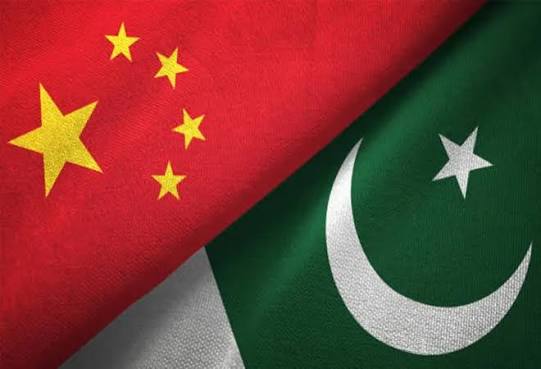
Xi Jinping’s Vision and the China–Pakistan Journey of 75 Years—Part II