
Medical
What is kratom, the ‘gas station heroin’ alarming officials in the US?

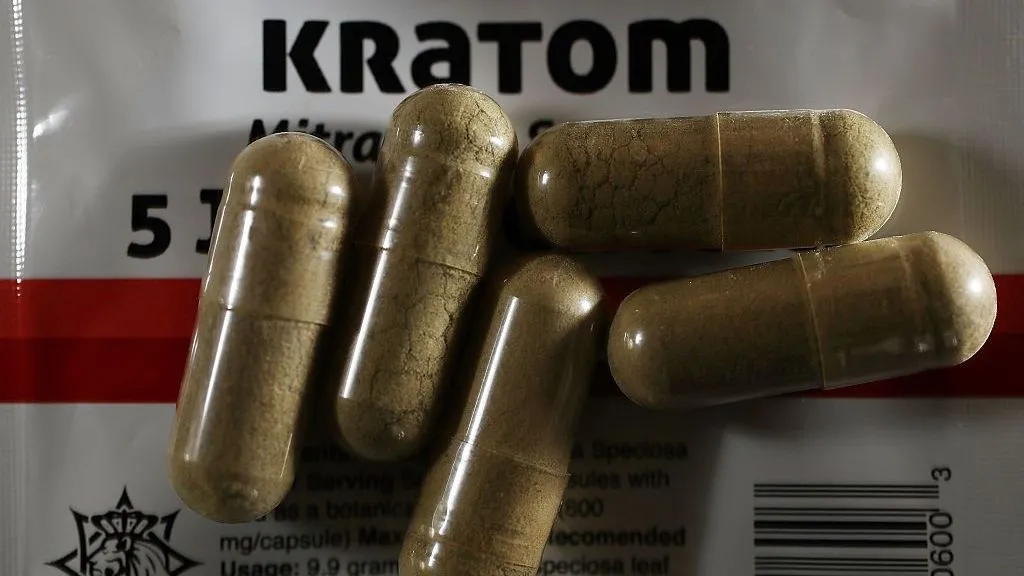
Jeffrey Deaver, a 58-year-old retired timber cutter in the state of Washington, has taken kratom for four years to help with severe chronic hip and knee pain.
He discovered the herbal product when he couldn’t find relief from doctors and while waiting for surgeries. Scared at first, he “started small”, but then took more until his pain went away.
“It was like a miracle,” Deaver said. “I could sleep. I could function.
“I just don’t know what I’d do without it.”
Kratom – an herb with opioid-like effects – has grown in popularity in the US over the last decade, and is typically purchased over-the-counter and consumed in pill or liquid form.
This week, investigators found packaged kratom in the possession of two deceased University of Mississippi students. Although their deaths were not attributed to kratom, officials are now issuing warnings about its consumption.
For years, anti-kratom advocates have pushed for bans, and in some countries, like the UK, it’s illegal. But Kratom is not regulated by the US Food and Drug Administration and is legal in some states, including Mississippi.
Here’s what we know about it:
What is kratom?
Kratom is a tree that is native to Southeast Asia in countries like Thailand, Malaysia and Indonesia.
It’s been used for centuries for its stimulant properties, grounded and consumed similar to tea.
As its popularity spread around the globe, it entered the US market as a supplement around 2016.
“That’s really where the problems began,” said Dr Shane Speights, dean of the New York Institute of Technology College of Osteopathic Medicine at Arkansas State University.
In the US kratom is mostly sold in highly concentrated forms either via pill, powder or liquid, Speights said.
It’s also widely available – found everywhere from convenience stores and petrol stations to vape shops.
Also, because of the supplement classification, kratom products are not federally regulated.
“There’s no way to know exactly what you’re getting,” Speight said. “You could go and create something in your basement, market it as a supplement, and nobody’s really going to check and see what’s in it.”
What is kratom used for?
Kratom is often marketed as a safe, natural herbal supplement that helps with pain management, anxiety and depression.
In lower doses, its stimulant properties create a “caffeine-kind of buzz”, Speights explained.
Because of its opioid-like effects, it has also been used with the goal of curbing addictions to actual opioids like fentanyl.
Those properties stem from the way the plant’s compounds – like 7-Hydroxymitragynine – activate various hormones, including dopamine.
What are the effects and how dangerous is it?
“It’s almost like taking a narcotic,” Speights said. “At higher doses, it can create more euphoria and give you more of a general high.”
Hallucinations are possible, too.
The higher doses also pose greater risk for adverse side effects.
That includes central nervous system (CNS) depression – which is “where the deaths come in,” Speights said.
CNS can result in cardiovascular collapse and loss of breathing.
Withdrawal symptoms and addiction are also risks, said Jana Wu, director of clinical integration at the addiction treatment centre Mountainside.
“It affects marriages, relationships,” she said. “I’ve seen people lose jobs, spend thousands of dollars a month on it.”
Because it’s easy to develop a high tolerance to the herb, users may need to take an increasing amount to achieve the same effect over time.
“I’ve worked with people that were taking like up to 20 pills a day,” Wu said.
Experts told the BBC that the biggest dangers come from the fact that kratom is not federally regulated.
“Is there a safe dose?” Speights said. “My answer is going to be no because – I’m going to go back to this – we don’t know what’s in it.”
Is kratom legal?
Kratom is banned in 11 states: Alabama, Arkansas, Connecticut, Indiana, Kansas, Louisiana, Massachusetts, North Dakota, Tennessee, Vermont and Wisconsin.
Massachusetts was the last state to make it illegal, issuing a temporary emergency order in August.
Ten years earlier, the US Drug Enforcement Agency (DEA) had moved to classify kratom as a Schedule 1, the most dangerous level for drugs, calling it “an imminent hazard to public safety”.
But the effort failed a few months later, after the justice department said it received “numerous comments from members of the public challenging” the attempt.
That leaves states to take action, like Arizona, which recently sued a company selling kratom beverage products.
Groups opposed to kratom want states to do more, saying “gas-station drugs are poisoning our communities”.
Pro-kratom groups like the American Kratom Association are pushing for bans against synthetics “posing as natural kratom”.
Internationally, kratom is banned in the UK. In Europe, the laws vary by country.
In Malaysia, where the kratom tree is native, consumption and sale are banned under the Poisons Act of 1952.














Patients prescribed drugs for movement disorders – including restless leg syndrome (RLS) – say doctors did not warn them about serious side effects that led them to seek out risky sexual behaviour.
Twenty women have told the BBC that the drugs – given to them for RLS, which causes an irresistible urge to move – ruined their lives.
A report by drugs firm GSK – seen by the BBC – shows it learned in 2003 of a link between the medicines, known as dopamine agonist drugs, and what it described as “deviant” sexual behaviour. It cited a case of a man who had sexually assaulted a child while taking the drug for Parkinson’s.
While there is no explicit reference to this side effect in patient leaflets, the UK medicines regulator told us there was a general warning about increased libido and harmful behaviour. GSK says a risk of “altered” sexual interest is also referred to in the leaflets.
Some of the women who described being drawn to risky sexual behaviour told us they had no idea of what was causing it. Others said they felt compelled to gamble or shop with no history of such activities. One accumulated debts of more than £150,000.
Like many women, Claire first developed RLS during her pregnancies. The relentless need to move was often accompanied by sleeplessness and a crawling sensation under her skin.
The condition persisted after giving birth and she was prescribed the dopamine agonist drug Ropinirole. She says she was not warned by doctors of any side effects. It initially worked wonders for her RLS, she says, but after a year or so she began feeling unprecedented sexual urges.
“The only way I could describe it is it was just deviant,” she tells us – using that word without any knowledge of the GSK research which had established a link with such behaviour.

Claire says she began leaving her house in the early hours of the morning to cruise for sex. Wearing a see-through top and jacket, she would flash her chest at any man she could find. She did this regularly, she says, and in increasingly dangerous locations, despite having a partner.
“There remains an element in your head that knows what you’re doing is wrong, but it affects you to the point that you don’t know you’re doing it.”
Claire says it took years to connect these urges with her medication – and they disappeared almost immediately when she stopped taking it. She feels complete “shame” and is “mortified” at the danger she placed herself in.
Impulsive behaviours, including gambling and increased sex drive, have long been listed as side effects in medicine leaflets for dopamine agonist drugs – and are thought to affect between 6% to 17% of RLS patients taking them, according to health guidance body NICE. A “common” side effect of any medicine is considered to only affect 1% of people who take it, according to the NHS.
The drugs work by mimicking the behaviour of dopamine, a natural chemical in our brains which helps regulate movement. It is known as the “happy hormone” because it is activated when something is pleasurable or we feel rewarded.
But agonist drugs can over-stimulate these feelings and under-stimulate the appreciation of consequences – leading to impulsive behaviour, according to academics.

The cases of what the GSK report from 2003 described as “deviant behaviour” involved two men who were prescribed Ropinirole for Parkinson’s disease. In one, a 63-year-old-man sexually assaulted a seven-year-old girl, leading to a custodial sentence.
The documents said the perpetrator’s libido had increased significantly from the start of his treatment with Ropinirole and his “libido problem subsequently resolved” after his dose was reduced.
In the second case, a 45-year-old man carried out “uncontrolled acts of exhibitionism and indecent behaviour”. His sex drive was reported to have increased prior to being prescribed Ropinirole but his urges “intensified” after the treatment.
Prevalence rates of what GSK calls “deviant” sexual behaviours caused by the drugs are unknown and tend to be under-reported by those who experience them, according to Valerie Voon, a professor of neuropsychiatry at the University of Cambridge.
“There’s a lot of stigma and shame attached to it, and people don’t realise that it’s associated with a medication,” she says.
Prof Voon believes risky sexual behaviours – beyond a purely increased libido – should be specifically warned about and screened by the NHS, because their impact can be “devastating”.
RLS is believed to affect about one in 20 adults – and women are about twice as likely to suffer as men.
The 20 sufferers we spoke to say not only had doctors failed to tell them of the potentially serious side effects of the drugs, but also failed to review the impact of the medication on their bodies subsequently.
Sarah was in her 50s when she was prescribed another dopamine agonist drug made by a different manufacturer.
“Previously I’d have had no interest if Brad Pitt walked in the room naked,” she says. “But it turned me into this raging woman who kept taking sexual addiction further.”
Sarah began selling used underwear and videos of sex acts online – and organising telephone sex with strangers. She also began shopping compulsively – ending up with £30,000 of debt.
To combat the effects of the dopamine agonist, she began self-medicating by taking pain-relieving opioids and sleeping pills. She ended up being admitted to rehab – but that meant her driving licence was taken away and she lost her job.
“I turned to things that weren’t healthy – I knew that the behaviour wasn’t me, but I couldn’t control it,” she tells the BBC.
A third woman, Sue, says she was prescribed two different dopamine agonist drugs without being warned of compulsive behaviour side effects on either occasion. She even mentioned recent gambling behaviour when the second drug was prescribed, she says. She went on to rack up debts of £80,000.
“The effect on my family was horrific – it was life-changing money to lose,” she says. “But at the time I didn’t know it was no fault of my own.”
A class action was brought against GSK in 2011 by four sufferers of Parkinson’s disease – the BBC has learned. They said Ropinirole led to gambling debts and broken relationships.
They also complained that despite a link between such behaviours and the drug having been established in medical studies as early as 2000, GSK had failed to include any warnings in its product literature until March 2007. The class action was settled but GSK denied liability.
Cases of serious side effects have also been reported in other countries, particularly in relation to the use of drugs for Parkinson’s disease.
In France, a court awarded damages to a father of two who complained that Ropinirole had given him compulsive homosexual urges, while another man without a criminal record began torturing cats.
In the US, the American Academy of Sleep Medicine recommends the drugs should only be used for short-term treatment, such as end-of-life care.

Many of the women the BBC spoke to also complained that prolonged use of the drugs also worsened their underlying RLS. It meant their dosage had been increased which, in turn, had exacerbated their compulsive behaviour – a process known as augmentation.
Dr Guy Leschziner, a consultant neurologist, says the drugs still play an important role but he believes that drug companies, health authorities and doctors need to better warn patients of these side effects.
“Not everybody knows the kinds of really quite dramatic changes that can occur,” he says.
In a statement, GSK told the BBC Ropinirole had been prescribed for more than 17 million treatments and undergone “extensive clinical trials”. It added the drug had proven to be effective and had a “well-characterised safety profile”.
“As with all medicines, [it] has potential side effects and these are clearly stated in the prescribing information,” it said.
In response to its 2003 research that had found a link with “deviant” sexual behaviour, GSK told us this was shared with health authorities and had informed updates in prescribing information – which now lists “altered or increased sexual interest” and “behaviour of significant concern” as side effects.
The current patient information leaflet for Ropinirole makes specific reference to changes in sexual interest on five occasions – almost exclusively warning about the frequency or strength of such feelings as potentially “abnormally high”, “excessive” or “increase[d]”.
The UK’s Medicines and Healthcare products Regulatory Agency (MHRA), said that while a specific reference to “deviant” sexual behaviour is not included in warnings, such impulses vary and a general warning about activities which may be harmful is included.
It also said that it is important for healthcare professionals to explain the possible risk to patients and not all experience these types of side effects.
The Department of Health and Social Care declined to comment.
Some names have been changed in this article to protect people’s identities.
Taken From BBC News


PTI’s protest postponement to double security cost in Islamabad

Any attempt to divert Pakistan’s water to be treated as act of war, India ‘must make no mistake about it’: PM at UNGA

Scrimshaw: The controversial art form on the brink of extinction


-

 Sports3 months ago
South Korea’s Yoo Useong Steps Onto the Global Strongman Stage as World Strongman Federation Professional Athlete
-

 Art & Culture1 year ago
A Survey of Mata-E-Zeest
-

 Europe News2 years ago
Chaos and unproven theories surround Tates’ release from Romania
-

 American News2 years ago
Trump expands exemptions from Canada and Mexico tariffs
-

 American News2 years ago
Trump Expels Zelensky from the White House
-

 Art & Culture2 years ago
Will Snow White be a ‘victim of its moment’? How the Disney remake became 2025’s most divisive film
-

 Entertainment2 years ago
Champions Trophy: Pakistan aim to defend coveted title as historic tournament kicks off today
-

 Pakistan News1 year ago
Comprehensive Analysis Report-The Faranian National Conference on Maritime Affairs-By Kashif Firaz Ahmed