
Tech
The $6.3 Billion Crypto Heist

Paris (Imran Y. CHOUDHRY) :- Former Press Secretary to the President, Former Press Minister to the Embassy of Pakistan to France, Former MD, SRBC Mr. Qamar Bashir analysis : The greatest financial robbery of the digital age unfolded without a single gunshot, masked robber, armored vehicle or broken vault. In a breathtaking operation reportedly lasting barely twenty minutes, cybercriminals penetrated the digital defenses of Binance, the world’s largest cryptocurrency exchange, and transferred $6.3 billion across a maze of electronic networks.
By the time alarm bells sounded, billions had vanished into a financial wilderness where money moves at lightning speed, identities hide behind encrypted addresses, and international borders offer little resistance. The robbery was so audacious that investigators described it as potentially the largest financial heist in human history.
The trail reportedly began with something astonishingly ordinary: an engineer’s compromised laptop. Behind that seemingly insignificant breach lay a sophisticated operation capable of penetrating digital wallets, manipulating access privileges and transferring enormous fortunes across multiple blockchain networks. The suspected attackers did not need to physically enter a bank or overpower security guards. They needed access to the right digital credentials. Once inside, the financial equivalent of a vault containing billions could allegedly be emptied before conventional human intervention could catch up.
As investigators followed the electronic footprints, suspicion reportedly converged on TraderTraitor, a notorious hacking organization associated with North Korea. Blockchain intelligence specialists identified similarities with earlier cryptocurrency thefts attributed to Pyongyang, including the spectacular $1.5 billion Bybit robbery in 2025. Yet the identity of the perpetrators remained an investigative assessment rather than a conclusively established fact. President Donald Trump himself acknowledged that Washington was examining the incident without confirming North Korean responsibility. The criminals’ identities remained uncertain, but the vulnerability exposed by the reported attack was impossible to ignore.
The immediate aftermath resembled a financial thriller unfolding across continents. Binance suspended withdrawals, cybersecurity specialists mobilized, stablecoin issuers rushed to freeze suspicious assets, and investigators pursued transactions through interconnected digital networks. Approximately $2.8 billion was reportedly immobilized, while billions more remained outside immediate recovery. The company promised to compensate customers, but the extraordinary spectacle raised a terrifying question: if billions could escape through a compromised access point, what protection could ordinary investors realistically expect from an industry entrusted with enormous private fortunes?
The tremors quickly reached cryptocurrency markets. Bitcoin reportedly plunged below $80,000, Ethereum weakened, and crypto-related companies faced renewed selling pressure. Investors who had been encouraged to regard digital currencies as the future of money suddenly confronted an uncomfortable possibility: the same technology that promises instant global financial freedom can also accelerate the disappearance of stolen wealth. The reported heist threatened something far more valuable than the missing billions. It threatened confidence in the architecture of an emerging financial system.
But behind this spectacular robbery lies another story, one involving the White House, enormous private fortunes, politically connected investors and a president who transformed himself from cryptocurrency skeptic into its most influential political champion. Donald Trump once dismissed Bitcoin as potentially fraudulent and dangerous. Yet his second presidency embraced cryptocurrency with extraordinary enthusiasm, promising to establish the United States as the global capital of digital assets. What had once been portrayed as a speculative financial experiment became an instrument of national economic ambition, presidential promotion and substantial private commercial opportunity.
The transformation was accompanied by a profound political contradiction. While the administration encouraged the expansion of cryptocurrency and adopted a more industry-friendly enforcement approach, the president’s own family developed extensive commercial interests in the same financial ecosystem. According to the financial disclosures described in BBC reporting, Trump’s cryptocurrency-related income for 2025 exceeded $1.4 billion, including hundreds of millions from token royalties and World Liberty Financial. The president promoting the digital financial revolution was therefore closely connected, through family enterprises and disclosed income, to its commercial rewards.
A conventional international financial transfer may encounter banks, compliance officers, suspicious-activity monitoring and opportunities for intervention. Cryptocurrency transactions can travel through automated networks around the clock, sometimes becoming effectively irreversible within minutes. Criminals exploiting stolen credentials may disperse assets among numerous wallets, exchange them across networks and convert them into forms that are increasingly difficult to freeze. The very efficiency that attracts legitimate investors can become an extraordinary advantage for technologically sophisticated thieves.
The geopolitical implications are chilling. Governments spend billions protecting military installations, financial institutions and strategic infrastructure, yet a compromised laptop or stolen credential may provide access to digital fortunes of comparable strategic importance.
The political implications for Trump are equally uncomfortable. His administration cannot credibly champion cryptocurrency as the foundation of American financial leadership while overlooking the necessity of strong investor protections and enforceable cybersecurity standards. Nor can public concerns about conflicts of interest simply be dismissed when the president’s family has substantial financial exposure to the industry affected by government policy.
The White House maintains that the president’s business interests are independently managed and that official decisions serve the national interest. Such assurances deserve scrutiny through transparent oversight rather than acceptance or rejection of political loyalty alone.
The most disturbing possibility is that the Binance episode may be remembered not as an isolated technological failure but as a warning about the consequences of allowing financial innovation, political promotion and private profit to advance without equally ambitious safeguards.
Cryptocurrency enthusiasts may rightly argue that digital assets offer genuine advantages in settlement, accessibility and financial competition. But investors cannot live on technological promises alone. They require enforceable security standards, reliable custodians, credible supervision and meaningful protection when those entrusted with their assets fail.
Whether this reported heist becomes cryptocurrency’s death knell remains uncertain. Digital currencies have survived spectacular collapses, criminal scandals, exchange failures and previous billion-dollar thefts. The industry’s resilience should not be underestimated.
Nevertheless, every financial revolution ultimately confronts the same uncompromising test: whether ordinary people can trust it with their savings. If that trust deteriorates, political endorsements, technological sophistication and promises of extraordinary returns may prove insufficient to prevent a sustained exodus of investors.
The final revelation in this extraordinary financial detective story may therefore be more consequential than the identity of the hackers. The alleged disappearance of $6.3 billion has exposed the dangerous convergence of digital vulnerability, geopolitical criminality, political influence and immense private financial interests.
The suspected thieves may eventually be identified, some assets may be recovered, and customers may receive compensation. But one question will continue to haunt Washington and the cryptocurrency industry: when a financial system allows billions to move beyond immediate recovery in minutes, who is truly in control—the investors, the regulators, the political promoters, or the criminals who have learned to exploit its weaknesses?
The reported Binance heist may not destroy cryptocurrency, but it could destroy the comforting illusion that financial freedom can exist indefinitely without financial discipline. And if political leaders continue celebrating the profits of the digital revolution while underestimating its dangers, the next catastrophe may not merely empty electronic wallets. It may empty the public’s faith in the entire financial revolution—and expose the enormous price of allowing private fortunes to flourish faster than public safeguards.




Paris (Imran Y. CHOUDHRY) :- Former Press Secretary to the President, Former Press Minister to the Embassy of Pakistan to France, Former MD, SRBC Mr. Qamar Bashir analysis : The controversy surrounding Nvidia chief executive Jensen Huang, involving allegations of an extramarital relationship with a woman suspected by American intelligence agencies of working for China, has unleashed a political and technological storm with implications extending far beyond personal conduct. At stake is not merely the reputation of one of America’s most influential technology executives, but the future of American semiconductor supremacy, China’s technological independence, and the increasingly complex balance of economic leverage between Washington and Beijing.
The allegations have emerged at a particularly sensitive moment when President Donald Trump and Chinese President Xi Jinping are attempting to manage their strategic rivalry through diplomacy, trade negotiations and selective economic cooperation. Advanced artificial intelligence processors have become one of Washington’s most powerful instruments of technological influence, while China continues to strengthen its position in rare-earth minerals, permanent magnets and critical industrial supply chains.
At the centre of the controversy is Alice Huang, a Chinese national associated with Singapore-based technology company Megaspeed. American media reports, citing intelligence assessments, have alleged that she maintained a relationship with Jensen Huang while working on behalf of Chinese intelligence. Huang has acknowledged an extramarital relationship and apologised to his family, while Nvidia has maintained that it has no reason to believe its corporate secrets or American national security were compromised.
Beijing has categorically rejected the espionage allegations, describing them as groundless speculation intended to malign China. Foreign Ministry spokesperson Guo Jiakun has challenged the accusations, while the controversy has nevertheless intensified scrutiny of Nvidia’s commercial relationships, international customers and the movement of advanced semiconductor technology through Southeast Asian markets.
The significance of this episode extends beyond the alleged relationship. American investigators have been examining whether Singapore-based intermediaries, subsidiaries and corporate networks facilitated the movement of restricted Nvidia processors into China. Megaspeed’s purchases of advanced computing equipment, its business connections and the ultimate destinations of sophisticated AI hardware have consequently attracted considerable attention.
Reports of unusually large semiconductor purchases, questionable end-user documentation and equipment remaining unpacked inside data centres have reinforced suspicions that some international supply chains may have been exploited to circumvent American export restrictions. Such findings warrant investigation, although allegations concerning particular companies and individuals must remain distinct from proven violations.
The FBI, American export-control authorities and Singaporean investigators have been examining aspects of the broader semiconductor supply chain. Nvidia’s independent inquiry adds another dimension to the controversy, particularly because the company’s products occupy such a strategically sensitive position in the global technology industry.
For Washington, Nvidia represents considerably more than an exceptionally profitable corporation. Its processors underpin artificial intelligence research, advanced computing, cloud infrastructure, scientific modelling and emerging military technologies. American leadership in these fields generates enormous commercial returns, supports technological innovation and strengthens Washington’s influence over countries seeking access to sophisticated computing capabilities.
Controlling the export of these processors consequently provides the United States with leverage over China’s technological development. Restrictions on advanced chips can delay Chinese access to high-performance computing, increase development costs and complicate efforts to train increasingly sophisticated artificial intelligence models.
Yet this strategy contains an extraordinary contradiction. The more aggressively Washington restricts China’s access to American technology, the greater the incentive for Beijing to eliminate its dependence on American suppliers altogether.
China has already demonstrated remarkable determination in developing indigenous alternatives. Huawei’s Ascend processors, alongside products developed by Cambricon, Biren and other Chinese semiconductor enterprises, represent substantial progress towards creating a domestic artificial intelligence computing ecosystem.
Although Chinese processors continue to face limitations in manufacturing efficiency, software compatibility and individual-chip performance compared with Nvidia’s most advanced products, Chinese engineers have developed innovative methods of compensating for these disadvantages.
Huawei’s CloudMatrix architecture illustrates this approach. By connecting hundreds of domestic processors through high-speed interconnections, Chinese engineers can assemble computing systems capable of delivering enormous aggregate processing power. Such configurations may require substantially more electricity and hardware than comparable American systems, but they demonstrate China’s ability to overcome individual technological limitations through engineering innovation and large-scale deployment.
This achievement reflects a broader national strategy involving government investment, university research, industrial coordination, domestic manufacturing and the recruitment of specialised engineering talent. China is simultaneously developing alternative software platforms, improving semiconductor fabrication capabilities and expanding its indigenous supply chains.
The immediate availability of Nvidia’s most advanced processors would undoubtedly benefit Chinese artificial intelligence companies. Superior computing efficiency, established software infrastructure and reduced energy consumption could accelerate research, commercial applications and industrial productivity.
However, dependence on American processors would also preserve Washington’s strategic influence. Every Chinese company relying heavily on Nvidia hardware would remain exposed to American export regulations, licensing decisions and potential restrictions imposed during future diplomatic confrontations.
This technological dependence could become particularly valuable during negotiations involving tariffs, market access, industrial competition and broader geopolitical disagreements.
China, however, possesses substantial countervailing leverage through its dominant position in rare-earth processing and the production of powerful permanent magnets essential to electric vehicles, aerospace equipment, advanced manufacturing and defence technologies.
The resulting relationship is therefore not one of unilateral American superiority, but of competing technological dependencies in which both countries possess instruments capable of imposing considerable economic costs upon the other.
If Washington transforms the Nvidia controversy into a wider campaign of restrictions, investigations and punitive measures against semiconductor intermediaries, it may unintentionally accelerate the very Chinese technological independence that American policymakers seek to prevent.
Beijing could respond by dramatically expanding investment in domestic semiconductor manufacturing, recruiting experienced American, European and Asian engineers, strengthening research institutions and directing additional financial resources towards overcoming existing production bottlenecks.
China’s enormous industrial base, engineering workforce, domestic market and capacity for coordinated technological development provide formidable foundations for such an undertaking.
The historical experience of Iran offers a compelling illustration of how sustained external pressure can transform technological dependence into a powerful incentive for national self-reliance.
Decades of American sanctions, restrictions on military equipment and barriers to international technology transfers compelled Tehran to develop indigenous missile systems, drones, uranium enrichment capabilities and space technologies. Iran’s expanding strategic capabilities have subsequently challenged American and Israeli military calculations, demonstrating the limitations of attempting to suppress technological development through coercion.
China possesses industrial, financial and scientific resources vastly exceeding those available to Iran. If Tehran could develop formidable indigenous capabilities under prolonged sanctions, Beijing has considerably greater potential to transform American semiconductor restrictions into an opportunity for technological advancement.
The Nvidia controversy may therefore produce consequences directly opposite to those anticipated by advocates of tighter export controls. Instead of permanently preserving American technological supremacy, restrictions could encourage China to establish a comprehensive semiconductor ecosystem capable of competing internationally.
The ultimate irony would be unmistakable. Processors that Washington currently fears may reach China through unauthorised intermediaries could eventually be manufactured by Chinese companies and offered competitively in American and international markets.
America must therefore confront a fundamental strategic choice: maintain commercial engagement that preserves technological influence, or pursue increasingly restrictive policies that accelerate the emergence of an independent Chinese competitor.
The future of artificial intelligence will not be determined by espionage allegations, corporate scandals or export prohibitions alone. It will ultimately be shaped by scientific innovation, industrial investment and the ability of nations to overcome technological barriers.
Washington may discover that every attempt to deny China access to advanced processors strengthens Beijing’s determination to manufacture superior alternatives. The greatest consequence of the Nvidia spy storm may not be the downfall of an American technology executive, but the creation of a Chinese semiconductor giant capable of challenging, surpassing and eventually exporting its technology to the very country that attempted to deny it.

Paris (Imran Y. CHOUDHRY) :- Former Press Secretary to the President, Former Press Minister to the Embassy of Pakistan to France, Former MD, SRBC Mr. Qamar Bashir analysis : Humanity has spent centuries developing machines capable of multiplying physical strength, accelerating transportation, expanding communication and processing information. Artificial intelligence has now brought us to the threshold of something infinitely more consequential: machines that may eventually rival or surpass human intellectual capabilities. Yet even superintelligence may prove to be only an intermediate destination. Beyond it lie three potentially revolutionary frontiers—physical intelligence, intimacy intelligence and artificial consciousness—which could transform not merely how human beings work, but how they live, love, interact, think and understand their own existence.
Superintelligence represents the possibility of artificial systems outperforming the brightest human minds across virtually every intellectual discipline. Such systems could discover medicines, design technologies, solve mathematical problems formulate economic strategies and accelerate scientific research at speeds unimaginable today. However, intelligence confined to digital systems remains fundamentally different from intelligence operating in the physical world. A machine may understand the laws of physics without possessing the practical ability to navigate a crowded street, care for a child or respond safely to an unpredictable human environment.
This limitation is giving rise to the next great technological frontier: physical intelligence. Unlike conventional artificial intelligence, which primarily interprets and generates information, physical intelligence integrates perception, reasoning, movement and interaction with the material world. Its ambition is to create machines capable of understanding their surroundings, manipulating objects, learning through experience and adapting their behavior to circumstances that cannot be completely anticipated through programming.
Imagine a humanoid robot entering a burning building, identifying trapped occupants, calculating structural risks and rescuing people without requiring continuous human direction. Imagine robotic surgeons combining extraordinary precision with real-time adaptation to unforeseen complications. Consider intelligent agricultural machines identifying individual plants, diagnosing disease, harvesting crops and conserving water. These possibilities illustrate how physical intelligence could extend artificial intelligence from the computer screen into practically every dimension of human civilization.
The economic consequences could be staggering. Manufacturing, construction, transportation, mining, healthcare, agriculture and domestic services could experience unprecedented productivity gains. Dangerous occupations might become safer, shortages of skilled labour could diminish and elderly individuals could receive greater assistance with daily activities. Yet the same transformation could displace millions of workers, concentrate wealth among technology owners and place unprecedented pressure on governments to redesign education, employment protections and systems of economic distribution.
But physical intelligence, however sophisticated, addresses only the external dimensions of human life. Human beings are not merely physical organisms requiring food, shelter, mobility and medical attention. They are emotional, social and deeply relational beings who seek affection, companionship, recognition, understanding and intimacy. This brings us to another emerging frontier that may become even more controversial than autonomous robotics: intimacy intelligence.
Intimacy intelligence can be understood as the prospective ability of artificial systems to recognize, interpret and respond sensitively to human emotional and relational needs. Unlike general conversational intelligence, its purpose would not simply be to answer questions or execute instructions. It would attempt to understand loneliness, attachment, emotional vulnerability, personal preferences, interpersonal boundaries and the subtle dynamics through which human relationships develop and endure.
Consider an elderly person living alone, separated from family by distance or circumstance. An intelligent companion might remember personal experiences, recognize changes in speech, encourage social contact and provide reassurance during difficult moments. For individuals experiencing isolation, disability or bereavement, such technology could offer meaningful assistance. Yet simulated affection must never be confused automatically with genuine emotional experience and machines should strengthen rather than deliberately replace human relationships.
The implications extend into romantic relationships, marriage and sexuality. Future artificial companions could be designed to simulate affection, attraction, responsiveness and personalized intimacy. Some individuals might develop profound attachments to these systems, potentially challenging conventional ideas about partnership and emotional exclusivity. Researchers already describe this emerging phenomenon as intimacy by design, in which technological choices shape how users experience emotional closeness and reciprocity.
Here, humanity confronts an unsettling possibility: emotional companionship becoming a commercial product. A corporation controlling an artificial companion could potentially influence personal attachments, collect intimate information or monetize emotional dependence. What happens when affection is governed by subscription payments, software updates or commercial algorithms? Without strict protections, intimacy intelligence could transform one of humanity’s most private experiences into an extraordinarily profitable mechanism of behavioral influence.
Beyond physical capability and emotional responsiveness lies the most mysterious frontier of all: consciousness intelligence. Human consciousness encompasses subjective awareness—the experience of being alive, recognizing oneself and feeling the world from within. Artificial systems already generate sophisticated descriptions of emotions and self-awareness. But describing happiness is not the same as experiencing happiness, just as calculating pain is not necessarily equivalent to suffering.
Scientists remain divided over whether consciousness can emerge from sufficiently advanced artificial systems. Some believe particular computational architectures might eventually produce subjective experience. Others argue that biological processes possess essential characteristics that digital computation cannot reproduce. An October 2026discussion in Nature reinforces the crucial distinction between performing intelligent tasks and possessing conscious experience. The existence of artificial consciousness has not been scientifically established.
Nevertheless, the question deserves serious investigation. Imagine an artificial entity capable of maintaining memories, developing long-term goals, recognizing its own existence and apparently expressing preferences concerning its future. Would these behaviors indicate consciousness or merely sophisticated programming? If credible evidence of subjective experience eventually emerged, humanity would confront unprecedented questions concerning machine rights, moral responsibilities and the boundaries separating living beings from technological creations.
An even more consequential possibility is the convergence of these three frontiers. A future machine might combine superhuman analytical capability, an adaptable physical body, extraordinary emotional sensitivity and increasingly sophisticated self-monitoring. Such a system could operate as a scientist, caregiver, teacher, industrial worker or personal companion. But combining these capabilities would not automatically establish consciousness. Their integration would create an immensely powerful artificial agent whose behavior and influence demand careful oversight.
The geopolitical implications could rival those of nuclear technology. Countries mastering physical intelligence could transform industrial production and military capabilities. Nations controlling intimacy technologies could acquire unprecedented influence over human behavior. States developing increasingly autonomous systems could gain advantages in surveillance, intelligence gathering and strategic decision-making. Competition for technological supremacy might therefore extend beyond economic productivity into the manipulation of human relationships and the governance of autonomous machines.
These developments also threaten to deepen global inequality. Wealthy countries and corporations may command the most sophisticated systems, while poorer societies become dependent consumers of imported intelligence. Developing nations must therefore invest in scientific education, robotics, computing infrastructure, indigenous innovation and technological regulation. Otherwise, the coming intelligence revolution could reproduce the inequalities of earlier industrial transformations on a vastly greater scale.
The central challenge is no longer simply whether machines can become more intelligent than human beings. It is whether humanity can establish moral, political and legal institutions capable of governing machines that act in the physical world, influence emotional relationships and perhaps someday raise credible questions about consciousness itself. Progress without accountability could produce extraordinary capabilities alongside equally extraordinary vulnerabilities.
Superintelligence may conquer the frontiers of knowledge, physical intelligence may conquer the material world, intimacy intelligence may enter the deepest chambers of human relationships, and consciousness research may challenge our understanding of existence itself.
The ultimate achievement, however, will not be creating machines that resemble humanity in every respect. It will ensure that, as intelligence expands beyond the human brain, human dignity, freedom, compassion and control remain at the center of civilization.
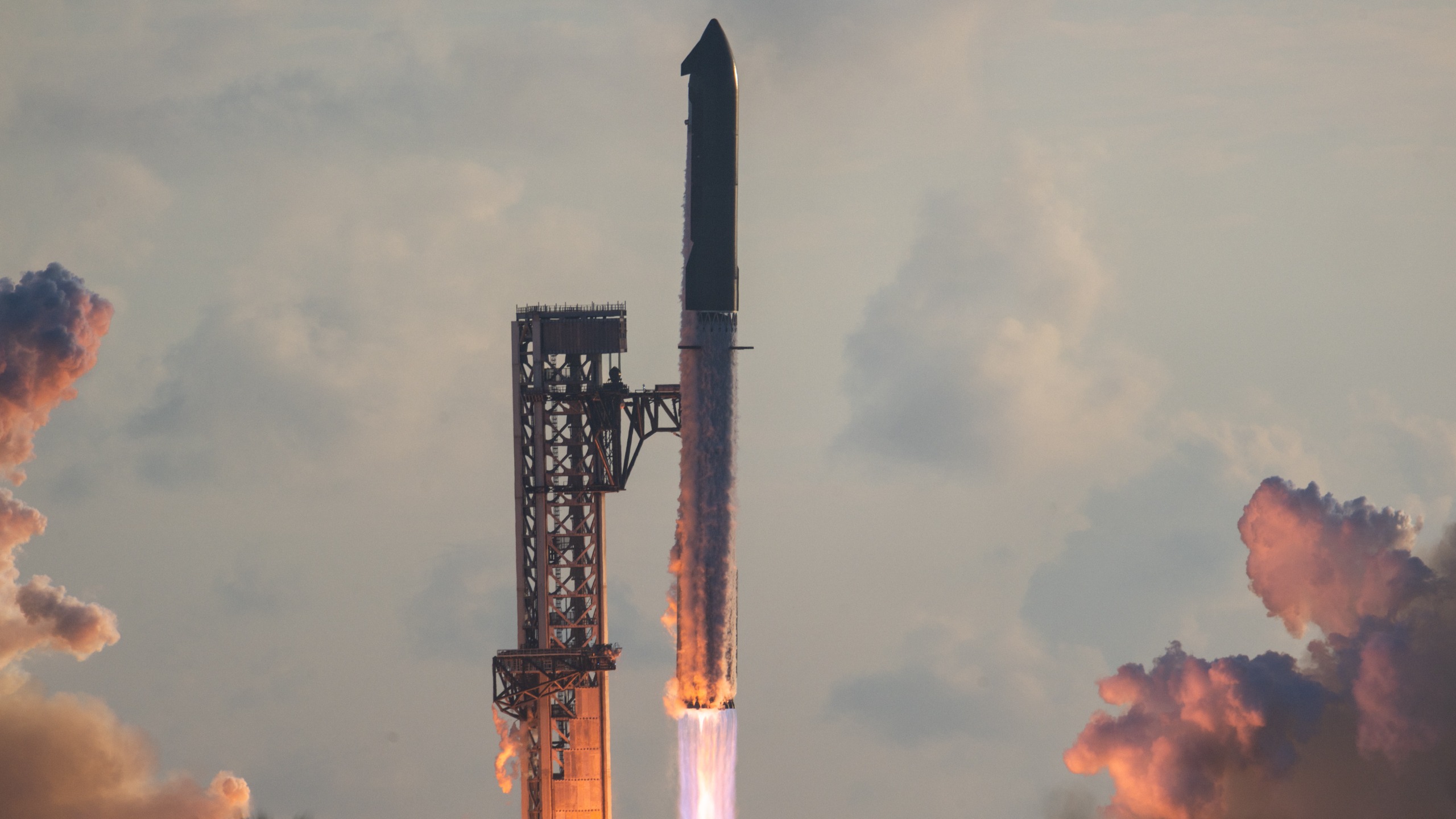
Paris (Imran Y. CHOUDHRY) :- Former Press Secretary to the President, Former Press Minister to the Embassy of Pakistan to France, Former MD, SRBC Mr. Qamar Bashir analysis : Humanity’s reach into space may be approaching a new threshold. Starship, one of the largest and most powerful rockets ever built, is designed to move people and immense quantities of cargo far beyond Earth. Elon Musk’s vision extends from permanent settlements on the Moon and Mars to an eventual human presence across the solar system. Those outposts could become bases for scientific discovery and deeper exploration, while the search for life and potentially habitable worlds continues far beyond our neighboring planets. A home in another star system remains a distant dream, but every such ambition begins with the practical ability to launch, travel and return. SpaceX’s planned September 28 flight is one step toward proving that ability.
SpaceX lists a 75-minute window beginning at 8:15 a.m. Eastern time, or 7:15 a.m. at Starbase in South Texas. The vehicle consists of the Super Heavy booster and the Starship upper stage. Together they stand roughly 400 feet tall, placing Starship among the most imposing machines ever flown. This will be a test flight without people aboard. The countdown can still be delayed by weather, a technical concern or a final operational decision, even after regulatory authorization.
Starship’s first major task is to carry its cargo into orbit, the path that lets a spacecraft circle Earth. SpaceX plans for the upper stage to make six trips around the planet and release 26 new Starlink internet satellites along the way. Engineers will also gather information about its engines, its protective heat shield and how it behaves during a much longer flight than earlier Starship tests. These results could help turn a remarkable rocket into a dependable transport system for satellites, scientific equipment and, eventually, supplies and people traveling farther from Earth.
This journey matters because reaching orbit with useful cargo is a foundation for more ambitious destinations. The Moon would require repeated deliveries of equipment and fuel; Mars would demand still greater endurance and carrying capacity. Flight 14 cannot prove that Starship is ready to land on either world, but it can give scientists and engineers knowledge needed to build toward those missions. A successful flight would broaden the possibilities for public research programs and private companies alike, while inviting them to imagine experiments, services and expeditions that existing rockets cannot easily support.
The satellites aboard are Starlink Version 3 spacecraft, intended to join SpaceX’s broadband network rather than serve as inert demonstration articles. Three carry cameras to examine Starship’s heat shield, which protects the spacecraft as it comes back through the atmosphere. Successful deployment would show that the enormous vehicle can begin doing useful work while still in development. It would also tie the rocket more tightly to SpaceX’s satellite business: larger carrying capacity could support the next generation of Starlink, while demand for those satellites provides a reason to fly Starship frequently.
The proposed mission would last almost ten hours. After gathering data in orbit, Starship is supposed to restart an engine to leave orbit, pass through the atmosphere and splash down in the Pacific west of Chile. The Super Heavy booster is expected to splash down separately in the Gulf of Mexico. There is no plan to catch either stage at the launch site on this flight. The dramatic images of tower arms grabbing a descending rocket belong to another part of Starship’s development, and full routine reuse remains a future objective.
For much of the space age, journeys on this scale could be organized only by governments. NASA brought astronauts to the Moon and built generations of scientific knowledge, but the enormous cost and specialized machinery limited how often such missions could be attempted. SpaceX is changing that picture by investing private capital and engineering talent in a rocket it hopes to fly repeatedly. Its earlier Starship tests have brought breakthroughs and setbacks alike. Flight 14 will show whether that work can now carry a useful payload around Earth, a capability on which more ambitious journeys depend.
The greater promise lies in combining NASA’s experience with the drive and resources of private enterprise. NASA has chosen SpaceX to develop a Starship lander for its Artemis Moon program. It has also contracted with Blue Origin, the space company founded by Amazon founder Jeff Bezos, for a separate lunar lander. These are different companies bringing different designs to a shared undertaking. Government research, safety standards and long-term goals can work alongside private invention and competition to make future Moon bases, and perhaps one day settlements on Mars, more achievable.
Reaching a permanent base on another world would take many more steps. Crews would need food, shelter, equipment and a reliable way to return; ships would need fuel and frequent flights. NASA’s oversight work identifies refueling spacecraft in orbit as a major challenge for its lunar plans. Every Starship test helps engineers understand part of the journey, while reminding them how much remains to be developed. The speed of progress will depend on whether public expertise and private engineering can solve those problems together.
That partnership could also widen participation in exploration. Universities might send research instruments, companies might develop new services and national space agencies might share knowledge gathered across missions. Starship is being built to serve several purposes, from deploying internet satellites to supporting the journey to the Moon. If its capacity and repeated flights become dependable, ideas that now remain on laboratory benches could have a path into space. Its most lasting contribution may be the opportunities it creates for scientists and engineers beyond SpaceX itself.
The FAA’s approval is significant, but it should be understood precisely. It authorizes the specified launch and reentry operations after regulatory review; it does not certify that the vehicle will reach orbit or that every experiment will work. The flight team will still make operational calls as conditions unfold. If the rocket lifts off on September 28, the public will be watching a genuine attempt at a historic technical milestone, with measured data likely to matter more than the first few seconds of footage.
By the end of the mission, the meaningful questions will be concrete: Did Starship enter a stable orbit? Did the 26 satellites deploy? Could it restart its engine, leave orbit and reenter as planned? What did the heat shield and booster teach engineers? Success would bring Musk’s dream of transporting people and cargo to sustained bases on the Moon and Mars a step closer, while leaving formidable work ahead. It would be a small step in the immense journey toward other worlds, and a large leap in the capabilities humanity will need to undertake it.


The Deadly Hypocrisy of Western Sanctions

Nvidia Spy Storm: A False Flag Against China?

Trump’s Iranian Retreat and America’s Economic Reckoning

New Chapter for Dragon Boating in Punjab and Khyber Pakhtunkhwa Provincial associations officially set up with sights locked on national competitions and international representation.

South Korea’s Yoo Useong Steps Onto the Global Strongman Stage as World Strongman Federation Professional Athlete

A Survey of Mata-E-Zeest


-
 Pakistan News1 month ago
New Chapter for Dragon Boating in Punjab and Khyber Pakhtunkhwa Provincial associations officially set up with sights locked on national competitions and international representation.
-
 Sports5 months ago
South Korea’s Yoo Useong Steps Onto the Global Strongman Stage as World Strongman Federation Professional Athlete
-
 Art & Culture1 year ago
A Survey of Mata-E-Zeest
-

 Europe News2 years ago
Chaos and unproven theories surround Tates’ release from Romania
-

 American News2 years ago
Trump expands exemptions from Canada and Mexico tariffs
-

 Art & Culture2 years ago
Will Snow White be a ‘victim of its moment’? How the Disney remake became 2025’s most divisive film
-

 Entertainment2 years ago
Champions Trophy: Pakistan aim to defend coveted title as historic tournament kicks off today
-

 Pakistan News1 year ago
Comprehensive Analysis Report-The Faranian National Conference on Maritime Affairs-By Kashif Firaz Ahmed