
Terrorism
Pakistan seeks peace with all neighbours, but will not allow cross-border terrorism from Afghanistan: COAS Munir

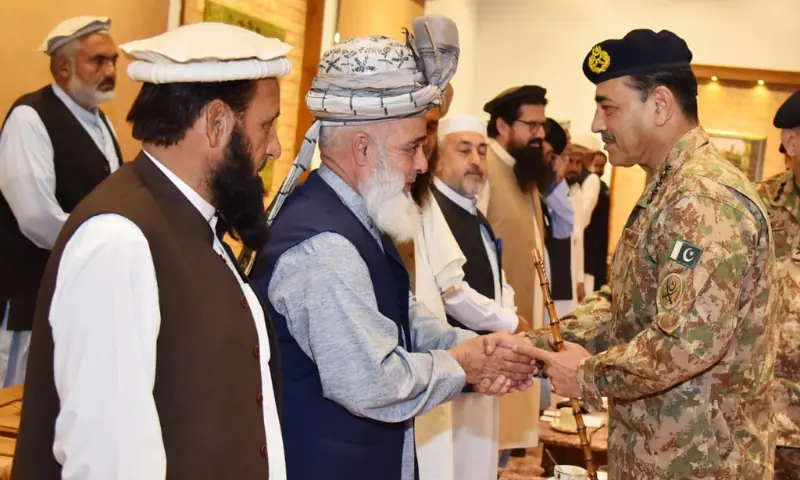
Chief of the Army Staff (COAS) Field Marshal Syed Asim Munir said on Thursday that Pakistan sought peace with all neighbours, including Afghanistan, but reiterated that the country will not allow cross-border terrorism to be perpetrated from Afghan soil.
According to a statement from the military’s media wing, the Inter-Services Public Relations (ISPR), Field Marshal Munir made the comments during a trip to Peshawar, where he held an interactive session with a jirga of tribal elders. Later on, he was given a comprehensive briefing at Headquarters 11 Corps on the prevailing security environment, operational preparedness and ongoing counter terrorism efforts to maintain peace and stability along the Pak-Afghan border.
Pakistan-Afghanistan relations have worsened sharply in recent weeks, marked by border clashes and mutual accusations. Islamabad has repeatedly warned Kabul against permitting the banned Tehreek-i-Taliban Pakistan (TTP) to use Afghan territory for attacks — an allegation the Taliban reject. After a ceasefire, both sides initiated talks in Turkiye to develop a mechanism for monitoring Taliban measures to curb cross-border assaults, but discussions have so far reached a stalemate.
While addressing the jirga, Field Marshal Munir highlighted that “despite the continuation of cross-border terrorism from Afghanistan, Pakistan, over the last few years has exercised patience and extended multiple diplomatic and economic overtures to Afghanistan, aimed at improving Pak-Afghan bilateral relations.”
“However, instead of acting decisively against Indian-sponsored terror proxies Fitna Al Khwarij and Fitna Al Hindustan, [the] Afghan Taliban regime has been providing all possible assistance to these groups,” the statement said.
Fitna-al-Khawarij is a term the state uses for terrorists belonging to the banned Tehreek-i-Taliban Pakistan (TTP), while Balochistan-based groups have been designated Fitna-al-Hindustan to highlight India’s alleged role in terrorism and destabilisation across Pakistan.
It added that during the interaction, the COAS assured the tribal elders that Pakistan, particularly Khyber Pakhtunkhwa, will be “cleansed of the terrorists and their abettors.”
The army chief also appreciated the “steadfast and unconditional support” rendered by the tribal people to the security forces during the recent standoff between Pakistan and the Afghan Taliban.
“He paid rich tribute to the resilience and sacrifices of the brave people of Khyber Pukhtunkhwa in [the] war against terrorism,” the statement said, adding that the tribal elders reiterated their “full support to the armed forces against terrorism and also against the Afghan Taliban.”
Per the statement, the tribal elders appreciated the candid discourse by the COAS and expressed their unwavering commitment to peace in Pakistan and highlighted that the “twisted ideology” of the Fitna al Khwarij had no acceptance among the tribes of KP.










Terrorism
Australia was seen as a world leader in gun control – Bondi has exposed a more complicated reality
It was a Sunday afternoon in April 1996 when a lone gunman armed with semi-automatic rifles killed 35 people in the Australian tourist town of Port Arthur.
The massacre almost 30 years ago, which ushered in some of the strictest gun laws in the world, feels like a bygone age for many Australians.
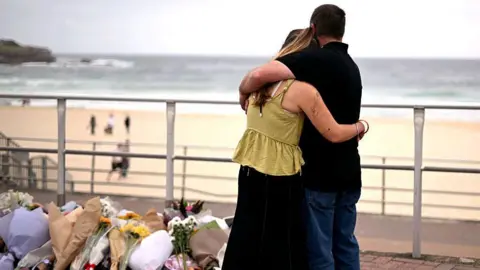
But the Bondi Beach attack on Sunday, which left 15 dead, rekindled memories of the Tasmanian tragedy – none more so than for leading gun control advocate Roland Browne.
As the country’s deadliest modern-day mass shooting was unfolding an hour’s drive away, Mr Browne was meeting fellow gun control advocates at his home, ahead of a government meeting, to lobby for a ban on the exact type of firearm the Port Arthur gunman was using.
Mr Browne, 66, was again at home in Hobart on Sunday when he received news of the shooting at Bondi, targeting a Jewish event celebrating the first night of Hanukkah.
“There’s just a lot of similarities,” Mr Browne, who spent childhood summers in Bondi and still has family there, told the BBC.
“They’re both very public places frequented by tourists from around the nation and around the world.”
“It’s sickening and I’m bitterly disappointed in our political system whereby the voices for tighter gun laws and public health aren’t listened to until there’s a major event like this,” he added.
For decades, Australia has stood as a beacon on the world stage for its strict gun laws, he says, taking a similar path to the UK which experienced its own mass shooting in Dunblane, just one month before Port Arthur.
Even now, Mr Browne remains friends with relatives of some of the 17 victims – mostly children aged five and six – killed at a primary school in Scotland.
But despite being praised for its stringent gun laws, the reality in Australia is not clear-cut.
Gun ownership at record high
A report by the Australia Institute earlier this year revealed that there are more than four million privately-owned firearms across the country – almost double the number from about 20 years ago.
That equates to one gun for every seven Australians, the report says.
Queensland has the most registered guns, followed by New South Wales (NSW) and Victoria while Tasmania and the Northern Territory have the most guns per person.
The report also dispels a common view that guns are mainly owned by rural residents.
Guns are widespread in metropolitan and suburban areas, with one in three firearms in NSW located in major cities, the report said.
The total figure has risen at a lower rate than population increases, but there are now more guns in fewer hands, with every licence holder owning an average of more than four firearms.
And that’s one of the key issues that Mr Browne wants the government to address.
Currently, only one jurisdiction – Western Australia – has a cap on the number of legal firearms that a licence holder can have. Under new laws introduced in March this year, gun owners can have between five and ten firearms, depending on the type of licence and model of firearm.
Authorities have confirmed that one of the alleged gunmen, Sajid Akram who was killed at the scene of the Bondi attack, owned six registered guns.
Mr Browne wants a cap of one to three guns, depending on the licence category, to be introduced across Australia.
But Tom Kenyon, chief executive of the Sporting Shooters Association of Australia, argues that a cap would be meaningless.
“Limiting the number of guns wouldn’t have made a difference on Sunday,” he says.
“And it wouldn’t have changed the fact that an attack occurred because those two individuals had been radicalised.”
Mr Kenyon argues that people intent on harm, without access to guns, will use other weapons, referencing the 2016 Bastille Day massacre in the French city of Nice where 86 people were killed after a man drove a truck into crowds during fireworks celebrations. The attack was claimed by Islamic State (IS).
The other alleged Bondi gunman, 24-year-old Naveed Akram, was previously investigated over links to IS, according to comments made by Prime Minister Anthony Albanese.
Mr Kenyon also says that more guns are found in cities because most people in Australia live in metropolitan areas and travel to other areas to hunt.
What are Australia’s current gun laws?
Gun control laws in Australia are not uniform across the country, with inconsistent implementation of the rules across states and territories.
But generally, to apply for a gun licence, you must be over 18, a “fit and proper person”, pass a training and safety course and give a “genuine reason” for having a firearm.
The eight accepted reasons include recreational hunting or pest control, target or sport shooting, for work (such as security guards and prison officers), for use in farming or animal welfare and firearms collectors.
But there are loopholes.
For example, anyone under 18 was meant to be barred from owning a firearm under the 1996 gun control reforms, but minors in various jurisdictions can have access to a firearm while under supervision, ranging from age 10 in the Northern Territory to 12 in other states.
Another situation is where a particular type of gun is banned in one state but legal elsewhere.
In the days after the Port Arthur massacre, then-Australian prime ministerJohn Howard galvanised every state and territory to overhaul the country’s gun laws.
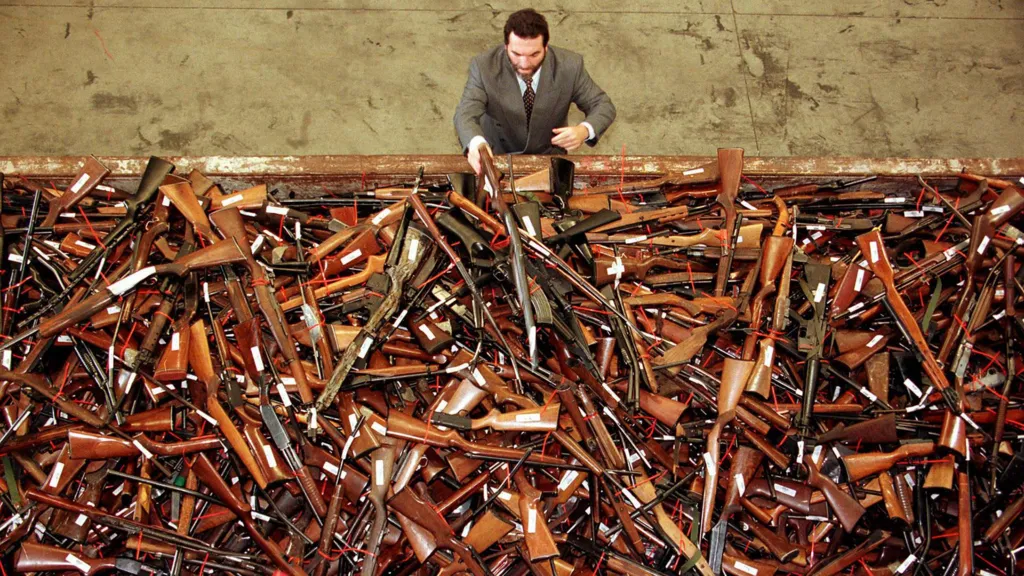
More than 650,000 firearms were voluntarily handed in to authorities and destroyed, as part of a buyback programme. And background checks and a mandatory cooling-off period for gun sales were introduced. Automatic and semi-automatic rifles and shotguns were banned.
Similar gun reforms – a ban on semi-automatic weapons and a buyback scheme – were introduced in New Zealand after a white supremacist killed 51 Muslims at two Christchurch mosques in 2019.
Part of Howard’s reforms included scrapping self-defence as a reason for owning a firearm – a contrast to gun laws in the United States where personal protection is often the main reason for citizens to own guns.
Gun ownership in the US is much higher compared to Australia as is gun violence. The country saw 488 mass shootings – defined as where four or more people are killed or injured – last year.
Recent polling by the Australia Institute showed that seven out of ten Australians think gun laws should make it harder to access a gun and 64% agreed that current gun laws need to be strengthened.
Fresh reform for gun laws
In the hours after the Bondi shooting, the NSW Premier Chris Minns was unequivocal about the need to tighten the state’s gun laws.
“If you’re not a farmer, you’re not involved in agriculture, why do you need these massive weapons?” he asked.
And less than 24 hours after the shooting, Australia’s Prime Minister Anthony Albanese hosted an emergency meeting where leaders from across the country pledged to tighten gun laws. On Friday he announced a national gun buyback scheme “to help get guns off our streets”, the first scheme of its size since 1996.
Other proposals include:
- limiting the number of guns someone can legally own
- limiting “open-ended” licensing
- making Australian citizenship a condition of owning a firearm
- improving intelligence sharing when licence applications are being assessed
Albanese said there should also be regular reviews of licence holders.
“People’s circumstances can change,” he said. “People can be radicalised over a period of time.”
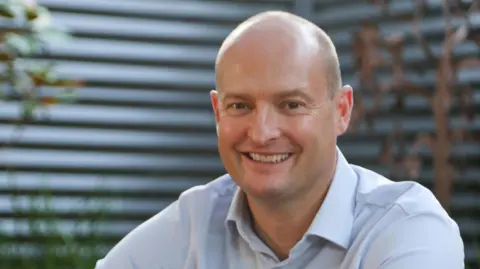
The swift action prompted Howard – the architect of the 1996 gun laws – to weigh in.
While he supported stricter gun laws, Howard said the move was an “attempted diversion” from the real cause of the tragedy, which he said was a rise in antisemitism in recent years.
Mr Kenyon believes the moves to tighten gun laws are a waste of resources.
“All that time and effort and political capital could be spent combating radicalisation of individuals,” he says.
The only thing that might have prevented Sunday’s attack was better intelligence-sharing that would have flagged the gunmen’s links to extremist ideology to the NSW firearms’ registry, he says.
Elsewhere, one of the headline reforms proposed in 1996 – a national firearms register – is yet to be created, with authorities saying the database is “expected to be operational by mid-2028”.
Little had been done to implement the measure until the 2022 fatal shooting of two police officers and a civilian in Wieambilla became a catalyst to speed the process up.
The Bondi shooting has now propelled the government to list the creation of the register as a priority.
Recreational hunting under spotlight
Mr Browne believes the application process for a gun licence is too easy and that licences for recreational hunting should be abolished as its definition is ambiguous.
Sajid Akram owned a recreational hunting licence.
But recreational hunting contributes a “valuable social good” to Australia, argues Mr Kenyon, saying that hunters remove millions of feral animals such as rabbits, foxes and cats.
He was just 10 when he picked up his first gun. Now 53, he goes on regular hunting trips – often shooting deer in Victoria’s high country – and competes in pistol shooting events six times a year.
Hunting isn’t just a pastime for him, it’s about family and community connections. He taught his three children – all adults now – how to shoot when they were teens.
“All my life I’ve had the opportunity to do it and I’ve enjoyed it,” Mr Kenyon, a former Labour politician in South Australia, says, “so I want my kids to have the same opportunity”.
In the wake of the Port Arthur massacre, self-loading firearms were banned, resulting in a drop in gun-related deaths, but the risk to public safety has now shifted to high-powered fast-loading rifles with magazines that can shoot up to five rounds, of the kind believed to have been used by the gunmen.
“If you watch the video, you’ll see him firing rapidly with his rifle,” Mr Browne says, referring to footage of one of the gunmen shooting from a footbridge leading to Bondi Beach.
“If he didn’t have a magazine in that rifle, he would have had to manually reload each time,” which would dramatically reduce – but not eliminate – the threat of a mass shooting.
Mass shootings remain rare in Australia.
In 2018, a Western Australian grandfather killed his wife, his daughter and four grandchildren before turning the gun on himself in what was, at the time, the worst such incident since Port Arthur.
For Mr Browne, Australia is a safe country but incidents involving firearms are not uncommon, ranging from neighbourhood disputes to gang shootings.
“This is a reflection on guns being in the wrong hands, a legacy of poor storage allowing guns to be stolen and sold – and thus move into black markets.”
But the issue of gun control isn’t just about the physical firearm.
“It’s like a plane crash, it’s never just one thing. It’s a culmination of a lot of factors,” he says. Australia needs better assessment of whether a licence holder is a suitable candidate and more stringent rules on the types of guns that can be legally owned, he says.
Tragedy is a wake-up call
In the aftermath of the Port Arthur massacre, Mr Browne met with many of the survivors and families of the victims including Walter Mikac, whose wife Nanette and two young daughters were among the 35 people killed.
Mr Mikac, who founded the Alannah and Madeline Foundation charity to honour his children, said the Bondi shooting was a “horrific reminder” of ensuring Australia’s gun laws protect everyone.
“After Port Arthur, Australia made a collective commitment to put community safety first, and that commitment remains as important today as ever,” he said in a statement.
Mr Browne echoed those sentiments.
Gun laws need to be reformed to “keep up-to-date with changing community attitudes, technological advances and to rectify identified deficiencies,” Mr Browne says.
“It’s sad that it takes such a tragedy to get people to wake up and listen.”
https://www.bbc.com/news/articles/cqxql12317qo
Taken From BBC News
Akhtar Hussain Sandhu
Historian & Columnist
Chicago, USA
An Afghan terrorist, Rahmanullah Lakanwal, targeted two West Virginia National Guard members, named, Sarah Bechstrom and Andrew Wolfe, near the White House on 26 November 2025 in Washington, DC. The suspect has been working as a US official in Afghanistan and came to the USA in 2021. When the Taliban took over Afghanistan after the US left, approximately one hundred thousand Afghan nationals were permitted to enter the US under the Biden administration but he got resident status in 2024. Sarah Bechstrom passed away on 28 November while Andrew Wolfe is being treated in a hospital as he is said to be in a critical condition. The Afghan suspect will face capital punishment or life imprisonment under the US laws. President Donald Trump declared it a terrorist targeted attack and suspended the immigration process of all Afghans and others. An officer clearly announced to proceed keeping involvement of any group or country in this case. Many talking on the drone attack in Tajikistan killing three Chinese and Washington attack and construing an endeavor to capture Bagram Airport but as a matter of fact the killing of a National Guard and terrorist attack near White House can never be overlooked therefore, be seen as an individual sensitivity. Afghanistan has been a locus of evil as it damages humanity, peace, and social order by exporting terrorism and smuggling wherever they settle. This is because of the constant lawlessness in the country, pissed with the tribal system and criminal mindset.
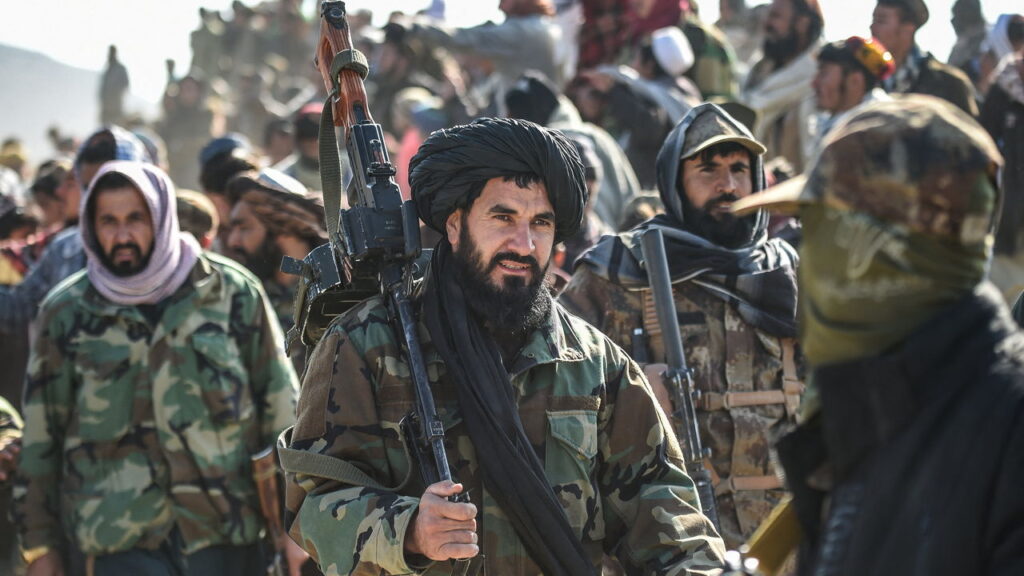
Afghan nationals desire to flee from their country, where they live as either slaves or criminals. The commoners are to obey the tribal heads; therefore, they are used as tools in maintaining their grasp over the economic and human resources. In the past decades, Afghanistan sought every type of support from Pakistan, which the Pakistani establishment overtly or covertly provided and defended Afghanistan at international level. The Western policymakers named it the ‘double-faced policy’ of Pakistan as they posed to be with the NATO forces but in fact supported the Taliban forces. This policy proved dangerous, and Pakistan could not create a soft image in the eyes of the world powers. Resultantly, every terrorist attack, even by any Afghan in any part of the world, was linked to Pakistan. Although Pakistan had been a victim of the terrorist attacks within Pakistan, but even then, Pakistan could not be perceived as a soft state. Pakistan has been a heaven for the Afghans who studied in the Pakistani universities, established huge businesses, got Pakistani National Identity cards and passports, and even continued smuggling of weapons, petroleum, vehicles, spare parts, drugs, etc. They earned huge money from the poppy crops and established their political, social, and economic status within the Pakistani society. The Law Enforcement Agencies supported these Afghan smugglers under the undeclared state policy because many politicians and economic tycoons was a part of this game. After the departure of NATO from Afghanistan, the Taliban regime took over and unexpectedly went against Pakistan. They supported Tehrik Taliban Pakistan (TTP) and its allied groups, Baluchistan Liberation Alliance (BLA), violent elements in Pakistan Tehrik e Insaf (PTI), and other anti-Pakistan groups. Afghans, if cursed by the US, will endeavor to cross the Durand Line because Pakistan has proved heaven for the Afghans; therefore, the Pakistan army and other LEAs must be alert to deal strictly with:
- Afghans crossing the Durand Line illegally;
- Afghan living in Pakistan illegally;
- Pro-Afghan groups within Pakistan/the business groups;
- The terrorist/violent groups (Afghan and Pakistani);
- Pro-Afghan Police, bureaucrats and other officials and Politicians within Pakistan.
The US authorities are empowered and equipped tremendously to cope with the situation and President Donald Trump may suspend the financial support to the Taliban regime Afghanistan if involved in the Washington woeful incident, but Pakistan has to plan to counter mass as well as terrorists’ infiltration into Pakistan. In the past, Pakistan had to face numerous problems even in the implementation of the existing laws against the groups involved in the terrorism. Still, the provinces are unable to implement the National Action Program agreed upon by all the stakeholders. The current international scenario seems profoundly favorable therefore the Pakistani government and establishment have potential importance in the Muslim and western countries. Under the circumstances, this is the right time to take stern action against the terrorists and violent groups in Pakistan. Denmark and other western countries have already requested the US to reverse the immigration or asylum policy of Afghanistan, and now a terrorist attack by an Afghan in Washington DC, will verify the criminal mindset of the Afghan nationals and testify to all the state actions against the Afghans and violent groups disturbing the peace and order of the social fabric of Pakistan.
Terrorism
The 20 terrifying minutes endured by train attack passengers Shayan Sardarizadeh, James Kelly, Kris Bramwell and Benedict Garman

On Saturday night a train from Doncaster bound for London was dramatically diverted after an alarm was raised on board. A man armed with a large knife, who is believed to have joined the train at Peterborough, carried out a vicious attack on multiple victims. Within 20 minutes a suspect had been arrested in Cambridgeshire, more than 70 miles from the train’s intended destination of King’s Cross in London.
Eleven people were treated in hospital, where one person remains in a stable but critical condition. The BBC has spoken to train passengers and stabbing victims alongside video and police statements to build a picture of how the attack and the emergency response unfolded.
‘You need to run, you need to run’
The attack started just over an hour after the LNER train left Doncaster. At 19:29 it had pulled out of Peterborough station, where the suspect had apparently boarded. Just five minutes later the alarm was pulled near the middle of the train in coach J.
Amira Ostalski and a friend, both students at Nottingham University, had got on the train at the previous stop of Grantham and were travelling to London to “have some fun”.
Amira was seated watching a film when she saw a man in a white shirt leap out of his seat about five rows in front of her followed by screams of “knife, knife”. Amira then spotted a man holding a large kitchen knife and fled towards the rear of the train with her friend.
In the next carriage, coach H, YouTuber Olly Foster heard shouts of “run, run, there’s a guy literally stabbing everyone”, and initially thought it was a Halloween prank. But as passengers began pushing through the carriage Olly could see “blood all over the chair” he had leaned on, covering his hand in blood.
Olly then saw an older man, thought to be an LNER staff member, who “blocked” the attacker from stabbing a younger girl, leaving him with a gash on his head and neck.

Nottingham Forest fan Joe, 24, was not meant to be on the train. He had watched the team’s football match against Manchester United earlier and missed a connecting train in Grantham.
Joe was texting his friends about his plans for the night when people came rushing through the carriage. “You need to run, you need to run,” someone told Joe. He started running but when he turned to look behind him saw “a tall black male” holding “a bloodied knife”.
Matt Kingston took his headphones out as he saw a group of people heading his way in coach H and also began running down the train. Another Nottingham Forest fan Alistair Day, 58, was next to the train’s cafe bar in coach G, and saw people fleeing down the train with blood on their clothes.
Sheltering inside the cafe

The train’s cafe bar transformed into an impromptu hiding space for those fleeing the attacker. Alistair said he saw around a dozen people inside this enclosed buffet counter in coach G and they were “trying to close up the shutters” to protect themselves from the assailant. Matt had managed to get inside the booth with the others.
Alistair saw the man near the door waving a knife and trying to open the shutters, which by then had been locked. A video he provided to the BBC from inside the cafe bar shows multiple passengers inside, with at least one on the phone to emergency services. Alistair and another witness, Tom McLaughlan, told the BBC they saw a Nottingham Forest fan move to confront the attacker. “He wasn’t the biggest guy. We tried to stop him,” Alistair said.
It appears they were referring to Stephen Crean who later told the BBC the man pulled out a large knife when he confronted him outside the cafe bar. “He’s gone for me and there was a tussle in the arms and that’s where my hand, the fingers are really bad, four cuts through them, sliced. And then he raised it and must have caught me when I was ducking and diving and caught me on the head.”

Stephen said he had been trying to give another passenger time to close the door to the cafe bar. “That door still wasn’t shut behind me, because I could still see him struggling to close it. So until I knew it was I wasn’t moving away from it.”
Matt said the attacker then walked past the locked door while waving the knife around. “He then returned back up the train and passed us again.” At that point a young man told Matt he’d been stabbed in the chest “so I helped with putting pressure on the wound and helped hold him up”.
Another victim of the train attack was Scunthorpe United footballer Jonathan Gjoshe, who was slashed across the bicep and later needed an operation.
Alarm raised and train diverted
As soon as the alarm was raised the train driver, Andrew Johnson, a Royal Navy veteran, sprang into action and contacted the control centre. The decision was made to divert the train, which was travelling at 125mph (201km/h), to a slow track, which allowed it stop at Huntingdon Station just minutes after the emergency services were first called.
The East of England Ambulance Service received the first emergency call at 19:38. A minute later, Cambridgeshire police received a report about multiple stabbings on a train. Together, they mobilised a response team outside Huntingdon Station, just under 300m away from the police force’s headquarters. At 19:41 the train arrived at the station, a minute before British Transport Police were also called to the incident.
Escape at Huntingdon Station

1:39Watch: Police rush to scene of Cambridgeshire train attack
CCTV footage captured by a business in its car park shows passengers running up platform two towards the main station building. A dramatic TikTok video, filmed from a bridge on Brampton Road overlooking the rail tracks and station, shows police officers running towards the train along the same platform.
Tom saw two men who appeared to have been stabbed “covered in blood” as he fled the train. Alistair said he saw a man who had been in the cafe bar with him being carried towards an ambulance by paramedics. “I just want to know he’s okay,” he said.
Emergency services took 10 people to hospital where a further victim was treated. Six patients have since been discharged.
The LNER staff member who remains in a critical but stable condition “undoubtedly saved people’s lives” by trying to stop the attacker, British Transport Police said.
Forced to flee again
CCTV footage shows a man climbing a fence at the station at 19:43 to an adjacent car park while holding a knife.
Amira, who had been hiding at the back of coach G armed with a metal tray to fight off the attacker if necessary, had run to the car park with her friend for safety when they got off the train.
But they saw the man walk in their direction. Fearing for their lives, they hid in a taxi. An image captured by Amira’s friend through its windscreen shows the man being detained by six police officers near several bins in the car park, around 50m (160ft) from the fence.
Video filmed from a separate taxi nearby shows the officers armed with guns, Tasers and accompanied by a dog detaining a man on the ground. Clicks from the Taser are audible in the footage.
By 19:50 police had two men in custody, 32-year-old Anthony Williams, and a 35-year-old man who was released a day later after police established he was not involved. On Monday morning Williams appeared in court charged with 10 counts of attempted murder over the train attack.


How the World Is Forced to Fund the Iran War

Scholars Urge UN to Protect Iran’s Scientific Sites Amid Airstrikes Global Academics Warn Attacks Threaten Research, Health, and Civilian Safety

How Iran Humiliated U.S. and Israeli Power


-

 Europe News1 year ago
Chaos and unproven theories surround Tates’ release from Romania
-

 American News1 year ago
Trump expands exemptions from Canada and Mexico tariffs
-

 American News1 year ago
Trump Expels Zelensky from the White House
-

 Pakistan News9 months ago
Comprehensive Analysis Report-The Faranian National Conference on Maritime Affairs-By Kashif Firaz Ahmed
-

 American News1 year ago
Zelensky bruised but upbeat after diplomatic whirlwind
-

 Art & Culture1 year ago
The Indian film showing the bride’s ‘humiliation’ in arranged marriage
-

 Art & Culture1 year ago
International Agriculture Exhibition held in Paris
-

 Pakistan News1 year ago
Can Pakistan be a Hard State?