
Pakistan News
Pakistan gears up to send 70 tonnes of relief goods as Myanmar quake kills over 2,700


The National Disaster Management Authority (NDMA) on Tuesday geared up to deliver 70 tonnes of relief supplies to Myanmar after the death toll rose to over 2,700 from last week’s earthquake.
The 7.7 magnitude quake, which hit around lunchtime on Friday, was the strongest to hit the Southeast Asian country in more than a century, toppling ancient pagodas and modern buildings alike.
Aid groups in the worst-hit areas of Myanmar said there was an urgent need for shelter, food and water but said the country’s civil war could prevent help reaching those in need. The death toll had reached 2,719 and is expected to rise to more than 3,000, Myanmar’s military leader Min Aung Hlaing said in a televised address today. He said 4,521 people were injured, and 441 were missing.
A statement issued today from the NDMA Pakistan was going to send 70 tonnes of relief supplies to Myanmar for the victims of the earthquake on Prime Minister Shehbaz Sharif’s directions.
“On the instructions of the prime minister, NDMA has started the process of sending relief supplies to the earthquake victims in Myanmar,” it said.
While speaking to the media after the dispatch ceremony of supplies, Federal Minister Dr Tariq Fazal Chaudhary said that the premier and the government stood with the people of Myanmar during the difficult time.
The federal minister also gave a special message of sympathy on behalf of the premier for the people of Myanmar.
The first batch of relief supplies, which would be 35 tonnes, includes approximately 565 tents, 210 tarpaulins, 2,000 blankets, a tonne of ready-to-eat food, 0.5 tonnes of medicines and 10 water purification modules.
The NDMA said that the first batch of relief supplies would leave today and land in the city of Yangon, while the second consignment would be dispatched soon.
The federal minister appreciated the NDMA for the prompt delivery of relief items on the prime minister’s instructions.
The statement added that the Myanmar ambassador thanked the government and people for the relief items.
Meanwhile, in neighbouring Thailand, rescuers pressed on searching for life in the rubble of a collapsed skyscraper in the capital Bangkok, but acknowledged time was against them.
In Myanmar’s Mandalay area, 50 children and two teachers were killed when their preschool collapsed, the United Nations Office for the Coordination of Humanitarian Affairs (OCHA) said.
“In the hardest-hit areas … communities struggle to meet their basic needs, such as access to clean water and sanitation, while emergency teams work tirelessly to locate survivors and provide life-saving aid,” the UN body said in a report.
The International Rescue Committee (IRC) said shelter, food, water and medical help were all needed in places such as Mandalay, near the quake’s epicentre.
“Having lived through the terror of the earthquake, people now fear aftershocks and are sleeping outside on roads or in open fields,” an IRC worker in Mandalay said in a report.
The civil war in Myanmar, where the junta seized power in a coup in 2021, has complicated efforts to reach those injured and made homeless by the Southeast Asian nation’s biggest quake in a century.
Amnesty International said the junta needed to allow aid to reach areas of the country not under its control. Rebel groups say the junta has conducted airstrikes after the quake.
“Myanmar’s military has a longstanding practice of denying aid to areas where groups who resist it are active,” Amnesty’s Myanmar researcher Joe Freeman said.
“It must immediately allow unimpeded access to all humanitarian organisations and remove administrative barriers delaying needs assessments.”
The junta’s tight control over communication networks and the damage to roads, bridges and other infrastructure caused by the quakes have intensified the challenges for aid workers.
Thai officials said a meeting of regional leaders in Bangkok later this week would go ahead as planned, although the junta’s Min Aung Hlaing may attend by teleconference.
Before the quake struck, sources said the junta chief had been expected to make a rare foreign trip to attend the summit in Bangkok on April 3-4.
Hopes dim at collapsed building
In Bangkok, rescuers were still scouring the ruins of an unfinished skyscraper that collapsed for any signs of life, but aware that as four days had passed since the quake, the odds of finding survivors lengthened.
“There are about 70 bodies underneath … and we hope by some miracle one or two are still alive,” volunteer rescue leader Bin Bunluerit said at the building site.
Bangkok Deputy Governor Tavida Kamolvej said six human-shaped figures had been detected by scanners, but there was no movement or vital signs. Local and international experts were now working out how to safely reach them, she said.
Search and rescue efforts continued at the site, supported by multinational teams, including personnel from the US and Israel, as family and friends said they feared the worst.
“The rescue teams are doing their best. I can see that,” said 19-year-old Artithap Lalod, who was waiting for news of his brother.
“However it turns out, that’s how it has to be. We just have to accept that things will be the way they are,” he said.
Thirteen deaths have been confirmed at the building site, with 74 people still missing. Thailand’s national death toll from the quake stands at 20.
Initial tests showed that some steel samples collected from the site of the collapsed building were substandard, Thai industry ministry officials said. The government has launched an investigation into the cause of the collapse.
Taken From Dawn News




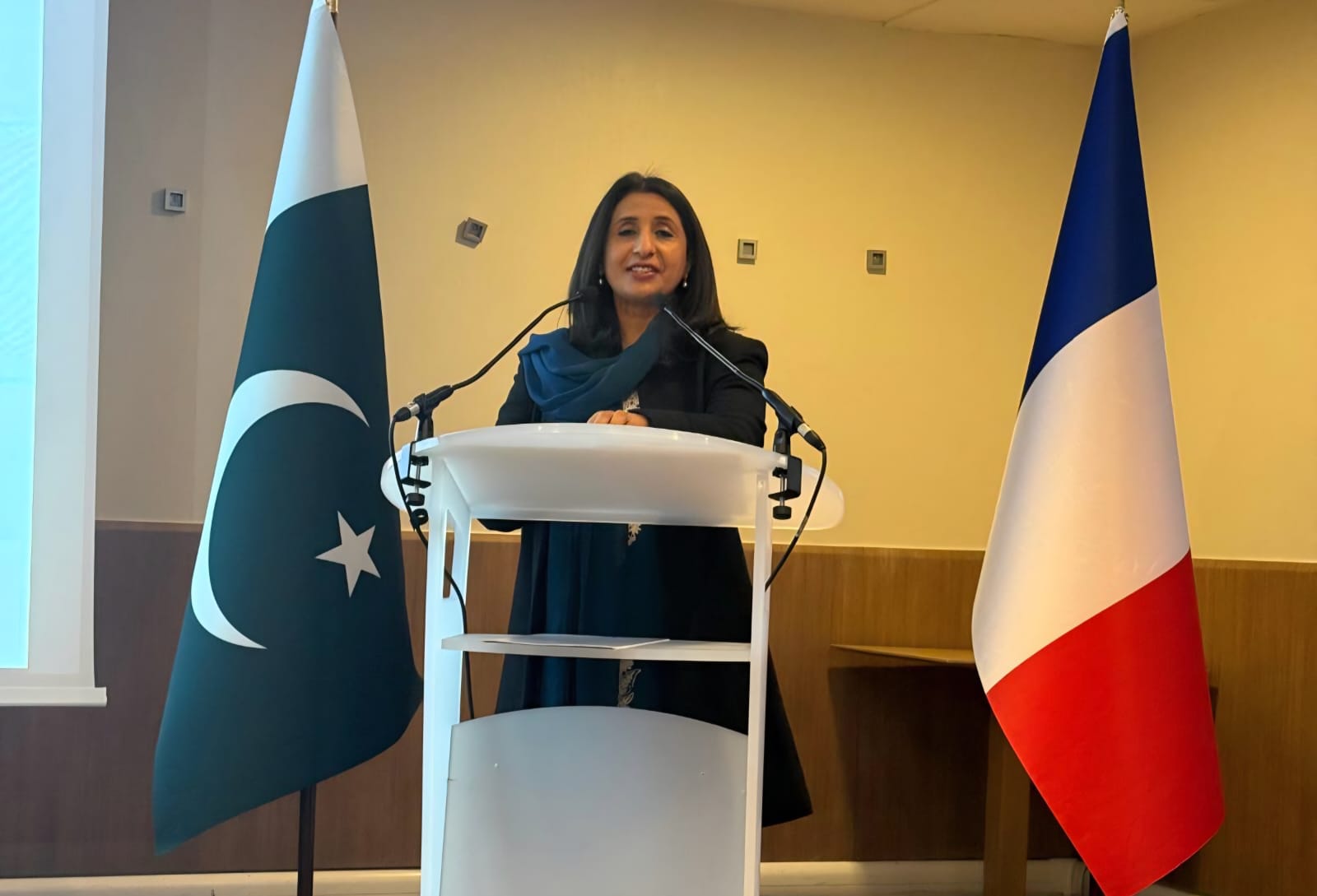
Paris ( Imran Y. CHOUDHRY):- A ‘Pakistan-France Trade and Investment Forum’ was held in Paris today, bringing together government officials, business leaders, industry experts and representatives of trade bodies of both countries.
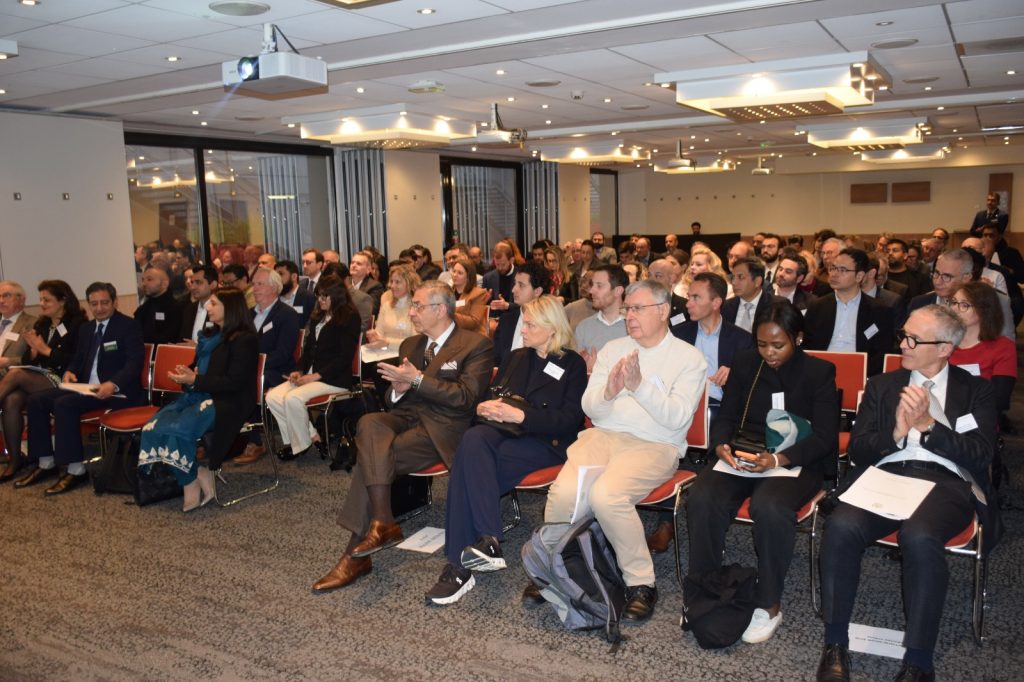
The Forum was held in implementation of an understanding reached between President Emmanuel Macron and Prime Minister Shehbaz Sharif in 2024, to build strong economic partnership between Pakistan and France. The objective of the Forum was to connect businesses, exchange ideas, explore new avenues of bilateral cooperation and showcase Pakistan’s trade and investment potential. It witnessed participation of over seventy French and Pakistani companies from diverse sectors including agriculture, information technology, textiles, energy and tourism.
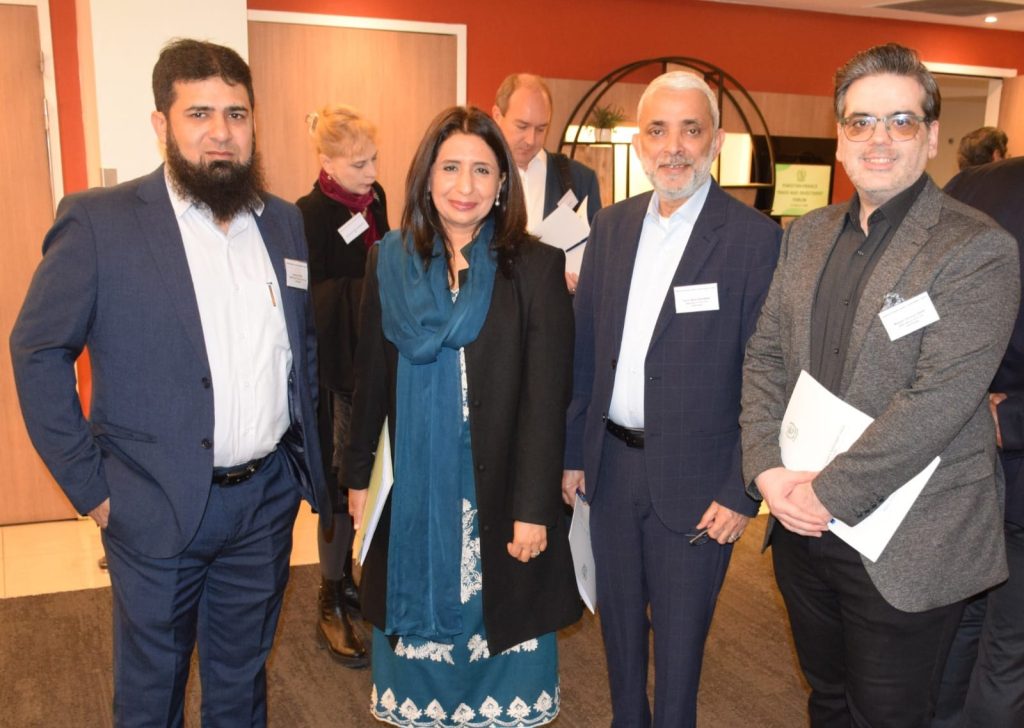
Ambassador Mumtaz Zahra Baloch opened the Business Forum and highlighted Pakistan’s economic growth and potential as an attractive trade partner for France. She outlined investor-focused initiatives and institutional facilitation mechanisms in Pakistan to promote trade and investment. She encouraged Pakistani and French businesses to explore collaborative opportunities, and develop joint ventures and win-win partnerships.

Speakers from the French side included Thierry Pflimlin, Chairman of the France-Pakistan Business Council at MEDEF International, Patricia Glasel, Vice President of the Conseillers du Commerce Extérieur de la France (CCEF) and Ardavan Amir-Aslani. They highlighted the growing momentum in France-Pakistan economic relations; identified the opportunities for trade and investment with Pakistan; and underscored the importance of strengthening private sector linkages to further facilitate bilateral trade and investment.
The plenary session was followed by ‘Breakout and Business-to-Business (B2B)’ sessions to discuss and identify tangible avenues for collaboration in textiles, agriculture and dairy, and Information Technology.
Pakistan News
Dr. Mohammad Faisal Joins Distinguished Quetta Association Event in London Gathering Reinforces Shared Military Heritage of Pakistan and Britain
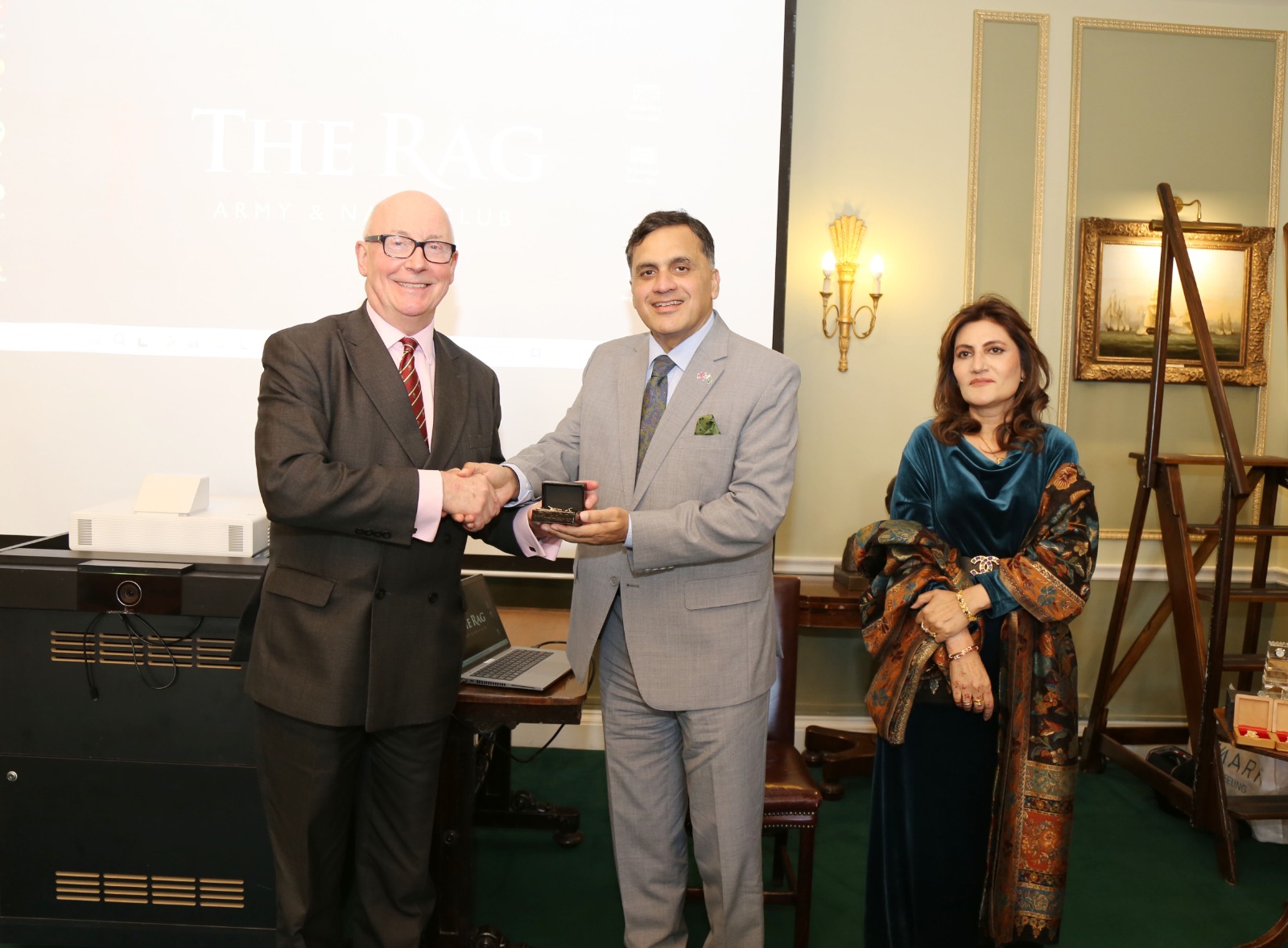
High Commissioner @DrMFaisal and his spouse @drsarahnaeem2 attended, as guests of honor, a distinguished gathering of the Quetta Association at the Army & Navy Club, London.
Military Officers from the Defence Wing of Pakistan High Commission, London, with their families also attended.
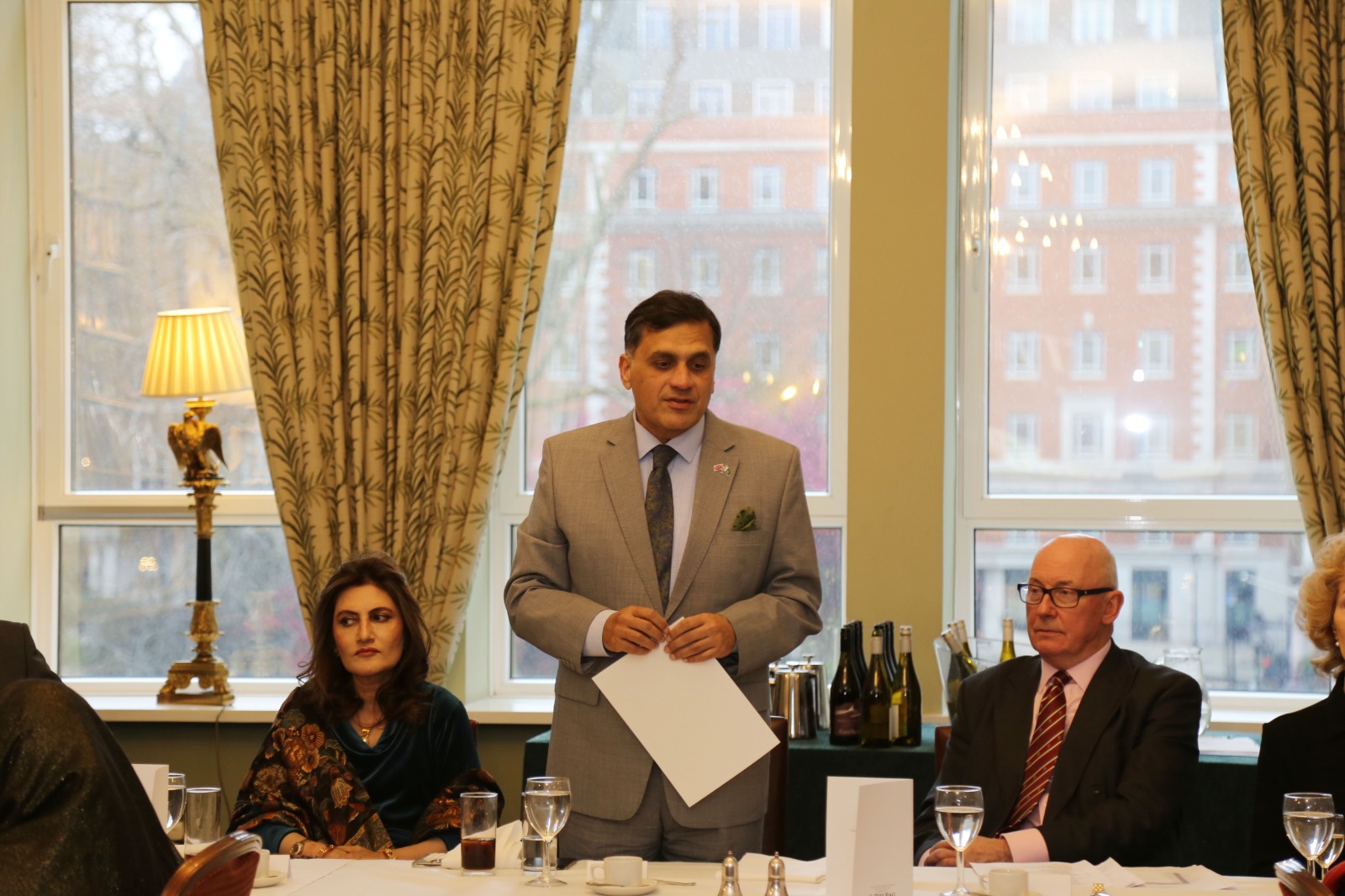
Quetta Association brings together British officers who graduated from the prestigious Command & Staff College, Quetta, Pakistan. The institution has produced outstanding military leaders, including British Field Marshals Sir Claude Auchinleck and Sir William Slim, whose leadership during the Second World War remains widely respected. Field Marshal Syed Asim Munir is also graduate of this prestigious institution.
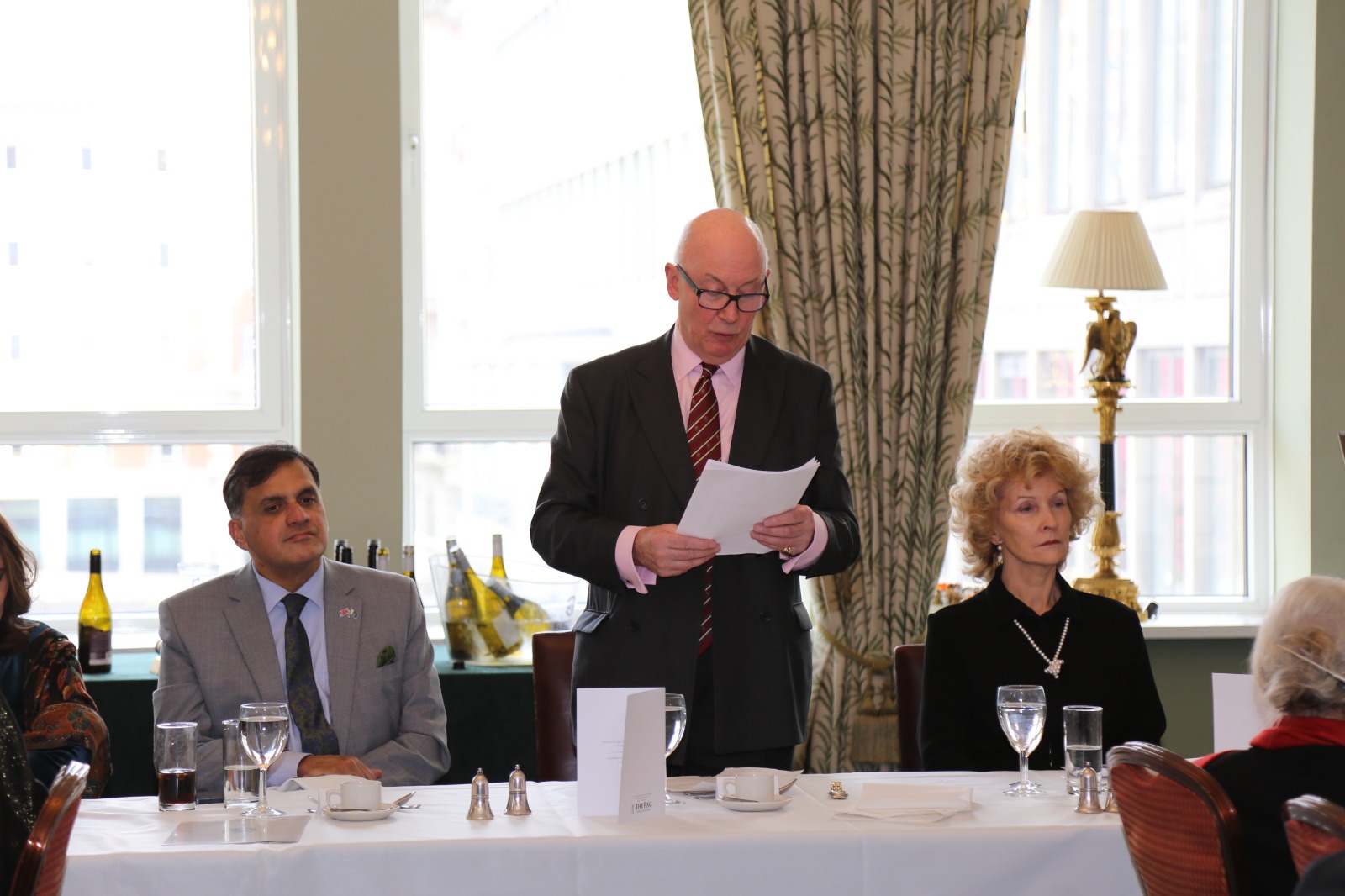
The High Commissioner appreciated the annual gathering that underscored the Association’s enduring role as a vital bridge linking the British Army and Pakistan Army through shared professional heritage and camaraderie.
Decorated British military officers and their families paid glowing tributes while referring to the hospitality accorded by Pakistan during their stay in Quetta.
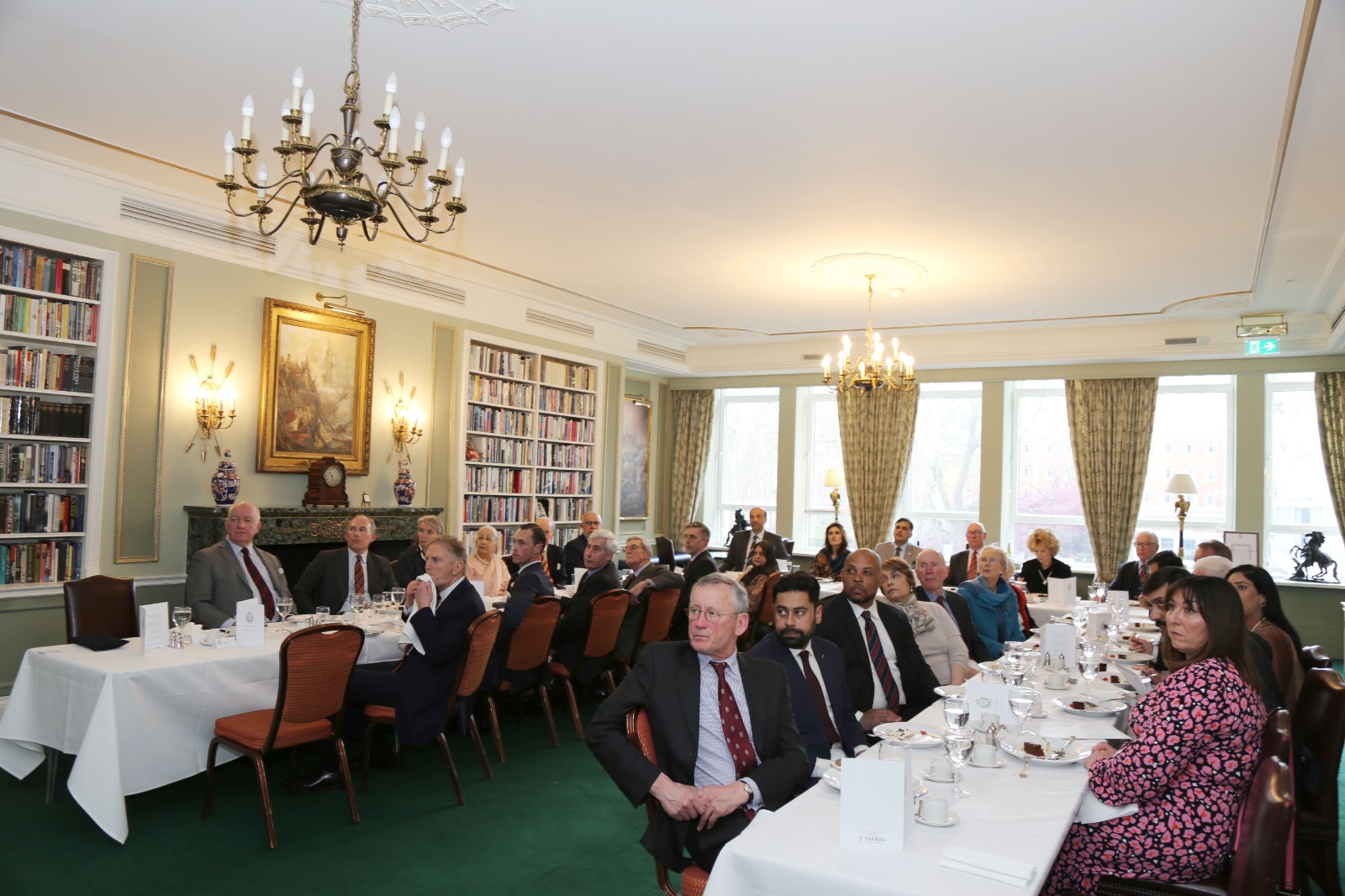
Graduate senior British Officers present at the gathering included Lt. Gen. Sir Alistair Irwin KCB CBE (1980) and Maj. Gen. Seumus Kerr CBE (1985).
Mementos were exchanged between the British officers and officers of @PakistaninUK.
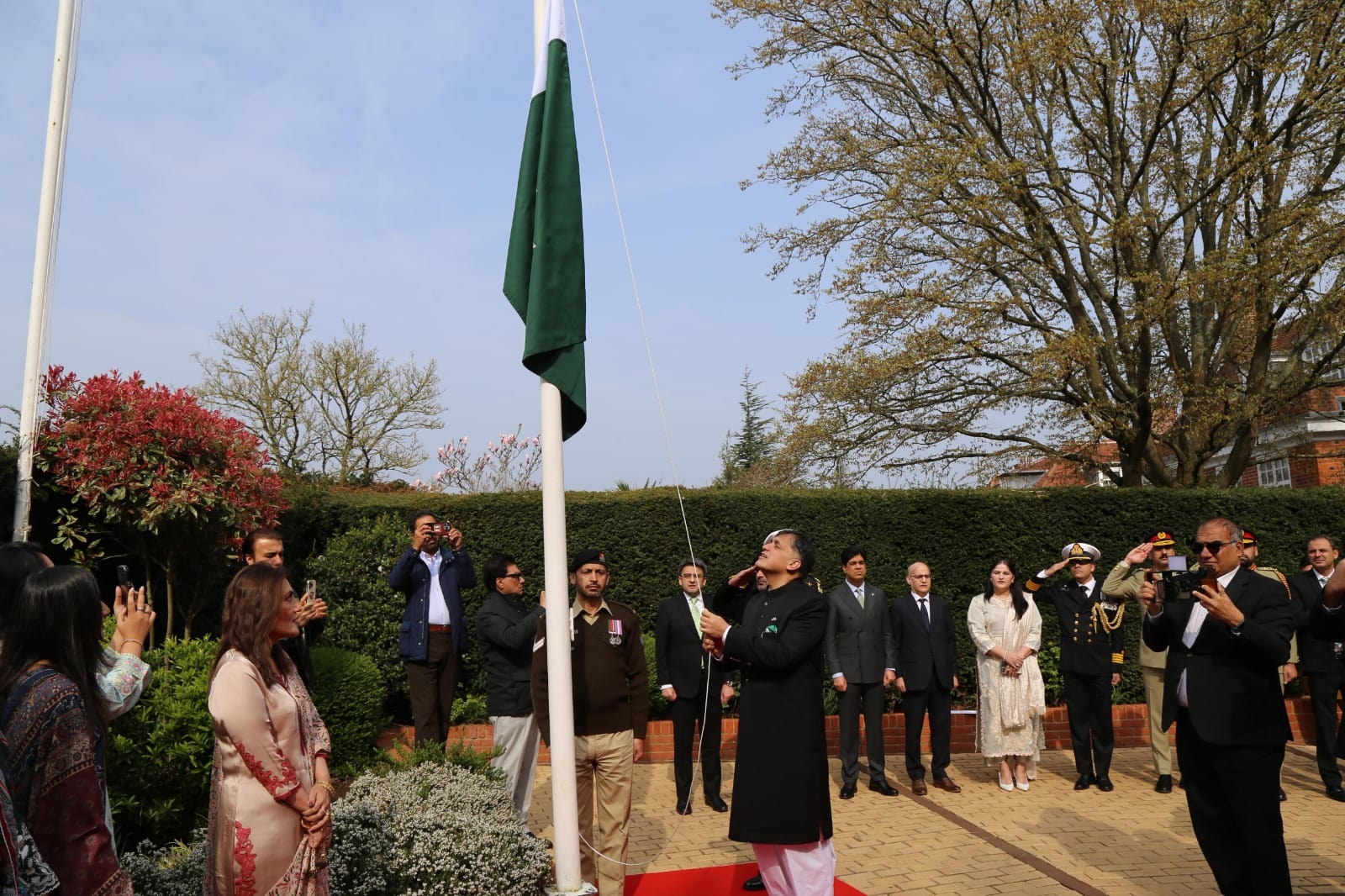
In a simple and dignified ceremony held at Pakistan House, London, the High Commissioner of Pakistan to UK Dr. Mohammad Faisal raised the Pakistan Flag on the occasion of Pakistan Day.
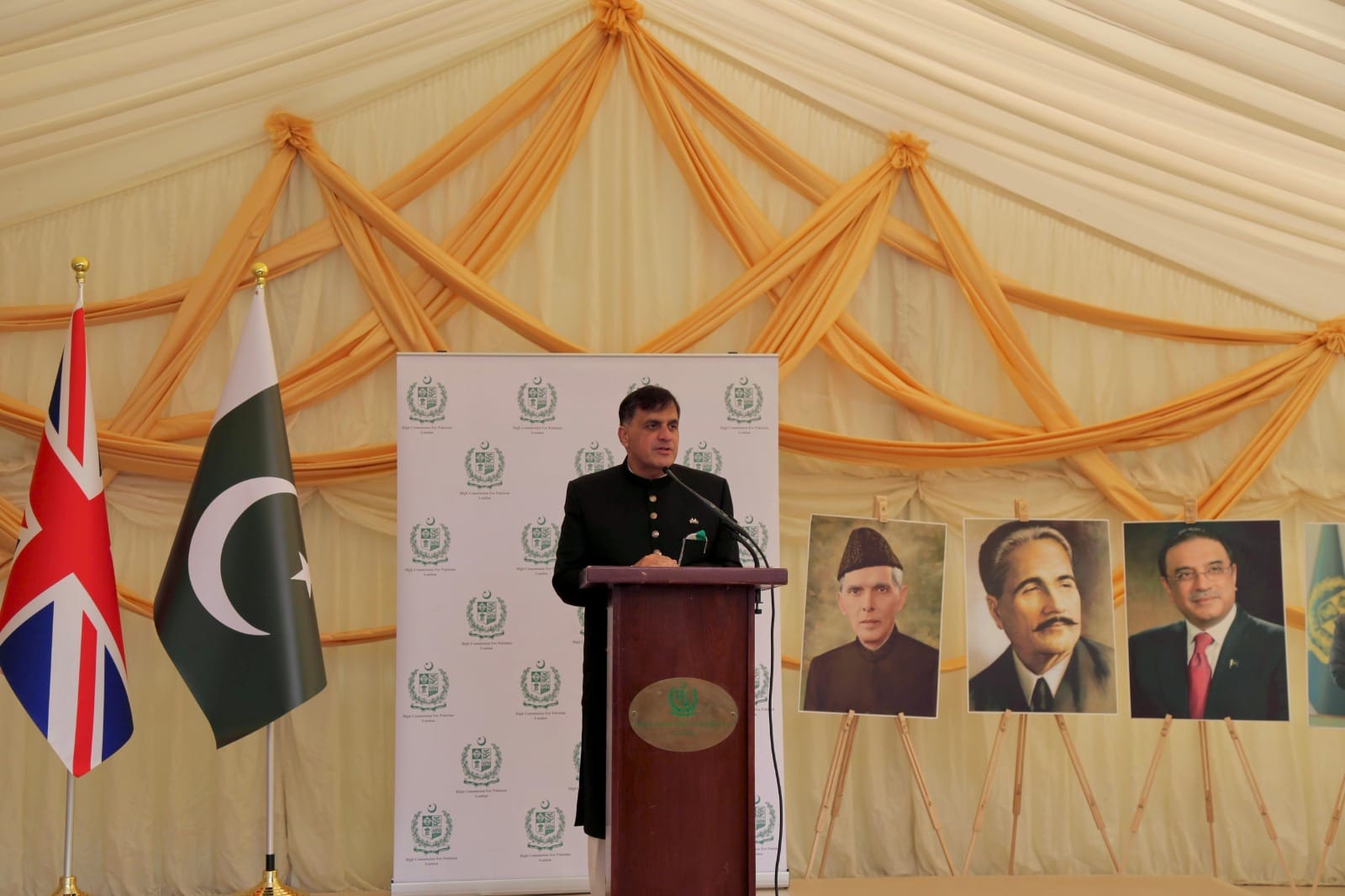
The ceremony was attended by Officials of the High Commission, British – Pakistanis and Media representatives.
Messages of the President, the Prime Minister and Deputy Prime Minister / Foreign Minister were read out.
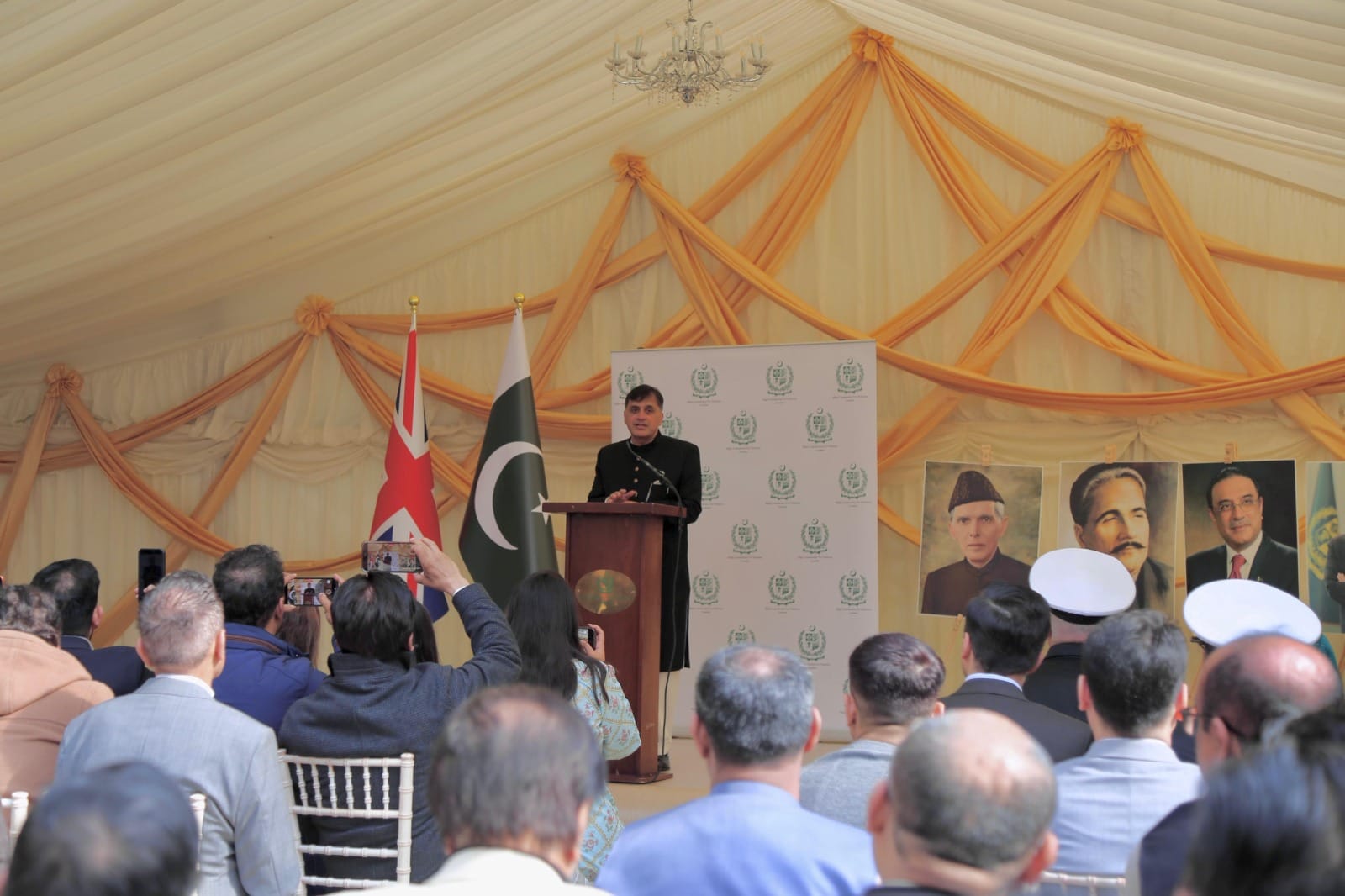
In his keynote address, the High Commissioner said that Pakistan Day was a tribute to our founding fathers who united the Muslims of Indian sub-continent where they could live independently as a Nation and live according to their customs & traditions.
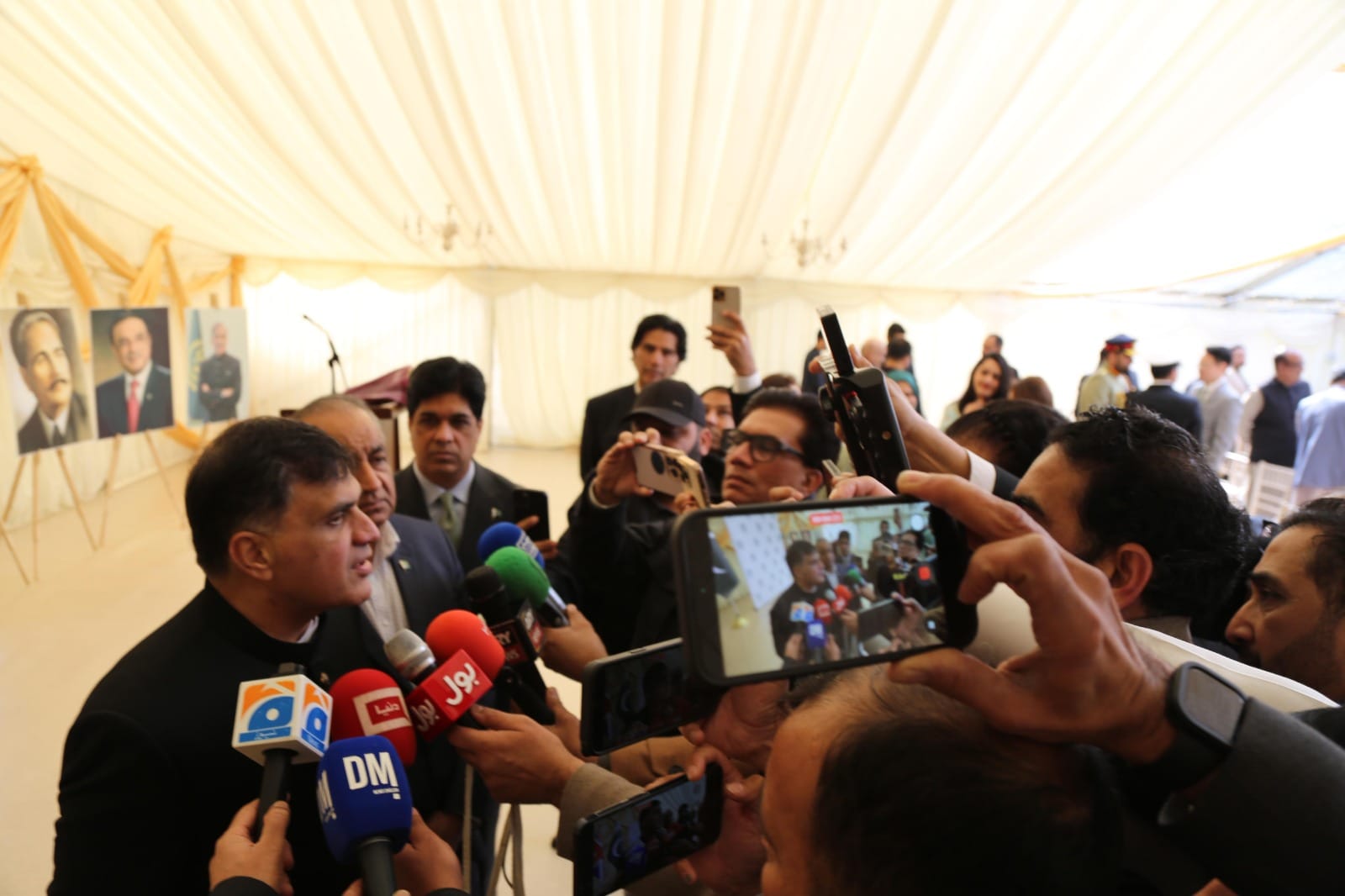
Dr. Faisal stated that Pakistan had always professed peace and stability in the region. However, Pakistan will not tolerate any aggression from neighbouring countries.
The High Commissioner said that Pakistani nation, despite the difficulties, remains resilient and demonstrates courage & perseverance.
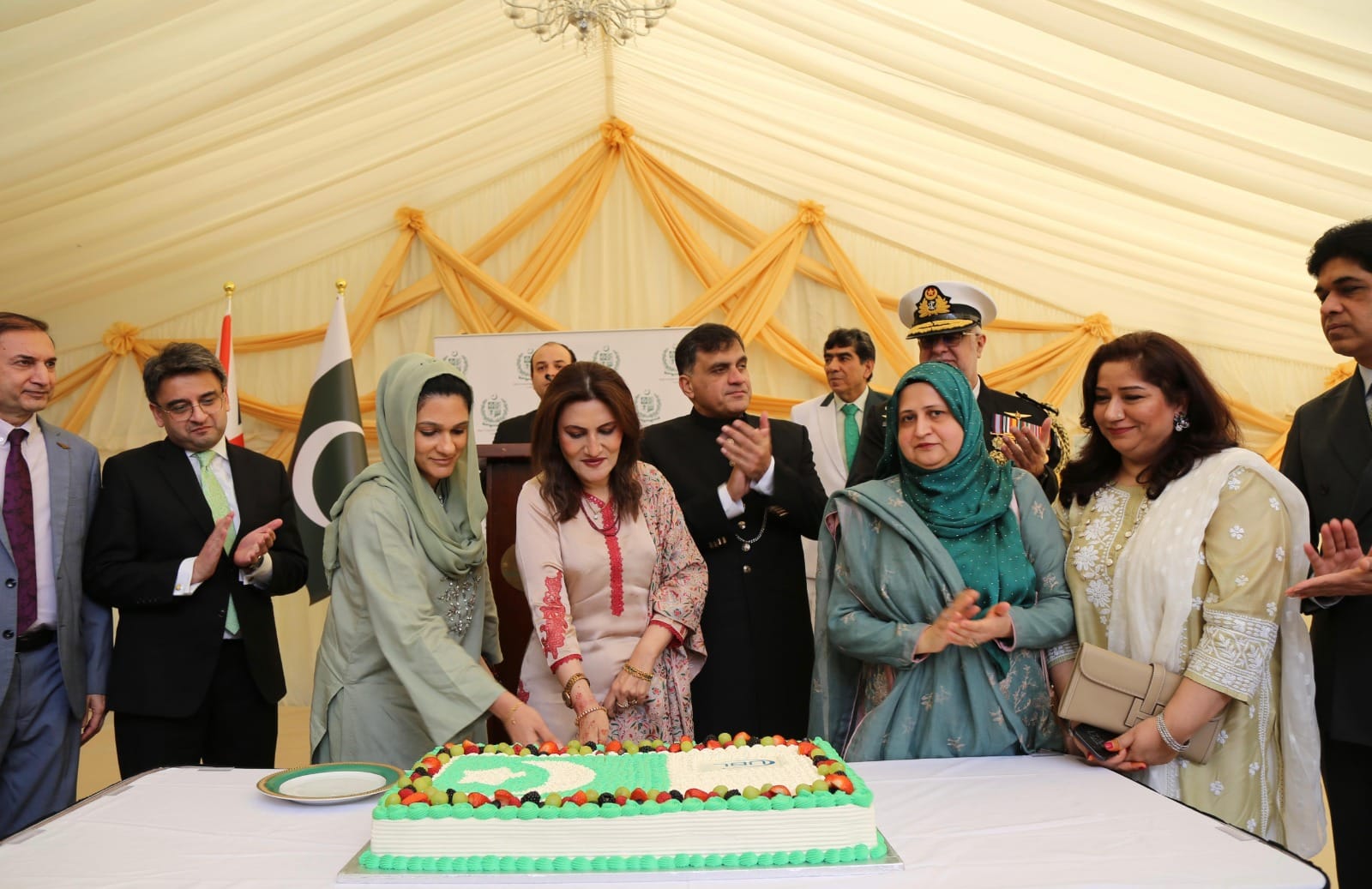
Dr. Mohammad Faisal stated that, in line with the instructions of the Prime Minister, the Deputy Prime Minister / Foreign Minister and the Federal Cabinet, Pakistan High Commission London is implementing strict austerity measures. However, these measures will not affect the performance & working of the High Commission.
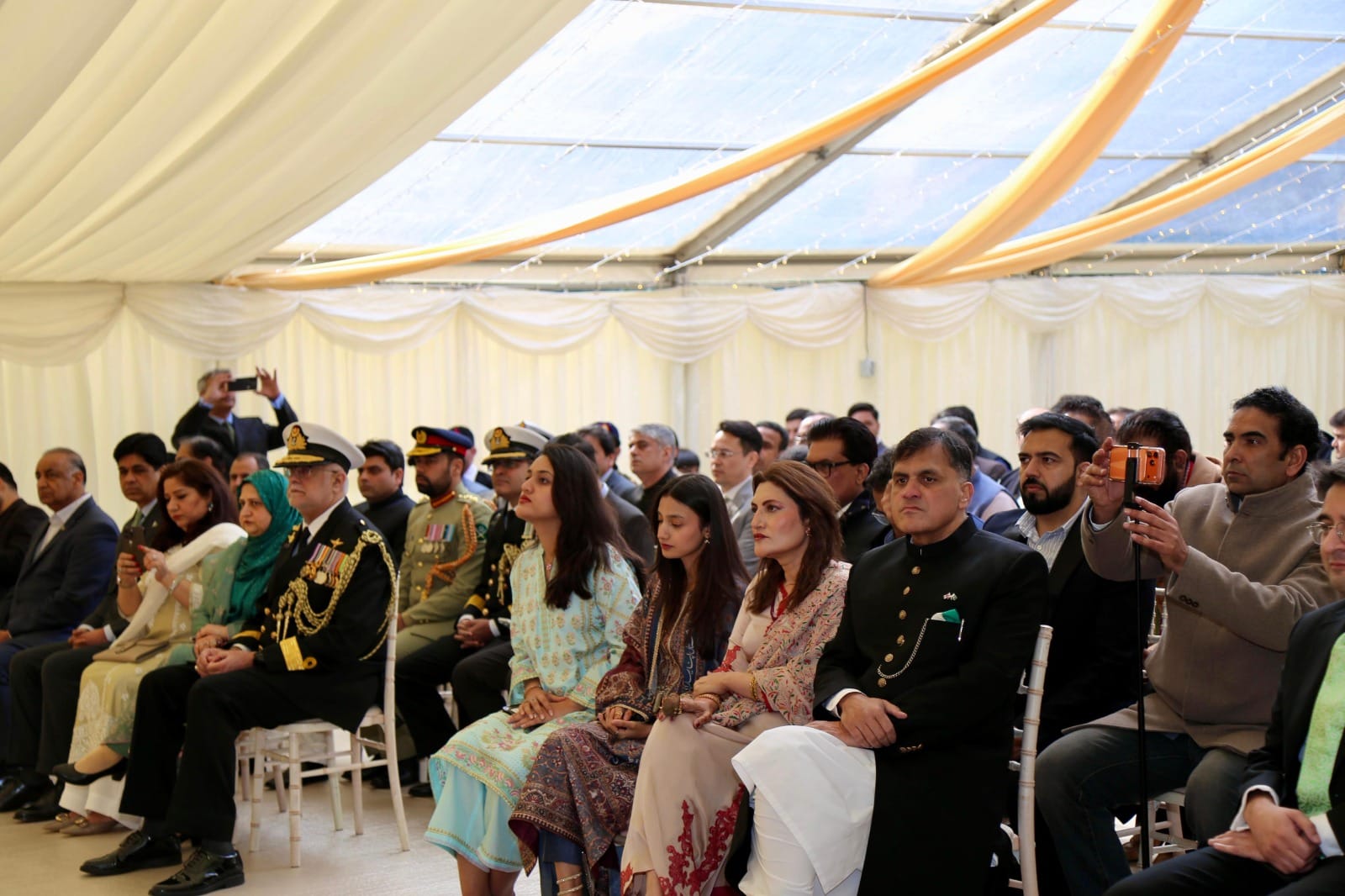
He acknowledged the remarkable contributions of Pakistani diaspora in UK and their extraordinary performance in various fields. He said that their achievements are a source of immense pride for Pakistan.
The High Commissioner expressed solidarity with the people of Indian Illegally Occupied Jammu and Kashmir and committed to continue diplomatic, moral and political support for their right to self determination under UN Resolutions.
London
23rd March, 2026


How the World Is Forced to Fund the Iran War

Scholars Urge UN to Protect Iran’s Scientific Sites Amid Airstrikes Global Academics Warn Attacks Threaten Research, Health, and Civilian Safety

How Iran Humiliated U.S. and Israeli Power


-

 Europe News1 year ago
Chaos and unproven theories surround Tates’ release from Romania
-

 American News1 year ago
Trump expands exemptions from Canada and Mexico tariffs
-

 American News1 year ago
Trump Expels Zelensky from the White House
-

 Pakistan News9 months ago
Comprehensive Analysis Report-The Faranian National Conference on Maritime Affairs-By Kashif Firaz Ahmed
-

 American News1 year ago
Zelensky bruised but upbeat after diplomatic whirlwind
-

 Art & Culture1 year ago
The Indian film showing the bride’s ‘humiliation’ in arranged marriage
-

 Art & Culture1 year ago
International Agriculture Exhibition held in Paris
-

 Pakistan News1 year ago
Can Pakistan be a Hard State?