
Pakistan News
Pakistan and the Yemen Trap

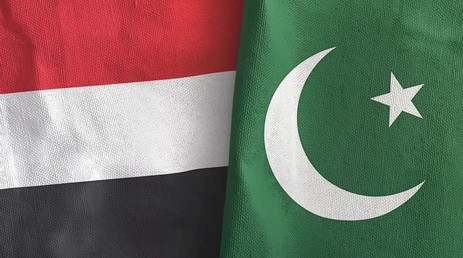
Paris (Imran Y. CHOUDHRY) :- Former Press Secretary to the President, Former Press Minister to the Embassy of Pakistan to France, Former MD, SRBC Mr. Qamar Bashir analysis : Any indication by the Director General of Inter-Services Public Relations that Pakistan is actively assisting Saudi Arabia against Yemen’s Houthis would represent a major departure from prudent diplomacy. This would not be an ordinary extension of defence cooperation between two longstanding allies. It could place Pakistan inside a conflict connected with Iran, Israel, the United States, the Gulf states and the future control of one of the world’s most sensitive maritime corridors.
The Houthis, formally known as Ansar Allah, are no longer merely a Yemeni insurgent movement. They control much of northern Yemen, including the capital, Sana’a, and possess missiles, drones and maritime-strike capabilities. By attacking commercial vessels and confronting Israel, they have projected themselves into the wider Middle Eastern conflict. Their actions may be disputed strategically, but across much of the Muslim world they portray their campaign as support for Palestinians and resistance to Israel’s war in Gaza.
Bab el-Mandeb is central to this equation. This narrow strait connects the Red Sea with the Gulf of Aden and, through the Suez Canal, links Asian trade with Europe. Any force capable of threatening vessels, ports or islands surrounding this corridor can disrupt shipping, raise insurance costs, increase oil prices and force commercial vessels around the Cape of Good Hope. The Strait of Hormuz and Bab el-Mandeb are therefore two strategic pressure points capable of influencing the global economy.
Pakistan must distinguish, however, between protecting commercial navigation and entering Yemen’s civil war on behalf of one party. Intelligence sharing, naval protection of Pakistani shipping and participation in internationally defined anti-piracy operations are different from identifying Houthi positions, supporting Saudi or Yemeni government forces, conducting strikes, or helping one side capture strategically important territory. The first category may serve a legitimate defensive purpose. The second would make Pakistan a party to the conflict.
That distinction is particularly important because the Houthis are closely aligned with Iran. Tehran may not control every Houthi decision, but it has provided the movement with political support, military technology and strategic assistance. Direct Pakistani involvement against the Houthis would consequently be interpreted in Tehran as Pakistan joining an anti-Iran regional alignment. This could damage a difficult but indispensable relationship between two neighbouring Muslim states sharing a border of more than 900 kilometres.
Pakistan’s strategic plate is already overflowing. Its confrontation with India has not disappeared; it has only been restrained by an uncertain truce and the fear of escalation between two nuclear-armed states. Any new incident could revive that conflict with extraordinary speed. Pakistan is also engaged in an increasingly dangerous struggle with militants operating from Afghanistan, while relations with the Afghan Taliban remain deeply strained. Terrorist attacks continue to take the lives of civilians and security personnel inside Pakistan.
Opening a third front—directly or indirectly—in Yemen would disperse Pakistan’s military attention, intelligence capabilities and diplomatic resources. A country confronting threats on its eastern and western borders cannot responsibly volunteer for another conflict thousands of kilometres away, particularly one involving missiles, drones, maritime warfare, proxy organisations and competing global powers.
There is also an unavoidable Palestinian dimension. Whatever Pakistan’s assessment of Houthi politics or methods, the movement has publicly connected its Red Sea operations with Israel’s actions in Gaza. If Pakistani assistance weakens the Houthis’ capacity to confront Israel, many Pakistanis will interpret Islamabad’s involvement as indirectly helping Israel rather than merely assisting Saudi Arabia. Whether that interpretation is strategically complete would matter less than its political effect inside Pakistan.
Religious parties, opposition forces, student organisations and civil-society groups could mobilise against the government. Demonstrations might portray the civilian and military leadership as exchanging Palestinian solidarity for Saudi financial support. At a time when Pakistan is already politically polarised, economically burdened and institutionally divided, such a perception could produce protests, agitation and prolonged internal instability. A foreign deployment undertaken in the name of national security could ultimately weaken security at home.
Israel and the United States would also view an expanded Pakistani role through their own strategic calculations. They may welcome operations that reduce Houthi attacks on shipping, but they would remain suspicious of the deployment of a major Muslim military force with nuclear capability and extensive combat experience. A Pakistani force introduced today against the Houthis could theoretically be redirected tomorrow under changed political circumstances. Israel would therefore evaluate Pakistan not merely as a temporary partner of Saudi Arabia but as a potentially independent military actor entering its immediate strategic environment.
Conversely, if Pakistan limited itself to Saudi defence but refused actions benefiting Israel, Washington and Tel Aviv could still consider Islamabad unreliable. Pakistan could thus acquire the liabilities of intervention without securing the complete trust of either side. In a region where alliances shift quickly, tactical cooperation does not necessarily produce lasting strategic protection.
The relevant calculation is not how many billions of dollars Saudi Arabia may deposit or invest. It is whether that assistance compensates Pakistan for possible casualties, retaliatory terrorism, damaged relations with Iran, increased defence expenditure, domestic turmoil and exposure to a prolonged regional war. Measured against these risks, even substantial economic support could become an extremely expensive bargain.
Yemen itself offers a warning. Years of Saudi-led military operations failed to eliminate the Houthis. Despite superior aircraft, weaponry and financial resources, the coalition could not impose a decisive settlement. The Houthis emerged more experienced, better armed and politically entrenched. Pakistan must therefore ask what its involvement could accomplish that years of regional military intervention did not.
There may nevertheless be a legitimate Pakistani role. Islamabad can defend Saudi territory against external attack under clearly defined bilateral arrangements. It can help train Saudi forces, support mine-clearing, protect Pakistani shipping and participate in diplomatic efforts for a Yemeni settlement. It can also use its relations with Saudi Arabia, Iran and other Muslim countries to encourage de-escalation. But Pakistani personnel should not conduct offensive operations inside Yemen or become instruments in a wider campaign against Iran and its regional partners.
Before any deployment, the government must inform Parliament about its objectives, geographical limits, duration, command structure and rules of engagement. It must clarify whether Pakistani forces are defending Saudi territory, protecting international shipping or operating against the Houthis inside Yemen. Strategic ambiguity may temporarily protect officials from criticism, but it leaves the country vulnerable to mission expansion without democratic consent.
Pakistan’s relationship with Saudi Arabia is important, but it cannot override Pakistan’s own national interest. The country needs economic recovery, internal stability, secure borders and balanced relations with neighbouring Iran. It does not need another battlefield.
The wisest policy is therefore one of defensive cooperation without offensive entanglement: protect Saudi Arabia from attacks on its territory, safeguard lawful maritime commerce, support negotiations and refuse participation in Yemen’s internal war. Pakistan can stand with Saudi Arabia without becoming an enemy of Yemen, Iran or those who believe they are resisting Israel. That balance may be difficult, but it is far less dangerous than stepping into a regional furnace from which Pakistan may find no easy exit.








Amir Bahadur Khan Hoti Demands Apology and Calls for Decency in Politics
LAHORE: Awami National Party (ANP) Punjab Provincial General Secretary Amir Bahadur Khan Hoti has strongly condemned the indecent and disrespectful language used by PTI leader Shafi Jan against Punjab Information Minister Azma Bukhari. He said that political disagreement is the right of every party, but the use of insulting and unethical language against a woman is unacceptable under any circumstances.
He said political workers and leaders must uphold decency, ethics and democratic values. Respect for women is a fundamental part of Pakistan’s social, religious and political traditions, and such language not only damages the political environment but also harms society’s moral values.
Amir Bahadur Khan Hoti demanded that Shafi Jan apologise for his irresponsible remarks. He also urged all political parties to ensure that their workers follow respectful and civilised political conduct.
He said respect for women has always held a central place in Pashtun culture, traditions and history, adding that the use of such language against a woman is unimaginable for any Pashtun.
He expressed concern that the growing use of abusive language and hateful behaviour in national politics had severely damaged the country’s traditional political decency, culture and moral values.
Pakistan News
PAYS RICH TRIBUTE TO THE MARTYRS AND VETERANS ON THE DEFENCE DAY OF PAKISTAN IN PARIS, FRANCE

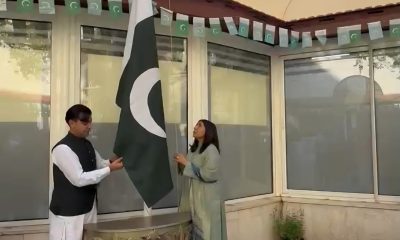
Paris (Imran Y. CHOUDHRY):- Pakistan Embassy, Paris hosted a reception on 7th September to commemorate the Defence and Martyrs Day of Pakistan. The reception was attended by Senator Allizard, members of the Diplomatic Corps, officers of the Armed Forces and several friends of Pakistan.

In her welcome note, Ambassador Mumtaz Zahra Baloch paid rich tribute to the martyrs and veterans of the Armed Forces of Pakistan and paid homage to their service and sacrifices. She said that the Armed Forces of Pakistan were the guarantors of its national security, and the entire nation stood shoulder to shoulder with its brave defenders.

She recalled the valiant defence by Pakistan in 1965 and in May last year when Pakistan’s Armed Forces responded to Indian aggression with resolve, precision, and professionalism. The Ambassador also highlighted Pakistan’s contributions for regional and global peace and stability especially under UN peacekeeping missions.
Ambassador Baloch said that over the past two decades, Pakistan national defence has not been confined to the conventional battlefield alone. It has also extended to the fight against terrorism. In this defining battle, Pakistan’s Armed Forces, its enforcement personnel, and its citizens had made immense and often immeasurable sacrifices, she added.

Ambassador Baloch said that Pakistan believes in forging partnerships and strengthening international cooperation in pursuit of shared objectives of global peace, security and development. It was this spirit of cooperation and dialogue and commitment to international law Pakistan was playing a mediatory role in dousing the flames of war in our region, she added.
She said Pakistan do not seek conflict and instead sought peaceful and mutually respectful relations with all its neighbours. However, it would never compromise on its national defence. She added that for long term peace in South Asia, the Jammu & Kashmir dispute should be resolved as per the UN Security Council Resolutions.
Pakistan News
Sexual crimes against women, kids: 80pc of offenders are people known to victims, says Punjab IGP
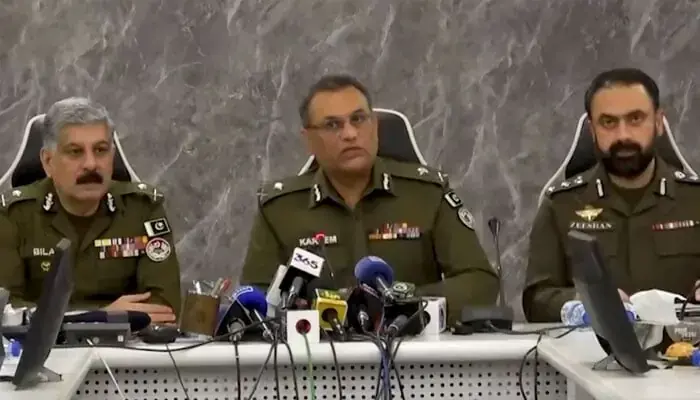
LAHORE: Punjab Inspector General of Police (IGP) Abdul Kareem has said that immediate action is being taken to curb sexual crimes against women and children on the chief minister’s directives and that 80 per cent of such crimes are committed by the relatives or people known to the victims.
The IGP said this at a ‘Meet the Press’ programme organised by the Lahore Press Club here on Tuesday, flanked by Lahore DIG Investigation Zeeshan Raza, DIG Operations Faisal Kamran and other police officers.
The Punjab police chief said that crime reporters play a vital role in identifying crime, guiding law enforcement agencies and helping improve the policing system, describing them as the “eyes, ears and helpers” of the Punjab Police.
He said there were 800 police stations in Punjab, which are the basic service-delivery mechanism of the police.
Listing the reforms introduced in policing, he cited automated systems, Safe City cameras, virtual women police stations and centres for child safety, body cameras and panic (pink) buttons as examples.
“The purpose of the police is to provide justice to people,” he said, adding that measures are being taken to ensure greater relief to the citizens visiting police stations.
Regarding the Crime Control Department (CCD), the IG said its scope is limited and that serious crimes have “declined significantly because of effective measures.”
Only the cases falling within the CCD’s jurisdiction are being referred to the department, he added.
The IGP said departmental proceedings have already been initiated against police personnel, from constable to senior ranks, over corruption and irregularities. He warned that there would be no leniency in the complaints of corruption, misconduct or abuse of authority by police officials.
He claimed that property-related crimes in Punjab have “almost been eliminated” and that the traffic system has also improved.
He announced that a board for promotion from the rank of sub-inspector to inspector would be convened soon. He said the Elite Orientation Course was meant for officers up to the ASP rank.
On the use of body cameras, Mr Kareem said the chief minister had allocated Rs12 billion for the initiative and that a consignment comprising 1,000 body cameras had arrived, with around 500 expected to be received on Tuesday, while more were on the way.
“Now every police officer deployed at a checkpoint will have a body camera,” he said.
The IG attributed the restoration of peace in the Katcha areas to effective police action and government measures.
He further stated that legislation against illegal weapons is being introduced, and a summary in this regard is in process.
At the conclusion of the programme, the press club president presented a shield to the IGP, who reciprocated the gesture by presenting police souvenirs to the club office-bearers.
Published in Dawn, September 2nd, 2026


Trump criticises Supreme Court after justices block mail-in ballot restrictions

Denmark says Russian warship fired flares at military helicopter

‘A distinct Canadian character’: The 1920s paintings that changed how the world saw Canada


-

 Sports3 months ago
South Korea’s Yoo Useong Steps Onto the Global Strongman Stage as World Strongman Federation Professional Athlete
-

 Art & Culture1 year ago
A Survey of Mata-E-Zeest
-

 Europe News2 years ago
Chaos and unproven theories surround Tates’ release from Romania
-

 American News2 years ago
Trump expands exemptions from Canada and Mexico tariffs
-

 American News2 years ago
Trump Expels Zelensky from the White House
-

 Art & Culture2 years ago
Will Snow White be a ‘victim of its moment’? How the Disney remake became 2025’s most divisive film
-

 Entertainment2 years ago
Champions Trophy: Pakistan aim to defend coveted title as historic tournament kicks off today
-

 Pakistan News1 year ago
Comprehensive Analysis Report-The Faranian National Conference on Maritime Affairs-By Kashif Firaz Ahmed