
Paris (Imran Y. CHOUDHRY) :- Former Press Secretary to the President, Former Press Minister to the Embassy of Pakistan to France, Former MD, SRBC Mr. Qamar Bashir analysis : Any indication by the Director General of Inter-Services Public Relations that Pakistan is actively assisting Saudi Arabia against Yemen’s Houthis would represent a major departure from prudent diplomacy. This would not be an ordinary extension of defence cooperation between two longstanding allies. It could place Pakistan inside a conflict connected with Iran, Israel, the United States, the Gulf states and the future control of one of the world’s most sensitive maritime corridors.
The Houthis, formally known as Ansar Allah, are no longer merely a Yemeni insurgent movement. They control much of northern Yemen, including the capital, Sana’a, and possess missiles, drones and maritime-strike capabilities. By attacking commercial vessels and confronting Israel, they have projected themselves into the wider Middle Eastern conflict. Their actions may be disputed strategically, but across much of the Muslim world they portray their campaign as support for Palestinians and resistance to Israel’s war in Gaza.
Bab el-Mandeb is central to this equation. This narrow strait connects the Red Sea with the Gulf of Aden and, through the Suez Canal, links Asian trade with Europe. Any force capable of threatening vessels, ports or islands surrounding this corridor can disrupt shipping, raise insurance costs, increase oil prices and force commercial vessels around the Cape of Good Hope. The Strait of Hormuz and Bab el-Mandeb are therefore two strategic pressure points capable of influencing the global economy.
Pakistan must distinguish, however, between protecting commercial navigation and entering Yemen’s civil war on behalf of one party. Intelligence sharing, naval protection of Pakistani shipping and participation in internationally defined anti-piracy operations are different from identifying Houthi positions, supporting Saudi or Yemeni government forces, conducting strikes, or helping one side capture strategically important territory. The first category may serve a legitimate defensive purpose. The second would make Pakistan a party to the conflict.
That distinction is particularly important because the Houthis are closely aligned with Iran. Tehran may not control every Houthi decision, but it has provided the movement with political support, military technology and strategic assistance. Direct Pakistani involvement against the Houthis would consequently be interpreted in Tehran as Pakistan joining an anti-Iran regional alignment. This could damage a difficult but indispensable relationship between two neighbouring Muslim states sharing a border of more than 900 kilometres.
Pakistan’s strategic plate is already overflowing. Its confrontation with India has not disappeared; it has only been restrained by an uncertain truce and the fear of escalation between two nuclear-armed states. Any new incident could revive that conflict with extraordinary speed. Pakistan is also engaged in an increasingly dangerous struggle with militants operating from Afghanistan, while relations with the Afghan Taliban remain deeply strained. Terrorist attacks continue to take the lives of civilians and security personnel inside Pakistan.
Opening a third front—directly or indirectly—in Yemen would disperse Pakistan’s military attention, intelligence capabilities and diplomatic resources. A country confronting threats on its eastern and western borders cannot responsibly volunteer for another conflict thousands of kilometres away, particularly one involving missiles, drones, maritime warfare, proxy organisations and competing global powers.
There is also an unavoidable Palestinian dimension. Whatever Pakistan’s assessment of Houthi politics or methods, the movement has publicly connected its Red Sea operations with Israel’s actions in Gaza. If Pakistani assistance weakens the Houthis’ capacity to confront Israel, many Pakistanis will interpret Islamabad’s involvement as indirectly helping Israel rather than merely assisting Saudi Arabia. Whether that interpretation is strategically complete would matter less than its political effect inside Pakistan.
Religious parties, opposition forces, student organisations and civil-society groups could mobilise against the government. Demonstrations might portray the civilian and military leadership as exchanging Palestinian solidarity for Saudi financial support. At a time when Pakistan is already politically polarised, economically burdened and institutionally divided, such a perception could produce protests, agitation and prolonged internal instability. A foreign deployment undertaken in the name of national security could ultimately weaken security at home.
Israel and the United States would also view an expanded Pakistani role through their own strategic calculations. They may welcome operations that reduce Houthi attacks on shipping, but they would remain suspicious of the deployment of a major Muslim military force with nuclear capability and extensive combat experience. A Pakistani force introduced today against the Houthis could theoretically be redirected tomorrow under changed political circumstances. Israel would therefore evaluate Pakistan not merely as a temporary partner of Saudi Arabia but as a potentially independent military actor entering its immediate strategic environment.
Conversely, if Pakistan limited itself to Saudi defence but refused actions benefiting Israel, Washington and Tel Aviv could still consider Islamabad unreliable. Pakistan could thus acquire the liabilities of intervention without securing the complete trust of either side. In a region where alliances shift quickly, tactical cooperation does not necessarily produce lasting strategic protection.
The relevant calculation is not how many billions of dollars Saudi Arabia may deposit or invest. It is whether that assistance compensates Pakistan for possible casualties, retaliatory terrorism, damaged relations with Iran, increased defence expenditure, domestic turmoil and exposure to a prolonged regional war. Measured against these risks, even substantial economic support could become an extremely expensive bargain.
Yemen itself offers a warning. Years of Saudi-led military operations failed to eliminate the Houthis. Despite superior aircraft, weaponry and financial resources, the coalition could not impose a decisive settlement. The Houthis emerged more experienced, better armed and politically entrenched. Pakistan must therefore ask what its involvement could accomplish that years of regional military intervention did not.
There may nevertheless be a legitimate Pakistani role. Islamabad can defend Saudi territory against external attack under clearly defined bilateral arrangements. It can help train Saudi forces, support mine-clearing, protect Pakistani shipping and participate in diplomatic efforts for a Yemeni settlement. It can also use its relations with Saudi Arabia, Iran and other Muslim countries to encourage de-escalation. But Pakistani personnel should not conduct offensive operations inside Yemen or become instruments in a wider campaign against Iran and its regional partners.
Before any deployment, the government must inform Parliament about its objectives, geographical limits, duration, command structure and rules of engagement. It must clarify whether Pakistani forces are defending Saudi territory, protecting international shipping or operating against the Houthis inside Yemen. Strategic ambiguity may temporarily protect officials from criticism, but it leaves the country vulnerable to mission expansion without democratic consent.
Pakistan’s relationship with Saudi Arabia is important, but it cannot override Pakistan’s own national interest. The country needs economic recovery, internal stability, secure borders and balanced relations with neighbouring Iran. It does not need another battlefield.
The wisest policy is therefore one of defensive cooperation without offensive entanglement: protect Saudi Arabia from attacks on its territory, safeguard lawful maritime commerce, support negotiations and refuse participation in Yemen’s internal war. Pakistan can stand with Saudi Arabia without becoming an enemy of Yemen, Iran or those who believe they are resisting Israel. That balance may be difficult, but it is far less dangerous than stepping into a regional furnace from which Pakistan may find no easy exit.
Pakistan and the Yemen Trap
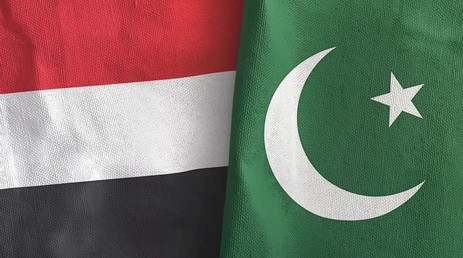
Pakistan and the Yemen Trap