
Pakistan News
One chief to rule all military services

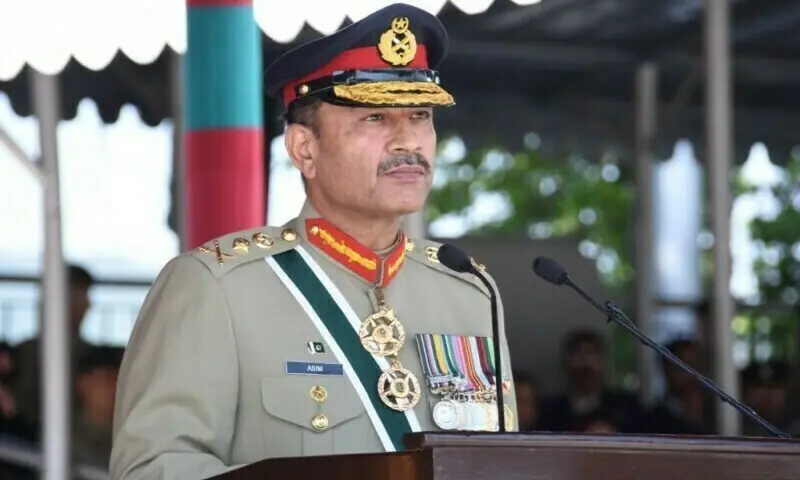
The proposed 27th Constitutional Amendment, which would overhaul Article 243 and recast Pakistan’s military command hierarchy, is the most ambitious restructuring effort in decades and perhaps the most contentious as it collides with entrenched institutional cultures and the fragile equilibrium between civilian and military power.
Its implementation may prove far more difficult than its drafters imagine. The plan collides with entrenched institutional cultures, long-standing inter-service rivalries, and the delicate balance between civilian oversight and military autonomy that has, at least in theory, defined Pakistan’s power structure since 1973.
At the heart of the bill lies the deceptively simple premise of modernising defence coordination by creating a Chief of Defence Forces (CDF) and abolishing the office of the Chairman Joint Chiefs of Staff Committee (CJCSC).
But in practice, the reform would elevate the army chief to a constitutionally enshrined position of supremacy — combining operational command with overarching control of all services.
Article 243 overhaul marks a leap towards military centralisation and consolidation of uniformed supremacy
For over four decades, the CJCSC has served as the symbolic head of the armed services, designed to ensure coordination among the Army, Navy, and Air Force.
In practice, the role remained largely ceremonial, with the army — for over two and a half decades — reluctant to rotate it to other branches.
The proposed amendment would dissolve the post entirely on Nov 27, 2025, coinciding with the retirement of the current CJCSC, Gen Sahir Shamshad Mirza, and make the chief of army staff concurrently the Chief of Defence Forces — placing all three services under his authority.
Former human rights minister and defence academic Dr Shireen Mazari highlights an ambiguity left unaddressed in the bill.
“With the end of the CJCSC position, would the joint chiefs of staff committee also be dissolved?” she asks.
If so, which forum would replace it for coordination among the three services though the CJCSC’s ineffectiveness is well known.
The supporters of the legislation argue that the change will streamline decision-making and enhance unified command.
However, critics see it as institutional capture. “By placing an army officer as the Chief of Defence Forces with authority over the Air Force and Navy, the proposed system invites institutional imbalance and potential disaster,” warns retired Lt Gen Asif Yasin Malik, a former defence secretary.
“This amendment appears tailored to benefit a specific individual rather than to strengthen the defence structure,” he adds.
The criticism cuts to the core of the country’s military culture — the deep-seated rivalries among the Army, Air Force, and Navy, each guarding its operational turf and doctrine.
The Air Force and Navy have long resisted attempts to subordinate their autonomy under land-centric command.
Harmonising these distinct traditions — air power’s rapid, decentralised decision cycles versus the army’s hierarchical chain of command — has historically been the Achilles’ heel of every “joint” reform effort.
A critical question under the new system is who would control transfers, postings, and promotions in the Air Force and Navy.
Would the two service chiefs readily cede that authority? Dr Mazari cautions that if promotions in the Air Force and Navy were to be decided by an army-origin CDF, it “could lead to festering resentments and affect morale in the long run”.
She raises another hypothetical scenario: “What if there is a Marshal of the Air Force or Admiral of the Fleet while the COAS is a four-star general — will they then be under a four-star army officer if the latter is the CDF?” she asks. “Too much has been left to ad hoc and arbitrary decisions.”
Equally consequential is the proposal to create a Commander of the National Strategic Command, a position overseeing the country’s nuclear forces.
Under the amendment, the commander would be appointed by the prime minister on the army chief’s recommendation and must be chosen from within the army.
That subtle shift moves control of the country’s most sensitive assets away from the collegial National Command Authority (NCA), designed to ensure civilian oversight and inter-service balance, toward a single service.
Dr Mazari warns the change could have grave operational implications.
“Effectively, all nuclear weapons and delivery systems will be under the army’s control, including second-strike missiles which normally fall under naval command,” she says.
“This could lead to command-and-control problems and time delays, especially in a war-like situation.”
Her concerns recall a rare moment of institutional dissent — the 2019 National Security Committee meeting after the Balakot strikes — when, according to retired Lt Gen Malik, the then-army chief Gen Qamar Bajwa advised restraint but was reportedly overruled by the air chief and the CJCSC.
“Under the proposed arrangement, would such dissent, and the powerful response it ensured, even be possible?” he asks pointedly.
Perhaps the most controversial innovation lies in the clauses granting life-long constitutional protection to officers elevated to five-star ranks — field marshal, marshal of the air force, or admiral of the fleet.
These officers would “retain rank, privileges and remain in uniform for life”, removable only through impeachment under Article 47 and protected by immunities “similar to those enjoyed by the president” under Article 248, applied mutatis mutandis.
The language is designed to legalise the extraordinary promotion of Gen Asim Munir to field marshal following the India-Pakistan confrontation in May this year.
What looks ceremonial on paper, however, amounts to a permanent legal armour around an unelected officeholder — “a parallel authority insulated from the very rule of law it is sworn to defend”, as one constitutional lawyer puts it, asking not to be named.
Such provisions blur the line between honour and power.
“Even in the United States, the chairman of the joint chiefs does not wield absolute powers,” notes Lt Gen Malik.
“Creating lifetime immunities for military officers upends the very idea of civilian supremacy”. The supporters of the amendment, including government ministers, argue the changes merely formalise existing practices.
Yet the bill remains ambiguous about the tenure of the service chiefs.
Minister of State for Law and Justice Barrister Aqeel Malik told reporters that there was “no need for a fresh notification” on the army chief’s tenure, since existing legal provisions already establish a five-year term under the Army Act as amended by the 26th Constitutional Amendment.
But such reassurances overlook a deeper concern, which is that the proposed amendment will move the defence management from statute to constitutional entrenchment, making future civilian corrections exponentially harder.
Military affairs expert Muhammad Faisal, a doctoral researcher in Sydney, sees the bill as “the first phase” of a broader restructuring.
“There could be more updates coming with changes in the Army Act and NCA Acts to reflect new proposals,” he says.
“This could also lead to the restructuring of strategic forces, currently administered by three services separately, into a unified single command.”
That trajectory — toward centralisation rather than coordination — captures the tension at the heart of Pakistan’s military politics. Every attempt at “jointness” risks hardening into hierarchy because institutional habits and prestige are resistant to reform.
The stakes are profound. The country’s Constitution has endured repeated experiments in balancing military power and civilian authority.
A Chief of Defence Forces position can be created, as many democracies have done, through statutory reform subject to parliamentary review.
But embedding such a role in the Constitution transforms it from an administrative necessity into a permanent political reality, one that cannot easily be undone.
Ultimately, the question is not whether Pakistan needs a modernised defence structure. However, it definitely needs to be updated.
The question is whether modernisation must come at the cost of institutional equilibrium. History offers a cautionary note that once military power is constitutionalised, it rarely yields ground voluntarily.
Article 243 was meant to preserve civilian command over the armed forces. The 27th Amendment risks rewriting it into a charter of military supremacy.
Published in Dawn, November 9th, 2025
Header image: Chief of Army Staff Field Marshal General Asim Munir addressing the passing out parade of the Pakistan Military Academy in Khyber Pakhtunkhwa’s Kakul on April 29. — ISPR





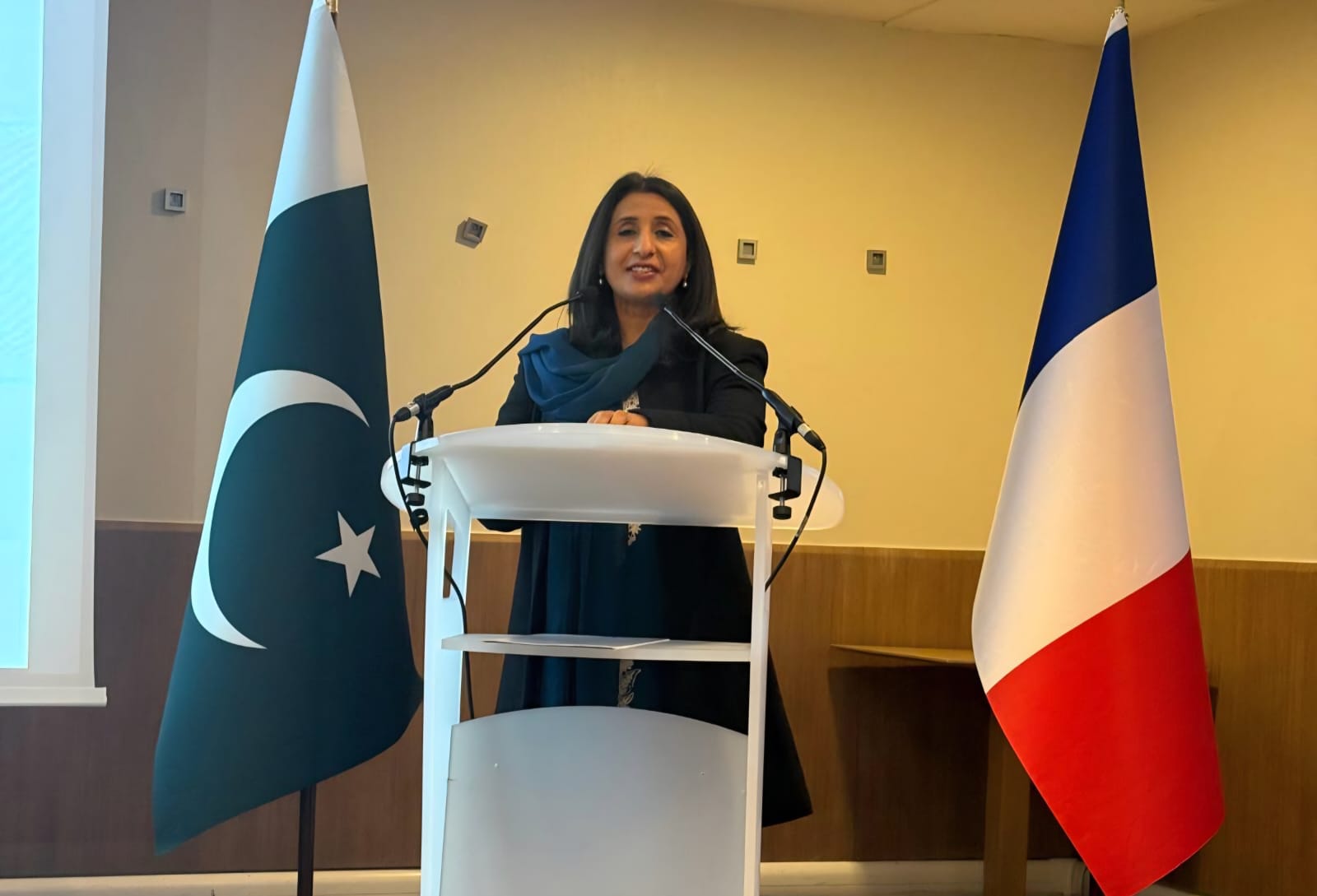
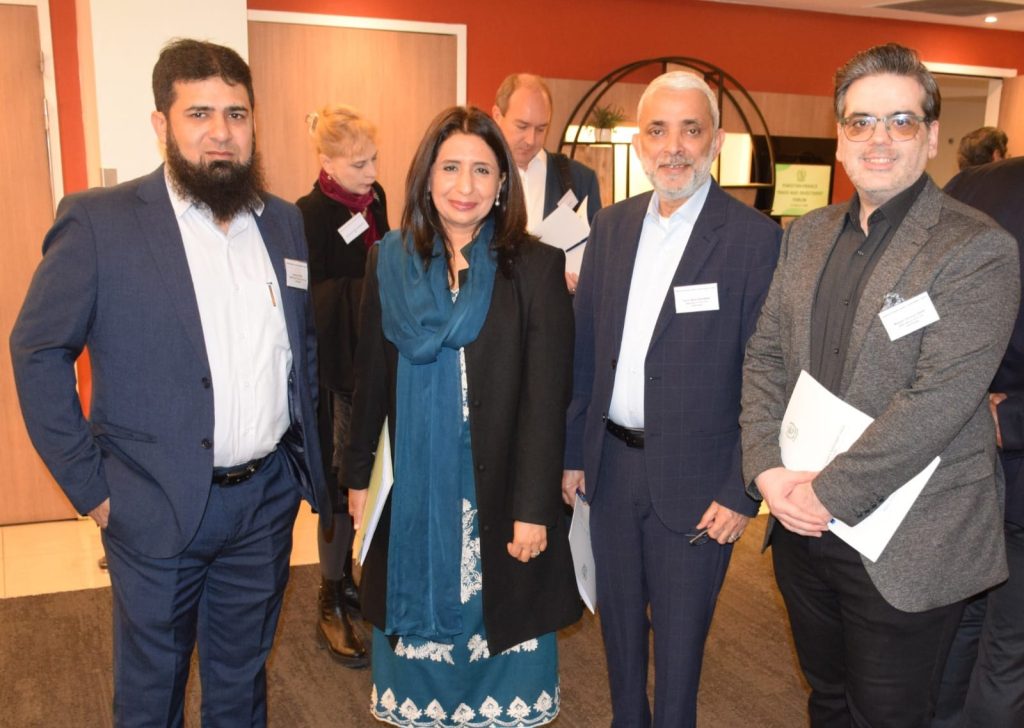
Paris ( Imran Y. CHOUDHRY):- A ‘Pakistan-France Trade and Investment Forum’ was held in Paris today, bringing together government officials, business leaders, industry experts and representatives of trade bodies of both countries.
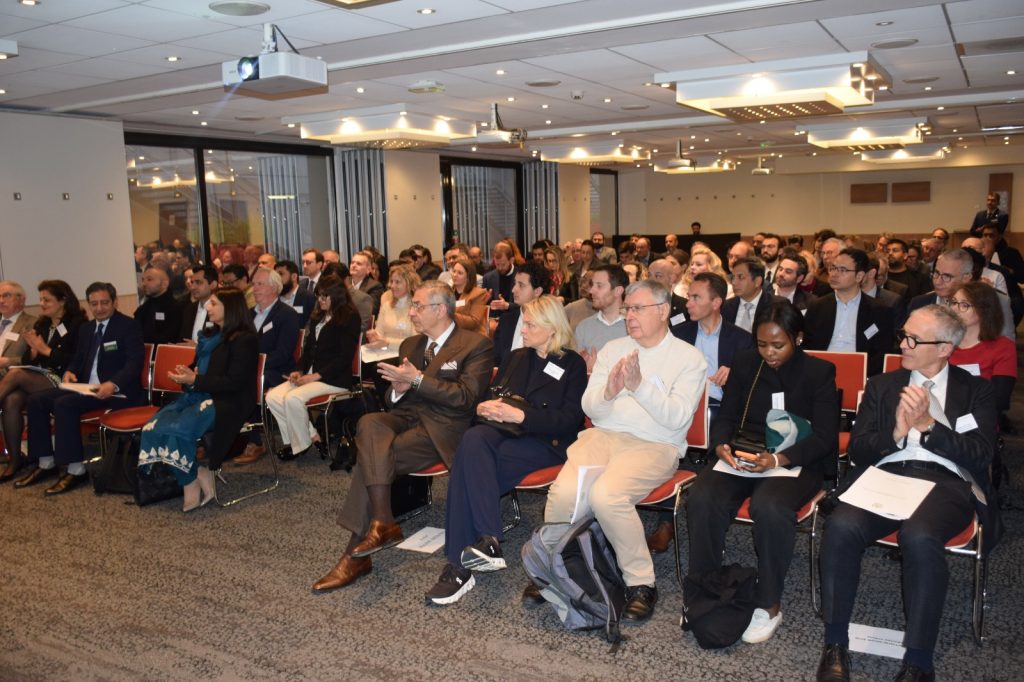
The Forum was held in implementation of an understanding reached between President Emmanuel Macron and Prime Minister Shehbaz Sharif in 2024, to build strong economic partnership between Pakistan and France. The objective of the Forum was to connect businesses, exchange ideas, explore new avenues of bilateral cooperation and showcase Pakistan’s trade and investment potential. It witnessed participation of over seventy French and Pakistani companies from diverse sectors including agriculture, information technology, textiles, energy and tourism.
Ambassador Mumtaz Zahra Baloch opened the Business Forum and highlighted Pakistan’s economic growth and potential as an attractive trade partner for France. She outlined investor-focused initiatives and institutional facilitation mechanisms in Pakistan to promote trade and investment. She encouraged Pakistani and French businesses to explore collaborative opportunities, and develop joint ventures and win-win partnerships.

Speakers from the French side included Thierry Pflimlin, Chairman of the France-Pakistan Business Council at MEDEF International, Patricia Glasel, Vice President of the Conseillers du Commerce Extérieur de la France (CCEF) and Ardavan Amir-Aslani. They highlighted the growing momentum in France-Pakistan economic relations; identified the opportunities for trade and investment with Pakistan; and underscored the importance of strengthening private sector linkages to further facilitate bilateral trade and investment.
The plenary session was followed by ‘Breakout and Business-to-Business (B2B)’ sessions to discuss and identify tangible avenues for collaboration in textiles, agriculture and dairy, and Information Technology.
Pakistan News
Dr. Mohammad Faisal Joins Distinguished Quetta Association Event in London Gathering Reinforces Shared Military Heritage of Pakistan and Britain
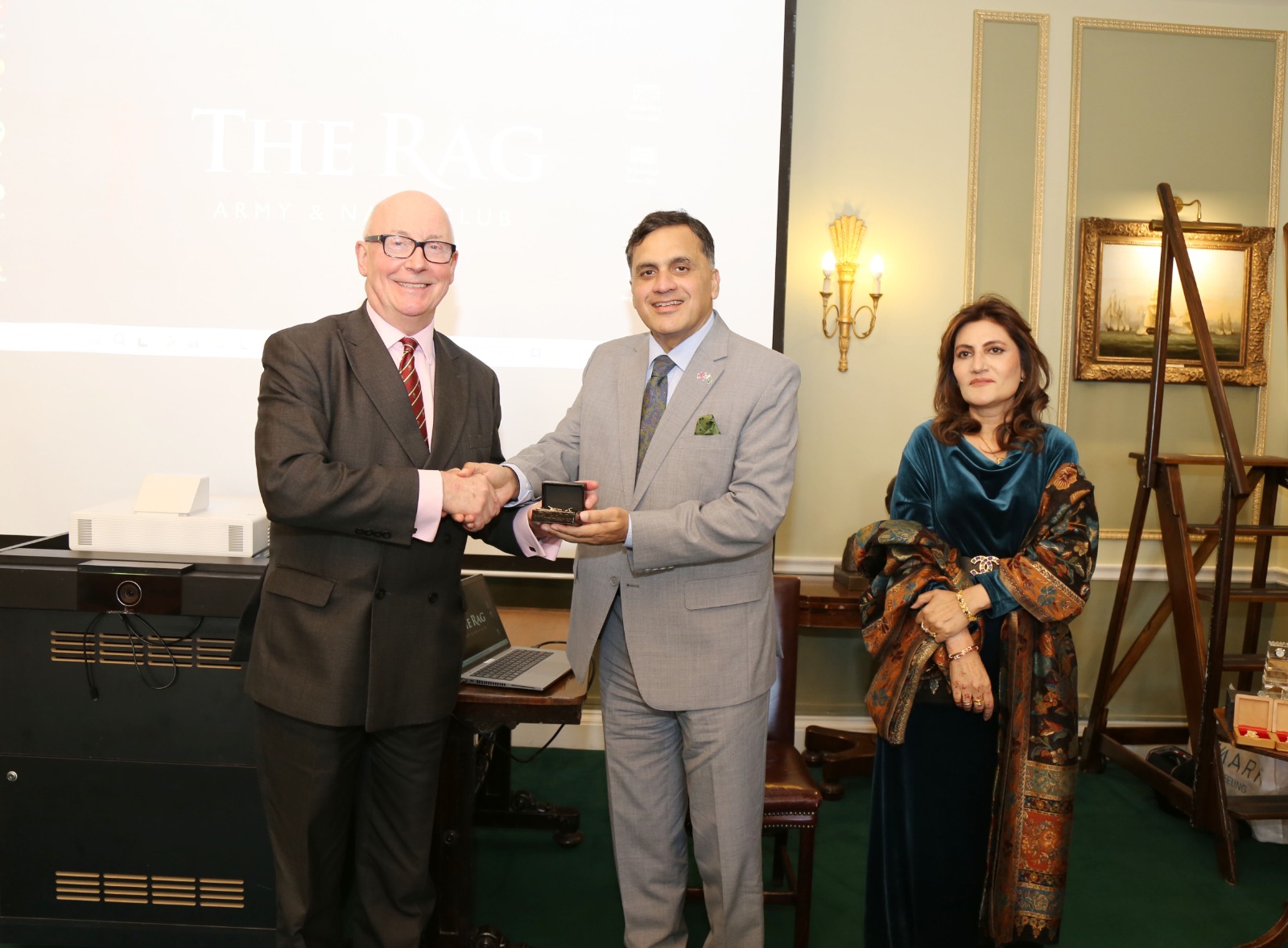
High Commissioner @DrMFaisal and his spouse @drsarahnaeem2 attended, as guests of honor, a distinguished gathering of the Quetta Association at the Army & Navy Club, London.
Military Officers from the Defence Wing of Pakistan High Commission, London, with their families also attended.
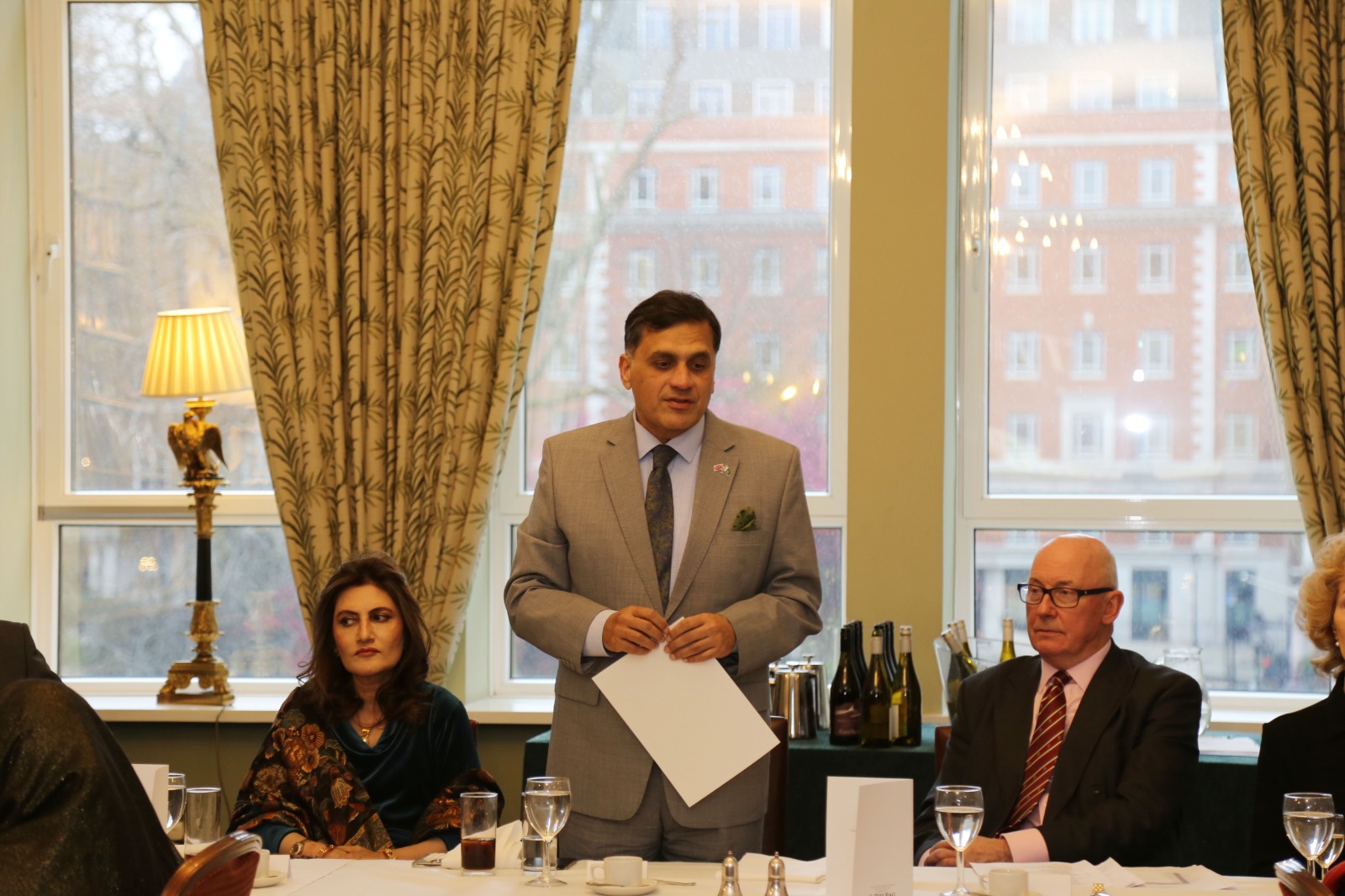
Quetta Association brings together British officers who graduated from the prestigious Command & Staff College, Quetta, Pakistan. The institution has produced outstanding military leaders, including British Field Marshals Sir Claude Auchinleck and Sir William Slim, whose leadership during the Second World War remains widely respected. Field Marshal Syed Asim Munir is also graduate of this prestigious institution.
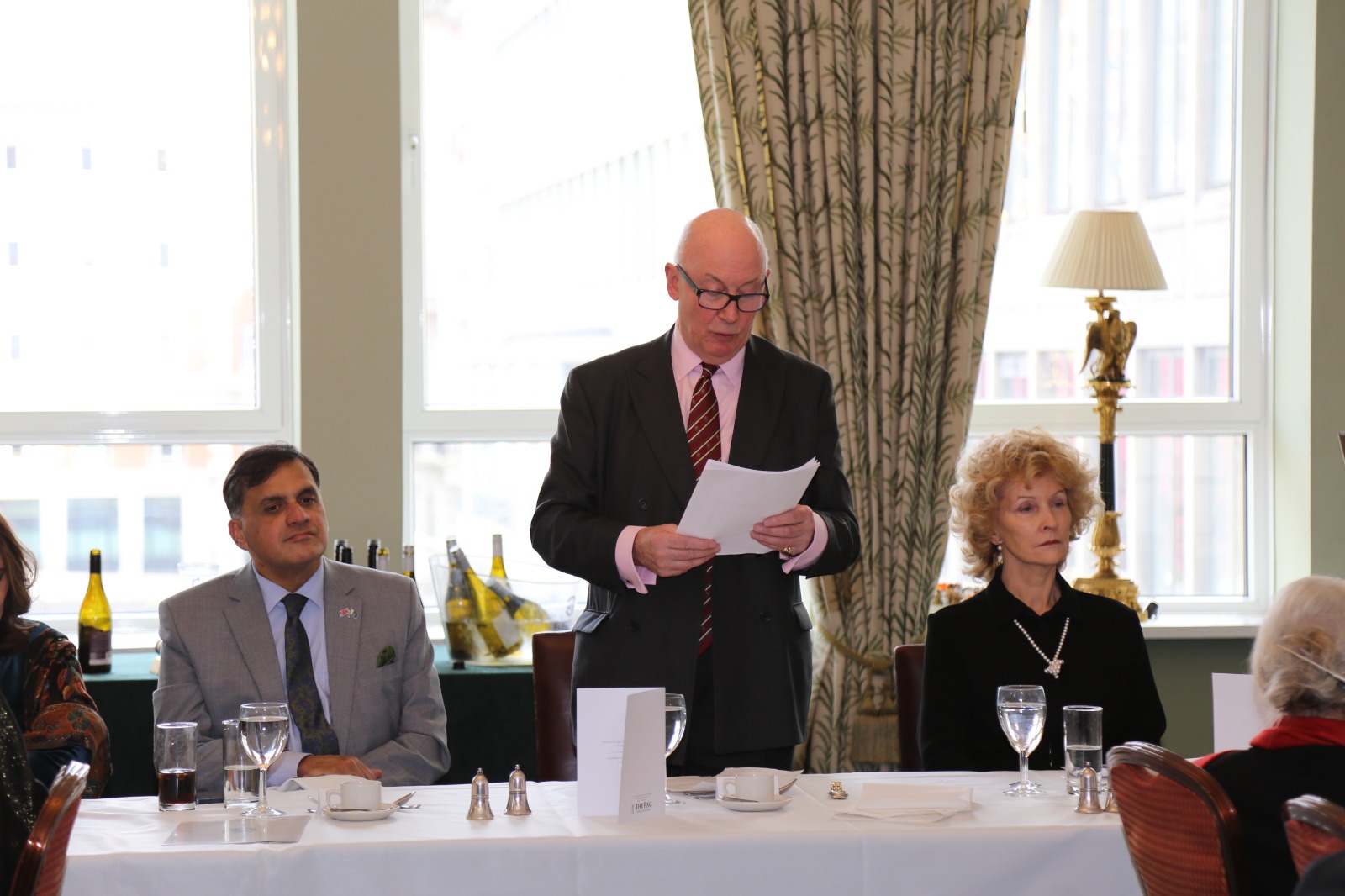
The High Commissioner appreciated the annual gathering that underscored the Association’s enduring role as a vital bridge linking the British Army and Pakistan Army through shared professional heritage and camaraderie.
Decorated British military officers and their families paid glowing tributes while referring to the hospitality accorded by Pakistan during their stay in Quetta.
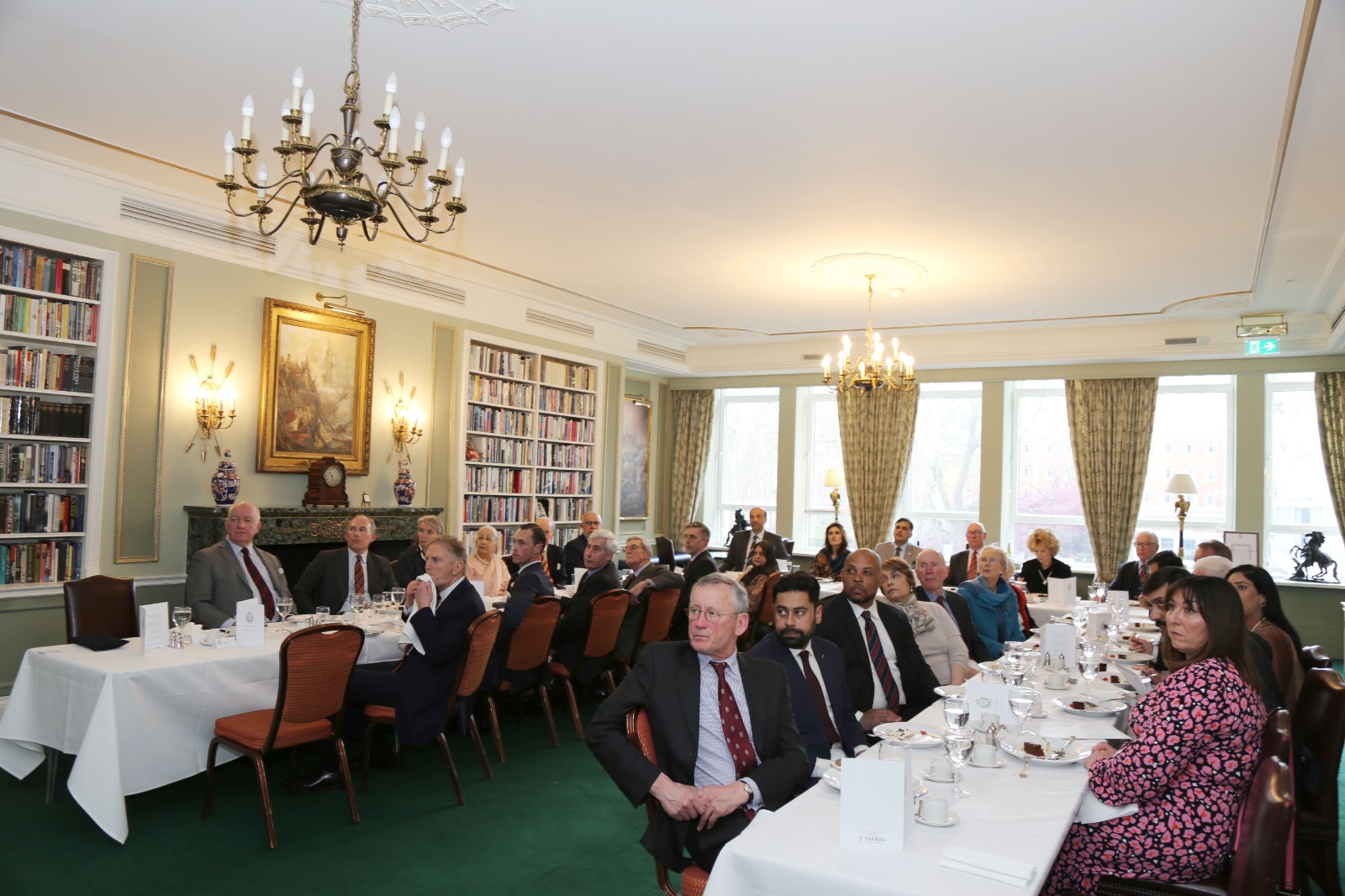
Graduate senior British Officers present at the gathering included Lt. Gen. Sir Alistair Irwin KCB CBE (1980) and Maj. Gen. Seumus Kerr CBE (1985).
Mementos were exchanged between the British officers and officers of @PakistaninUK.
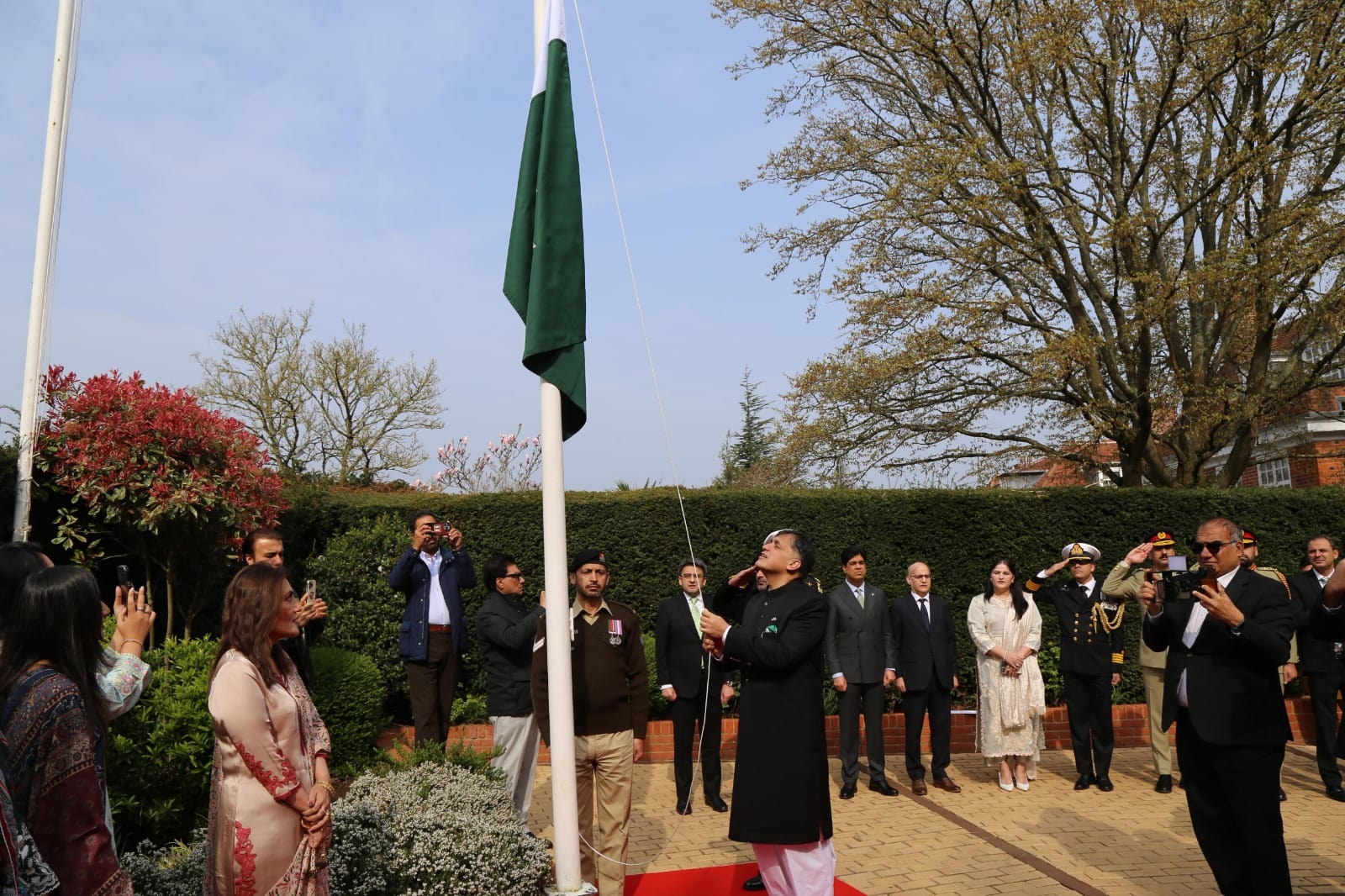
In a simple and dignified ceremony held at Pakistan House, London, the High Commissioner of Pakistan to UK Dr. Mohammad Faisal raised the Pakistan Flag on the occasion of Pakistan Day.
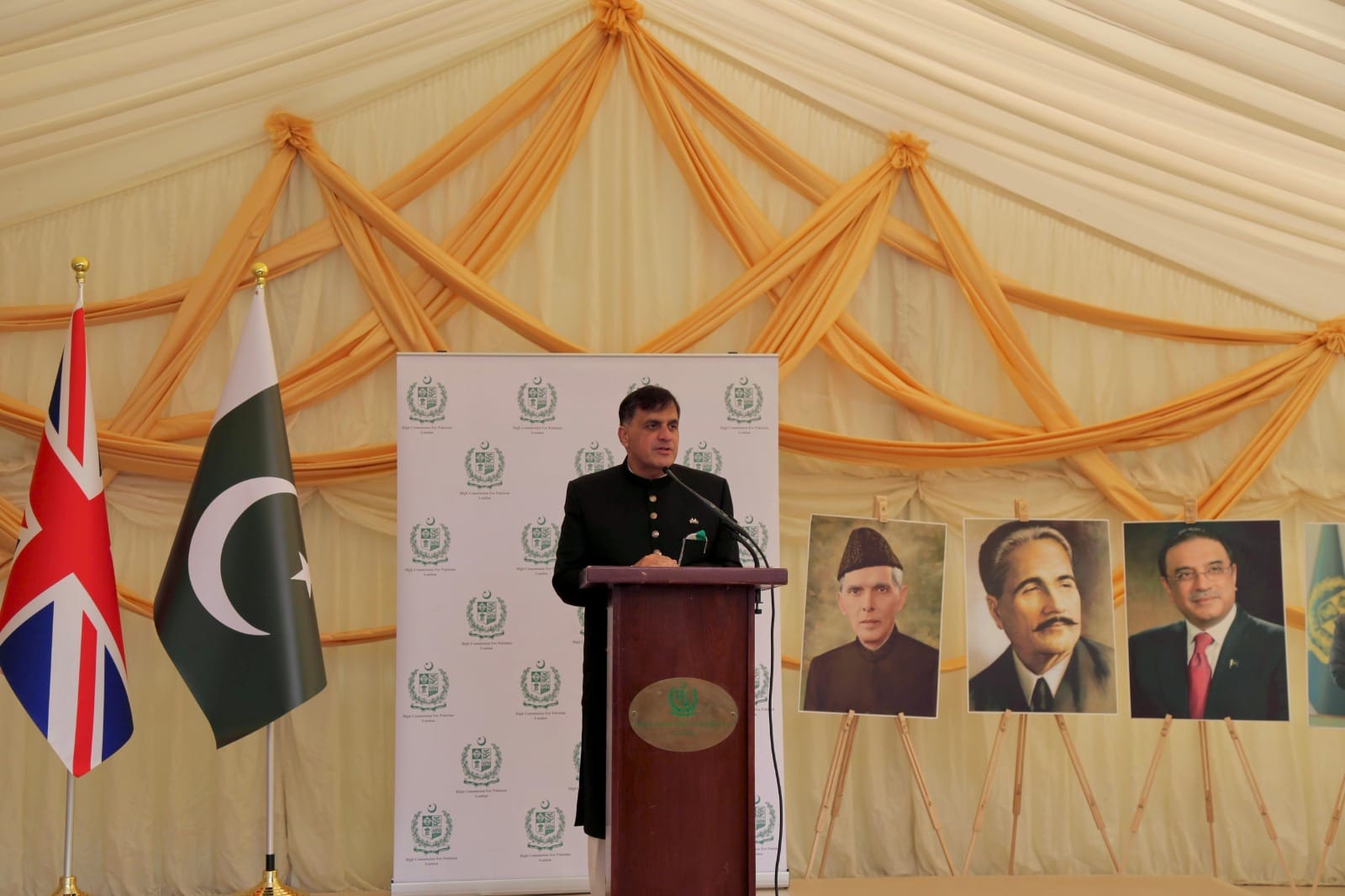
The ceremony was attended by Officials of the High Commission, British – Pakistanis and Media representatives.
Messages of the President, the Prime Minister and Deputy Prime Minister / Foreign Minister were read out.
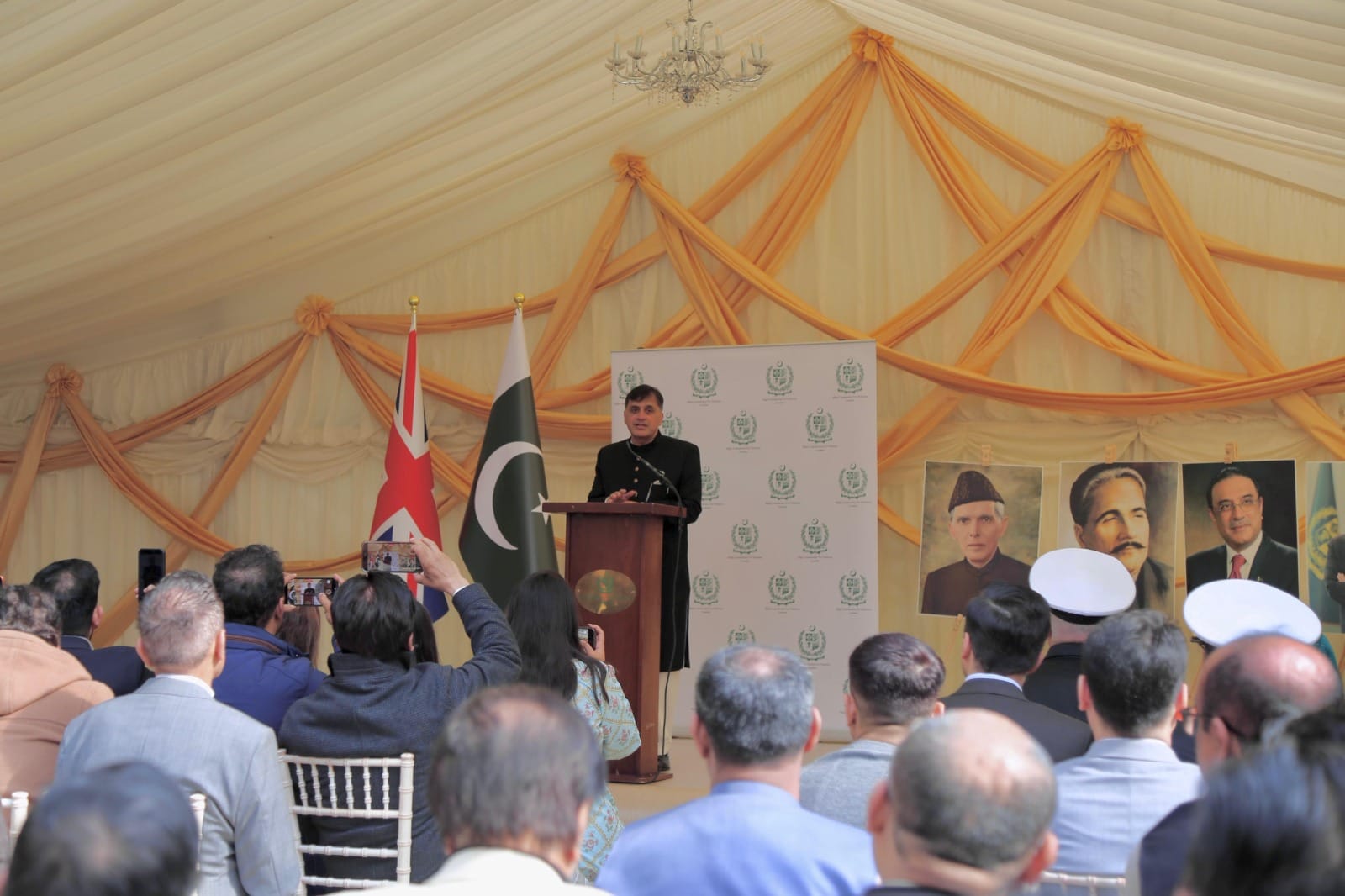
In his keynote address, the High Commissioner said that Pakistan Day was a tribute to our founding fathers who united the Muslims of Indian sub-continent where they could live independently as a Nation and live according to their customs & traditions.
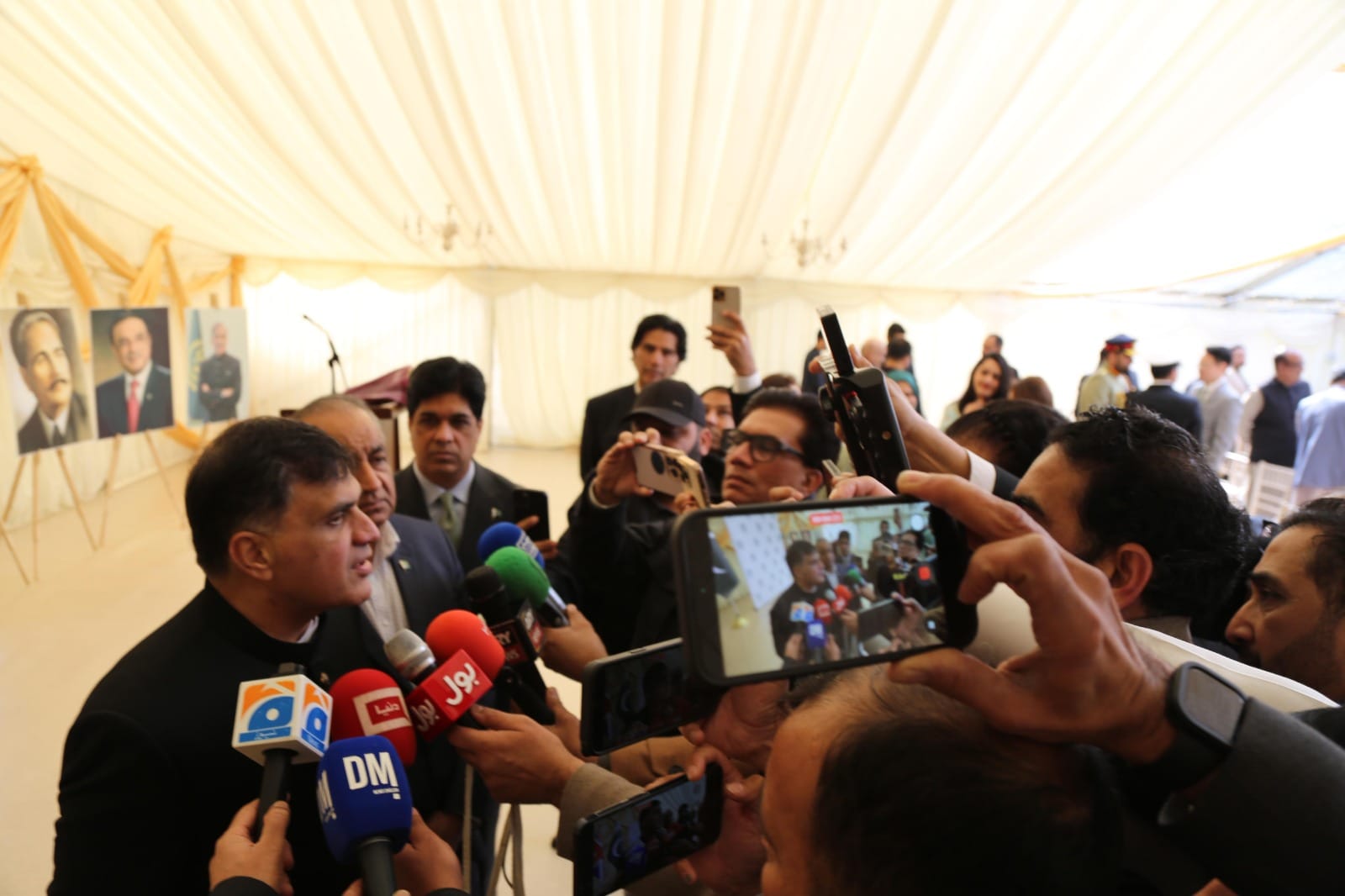
Dr. Faisal stated that Pakistan had always professed peace and stability in the region. However, Pakistan will not tolerate any aggression from neighbouring countries.
The High Commissioner said that Pakistani nation, despite the difficulties, remains resilient and demonstrates courage & perseverance.
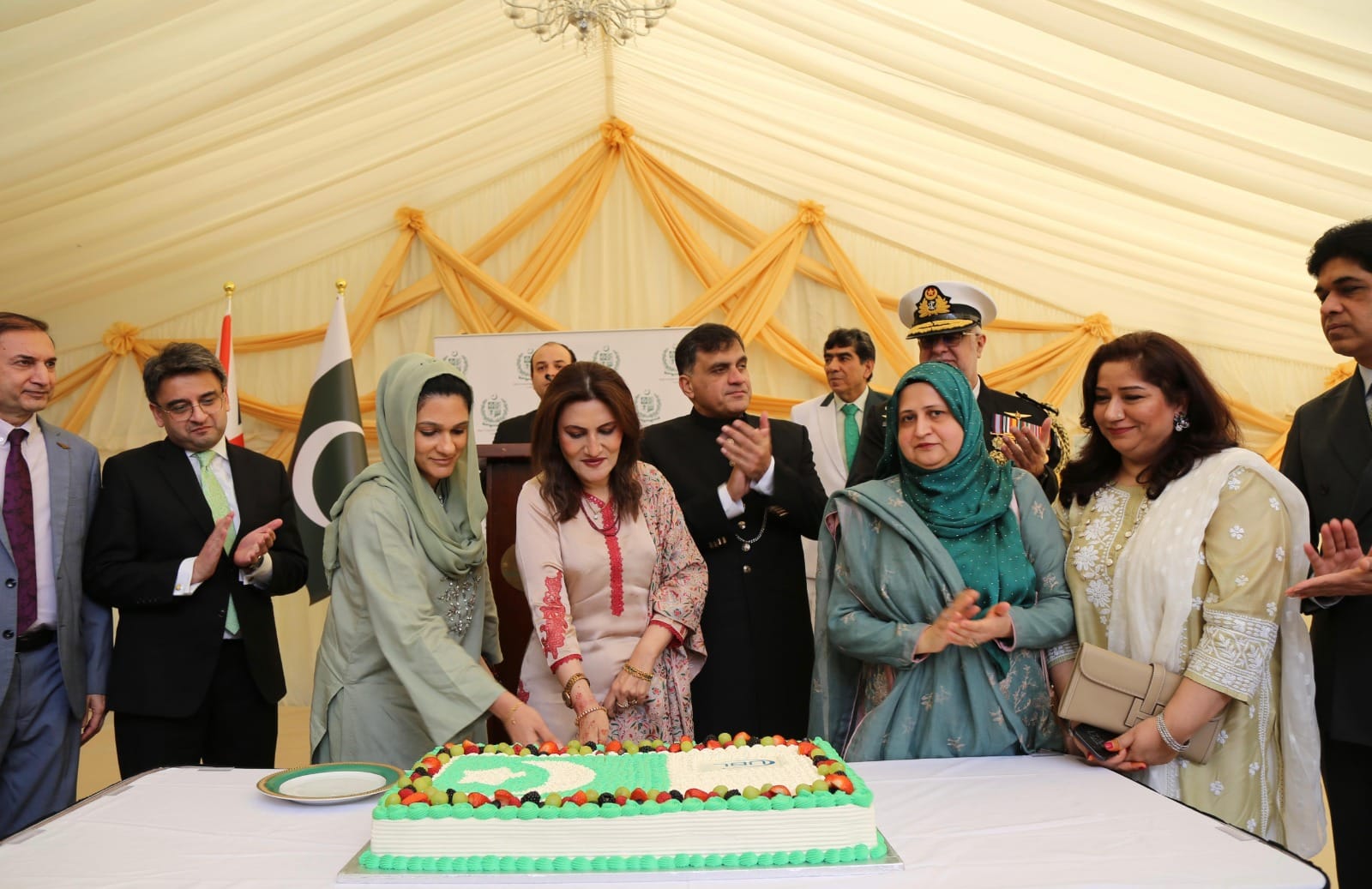
Dr. Mohammad Faisal stated that, in line with the instructions of the Prime Minister, the Deputy Prime Minister / Foreign Minister and the Federal Cabinet, Pakistan High Commission London is implementing strict austerity measures. However, these measures will not affect the performance & working of the High Commission.
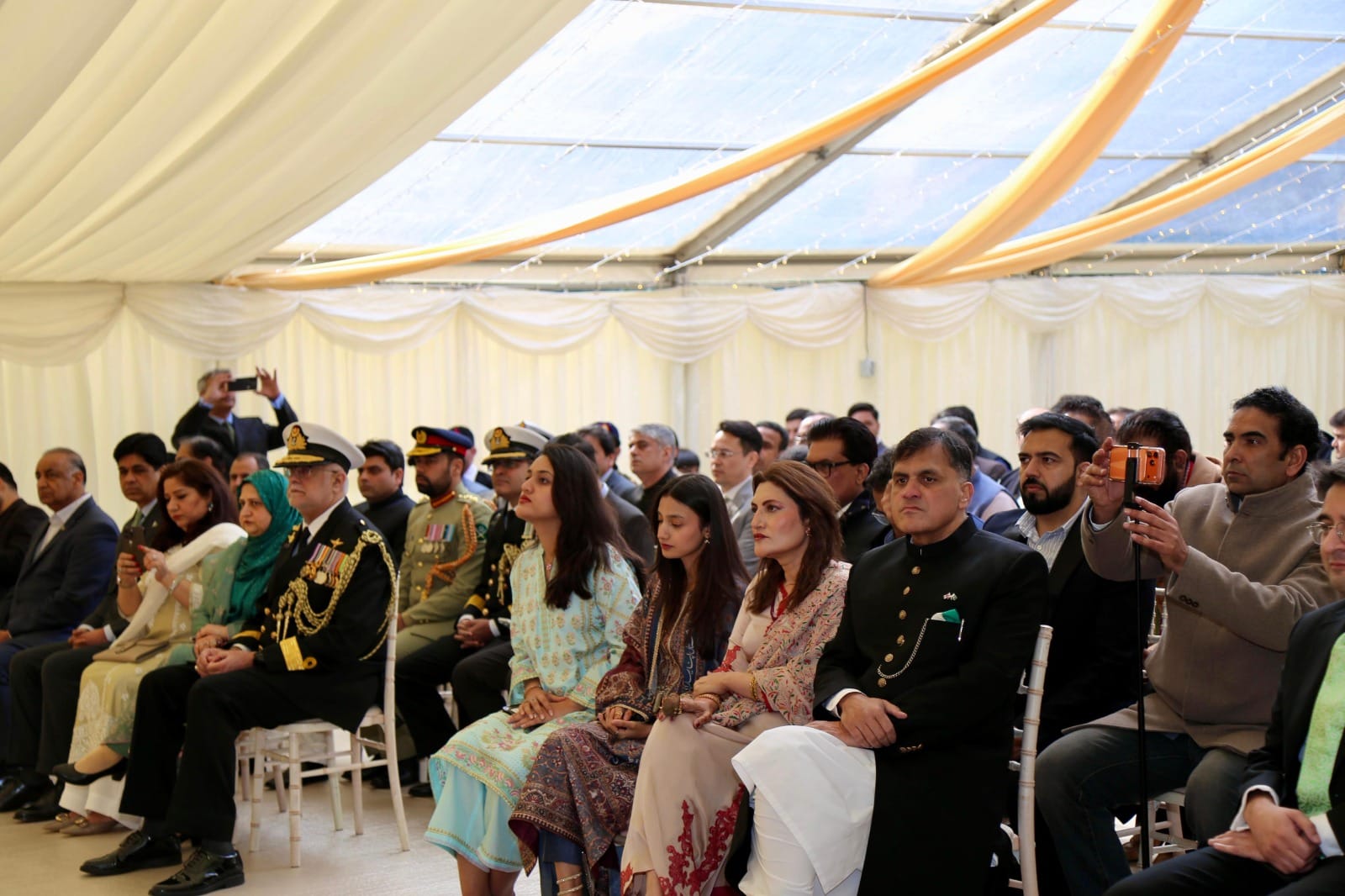
He acknowledged the remarkable contributions of Pakistani diaspora in UK and their extraordinary performance in various fields. He said that their achievements are a source of immense pride for Pakistan.
The High Commissioner expressed solidarity with the people of Indian Illegally Occupied Jammu and Kashmir and committed to continue diplomatic, moral and political support for their right to self determination under UN Resolutions.
London
23rd March, 2026


How the World Is Forced to Fund the Iran War

Scholars Urge UN to Protect Iran’s Scientific Sites Amid Airstrikes Global Academics Warn Attacks Threaten Research, Health, and Civilian Safety

How Iran Humiliated U.S. and Israeli Power


-

 Europe News1 year ago
Chaos and unproven theories surround Tates’ release from Romania
-

 American News1 year ago
Trump expands exemptions from Canada and Mexico tariffs
-

 American News1 year ago
Trump Expels Zelensky from the White House
-

 Pakistan News9 months ago
Comprehensive Analysis Report-The Faranian National Conference on Maritime Affairs-By Kashif Firaz Ahmed
-

 American News1 year ago
Zelensky bruised but upbeat after diplomatic whirlwind
-

 Art & Culture1 year ago
The Indian film showing the bride’s ‘humiliation’ in arranged marriage
-

 Art & Culture1 year ago
International Agriculture Exhibition held in Paris
-

 Pakistan News1 year ago
Can Pakistan be a Hard State?