
war
Israeli air strikes kill 40 in Gaza, say hospitals, while aid blockade continues


Hospitals among targets of Israeli air strikes this week
On a single day this week, two hospitals in Gaza were hit by Israeli strikes, according to hospitals and first responders.
On Tuesday, Israeli warplanes dropped six bombs simultaneously at the European Hospital in Khan Younis, killing 28 people and injuring dozens, the Hamas-run civil defence agency said.
Dr Tom Potokar, a plastic surgeon who was working with the Ideals international aid charity in the hospital, told the BBC the explosions had directly hit with “no warning whatsoever”.
The Israeli military said it had conducted a “precise strike” on “Hamas terrorists in a command and control centre” which it claimed was beneath the hospital.
The dead and wounded were transferred to Nasser Hospital in Khan Younis, which had been hit by another strike earlier on Tuesday, killing two people, according to medical sources and eyewitnesses.
In a statement, the Israeli military said Hamas “continues” to use hospitals in Gaza for its activities – a long-standing Israeli allegation which the group denies.
The BBC obtained and analysed video footage of the European Hospital strike and the kind of bombs used.


war
Scholars Urge UN to Protect Iran’s Scientific Sites Amid Airstrikes Global Academics Warn Attacks Threaten Research, Health, and Civilian Safety
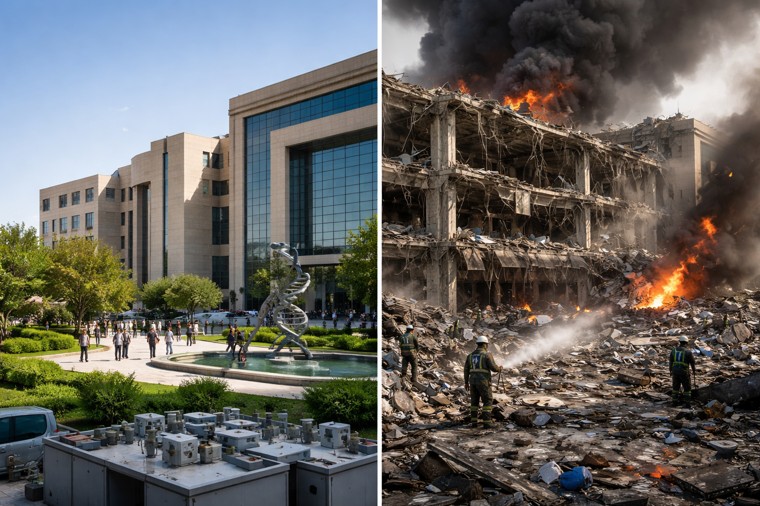
LONDON / GENEVA / PARIS / NEW YORK (Shabnam Delfani) — A broad coalition of academics, researchers, students, and members of the international scholarly community has issued a strongly worded open letter condemning a series of strikes on universities, laboratories, hospitals, and research facilities in Iran, urging immediate international action to safeguard civilian scientific infrastructure amid the ongoing U.S.-Israeli military operations against the country.
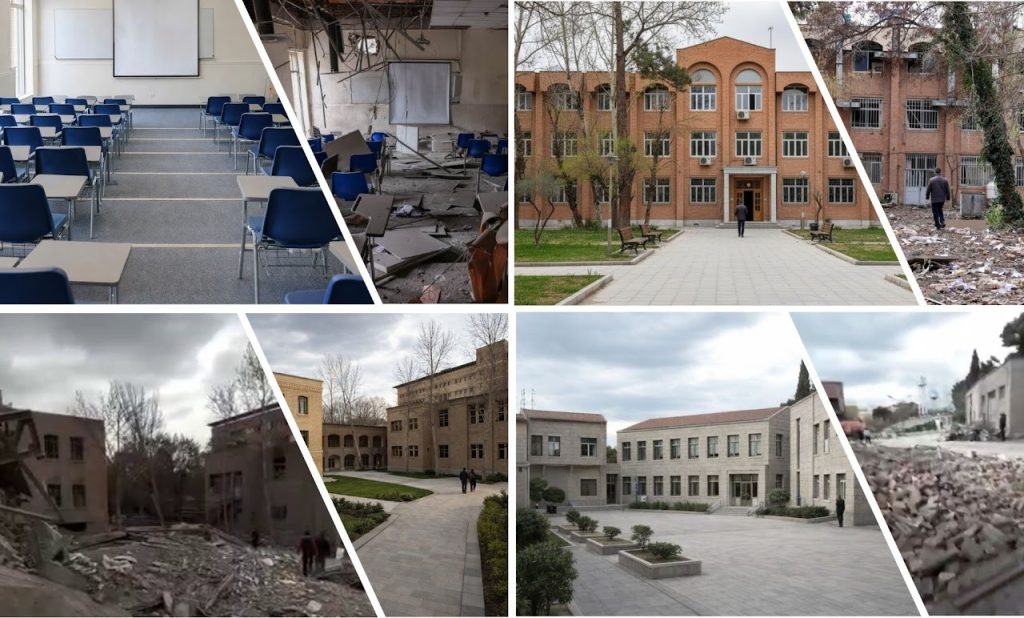
The letter, addressed to United Nations Secretary-General António Guterres, UNESCO Director-General Audrey Azoulay, UN High Commissioner for Human Rights Volker Türk, and the governments of all parties involved, highlights at least 21 reported attacks on scientific and educational institutions. It warns that such assaults endanger researchers, students, medical personnel, and the broader public while inflicting irreversible damage on scientific progress and societal well-being.
Recent strikes between March 28 and 31, 2026, have drawn particular alarm. Attacks targeted Isfahan University of Technology in Isfahan, as well as Iran University of Science and Technology and Amirkabir University of Technology in Tehran. On March 31, one of Iran’s largest pharmaceutical research and development centers, Tofigh Daru (also known as Tofiq Daru), was severely damaged. The facility is a major producer of anesthetics and critical treatments for multiple sclerosis and cancer.
“Scientific and educational institutions are civilian spaces essential to public health, knowledge, and human survival,” the open letter declares. “Their destruction endangers researchers, students, medical personnel, and the broader public, while causing lasting harm to science and society.”
The signatories issue a forceful call for all parties to the conflict to immediately cease attacks on civilian scientific and educational sites, including laboratories, universities, hospitals, research centers, libraries, and archives. They further demand that the United Nations, UNESCO, and other relevant international bodies take concrete steps: thoroughly document the damage inflicted on these institutions, provide protection and support to affected scholars and students, launch independent investigations into potential violations of international humanitarian law, and ensure that those responsible for unlawful strikes on protected civilian infrastructure are identified and held accountable through impartial legal mechanisms.
“Science is not a military target. Universities and laboratories must not become battlefields,” the letter asserts. It concludes with an urgent appeal to the international community to act decisively to protect scientific infrastructure, defend academic life, and uphold the fundamental principle that institutions dedicated to the advancement of knowledge must never be treated as expendable in times of war.
In response to the escalating strikes, Iranian officials have warned of possible retaliation against American and Israeli-linked academic campuses in the region, raising fears of a dangerous widening of the conflict into educational spheres.
The open letter, signed collectively by “academics, researchers, students, and members of the global scholarly community,” underscores the long-standing international consensus on preserving the sanctity of scientific and educational institutions even amid geopolitical tensions and armed conflict. It stresses that safeguarding academic freedom and scientific capacity serves the collective well-being of humanity and must be defended against future assaults.
This appeal comes as reports continue to emerge of significant material damage to Iranian academic and medical research facilities, with some accounts noting injuries among university staff. The global scholarly community’s unified stance reflects growing concern that the targeting of Iranian Scientists and knowledge-producing institutions threatens not only Iran but the broader fabric of international scientific cooperation.
Please Sign: https://docs.google.com/forms/d/e/1FAIpQLSd9yA3741PhNbeae-pWxiNU-buR5PJTgi5lYHXmvB11ZoMybA/viewform
Paris (Imran Y. CHOUDHRY) :- Former Press Secretary to the President, Former Press Minister to the Embassy of Pakistan to France, Former MD, SRBC Mr. Qamar Bashir analysis : As the Middle East trembles under the roar of fighter jets, the flash of missiles, and the collapse of cities into dust, a parallel story is unfolding—quieter, more complex, yet potentially far more consequential. While destruction dominates the headlines, Pakistan has stepped into a role that is both extraordinary and perilous: that of a mediator between the United States and Iran, two adversaries locked in confrontation but searching, however cautiously, for a path out of escalation.
This moment reflects not just diplomacy, but a test of credibility, trust, and survival. Iran has endured sustained pressure, repeated strikes, and targeted elimination of leadership, yet it continues to stand—resilient, adaptive, and determined. It has demonstrated that even under the combined weight of Israel and the United States, it retains the capacity to defend its sovereignty with courage, resourcefulness, and strategic depth. This transformation—from a perceived vulnerable state to a formidable resisting power—has altered the balance of the conflict.
It is in this altered reality that Pakistan has entered the stage.
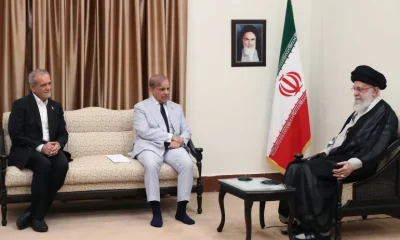
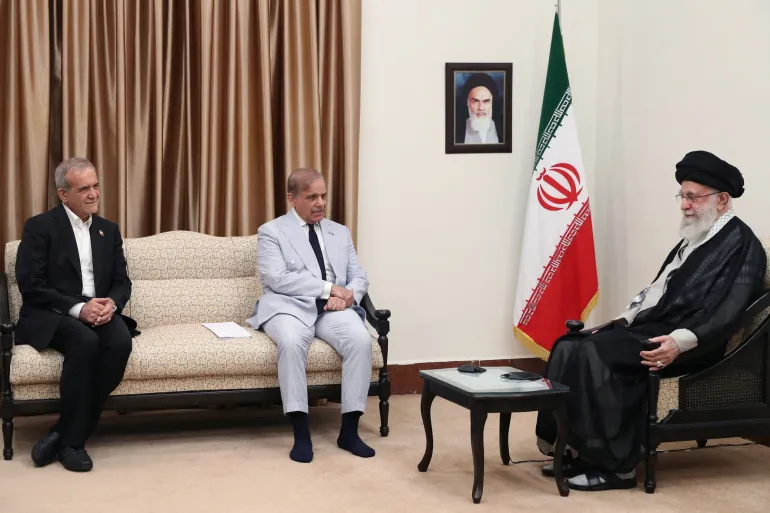
The sequence of events is critical. Field Marshal Asim Munir engaged in direct and substantive discussions with President Donald J. Trump, reviewing the evolving battlefield dynamics, the risks of prolonged conflict, and the urgent need for de-escalation. Immediately thereafter, Prime Minister Shehbaz Sharif spoke with Iranian President Masoud Pezeshkian, conveying the essence of these discussions and emphasizing the necessity of dialogue, ceasefire, and a dignified resolution. This carefully calibrated diplomatic relay—Washington to Islamabad, Islamabad to Tehran—has positioned Pakistan as a central conduit in a highly fragile process.
Yet, Pakistan’s role must be understood through a very precise lens.
When the confrontation is between Iran and Israel, Pakistan’s position is clear and principled. It extends diplomatic, political, and, where expedient, material support to Iran, recognizing its right to defend itself against aggression. In such a context, Pakistan does not adopt neutrality; it aligns itself with the principle of sovereignty and resistance.
However, when tensions arise between Iran and the Middle Eastern countries—Saudi Arabia, the UAE, Qatar, Oman—Pakistan assumes a different role altogether. It does not take sides. Instead, it becomes a balancer, working to reduce friction, discourage escalation, and bring all parties toward diplomatic resolution. This distinction is not merely tactical; it reflects deep strategic understanding. Pakistan recognizes that division within the Muslim world weakens the region collectively and invites external manipulation. Therefore, its objective in such cases is unity, not alignment.
This dual posture—supportive where principle demands, balanced where unity requires—is the essence of Pakistan’s diplomatic maturity.
But today’s mediation carries an added layer of danger—one that makes Pakistan’s role not only critical, but extremely sensitive and precarious.
Recent history has created a deep trust deficit. On more than one occasion, diplomatic engagement between the United States and Iran has coincided with or been followed by military escalation. During earlier negotiations, including those in the previous year, Iran was attacked even while diplomatic channels were active. Now, for the third time, a mediation process involving a third party—this time Pakistan—is underway. This pattern has made Iran extremely cautious.
From Tehran’s perspective, diplomacy has at times appeared less as a path to peace and more as a prelude to pressure or even attack. This perception fundamentally shapes Iran’s current approach. It fears that under the cover of dialogue, strategic positioning may continue—potentially culminating not just in aerial strikes, but in a more direct confrontation. With tens of thousands of U.S. personnel already positioned in the region and military assets significantly reinforced, concerns about escalation into ground engagement cannot be entirely dismissed.
This is what makes Pakistan’s role extraordinarily delicate. It is not merely facilitating communication; it is navigating a minefield of distrust, suspicion, and historical experience. Any misstep, any perceived imbalance, or any repetition of past patterns could collapse the entire process. Pakistan must therefore ensure that this round of diplomacy does not become another episode of “talk and strike,” but instead evolves into a genuine pathway toward resolution.
At the same time, the broader dynamics of the war continue to reinforce the urgency of mediation. Massive arms flows into the region, including tens of billions of dollars in recent U.S. approvals, have intensified militarization. While these are presented as defensive measures for regional allies, they form part of a larger strategic framework that supports U.S. interests and ensures Israel’s security. Middle Eastern countries finance these systems, yet their operational integration often aligns with broader strategic objectives beyond their immediate national defense.
This deepens the paradox of the conflict. The region pays for its own militarization, while remaining locked in a cycle of dependency and insecurity.
Iran, on the other hand, continues to rely on indigenous capabilities—missiles, drones, and asymmetric strategies—to offset this imbalance. Its resilience has demonstrated that even under sustained attack, it retains the ability to respond and endure. Leadership losses have not dismantled its system; instead, new layers continue to emerge, ensuring continuity.
For the United States, this creates a strategic dilemma. A prolonged war is costly, complex, and increasingly unsustainable. Yet, disengagement without a structured settlement risks reputational damage. Pakistan’s mediation offers a path that allows both sides to recalibrate without humiliation—providing Iran with dignity and recognition, and the United States with a viable exit from escalation.
However, another critical dimension must be clearly understood.
If the war continues, Israel stands as the principal beneficiary. Prolonged conflict keeps the region divided, keeps Iran under pressure, and ensures continued U.S. engagement in support of Israeli security. A fragmented and militarized Middle East serves Israel’s long-term strategic interests.
But if the war is halted, if a ceasefire is established, and if negotiations—particularly on Iran’s nuclear program—reach a balanced and dignified conclusion, then the equation changes dramatically. In such a scenario, Israel risks becoming the biggest loser. Its strategy of sustained escalation would fail, its ability to keep the region in perpetual tension would diminish, and it could find itself increasingly isolated—not only globally, but potentially even in its strategic alignment with the United States.
This is why the success of mediation carries consequences far beyond the immediate ceasefire. It determines who shapes the future of the region: those who thrive on conflict, or those who seek stability.
In this context, one additional and essential element must be considered. For lasting peace, there must be accountability. A high-level international commission—under the United Nations or a similarly credible global framework—should be established to examine the origins of the conflict. It must determine whether there was a genuine and imminent threat from Iran that justified the scale of military action.
If such a threat is established, then responsibility must be acknowledged accordingly. But if no imminent threat existed, then justice demands a different outcome. Those responsible for initiating and sustaining the conflict must be held accountable, and Iran must be compensated for the destruction inflicted upon its infrastructure, economy, and people. Reconstruction, restitution, and accountability are not optional—they are essential for restoring trust and preventing future conflicts built on contested narratives.
This is where Pakistan’s mediation must evolve beyond ceasefire into structured resolution.
Pakistan’s own motivations reinforce its commitment. Instability in the Middle East directly affects its economy, energy security, and internal cohesion. Peace is therefore not just a diplomatic aspiration—it is a national necessity.
If Pakistan succeeds, it will not only help end a devastating conflict, but also reassert the power of diplomacy in an era dominated by force. It will revive its historical legacy as a bridge between great powers and demonstrate that even in the most volatile circumstances, dialogue can prevail over destruction.
If it fails, the consequences will be severe. The cycle of war will deepen, distrust will harden, and the forces that benefit from perpetual conflict will emerge stronger.
At this decisive moment, Pakistan stands at the intersection of war and peace, navigating one of the most dangerous diplomatic terrains of our time. It has chosen the path of balance, courage, and foresight.
And in doing so, it has reminded the world of a profound truth: that the greatest victories are not achieved by those who prolong wars, but by those who have the wisdom—and the courage—to end them.
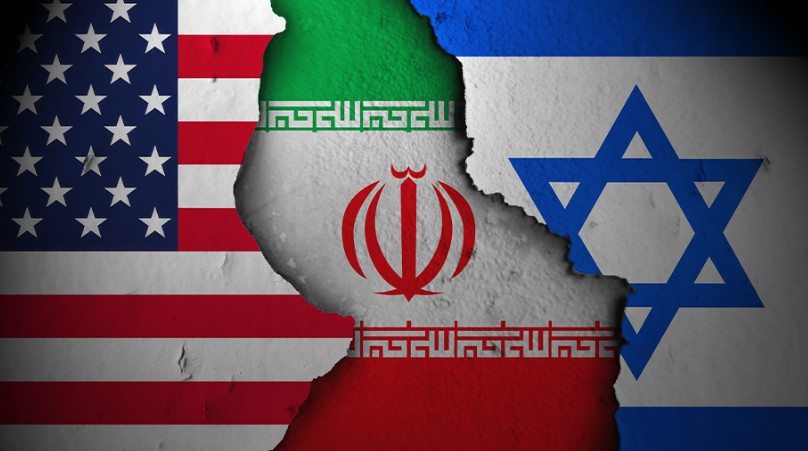
Paris (Imran Y. CHOUDHRY) :- Former Press Secretary to the President, Former Press Minister to the Embassy of Pakistan to France, Former MD, SRBC Mr. Qamar Bashir analysis : What once appeared to be an abstract geopolitical forecast has now taken the shape of unfolding reality. In early 2024, Chinese-Canadian analyst Jiang Xueqin advanced a controversial thesis—“The Iran Trap.” His argument was dismissed by many as speculative: Donald Trump would return to power, initiate a major confrontation with Iran, and ultimately entangle the United States in a costly, unwinnable war that would weaken its global standing. Two elements of that prediction have already materialized. The third—strategic failure—is now emerging gradually, not through collapse, but through erosion.
The war, which began on February 28, 2026, quickly escalated into one of the most intense confrontations in modern Middle Eastern history. The United States, alongside Israel and supported by regional partners, launched extensive aerial and naval operations targeting Iranian military infrastructure, energy networks, and strategic facilities. Initial expectations in Washington were rooted in the belief that overwhelming force would compel Iran into submission or at least force it to negotiate from a position of weakness.
But the war did not follow that script. Iran absorbed the shock and responded with calculated resilience. It refused to surrender, refused to slow its retaliation, and instead demonstrated a sustained capacity to respond through asymmetric means. Missile strikes, drone operations, and regional disruptions transformed the battlefield into a prolonged contest of endurance. The conflict shifted from a display of technological superiority to a test of strategic patience.
For the first time in decades, Israel faced sustained retaliatory pressure that tested both its defensive systems and civilian morale. Reports of public frustration—including direct confrontations with political leaders—revealed growing discontent with a war that appeared to lack a clear exit strategy. The psychological balance of the conflict began to shift.
On March 23, 2026, President Donald Trump announced a five-day pause in planned strikes on Iranian energy infrastructure, particularly power grids. He described ongoing contacts as “very good and productive,” signaling a potential diplomatic breakthrough. However, Iranian officials quickly dismissed these claims, denying any formal or informal negotiations and labeling such statements as misleading narratives intended to influence global markets.
According to Iranian spokespersons, this announcement by the United States—framed as a diplomatic opening—was not driven by genuine intent for peace, but rather by economic pressure. They argued that rising oil prices, triggered by disruptions in the Strait of Hormuz, were causing severe strain not only on Europe but also on the United States and the global economy. In their view, Washington’s signaling of negotiations was a calculated attempt to cool oil markets and temporarily ease economic pain, rather than a reflection of substantive progress.
Iranian officials further warned that such unilateral messaging would be short-lived, and that once the immediate market reaction subsides, tensions would likely escalate again—driving oil prices upward once more. This perspective highlights a deeper layer of the conflict, where economic warfare and perception management are as critical as military operations.
At this stage, Iran’s Foreign Minister Abbas Araghchi has expressed conditional willingness to engage in negotiations, but only within a clearly defined framework. Any dialogue, he has emphasized, must focus strictly on the nuclear issue, must be fair, and must ensure a win-win outcome that preserves Iran’s sovereignty, dignity, and national integrity. Yet, notably, Iran’s official channels have not confirmed any ongoing talks, nor acknowledged any tangible progress, even as U.S. leadership continues to project optimism.
This non-committal posture is deliberate. From Tehran’s perspective, the United States has already escalated the region into chaos—damaging infrastructure, destabilizing allies, and contributing to disruptions in global energy flows. Having triggered this environment, Washington now appears eager to de-escalate. But Iran’s stance is clear: it will not allow the United States to exit the conflict without consequence, without concessions, and without accountability.
This raises a critical and uncomfortable question. If Iran’s leadership has not formally acknowledged negotiations, and if there is no official confirmation of talks, then who exactly is Washington engaging with? Reports have mentioned possible intermediaries such as Brett McGurk and other diplomatic figures, yet the absence of Iranian confirmation introduces ambiguity. While it may seem far-fetched, the possibility cannot be entirely dismissed that the United States may be interacting with non-authoritative or secondary channels, rather than the core decision-making leadership in Tehran.
Such uncertainty underscores the fragility of the diplomatic process. Meanwhile, Iran continues to assert that its nuclear program remains fully compliant with the Non-Proliferation Treaty (NPT). It has reiterated its willingness to allow inspections by the International Atomic Energy Agency (IAEA), while firmly maintaining that uranium enrichment is its sovereign right. This dual posture—cooperation without concession—has strengthened Iran’s negotiating position.
The broader geopolitical consequences are equally significant. Europe, having reduced dependence on Russian energy, is now heavily reliant on Middle Eastern supplies routed through the Strait of Hormuz. With that corridor under threat, energy prices have surged, supply chains have tightened, and political pressure has intensified across European capitals. The global economy has reacted sharply to every development—oil prices, shipping costs, and stock markets now fluctuate in direct response to battlefield events and diplomatic signals.
At its core, the conflict has exposed a fundamental imbalance—not in military strength, but in strategic approach. The United States and Israel have relied on conventional superiority—air dominance, naval strength, and precision strikes. Iran, by contrast, has leveraged asymmetric warfare, combining missile capabilities, drone networks, cyber tools, and regional influence to offset its disadvantages. Its ability to project force and sustain pressure has reshaped perceptions of power.
This is precisely the dynamic envisioned in the “Iran Trap”—a scenario in which a superpower becomes entangled in a conflict where traditional advantages fail to yield decisive outcomes.
As negotiations—acknowledged or otherwise—move closer, the balance of power has shifted. Iran now enters this phase as a confident and strengthened actor, capable of negotiating from a position of resilience. If sanctions are lifted, Iran could rapidly emerge as a revitalized economic and regional force, leveraging its energy resources and strategic geography.
Yet, the implications extend beyond Iran. History shows that unresolved conflicts often lead to new entanglements. Some analysts speculate that if this confrontation stabilizes without a clear resolution, geopolitical tensions may shift to other regions, including Cuba. While such scenarios remain hypothetical, they underscore a broader risk: the danger of moving from one strategic quagmire to another without learning from the first.
The lesson is unmistakable. Power alone does not guarantee victory. Military superiority does not ensure control. In a multipolar world defined by complexity, resilience and adaptability can challenge even the most dominant forces. The Iran conflict is no longer just a regional war—it is a defining test of global power, credibility, and strategic limits. What began as an assertion of dominance may ultimately redefine it.


Scholars Urge UN to Protect Iran’s Scientific Sites Amid Airstrikes Global Academics Warn Attacks Threaten Research, Health, and Civilian Safety

Pakistan-France Trade and Investment Forum held in Paris, France

Inheritance of a woman in Islamic law ; From Implications to Challenges! _ By Syeda Fatima Batool


-

 Europe News1 year ago
Chaos and unproven theories surround Tates’ release from Romania
-

 American News1 year ago
Trump expands exemptions from Canada and Mexico tariffs
-

 American News1 year ago
Trump Expels Zelensky from the White House
-

 Pakistan News9 months ago
Comprehensive Analysis Report-The Faranian National Conference on Maritime Affairs-By Kashif Firaz Ahmed
-

 American News1 year ago
Zelensky bruised but upbeat after diplomatic whirlwind
-

 Art & Culture1 year ago
The Indian film showing the bride’s ‘humiliation’ in arranged marriage
-

 Art & Culture1 year ago
International Agriculture Exhibition held in Paris
-

 Pakistan News1 year ago
Can Pakistan be a Hard State?