
Pakistan News
How Pakistan Outmaneuvered a Superpower

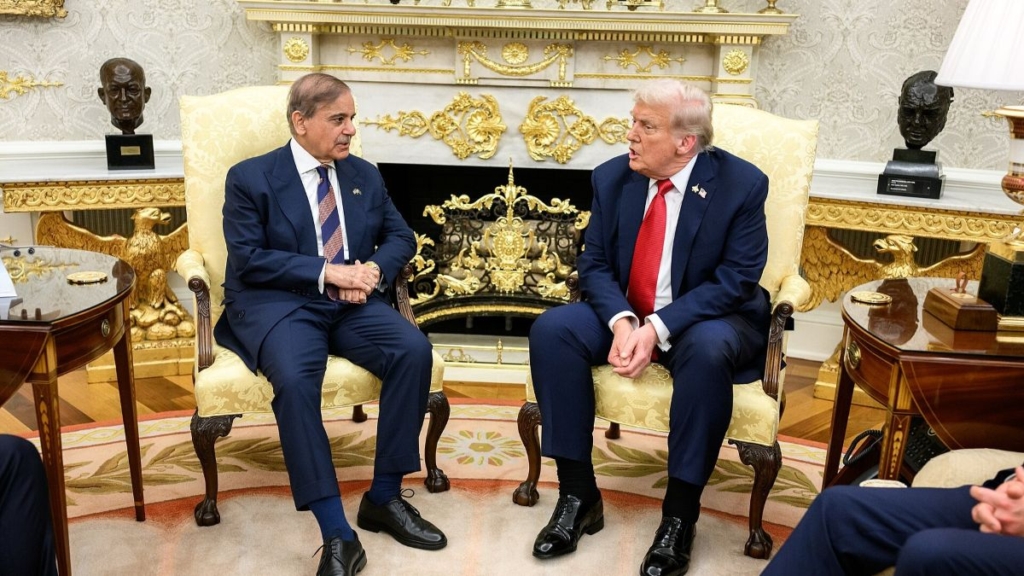
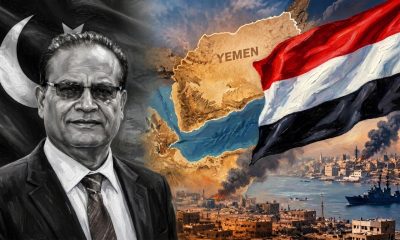
Paris (Imran Y. CHOUDHRY) :- Former Press Secretary to the President, Former Press Minister to the Embassy of Pakistan to France, Former MD, SRBC Mr. Qamar Bashir analysis : The most striking development in the unfolding U.S.–Iran crisis is not the blockade in the Strait of Hormuz, nor the sudden emergence of overland trade corridors—it is the calculated silence of Donald Trump. When directly asked whether he was aware that Pakistan had opened land routes enabling Iran to bypass the naval blockade and continue trade with China and other partners, the President did not deny it, condemn it, or even express concern. Instead, he acknowledged that he knew “everything” about the arrangement and pivoted to praise Pakistan’s leadership. No warning, no sanctions threat, no diplomatic protest—just silence wrapped in approval. In geopolitics, such silence is never accidental; it is policy in its most refined form.
This tacit acceptance has now become the central fact shaping the narrative. Pakistan’s decision to activate six overland trade corridors into Iran on April 25, 2026, is no longer just a regional economic maneuver. It is a move taking place with the full awareness—and arguably the quiet consent—of Washington. The implications are profound. What was initially portrayed as a logistical workaround to clear more than 3,000 stranded containers at Karachi and Port Qasim has evolved into a strategic reconfiguration of global trade flows under the shadow of great-power competition.
The corridors, linking Pakistan’s ports of Karachi, Port Qasim, and Gwadar to Iranian border crossings at Gabd and Taftan, have effectively neutralized the immediate economic impact of the U.S. naval blockade. By shifting cargo from sea to land, Pakistan has created a parallel supply chain that cannot be intercepted by naval forces. Travel time from Gwadar to the Iranian border has been reduced to just a few hours, and transport costs have dropped significantly. In practical terms, the blockade’s ability to strangle Iran’s economy has been diluted, if not outright undermined.
Yet the deeper question is why Washington has chosen not to act against this development. The answer lies in the complex web of interdependencies that define the current global order. At the center of this web is China. As one of the largest consumers of Iranian oil, China’s economic stability is closely tied to uninterrupted energy supplies. Any attempt by the United States to fully enforce the blockade by targeting overland routes through Pakistan would risk triggering a broader confrontation with Beijing.
China’s leverage is not theoretical. Its dominance in the production and export of rare earth minerals—critical components for advanced electronics, defense systems, and renewable technologies—gives it the capacity to inflict significant economic pain on the United States. A disruption in these supply chains would directly impact American industries, particularly at a time when defense production is operating at full capacity. In this context, the U.S. President’s silence can be interpreted as a strategic compromise: allow limited economic flows to continue through Pakistan rather than provoke a retaliatory response from China that could destabilize the global economy.
Pakistan, meanwhile, has emerged as the pivotal actor in this evolving scenario. Under the leadership of Shehbaz Sharif and with the strategic backing of Asim Munir, Islamabad has positioned itself at the intersection of competing interests. It is simultaneously mediating between Washington and Tehran, facilitating trade that sustains Iran’s economy, and enabling energy flows that support China’s growth. This is not a contradiction; it is a deliberate strategy.
Critics have labeled Pakistan’s approach as duplicity, accusing it of playing a “double game.” But such assessments overlook the sophistication of Pakistan’s balancing act. In a world increasingly defined by multipolarity, survival depends on the ability to engage with multiple power centers without becoming subordinate to any single one. Pakistan’s actions reflect an understanding that rigid alignment is less valuable than strategic flexibility.
Iran’s response to the blockade further underscores this shift. Confronted with maritime restrictions, Tehran has accelerated its pivot toward overland connectivity. The visits of Abbas Araghchi to Islamabad, Moscow, and other regional capitals are part of a broader effort to construct an alternative economic architecture. By integrating with Pakistan’s transport networks and leveraging Chinese infrastructure under the China-Pakistan Economic Corridor (CPEC), Iran is building resilience against external pressure.
This transformation is not occurring in isolation. Russia’s engagement, particularly through frameworks like the International North-South Transport Corridor, adds another layer of complexity. Together, these initiatives are creating a lattice of overland routes that challenge the dominance of traditional maritime trade. The Strait of Hormuz, once the uncontested artery of global energy flows, is no longer the sole gateway. Geography is being reimagined, and with it, the balance of power.
The United States, despite its formidable naval capabilities, finds itself constrained by these emerging realities. The blockade, while effective in raising costs and disrupting shipping, cannot fully contain a network that extends across land borders and sovereign territories. Each new corridor, each new partnership, erodes the efficacy of coercive measures. The question is no longer whether the blockade can pressure Iran, but whether it can be sustained in the face of adaptive resistance.
Pakistan’s role in this process has also altered regional dynamics. By providing a direct land bridge to Iran, Islamabad has reduced its reliance on routes through Afghanistan, where relations have deteriorated. This shift not only enhances Pakistan’s strategic autonomy but also redefines its economic geography. It is becoming a conduit not just for trade, but for influence—linking South Asia, Central Asia, the Middle East, and China in a single, interconnected framework.
At the same time, the risks are significant. Security challenges in Balochistan, tensions along the Afghan border, and the broader volatility of the region could threaten the stability of these corridors. Moreover, the exclusion of Indian-origin goods from transit routes highlights the enduring impact of geopolitical rivalries. Connectivity, while transformative, is not immune to conflict.
Nevertheless, the broader trajectory is clear. The opening of overland routes into Iran represents a shift from a unipolar system, where maritime dominance dictated outcomes, to a more complex, multipolar landscape where adaptability and connectivity determine success. Pakistan’s actions, far from being a mere logistical adjustment, are emblematic of this transition.
In this context, the silence of the U.S. President takes on even greater significance. It is not simply a lack of response; it is an acknowledgment of limits. It reflects an understanding that in a world of interdependent powers, absolute control is neither feasible nor desirable. By choosing not to confront Pakistan’s initiative, Washington is implicitly accepting a new equilibrium—one in which influence is negotiated rather than imposed.
For Pakistan, this moment represents a culmination of strategic foresight and opportunism. By leveraging its geography, infrastructure, and diplomatic relationships, it has carved out a role that extends beyond its traditional boundaries. It is no longer a peripheral player but a central node in the evolving global order.
The story of these corridors, therefore, is not just about trade or transport. It is about the redefinition of power in the 21st century. It is about how nations adapt to constraints, exploit opportunities, and navigate the complexities of a world where alliances are fluid and interests intersect. And above all, it is about how a single moment of silence—from the most powerful office in the world—can reveal more than a thousand words ever could.









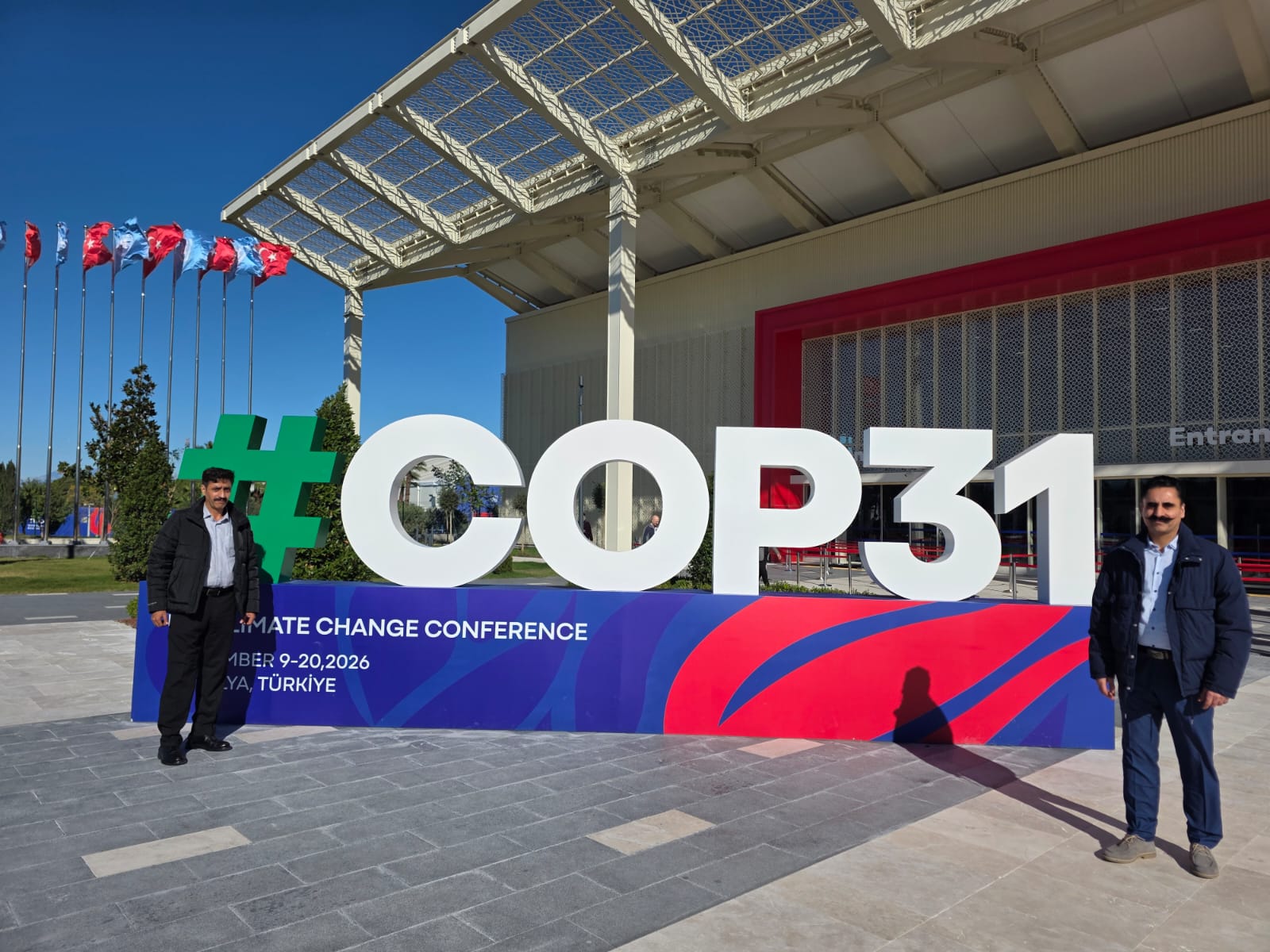
Antalya (Imran Y. CHOUDHRY):- Prime Minister Muhammad Shehbaz Sharif will visit Antalya, Republic of Türkiye, from 10–12 November 2026 to participate in the Leaders’ Summit of the 31st Conference of the Parties to the United Nations Framework Convention on Climate Change (UNFCCC).
Prime Minister will address the Leaders’ Summit on 11 November 2026, during which he will urge the global community to take concrete actions to address the threat posed by climate change to the planet. He will highlight Pakistan’s steps towards rapid solarization and expansion of its renewable energy capacity, as part of its transition towards a cleaner and more resilient economy, along with its efforts to strengthen disaster preparedness and early-warning systems.
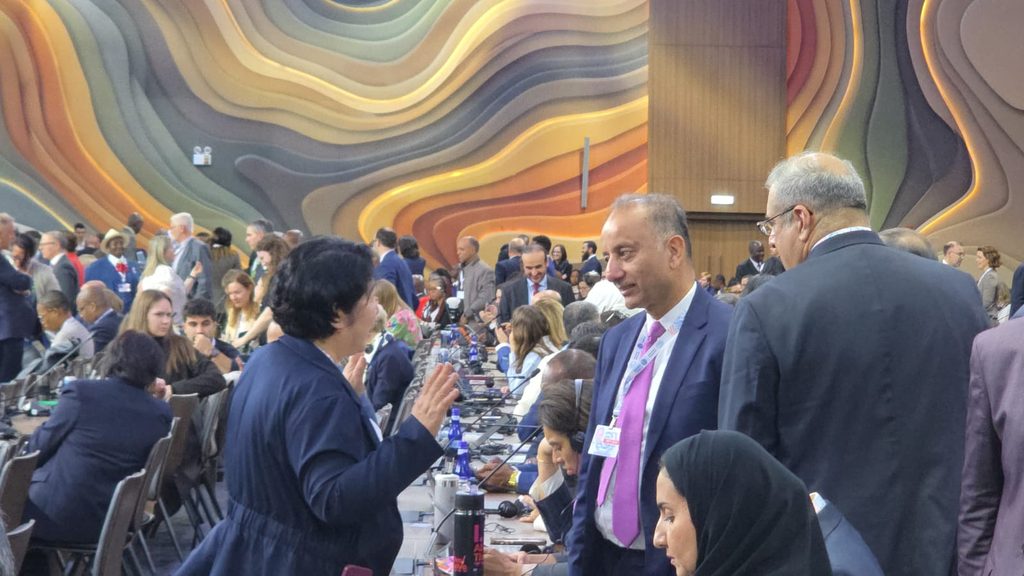
In addition, he will also call for predictable, adequate and accessible climate finance for developing countries to strengthen their resilience and pursue sustainable development.
The Prime Minister will also attend a High-Level Roundtable convened by the Presidency of the COP-31 on the sidelines of the Leaders’ Summit, and hold bilateral meetings with the Turkish leadership as well as several other world leaders.
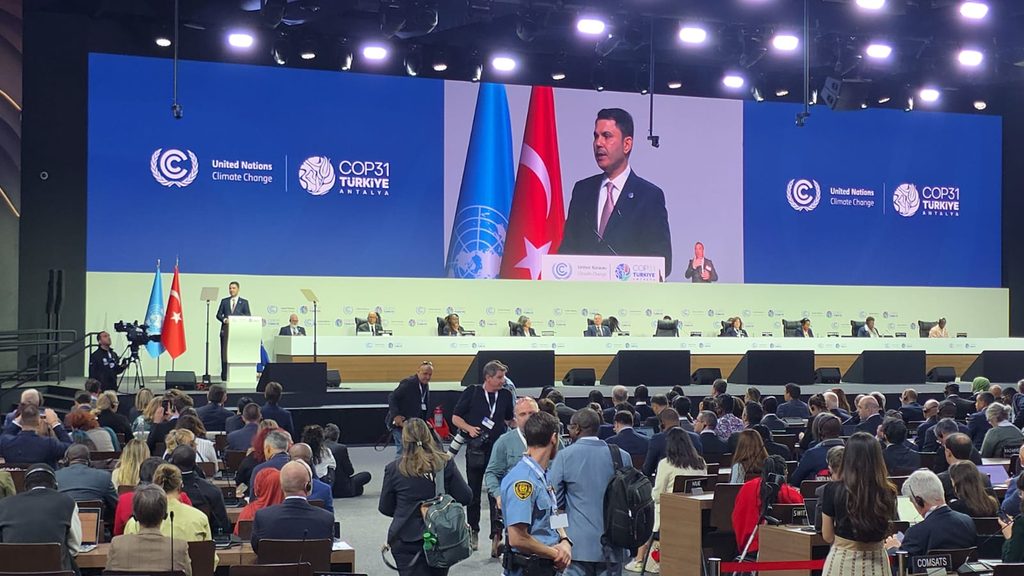
Prime Minister’s participation in the COP-31 Leaders’ Summit is an expression of Pakistan’s strong support for the climate agenda, and will provide Pakistan with an opportunity to reaffirm its commitment towards working closely with the international community to address the climate crisis.
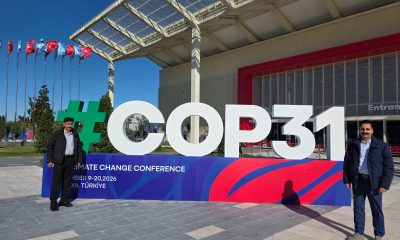
COP 31 starting Yesterday, Minister Climate Change of Pakistan Mr. Tasadaq Malik attended the opening ceremony in Antalya, Türkiye.
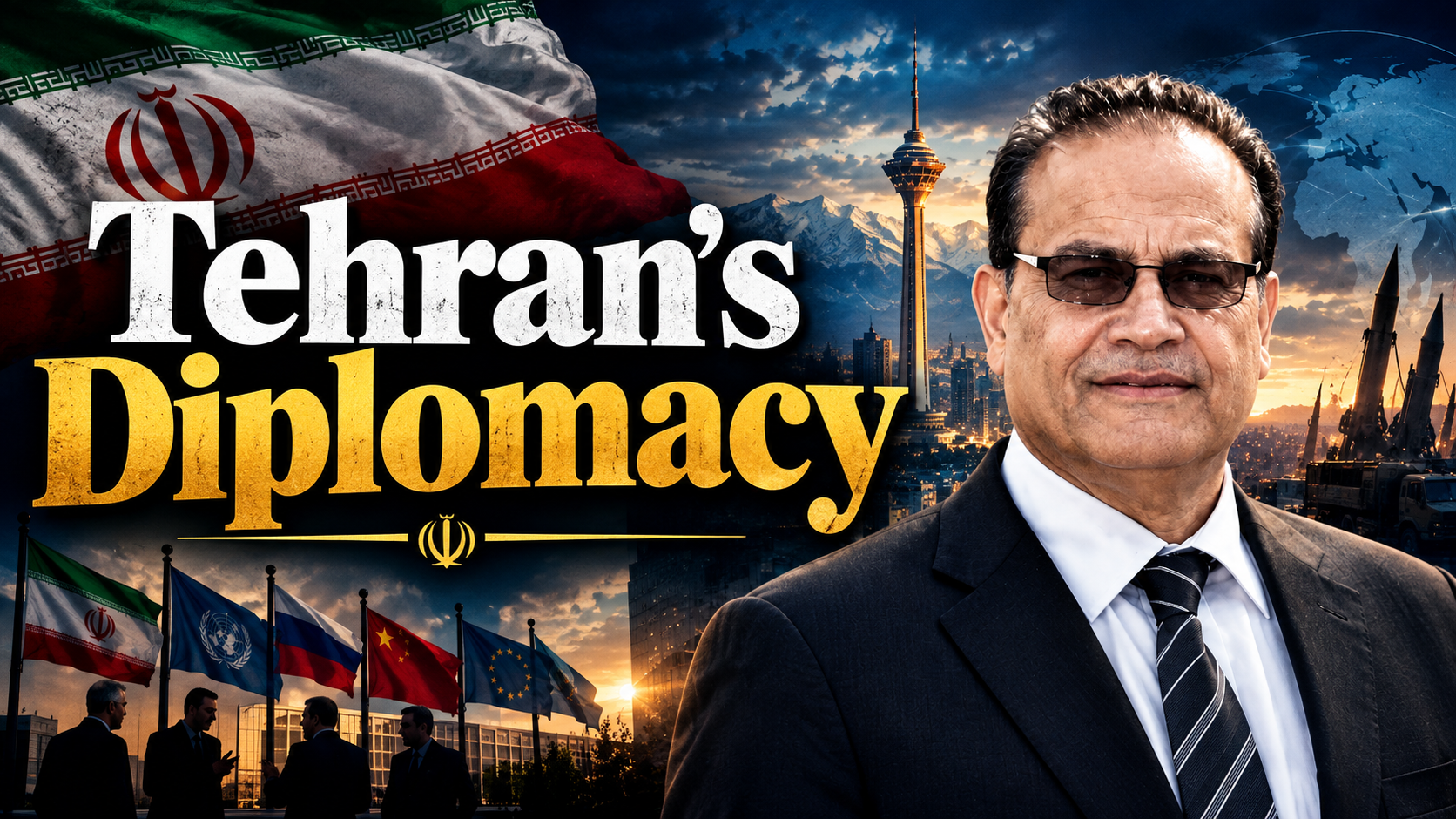
Paris (Imran Y. CHOUDHRY) :- Former Press Secretary to the President, Former Press Minister to the Embassy of Pakistan to France, Former MD, SRBC Mr. Qamar Bashir analysis : The arrival in Tehran of the defence minister of Saudi Arabia, the army chief of Pakistan and the intelligence chief ofTürkiye may prove more consequential than another round of American or Israeli military threats. Three powerfulMuslim countries, bound by the Makkah Joint Defence Agreement, sat across the table from Iran while Washington and Israel contemplated renewed military operations. The question is not merely what these leaders discussed, but what they may have quietly agreed to do—or refuse to do—when the next missiles begin flying.
The delegation was extraordinary in its composition. Saudi Defence Minister Prince Khalid bin Salman, Pakistan’s FieldMarshal Asim Munir and Turkish intelligence chief Ibrahim Kalin represented countries possessing enormous financial, military, diplomatic and strategic influence. Their collective appearance conveyed that Iran’s security could no longer be treated exclusively as a confrontation between Tehran, Washington and Tel Aviv. Regional powers were asserting their own interests in determining whether another devastating war would engulf their neighbourhood.
The war with Iran has transformed American military installations across the Gulf from instruments of deterrence into potential targets of retaliation. Reports and assessments of American military repositioning toward Israel, Jordan and other locations reflect this wider vulnerability. For Washington, geographic access remains a military advantage; for Gulf governments, that same access increasingly carries the possibility of devastating retaliation.
Saudi Arabia consequently faces an exceptionally difficult choice. American air defence systems, intelligence cooperation, maintenance arrangements and advanced weapons remain important to its security. Yet the presence ofAmerican forces can expose Saudi oil installations, airports, industrial infrastructure and civilian populations to Iranian orHouthi attacks. The attacks around Ras Tanura have demonstrated how rapidly regional warfare can threaten energy supplies and global economic stability. Riyadh must therefore calculate whether American protection is reducing its vulnerability or contributing to it.
Here lies the first possible hidden significance of the Tehran meeting. Iran may have sought assurances that Saudi Arabia,Pakistan and Türkiye would neither participate in renewed American-Israeli attacks nor facilitate them through military installations, airspace, intelligence or logistical support. No publicly disclosed agreement establishes that such promises were made. Nevertheless, the subject would be entirely consistent with Iran’s longstanding concern about foreign military infrastructure being used against it.
The second possibility points in the opposite direction. The Makkah Pact countries may have arrived not simply as sympathetic neighbours, but as a collective deterrent. Their defence agreement treats an attack against one member as a matter of common security. The presence of nuclear-armed Pakistan, NATO member Türkiye and economically powerful Saudi Arabia could therefore convey a warning that further Iranian or Houthi attacks against Saudi territory risk widening the conflict. Collective defence, however, does not automatically establish a commitment to join an American war.
This dual character makes the delegation particularly significant. It could simultaneously reassure Iran against foreign aggression and warn Tehran against attacking Saudi Arabia. Such diplomacy is not necessarily contradictory. It reflects an attempt to establish reciprocal restraint: regional states would avoid becoming launching platforms for attacks on Iran,while Iran would avoid retaliating against countries that remained outside the fighting. Whether such an understanding was actually reached remains undisclosed.
The third possibility concerns Qatar’s parallel diplomatic initiative. Unlike the three Makkah Pact countries, Qatar has maintained an intermediary role between Washington and Tehran. Its proposed seven-day confidence-building framework sought to bridge disagreements over nuclear activities, sanctions, maritime access and the wider conflict. Reports also indicate support for mediation from Pakistan, Saudi Arabia and Türkiye. Thus, the Tehran consultations could represent complementary diplomatic tracks rather than competing initiatives.
Iran’s response to the Qatari proposal was nevertheless uncompromising. Tehran objected to demands for nuclear concessions before meaningful economic relief, insisting that the American blockade of Iranian ports and restrictions on oil exports must be addressed first. Washington, conversely, wanted nuclear commitments from the beginning. The dispute was therefore not merely over the contents of a peace agreement, but over which party would surrender its leverage before receiving guarantees.
The most consequential outcome of the Tehran meeting may lie not in what was publicly announced, but in what was deliberately withheld. A day-long consultation involving the defence minister of Saudi Arabia, Pakistan’s army chief, Türkiye’s intelligence chief and Iran’s highest political and security authorities could hardly have been confined to the four lines of the joint communiqué. Such meetings necessarily involve extensive deliberations on the strengths, weaknesses, opportunities and threats arising from an ongoing war, including American military bases, Iranian retaliation, Saudi security, the Strait of Hormuz, economic sanctions and the consequences of another American-Israeli offensive.
Drawing upon my experience attending high-level meetings as Press Secretary and media adviser to the President of Pakistan, I know that public statements rarely disclose the full substance of sensitive diplomatic and security consultations.
The positive assessments expressed by the Iranian leadership and the visiting delegations strongly suggest that the participants found sufficient common ground to explore practical understandings and a coordinated pathway for responding to future developments.
Such understandings may include assurances of non-participation in renewed attacks against Iran, restrictions on the use of regional military facilities, reciprocal restraint toward Gulf countries and mechanisms for further consultations should Washington and Israel resume hostilities.
Kuwait and the other Gulf countries will therefore become important indicators. Their decisions concerning American bases, airspace, logistical support and diplomatic engagement could reveal whether the Tehran initiative develops into a broader regional non-aggression arrangement. The Houthis’ conduct will be equally revealing. A sustained reduction in attacks on Saudi infrastructure could indicate that Tehran and Riyadh have found a mechanism to separate Gulf security from the wider American-Israeli confrontation, although Houthi decision-making cannot simply be equated with Iranian instructions.
The timing adds urgency. Reports indicate concern about renewed American and Israeli military action around the November 3 American midterm elections. Whether such an offensive actually occurs remains uncertain. But if it does, the military effectiveness of the campaign will depend partly on regional access, intelligence, logistics and the willingness of neighbouring governments to absorb the consequences of Iranian retaliation.
Ultimately, Tehran may have achieved something strategically important without obtaining a single publicly declared concession: it has compelled influential regional governments to discuss security with Iran rather than merely discuss Iran with Washington. That is a meaningful diplomatic shift, even if its durability remains untested.
The real verdict on the Tehran meeting will not emerge from its carefully worded communiqué. It will emerge whenWashington next demands military access, when Israel considers another strike, and when Iran decides where its missiles will—or will not—fall. If regional governments refuse to become instruments of another war, the Makkah Pact may be remembered not as an alliance formed to confront Iran, but as the beginning of a Middle East determined to prevent outside powers from deciding its fate.
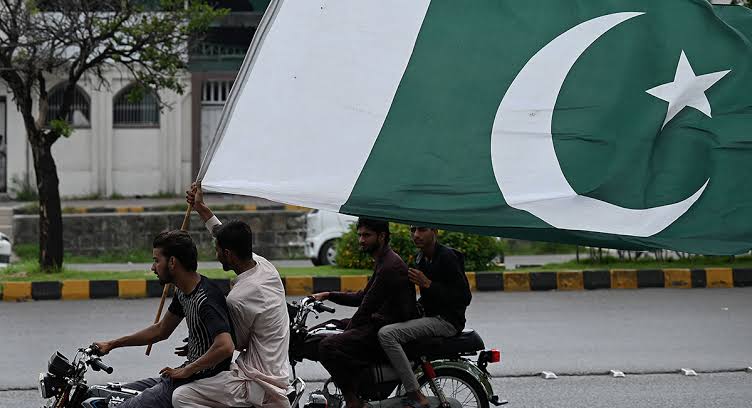
Paris (Imran Y. CHOUDHRY) :- Former Press Secretary to the President, Former Press Minister to the Embassy of Pakistan to France, Former MD, SRBC Mr. Qamar Bashir analysis : While Pakistan wrestles with political confrontation at home, its diplomacy is opening doors abroad. From the Badr memorandum signed in Doha to the earlier Mecca defence agreement, and from Riyadh’s security consultations to mediation with Tehran and Washington, Pakistan is acquiring a place at tables where regional security is being negotiated. The opportunity is considerable. The challenge is to turn international recognition into domestic stability, industrial strength and prosperity.
The Badr Memorandum of Understanding, signed on October 21 by Qatar, Türkiye, Pakistan and Indonesia, marks the latest advance. Its central purpose is defence industrial cooperation: joint production, technical training, research, development and stronger manufacturing capabilities. It offers a means of building the technological and industrial capacity that makes security sustainable.
Its promise lies in combining complementary strengths. Türkiye brings an expanding defence industry and experience in developing and integrating complex systems. Pakistan contributes military experience, technical manpower and established production facilities. Indonesia offers manufacturing capacity, a substantial domestic market and an important Southeast Asian base. Qatar brings investment potential and demand. Together, these assets could support projects beyond the reach of countries working separately.
The resulting opportunity extends beyond buying and selling weapons. Shared design, component manufacturing, software development, testing, maintenance and training could create enduring industrial relationships. A country that helps manufacture a system develops skills and supplier networks that an ordinary purchase may never deliver. The real prize is the ability to understand, sustain and improve equipment throughout its working life.
But signatures cannot run factories. Badr needs an efficient institution to translate ambition into projects, with agreed financing, clear responsibilities and deadlines. Partners must settle technology access, intellectual property, export permissions and the division of production before these become disputes. Each project should have accountable leadership and measurable milestones. Good faith must be matched by management capable of delivering on time.
For Pakistan, Türkiye is a particularly valuable partner. Their existing naval cooperation demonstrates how procurement can support domestic construction and technical learning. Turkish progress in drones, electronics, armoured platforms and naval systems offers further possibilities. Pakistan should seek arrangements that allow its engineers and manufacturers to become development partners, accumulating knowledge with every successive project.
This industrial initiative follows the Mecca Joint Defence Agreement, signed by Saudi Arabia, Türkiye and Pakistan in August, which established a powerful principle: an armed attack against one would be regarded as an attack against all. Its resemblance to NATO’s collective defence commitment explains the attraction of calling it a “mini-NATO”. For Pakistan, it represents recognition that its military capacity and strategic position have value well beyond South Asia.
Yet solidarity becomes complicated when it must move from declarations to decisions. These countries share Islamic bonds, but their relationships, interests and vulnerabilities differ. A confrontation involving Saudi Arabia and Iran, or attacks from Yemen, would confront Pakistan with difficult choices. Religious, social and historical connections cross the very boundaries that security arrangements seek to defend. An effective pact must therefore combine credible deterrence with political judgment and clearly understood responsibilities.
Nor does Mecca constitute a comprehensive Muslim alliance addressing every shared concern. The Palestinian question and Israel’s military actions remain central to public sentiment across the Muslim world, while the agreement’s immediate operation is shaped by its members’ security needs. Its worth will depend on whether it protects its participants while helping contain regional conflict. Pakistan’s strongest contribution would be to make collective security reinforce reconciliation rather than deepen divisions.
Pakistan also brings a distinction no other Muslim country possesses: nuclear weapons capability. Alongside this stands an experienced army, a capable air force and a smaller navy responsible for demanding maritime duties. The May 2025 confrontation with India, which Pakistan regards as a major defensive success, reinforced the importance of readiness and technological competence. India’s acknowledgment of initial aircraft losses underlined the seriousness of that contest.
Military standing, however, achieves its greatest value when it supports diplomacy. Field Marshal Asim Munir’s October 20 visit to Tehran formed part of Pakistan’s continuing effort to help bring the United States and Iran towards an accommodation. Such engagement requires persistence because the parties approach negotiations through deep distrust, competing security demands and domestic political pressures.
Pakistan is attempting a difficult balancing act: sustaining communication with Washington and President Donald Trump, preserving access to Iran’s leadership, and maintaining Saudi confidence. Its usefulness rests on remaining a credible channel across these relationships. Every conversation that clarifies intentions, reduces miscalculation or identifies a possible compromise adds value, even when a final settlement remains elusive.
This is where Pakistan’s defence partnerships and diplomatic role must reinforce each other. Friendship with Saudi Arabia should strengthen its ability to explain Saudi concerns to Tehran. Relations with Iran should help it communicate Iranian concerns elsewhere. Close ties with Türkiye and Qatar add further channels. Pakistan can gain lasting influence by helping countries find an exit from confrontation that preserves security and dignity.
That achievement would be more persuasive if accompanied by reconciliation at home. Continuing confrontation around Pakistan Tehreek-e-Insaf and the imprisonment of former prime minister Imran Khan consumes political energy the country urgently needs for reconstruction. Pakistan should ensure fair and transparent judicial proceedings, end politically motivated restrictions and pursue his release through lawful means. He should have the opportunity to participate in normal democratic politics.
The way forward also requires free, fair and impartial elections, credible institutions and acceptance that political opponents belong within the constitutional system. Protest must remain peaceful, and the state must protect lawful political participation. A country seeking to mediate between bitter international adversaries should apply the same patience and confidence to resolving its own political disputes.
Peace along Pakistan’s borders is equally necessary. Terrorism must be confronted firmly, but lasting security also requires sustained diplomacy with Afghanistan. Islamabad and Kabul need practical arrangements to prevent armed groups from exploiting territory, manage border disputes and preserve legitimate trade. With Iran, cooperation should protect a peaceful frontier. With India, Pakistan should continue seeking dialogue and measures that reduce the risk of another military escalation.
Economic recovery must give these efforts a material foundation. Pakistan’s mineral resources can contribute far more if extraction is connected to processing and domestic manufacturing. Copper, gold and other commercially viable deposits should support infrastructure, technical education and industries that add value at home. Mineral wealth becomes national wealth when it creates productive skills, competitive businesses and lasting employment.
Badr could help cultivate some of the engineering, electronics and materials expertise relevant to that broader transformation. Pakistan should connect its diplomatic partnerships with universities, industrial estates, reliable energy and local suppliers. Exporting raw materials alone would leave much of the value elsewhere; building industries around them would allow Pakistanis to retain a larger share.
Pakistan has earned an opening. Its task now is to make external confidence durable through internal consent, peaceful borders and productive industry. The country’s finest strategic achievement would be a Pakistan whose citizens experience the gains its diplomats announce: greater security, meaningful work and a future worth investing in.


The Deadly Hypocrisy of Western Sanctions

Nvidia Spy Storm: A False Flag Against China?

Trump’s Iranian Retreat and America’s Economic Reckoning

New Chapter for Dragon Boating in Punjab and Khyber Pakhtunkhwa Provincial associations officially set up with sights locked on national competitions and international representation.

South Korea’s Yoo Useong Steps Onto the Global Strongman Stage as World Strongman Federation Professional Athlete

A Survey of Mata-E-Zeest


-
 Pakistan News1 month ago
New Chapter for Dragon Boating in Punjab and Khyber Pakhtunkhwa Provincial associations officially set up with sights locked on national competitions and international representation.
-
 Sports5 months ago
South Korea’s Yoo Useong Steps Onto the Global Strongman Stage as World Strongman Federation Professional Athlete
-
 Art & Culture1 year ago
A Survey of Mata-E-Zeest
-

 Europe News2 years ago
Chaos and unproven theories surround Tates’ release from Romania
-

 American News2 years ago
Trump expands exemptions from Canada and Mexico tariffs
-

 Art & Culture2 years ago
Will Snow White be a ‘victim of its moment’? How the Disney remake became 2025’s most divisive film
-

 Pakistan News1 year ago
Comprehensive Analysis Report-The Faranian National Conference on Maritime Affairs-By Kashif Firaz Ahmed
-

 Entertainment2 years ago
Champions Trophy: Pakistan aim to defend coveted title as historic tournament kicks off today