
Pakistan News
China’s Strategic Red Line: Unwavering Support for Pakistan


Paris (Imran Y. CHOUDHRY) :- Former Press Secretary to the President, Former Press Minister to the Embassy of Pakistan to France, Former MD, SRBC Mr. Qamar Bashir analysis : In a historic and unambiguous declaration, Professor Victor Gao—close associate and advisor of China’s paramount leader Deng Xiaoping and Vice President of the Center for China and Globalization (CCG), one of Beijing’s most influential think tanks—publicly stated what analysts long assumed but never confirmed: China will always stand with Pakistan, in peace or in war, against any country that threatens its sovereignty and territorial integrity.
“China and Pakistan are all-weather ironclad allies. No one should second-guess this alliance between China and Pakistan. China will always come to Pakistan’s help and assistance whenever Pakistan’s sovereignty and territorial integrity will be threatened by any country.”
This was not a diplomatic flourish. Delivered on Indian television in the presence of strategic commentators, Gao’s statement was a decisive strategic message, one that carries weight not only because of his current position, but also due to his proximity to China’s policymaking elite. His language left no ambiguity: the “any country” referred to could be India, the United States, or any other actor contemplating actions against Pakistan’s sovereignty.
Gao’s declaration came amidst heightened tensions following the Pahalgam terror attack in India, which killed several civilians. India blamed Pakistan-based elements and responded with missile strikes on Pakistani airbases, including Noor Khan and Murid, according to Pakistan’s Inter-Services Public Relations (ISPR). Pakistan reported no major damage but warned it reserved the right to retaliate “at the time and place of its choosing.”
China, rather than blindly supporting any narrative, called for a thorough, transparent, and impartial investigation, aligning itself with Pakistan’s diplomatic stance. Gao reiterated this position:
“We need to call for impartial and complete and thorough investigation into the background of this attack, before any country should seize this opportunity to use this attack as the trigger for escalation of tensions, or even conflict between India and Pakistan.”
He cautioned against unilateral action based on conjecture or politicized assumptions:
“When you talk about terrorist attacks, you may know inside Pakistan, there have been terrorist attacks against Chinese nationals. We actually lost quite a few Chinese nationals inside Pakistan. But we always called for a thorough investigation into what exactly is happening behind the scenes—who was pulling the trigger, who was committing all these atrocities.”
This contrast with India’s rapid attribution and response has underlined China’s preference for due process over punitive adventurism, but with a red line: Pakistan’s sovereignty is non-negotiable.
Professor Gao’s statements are matched by facts on the ground. Over 60% of Pakistan’s current military arsenal originates from China. This includes: JF-17 Thunder fighter jets, co-developed with China, Yuan-class submarines, providing second-strike capabilities, HQ-series air defense systems, complementing Pakistani strategic depth and P-10 and P-15 cruise and ballistic missiles, enhancing Pakistan’s tactical reach.
Recent reports indicate the arrival of Chinese Y-20 cargo aircraft in Pakistan, allegedly delivering defense equipment and signaling readiness for joint preparedness. This growing military interoperability indicates that the China-Pakistan military alliance is not theoretical—it is active and deepening.
Professor Gao underscored this in the clearest terms:
“You are talking about a war between Pakistan and India on the one hand, and then you are talking about an ironclad alliance between China and Pakistan, and China’s full commitment to defend Pakistan’s sovereignty and territorial integrity.”
Professor Gao’s statements expand China’s security perimeter beyond its own borders. By stating that China’s alliance with Pakistan would activate against “any country” threatening its integrity, he has laid out a doctrine that potentially covers U.S. operations, Indian offensives, or multilateral actions that challenge Pakistan’s territorial claims or strategic interests.
This extension is not purely theoretical. China is already involved in several proxy confrontations—with the United States over Taiwan and trade, with the Philippines over the South China Sea, and now, possibly, with India over Pakistan. It’s no surprise, then, that Gao warned of the catastrophic consequences of escalation:
“The deterioration of the situation between India and Pakistan is a reason for great concern. These are two big countries, both armed with nuclear weapons… the consequence will be too much for either India or Pakistan to bear.”
He warned against viewing such a crisis through a limited lens:
“This is the time for both India and Pakistan, and all other stakeholders, to work very closely to get to the bottom of the situation, rather than allowing this attack to be the trigger.”
Perhaps the most alarming yet underappreciated part of Gao’s message came in his remarks about the weaponization of water—a real threat in a region reliant on the Indus basin. India has previously threatened to cut or reduce Pakistan’s water access under the Indus Waters Treaty.
Professor Gao minced no words:
“In the context of war, any stopping of a dam or the flow of the water causing drought or loss of life in another country may be considered a war crime. In a non-war context, any such action may be considered a crime against humanity.”
This was more than a caution. It was a legal and diplomatic shield, warning that Chinese diplomatic and possibly legal mechanisms would be employed to protect Pakistan from such strategic sabotage.
India must now revise its strategic calculus. For too long, Indian planners assumed that limited strikes or hybrid warfare against Pakistan could proceed without triggering third-party escalation. But China’s position has changed that permanently. The illusion of unilateral maneuvering has been shattered. India now faces the reality of a two-front military, diplomatic, and possibly economic counter-pressure.
China’s readiness to match rhetoric with resources is clear. Pakistan, fortified by Chinese support, is no longer strategically isolated. India must ask itself: is it prepared for a confrontation not just with Pakistan, but with Pakistan and China acting in concert?
Despite the gravity of the situation, Professor Gao’s remarks were also an invitation—to de-escalate:
“This is the right time to call on both India and Pakistan to exercise the maximum restraint and seek a peaceful solution.”
That call must not go unheard. With 1.6 billion people living in the arc of conflict between the Himalayas and the Arabian Sea, the cost of further escalation is not abstract—it is existential.
For now, the message from Beijing is unmistakable: China will fight shoulder to shoulder with Pakistan if India dares to turn South Asia into a battleground.




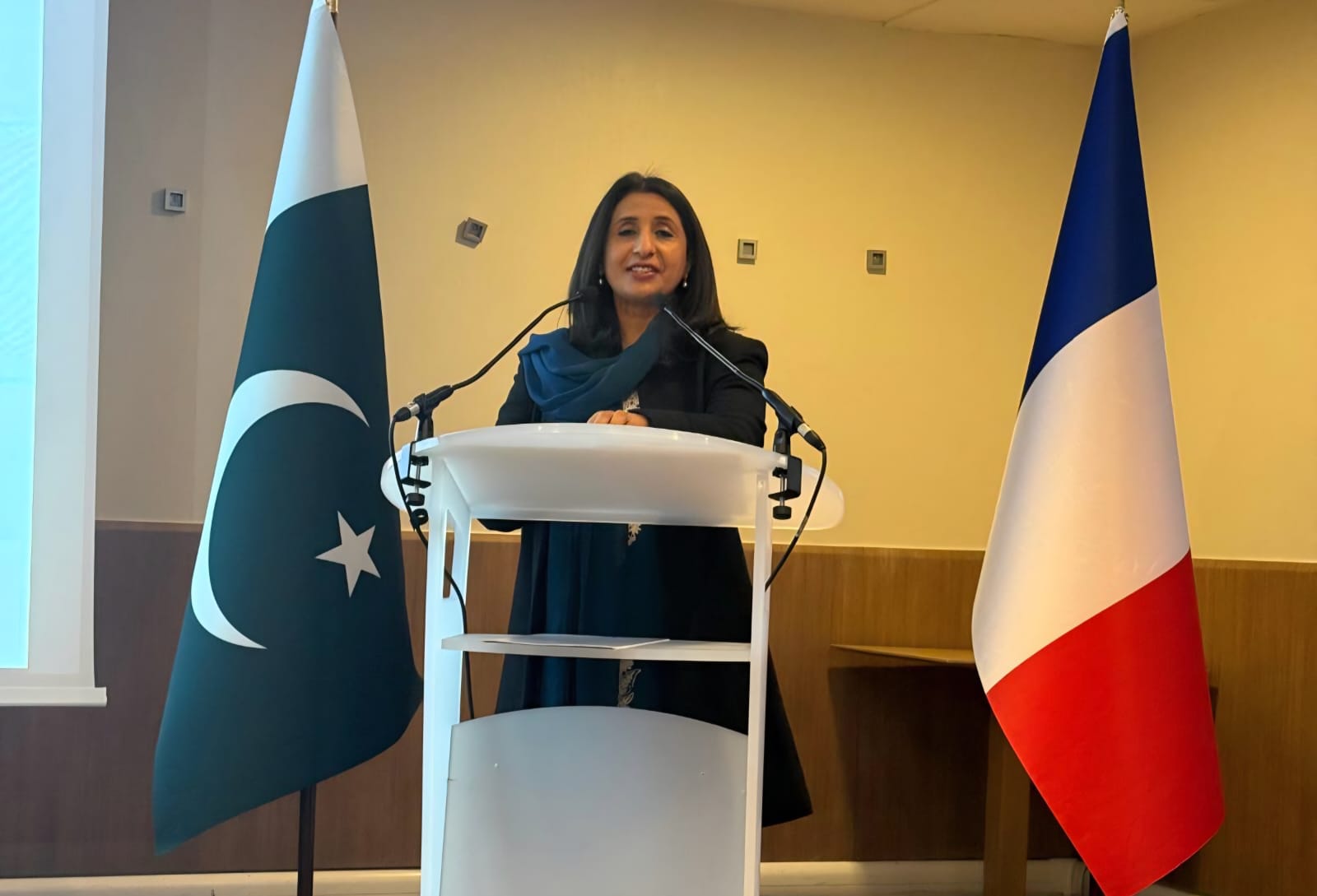
Paris ( Imran Y. CHOUDHRY):- A ‘Pakistan-France Trade and Investment Forum’ was held in Paris today, bringing together government officials, business leaders, industry experts and representatives of trade bodies of both countries.
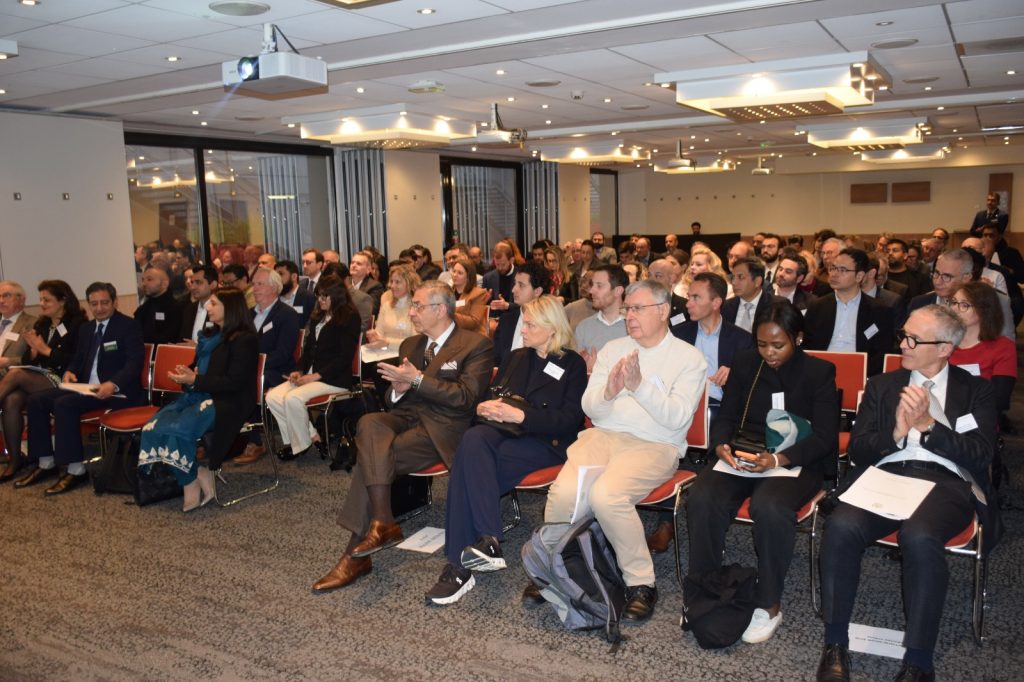
The Forum was held in implementation of an understanding reached between President Emmanuel Macron and Prime Minister Shehbaz Sharif in 2024, to build strong economic partnership between Pakistan and France. The objective of the Forum was to connect businesses, exchange ideas, explore new avenues of bilateral cooperation and showcase Pakistan’s trade and investment potential. It witnessed participation of over seventy French and Pakistani companies from diverse sectors including agriculture, information technology, textiles, energy and tourism.
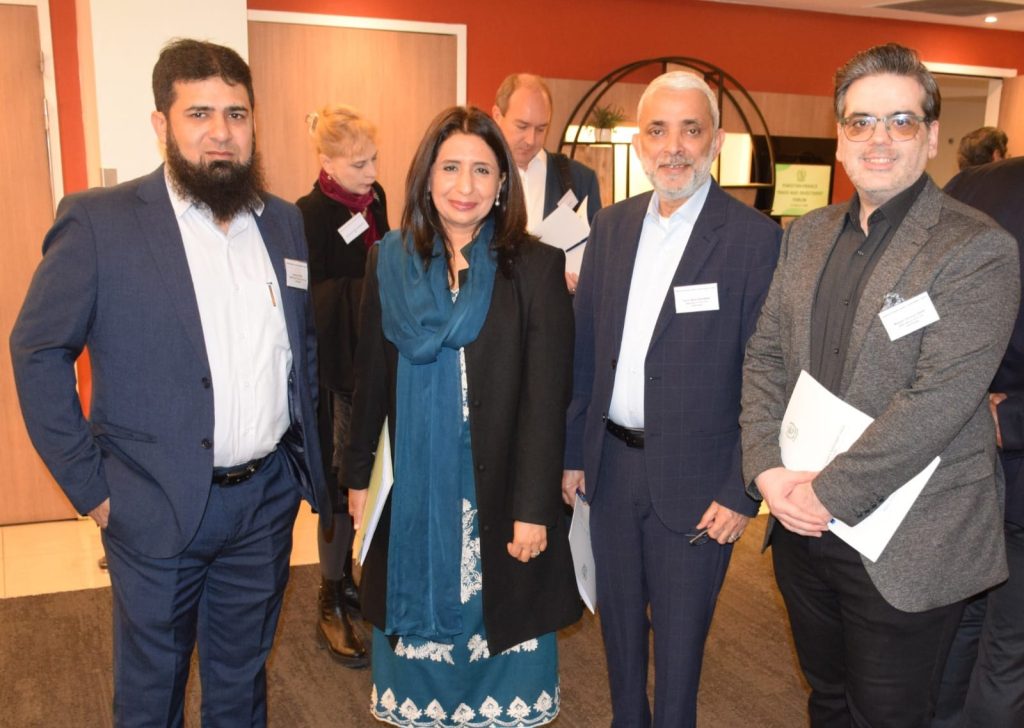
Ambassador Mumtaz Zahra Baloch opened the Business Forum and highlighted Pakistan’s economic growth and potential as an attractive trade partner for France. She outlined investor-focused initiatives and institutional facilitation mechanisms in Pakistan to promote trade and investment. She encouraged Pakistani and French businesses to explore collaborative opportunities, and develop joint ventures and win-win partnerships.
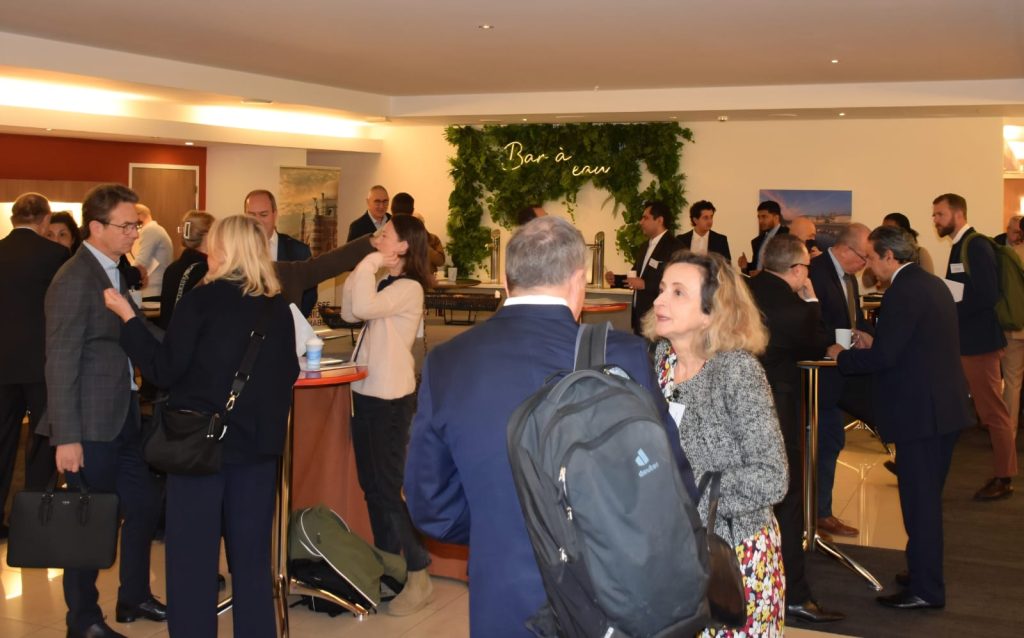
Speakers from the French side included Thierry Pflimlin, Chairman of the France-Pakistan Business Council at MEDEF International, Patricia Glasel, Vice President of the Conseillers du Commerce Extérieur de la France (CCEF) and Ardavan Amir-Aslani. They highlighted the growing momentum in France-Pakistan economic relations; identified the opportunities for trade and investment with Pakistan; and underscored the importance of strengthening private sector linkages to further facilitate bilateral trade and investment.
The plenary session was followed by ‘Breakout and Business-to-Business (B2B)’ sessions to discuss and identify tangible avenues for collaboration in textiles, agriculture and dairy, and Information Technology.
Pakistan News
Dr. Mohammad Faisal Joins Distinguished Quetta Association Event in London Gathering Reinforces Shared Military Heritage of Pakistan and Britain
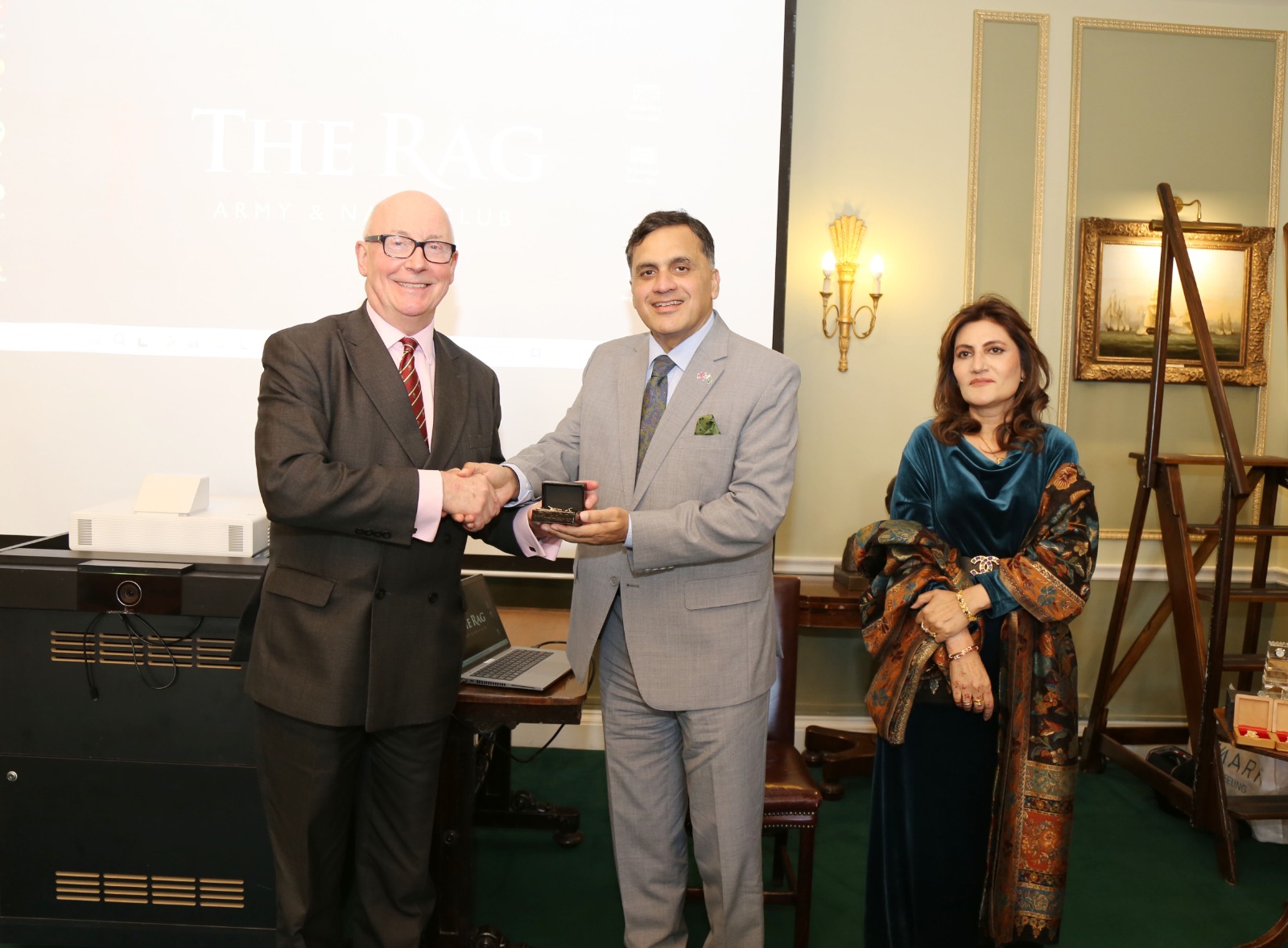
High Commissioner @DrMFaisal and his spouse @drsarahnaeem2 attended, as guests of honor, a distinguished gathering of the Quetta Association at the Army & Navy Club, London.
Military Officers from the Defence Wing of Pakistan High Commission, London, with their families also attended.
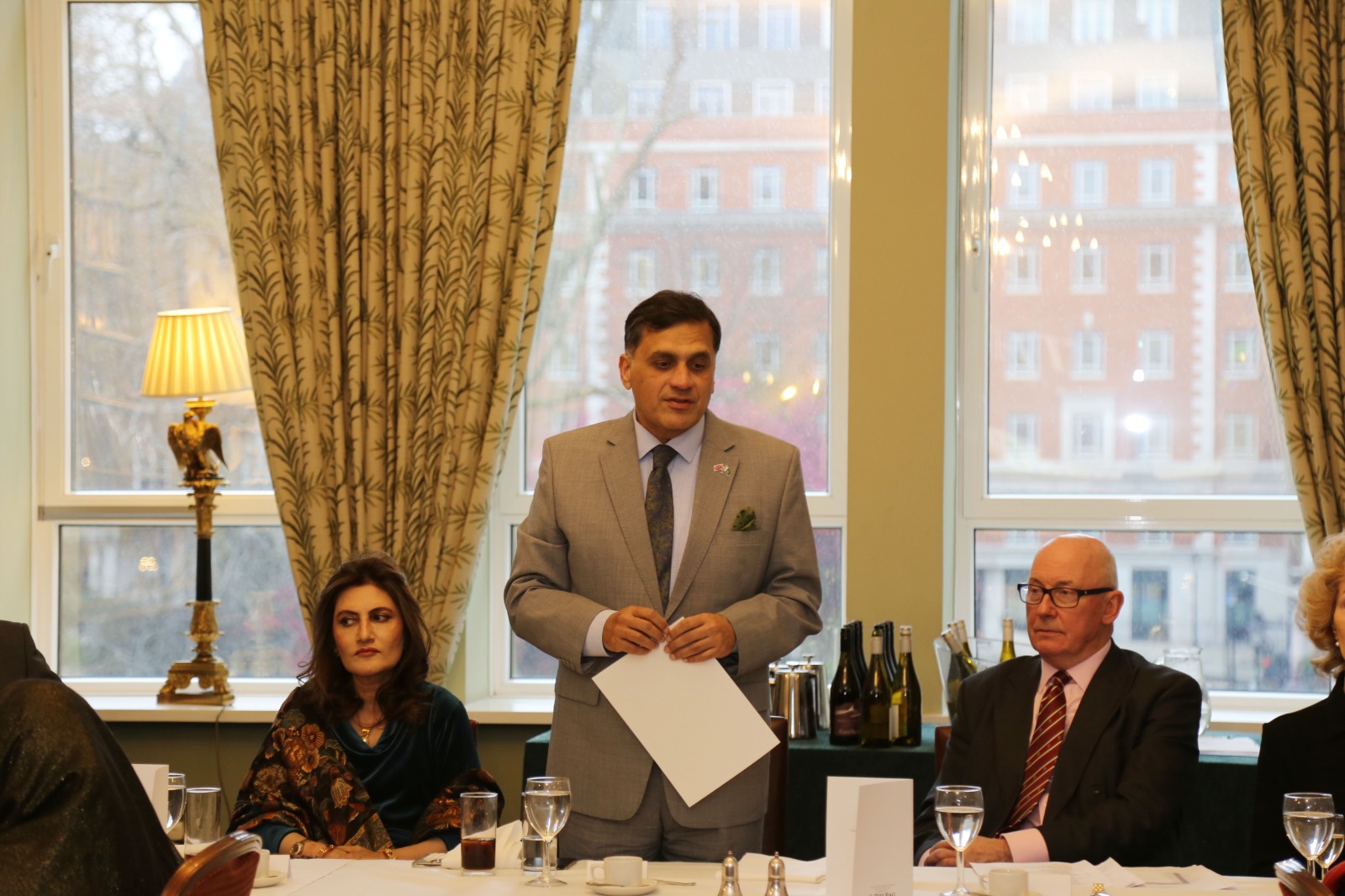
Quetta Association brings together British officers who graduated from the prestigious Command & Staff College, Quetta, Pakistan. The institution has produced outstanding military leaders, including British Field Marshals Sir Claude Auchinleck and Sir William Slim, whose leadership during the Second World War remains widely respected. Field Marshal Syed Asim Munir is also graduate of this prestigious institution.
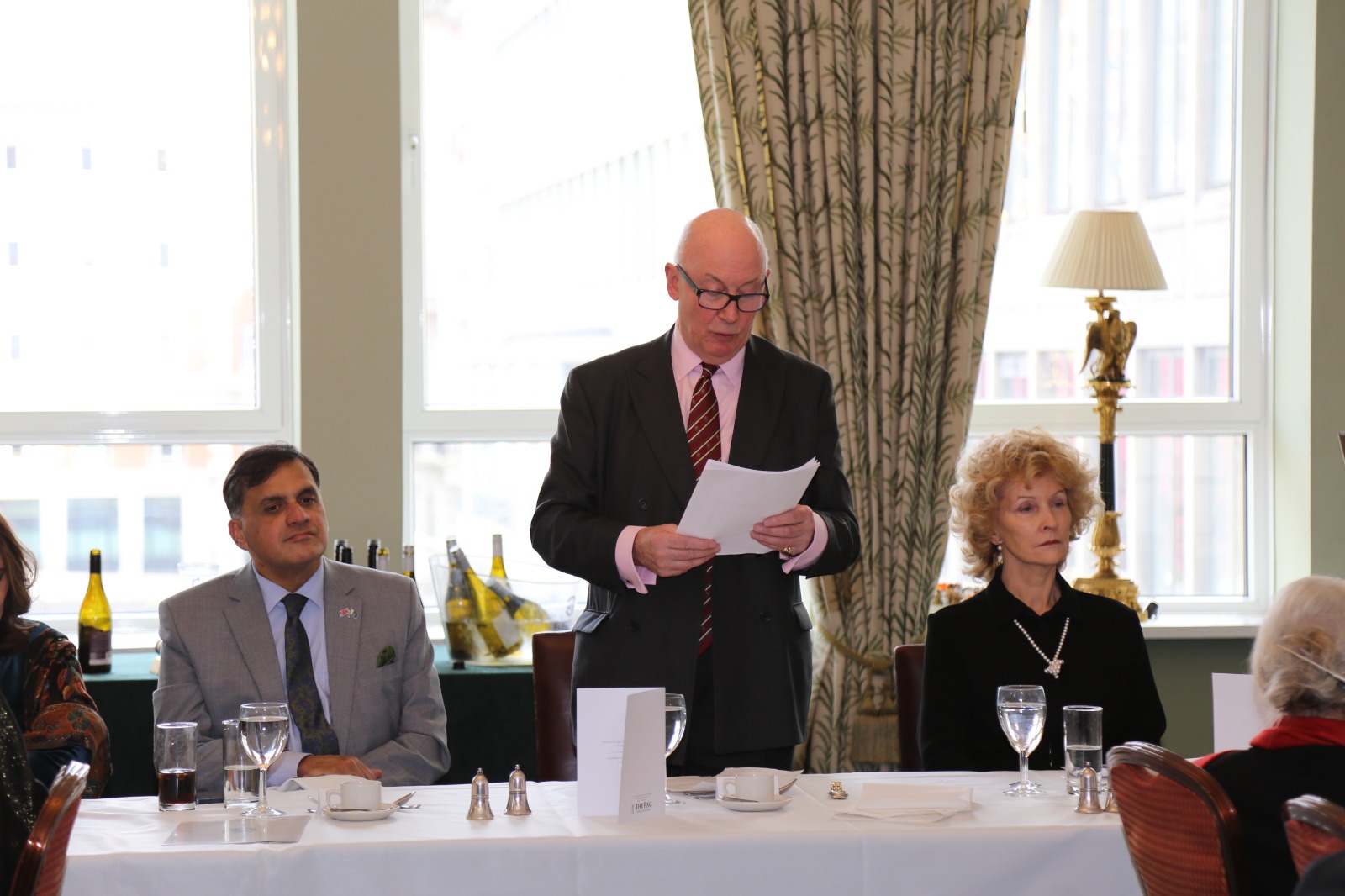
The High Commissioner appreciated the annual gathering that underscored the Association’s enduring role as a vital bridge linking the British Army and Pakistan Army through shared professional heritage and camaraderie.
Decorated British military officers and their families paid glowing tributes while referring to the hospitality accorded by Pakistan during their stay in Quetta.
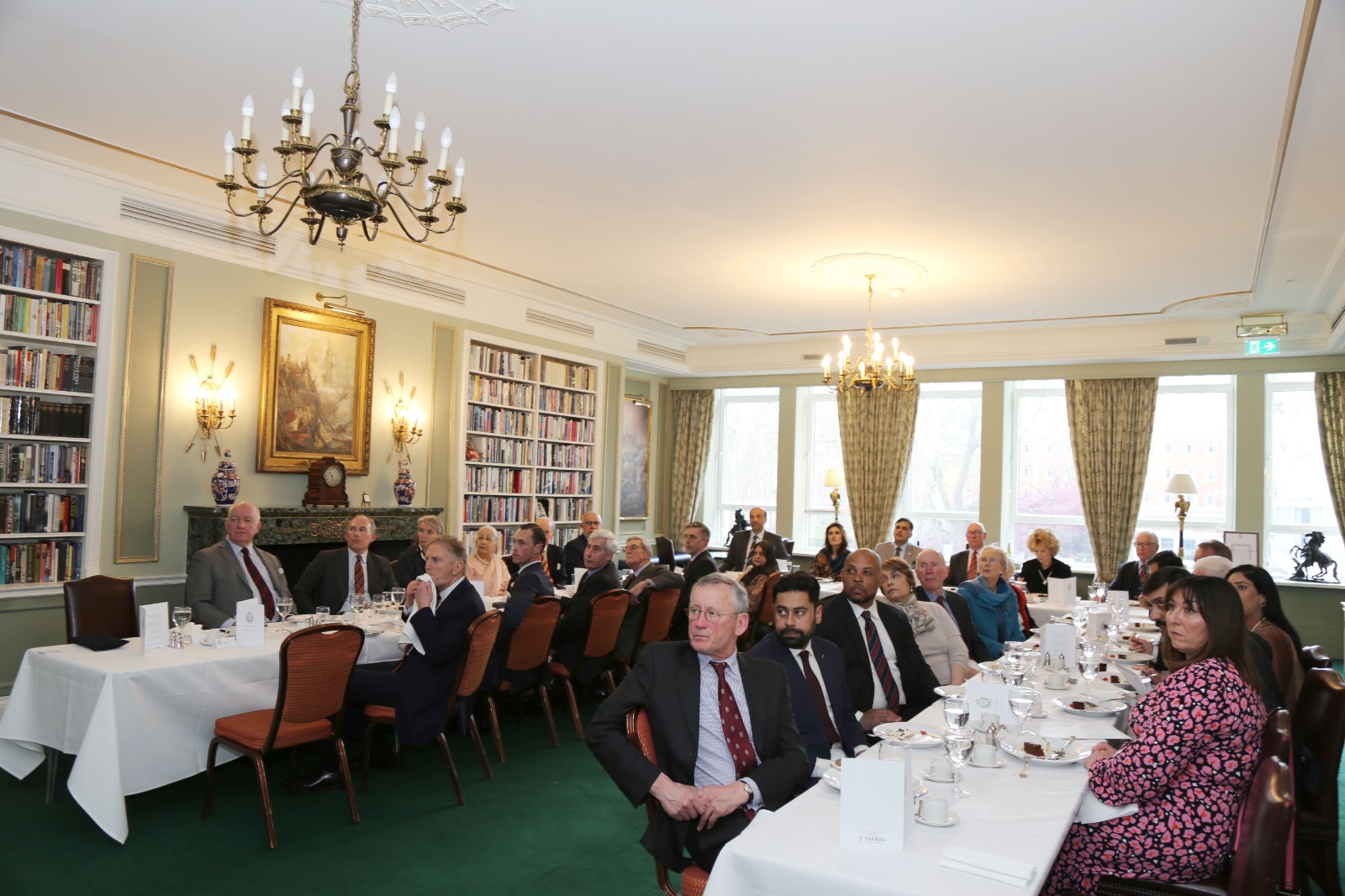
Graduate senior British Officers present at the gathering included Lt. Gen. Sir Alistair Irwin KCB CBE (1980) and Maj. Gen. Seumus Kerr CBE (1985).
Mementos were exchanged between the British officers and officers of @PakistaninUK.
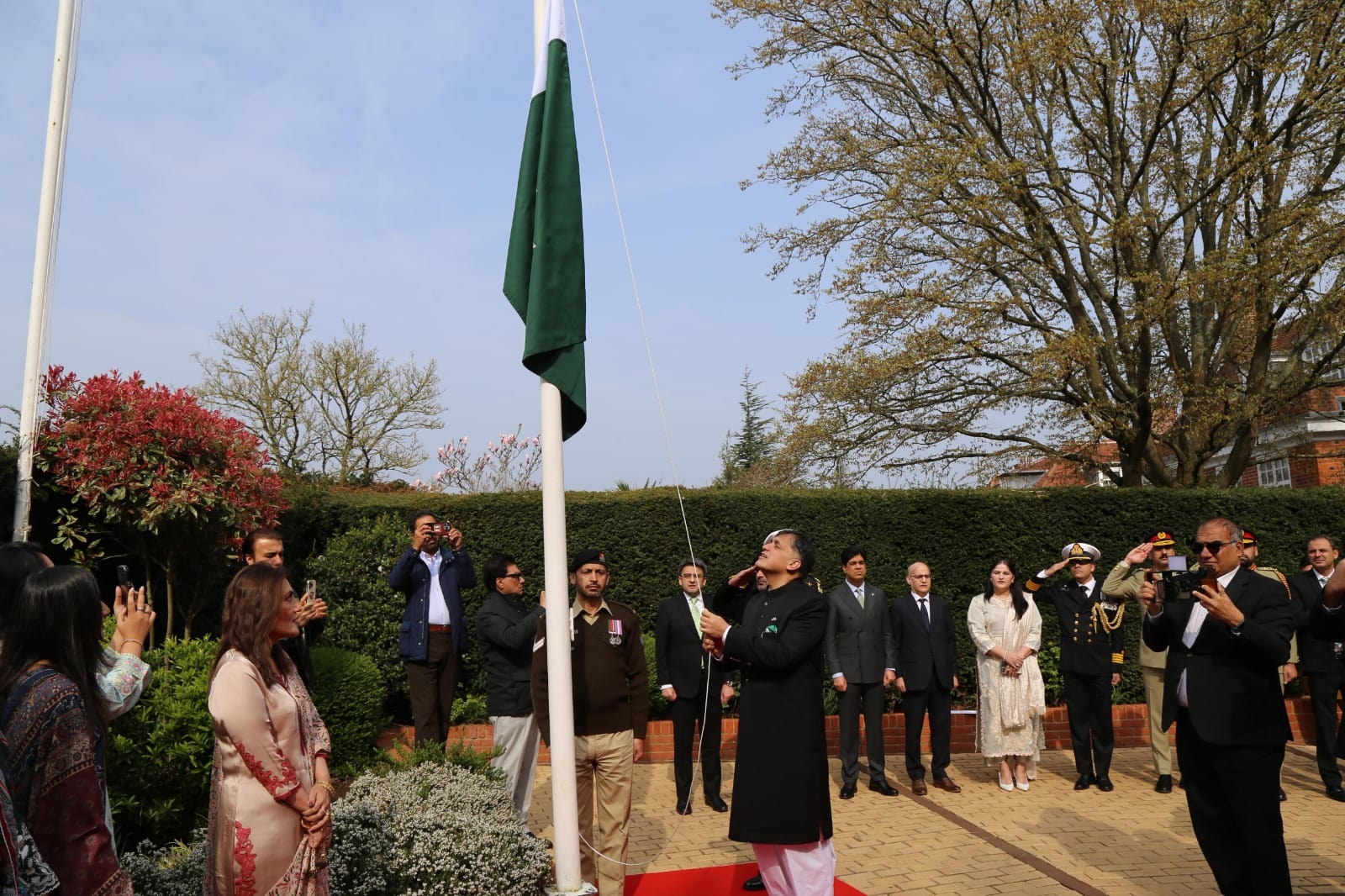
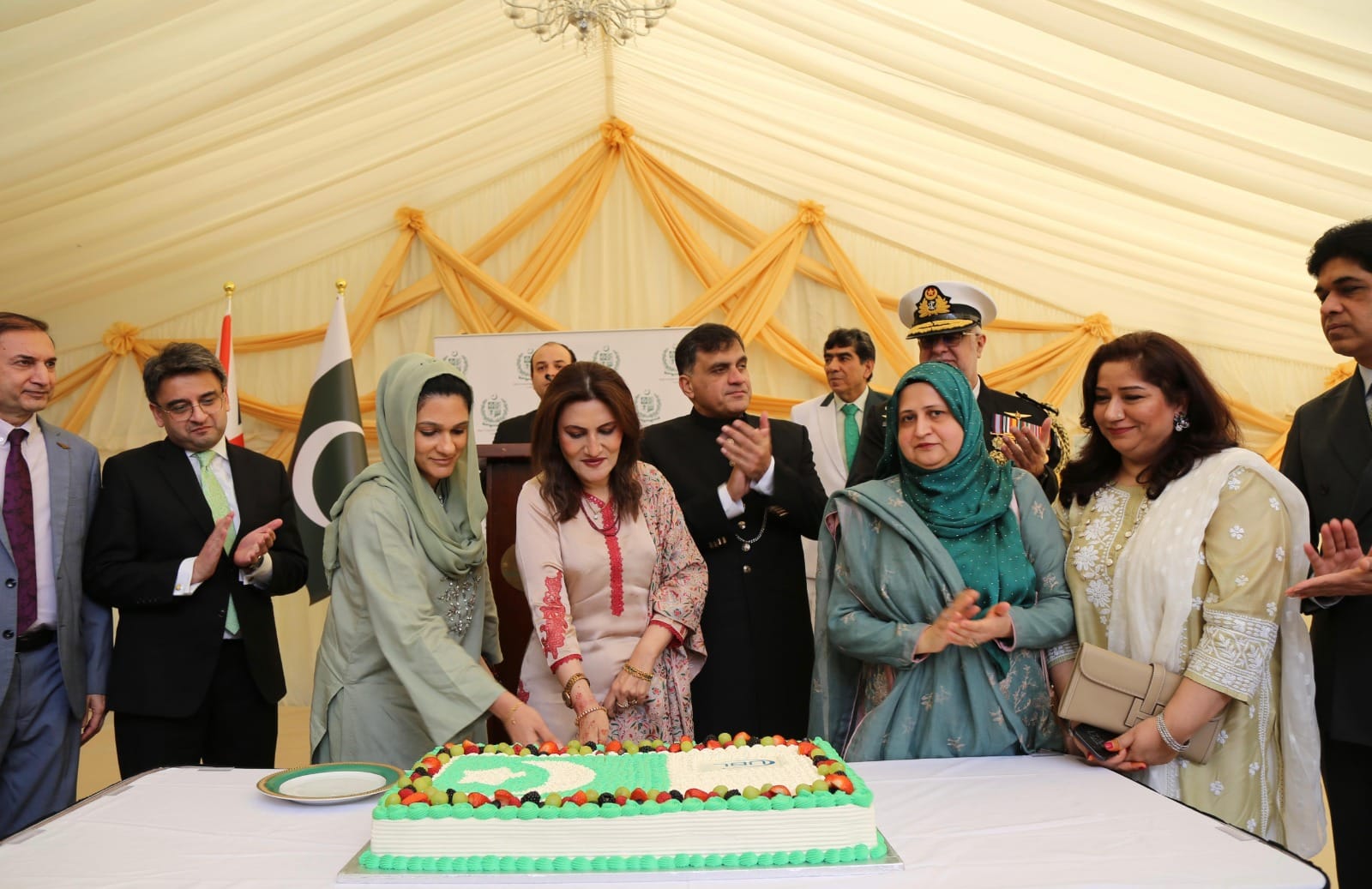
In a simple and dignified ceremony held at Pakistan House, London, the High Commissioner of Pakistan to UK Dr. Mohammad Faisal raised the Pakistan Flag on the occasion of Pakistan Day.
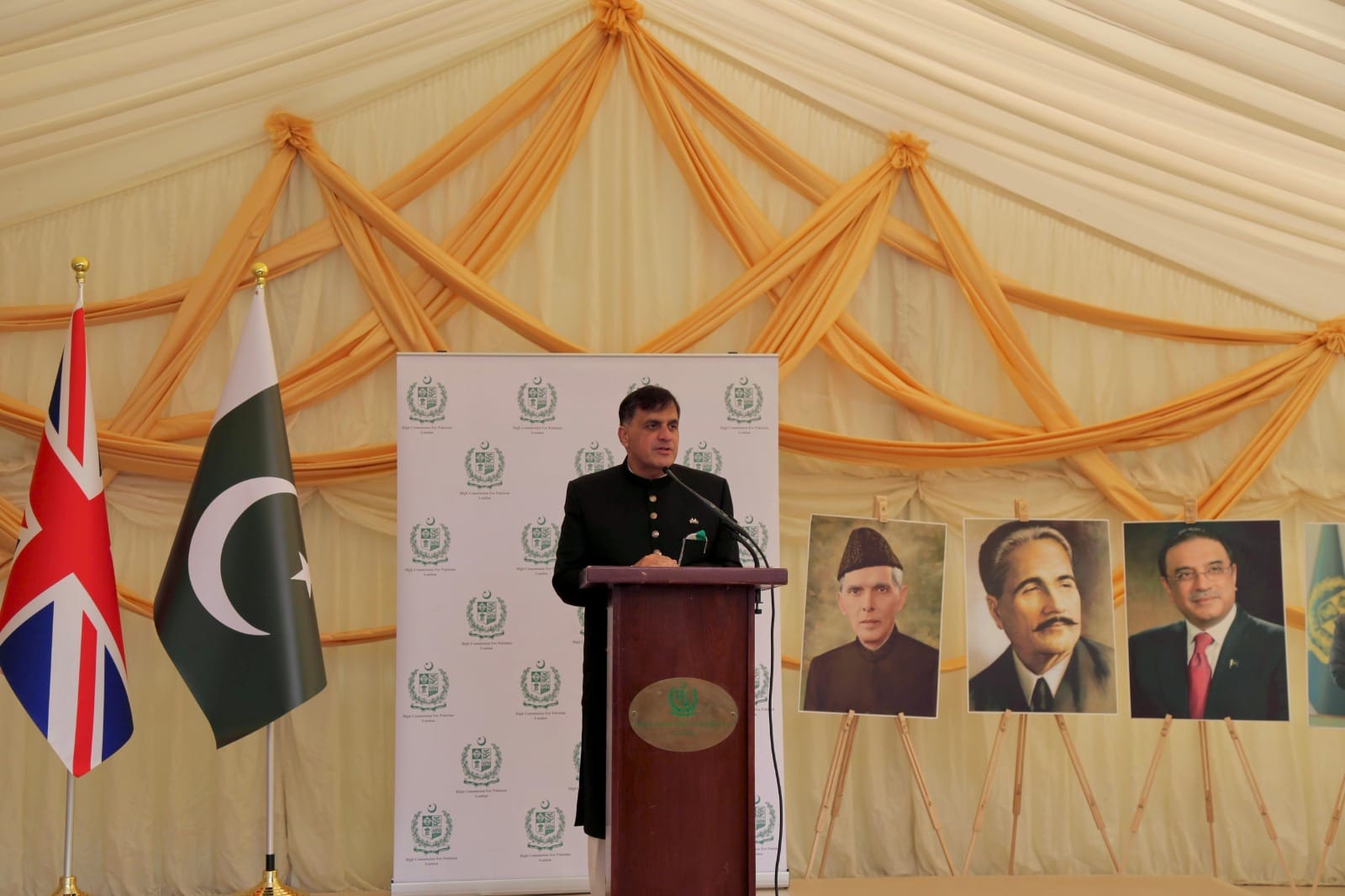
The ceremony was attended by Officials of the High Commission, British – Pakistanis and Media representatives.
Messages of the President, the Prime Minister and Deputy Prime Minister / Foreign Minister were read out.
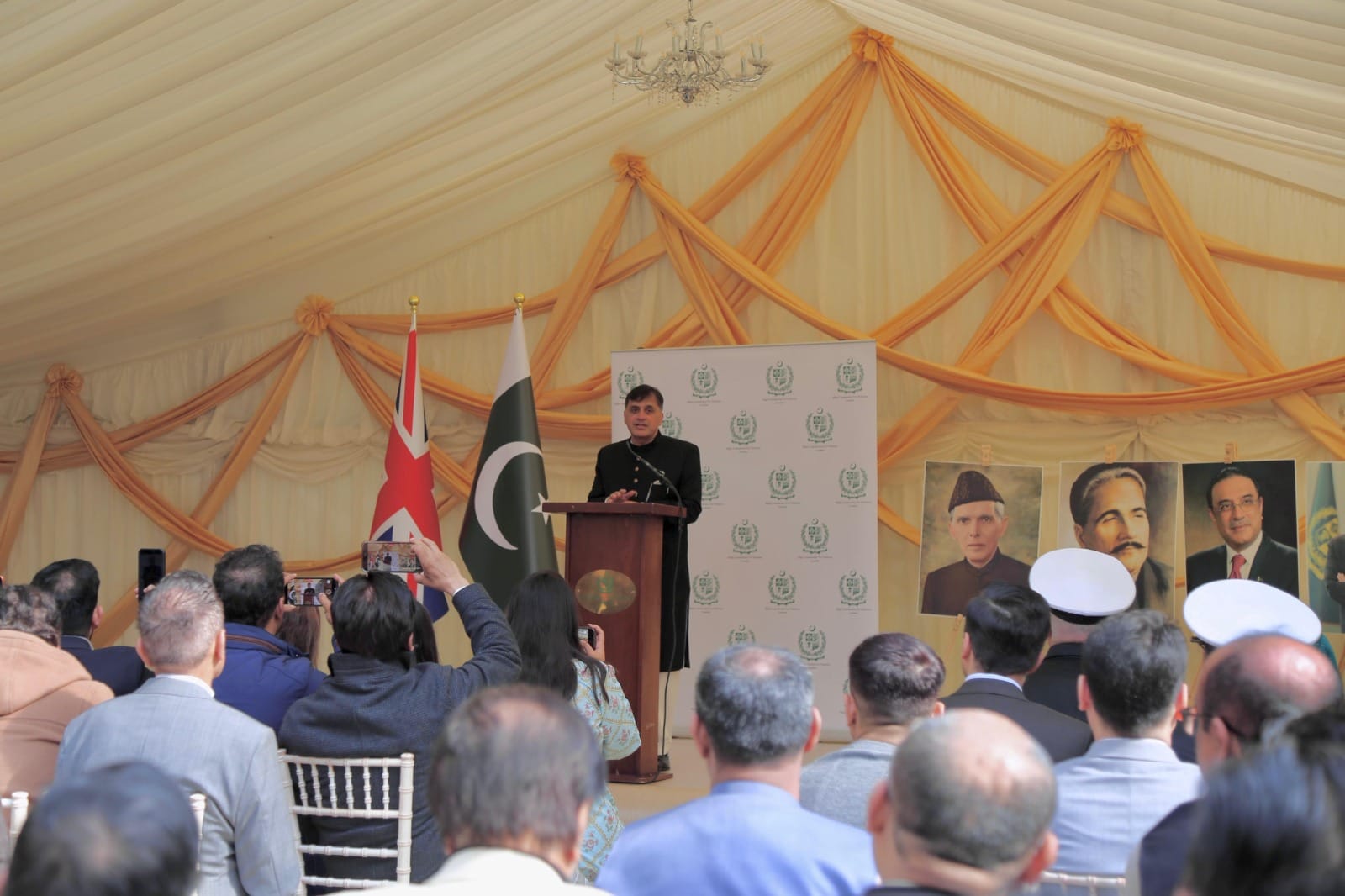
In his keynote address, the High Commissioner said that Pakistan Day was a tribute to our founding fathers who united the Muslims of Indian sub-continent where they could live independently as a Nation and live according to their customs & traditions.
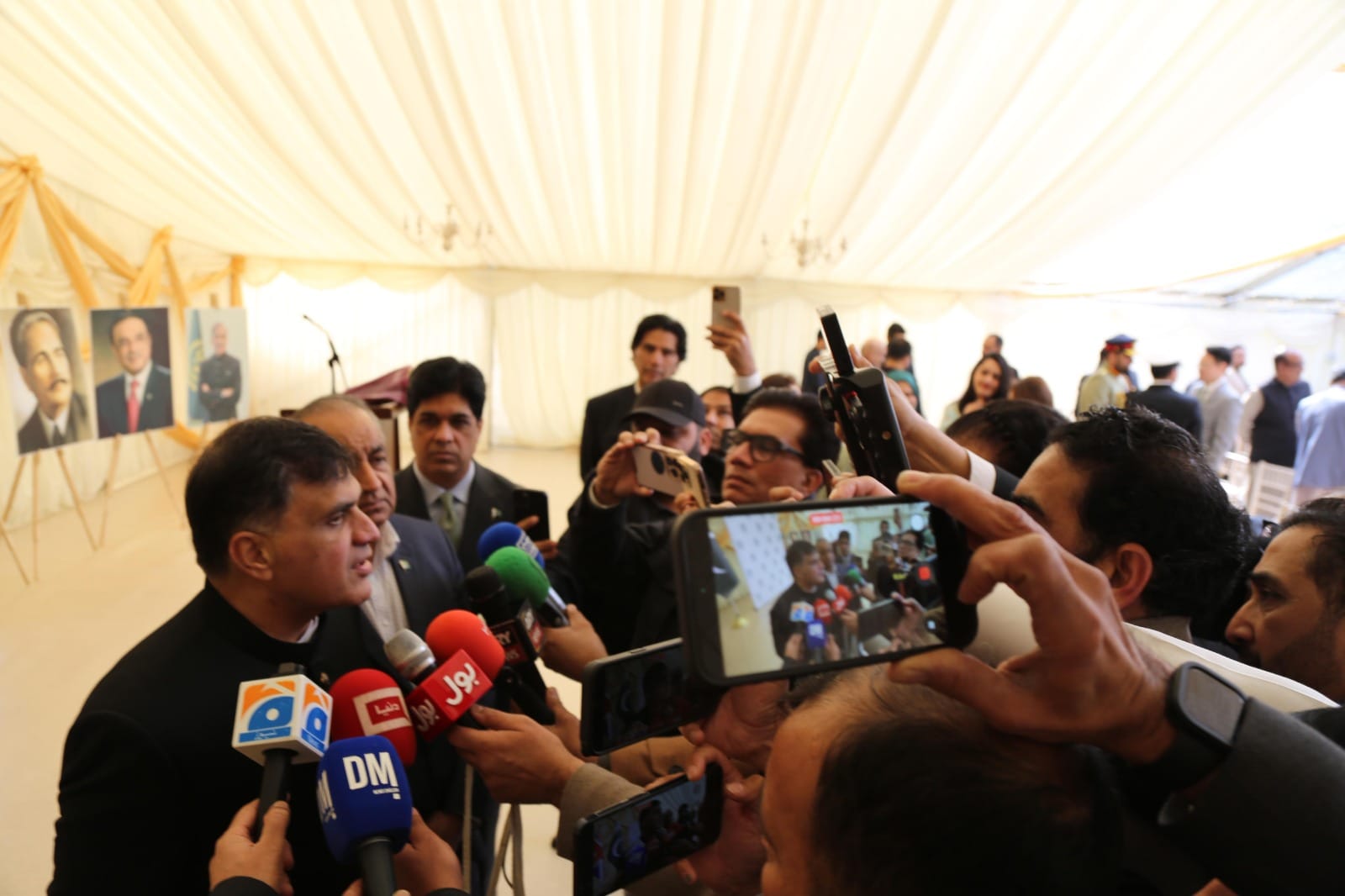
Dr. Faisal stated that Pakistan had always professed peace and stability in the region. However, Pakistan will not tolerate any aggression from neighbouring countries.
The High Commissioner said that Pakistani nation, despite the difficulties, remains resilient and demonstrates courage & perseverance.
Dr. Mohammad Faisal stated that, in line with the instructions of the Prime Minister, the Deputy Prime Minister / Foreign Minister and the Federal Cabinet, Pakistan High Commission London is implementing strict austerity measures. However, these measures will not affect the performance & working of the High Commission.
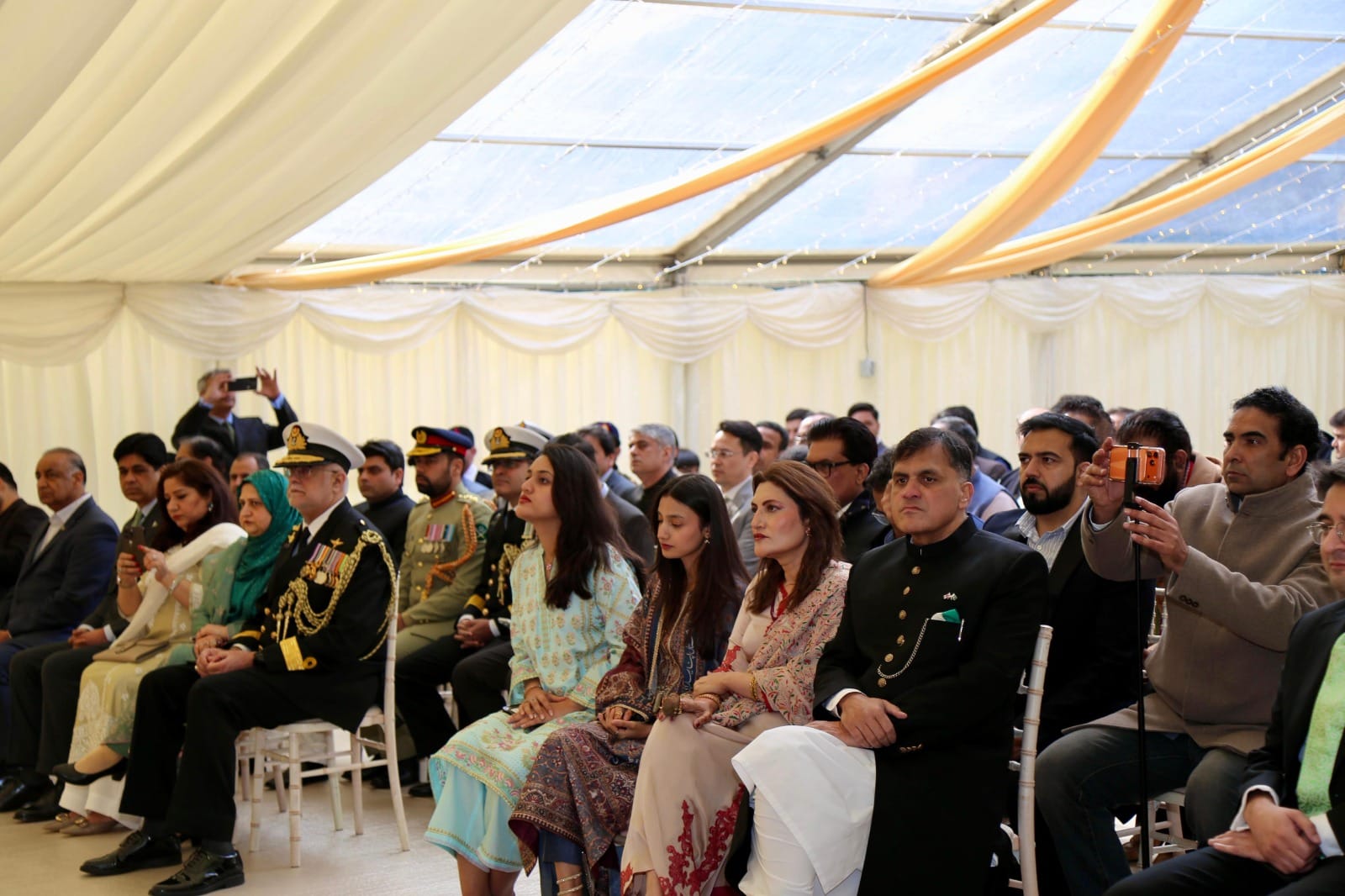
He acknowledged the remarkable contributions of Pakistani diaspora in UK and their extraordinary performance in various fields. He said that their achievements are a source of immense pride for Pakistan.
The High Commissioner expressed solidarity with the people of Indian Illegally Occupied Jammu and Kashmir and committed to continue diplomatic, moral and political support for their right to self determination under UN Resolutions.
London
23rd March, 2026


How the World Is Forced to Fund the Iran War

Scholars Urge UN to Protect Iran’s Scientific Sites Amid Airstrikes Global Academics Warn Attacks Threaten Research, Health, and Civilian Safety

How Iran Humiliated U.S. and Israeli Power


-

 Europe News1 year ago
Chaos and unproven theories surround Tates’ release from Romania
-

 American News1 year ago
Trump expands exemptions from Canada and Mexico tariffs
-

 American News1 year ago
Trump Expels Zelensky from the White House
-

 Pakistan News9 months ago
Comprehensive Analysis Report-The Faranian National Conference on Maritime Affairs-By Kashif Firaz Ahmed
-

 American News1 year ago
Zelensky bruised but upbeat after diplomatic whirlwind
-

 Art & Culture1 year ago
The Indian film showing the bride’s ‘humiliation’ in arranged marriage
-

 Art & Culture1 year ago
International Agriculture Exhibition held in Paris
-

 Pakistan News1 year ago
Can Pakistan be a Hard State?