
American News
‘It’s him, it’s him!’ – Mother spots son deported from US in mega-prison footage


In a poor neighbourhood of the Venezuelan city of Maracay, the mother of 24-year-old Francisco José García Casique was waiting for him on Saturday.
It had been 18 months since he had migrated to the US to begin a new life but he had told her that he was now being deported back to Caracas, Venezuela’s capital, for being in the US illegally. They had spoken that morning, just before he was due to depart.
“I thought it was a good sign that he was being deported [to Caracas],” Myrelis Casique López recalled. She wanted him home.
But he never arrived. And while watching a television news report on Sunday, Ms Casique was shocked to see her son, not in the US or Venezuela but 1,430 miles (2,300km) away in El Salvador.
The footage showed 238 Venezuelans sent by US authorities to the Terrorism Confinement Centre, or Cecot, a notorious mega-jail. She saw men with shaved heads and shackles on their hands and feet, being forcefully escorted by heavily-armed security forces.
The Trump administration says all of the deportees are members of the Tren de Aragua gang, which has found itself in the White House’s crosshairs. The powerful multi-national crime group, which Trump recently declared a foreign terrorist organisation, has been accused of sex trafficking, drug smuggling and murders both at home and in major US cities.
Ms Casique told the BBC she was certain her son was among the detainees, even if no official list of names has been released.
“It’s him. It’s him,” she said, gesturing at a picture in which a man is seated, with his head bowed, on a prison floor alongside a row of others, a tattoo visible on his arm. “I recognize his features.”
She also maintains that he is innocent.
US immigration officials have said the detainees were “carefully vetted” and verified as gang members before being flown to El Salvador. They said they used evidence collected during surveillance, police encounters or testimonies from victims to vet them.
“Our job is to send the terrorists out before anyone else gets raped or murdered,” Deputy White House Chief of Staff Stephen Miller said on Wednesday.
Many of the deportees do not have US criminal records, however, a US Immigration and Customs Enforcement (ICE) official acknowledged in court documents. And they were deported under a law last invoked during wartime that doesn’t require them to be charged with a crime.
Those who do have criminal records include migrants with arrests on charges ranging from murder, fentanyl trafficking and kidnapping to home invasion and operating a gang-run brothel, according to the Trump administration.


In Mr García’s case, his mother disputes that her son was involved in criminal activity. He left Venezuela in 2019, first to Peru, seeking new opportunities as overlapping economic, political and social crises engulfed the country, she said. He crossed illegally into the US in September 2023.
His mother has not seen him in person in six years.
“He doesn’t belong to any criminal gang, either in the US or in Venezuela… he’s not a criminal,” Ms Casique said. “What he’s been is a barber.”
“Unfortunately, he has tattoos,” she added, convinced that the roses and names of family members that adorn his body led to his detention and deportation. That is how she, and other family members, recognised him from pictures released of the deportees in El Salvador.

Several other families have said they believe that deportees were mistakenly identified as Tren de Aragua gang members because of their tattoos.
“It’s him,” Ms Casique said tearfully in Maracay, referencing the image from the prison. “I wish it wasn’t him… he didn’t deserve to be transferred there.”
The mother of Mervin Yamarte, 29, also identified her son in the video.
“I threw myself on the floor, saying that God couldn’t do this to my son,” she told the BBC from her home in the Los Pescadores neighbourhood of Maracaibo, Venezuela.
Like Ms Casique, she denies her son was involved with the brutal gang. He had left his hometown and travelled to the US through the Darién Gap, crossing illegally in 2023 with three of his friends: Edwar Herrera, 23; Andy Javier Perozo, 30; and Ringo Rincón, 39.
The BBC spoke with their families and friends, who said they had spotted the four men in the footage from the El Salvador jail.
Mr Yamarte’s mother said her son had worked in a tortilla factory, sometimes working 12-hour shifts. On Sundays, he played football with his friends, who all shared a home in Dallas, Texas.
“He’s a good, noble young man. There’s a mistake,” she said.
‘We’re terrified’
President Trump invoked a centuries-old law, the 1798 Alien Enemies Act, to deport the men without due process in the US, saying they were Tren de Aragua gang members.
Despite the US government’s assurances that the deportees were carefully vetted, the move has had a chilling effect on many Venezuelans and Venezuelan-Americans in the US, who fear that Trump’s use of the law could lead to more Venezuelans being accused and swiftly deported without any charges or convictions.
“Of course we’re afraid. We’re terrified,” said Adelys Ferro, the executive-director of the Venezuelan-American Caucus, an advocacy group. “We want every single member of TdA to pay for their crimes. But we don’t know what the criteria is.”
“They [Venezeulans] are living in uncertain times,” she said. “They don’t know what decisions to make – even people with documents and have been here for years.”
Ms Ferro’s concerns were echoed by Brian de la Vega, a prominent Florida-based, Venezuela-born immigration lawyer and military veteran.
Many of his clients are in the Miami area, including Doral – a suburb sometimes given the moniker “Doralzuela” for its large Venezuelan population.
“The majority of Venezuelans in the US are trying to do the right thing. They fear going back to their home country,” Mr de la Vega told the BBC. “The main concern, for me, is how they’re identifying these members. The standard is very low.”
Many Venezuelan expatriates in the US – particularly South Florida – have been broadly supportive of Trump, who has taken a tough stance on the left-wing government of Venezuelan President Nicolás Maduro which many of them fled.
But in February, the Trump administration terminated Temporary Protected Status – TPS – for Venezuelans, which had shielded many from deportation. The programme officially ends on 7 April and could impact nearly 350,000 Venezuelan nationals living in the US.
“Trump’s speeches have always been strong about the Venezuelan regime, especially during the campaign,” Mr de la Vega said. “I don’t think people expected all this.”
Daniel Campo, a Venezuelan-born naturalised US citizen in Pennsylvania – and ardent Trump supporter – told the BBC that while he remains steadfast in his support of the president, he has some concerns about the deportations to El Salvador and the end of TPS.
“I certainly hope that when they are doing raids to deport Tren de Aragua, especially to the prison in El Salvador, they are being extra careful,” he said.
Among those caught by surprise by the end of TPS and the recent deportations is a 25-year-old Venezuelan man who asked to be identified only as Yilber, who arrived in the US in 2022 after a long, dangerous journey through Central America and Mexico.
He’s now in the US – but unsure about what comes next.
“I left Venezuela because of the repression, and the insecurity. My neighbourhood in Caracas had gangs,” he said. “Now I don’t know what’s going to happen here.”
Taken from BBC News







Paris (Imran Y. CHOUDHRY) :- Former Press Secretary to the President, Former Press Minister to the Embassy of Pakistan to France, Former MD, SRBC Mr. Qamar Bashir analysis : Donald Trump’s declaration that the military war against Iran is effectively over marks a stunning reversal in American strategy and a profound political embarrassment for a president who entered the conflict expecting military supremacy to deliver strategic submission. After months of confrontation, enormous economic disruption and mounting domestic opposition, Washington is discovering that military superiority cannot automatically translate into political victory. Iran has survived the assault, its governing system remains intact, and the objectives of the American-Israeli campaign remain unfulfilled. What began as an ambitious attempt to reshape the Middle East has now become a struggle to rescue American credibility while containing the political and economic consequences at home.
On November 9, Trump acknowledged that further military action against Iran appeared unnecessary, although American forces remained prepared to resume operations. His declaration followed discussions with Qatar’s prime minister and renewed diplomatic efforts to establish a negotiated settlement. Trump maintained that Iran must never acquire nuclear weapons, suggesting that negotiations could provide assurances without further military confrontation. His announcement did not constitute a formal peace agreement, but it unmistakably signalled Washington’s retreat from the expectation that additional military force would produce the desired political outcome. The Washington Post +1
Yet the abandonment of major military operations does not mean the abandonment of American pressure. Instead, Washington is shifting the battlefield from military installations to Iran’s economic foundations. Secretary of State Marco Rubio openly acknowledged on November 10 that sanctions and the naval blockade were inflicting extraordinary economic damage, making further major combat operations unnecessary. His explanation exposed the emerging strategy: achieve through economic strangulation what military confrontation failed to accomplish. Investing.com +1
Iran’s energy exports have become the principal target. Reuters reported that the American naval blockade had prevented fresh Iranian crude shipments from reaching China through the Strait of Hormuz, interrupting a vital source of foreign currency. Washington apparently calculates that depriving Tehran of petroleum revenues, restricting imports and exhausting financial reserves will progressively undermine the government’s capacity to administer the country. The ultimate expectation appears to be that economic hardship will generate domestic unrest and eventually accomplish the regime change that military intervention could not deliver. Yahoo Finance +1
This strategy, however, carries an unmistakable contradiction. A military campaign justified partly through claims of liberating Iranians is being replaced by economic measures that threaten the livelihoods of ordinary Iranian families. Financial deprivation, shortages and unemployment do not distinguish between governments and populations. Washington may hope that economic suffering will translate into political rebellion, but Iran’s continued institutional survival demonstrates that such calculations cannot guarantee the desired outcome.
The political repercussions are equally visible in Israel. Benjamin Netanyahu’s coalition lost its parliamentary majority in the October 27 election, and President Isaac Herzog subsequently entrusted opposition leader Gadi Eisenkot with attempting to form a government. Israel’s newly elected parliament was sworn in on November 10, although coalition negotiations remained unresolved. Netanyahu’s diminished political position represents another major reversal for the leadership associated with the confrontation against Iran. Reuters +1
Across the Atlantic, the American electorate has delivered its own verdict. Democrats captured both chambers of Congress in the November midterm elections, dramatically weakening Trump’s political authority. The war’s economic consequences, particularly higher energy prices and mounting public frustration, contributed to Republican losses. Vice President JD Vance directly attributed the electoral defeat to the war, while Trump himself acknowledged its political cost. euronews +1
The transfer of congressional power threatens an uncomfortable period of investigations, oversight hearings and intensified scrutiny of the administration’s decisions, military expenditures and allegations of misconduct. A president who expected foreign military success to strengthen his political position must now confront an opposition empowered to examine the consequences of his policies.
For Trump, the writing on the wall should be unmistakable. America’s greatest challenges are no longer confined to distant battlefields. They exist within its own cities, highways, railway networks, deteriorating public infrastructure and increasingly unaffordable household budgets. The American Society of Civil Engineers awarded national infrastructure a C grade in 2025 and identified a staggering $3.7 trillion investment shortfall. These are the foundations upon which national productivity, competitiveness and prosperity ultimately depend. ASCE +1
More disturbing is the economic structure that increasingly rewards financial intermediation while leaving millions of workers struggling to meet basic expenses. Banks, insurance corporations, mortgage lenders, credit card companies, healthcare providers, telecommunications businesses and utilities extract substantial portions of household earnings through interest, premiums, fees and recurring charges. Many of these services are indispensable, but their pricing structures deserve scrutiny when corporate profitability expands alongside household financial insecurity.
The Federal Reserve’s latest household survey revealed that 16 percent of American adults had failed to pay all their bills during the preceding month, while 26 percent had avoided medical expenses because of cost. These figures expose the contradiction between America’s extraordinary aggregate wealth and the daily insecurity experienced by substantial sections of its population. May 2026
The problem becomes particularly visible in working households. Parents work extended shifts, spouses seek additional employment, and young adults contribute earnings toward family expenses. Yet mortgage payments, automobile insurance, medical coverage, utilities, groceries and credit card obligations consume much of their income. Those performing the essential work of production, transportation, construction, agriculture, retail and public services frequently discover that their wages cannot guarantee financial stability.
The concentration of wealth makes this imbalance even more troubling. Federal Reserve distributional data show that the wealthiest one percent of American households controlled approximately 31.6 percent of national household wealth in early 2026, while the bottom half possessed barely 2.5 percent. Such concentration raises fundamental questions about whether the economic rewards generated by millions of workers are being distributed equitably. Count The Zeros +1
The Census Bureau’s 2025 Supplemental Poverty Measure placed poverty at 13.1 percent, a particularly disturbing figure for the world’s largest economy. Behind these statistics are families confronting difficult choices between food, healthcare, housing and debt repayment. The persistence of such hardship amid extraordinary national wealth demands structural reform rather than political rhetoric. Census.gov
America must therefore reconsider an economic arrangement in which financial institutions and dominant corporations can accumulate enormous wealth while workers struggle to retain a reasonable share of their earnings. Affordable healthcare, fair insurance pricing, reasonable credit costs, stronger wages, competitive markets and renewed infrastructure investment should become national priorities. Economic prosperity must be measured not merely through corporate earnings and stock market valuations but through the living standards of those whose labour sustains the economy.
An additional challenge is emerging internationally. The dollar’s reserve-currency status has long provided America with exceptional financial advantages, facilitating global borrowing, international transactions and economic influence. Yet alternative payment arrangements and growing interest in financial diversification are gradually challenging assumptions about permanent dollar dominance. International Monetary Fund figures placed the dollar’s share of global foreign exchange reserves at approximately 57 percent in early 2026. Its dominance remains substantial, but it cannot be treated as an everlasting entitlement. IMF Data
The lesson of Iran extends far beyond the Middle East. A nation cannot indefinitely substitute military expenditure for domestic investment, financial privilege for productive competitiveness, or corporate enrichment for social prosperity. Trump now faces a historic choice: continue pursuing coercive policies abroad while economic inequalities deepen at home, or undertake the fundamental restructuring necessary to restore prosperity to working Americans.
Iran has exposed the limitations of American military power. The midterm elections have exposed the limitations of Trump’s political authority. America’s widening economic divisions expose something potentially more consequential: the vulnerability of a system that increasingly concentrates wealth among those who control capital while millions who create and sustain that wealth struggle to survive. Unless Washington redirects its priorities from foreign confrontation toward domestic reconstruction, fairer economic distribution and productive investment, the decline it fears abroad may ultimately be accelerated by the injustices it refuses to confront at home.
American News
The United States Finally Parts Ways with Israel The Iran war and elections in both countries have exposed the political cost of an alliance once treated as untouchable.

Paris (Imran Y. CHOUDHRY) :- Former Press Secretary to the President, Former Press Minister to the Embassy of Pakistan to France, Former MD, SRBC Mr. Qamar Bashir analysis : The alliance has not ended, but its old immunity has. Donald Trump now says the United States will stop giving Israel nearly $4 billion a year. His party has lost both houses of Congress after an Iran war that most Americans oppose. In Israel, Benjamin Netanyahu has lost his parliamentary majority, and his rival has been asked to form a government. In the space of days, the two leaders who took their countries into war have discovered that even their closest political partnership has a price.
Israel’s election delivered neither man a majority. Netanyahu’s bloc won 53 seats in the 120-seat Knesset; Gadi Eisenkot’s alliance won 48. Two Arab-led parties won a record 19 and endorsed Eisenkot. President Isaac Herzog announced on Saturday that he would give Eisenkot, rather than Netanyahu, the mandate to form the next government at 5 p.m. on Sunday. Netanyahu remains caretaker prime minister while the talks proceed. Arab voters have given his opponents a possible route to power.
Israel’s election delivered neither man a majority. Netanyahu’s bloc won 53 seats in the 120-seat Knesset; Gadi Eisenkot’s alliance won 48. But when President Isaac Herzog consulted the parties, 67 lawmakers recommended Eisenkot, including all 19 members of the two Arab-led parties. Netanyahu received just 46 recommendations. United Torah Judaism, a seven-seat party long allied with him, declined to recommend anyone, exposing a crack in his own bloc. Herzog announced on Saturday that he would give Eisenkot the mandate to form the next government at 5 p.m. on Sunday. Netanyahu remains caretaker prime minister while the talks proceed.
Netanyahu’s removal would not close the book on his conduct. He is already on trial on corruption charges, which he denies. Eisenkot’s bloc wants to replace the Knesset speaker, reverse Netanyahu-era judicial changes and establish a state commission of inquiry into the failures surrounding the October 7, 2023, attack. Israelis also deserve an accounting of Netanyahu’s policy of permitting Qatari payments into Hamas-run Gaza. Reporting has raised serious questions about warnings over the possible diversion of funds; Netanyahu’s office disputes the account. Questions that demand investigation must not be converted into a verdict before evidence is tested.
Across the Atlantic, the electoral verdict was less ambiguous. Democrats won control of the House and Senate in the November 3 midterms. Vice President JD Vance wrote, “The reason we lost is the war. The president himself said so last night.” He named four demands he believed had moved former Trump voters: end the Iran war, confront inflation, put America first and change the relationship with Israel. Trump was less categorical, conceding, “Iran was a piece of it,” while insisting he would make the same decision again. Their dispute over emphasis cannot hide the admission: the war and the alliance that helped produce it have become electoral liabilities.
The Iran war has lasted far longer than Trump promised. A Pew survey in early October found 65 percent of Americans disapproved of his handling of it. Families experience war through more than casualty reports: energy prices, transport costs and public money that cannot be spent twice. Voters asked why Washington could find resources for another Middle Eastern campaign while they struggled with rent, health insurance, food and car payments.
Trump’s answer on Election Day was startling. He said he and Netanyahu had agreed months earlier to stop the annual aid by the end of 2026: “They don’t need it.” He also called the payments a “bad talking point” for Republicans. Israeli finance and defense officials said the sudden announcement caught them by surprise. The existing agreement provides $3.8 billion annually through fiscal 2028, and Congress controls appropriations. Trump promised continued arms sales and help if Israel needs it. Ambassador Mike Huckabee says Washington wants a relationship of trade instead of aid, but admits the cutoff date is unclear. That is a political rupture, not yet a completed financial separation.
The $4 billion question is now impossible to evade. Israel is a wealthy, technologically advanced country with universal healthcare, a strong education system, modern infrastructure and substantial investment in research. Yet the United States continues to send billions in military aid while American families struggle to pay for medical care, education, housing and insurance.
Politicians and commentators are asking why taxpayers in a country without universal healthcare must finance a prosperous ally that provides it to its own people. At times, it looks as if a third-world country is providing aid to a first-class country. Trump’s promise to end the payments reflects the force of that question.
This is not an abstract argument about budgets. By the Census Bureau’s supplemental measure, which accounts for taxes, benefits and essential expenses, 13.1 percent of Americans lived in poverty in 2025. The Federal Reserve found that only 63 percent of adults would cover an unexpected $400 expense entirely with cash or its equivalent, while 26 percent skipped medical care because of cost. For families living from one paycheck to the next, every dollar sent abroad invites a blunt question: why can Washington guarantee billions for Israel while so many Americans cannot afford the basics at home?
America’s claim to police the world is losing its force. Trump tried to bring China to its knees with tariffs; Beijing hit back with trade measures and its command of rare earth supplies, compelling Washington to bargain. Europe stood against his ambitions in Greenland, Canada resisted his economic threats, and Cuba has refused to submit to pressure. Iran has endured sanctions and the combined military assault of the United States and Israel without surrendering. Trump sent the world’s most powerful military to impose his will on Tehran. Iran’s refusal has exposed the limits of that power before the entire world.
That failure has changed the balance of power in the Middle East. Netanyahu faces the prospect of losing office after a war that failed to break Iran; Trump faces a Democratic Congress and voters demanding an end to the war and a new relationship with Israel. Iran has emerged from the assault with its government and capacity to resist intact. Turkey is asserting its own regional weight. Pakistan, with its nuclear deterrent, capable air force, missile systems and experienced army, is another power whose influence cannot be ignored. Israel can no longer count on an unlimited American subsidy or assume that Washington can impose its preferred order on the region by force.
The United States has not yet parted ways with Israel in the literal sense. What is breaking is the belief that its support must be unconditional, permanent and immune from the judgment of Americans. Trump can still reverse himself; Eisenkot can still fail; Congress can still preserve the aid. But the political bargain that protected it has been exposed. If Washington now chooses domestic renewal over endless war, and a relationship with Israel governed by accountability rather than entitlement, this election will mark the beginning of a genuine parting of ways.
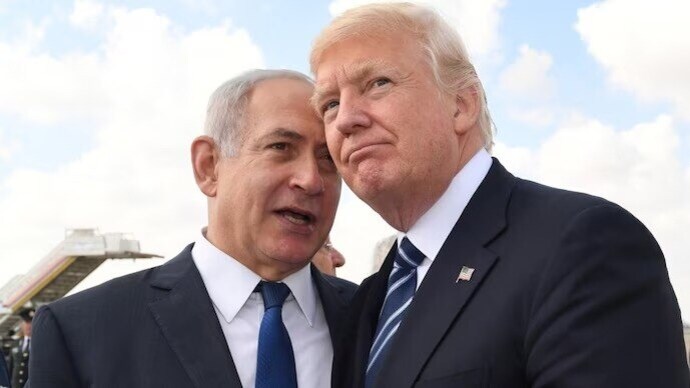
Paris (Imran Y. CHOUDHRY) :- Former Press Secretary to the President, Former Press Minister to the Embassy of Pakistan to France, Former MD, SRBC Mr. Qamar Bashir analysis : History has delivered a devastating irony to Donald Trump and Benjamin Netanyahu. The two leaders who unleashed a war intended to destroy Iran’s military capabilities, strangle its economy and ultimately dismantle its political system now confront the consequences of their own strategic miscalculation.
Iran, despite enduring overwhelming military pressure, punishing economic sanctions and relentless international isolation, remains standing. Meanwhile, Trump has lost Republican control of both chambers of Congress, and Netanyahu is struggling to assemble a parliamentary majority. What began as a campaign to determine who would govern Tehran has become a political nightmare threatening the authority of those who sought its destruction. Iran’s extraordinary achievement is not merely that it survived the military and economic onslaught, but that its resistance helped transform the war into a political liability for its adversaries within their own countries.
The confrontation exposed the dangerous distinction between military superiority and strategic success. American and Israeli forces possessed extraordinary technological advantages, sophisticated intelligence networks, advanced aircraft and formidable missile-defense systems. Yet none of these advantages guaranteed the political outcome their leaders anticipated. Iran absorbed devastating attacks while preserving its governing institutions, retaining retaliatory capabilities and refusing to accept externally imposed political surrender.
Iranian missiles and drones repeatedly challenged Israel’s defenses, disrupted economic activity and forced civilians into shelters. The psychological consequences were substantial. A country accustomed to projecting overwhelming military superiority discovered that technological sophistication could not guarantee immunity from sustained retaliation. American military installations throughout the region also faced threats, demonstrating the vulnerability of forward-deployed forces and the countries hosting them.
The enormous expense of missile-defense interceptors, military deployments, ammunition replenishment and prolonged operations further exposed the imbalance between the cost of attack and defense. Relatively inexpensive Iranian drones and projectiles could compel adversaries to deploy sophisticated defensive systems costing vastly more. The confrontation therefore became not merely a contest of firepower but an exhausting struggle over resources, endurance and political determination.
Ultimately, the decisive question was whether the military campaign achieved its central objectives. Iran’s political system survived. Its missile capabilities were not eliminated. Its nuclear ambitions were not conclusively extinguished, and its regional influence was not permanently dismantled.
The economic confrontation produced an equally remarkable reversal. For decades, Washington had attempted to compel Iranian submission through primary and secondary sanctions, financial restrictions, trade barriers and diplomatic isolation.
Yet the anticipated political collapse never materialized. Despite economic hardship and internal dissatisfaction, Iran’s governing institutions endured. External military pressure also strengthened nationalist resistance among sections of the population, demonstrating that economic punishment does not necessarily translate into political capitulation.
Meanwhile, the conflict unleashed economic consequences far beyond Iran’s borders. Disruptions around the Strait of Hormuz threatened global energy supplies, pushed up transportation costs and intensified inflationary pressures. American consumers confronted rising gasoline prices and household expenses, while Israeli businesses struggled with wartime disruption, security expenditures and interrupted commercial activity.
European economies and regional countries that hosted American military facilities or supported the campaign also encountered the consequences of energy insecurity, disrupted shipping and higher operating costs. The economic pain that Washington intended to concentrate on Tehran spread through the international economy, reaching the households and industries of countries aligned with the United States.
For Trump, this economic backlash carried particularly damaging political consequences. He had promised American voters prosperity, affordable living and an end to costly foreign entanglements. Instead, the Iran confrontation became associated with rising prices, expanding military expenditures and another prolonged Middle Eastern conflict. Every additional dollar spent on warfare invited uncomfortable questions about neglected domestic priorities.
The political reckoning arrived with the November 2026 midterm elections. Democrats captured both chambers of Congress in a sweeping rejection of Republican governance. Public frustration over the cost of living, presidential conduct and the unpopular Iran war contributed to the electoral reversal. The conflict had become an electoral burden rather than the triumphant demonstration of American strength its architects had anticipated.
Trump now faces the prospect of a hostile Congress armed with investigative and subpoena powers. Democratic lawmakers have signaled scrutiny of his family’s business dealings, potential conflicts of interest, immigration enforcement, Justice Department conduct, federal contracts and alleged administrative corruption.
The political implications are profound. A president who previously enjoyed congressional support must now contend with lawmakers capable of obstructing his legislative priorities, investigating his administration and demanding accountability. He retains substantial executive authority, but his freedom to govern without sustained congressional resistance has been sharply curtailed.
Netanyahu faces an equally uncomfortable predicament. Israel’s October 27 election left his political bloc with only 53 seats in the 120-member Knesset, eight short of a governing majority. His opponents secured 48 seats, while Arab-led parties won 19, making coalition negotiations decisive for his political survival.
His predicament is compounded by longstanding corruption proceedings, controversy surrounding intelligence failures before October 7, demands for an independent inquiry and accusations that security institutions have been politicized. The Iran confrontation has added another contentious chapter to a political career built upon promises of exceptional national-security leadership.
Even if Netanyahu succeeds in assembling another coalition, he could face a fragile parliamentary arrangement, intensified opposition and persistent demands for accountability. The leader who promised to eliminate Iran’s strategic threat now confronts uncertainty over his own political future.
The significance of these developments extends beyond Trump and Netanyahu. They expose a fundamental limitation of coercive power: military dominance cannot guarantee political obedience, economic sanctions cannot automatically overthrow governments, and foreign adventures cannot indefinitely escape domestic accountability. A determined adversary may achieve strategic success simply by surviving long enough for the costs of aggression to overwhelm the political calculations of its attackers.
In the final reckoning, Iran has transformed a war intended to destroy its military power, cripple its economy and overthrow its government into a historic strategic humiliation for its architects.
Tehran frustrated the central military objectives jointly pursued by Washington and Tel Aviv, endured the crushing weight of primary and secondary sanctions, and imposed enormous economic costs on American and Israeli populations, European allies and regional countries that supported or facilitated the confrontation.
But the most devastating reversal has unfolded on the political front. The Iranian government that Trump and Netanyahu sought to remove remains intact, while Netanyahu struggles to retain the premiership and Trump, deprived of congressional majorities, faces the prospect of becoming a politically toothless tiger.
Iran survived their missiles, outlasted their sanctions and witnessed the political backlash engulf their governments. The ultimate irony is both profound and merciless: Trump and Netanyahu went to war to change the government in Tehran, only to discover that their war had helped destabilize their own political fortunes. The regime they sought to overthrow remains standing; the political authority they hoped to strengthen through victory is now fighting for survival.


The Deadly Hypocrisy of Western Sanctions

Nvidia Spy Storm: A False Flag Against China?

Trump’s Iranian Retreat and America’s Economic Reckoning

New Chapter for Dragon Boating in Punjab and Khyber Pakhtunkhwa Provincial associations officially set up with sights locked on national competitions and international representation.

South Korea’s Yoo Useong Steps Onto the Global Strongman Stage as World Strongman Federation Professional Athlete

A Survey of Mata-E-Zeest


-
 Pakistan News1 month ago
New Chapter for Dragon Boating in Punjab and Khyber Pakhtunkhwa Provincial associations officially set up with sights locked on national competitions and international representation.
-
 Sports5 months ago
South Korea’s Yoo Useong Steps Onto the Global Strongman Stage as World Strongman Federation Professional Athlete
-
 Art & Culture1 year ago
A Survey of Mata-E-Zeest
-

 Europe News2 years ago
Chaos and unproven theories surround Tates’ release from Romania
-

 American News2 years ago
Trump expands exemptions from Canada and Mexico tariffs
-

 Art & Culture2 years ago
Will Snow White be a ‘victim of its moment’? How the Disney remake became 2025’s most divisive film
-

 Pakistan News1 year ago
Comprehensive Analysis Report-The Faranian National Conference on Maritime Affairs-By Kashif Firaz Ahmed
-

 Entertainment2 years ago
Champions Trophy: Pakistan aim to defend coveted title as historic tournament kicks off today