
World News
The Yemenite Children Abduction: A Stain on Humanity’s Conscience


Paris (Imran Y. CHOUDHRY) :- Former Press Secretary to the President, Former Press Minister to the Embassy of Pakistan to France, Former MD, SRBC Mr. Qamar Bashir analysis : For decades, a dark cloud has hung over the founding of the State of Israel—one that involves the systematic disappearance of thousands of children from immigrant families, primarily of Yemenite descent. This is the Yemenite Children Affair, a chapter of history so painful that its official records were sealed for seventy years, until 2071. The wound has been reopened by recent remarks attributed to Israeli National Security Minister Itamar Ben-Gvir, who has reportedly admitted that these children were abducted and sold to the United States for medical experimentation. His heartless statement has once again forced the world to revisit a humanitarian tragedy that has haunted thousands of families for more than seven decades.
This renewed attention comes at a time when Israeli National Security Minister Itamar Ben-Gvir has repeatedly drawn worldwide criticism for inflammatory public rhetoric. His verified statements calling for “all of Lebanon to burn,” declaring that “for every teardrop of an Israeli mother, a thousand Lebanese mothers need to cry,” and advocating overwhelming military force against Israel’s enemies have been condemned by governments, international organizations, and even political figures within Israel.
Reuters, The Times of Israel, the BBC, CNN, and other international media have extensively reported these remarks. Critics argue that such rhetoric reflects a broader political mindset that has increasingly alarmed much of the international community. Whether one agrees with that assessment or not, the renewed debate surrounding the Yemenite Children Affair has inevitably become part of that larger discussion.
The Yemenite Children Affair is not merely an Israeli controversy. It is a humanitarian tragedy whose consequences continue to devastate families to this day. Between 1948 and 1954, shortly after the establishment of the State of Israel, tens of thousands of Jewish immigrants from Yemen, along with immigrants from Iraq, Morocco, Libya, Tunisia and other Middle Eastern and North African countries, arrived in the new state under extremely difficult conditions. During those years, hundreds—and according to many families and researchers, possibly more than a thousand—babies and toddlers disappeared after being admitted to hospitals or immigration camps.
Parents consistently recounted strikingly similar experiences. They were told that their child had suddenly died, often without ever seeing the body. Many said they received no death certificate, no burial location, and no convincing explanation. Instead of closure, they were left with uncertainty that lasted not months or years, but generations.
Israeli governments established three major commissions of inquiry to investigate the affair. Those commissions generally concluded that the majority of the missing children had died from disease during the difficult conditions prevailing in the early years of the state. They also acknowledged that some cases could not be conclusively resolved because records were incomplete or missing. Many families, however, rejected those conclusions, arguing that the investigations failed to answer fundamental questions and left significant contradictions unresolved.
One of the most controversial aspects of the affair was the decision by the 2001 Kedmi Commission to seal large portions of its evidence until 2071. That extraordinary decision itself became a source of public suspicion. Many asked a simple question: if there was nothing to hide, why should crucial evidence remain inaccessible for seventy years?
Growing public pressure eventually led the Israeli government to reconsider. In 2016, the Knesset Constitution, Law and Justice Committee unanimously approved the release of hundreds of thousands of classified documents relating to the affair. Minister Tzachi Hanegbi, appointed by Prime Minister Benjamin Netanyahu to examine whether the archives should be opened, concluded that the authorities’ handling of the affair “did not reflect the values of the Jewish state.” He also acknowledged that he found it difficult to accept the bureaucratic explanations that had long been offered for many of the disappearances.
The release of documents represented an important step toward transparency, but it did not end the controversy. Instead, it reinforced the determination of many families to continue searching for answers.
In 2021, the Israeli government approved approximately NIS 162 million in compensation for eligible families affected by the affair. Prime Minister Benjamin Netanyahu acknowledged the suffering endured by the families and expressed hope that the compensation would provide at least some measure of recognition. Yet many recipients responded that they had never sought money. What they wanted was truth.
Some family representatives described the compensation as an attempt to close the chapter without fully addressing it. They insisted that financial payments could never replace knowledge of what happened to their children. They demanded access to every remaining document, every available DNA record, every adoption file permitted by law, and every piece of evidence capable of revealing the fate of their loved ones.
That demand is neither political nor ideological. It is profoundly human. Every parent possesses an inalienable right to know what happened to a missing child. If a child died, where is the grave? If a child was adopted, who authorized it? If records exist, why were they hidden? If mistakes were made, why were they never fully acknowledged? These questions transcend nationality, religion and politics.
The recent circulation of the video has once again intensified public debate. Supporters of the video’s interpretation argue that it confirms long-standing allegations surrounding the affair. The renewed attention demonstrates that the issue remains unresolved in the minds of countless families and observers around the world.
Meanwhile, Ben-Gvir’s own recent conduct has further fueled international concern. His call for Lebanon to “burn,” his celebration of controversial legislation introducing the death penalty for certain terrorism offenses tried in military courts—a law widely criticized by opponents as discriminatory because of its practical application—and his repeated inflammatory language toward Palestinians have generated condemnation from governments, human rights organizations and international media. His rhetoric has become, for many critics, symbolic of a political climate that warrants closer scrutiny of unresolved historical controversies.
History teaches an important lesson: societies become stronger, not weaker, when they confront difficult truths honestly. The Yemenite Children Affair deserves precisely such an approach. No democratic society should fear opening archives, encouraging independent historical research, facilitating DNA identification, or allowing families to learn the fate of their loved ones. Transparency strengthens public confidence; secrecy erodes it.
For this reason, the time has come for the international community to assist—not to prejudge, but to establish the fullest possible historical record. An independent commission under United Nations auspices, composed of internationally respected historians, forensic specialists, archivists, legal experts, and human rights professionals, should be invited to examine all available evidence, including previously classified records, adoption files where legally accessible, DNA evidence, and testimony from surviving families and witnesses. Its mandate should not be political. Its mandate should be truth.
If that independent inquiry establishes that individuals or institutions unlawfully removed children from their families or committed other crimes, those findings should also be made public, and accountability should follow in accordance with applicable law. Justice cannot be selective. It must be guided by evidence rather than ideology.
The greatest injustice is not merely that children disappeared. The greatest injustice is that so many parents died never knowing whether their sons or daughters lived or died. Some spent their entire lives waiting for a knock at the door that never came. Others carried photographs of missing children to their graves. Their suffering cannot be measured in financial compensation.
This is why the Yemenite Children Affair remains a burden on the conscience of humanity. Regardless of nationality, religion or political belief, every civilized society should stand with families seeking truth about missing children. That principle is universal.
The search for truth is not an act of hostility toward Israel or toward any nation. It is an act of respect for human dignity. History ultimately belongs not to governments but to the victims, the witnesses, and future generations who deserve an honest account of the past.
Only when every available archive has been opened, every credible lead investigated, every possible DNA match pursued, and every family given the fullest answers that history can provide, will this painful chapter begin to close. Until then, the Yemenite Children Affair will remain not merely a historical controversy, but an unfinished moral obligation owed to every parent who never stopped asking one simple question: What happened to my child?


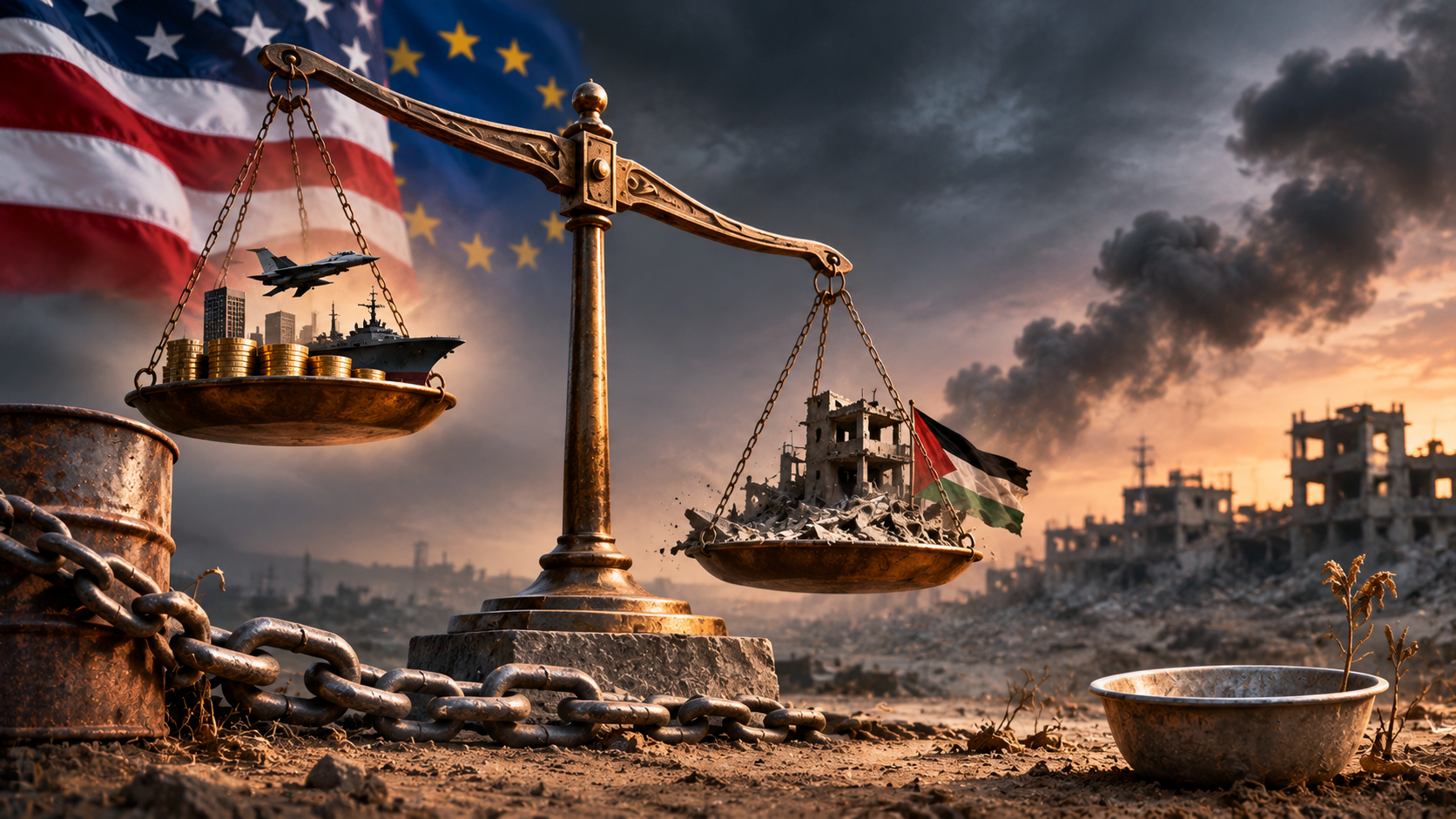
Paris (Imran Y. CHOUDHRY) :- Former Press Secretary to the President, Former Press Minister to the Embassy of Pakistan to France, Former MD, SRBC Mr. Qamar Bashir analysis : “Power tends to corrupt, and absolute power corrupts absolutely.” Lord Acton’s enduring maxim finds devastating confirmation in a major study published in The Lancet Global Health, which estimated that unilateral economic sanctions were associated with approximately 38 million excess deaths worldwide between 1971 and 2021. This staggering human toll exposes the contradiction at the heart of the Western-led international order: nations that proclaim themselves guardians of human rights, champions of democracy and defenders of human dignity have employed economic coercion associated with the deaths of millions of innocent people. The self-appointed protectors of humanity have become instruments of extraordinary human suffering.
The contradiction is staggering. Countries that lecture the world on morality, international law and humanitarian responsibility frequently reserve for themselves the privilege of violating those very principles. Their economic dominance becomes an instrument of punishment, their military superiority a license for destruction, and their political influence a shield against accountability. The victims are overwhelmingly ordinary people who have neither declared war nor formulated the policies for which they are punished.
The instruments of coercion are principally two: military aggression and economic strangulation. The first destroys cities, infrastructure, hospitals, schools and livelihoods through bombs and missiles. The second accomplishes comparable devastation more slowly, through financial blockades, trade restrictions, frozen assets, banking prohibitions and the systematic deprivation of essential economic resources.
One kills through explosions; the other through hunger, disease, poverty and the collapse of public services. Both can devastate entire generations.
The cruelty of economic warfare becomes particularly apparent when its architects openly celebrate the suffering it produces. In remarks attributed to US Secretary of State Marco Rubio, the devastating impact of sanctions and economic restrictions on Iran was presented as pressure that compounds with time. The argument was that economic deprivation would eventually undermine the government’s ability to sustain its institutions, compensate its personnel and maintain political control.
Such reasoning exposes the disturbing logic underlying economic strangulation. When workers cannot receive wages, families cannot afford food, hospitals struggle to obtain medicines and inflation destroys purchasing power, civilian suffering becomes an instrument of geopolitical pressure. Human deprivation is no longer treated merely as an unfortunate consequence; it becomes part of the mechanism through which political objectives are pursued.
The scientific evidence behind this indictment is particularly disturbing. The study, titled Effects of international sanctions on age-specific mortality: a cross-national panel data analysis, examined 152 countries over five decades. Its researchers estimated an average annual mortality burden of approximately 564,258 deaths associated with unilateral sanctions in recent years.
These were not primarily battlefield casualties. They represented the consequences of deteriorating economic conditions, restricted access to essential goods, weakened healthcare systems and the broader deprivation associated with sanctions.
Most horrifying was the disproportionate suffering of children. According to the research estimates, children younger than five accounted for approximately 51 percent of sanction-associated deaths. Children and older people together represented an overwhelming proportion of the estimated mortality burden.
These findings expose the enormous distance between the declared objectives of economic sanctions and their actual humanitarian consequences. Measures supposedly directed against political leaders, military organizations and governing elites fall most heavily upon infants, patients, workers, pensioners and families struggling to survive.
The political leadership that sanctions are designed to weaken frequently retains privileged access to resources. Security institutions continue functioning, influential elites exploit alternative commercial networks, and politically connected businesses benefit from scarcity. Meanwhile, independent enterprises collapse, ordinary employees lose their livelihoods, and the middle class gradually disappears.
Economic punishment can therefore strengthen the very structures it claims to dismantle. Governments consolidate control over scarce resources, black markets flourish, and populations become increasingly dependent upon political authorities for survival.
The historical record provides compelling illustrations. Cuba has endured decades of American economic restrictions without the political transformation Washington originally sought. North Korea developed nuclear weapons despite extensive international sanctions. Iran survived successive campaigns of maximum pressure while expanding alternative economic relationships. Venezuela experienced devastating economic hardship without the immediate political collapse anticipated by proponents of sanctions.
Iraq suffered catastrophic economic and humanitarian deterioration during the sanctions imposed throughout the 1990s. Yet Saddam Hussein remained in power until the American-led military invasion of 2003. The civilian population paid an enormous price for policies that failed to achieve their central political objective through economic pressure alone.
Iran now stands at the center of another confrontation between geopolitical ambition and humanitarian consequences. American restrictions on banking, oil exports, financial transactions and international commerce have imposed severe economic difficulties. Currency depreciation, inflation, weakened purchasing power and obstacles to essential imports have placed immense pressure upon ordinary Iranian households.
The people suffering these consequences are not necessarily participants in government decisions. They are teachers, doctors, laborers, students, shopkeepers, children and elderly citizens whose fundamental aspiration is to live with dignity.
The same contradiction extends to Israel’s military conduct across the Middle East. Gaza has suffered immense civilian casualties, widespread displacement and the destruction of essential infrastructure. Israeli settlement expansion and occupation in the West Bank continue to deprive Palestinians of land, security and political rights. Israeli military operations in Lebanon and Syria have further intensified regional instability.
Israel’s military capabilities are sustained substantially by American assistance, weapons supplies and diplomatic protection. Washington’s professed commitment to civilian protection consequently stands in sharp contrast to its continued support for military operations that have produced catastrophic humanitarian consequences.
This is not merely a question of contradictory foreign policy. It concerns the concentration of international power in the hands of governments that claim universal moral authority while resisting equivalent scrutiny of their own conduct.
International human rights cannot remain credible when their application depends upon the identity of the perpetrator. The right to food, healthcare, livelihood and human dignity cannot be defended selectively. Nor can the suffering of children become acceptable because their governments refuse to submit to external political demands.
The most disturbing revelation of the Lancet research is that economic warfare can produce a human toll comparable in magnitude to armed conflict without attracting equivalent international outrage. Its victims die quietly, in hospitals without supplies, homes without adequate food and communities whose economic foundations have been systematically undermined.
A world order that condemns violence while normalizing mass civilian deprivation has surrendered its moral legitimacy. When powerful nations can devastate populations through bombs or blockades and still present themselves as champions of humanity, Lord Acton’s warning becomes more than a historical observation.
Absolute power has not merely corrupted the guardians of human rights; it has enabled them to transform human suffering into an instrument of policy while demanding that the world applaud their moral leadership.
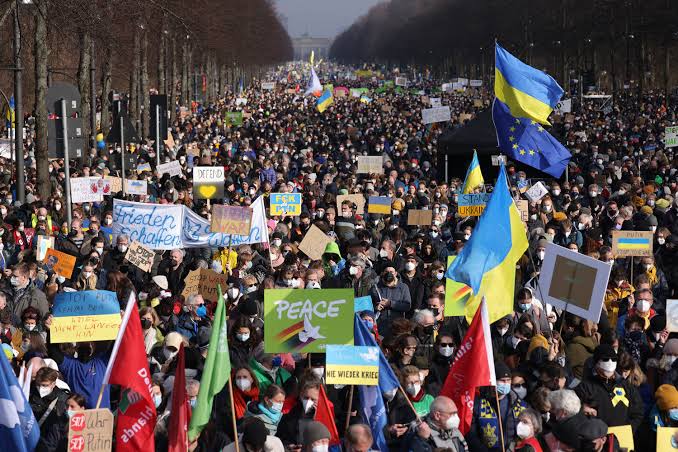
Paris (Imran Y. CHOUDHRY) :- Former Press Secretary to the President, Former Press Minister to the Embassy of Pakistan to France, Former MD, SRBC Mr. Qamar Bashir analysis : The imperial ambitions that once propelled European powers across continents in pursuit of territory, wealth, natural resources and geopolitical supremacy have returned to haunt their architects. For centuries, Britain and other European powers accumulated enormous fortunes by exploiting weaker nations, extracting their resources and controlling their political destinies. The collapse of the Soviet Union presented Europe with another historic opportunity: to extend its influence eastward, weaken Russia, surround it strategically and ultimately gain leverage over its immense natural wealth. Yet the grand strategy intended to diminish Russia has produced a spectacular reversal. Russia remains standing, while Europe confronts economic difficulties, political instability, public resentment and the consequences of its own strategic miscalculations.
Karl Marx recognized that capitalism possessed an extraordinary capacity to create an interconnected global economy. Markets, industries, trade routes and financial systems would eventually bind distant societies into a single economic structure. What this expansion produced, however, was an international order characterized by staggering inequalities. Western Europe, North America and Japan accumulated extraordinary wealth, while much of Asia, Africa and Latin America endured colonial exploitation, economic dependency and persistent poverty. The global economy became interconnected without becoming equitable. Its prosperity was concentrated among the powerful, while its burdens were disproportionately imposed upon the powerless.
European colonialism was never merely about planting flags or establishing administrative control. Its central objective was economic extraction. Colonized territories supplied raw materials, cheap labor, captive markets and strategic routes through which imperial powers accumulated wealth. Political domination protected economic privilege, while military superiority enforced submission. The vocabulary of imperialism subsequently changed, but the pursuit of resources, markets and geopolitical advantage remained deeply embedded in international power struggles.
The dissolution of the Soviet Union in 1991 fundamentally transformed Europe’s strategic landscape. Russia inherited enormous territory, substantial military capabilities, vast hydrocarbon reserves, mineral deposits, agricultural resources and a geographical position connecting Europe with Asia. Its oil, natural gas, coal, precious metals, rare-earth potential and strategic transportation corridors represented extraordinary economic and geopolitical assets. For European strategists, a weakened Russia promised a more favorable balance of power, reduced resistance to Western influence and potentially greater leverage over these resources.
The subsequent enlargement of NATO and the European Union steadily shifted Europe’s political and security architecture eastward. Poland, Hungary and the Czech Republic entered NATO in 1999. Bulgaria, Romania, Slovakia and the Baltic states followed in 2004, alongside other countries. Several former Soviet-aligned states also joined the European Union. Western governments presented this expansion as the sovereign choice of countries seeking security and prosperity. Moscow increasingly interpreted the same process as strategic encirclement, the erosion of its regional influence and the gradual construction of a hostile military perimeter.
Ukraine eventually became the most consequential arena of this confrontation. Its geographical position, agricultural wealth, industrial infrastructure, Black Sea access and historical connections with Russia made it strategically indispensable. A Ukraine firmly integrated into Western military structures would fundamentally alter Russia’s security environment. From Moscow’s perspective, the possibility of NATO extending its influence across Ukraine represented a direct challenge to its strategic depth and regional security.
The political upheaval of 2014 intensified these tensions. The overthrow of President Viktor Yanukovych, following mass protests and political confrontation, was celebrated in Western capitals as a democratic breakthrough. Russia characterized the change as a Western-supported coup. Western political involvement and support for Ukraine’s subsequent governments reinforced Moscow’s suspicions. Volodymyr Zelenskyy’s election in 2019, however, occurred through a competitive presidential vote, rather than the 2014 uprising. Nevertheless, Ukraine increasingly became the principal battlefield of competing Russian and Western strategic ambitions.
When Russia launched its full-scale invasion in February 2022, Europe and the United States mobilized enormous financial, military, diplomatic and economic resources behind Ukraine. Sanctions targeted Russian banks, energy exports, technology access and international financial transactions. Western governments expected sustained economic pressure, combined with Ukrainian military resistance, to weaken Moscow’s ability to continue the war. Some anticipated that economic isolation would eventually undermine Russia’s domestic stability and geopolitical influence.
Instead, Russia demonstrated greater economic resilience than many Western policymakers anticipated. Moscow redirected substantial energy exports toward Asian markets, strengthened commercial relationships with China and India, expanded domestic military production and adapted parts of its financial system to sanctions. China became particularly important as a commercial partner and geopolitical counterweight to Western pressure. Although Russia suffered significant military losses, economic disruption and long-term technological constraints, the anticipated rapid collapse of its economy did not materialize.
Europe, meanwhile, discovered that economic warfare could inflict serious costs upon those deploying it. The reduction of Russian energy supplies forced European industries and households to adjust to a fundamentally altered energy market. Germany’s energy-intensive industrial sector faced particularly severe pressures. Higher energy costs, inflation, expensive defense commitments and uncertainty over industrial competitiveness exposed vulnerabilities within economies accustomed to relatively affordable energy and stable international trade.
The political consequences extended beyond economic statistics. Farmers, industrial workers, transport operators and ordinary households across European countries expressed frustration over living costs, declining purchasing power and government priorities. Demonstrations reflected numerous domestic grievances, but energy insecurity and economic pressures associated with the confrontation with Russia intensified an already difficult environment. Resources committed to military expenditure and foreign strategic objectives increasingly competed with demands for better public services, employment security and affordable living conditions.
Donald Trump’s approach to Ukraine further complicated Europe’s calculations. His insistence that European governments assume greater responsibility for their own security exposed the continent’s longstanding dependence upon American military power. Washington’s shifting commitment created uncertainty over the durability of Western support for Kyiv. Europe found itself confronting the possibility of sustaining an expensive confrontation with Russia without the same degree of dependable American leadership and assistance.
The irony is striking. European powers that once dictated the destinies of distant nations now struggle to control the consequences of their own geopolitical ambitions. A strategy intended to isolate Russia has encouraged Moscow to deepen relationships outside the Western economic system. The emergence of BRICS and the growing influence of China illustrate a broader international movement toward alternative commercial and diplomatic arrangements. The Western monopoly over global economic decision-making is increasingly contested.
Russia has not emerged unscathed, nor has Europe alone determined the course of the conflict. Nevertheless, the confrontation demonstrates the limitations of attempting to impose geopolitical outcomes through military alliances, economic coercion and strategic pressure. The belief that a major nuclear power possessing vast resources, territorial depth and powerful international partnerships could be economically strangled into submission has proved dangerously simplistic.
The lesson extends far beyond Russia and Ukraine. Britain, Europe and the United States must confront the declining effectiveness of imperial habits in a world where formerly subordinated nations possess growing economic, technological and diplomatic influence. Threatening territories, expanding military commitments and attempting to police the international system cannot indefinitely substitute for domestic prosperity and political legitimacy.
The time has arrived for Western governments to abandon the illusion that global supremacy guarantees national well-being. Their foremost responsibility is not to control Russia’s resources, redraw geopolitical boundaries or perpetuate confrontations across continents. It is to improve the lives of their own citizens through affordable energy, productive industries, quality healthcare, education, housing and economic security. Europe attempted to weaken Russia through a geopolitical chess game, only to discover that the board could turn against its own players. The greatest victory now available to Europe and America is not the subjugation of another nation, but the restoration of prosperity, stability and dignity to their own people.

Paris (Imran Y. CHOUDHRY) :- Former Press Secretary to the President, Former Press Minister to the Embassy of Pakistan to France, Former MD, SRBC Mr. Qamar Bashir analysis : Strategic alliances rest on an expectation of reciprocity: friendship should command respect, cooperation should earn trust, and support should carry political value. Rabbi Yosef Mizrachi’sRabbi Yosef (Yossi) Mizrachi, an Israeli-American ultra-Orthodox preacher and founder of Divine Information, has spent three decades promoting Torah observance through lectures and digital outreach. Born in Israel in 1968, he served in the Israeli Air Force and worked in Manhattan finance before turning to religious outreach in 1994.
His pronouncements confront strategic alliances with a theological challenge: India’s friendship with Israel counts for less than its religious practices, while Pakistan’s hostility becomes secondary to Muslim monotheism. His argument places religious judgment above national advantage, raising consequential questions for Israel’s partners.
His message exposes a fundamental tension between the pursuit of national advantage and a religious doctrine that ranks nations by their worship. For Israel’s partners, the implications deserve examination beyond the controversy surrounding a sermon.
Mizrachi begins by acknowledging the strength of India’s relationship with Israel. He describes cooperation encompassing weapons, cybersecurity, agriculture, medicine and science, portraying India as perhaps Israel’s closest friend, even ahead of the United States. His account stresses mutual benefit, commercial exchange and goodwill. This recognition is essential to his argument: he understands the strategic value of the partnership before declaring that religious considerations must override it.
His description of Pakistan establishes the opposite pole. He portrays it as an adversary sympathetic to Israel’s opponents and hostile to Jewish security. Yet he then asks his audience which country deserves its sympathy in a conflict. The question places political loyalty and religious classification in direct competition. Friendship, in his reasoning, cannot settle the matter because the decisive criterion lies elsewhere: whether a population worships the God he recognises.
The answer reverses the apparent logic of the comparison. Mizrachi categorises Hindu worship as idolatry and argues that it constitutes a greater offence against God than hostility towards Jews that has not resulted in an attack.
Pakistan consequently receives theological preference because of its Muslim identity. He admits that personal calculation would favour India, but insists that divine judgment requires another standard. Religious obligation, as he interprets it, supersedes strategic gratitude.
This distinction carries implications extending beyond India and Pakistan. It establishes a framework in which an accommodating ally may remain religiously unacceptable while an antagonistic neighbour occupies a superior theological position.
Conduct towards Israel becomes subordinate to belief. The argument also provides a justification for disregarding established partnerships: if cooperation with one country becomes religiously objectionable, God will supposedly provide another source of benefit. Dependence is answered with an assurance of divine substitution.
For New Delhi, this is a challenge to assumptions about the durability of friendship. Commercial cooperation and security coordination may generate mutual interests without removing ideological hostility towards the partner’s faith.
Mizrachi’s argument makes that separation explicit. India is valuable for what it provides, yet its predominantly Hindu identity becomes grounds for condemnation. The resulting question is whether strategic usefulness offers sufficient protection when religious judgment is presented as a higher authority.
Pakistan faces a different calculation. The preference expressed for it arises from monotheism rather than endorsement of its policies or recognition of its grievances. Nevertheless, the argument disrupts the familiar division between friend and enemy. It introduces a religious basis for sympathy across an otherwise adversarial relationship. For Pakistani analysts, the significance lies in examining that contradiction and its possible influence, rather than assuming that theological preference automatically produces diplomatic recognition or practical support.
Mizrachi’s treatment of Christianity reveals a similar collision between dependence and disdain. He acknowledges Christian assistance to Israel while ridiculing Christian beliefs concerning Jesus, sacrifice and salvation. Benefactors are recognised for their contributions even as their faith is subjected to contempt. The contradiction is particularly consequential for supporters whose commitment to Israel is itself religiously motivated. Their devotion becomes useful as a source of support but objectionable as a form of worship.
His remarks about churches take the argument beyond theological disagreement. By describing them as sites of idolatry and invoking the destruction of idols in the land of Israel, he raises questions about the place of Christian worship within his religious vision. The issue concerns the security of sacred spaces and the conditions under which communities can practise their faith. A doctrine that treats another community’s worship as an offence creates tension with religious coexistence.
The discussion of punishment intensifies these concerns. Mizrachi presents idolatry as an offence exceeding murder, theft and rape in severity, then describes execution by stoning or sword.
Elsewhere, his language of vengeance extends destruction to children. These statements establish a hierarchy in which religious transgression can outweigh violence against human beings. Their significance lies in the moral reasoning they communicate: identity and worship become grounds for judgments detached from an individual’s conduct towards others.
His condemnation of expressions of empathy towards gay people follows the same pattern. Compassion itself becomes punishable when directed towards those he condemns. Across these passages, the central demand is obedience to a religious classification that overrides ordinary considerations of reciprocity, sympathy and individual dignity.
The consequences are therefore social as well as diplomatic. Such reasoning influences how audiences understand neighbours, minorities, allies and adversaries, assigning moral status before examining particular actions.
The geopolitical question is how such ideas interact with political power. A sermon can articulate a standard by which supporters subsequently judge leaders, agreements and compromises.
If religious conformity becomes the measure of legitimate partnership, diplomatic flexibility may be denounced as disobedience. Existing alliances can then face pressure from constituencies that regard strategic calculation as an inadequate justification for cooperation. Assessing that possibility requires attention to audiences, institutional connections and the reception of these arguments.
A second interpretation concerns bargaining. Rhetoric that diminishes the value of established allies can communicate that their support should never be taken as decisive. Yet identifying a deliberate pressure campaign requires evidence connecting the language to political actors and specific objectives. The distinction matters because theological conviction and strategic signalling can produce similar words while serving different purposes. The proper inquiry is into their relationship, including whether decisionmakers adopt, amplify or act upon the reasoning.
For Washington and New Delhi, the practical response begins with examining the ideological assumptions accompanying their partnerships. For Pakistan and other Muslim states, it begins with distinguishing religious affinity from dependable political commitments.
Across these relationships, the same question persists: what happens to negotiated interests when an asserted divine obligation demands their abandonment? Mizrachi’s remarks give that question a concrete form, placing the friend who worships differently below the adversary who professes one God.
The significance of this discourse lies in its proposed ordering of international relationships. Gratitude, shared interests and cooperation are made conditional upon religious judgment.
An ally can be praised as indispensable and condemned as spiritually criminal within the same argument. That contradiction warrants sustained scrutiny wherever religious authority intersects with political ambition. Alliances become vulnerable when the value of friendship is acknowledged, then dismissed because the friend prays differently.


The Deadly Hypocrisy of Western Sanctions

Nvidia Spy Storm: A False Flag Against China?

Trump’s Iranian Retreat and America’s Economic Reckoning

New Chapter for Dragon Boating in Punjab and Khyber Pakhtunkhwa Provincial associations officially set up with sights locked on national competitions and international representation.

South Korea’s Yoo Useong Steps Onto the Global Strongman Stage as World Strongman Federation Professional Athlete

A Survey of Mata-E-Zeest


-
 Pakistan News1 month ago
New Chapter for Dragon Boating in Punjab and Khyber Pakhtunkhwa Provincial associations officially set up with sights locked on national competitions and international representation.
-
 Sports5 months ago
South Korea’s Yoo Useong Steps Onto the Global Strongman Stage as World Strongman Federation Professional Athlete
-
 Art & Culture1 year ago
A Survey of Mata-E-Zeest
-

 Europe News2 years ago
Chaos and unproven theories surround Tates’ release from Romania
-

 American News2 years ago
Trump expands exemptions from Canada and Mexico tariffs
-

 Art & Culture2 years ago
Will Snow White be a ‘victim of its moment’? How the Disney remake became 2025’s most divisive film
-

 Pakistan News1 year ago
Comprehensive Analysis Report-The Faranian National Conference on Maritime Affairs-By Kashif Firaz Ahmed
-

 Entertainment2 years ago
Champions Trophy: Pakistan aim to defend coveted title as historic tournament kicks off today