
Pakistan News
Budget 2025-26: Austerity budget offers ‘crumbs’ for relief


• Next year’s revenue target set at Rs14.13tr
• Provinces’ contribution helps Centre outperform fiscal target, record lowest budget deficit in a decade
• Subsidy allocations have been reduced by 14pc
• Reduced debt servicing drives expenditure containment of nearly Rs2.26tr
• Generous tax relief, incentives for construction sector
• Fuel levy, electricity surcharges to rise next year
• Tough crackdown planned on non-filers, tax evaders
• Development spending squeezed to cut deficit
ISLAMABAD: Maintaining an aggressive stance on fiscal consolidation, as required by the International Monetary Fund (IMF), Finance Minister Muhammad Aurangzeb on Tuesday still managed to offer some notional relief to the salaried class in the federal budget for fiscal year 2025-26, along with incentives for the real estate and construction sectors, in an effort to revive the struggling industrial sector and stimulate economic growth.
At the same time, however, the government announced it was imposing a ‘carbon levy’ of Rs2.5 per litre on petrol, diesel and furnace oil in the upcoming fiscal year, to be doubled the following year. It also introduced a 5 per cent tax on large pensions, an 18pc tax on imported solar panels, and an increase in the debt servicing surcharge on electricity to finance not only interest payments, but also principal debt. Additionally, it announced the gradual elimination of tax exemptions for the tribal areas beginning this year.
Ambitious targets
Despite a record tax shortfall of Rs1.07 trillion recorded for the current fiscal year, the finance minister set next year’s revenue target at Rs14.13tr — an 18.7pc increase from this year’s revised estimate of Rs11.9tr, against the original budget target of Rs12.97tr. This would include approximately Rs840 billion in additional revenue measures, on top of a Rs1.39tr automatic tax increase supported by projected inflation of 7.5pc and economic growth of 4.2pc and expenditure containment of nearly Rs2.26tr (equivalent to 2pc of GDP), driven primarily by reduced debt servicing costs, and also at the expense of development and public welfare initiatives.
Not only the Federal Board of Revenue (FBR), but the provincial governments, too, were unable to meet their commitment of maintaining a Rs1.22tr surplus for the current year. Still, they provided vital support to the federal government with a surplus of Rs1.01tr.
This contribution enabled the federal government to outperform its fiscal target and record a budget deficit of just 5.6pc of GDP (Rs6.44tr) — the lowest in a decade since FY2015-16 — compared to a higher projected deficit of 5.9pc (Rs7.28tr). This notable fiscal tightening was achieved through punishing additional taxation measures amounting to Rs2.2tr (1.8pc of GDP) alongside a reduction in expenditure as interest rates declined from a historic peak of 22pc.
Accordingly, the FY2025–26 budget sets an ambitious target to reduce the budget deficit to 3.9pc of GDP (Rs5.04tr), contingent upon a cash surplus of Rs1.46tr from the provinces. As a result, the primary budget surplus is projected to rise to 2.4pc of GDP, or Rs3.17tr, for the next year — up from this year’s 2.2pc of GDP (Rs2.5tr).
Relief for select groups
The government found sufficient fiscal space to offer some relief to the salaried class, who have been burdened by high tax rates, declining real incomes, and severe inflation over the past two years.
The finance minister proposed a reduction in income tax by half, to 2.5pc, on annual income between Rs600,000 and Rs1.2 million. It is pertinent to mention that there was a discrepancy in the income tax rate for the lowest taxable bracket announced by the finance minister and the tax rate mentioned in the finance bill, which was even lower at 1pc.
https://www.dawn.com/news/card/1916323
Clarity is awaited on this matter. Similarly, the annual tax on a salary of Rs1.2m was proposed to be reduced to Rs6,000, down from the current Rs30,000. Mr Aurangzeb added that the income tax rate for those earning up to Rs2.2m per annum would be cut to 11pc, down from the current 15pc. Similarly, the tax rate has been reduced to 23pc from 25pc for salaried income between Rs2.2m and Rs3.2m. In addition, the finance minister acknowledged that oppressive tax rates were driving highly skilled professionals to migrate, contributing to a “brain drain”. As a corrective measure, he announced a 1pc reduction in the surcharge on annual incomes exceeding Rs10m.
Apart from this, a 10pc increase in salaries and 7pc rise in pensions was announced for government employees. The salaries of armed forces personnel would also be increased by 25pc, including a special relief allowance in recognition of their recent heroic performance in response to Indian aggression, the finance minister said.
At the same time, the government introduced a generous tax relief and incentives for the construction sector, including access to cheaper mortgage financing, in a bid to revive large-scale manufacturing, which has been contracting for the past three years due to unprecedented increases in energy and borrowing costs. To this end, the finance minister announced a reduction in the withholding tax on the purchase of real estate from 4pc to 2.5pc. The next two current withholding tax rates of 3.5pc and 3pc will also be reduced to 2pc and 1.5pc respectively.
Additionally, a 7pc federal excise duty imposed last year on the transfer of commercial properties, plots and houses has also been proposed to be abolished.
As a new initiative, the budget includes a tax credit on mortgages for homes of up to 10 marla (250 square yards) and flats of up to 2,000 square feet. This is in addition to a new scheme aimed at promoting mortgage financing. The finance minister also announced a reduction in stamp duty on property purchases in Islamabad Capital Territory, from 4pc to 1pc, and expressed hope that provincial governments would follow suit by reducing heavy taxation on immovable property.
The government also succeeded in persuading the IMF to exempt fertilisers and insecticides from taxation for the current year, in an effort to position agriculture as the engine of economic growth.
Tightening the net
On the other hand, the finance minister announced an increase in the tax rate on interest income from 15pc to 20pc, a move that may discourage savings. However, he clarified that this would not apply to small savers or investments in national saving schemes.
Similarly, digital marketplaces and online businesses are to be brought into the tax net through courier companies, it was announced. The minister also announced a 5pc income tax on pensions exceeding Rs10m per annum for pensioners under the age of 70. In a move to promote a cashless economy, non-filers will now be subject to a 1pc advance tax on cash withdrawals, up from the existing 0.6pc. Taxpaying businesses will be discouraged from making cash sales exceeding Rs200,000. Additional measures have also been introduced to encourage online transactions and digital payments.
https://www.dawn.com/news/card/1916314
Strict steps will be taken against non-filers. Only taxpayers who submit their wealth statements will be allowed to undertake large financial transactions, such as the purchase of vehicles, immovable properties, securities, mutual funds, or the opening of certain bank accounts.
Tightening the noose around unregistered traders, the finance minister proposed the freezing of bank accounts, restrictions on property transfers, and the sealing of business premises in cases of serious violations of sales tax laws, with the involvement of trade bodies. In the same vein, he also announced a notional 0.5pc reduction in the super tax for corporate firms with annual incomes between Rs200m and Rs500m.
Improved tax collection
The finance minister noted a rise in the tax-to-GDP ratio, which has historically been one of the weakest aspects of Pakistan’s economy, from 8.8pc in June 2024 to 10.3pc in the first nine months of the current year. This figure is projected to reach 10.4pc by June 30, 2025. Including non-tax revenue, the federal tax-to-GDP ratio has improved to 11.6pc, representing an increase of 1.2 percentage points, up from 0.8 percentage points last year. The consolidated tax-to-GDP ratio, the finance minister added, has reached 12.3pc, including a 0.7pc contribution from the provinces. “The 1.6pc of GDP increase in FBR revenue is not only the highest in Pakistan’s history, but is also rarely seen anywhere else in the world in recent times,” the minister boasted.
Balancing the budget
The government has set the non-tax revenue target for the next year at Rs5.15tr, slightly higher than the current year’s Rs4.9tr. This brings the total gross federal revenue (FBR plus non-tax) to Rs19.28tr, up from the current year’s original budget target of Rs17.8tr, which was later revised down to Rs16.8tr. After transferring Rs8.2tr to the provinces, the net federal revenue is estimated to be Rs11.07tr for the next year, compared to Rs9.8tr this year. This leaves a projected federal deficit of Rs6.5tr, a reduction from the current year’s budgeted Rs8.5tr, which was later revised to Rs7.44tr.
Subsidy allocations have been reduced by 14pc to Rs1.19tr for the next year, down from Rs1.38tr in the current year. This is primarily due to a 13pc (Rs154bn) cut in power sector subsidies. The tariff differential subsidy for ex-Wapda distribution companies has been reduced by 9.7pc (Rs27bn) to Rs249bn, from Rs276bn this year. Meanwhile, the tariff subsidy for K-Electric has been cut by 28pc (Rs49bn), to Rs125bn from Rs174bn. An even larger reduction has been applied to the tariff subsidy for Azad Jammu and Kashmir, which has been reduced to Rs74bn from Rs108bn, reflecting a cut of 31.5pc.
The major non-tax revenue item is expected to be the petroleum levy on POL products, projected at Rs1.47tr, which is a 26pc increase from the current year’s Rs1.16tr. An even larger contribution is anticipated from State Bank of Pakistan profits, estimated at Rs2.4tr for the next year, though this marks a slight decline from Rs2.6tr this year.
The debt servicing cost for next year has been estimated at Rs8.2tr, representing an 8pc decline from actual repayments of Rs8.95tr, and 16pc lower than the original budget estimate of Rs9.78tr. Pension expenditure is expected to rise by around 4pc, reaching Rs1.06tr, up from Rs1.01tr this year. Military pensions are projected to grow by 12pc to Rs742bn, compared to a 10pc increase in civil pensions, which are expected to reach Rs243bn.
As a result, total current expenditure has been set at Rs16.29tr for the next year, slightly below this year’s figure of Rs16.39tr.
Published in Dawn, June 11th, 2025

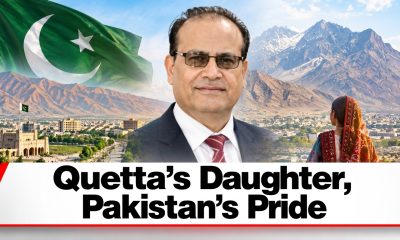





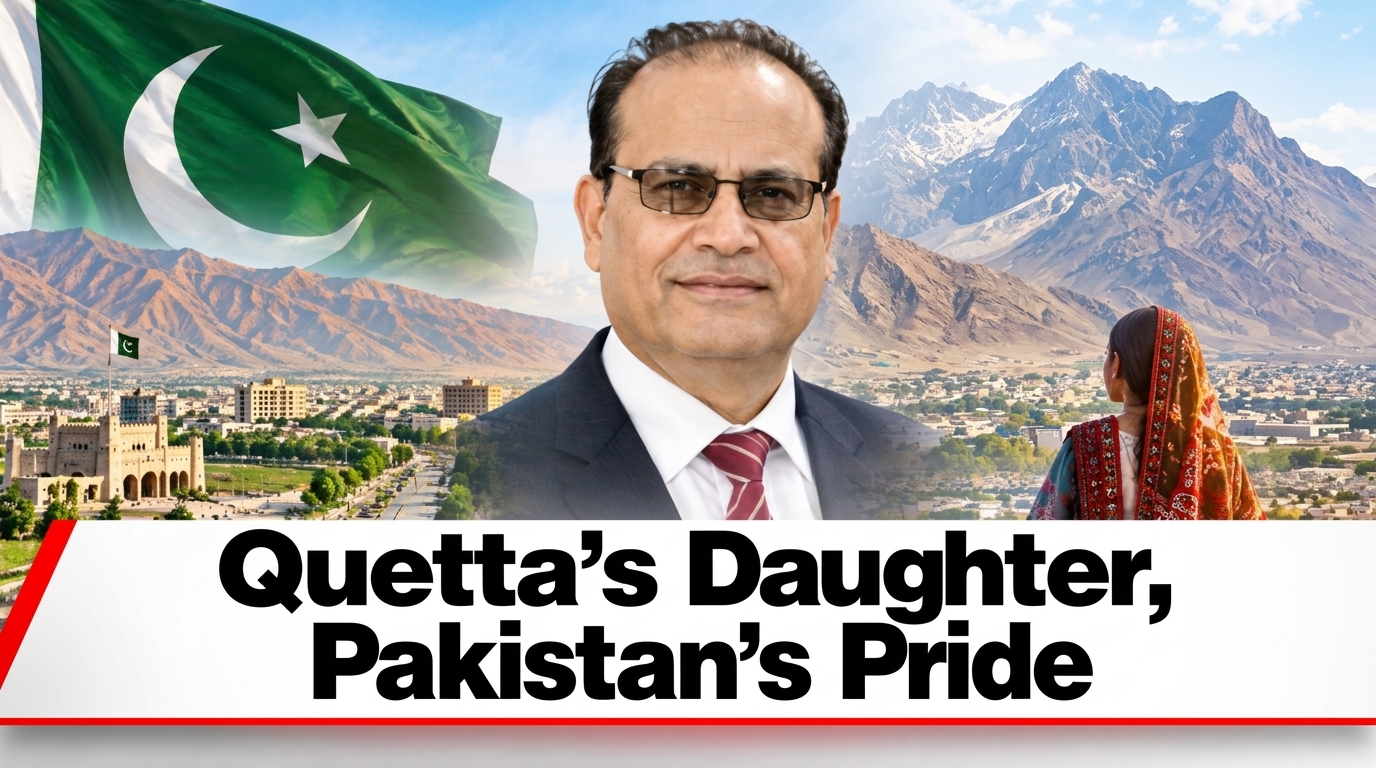
Paris (Imran Y. CHOUDHRY) :- Former Press Secretary to the President, Former Press Minister to the Embassy of Pakistan to France, Former MD, SRBC Mr. Qamar Bashir analysis : While browsing today’s international news, one story stopped me and filled my heart with both pride and anguish: Jalila Haider, a Hazara woman born, raised and educated in my hometown, Quetta, has won the 2026 Right Livelihood Award, announced today, September 30. Presented by the Stockholm-based Right Livelihood Award Foundation, the distinction is widely known as the “Alternative Nobel Prize,”.
This year, just four recipients—two women and two women-led organizations—were selected from 200 nominations across 72 countries. Haider was recognized for challenging ethnic persecution, state repression and discrimination against women through her legal work and activism.
For recipients, such recognition brings international visibility to their struggles and strengthens their ability to rally support; for Pakistan, Haider’s achievement highlights the courage and humanity of citizens defending its most vulnerable communities.
Amid reports of conflict and suffering, here was a Pakistani woman honored for standing beside people whom violence and indifference had pushed into the shadows. The news brought pride, but also anguish over the injustices that made her work necessary—and memories of a city whose humanity I once knew intimately.
Quetta, nestled like a bowl among towering hills, was beautiful for more than its landscape and refreshing weather. During my years of education, from 1970 to 1984, its greatest attraction was the fellowship between its communities. In the Quetta I remember, differences of ethnicity, language and religious tradition did not prevent friendship. We studied, played and visited one another, sharing a city that felt like home to us all.
I watched Hazara families advance through education, commerce, public service and sport. Their businesses grew, their young people distinguished themselves, and their contribution became woven into Quetta’s everyday life. Their achievements enriched the city. Remembering that shared life makes the subsequent persecution especially painful: people who helped build our hometown were increasingly denied the freedom to live safely within it.
I witnessed that atmosphere deteriorate as the Soviet invasion of Afghanistan in 1979 drew our region into confrontation between Moscow and Washington. In my observation, foreign ideological rivalries, money and weapons deepened divisions among people who had lived together. I saw resentment grow around Hazara and Punjabi advancement in commerce and public employment. These memories carry the pain we shared as neighbours: the gradual destruction of trust, followed by violence against familiar families.
The consequences were merciless. Hazaras were attacked in markets, on roads and while travelling to worship. Human Rights Watch recorded that two major bombings in Quetta in January and February 2013 killed at least 180 Hazaras. Such figures describe the scale, but cannot convey the anguish within each household. Every victim left relationships, responsibilities and hopes that no compensation or official condolence could restore.
For me, this tragedy has a familiar face: Abrar Hussain, the celebrated Hazara boxer who trained us during our school and college years. He brought distinction to Pakistan in international competition. When I later served in Quetta as deputy income tax commissioner, I knew him in his sports administration role. In June 2011, he was murdered in the city he had served. A man who strengthened Pakistan’s reputation abroad could not be protected at home.
Fear drove families away from their neighbourhoods, livelihoods and memories. Some sought safety elsewhere in Pakistan; others rebuilt their lives overseas, including in Australia. Those who remained faced restricted movement and shrinking opportunities. The loss extended beyond households. Quetta itself was diminished whenever a family left because it could no longer trust that its children would return safely from school, work or the market.
This was the environment in which Jalila Haider chose to stand her ground. Born in 1984, she lost her father when she was twelve. Her mother raised six children and supported her determination to study law. In 2010, she earned her degree from University Law College, Quetta, becoming the first woman lawyer from Pakistan’s Hazara community. Behind that achievement stood a mother’s resolve and a daughter’s refusal to surrender.
Her legal practice, established in 2011, became a refuge for people whose cases others considered dangerous or unrewarding. According to her award biography, her firm has handled more than 7,000 cases and helped restore freedom of movement to more than 600 political activists and human rights defenders. She has represented women seeking divorce, custody and inheritance rights, alongside refugees, transgender people and those facing wrongful accusations.
The dangers were personal. She survived the 2016 bombing that devastated Balochistan’s legal community. She has endured detention, online harassment and death threats. Nevertheless, she continued appearing for people whose vulnerability often made them easy to abandon. In a setting where professional advancement can reward silence, her willingness to accept difficult cases gave frightened families someone prepared to listen and act.
In 2018, she carried that determination into a seven-day hunger strike against the targeted killing of Hazaras. She demanded direct engagement from the army chief, refusing to accept assurances from officials unable to deliver security. The protest brought negotiations between the military leadership and Hazara women. The award foundation credits it with contributing to a sustained decline in attacks, although the community’s insecurity and displacement remained unresolved.
Her work also recognises that justice requires the means to survive. Through We the Humans, founded in 2015, she has helped more than 400 widows of terrorism victims gain financial independence. Rug weaving, childcare, education and literacy support connect income with dignity. A widow able to support her children acquires something beyond financial relief: greater freedom to make decisions about her family’s future.
As a founding member of the Women’s Democratic Front, Haider also helped pioneer Balochistan’s first Women’s March. Her advocacy reaches women facing forced marriage and honour violence, crossing the boundaries of her own community. That breadth matters. Having experienced persecution, she has refused to make another person’s ethnicity or identity a condition for receiving help.
Pakistan owes women like her more than ceremonial praise. They need protection, functioning courts and institutions that respond before desperation forces a hunger strike. Their work reveals both the courage within our society and the distance between constitutional promises and everyday experience. Supporting them would allow more families to recover the ordinary security that violence has stolen.
Pakistan is too often viewed through an unfavourable lens in the international media, with few stories allowing its humanity and courage to shine. Finding Jalila Haider’s recognition among the day’s top ten world news stories filled my heart with pride, even as it revived the agony of everything our Hazara community has endured.
May this honour bring her greater dignity, respect and protection, and inspire many more Jalila Haiders across Pakistan and the world to join the struggle for justice and freedom. May their courage restore hope to those pushed into the shadows and challenge the label of “illegal” imposed on human beings through no fault of their own, but by systems, borders and laws that fail to recognise their humanity.
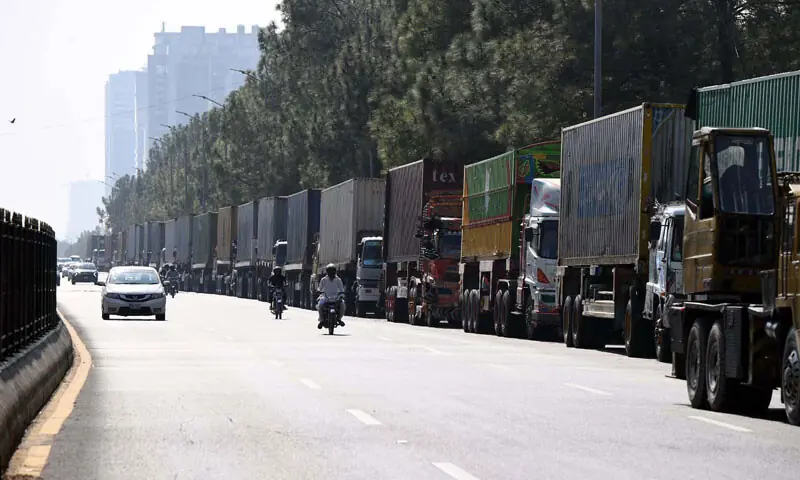
ISLAMABAD: The government will pay Rs46.5 million per day to the owners of 1,550 containers arranged to counter the Pakistan Tehreek-i-Insaf (PTI) protest in the capital.
Sources in the police said the amount requested by the capital police for security arrangements to counter the PTI’s protest would effectively double and was likely to cost the exchequer more than Rs1 billion as the political party has postponed the protest rally for about a week.
Earlier, PTI had announced a countrywide protest starting on September 27.
Following the announcement, the capital police, like their counterparts in Punjab, began preparations and requested Rs820 million to cover the rent of containers, accommodation and meals for the police personnel arriving from Punjab and Sindh.
Police yet to decide whether to release containers or retain them in their custody, says All Pakistan Goods Alliance chairman
The amount was intended to cover one week, as the police expected the protest and long march, scheduled to begin on September 27, to disperse by October 4.
However, with the protest and long march postponed for a week, the expenses are also expected to increase.
All Pakistan Goods Alliance Chairman Nisar Hussain Jaffri said the alliance had initially demanded a daily rent of Rs40,000 and Rs20,000 for 40-foot and 20-foot containers, respectively. Later, he said, the demand was revised to Rs30,000 per container for both sizes.
After PTI postponed the long march, the police were asked about the containers, he said, adding that the authorities had so far not decided whether to release or retain them in their custody.
The sources said that according to the demand the daily rent for 1,550 containers comes to Rs46.5 million, while the rent for one week is Rs325.5 million and for two weeks Rs651 million.
The sources said the police had also requested a contingent of 16,000 personnel from the Punjab Police and 2,000 from the Sindh Police. So far, the Sindh Police contingent has reached the capital and is staying at marquees at the Police Lines Headquarters, Faisal Mosque and Community Centre G-13.
Three meals a day are being provided to the visiting personnel. The cost of three meals per person is Rs600, meaning Rs1.2 million is being spent each day to feed the 2,000 Sindh Police personnel. The cost of meals for one week is Rs8.4 million and for two weeks Rs16.8 million.
Surprisingly, the requested Punjab Police contingent is yet to reach Islamabad. The sources said the 16,000-member contingent was scheduled to reach the capital by the evening of September 25, as the deployment plan was to take effect from the evening of September 26. However, no Punjab Police official had arrived in Islamabad by Friday evening, they added.
About 70 coasters, 30 double-cabin vehicles and buses were also arranged to transport the police force between their places of accommodation and designated duty points. The daily rent of a coaster is Rs15,000, bringing the daily cost of 70 coasters to Rs1.05 million. The daily rent of a double-cabin vehicle is Rs10,000, while the 30 vehicles cost Rs300,000 per day.
The police also booked 175 rooms in 13 hotels in different sectors for 246 inspectors, 58 deputy and assistant superintendents of police, superintendents of police, 10 senior superintendents of police and eight deputy inspectors general of police.
Although the Punjab Police contingent has yet to arrive in the capital, its three-meal daily food bill is estimated at Rs9.6 million. The cost would rise to Rs67.2 million for one week.
The rent of the buses arranged to transport the police force, as well as the rent of 18 rooms at two hotels booked for DIGs and SSPs, was not known.
Meanwhile, All Pakistan Goods Alliance Chairman Nisar Hussain said the police in Islamabad and Punjab had taken into custody at least 2,700 vehicles along with their three-member crews.
Of the total, about 400 vehicles and their crews were still missing, while the crews of the remaining vehicles were being kept at police stations. He clarified that the police had not formally arrested the drivers and other crew members but had stopped them from leaving the police stations except for meals. The police had also confiscated their mobile phones, vehicle documents and keys.
The sources said the crews would remain at the police stations until a decision was made on releasing the containers. They were being kept there to drive and move the vehicles, as special skills were required to operate the large container trucks.
The containers and vehicles were seized and their crew members detained in Islamabad, Rawalpindi, Lahore, Jhang, Hasanabdal, Attock, Kamoke, Taxila, Jhelum, Mianwali, Chakwal, Faisalabad and Gujrat. Of the 2,700 vehicles, 450 were carrying goods, including medicines, food items and chemicals.
Published in Dawn, September 26th, 2026
Pakistan News
Any attempt to divert Pakistan’s water to be treated as act of war, India ‘must make no mistake about it’: PM at UNGA
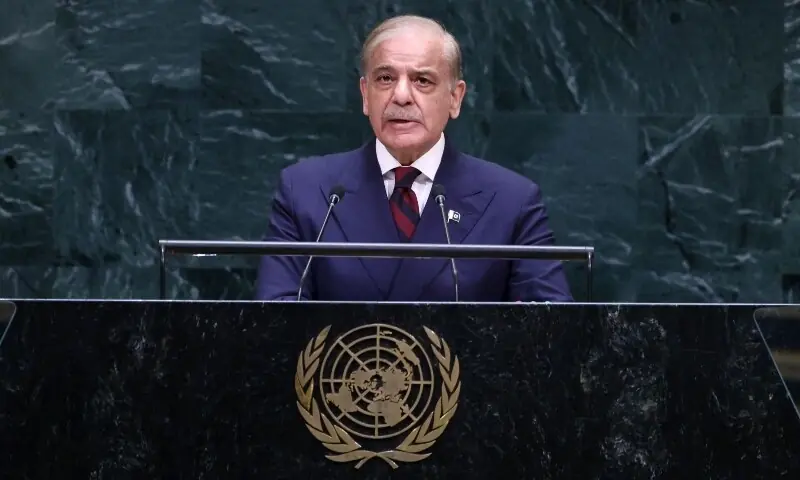
Prime Minister Shehbaz Sharif on Friday said that any attempt by India to divert Pakistan’s share of water would be treated as an “act of war”.
“Any attempt to stop, impede or divert Pakistan’s share of the waters will be treated as an act of war. India must make no mistake about it,” he said during a speech at the 81st session of the United Nations General Assembly (UNGA) in New York, where he called attention to the neighbouring country’s decision to hold the Indus Waters Treaty (IWT) in abeyance.
He highlighted that the country’s claims and actions regarding the treaty had been rejected by UN experts as well as by the Permanent Court of Arbitration, leaving Pakistan “vindicated beyond any ray of doubt” in its position.
“Water must never be weaponised. Rivers should nourish nations, not divide them,” he stressed, calling the Indus river system the “lifeblood” of the entire region.
PM Shehbaz also addressed last year’s brief military conflict with India, which came after an attack on tourists in occupied Kashmir’s Pahalgam that killed 26 tourists — an incident New Delhi blamed on Islamabad without evidence. For its part, Pakistan strongly denied the allegations and called for a neutral investigation.
“Our brave and valiant armed forces, under the courageous leadership of Field Marshal Asim Munir, responded with precision and professionalism,” he said.
He once again praised US President Donald Trump’s “resolute and visionary leadership” in brokering a ceasefire between the two countries in May 2025, stressing that it saved “hundreds of millions of lives”.
“Who knows the extent of devastation that could have taken place had President Trump not stepped in at this critical moment with clarity of thought and action?” he questioned.
“We must therefore ensure that South Asia never reaches this precipice ever again,” he said. This, however, the premier added, required a fair resolution of the Kashmir dispute.
“For eight decades, the Kashmiri people have waited for the United Nations to fulfill its solemn commitment of a free and impartial plebiscite,” he pointed out, adding that they had endured “illegal occupation, arbitrary detention, extrajudicial killings, enforced disappearances, sexual violence and collective punishment” for generations.
He declared that Pakistan would continue to extend its full diplomatic, political and moral support to Kashmiris until they were granted their right to self-determination, terming Kashmir “Pakistan’s jugular vein”.
Pakistan’s peace efforts
During his address, the prime minister also addressed the conflict in the Gulf region and the Middle East, highlighting the loss of lives, economic suffering and pressure faced by critical maritime routes, particularly the Strait of Hormuz.
“At this critical moment, Pakistan chose to act swiftly. Through concerted efforts, Pakistan brought Washington and Tehran under one roof in Islamabad,” PM Shehbaz said, referring to the Islamabad Talks that resulted in the signing of the Islamabad Memorandum of Understanding by the US and Iran in June.
In this regard, he appreciated Chief of Defence Forces Field Marshal Munir, whose “relentless efforts helped create space for diplomacy under exceptionally difficult and challenging circumstances”. He also extended his appreciation to Deputy Prime Minister and Foreign Minister Ishaq Dar for his role in the process.
“Amid the roar of missiles, drones and guns, the voice for diplomacy must echo even louder and stronger,” the premier stated.
“The Strait of Hormuz and Bab al-Mandab are arteries of the global economy. They must remain open, connecting nations, not becoming choke points of confrontation,” he said.
He also condemned, “in the strongest possible terms”, the recent attacks by the Houthis against the kingdom of Saudi Arabia, calling them “deplorable” and expressed Islamabad’s complete solidarity with Riyadh.
He also highlighted the tripartite defence agreement recently signed by Pakistan, Turkiye and Saudi Arabia as a reflection of Pakistan’s commitment to peace.
“This alliance is not directed against any country; it is a collective commitment for defence, stability and peace in the region, and nothing more,” he stressed.
Israel’s ‘genocidal agenda’
PM Shehbaz also restated Pakistan’s support for Palestine, expressing his concern for ongoing Israeli violence in Gaza and the West Bank as well as its continued aggression against Lebanon and Syria.
He said that last year he had mentioned the “heart-wrenching story” of Hind Rajab, a 5-year-old Palestinian girl who was shot dead by Israeli forces in Gaza after being trapped for hours in a car with her family members.
“This year, another tragedy weighs heavy on the heart. This time, it is the deafening cries of the sobbing mother of eight-year-old Wafaa Akila, who embraced martyrdom in this senseless aggression. What should have been the first day of her school became the last day of her life,” he said.
“Does not a child born in Gaza deserve the same life, and the same future as a child anywhere else in the world? The tragedies of Hind Rajab, Wafaa Akila, and countless others will echo through history as an indictment of our collective silence and inaction,” he said.
In particular, he noted that the forcible eviction of Palestinians in the West Bank “clearly reflects Israel’s genocidal agenda”.
“Pakistan believes that the only just and lasting solution is the creation of an independent, sovereign, viable and contiguous state of Palestine based on pre-1967 borders, with Al-Quds Al-Sharif as its capital,” he reaffirmed.
Terrorism and Afghanistan
Talking about terrorism, the premier said: “Terrorism remains one of the gravest threats to international peace and security.”
He said that as a frontline state in combating the menace of terrorism, Pakistan had “fought terrorists in our own cities, in our own mountains and along our frontiers”.
“Pakistan has sacrificed, almost 100,000 precious lives and suffered economic losses exceeding $150 billion. The world is safer today thanks to the valuable sacrifices of our valiant armed forces and brave civilians who took on these terrorists. The peace-loving world must never forget this reality,” he said.
He added that Afghan territory continued to be exploited by the Tehreek-i-Taliban Pakistan and the Balochistan Liberation Army.
“These foreign-funded groups operated from sanctuaries in Afghanistan with the aim of destabilising Pakistan,” he said. The premier said that all such attacks from the territory of Afghanistan “must come to a grinding halt”.
He called on Afghan authorities to fulfill their international commitments and take “verifiable, decisive action to ensure that Afghan soil is never again used against Pakistan or any other country”.
“The fundamental rights of the Afghan people, especially women and girls, must be respected,” he said.
On restoring trust
PM Shehbaz also called attention to the theme of this year’s assembly, saying, “The theme of this session calls upon us to restore trust. But trust cannot be restored by words alone. It must be earned through action.
“We will restore trust when rivers become lifelines of cooperation, not faultlines of conflict. We will restore trust when those who fuelled the climate crisis protect those who suffer most from its devastating consequences. And above all, trust will be restored when the guns are silenced and replaced by handshakes, embraces and smiles,” he said.
He called for the UN to become stronger and more effective, stressing that reform must reflect “the interests and aspirations of the overwhelming majority of member states, not the ambitions of a select few”.
“We live at a dangerous moment. But our future is not predetermined. War is a choice. Peace is also a choice. And sometimes, courage lies not in starting a war but in preventing one,” he said.
“Pakistan has made its choice. We have chosen dialogue over confrontation. We have chosen cooperation over coercion. We have chosen peace over war,” the premier said.
“Let this 81st General Assembly make it a unanimous choice … Let us restore trust. Let us preserve peace. And let us prove that even in a divided world, humanity can still choose to stand together,” he concluded.


Quetta’s Daughter, Pakistan’s Pride

Why is Trump a Dictator?

America Must Rebuild Within


-

 Sports4 months ago
South Korea’s Yoo Useong Steps Onto the Global Strongman Stage as World Strongman Federation Professional Athlete
-

 Art & Culture1 year ago
A Survey of Mata-E-Zeest
-

 Europe News2 years ago
Chaos and unproven theories surround Tates’ release from Romania
-

 American News2 years ago
Trump expands exemptions from Canada and Mexico tariffs
-

 American News2 years ago
Trump Expels Zelensky from the White House
-

 Art & Culture2 years ago
Will Snow White be a ‘victim of its moment’? How the Disney remake became 2025’s most divisive film
-

 Entertainment2 years ago
Champions Trophy: Pakistan aim to defend coveted title as historic tournament kicks off today
-

 Pakistan News1 year ago
Comprehensive Analysis Report-The Faranian National Conference on Maritime Affairs-By Kashif Firaz Ahmed