
war
Russia’s Pearl Harbor: Escalating the Horrors of War


Paris (Imran Y. CHOUDHRY) :- Former Press Secretary to the President, Former Press Minister to the Embassy of Pakistan to France, Former MD, SRBC Mr. Qamar Bashir analysis : In a dramatic escalation of the ongoing conflict, Ukraine launched a highly sophisticted drone strike on Russian airbases, reportedly damaging and destroying a substantial portion of Moscow’s strategic bomber fleet. This operation, codenamed “Spiderweb,” involved the deployment of 117 AI-guided drones, which targeted five key Russian airbases across regions including Murmansk, Irkutsk, Ivanovo, Ryazan, and Amur. The attack resulted in the destruction and severe damage of over 40 aircraft, including Tu-95, Tu-22M3, Tu-160 bombers, and A-50 airborne early warning and control aircraft. The damage to Russia has been estimated to be round $7 billion, marking a significant blow to Russia’s long-range aerial capabilities.
The timing of this strike coincided with peace talks in Istanbul, mediated by Turkish President Recep Tayyip Erdoğan. The peace talks highlighted the fundamentally opposing objectives of Russia and Ukraine. Russia demands recognition of its control over annexed territories, including Crimea and four other regions, the withdrawal of Ukrainian forces, and a commitment from Ukraine to remain neutral and non-aligned, effectively preventing NATO membership .
Conversely, Ukraine insists on the complete withdrawal of Russian troops, the restoration of its territorial integrity, and security guarantees from Western countries to prevent further aggression. Ukraine also seeks the prosecution of Russian leaders for war crimes and the return of abducted Ukrainian children.
The latest attack—an advanced, high-tech, and professionally maneuvered drone strike—has dealt a severe blow to Russia. If such attacks continue and Russia finds itself unable to respond with conventional forces in kind, there is a growing possibility that Moscow may seriously consider the use of tactical nuclear weapons.
Russia may seek not only to counterbalance the damage inflicted but also to punish those directly involved in planning, executing, and supporting the operation. This could mean that Russia may expand the scope of the war, targeting European capitals that have been providing aid and resources to Ukraine—actions which have now become a significant concern for the United States and its allies, as the war risks spiraling beyond its current boundaries.
By striking deep into the heart of Russia with such precision and devastation, Ukraine has gained a position of relative strength compared to Moscow, a factor that will provide Kyiv with greater bargaining leverage in any potential future negotiations—if such talks materialize at all. However, Russia is even more astute. It is unlikely to enter into any meaningful negotiation from a position of weakness.
Instead, Russia will likely seek to counterbalance the damage inflicted upon it, and may even surpass Ukraine’s gains with its own retaliatory strikes, in order to restore its strategic advantage before considering any talks. This tit-for-tat escalation is a profoundly dangerous dynamic, one that risks undermining any prospects for peace and threatens to prolong and intensify the conflict between the two nations
As the war drags into its fourth year, both Russia and Ukraine—along with their allies in Europe and the United States—are beginning to grasp the immense toll this war has taken. Russia has sustained military losses exceeding $94 billion as of May 2025, with inflation and a weakened ruble further straining its economy. Ukraine’s economy has been crippled, with a cumulative GDP loss of $120 billion, infrastructure damages topping $1 trillion, and reconstruction needs projected at a staggering $524 billion—nearly triple its pre-war GDP. Meanwhile, European allies have not been spared: German companies alone faced losses of at least €200 billion in 2022, particularly in the automotive, energy, and chemical sectors, as the sanctions and war-driven economic disruptions ripple across the continent. The war is bleeding resources, depleting tax bases, and pushing all involved nations toward economic strain.
The countries directly or indirectly involved in this conflict are draining their national wealth in a futile pursuit of land, power, and hegemony, while other nations, uninvolved in the war, are conserving their resources and channeling them into productive investments: building modern infrastructure, advancing research and development, exploring space, and fostering innovation. As a result, the economies of the United States, Russia, Europe, and their allies will bear the long-term costs of this war, while their adversaries—particularly China, which has been labeled a strategic competitor—will continue to grow stronger. China stands to benefit the most from this prolonged conflict, as the Western powers exhaust themselves financially, militarily, and diplomatically, effectively handing Beijing the advantage on the global stage.
Ukraine, heavily reliant on Western support, faces the risk of donor fatigue. Ukrainian officials have expressed concerns about growing donor fatigue, noting a $43 billion budget shortfall for 2024. Conversely, Russia, with its larger economy and resources, may continue to absorb the war’s costs, albeit at the expense of its own economic stability.
The recent talks in Istanbul, while limited in progress, have set the stage for potential future negotiations involving Presidents Putin, Zelenskyy, and Trump. For meaningful dialogue to occur, both sides must address the core issues: territorial integrity, security guarantees, and the future of Ukraine’s alignment with Western institutions.
This is perhaps a shorter and more intense replica of the First and Second World Wars, where alliances were drawn, and massive resources were expended. Now, allies are on one side, and Russia is on the other, both depleting their resources and indirectly enabling their adversaries to gain strength. The solution to this quagmire lies in recognizing the mutual losses and the unintended empowerment of non-involved nations.
It would be naive to think that European leaders and the USA have not calculated these aspects—their own losses and the strengthening of their adversaries—while they continue to fund and fuel the war. Sanity should prevail among all parties. The conflict results in losses for Russia, Ukraine, and their allies, while those outside the conflict stand to gain.
The entire geopolitical landscape is undergoing a profound shift due to this war, with a heightened possibility of shrinking the economic, trade, investment, business, and military influence of the warring nations—primarily European powers this time—while simultaneously creating space for their adversaries to expand. Let us hope that sanity will prevail sooner rather than later, bringing an end to the erosion of the geopolitical space of the warring parties and, conversely, halting the encroachment of their adversaries into their traditional spheres of influence.








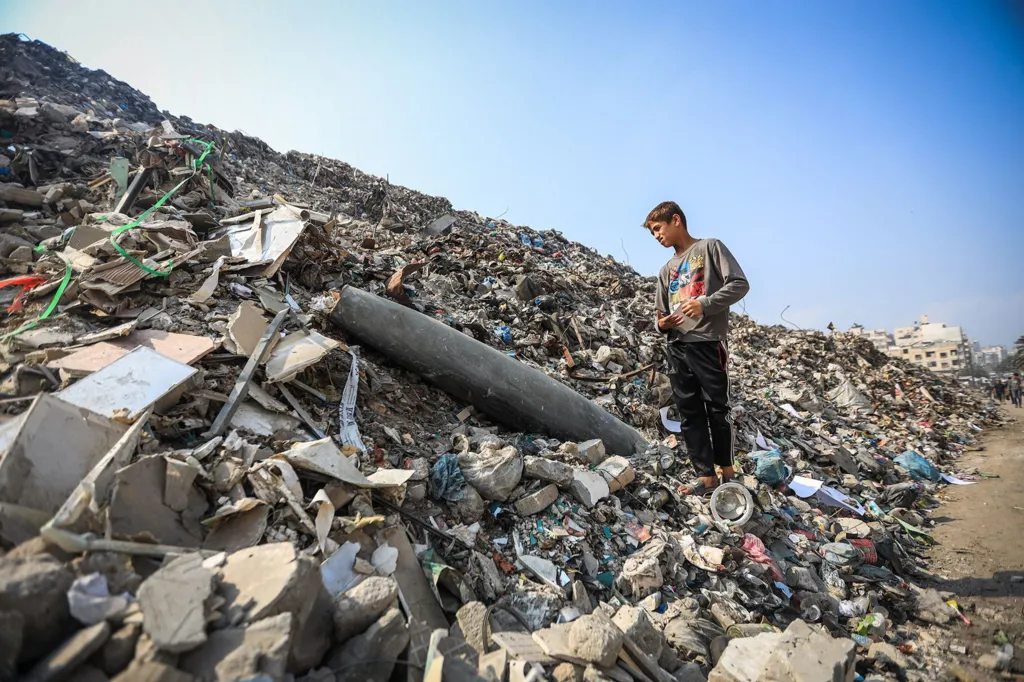
Gaza has been turned into “a toxic wasteland”, with more than 99% of the Palestinian territory showing indicators of environmental contamination from Israeli military attacks, a new report from the charity Oxfam says.
Heavy metals, explosive residues, asbestos from destroyed buildings, and dioxins and biological contaminants are threats to Palestinians now and potentially for decades to come, it says.
Oxfam International’s executive director, Amitabh Behar, said the impact on Gaza “will have fundamentally degraded the environmental conditions necessary for human safety and survival”.
In response, the Israeli embassy in the UK said the report “falls short of professional standards”.
Behar also accused Israel of “environmental war crimes” as part of an “ongoing genocide in Gaza”.
Israel has rejected genocide accusations in an ongoing case at the International Court of Justice as baseless and distorted. It maintains that its military campaign in Gaza is an act of self-defence against Hamas in response to the group’s deadly attack on Israel on 7 October 2023, and that it takes steps to mitigate civilian harm.

Oxfam and the UK-based Conflict and Environment Observatory (CEOBS) used satellite imagery, remote sensing, spatial analysis and other open-source data to draw their conclusions in the most comprehensive report to date on the severe environmental impacts caused by three years of intense war in Gaza.
The report details how munitions used in Israel’s intense bombardment, as well as the debris from destroyed buildings and infrastructure, all have an impact on the environment. In February, a UN special rapporteur stated that more than 200,000 tonnes of explosives were dropped on Gaza in almost two years – “the equivalent of the total energy of approximately 13 Hiroshima-type nuclear bombs”.
Last year, the UN Environment Programme (UNEP) estimated that Israel’s military operations destroying homes and infrastructure had generated more than 61 million tonnes of debris across the territory, with about 15% potentially carrying a high risk of contamination from hazardous materials.
“There are going to be chronic health impacts that are long term because a lot of these contaminants are persistent in the environment,” Oxfam report author Lama Abdul Samad told the BBC.
She says that now and in future Gazans are likely to suffer from increased respiratory diseases, cancers, organ damage and a rise in birth defects and stillbirths.

With all six wastewater treatment plants out of operation in Gaza, untreated sewage currently makes its way into groundwater and the Mediterranean Sea. The health impact has recently been exacerbated by heavy winter storms causing rainwater to mix with wastewater and flow through streets and tent sites housing displaced people.
Testing types and levels of contamination is often not possible because Gazan laboratories have been destroyed and there are Israeli restrictions on the entry of specialist testing equipment and scientists. The BBC has approached the Israeli military for comment.
UNEP said security concerns also prevented its expert staff from previously travelling to Gaza.
The Oxfam report calls for a full, independent environmental assessment to be carried out in Gaza to identify contamination risks ahead of a clean-up. It says special attention must be given to the protection of workers involved.
The Israeli embassy sharply criticised the report, arguing that it relied on satellite imagery “and unverified assumptions, and its methodology lacks the academic rigour needed to withstand serious scrutiny”.
It said the report drew conclusions about Gaza’s soil and groundwater without considering the excavation of hundreds of kilometres of tunnels by Hamas, rendering it fundamentally flawed.

Already, Gazan doctors have been reporting increased acute respiratory infections caused by dust and pollution from destroyed buildings and displaced people burning plastic, rags and cardboard to keep warm and cook food. Gastrointestinal diseases are linked to unsafe water and poor sanitation.
A Palestinian dermatologist, Dr Alaa Abu Hajar, told the BBC he had seen a five-fold increase in chronic skin diseases since the start of the war, putting this down to environmental pollution and overcrowded, unhygienic living conditions in tents and displacement camps.
“There are rodents, rubbish and sewage that’s spread through the streets,” he says. “Unfortunately, the age group most affected is children.”

Farmers and those working in fishing say that pollution of the soil and sea mean they are unable to produce food that is safe.
“Sewage and wastewater are discharged into the sea without treatment and this is a great disaster,” complains fisherman Abu al-Abed Sultan. “There is also rubble from destroyed houses that’s dumped into the sea. When we lower our nets, we catch rubble and garbage. This harms the marine environment; the fish are affected and so are the fishermen.”
At least 74,746 Palestinians have been killed since the start of the war in Gaza, according to the Hamas-run health ministry, whose figures are considered reliable by the UN. The UN says that humanitarian conditions remain dire.
Israel has conditioned large-scale Gaza reconstruction on the full disarmament of Hamas and other Palestinian armed groups. In July, Hamas accepted a plan put forward by the US-led Board of Peace to give up its weapons in exchange for an Israeli troop withdrawal. However, the Israeli government said the proposal was insufficient.
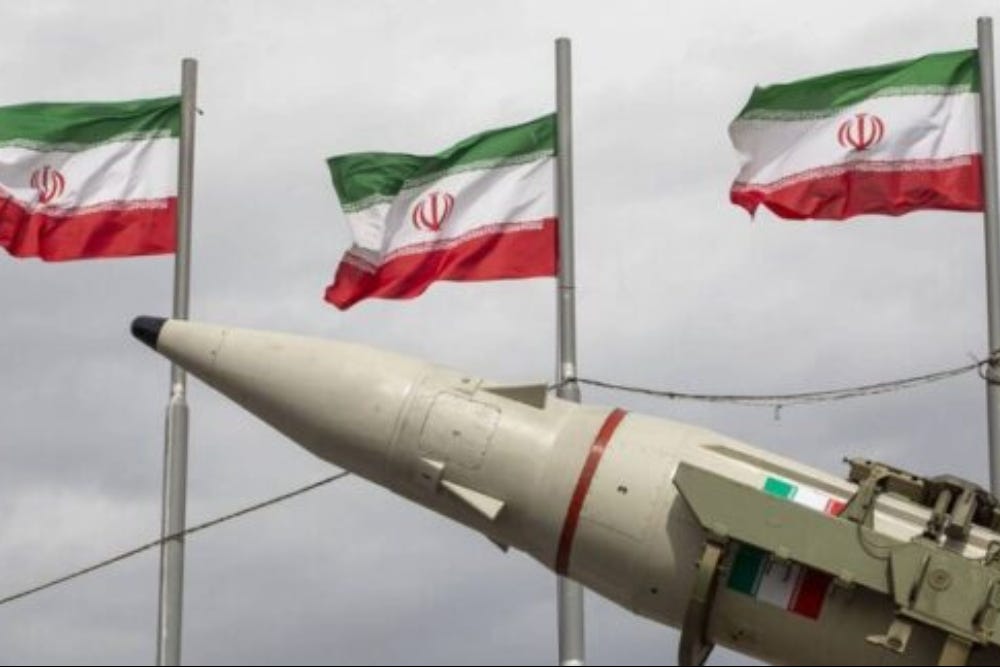
Paris (Imran Y. CHOUDHRY) :- Former Press Secretary to the President, Former Press Minister to the Embassy of Pakistan to France, Former MD, SRBC Mr. Qamar Bashir analysis : When American and Israeli bombs began falling on Iran, Tehran’s confidence appeared almost incomprehensible. Senior commanders were killed, military installations struck and overwhelming firepower brought to bear. Yet Iranian officials continued to promise resistance and eventual success. Watching those declarations, I wondered what their adversaries had failed to understand. Nearly eight months later, Iran’s continued ability to fight has given that question a compelling answer.
Iranian planners had prepared a war in which survival would sustain retaliation, retaliation would impose economic pain, and economic pain would challenge the political endurance of the attacking powers. Geography became an instrument of this strategy through deliberate military choices: where to shelter weapons, how to disperse forces, which maritime passage to threaten and how to exploit the regional dependence of an expeditionary war machine.
The first foundation was national resolve. For many Iranians, defending the homeland combines patriotic duty with moral and spiritual conviction. The belief that they are resisting aggression gives sacrifice a purpose. This human commitment sustains the personnel who maintain weapons, restore damaged facilities and keep military organizations functioning under bombardment. It gives the strategy the endurance it requires.
The first military task was to preserve the means of retaliation through the opening assault. Iran addressed that problem by placing military infrastructure underground and distributing assets across a country of approximately 1.65 million square kilometres. Its planners understood that surviving weapons could continue to shape the war after exposed installations had been destroyed.
Iran paired this physical dispersal with decentralized organization. Its “mosaic defence” doctrine seeks to sustain resistance when local formations lose contact with higher command. That principle addresses the shock of leadership losses and damaged communications. The purpose is continuity: ensuring that an assault on senior leadership does not automatically become the paralysis of the entire military machine.
The military use of its diverse locations is the essential point. Coastal surveillance, anti-ship weapons and small naval craft can exploit proximity to shipping routes. A dispersed coastal threat forces a superior navy to address risks across multiple positions while protecting commercial movement. Iran’s objective is to preserve enough threatening capability to make uninterrupted passage costly and uncertain.
Hormuz concentrates the effect. Between Iran and Oman’s Musandam Peninsula, commercial traffic follows narrow designated lanes. By threatening vessels through missiles, drones, mines and small craft, Iran has influenced the decisions of shipowners, insurers and energy traders. A credible danger has interrupted commerce before any navy has established complete command of the waterway.
The second outward application of this strategy concerns the American military presence around the Gulf. Expeditionary warfare depends on regional facilities, communications, fuel, maintenance and transport. Iranian attacks on American bases challenge the assumption that the infrastructure supporting attacks on Iran can operate safely throughout the campaign. Proximity gives Tehran opportunities to impose costs on the regional system sustaining its adversary.
Reuters’ investigation into infrastructure attacks illustrates the wider consequences. It counted at least 135 attacks by Iran and allied groups against 84 infrastructure sites across seven countries. Disruption at Fujairah, Qatar’s Ras Laffan complex and Saudi pipeline facilities showed how strikes on selected components could interrupt much larger operations. The strategic effect extends beyond the equipment struck to the services and revenues dependent upon it.
Sustaining this defensive and offensive capability requires a productive economy and access to supplies. Iran’s military use of geography is supported by its economic use of the same geographic position. Its connections with South Asia, Central Asia, the Caucasus and the Middle East provide channels for trade, industrial inputs and commercial earnings under sanctions.
This is the geographic foundation of its economic endurance. Iran borders Pakistan and Afghanistan to the east, Turkmenistan to the northeast, Armenia and Azerbaijan to the northwest, and Turkey and Iraq to the west. Turkmenistan provides its direct land connection to Central Asia. The Caspian opens a separate northern maritime connection, while ports on the Gulf of Oman face the Arabian Sea outside Hormuz.
Iran trade with Afghanistan alone stood at $3.366 billion including fuel, liquefied gas, machinery, vehicle parts and industrial materials. Pakistan supplies another economic connection. The LPG supplies to Pakistan stood at 7,000 tonnes daily. That is a documented regional market for Iranian energy products, even as border restrictions make its availability variable.
Northward, Iran’s connection through Turkmenistan links it to wider Eurasian transport networks. In November 2025, a freight train from Russia reached Iran through Kazakhstan and Turkmenistan, entering Incheh Borun. Its 62 containers carried paper and related products. The cargo establishes an important fact: a functioning commercial connection can bring industrial goods into Iran without passing through Hormuz. Whereas the Caspian provides a parallel maritime connection. Iranian ports including Bandar Anzali and Amirabad link with Russian ports across the inland sea. RUSI identifies this network as important to Russia–Iran arms and technology transfers.
These connections matter in both directions. Outward trade generates earnings and maintains commercial relationships. Inward trade supplies food, machinery, raw materials and components that support domestic activity. A military-industrial system depends upon that wider productive economy. The capacity to obtain industrial inputs can support maintenance and manufacture without requiring every incoming shipment to be military cargo.
The strongest inference is therefore about diversified access. A blockade affecting southern maritime trade does not physically close every land border or the Caspian. Multiple connections widen Iran’s alternatives and complicate efforts to isolate it completely. Each corridor’s practical contribution depends on capacity, neighbouring governments and the goods moving through it.
Domestic industry turns that access into usable capacity. Iran’s defence organizations manufacture weapons and maintain existing systems, while local workers, engineering and construction materials contribute to hardened infrastructure. Decades of investment have produced facilities and stocks that serve the present war. The full cost of that accumulated preparation does not fall on eight months of wartime receipts.
The economic and military uses of geography thus reinforce one another. Regional connections help sustain the productive base; domestic industry converts resources into military capability; underground facilities protect parts of that investment; and surviving weapons impose costs on adversaries. Iran’s endurance rests on the planning that connects these functions.
This is the military ecosystem behind Iran’s endurance: protected assets, dispersed command, surviving means of retaliation and pressure on regional bases and maritime commerce. Economic corridors help sustain the resources that keep this system functioning. National commitment and military planning connect these elements into a continuing capacity to resist.
The October 26 talks in Tehran involving Saudi Arabia, Pakistan and Turkey, alongside Qatar’s mediation, offer a chance to act upon that lesson. Renewed bombardment risks repeating the assumption that another round of destruction will finally deliver submission. Diplomacy offers a route out of a cycle that military escalation has prolonged.
Iran’s resistance has made a forceful argument through endurance. Its planners have connected protection with retaliation, military survival with pressure on the adversary, and economic access with the capacity to continue fighting.
This is how geography becomes a weapon: through the decisions that turn location into sustained military power. Washington and Israel must now confront the consequence. The ability to inflict greater destruction has not delivered the ability to dictate the outcome. A lasting peace will require them to recognize the strategic capacity they expected to extinguish.
Paris (Imran Y. CHOUDHRY) :- Former Press Secretary to the President, Former Press Minister to the Embassy of Pakistan to France, Former MD, SRBC Mr. Qamar Bashir analysis : We are squeezing the Iranians like they have never seen,” United States Treasury Secretary Scott Bessent declared while the 81st session of the United Nations General Assembly was under way in New York. Claiming that 80 to 90 percent of Iran’s external flights had been shut down, he said he was unsure how the Iranian representatives attending the United Nations would get home.
His remarks came one day after President Donald Trump used the General Assembly podium to threaten that he could “annihilate the Islamic Republic” if no agreement were reached, while calling upon other nations to join the United States in economically isolating Iran.
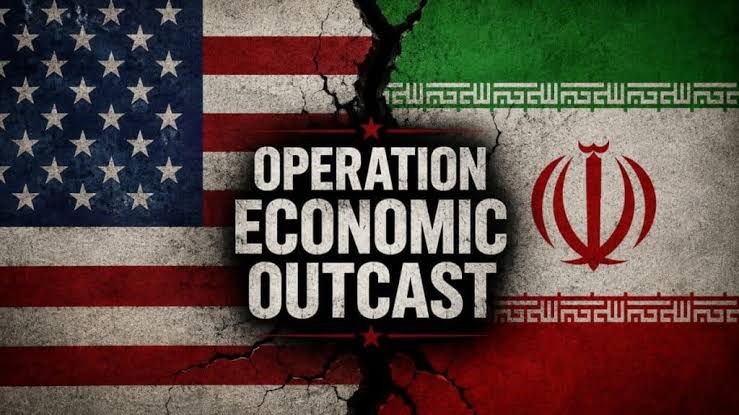
while calling upon other nations to join the United States in economically isolating Iran. Placed alongside Operation Economic Outcast—the whole-of-government campaign announced by the Treasury Department on August 24, 2026—these declarations reveal the intended scale of the pressure: not merely sanctions against selected officials, but the economic, financial and physical isolation of a country whose ordinary people will inevitably bear the consequences.
These measures raise an unavoidable question: can an economy be isolated so extensively without placing the principal burden upon people who do not control the government, the IRGC or military decisions?
An economy cannot be neatly divided between a government and its population. When oil revenue contracts, currency depreciates and banks lose access to international settlement, the effects travel through wages, savings, pensions, prices and employment.
Restrictions on shipping and aviation affect commercial supply chains as well as government movement. Even when food and medicine are formally exempt, banks, insurers and transport companies may avoid lawful transactions because they fear penalties. The United Nations human-rights system has examined the resulting effects on access to medicines and the right to health in Iran.
Behind every economic indicator is a household. Iran has roughly ninety million inhabitants: children requiring milk and medicine, patients dependent on imported treatments, workers needing functioning businesses, and parents responsible for food, rent and education. They do not decide upon missile launches, direct military operations or determine which regional organization receives Iranian assistance. They cannot morally be treated as responsible merely because they live under a government accused of objectionable conduct.
This distinction is central to the principle against collective punishment. Article 33 of the Fourth Geneva Convention prohibits collective penalties against protected civilians for acts they did not personally commit. Its underlying principle—individual responsibility rather than punishment by identity—illuminates the humanitarian problem created when economic pain is deliberately spread across an entire society.
International humanitarian law also prohibits using starvation of civilians as a method of warfare. The legal threshold is not established merely because sanctions produce hardship; the conflict context, conduct and intent must be proved.
But the rule makes one point unmistakable: food, water, medicine and objects indispensable to civilian survival cannot legitimately become weapons against a population. Where sanctions, blockades or financial restrictions obstruct those essentials, humanitarian exemptions must work in practice, not merely appear in official documents.
The contradiction becomes sharper because American officials have repeatedly distinguished the Iranian people from their government and portrayed U.S. policy as supporting their freedom. Yet a policy intended to produce a subsistence economy inevitably reaches far beyond officials and commanders. Powerful institutions possess privileged access to hard currency, protected supply networks and state resources. Low-income families, small businesses, pensioners and patients have no comparable protection.
For ordinary Iranians, Washington’s declaration that their country must become an “economic outcast” is not an abstract foreign-policy slogan—it is a sentence imposed upon everyday life. Economic warfare, sanctions and the naval blockade are crushing the value of wages and savings, driving inflation above 80 percent, producing shortages of gasoline and electricity, and pushing the rial to historic depths.
Families are abandoning meat and fruit, watching the price of traditional bread multiply, selling possessions to meet household expenses and giving up the ability to plan even the most modest future.
The cruel reality is that an economic campaign publicly presented as pressure upon Tehran’s leadership is reaching most deeply into the kitchens, medicine cabinets and empty pockets of people who neither formulate state policy nor command its military forces.
Declaring Iran an economic outcast therefore means casting millions of innocent human beings outside the protections of normal economic life—depriving parents of security, children of nutrition, patients of treatment and an entire generation of hope—in order to extract political concessions from a government far better equipped than its population to survive the punishment.
The United Nations General Assembly is presently giving deserved attention to civilian suffering in Gaza and to developments in the occupied West Bank. The same universal principles require close examination of harm to Iranian civilians. Human rights cannot depend upon the nationality of the victim or the geopolitical alignment of the government under which that person lives. Concern for a hungry child in Gaza is not diminished by concern for a child in Iran whose family cannot obtain food or medicine. Consistency strengthens humanitarian law; selective concern weakens it.
International organizations should document prices, nutrition, medicine availability, household income and access to transport. Such safeguards would not settle the political disputes, but they could prevent civilians from becoming instruments through which pressure is applied to their government.
The Iranian people have no control over the confrontation between Washington and Tehran. They did not decide to impose sanctions, launch military operations or close the avenues of diplomacy.
Yet they are the people most exposed to collapsing purchasing power, unemployment, shortages of medicine, restricted travel and the daily struggle to place food on the table. They deserve the same concern extended to every population subjected to oppression, collective hardship or economic strangulation. Human dignity cannot be protected selectively, according to nationality, political convenience or strategic alliance.
The suffering of Iranian civilians must therefore become a sustained subject of discussion within the United Nations, international humanitarian organizations, human-rights institutions, academic forums, civil-society platforms and the global media.
Their hardship must be documented, debated and placed before the conscience of the world. International institutions should develop practical measures to protect access to food, medicine, remittances, transportation and other necessities of life, while pressing for diplomacy capable of ending the confrontation. Silence would leave millions of innocent people trapped between a powerful external campaign and a government whose decisions they do not control.
The international community has a legal, humanitarian and moral obligation to speak for them, to examine the consequences of the measures being imposed and to seek remedies that mitigate their suffering.
Iranian civilians are not instruments of war, bargaining chips or economic leverage. They are human beings, and their pain deserves the same recognition, urgency and protection demanded for suffering populations everywhere.


Long-lost Chevalier landscape found in charity shop

Heiress Peggy Guggenheim scandalised high society – and transformed modern art

Israeli attacks have turned Gaza into ‘toxic wasteland’, Oxfam says

New Chapter for Dragon Boating in Punjab and Khyber Pakhtunkhwa Provincial associations officially set up with sights locked on national competitions and international representation.

South Korea’s Yoo Useong Steps Onto the Global Strongman Stage as World Strongman Federation Professional Athlete

A Survey of Mata-E-Zeest


-
 Pakistan News1 month ago
New Chapter for Dragon Boating in Punjab and Khyber Pakhtunkhwa Provincial associations officially set up with sights locked on national competitions and international representation.
-
 Sports5 months ago
South Korea’s Yoo Useong Steps Onto the Global Strongman Stage as World Strongman Federation Professional Athlete
-
 Art & Culture1 year ago
A Survey of Mata-E-Zeest
-

 Europe News2 years ago
Chaos and unproven theories surround Tates’ release from Romania
-

 American News2 years ago
Trump expands exemptions from Canada and Mexico tariffs
-

 Art & Culture2 years ago
Will Snow White be a ‘victim of its moment’? How the Disney remake became 2025’s most divisive film
-

 Pakistan News1 year ago
Comprehensive Analysis Report-The Faranian National Conference on Maritime Affairs-By Kashif Firaz Ahmed
-

 Entertainment2 years ago
Champions Trophy: Pakistan aim to defend coveted title as historic tournament kicks off today