
Europe News
Wildfires rage across southern Europe as temperatures top 40C


At least three people have died in a scorching heatwave that is fuelling dozens of wildfires across parts of southern Europe, forcing thousands of people from their homes.
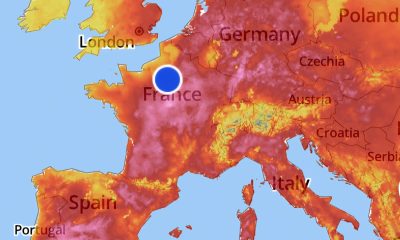
Red heat alerts have been issued in parts of Italy, France, Spain, Portugal and the Balkans, warning of significant risks to health as temperatures push above 40C (104F).
Spain’s weather service Aemet said temperatures could reach 44C (111.2F) in Seville and Cordoba, while southern Portugal could also hit 44C.
In Spain, an equestrian centre employee died after suffering severe burns in Tres Cantos, near Madrid, where winds over 70km/h (43mph) drove flames near homes, forcing hundreds to flee.

Spanish Prime Minister Pedro Sanchez said on Tuesday that rescue services “are working tirelessly to extinguish the fires”.
“We are at extreme risk of forest fires. Please be very cautious,” he added in a post on X.
In Spain’s north-western region of Castile and Leon, almost 4,000 people were evacuated and more than 30 blazes were reported – with one threatening the Unesco-listed Las Médulas, renowned for its ancient gold mines.
Another 2,000 people were evacuated from hotels and homes near the tourist hotspot of Tarifa in the southern region of Andalusia.
Almost 1,000 soldiers were deployed to battle wildfires around the country, Spain’s national military emergency unit said on Tuesday morning.
In neighbouring Portugal, firefighters battled three large wildfires, with the most serious near Trancoso contained in the centre of the country on Tuesday.

More than 1,300 firefighters and 14 aircraft were deployed, with Morocco sending two planes after Portuguese water bombers broke down, Reuters reported. Authorities warned southern regions could hit 44C, with the temperature not expected to dip below 25C.
One child died of heatstroke in Italy on Monday, where temperatures of 40C are expected to hit later this week. Red heat alerts were in place for at least 10 Italian cities, including Rome, Milan and Florence.
A four-year-old Romanian boy, who was found unconscious in a car in Sardinia was airlifted to a hospital in Rome but died due to irreversible brain damage, reportedly caused by heatstroke, medical authorities told AFP.
Almost three-quarters of France is under heat alerts, with temperatures forecast to top 36C in the Paris region and 40C in the Rhône Valley.
French Health Minister Catherine Vautrin said hospitals were braced for fallout from the country’s second heatwave in just a few weeks.

Greece is battling more than 150 wildfires across the country, exacerbated by fierce winds, with nearly 5,000 firefighters and dozens of aircraft tackling the blazes.
Mass evacuations are under way on touristic island Zakynthos and in western Achaia, where blazes have destroyed homes, vehicles and businesses.
Grigoris Alexopoulos, the mayor of western Achaia, said the fires in the region were “out of control”, adding some coastal areas have been “irreparably damaged”.
Rescue boats have been evacuating beachgoers trapped by advancing flames on Chios and authorities have requested several EU firefighting aircraft.
Greek authorities are warning the conditions could become even more challenging in the coming days.
Turkey has brought several major fires under control, including in Canakkale and Izmir, after hundreds were evacuated and the Dardanelles Strait and Canakkale airport were closed.
In Montenegro, a soldier died and another was injured when their water tanker overturned while fighting fires near the capital Podgorica.
Wildfires in Albania forced people to evacuate their homes on Monday, while in Croatia a large fire raged in Split and was contained on Tuesday.
Parts of the UK are sweltering in its fourth heatwave of the year, with temperatures hitting 33C and amber and yellow heat health alerts in place for all of England.
Two grassfires broke out in the capital on Tuesday, one in Ealing and another in Wanstead Flats, burning more than 17 acres combined.
Scientists warn global warming is making Mediterranean summers hotter and drier, fuelling longer and more intense fire seasons.
Additional reporting by Nikos Papanikolaou.






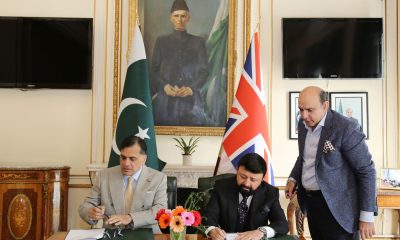


Paris (Imran Y. CHOUDHRY) :- Former Press Secretary to the President, Former Press Minister to the Embassy of Pakistan to France, Former MD, SRBC Mr. Qamar Bashir analysis : The world stands at a critical juncture in its relationship with Israel. For decades, the international community has watched as Palestinians have been systematically displaced, their homes destroyed, and their rights violated under the guise of security concerns. The recent announcement by the United Kingdom government to impose comprehensive sanctions on Israeli settlements in the occupied West Bank represents a watershed moment—one that challenges the long-standing impunity with which Israel has operated. These measures are not merely diplomatic gestures but essential tools for justice, peace, and the preservation of human dignity.
Ironically it was the UK which spearheaded the foundation of Israel in 1948, and was instrumental in ethnically cleansing 750,000 Palestinians from their homes in Majdal Ashkelan to establish the state of Israel. These Palestinians were forcibly removed, placed in prison camps, and eventually dumped into the Gaza Strip, where they have been permanently warehoused under siege conditions.
However, as repentance of its past crimes, the encouraging British government’s decision to ban imports from illegal Israeli settlements, impose strict arms export controls, and sanction individuals involved in settler violence represents a courageous stand for international law, is a step in the right direction.. These settlements are unequivocally illegal under the Fourth Geneva Convention, which prohibits an occupying power from transferring parts of its own civilian population into territory it occupies. For too long, the international community has paid lip service to this principle while allowing Israel to continue its expansion unabated.
Foreign Secretary Ed Miliband’s characterization of settler activities as “ethnic cleansing” is not hyperbole but an accurate description of reality. When Israeli settlers, often with state protection, systematically drive Palestinian communities from their land through violence, intimidation, and the destruction of homes and olive groves, this is ethnic cleansing by any reasonable definition. The UK’s sanctions send a clear message: such practices have consequences, and the era of impunity is ending.
Israel’s reaction to the UK sanctions has been telling. President Herzog and Prime Minister Netanyahu have condemned the measures, claiming that sanctions are not the solution and that dialogue is the only path forward. Yet this appeal to dialogue is fundamentally disingenuous when Israel itself has consistently rejected dialogue in favor of military action. The same government that has flattened Gaza, destroyed southern Lebanon, occupied the Golan Heights, and continues to expand settlements in the West Bank cannot credibly lecture others about the virtues of peaceful negotiation.
The Israeli government’s countermeasures—closing the British consulate in Jerusalem, expelling UK representatives from coordination centers, and denying entry to British officials—reveal a government more interested in retaliation than reconciliation. This is the behavior of a state that believes it can act with complete impunity, that international law applies to others but not to itself. The irony of Israel’s position becomes even more apparent when considering its enthusiastic support for US sanctions against Iran. If sanctions are illegitimate when applied to Israel, why are they legitimate when applied to others?
What makes the current moment particularly significant is the growing global consensus around the need to hold Israel accountable. Canada and France have already implemented matching bans on settlement trade, and other nations are expected to follow. This is not a fringe movement but a mainstream diplomatic position grounded in international law and basic human rights principles.
The United States, Israel’s most steadfast ally, is increasingly isolated in its unconditional support. The proposed congressional resolution declaring that the United States will not aid Israel or enter into wars on its behalf represents a significant shift in American public sentiment. Even within the US, there is growing recognition that uncritical support for Israel has damaged American interests, destabilized the Middle East, and put the United States on the wrong side of history.
The call for boycott has extended beyond governments to include religious authorities and civil society organizations. Christian leaders, including Archbishop J. Black, have called for boycott of Israeli products, drawing parallels to the successful international campaign against apartheid South Africa. Their position is rooted not in anti-Semitism but in a profound commitment to justice—the recognition that any system built on racial or religious supremacy must be dismantled.
The boycott movement has practical implications. Consumers are being urged to check labels and avoid products from Israeli settlements, which are often sold under supermarket own brands or other disguises. Items ranging from fruits and vegetables to beauty products, diamonds, and plastic goods should be scrutinized for Israeli origins. The economic impact of such boycotts, if sustained, could be substantial—UK trade with Israel amounts to approximately $1.6 billion annually.
The UK’s leadership in this matter provides an opportunity for Muslim countries to take decisive action. While individual boycotts have existed in some Muslim nations, coordinated government-level sanctions would send an even stronger message. Islamic countries should follow the British example by imposing comprehensive bans on Israeli products, regardless of how they are branded or marketed. They should also consider severing diplomatic, economic, and cultural ties with Israel until it complies with international law.
This is not about targeting Jewish people—a charge that Israeli leaders cynically weaponize to deflect legitimate criticism. It is about opposing a state that has institutionalized discrimination, collective punishment, and territorial expansion. The vast majority of pro-Palestinian advocates, whether Muslim, Christian, Jewish, or secular, are motivated by a commitment to human rights, not by prejudice.
No discussion of Israel’s accountability would be complete without addressing the United States’ role as its primary enabler. For decades, the US has provided Israel with billions of dollars in annual aid, diplomatic cover at the United Nations, and military support that has been used to commit atrocities against Palestinians. This relationship has not only facilitated Israeli aggression but has also undermined US credibility in the Middle East and the global South.
The American people, who are hardworking, peace-loving, and committed to justice, must pressure their representatives to end this unconditional support. Individual Americans can participate in boycotts, campaign for congressional action, and raise their voices in solidarity with Palestinians. The Israeli government’s increasingly extreme rhetoric, including calls for a “greater Israel” from the Nile to the Euphrates, should alarm all Americans who value stability and international law.
The South African anti-apartheid movement demonstrated that sustained international pressure can bring about change. Sanctions, boycotts, and diplomatic isolation were instrumental in forcing the apartheid regime to negotiate an end to its discriminatory system. The same strategy can and must be applied to Israel.
Making Israel a pariah state serves multiple purposes. First, it strips away the illusion that Israel’s actions are legitimate, forcing the Israeli public to confront the reality of their government’s policies. Second, it creates tangible consequences for continued occupation and settlement expansion. Third, it signals to the world that the era of unconditional tolerance for Israeli atrocities is over.
The UK’s sanctions against Israeli settlements are not an act of hostility but an expression of hope—hope that international law can be restored, hope that justice can prevail over might, hope that the Palestinian people will finally receive the recognition and rights they have been denied for three generations.
Justice for Palestinians is not about choosing sides in a conflict; it is about upholding fundamental principles of human dignity, equality, and the rule of law. Israel must now confront the fact that its political establishment has become a pariah in the community of nations. The question is not whether Israel will change—it is whether the world will have the courage to demand that change. History will judge us all by our response to this defining moment. The time for action is now, and the world must recognize Palestine as a state and ensure its borders are protected. Only through collective action can we ensure that justice, truth, and humanity prevail.
Europe News
Ahmadiyya Muslim Community distance organisation from “Ahmadi Religion of Light and Peace” After Media Confusion
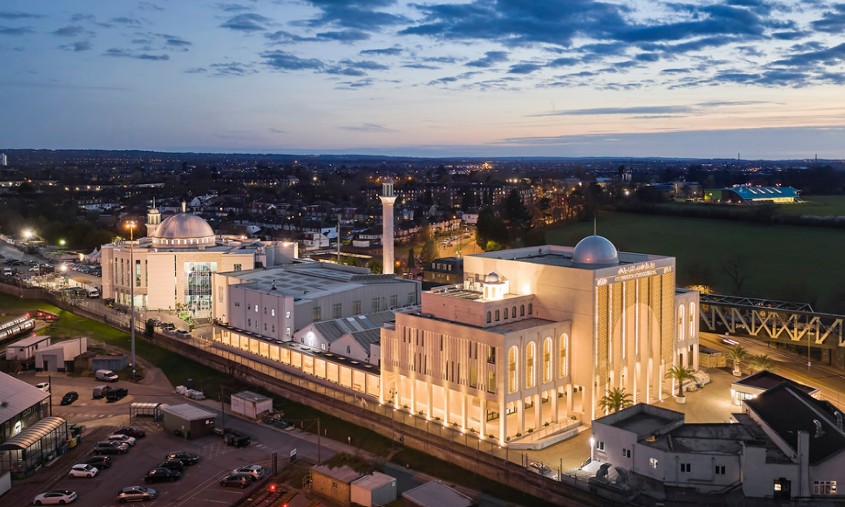
After the UK based religious group ‘The Ahmadi Religion of Peace and Light” was raided by police, with nine arrests for modern slavery and child marriage, the Ahmadiyya Muslim Community has issued a formal statement distancing itself from the organisation.
Due to the similarity in name, what followed was a wave of public confusion triggered by recent media reports.
A clarification statement issued by the UK president of the Ahmadiyya Muslim Community, Mr Rafiq Hayat, explains that the organisations are entirely unrelated and asked media outlets to ensure this distinction is made clear in all future reporting — including previously published online material.
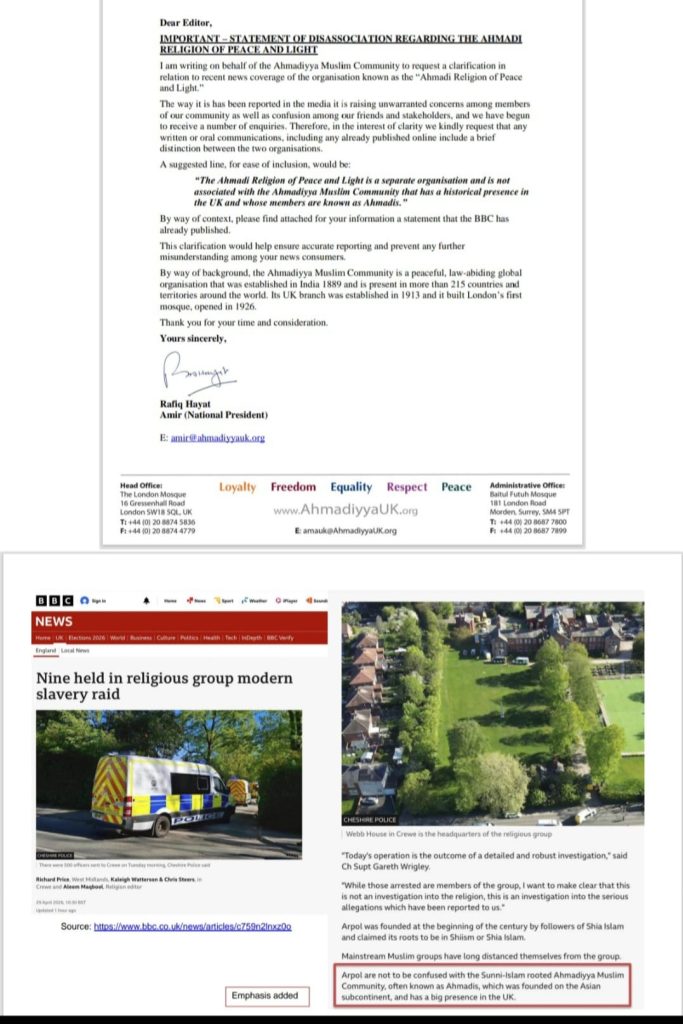
The Community has proposed a standard clarification line for journalists: “The Ahmadi Religion of Peace and Light is a separate organisation and is not associated with the Ahmadiyya Muslim Community that has a historical presence in the UK and whose members are known as Ahmadis.”
Whilst the BBC has already issued a clarification, this statement encourages other media outlets to also do so, suggesting that both friends and stakeholders of the community as well as members of the community have been confused by the media coverage.
The Ahmadiyya Community which has been established in the UK since 1913 and built London’s first mosque in 1926 which is still functioning, have long established themselves as a Muslim sect which abides by the motto “Love for All, Hatred for None.”

Paris (Imran Y. CHOUDHRY):- The World Famous International Agricultural Show has showcased various agricultural sectors. Paris will play host to three complementary exhibitions: the Paris International Agricultural Show (SIA), the Agricultural Technologies and Solutions Exhibition (SIA’PRO), and the Concours Général Agricole.

The 2026 Paris International Agricultural Show opened its doors with a call to support the agricultural sector, with a particular focus on the bovine sector.
Among the highlights, the final of the Ovinpiades des Jeunes Bergers — the Young Shepherds’ Competition — and the opening of the Concours Général Agricole. Côte d’Ivoire is this year’s guest of honour, showcasing its agricultural innovations. Visitors around the world can explore new spaces such as AGRI’CULTURE, featuring screenings, live performances and a themed bookshop. A varied programme of activities for children and a fishmongers’ competition further enrich the event.
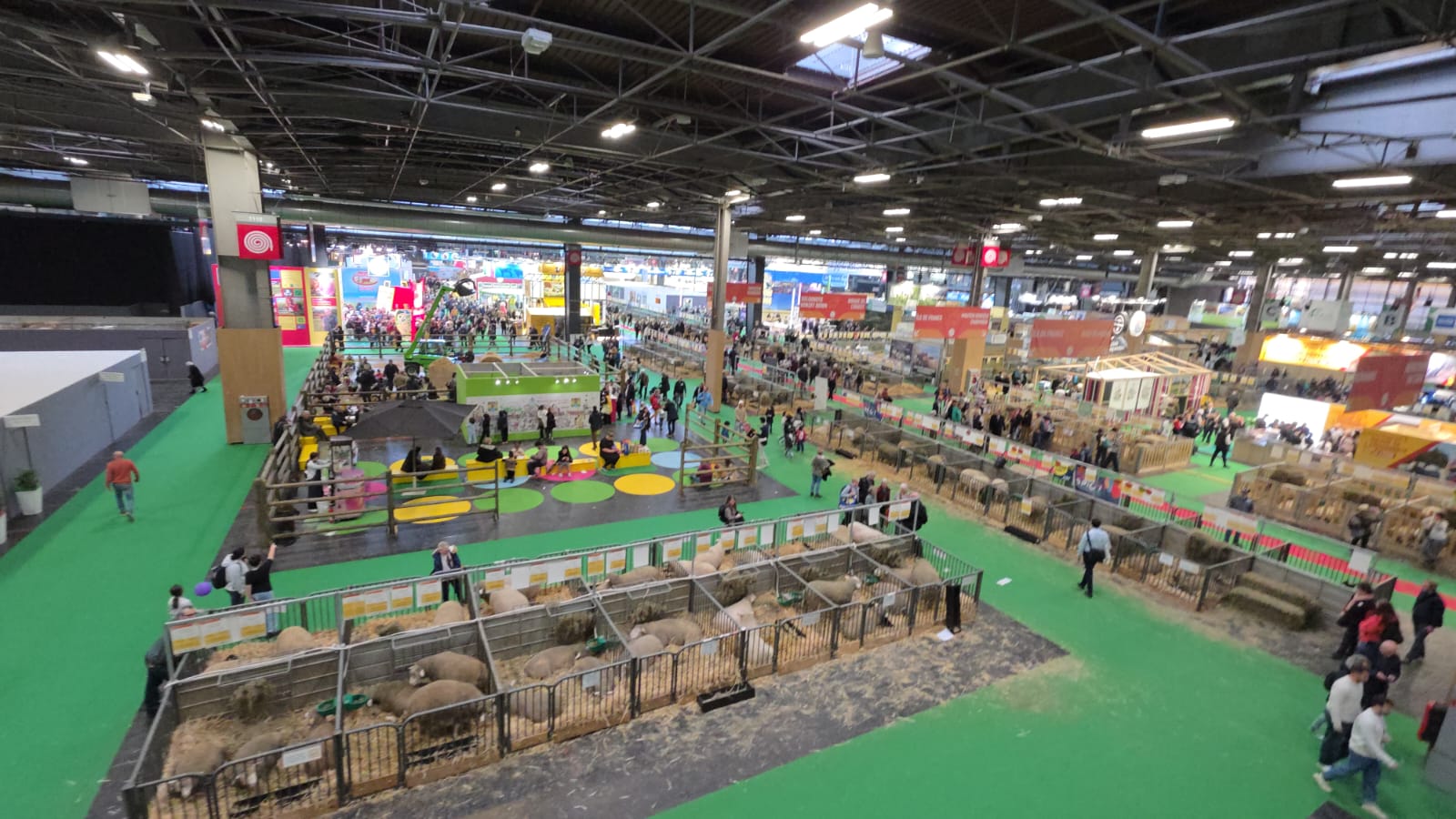
French President Emmanuel Macron attended the opening day and inauguration of the 62nd International Agricultural Fair (Salon de l’Agriculture).
The launch of the Year of Pastoralism at the Grand Ring and the most prestigious Concours Général Agricole wine competition, featuring 100% blind tastings. Côte d’Ivoire, the guest country, celebrates its key sectors: cocoa, coffee, forestry and innovation, through a vibrant and immersive pavilion. On the new additions front, the AGRI’LIBRAIRIE in the AGRI’CULTURE pavilion offers over 800 titles and author meet-and-greet sessions. Today’s programme includes the Texel breed competition, herbal infusion workshops, and Gargantua demonstrations and tastings. Behind the scenes, preparations are underway for SIA’PRO, with professional networking sessions.
The horses and donkeys featuring shows, demonstrations, a pop-up pony club and a special performance by the Cadre Noir. Today’s highlights include a live cooking show with Redouane Bougheraba and Top Chef winner Quentin Mauro, as well as the official launch of Terres de Jim. New this year: guided tours for visually impaired visitors and the opening of SIA’PRO, the professional trade show dedicated to agricultural technologies and solutions. The 3rd GAIA hackathon also kicks off, focusing on AI and agroecology. Finally, the Maison des Vétos invites families to discover careers in animal health.
Women in agriculture as part of the International Year of Women Farmers, featuring testimonials and discussions on their role and ongoing inequalities. A major highlight is the exceptional Cadre Noir de Saumur gala on the Grand Ring, followed by a signing session. Entertainment includes a first-ever classical concert at the CGA restaurant, the official crowning of Miss and Mister Agri, and tastings at the Pacific Village. Pastoralism also takes center stage with the immersive “Transhumance 360°” exhibition. Finally, the Vendée brioche makes its experimental debut at the Concours Général Agricole.
At this exhibition Pakistani Ambassador Madam Mumtaz Zahra Baloch also visited and represented Pakistan at the Ministerial Session on the sidelines of the exposition. During the visit, Ambassador Baloch held constructive exchanges with farmers, innovators, and industry leaders to explore new avenues for cooperation between Pakistan and France in modern agriculture and sustainable agri-technology.
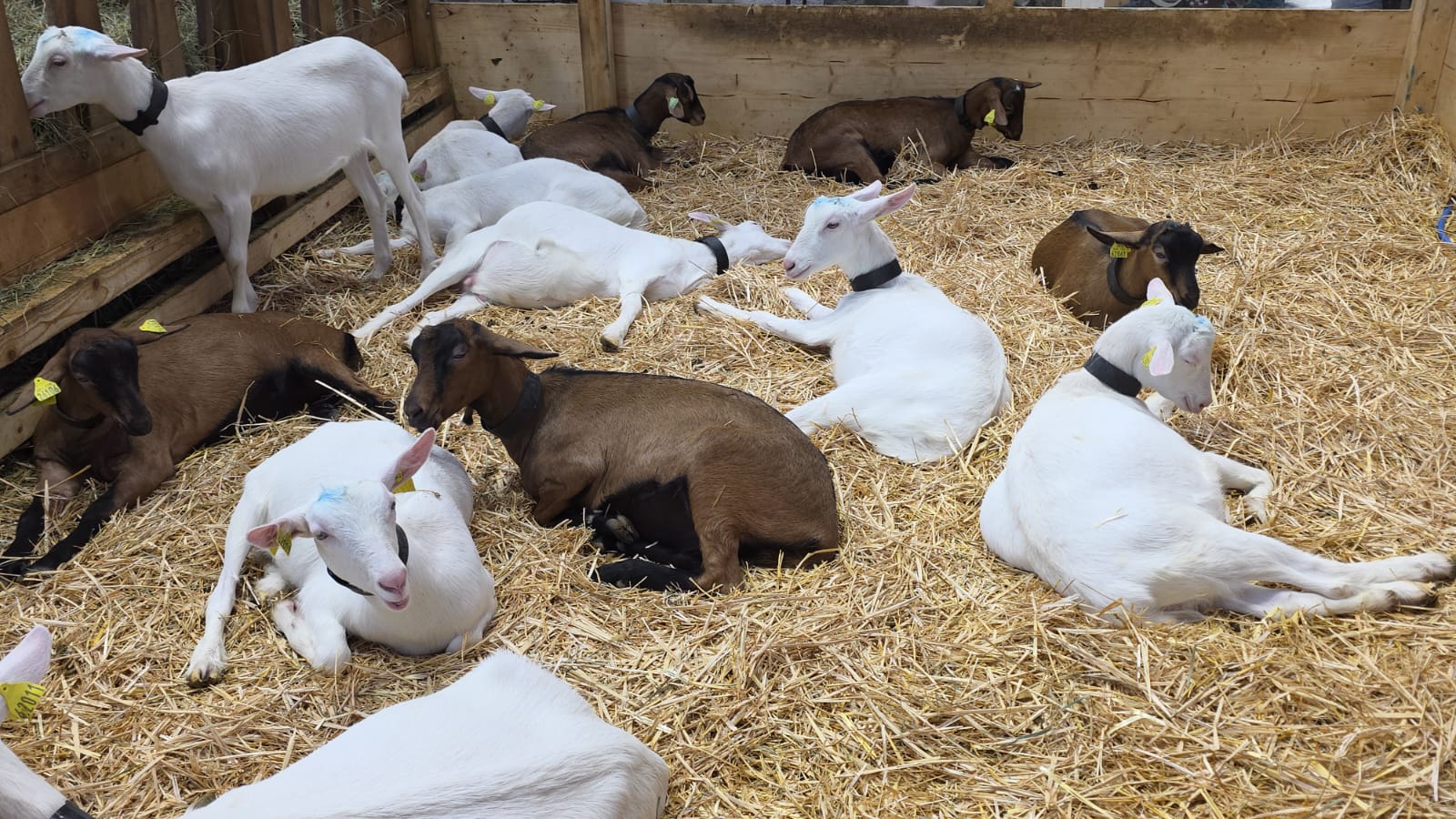
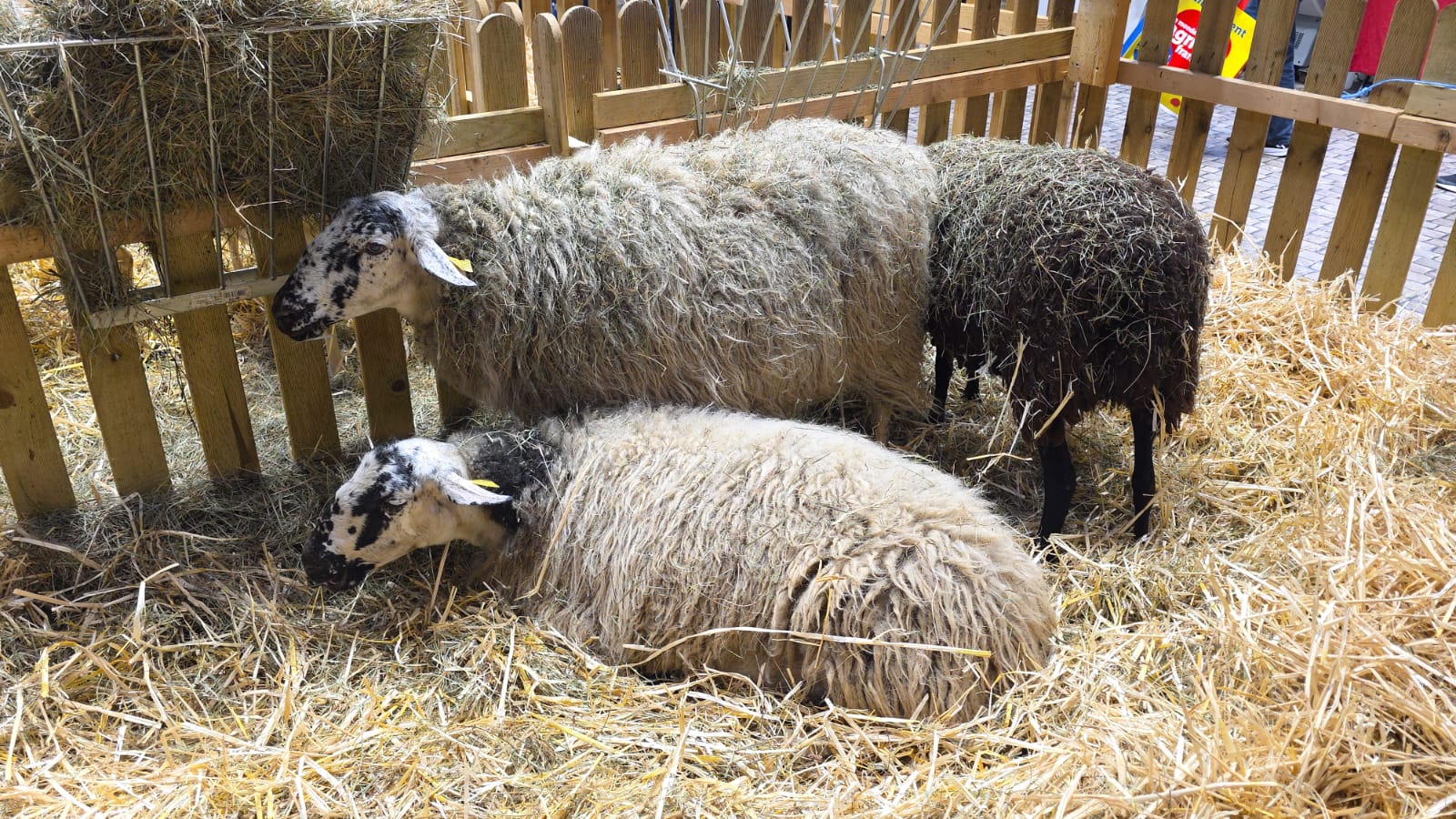
This year, the Paris International Agricultural Show is marked by crises due to climate disasters, trade tensions and unstable incomes, as well as animal disease outbreaks, which have led to there being no cows or poultry at this edition.
Photos @ Imran Y. CHOUDHRY


Quetta’s Daughter, Pakistan’s Pride

Why is Trump a Dictator?

America Must Rebuild Within


-

 Sports4 months ago
South Korea’s Yoo Useong Steps Onto the Global Strongman Stage as World Strongman Federation Professional Athlete
-

 Art & Culture1 year ago
A Survey of Mata-E-Zeest
-

 Europe News2 years ago
Chaos and unproven theories surround Tates’ release from Romania
-

 American News2 years ago
Trump expands exemptions from Canada and Mexico tariffs
-

 American News2 years ago
Trump Expels Zelensky from the White House
-

 Art & Culture2 years ago
Will Snow White be a ‘victim of its moment’? How the Disney remake became 2025’s most divisive film
-

 Entertainment2 years ago
Champions Trophy: Pakistan aim to defend coveted title as historic tournament kicks off today
-

 Pakistan News1 year ago
Comprehensive Analysis Report-The Faranian National Conference on Maritime Affairs-By Kashif Firaz Ahmed