
American News
Trump’s Shadow War Against China


Paris (Imran Y. CHOUDHRY) :- Former Press Secretary to the President, Former Press Minister to the Embassy of Pakistan to France, Former MD, SRBC Mr. Qamar Bashir analysis : In a world increasingly defined by polarized narratives, few leaders evoke as intense a spectrum of reactions as Donald Trump. Critics across global media and political corridors have not hesitated to label his actions as reckless, impulsive, or even dangerous—particularly in the context of escalating tensions in the Middle East. Yet, beneath the surface of this widespread criticism lies an alternative interpretation: that what appears chaotic may, in fact, be a calculated and deeply strategic attempt to reorder global power dynamics, particularly through control of energy resources.
At the heart of this perspective is the doctrine of “America First,” a policy framework that prioritizes U.S. economic and strategic supremacy above all else. Rather than viewing recent geopolitical developments as isolated events, this lens interprets them as interconnected steps in a broader strategy aimed at securing long-term dominance—especially over emerging rivals like China.
During his political rise, Trump repeatedly identified China as America’s foremost strategic competitor. This assessment was not merely rhetorical. China’s rapid economic expansion, its integration with over 140 countries through the Belt and Road Initiative, and its dominance in critical sectors such as rare earth minerals positioned it as a formidable challenger to U.S. global influence. Any serious attempt to counterbalance China, therefore, required not just military strength, but economic leverage of equal or greater magnitude.
Energy, particularly oil and gas, emerged as the most potent instrument in this strategic contest. The United States, already endowed with significant natural resources, dramatically expanded its production capacity under the “drill, baby, drill” policy ethos. Advances in shale extraction and aggressive domestic production turned the U.S. into one of the world’s leading energy producers, rivaling traditional giants like Saudi Arabia and Iran. This surge was not merely about self-sufficiency; it was about positioning the U.S. as a dominant global supplier.
Simultaneously, attention turned toward other major energy reserves—most notably Venezuela, home to some of the largest proven oil reserves in the world. Through a combination of political pressure, sanctions, and strategic interventions, the U.S. effectively reduced Venezuela’s ability to operate independently in global oil markets, thereby limiting alternative supply channels—particularly those accessible to China.
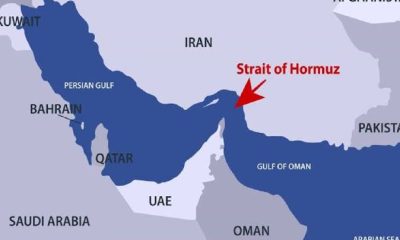
The next phase of this strategy unfolded in the Middle East, a region that has long served as the backbone of global energy supply. Tensions surrounding Iran’s nuclear program—whether viewed as legitimate concerns or strategic pretexts—provided the context for heightened military engagement. In this interpretation, the objective was not solely to neutralize nuclear threats or enforce regime change, but to influence a far more critical variable: the flow of oil through the Strait of Hormuz.
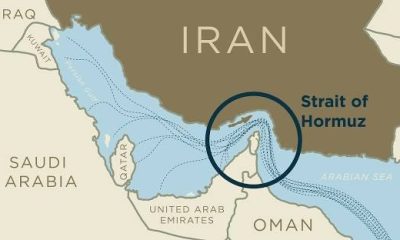
The Strait of Hormuz is one of the world’s most vital chokepoints, through which nearly a fifth of global oil supply passes. Any disruption in this narrow passage sends shockwaves across international markets. By escalating tensions and contributing to instability in the region, the United States effectively created conditions under which oil flows could be restricted, redirected, or controlled.
When regional production facilities were damaged and shipping routes became uncertain, global economies—especially those heavily dependent on imported energy—were forced into a state of urgency. In such a scenario, the United States positioned itself as the most reliable alternative supplier. Reports of large numbers of oil tankers heading toward U.S. ports underscore this shift, reflecting a reorientation of global supply chains.
This redirection of energy flows carries profound implications. Countries that once relied on Middle Eastern oil—many of them key partners of China—are now increasingly dependent on American exports. In effect, energy dependency is being recalibrated, transferring leverage from traditional producers and transit routes to a new central hub: the United States.
For China, this development poses a strategic dilemma. As one of the world’s largest energy consumers, China’s economic engine depends on stable and affordable access to oil. Historically, it has diversified its sources, importing from Iran, Venezuela, and Russia. However, sanctions, geopolitical tensions, and disruptions in shipping routes have significantly constrained these options. If access to these supplies is reduced or eliminated, China faces the prospect of turning—directly or indirectly—to the United States to meet its energy needs.
This dynamic mirrors an existing asymmetry: the global dependence on China for rare earth minerals, which are essential for advanced technologies. By establishing a parallel dependency in energy, the United States potentially creates a counterbalance—an economic lever that can influence even the most powerful economies.
The strategic vision does not end there. Additional proposals, such as pipeline networks connecting Middle Eastern oil fields to Israeli ports and onward to global markets, suggest efforts to create alternative routes that bypass traditional chokepoints while maintaining U.S.-aligned control. Such infrastructure would further consolidate influence over energy distribution, extending beyond 40% toward potentially 60% of global oil flows.
Critics argue that such strategies come at an immense cost: regional instability, economic volatility, and human suffering. The disruption of global trade routes, spikes in energy prices, and the threat of prolonged conflict have placed enormous strain on economies worldwide. Journalists and analysts, often operating far from the realities of decision-making at the highest levels, highlight these consequences and question the rationale behind such policies.
However, supporters of this strategic interpretation contend that leadership at this level requires decisions that transcend immediate perceptions. They argue that the complexities of global power competition demand unconventional approaches—moves that may appear disruptive in the short term but aim to secure long-term advantages.
From this perspective, labeling Trump as irrational or incompetent oversimplifies a far more intricate picture. His background as a businessman—someone who built a vast enterprise and navigated complex negotiations—suggests a familiarity with leverage, risk, and long-term positioning. Whether one agrees with his methods or not, the outcomes of these strategies—particularly in energy markets—indicate a deliberate attempt to reshape global dependencies.
Ultimately, the unfolding scenario represents a broader shift in how power is exercised in the modern world. Military actions, economic policies, and geopolitical maneuvers are increasingly intertwined, forming a cohesive strategy where energy becomes both a tool and a target. The intersection of war and economics, once considered distinct domains, is now central to the pursuit of global influence.
As the world watches these developments, the debate is unlikely to settle into a single narrative. Some will continue to see chaos and recklessness; others will perceive calculated strategy and bold leadership. What remains clear is that the stakes are extraordinarily high—not just for the United States or China, but for the global system as a whole.
In this evolving landscape, one question persists: is the current trajectory a path toward renewed dominance, or a gamble that could redefine the balance of power in unpredictable ways?







Investigators have released new photos that show the stark aftermath of a news helicopter crash that killed three people in Los Angeles on Tuesday night.
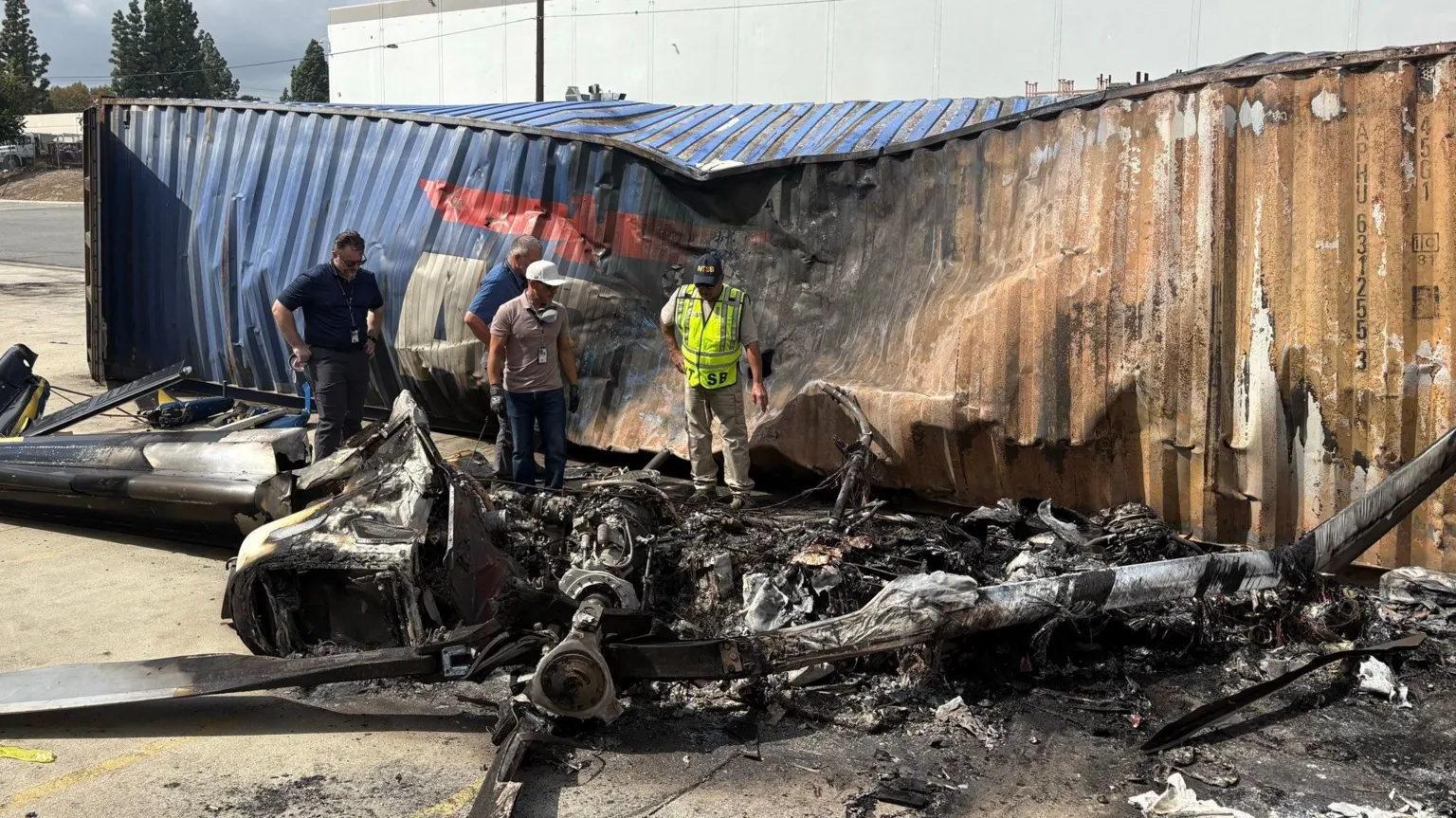
A scorched aircraft and charred storage container were being examined at the scene of the incident on Wednesday. The collision claimed the lives of NBC photojournalist Eliana Moreno and pilot George Marciniw.
The third victim, a pedestrian, was identified as Edy Gutierrez Mejia, 29, by the coroner’s office.
The National Transportation Safety Board (NTSB), which is leading the investigation into the incident, said a report on the cause could take up to 18 months.

NBC Los Angeles said its NewsChopper4, which also operated for the Spanish-language Telemundo 52, was in the city’s suburb on Tuesday night reporting on a deadly bus crash that had killed two people.
Several other news helicopters were also overhead in the area.
The driver in the bus crash has since been arrested on suspicion of murder.
The cause of the aircraft crash has not yet been determined, officials said. Marciniw was reportedly an experienced pilot.
Mejia, the pedestrian killed when the helicopter came down, was a Guatemalan national who had only arrived in Los Angeles this week, according to NBC News.
Investigators were collecting data at the crash site on Wednesday. The helicopter will be moved to a secure facility, where the NTSB will continue to examine the wreckage.
The NTSB is an independent US government agency that investigates civil transportation accidents.
During a news conference on Wednesday, the NTSB’s investigator-in-charge Fabian Salazar said a preliminary report on the incident would be issued within 30 days.
A final report on the cause of the crash could take up to 18 months to be released, he added.
Asked by reporters about video circulating on social media that appears to show the helicopter’s viewpoint in the seconds before the crash, Salazar said it is so far “probably the most important evidence” for investigators.
In addition to the three people killed, two others were taken to the hospital.
During emotional live coverage on NBC4 on Tuesday night, veteran news anchor Colleen Williams confirmed it was the local news station’s helicopter that crashed.
While news coverage via helicopter is not necessarily unique to Los Angeles, it is more prominent compared to other major metropolitan areas.
LA local news stations regularly break into live programming to broadcast high-speed police pursuits from the air, fly over wildfires and show accidents, protests, and holiday traffic jams in often unscripted, real-time aerials.
Taken From BBC News
The US Supreme Court has rejected President Donald Trump’s plan to restrict voting by mail before November’s midterm elections, in a setback for the White House.
The justices upheld a federal judge’s order that temporarily blocked the US Postal Service (USPS) from moving forwards with new requirements for postal ballots.
Trump called the decision a blow to his political party. “Republicans just got another bad decision from the United States Supreme Court,” the president wrote on Truth Social.
One legal group said in response that the decision would prevent the USPS from “sowing chaos in our elections”.
The ruling is unlikely to be the final word on the matter. Justice Brett Kavanaugh, a conservative, agreed with the ruling, but indicated he might later rule in Trump’s favour as litigation in the case continues.
Trump, who argued the rules would combat electoral fraud, signed an executive order in March that directed the USPS to deliver ballots only to voters on lists of citizens.
Legal challenges argued that the move violated states’ constitutional rights to run elections.
Election officials from 24 Democratic-led states and the District of Columbia also warned that the proposed changes were not ready for implementation and could prevent ballots from reaching voters.
Meanwhile some Republican-led states, including Florida, Louisiana, and Montana, supported the president in court filings.
Justice Kavanaugh wrote in the opinion that there was “at least a fair prospect that the final rule falls within the Postal Service’s statutory authority”. But he argued that “applying the rule in the 2026 elections would be arbitrary and capricious”.
Justices Samuel Alito and Clarence Thomas, also conservatives, dissented. They wrote that the challenge to Trump’s order was a “Hail Mary pass” that was unlikely to be successful ultimately.
In a Truth Social post, Trump criticised the top court’s Monday decision, as well as other key rulings against him such as striking down his executive order to limit birthright citizenship, and also a key element of his tariff policies.
“The Supreme Court has really let our Country down!” he wrote, alleging some justices were “totally unable to show the courage necessary to save our America”.
“These are not the people I interviewed to serve on the United States Supreme Court,” the president wrote.
However, several states like Oregon, Washington, and Colorado rely heavily or entirely on mail ballots for their elections, requiring Republicans to use the system as well.
Seven Republican state election officials warned the justices that allowing significant changes to mail ballot rules so close to the midterm elections would “lead to mistakes, delays, and confusion”.
Local election officials told the BBC this week they were proceeding as normal but had begun drafting contingency plans in case the court upended existing mail ballot procedures.
The rule changes would have resulted in “thousands of people disenfranchised” in Cherokee County, Georgia, its election director Anne Dover told the BBC. The heavily Republican county voted 69% for Trump in the 2024 election, in which about 10,000 of its residents voted by mail, according to Dover.
Monday’s decision earned praise from legal groups who have challenged other aspects of the Trump agenda.
“Today’s Supreme Court decision prevents the US Postal Service from sowing chaos in our elections,” Trevor Potter, president of Campaign Legal Center, said in a statement.
Since returning to the White House, Trump has sought to restrict voting by mail. While he himself has voted by post, he has long claimed this method allows non-citizens to cast ballots and is prone to fraud.
In March’s executive order, the president directed USPS to introduce unique barcodes on postal ballot envelopes.
State and local election officials would also be required to supply information to an online portal about voters who receive mail ballots.
Twenty-three states and Washington DC sued to stop Trump’s order.
The postal workers’ union also said clerks could not be trained in time for the election.
In court filings, the Trump administration maintained the new USPS rules were constitutional.
It said states “cannot choose to use the federal mails to carry out their elections but then insist that their election-related mail is somehow exempt from the Postal Service’s rule-making authority, conferred by Congress”.
Boston-based Judge Indira Talwani imposed an injunction on 4 September blocking Trump’s order. She ruled that implementing the measures close to November’s elections could disenfranchise voters.
Last week, a US appeals court refused to put Judge Talwani’s order on hold.
On Sunday, another federal judge, Judge Carl Nichols, ruled against Trump’s order.
Some states have already begun distributing mail-in ballots ahead of the midterm elections, which will decide which party controls Congress.
Some states that had not yet sent ballots had already printed their election materials, and changing their voting materials would have required starting the process anew.
“Hypothetically, if we did have to implement, it would have a huge impact, and it would be very costly. At this point, we already have our envelopes printed,” Josh Zygielbaum, the Adams County, Colorado clerk and recorder, told the BBC the day before the Supreme Court ruled.
Colorado conducts its elections by mail, and Zygielbaum had been creating contingency plans in the event its voting system had been disrupted.
The Supreme Court decision is not the first setback on postal ballots for Trump.
In June, the justices ruled that states may count ballots postmarked by election day, rejecting the Trump administration’s push to block votes being tallied when they are received after polls close.
Trump has previously made false claims that he lost the 2020 election owing to widespread electoral fraud.
Taken From BBC News
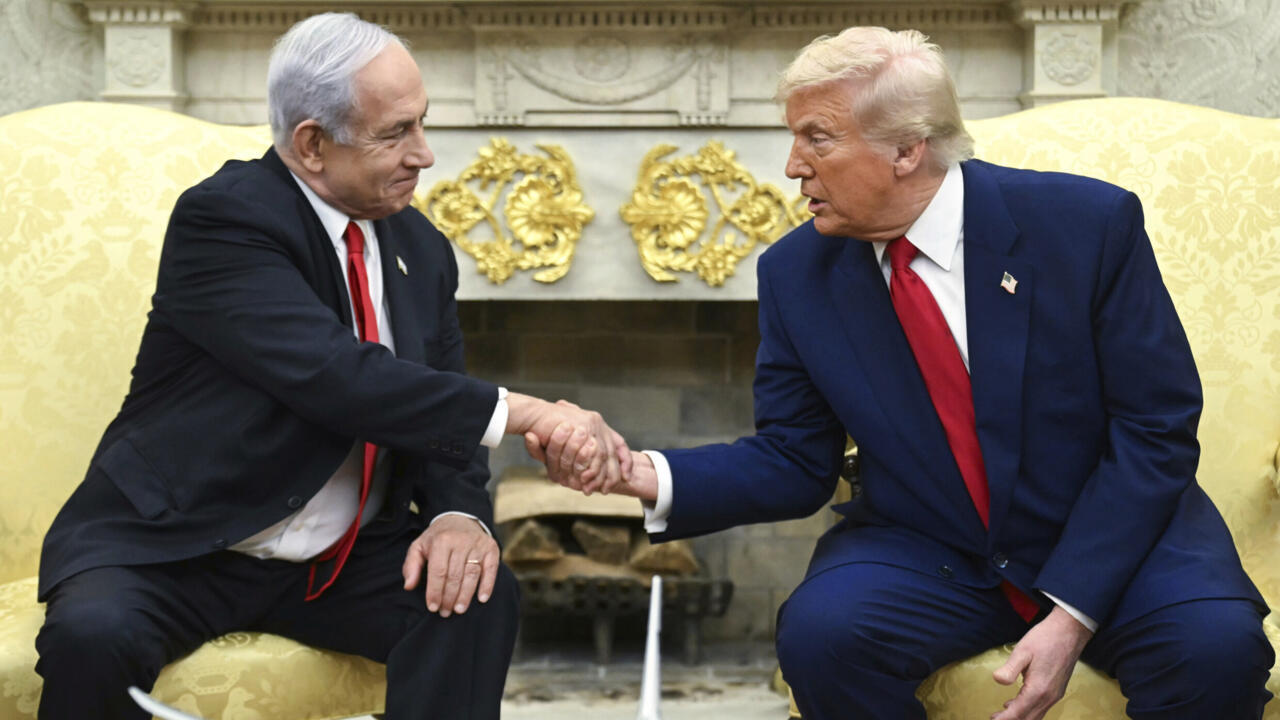
Paris (Imran Y. CHOUDHRY) :- Former Press Secretary to the President, Former Press Minister to the Embassy of Pakistan to France, Former MD, SRBC Mr. Qamar Bashir analysis : Military strikes, economic strangulation and an open-ended American deployment risk turning pressure on Tehran into collective punishment of ordinary Iranians—and dragging the entire Middle East deeper into war.
The United States and Israel appear to be constructing two arms of the same pressure campaign against Iran. Israel threatens overwhelming military destruction if Tehran again attacks it, while Washington is tightening Iran’s economic isolation and maintaining a formidable military presence across the Middle East.
One attacks the state’s physical capacity; the other squeezes its financial oxygen. Between them stand nearly 90 million Iranian citizens who will ultimately bear much of the cost.
Washington describes its strategy differently. The Trump administration argues that sanctions, blockade and selective military pressure are intended to force Tehran to change its behavior and return to negotiations. Yet the scale and duration of the campaign increasingly raise a disturbing question: at what point does pressure on a government become collective punishment of a population?
Treasury Secretary Scott Bessent has used unusually uncompromising language about America’s economic objective. Washington has launched an intensified campaign against Iran’s international financial and commercial lifelines, targeting shipping, aviation, technology, gold, digital assets and financial networks. Foreign companies and banks dealing with sanctioned Iranian entities face the enormous leverage of America’s dollar-based financial system.
The strategic objective is clear: deprive Tehran of revenue, foreign currency and international commercial access until economic pressure forces political concessions. But economies are not governments.
When oil revenue collapses, ordinary citizens lose purchasing power. When a currency depreciates, food, medicine and imported necessities become more expensive. When companies cannot trade, workers lose jobs. When banking channels close, families and legitimate businesses suffer alongside the institutions Washington actually intends to punish. Economic warfare may produce fewer dramatic television images than missiles, but its human consequences can penetrate every household.
That is why the language of economic strangulation is so troubling. Iran’s leadership may be the declared target, but Iranian families inevitably become part of the battlefield. A pensioner purchasing medicine, a mother buying groceries or a worker trying to support his family cannot isolate himself from inflation, shortages and economic contraction merely because sanctions were designed to influence his government. Meanwhile, military pressure is not disappearing.
Defense Secretary Pete Hegseth has extended major American deployments in the Middle East into 2027. Approximately 50,000 U.S. military personnel and 19 warships remain positioned across the region, supported by fighter aircraft, air-defense systems and other forces. The deployment unmistakably demonstrates that America is preparing for a prolonged confrontation. That creates an extraordinary contradiction.
President Donald Trump speaks about limiting military involvement and relying increasingly upon economic pressure, while the Pentagon maintains the infrastructure required for blockade enforcement, missile interception, protection of commercial shipping and renewed offensive operations. This is not disengagement. It is military readiness combined with economic warfare.
Israel adds another dimension. Israeli leaders have again threatened devastating attacks against Iranian military and other strategic infrastructure. After months of conflict, the danger is that the distinction between military pressure and destruction of the economic foundations sustaining civilian life becomes progressively blurred.
Recent American strikes demonstrate how quickly civilians can become victims even when governments insist that they are attacking military targets. Iranian authorities reported civilian deaths and injuries following the latest U.S. operations, including casualties associated with a reported strike near a wedding gathering. Washington says it does not intentionally target civilians and is investigating that incident. But for the dead and wounded, intention does not reverse the consequences.
The greater danger is what happens if economic strangulation and repeated military destruction continue simultaneously. Iran possesses one of the Middle East’s largest populations. It also occupies perhaps its most strategically consequential geography. The Strait of Hormuz sits beside its coastline, while American bases, Gulf oil installations, shipping routes and some of the world’s largest energy facilities lie within the broader theater.
Iran cannot match the United States conventionally. It cannot match Israel’s combination of advanced aircraft, intelligence capabilities and sophisticated missile defenses. But it can retaliate asymmetrically. That retaliation would not fall primarily upon the American homeland thousands of miles away. It would fall upon the Middle East.
This is the strategic nightmare now developing. If American and Israeli pressure devastates Iran, Tehran may respond by expanding attacks against military facilities, shipping and infrastructure throughout the Gulf. Iran could be destroyed while simultaneously inflicting enormous damage upon neighboring economies. Everybody loses.
The assumption that sufficient suffering will automatically produce a government favorable to Washington is equally dangerous. Iranian history should discourage such confidence. Foreign intervention helped overthrow democratically elected Prime Minister Mohammad Mossadegh in 1953. A quarter-century later, the Shah—Washington’s principal regional ally—was swept away by a revolution that produced a government dramatically more hostile to the United States.
Destroying today’s Iranian state would offer no guarantee that tomorrow’s Iran would be moderate. The opposite could occur.
If central authority fractures, organized government and conventional armed forces could give way to militias, underground networks and radical organizations. A centralized adversary can negotiate, sign agreements and enforce them. A fragmented landscape of armed groups may produce decades of asymmetric warfare. Iraq, Libya, Syria and Afghanistan should have taught the world that destroying institutions is much easier than constructing stable replacements. There is also a moral question America cannot escape.
For generations, the United States presented human rights, civilian protection and international law as essential elements of its global leadership. American influence came not only from aircraft carriers and dollars but from universities, technology, culture, diplomacy, alliances and the belief—sometimes justified, sometimes contested—that American power represented certain universal principles.
That soft power is an enormous strategic asset. Every civilian casualty, every image of devastated infrastructure and every Iranian family pushed toward desperation risks consuming another portion of it. The Muslim world therefore cannot remain a spectator.
Saudi Arabia, Türkiye, Pakistan, Qatar, Oman, the UAE and other influential states should urgently seek an emergency session of the Organisation of Islamic Cooperation. The purpose should not be rhetorical condemnation. It should be the construction of a serious diplomatic initiative demanding both Israel and USA to stop this unfortunate war of choice otherwise face kinetic, economic, investment, trade and diplomatic offensive from all the Muslim states whether small or big.
The Middle East is approaching an escalation trap in which every strike supposedly justifies another strike, every sanction invites countermeasures and every temporary pause becomes an opportunity to replenish weapons and identify new targets. Sooner or later, somebody must interrupt that cycle.
If diplomacy fails and military destruction combined with economic suffocation, history may judge that Iran was not the only casualty. The victims could include regional stability, the global economy, America’s soft power and the possibility of a generation of peace in the Middle East.
The time to prevent that outcome is now—before pressure intended to change Iran ends up destroying far more than Iran.


CM Murad asks authorities to boost polio vaccination across Sindh

Dealers await answers as fuel subsidy rollout begins

Islamabad, Beijing activate joint border commission


-

 Sports3 months ago
South Korea’s Yoo Useong Steps Onto the Global Strongman Stage as World Strongman Federation Professional Athlete
-

 Art & Culture1 year ago
A Survey of Mata-E-Zeest
-

 Europe News2 years ago
Chaos and unproven theories surround Tates’ release from Romania
-

 American News2 years ago
Trump expands exemptions from Canada and Mexico tariffs
-

 American News2 years ago
Trump Expels Zelensky from the White House
-

 Art & Culture2 years ago
Will Snow White be a ‘victim of its moment’? How the Disney remake became 2025’s most divisive film
-

 Pakistan News1 year ago
Comprehensive Analysis Report-The Faranian National Conference on Maritime Affairs-By Kashif Firaz Ahmed
-

 Entertainment2 years ago
Champions Trophy: Pakistan aim to defend coveted title as historic tournament kicks off today