
Art & Culture
PAKISTAN PAVILION SHINES AT INTERNATIONAL VILLAGE OF GASTRONOMY PARIS

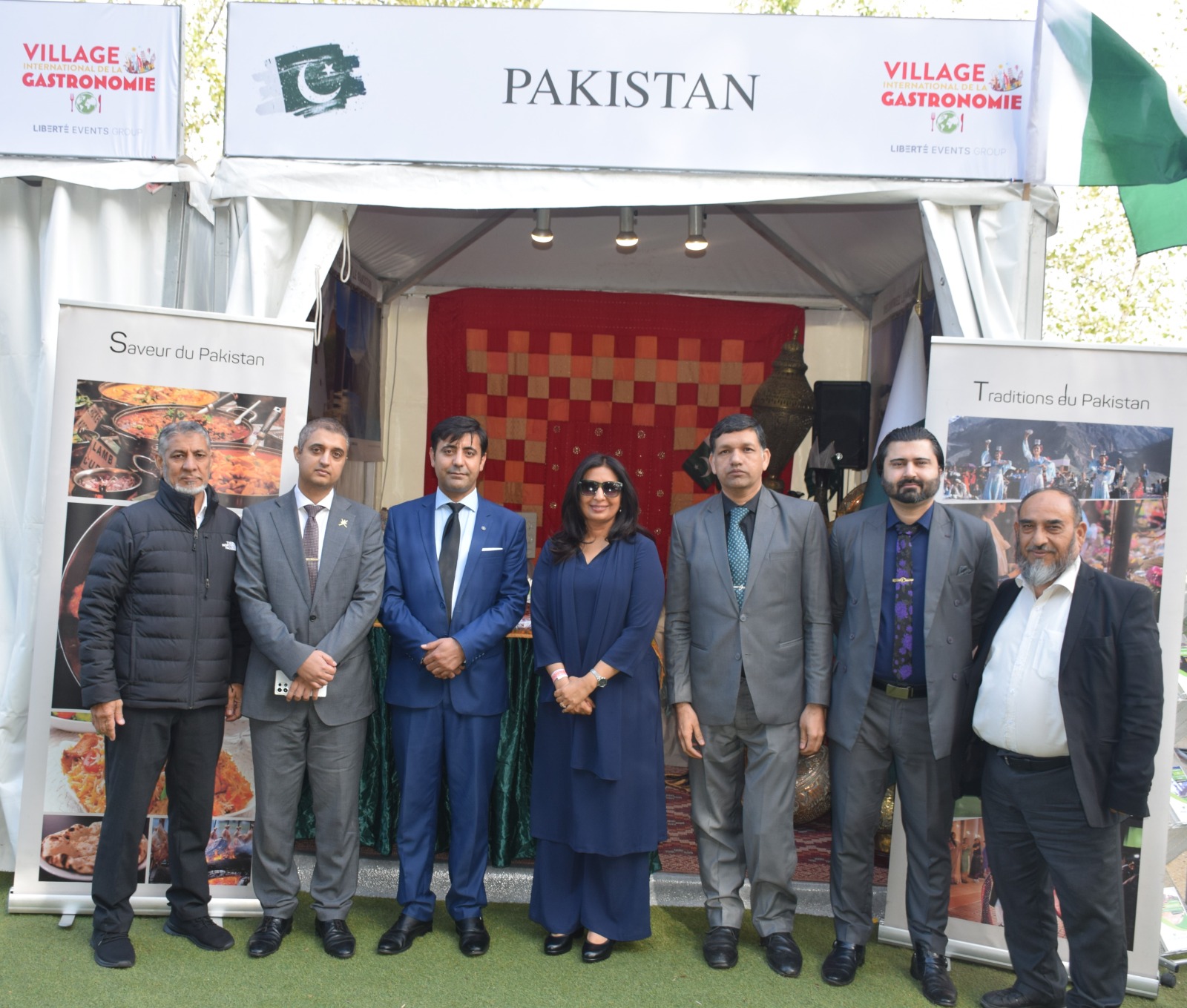
Paris ( Imran Y. CHOUDHRY):- Ambassador of Pakistan to France Mumtaz Zahra Baloch visited the International Village of Gastronomy Paris at the invitation of its President and Founder Anne-Laure Descombin. It is one of the biggest gastronomy events in Paris being held since 2016 and aims to celebrate the richness of culinary traditions from around the world.
Inaugurating the Pakistan pavilion Ambassador Baloch highlighted the rich culinary heritage and culture of Pakistan. She appreciated the tradition of holding international gastronomy festivals to promote understanding and appreciation of the cuisine and cultures of countries around the world. Pakistan’s participation in this year’s festival is part of a series of public diplomacy initiatives being taken by the Embassy of Pakistan with a vision to popularize Pakistan’s culture and cuisine in France.
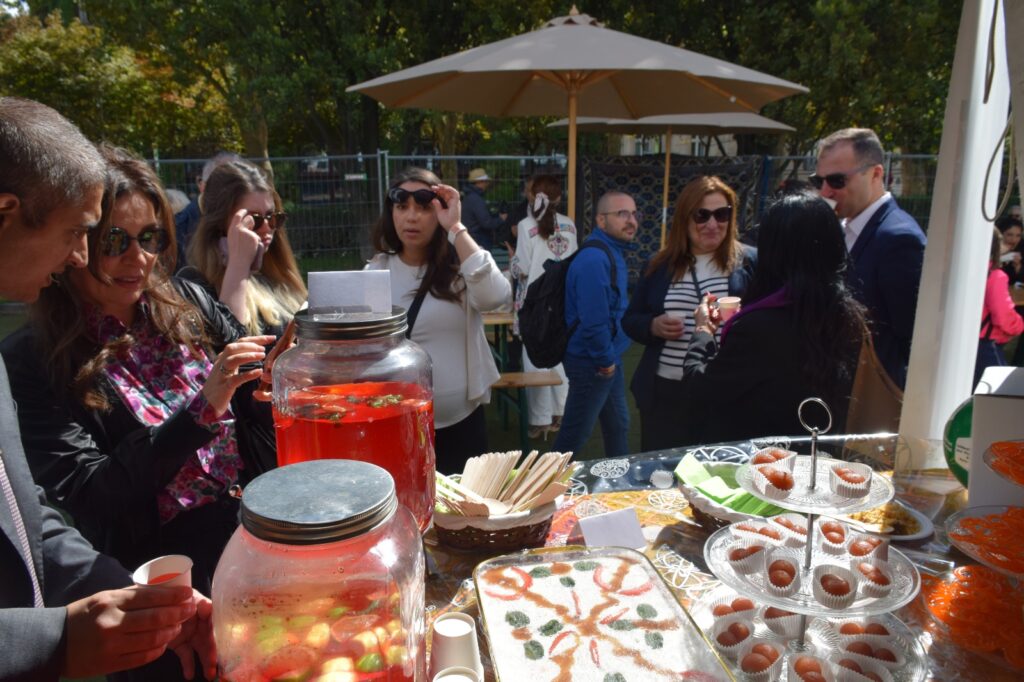
Pakistan’s pavilion remained center of attraction at the Festival as food lovers came in large numbers to enjoy Pakistani cuisine and learn about the traditional culinary culture of Pakistan.

The visitors also appreciated the diversity of the savory and sweet dishes on display: chicken biryani, channa chaat, chicken seekh kebab, vegetable samosas, gulab jamans, jaleebi along with the famous drink rooh afza and mango juice. They showed keen interest in the cooking process, the ingredients used and the recipes of the dishes.

This year the Embassy of Pakistan is participating in this mega event along with some 62 other countries and French regions. The event will continue for four days and is expected to receive over 10,000 visitors daily.

The Ambassador also appreciated the Embassy team for their zest and hard work in organizing the event.










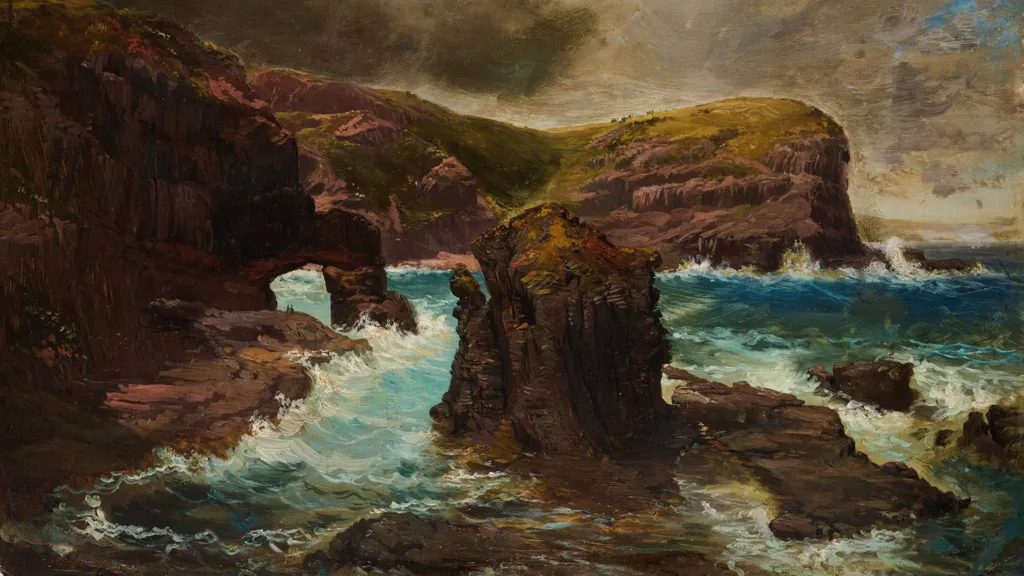
A rediscovered 19th Century oil painting bought for £20 in a charity shop could be auctioned for up to £20,000.
Cape Schanck, Victoria, by Russian-Swiss artist Nicholas Chevalier, was discovered in a charity shop in Maidenhead, Berkshire.
It was brought to the attention of Adrian Biddell at London’s Olympia Auctions, who established the painting was a Chevalier work that had been missing for 160 years.
“To find it now, quite unexpectedly, in a corner of the British high street, is an extraordinary find,” he said.
The painting dates from 1862 and depicts the dramatic, rugged coastline at the southernmost tip of Australia’s Mornington Peninsula, about 60 miles (96.5km)south of Melbourne.
The auction house said only two of five en plein air – meaning painted directly in front of the landscape it depicts – views of Cape Schanck by Chevalier that year were known to have survived until now.
Both are in the collection of the Art Gallery of New South Wales in Sydney.
It said the charity shop buyer had liked the landscape but had not been familiar with the artist or the painting’s value.
Its appearance “resolves a longstanding gap in the documented history of Chevalier’s work”, it said.
It was leading Chevalier expert Simon Gregg who confirmed its whereabouts had previously been recorded as “unknown” in his catalogue of the artist’s work.
“This was definitely painted en plein air,” he said. “This was Chevalier’s typical modus operandi.”
Gregg added: “Most of the oil sketches have not survived, hence my delight that this one has shown up.”
Biddell said Chevalier “was a remarkable visual talent, with an extraordinary ability to capture the drama, power and sheer scale of the natural world”.
“The discovery of Cape Schanck, Victoria is hugely exciting,” he said.
The painting will go under the hammer on 9 December.
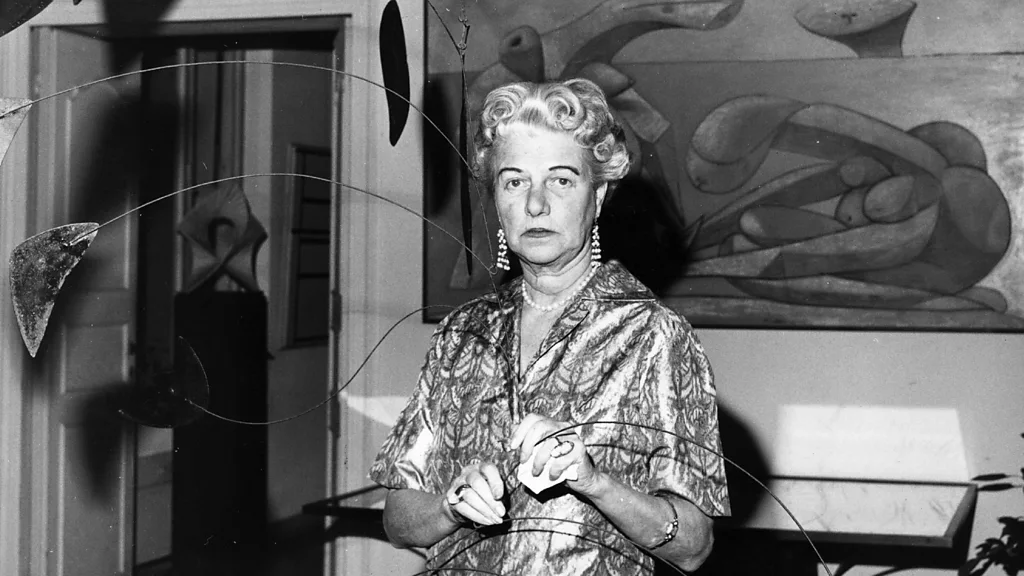
She bravely rescued modernist masterworks from Nazi confiscation and championed the most brilliant artists of the 20th Century – among them Mark Rothko and Jackson Pollock – at the start of their careers. So why was this remarkable art collector sneered at, and remembered mostly for her romantic life?
Peggy Guggenheim was a bohemian free spirit, whose passion for art was matched only by her passion for men. When asked by an interviewer how many husbands she had had, she quipped “My own, or other people’s?” Peggy was born into the hugely wealthy Guggenheim family, which included her uncle Solomon, who went on to found one of the most iconic art museums in New York.
Her insistence on living her life as she chose, turning her back on the life of bourgeois conformity in which she had grown up, led the US writer Gore Vidal to describe her as “the last of Henry James’s transatlantic heroines, Daisy Miller with more balls.” But the fascination with her private life has tended to overshadow just how important she was in transforming our understanding of 20th-Century art.
“I think she’s been underrated. People talk so much about her relationships, all the advisors who helped her make decisions, but Peggy was really groundbreaking herself,” says Gražina Subelytė, co-curator of Peggy Guggenheim in London: The Making of a Collector at The Royal Academy.

An often-overlooked example of her free spirit, and one that would prove to be as valuable as any of the advice she later received, was her decision to escape the rigid social orthodoxy of her family by volunteering in the Sunwise Turn Bookshop in New York. Part bookshop, part art salon, this pioneering, avant-garde establishment – owned and run by women – gave Peggy an insight into how “a woman could do something extremely creative and independent,” says Simon Grant, the exhibition’s co-curator.
Here, Peggy met artists and was encouraged by the cultured clientele to study art history. “Her sister Hazel later said that if it hadn’t been for the Sunwise Turn, Peggy would have been playing golf at the Westchester Country Club,” Grant tells the BBC.
However it would be another 17 years – during which time she settled in England, married and divorced her first husband, the eccentric and sometimes violent English writer Laurence Vail, had two children, and embarked on a number of affairs – before she began to seriously think about setting up her own gallery.

The inheritance of $450,000 (around $5m or £3.8m today) that she received on the death of her mother in 1937 helped fund it. It’s a frequent misconception that Peggy was as wealthy as the other Guggenheims, but her father’s decision to abandon the family mining business and squander his fortune – before going down with the Titanic in 1912 – meant that her side of the family were, relatively speaking, the poor relations.
Her trailblazing London gallery
The new gallery in London was called Guggenheim Jeune, which highlighted Peggy’s position as the younger family member in the art world. Her uncle Solomon was yet to open his museum, but was in the process of building a collection in New York with the aid of Hilla Rebay, widely assumed to be his mistress, who Peggy later described as her “nemesis”. When she wrote to her uncle, at the request of artist Vasily Kandinsky, suggesting he purchase one of his works for his collection, she received a stinging rejection from Rebay stating that with her gallery “you will soon find you are propagating mediocrity, if not trash”.
Everything that Peggy was showing was really and truly groundbreaking – she was making bold choices – Gražina Subelytė
Nothing could be further from the truth. During a trip to Paris in 1937 she had met the Irish novelist and playwright Samuel Beckett, who became another lover and persuaded her to dedicate her life to contemporary art as “a living thing”. With Guggenheim Jeune she would begin doing just that, shaking up the stuffy British art world by injecting a much-needed dose of internationalism.

It opened as it meant to go on with an exhibition by Jean Cocteau that featured drawings on bedsheets depicting his lover’s pubic hair covered with leaves, and later hosted the first UK solo shows dedicated to Kandinsky, Danish Surrealist Rita Kernn-Larsen and Yves Tanguy (who was another lover, and created a beautiful pair of earrings for her).
It also held an innovative exhibition of children’s art which featured work by a young Lucian Freud. “Everything that Peggy was showing was really and truly groundbreaking and she was making bold choices. She was presenting something that was not yet on view in the main museums in London,” Subelytė tells the BBC.
One of the most influential exhibitions was a group sculpture show including work by Jean Arp, Constantin Brâncuși and Henry Moore which completely changed attitudes to contemporary sculpture in the UK. When works destined for the show were stopped by British customs agents who wanted to tax them as imported stone, the then director of the Tate, JB Manson was called in to rule on whether or not they were art. When he declared they were not, the case ended up in the House of Commons where Peggy eventually won the day. “Mr Manson not only lost his case, but pretty soon his job as well. I thus rendered a great service to foreign artists and to England,” Peggy declared.
How she rescued great art from the Nazis
When her gallery closed in 1939, Peggy had dreams of opening a permanent museum of modern art, but the outbreak of war put paid to her plans. Aware that the art she was championing had been labelled “degenerate” by the Nazis, she instead headed to France with the aim of saving an artwork a day.

She amassed an incredible haul which included works by Picasso, Brâncusi, Klee, Mondrian, Magritte and Kandinsky, however when she asked The Louvre if they might look after it in their rural hiding space, she was told her collection was too modern to be worth saving. It eventually left the country with the aid of a shipping agent she’d had an affair with, in crates labelled as household goods.
It was an extraordinarily brave thing for Peggy to do as a Jewish woman. She had a lucky escape in Vichy-controlled Marseilles when police entered the hotel room where she had hidden wads of the black-market cash, needed to facilitate the passage of the various artists she was also helping to escape to New York. These included Max Ernst, to whom she was married from 1941 until 1946.
Arriving safely in New York in 1941 she set about organising her next influential gallery, Art of This Century, which opened its doors in 1942. Here, she championed Mark Rothko and Jackson Pollock, to whom she also gave a monthly stipend which allowed Pollock to quit his job as a carpenter at her uncle’s newly opened Museum of Non-Objective Painting.

Peggy also played a vital role in promoting female artists. The Exhibition of 31 Women, which included work by Frida Kahlo, Leonora Carrington and Méret Oppenheim, was the first all-women show in America.
However, she came to regret her decision to send the womanising Ernst, by then her husband, out to select the works to be included in the show, as in the process he met and fell in love with the painter Dorothea Tanning. Peggy later quipped that she should have only had 30 women in the show.
‘Nymphomaniacal revelations’
Peggy was riding high on the success of the gallery when she released the first version of her autobiography, Out of This Century, an uninhibited account of her life and loves.
There’s no way that she didn’t know that the things she was writing were going to appal her family and the people around her, but she enjoyed it – Francine Prose
It shocked readers and the press alike, with The Chicago Tribute suggesting Out of My Head as a more appropriate title for her “nymphomaniacal revelations”.
“There’s no way that she didn’t know that the things she was writing were going to appal her family and the people around her, but she enjoyed it, I think she really got off on it,” Peggy’s biographer Francine Prose tells the BBC.

Largely on account of the book, when she left New York for Venice in 1947, hoping to finally realise her dream of creating a permanent museum, her reputation obscured her accomplishments. However, she eventually had the satisfaction of showing her collection, to great acclaim, in institutions that had once dismissed her art – The Tate in 1964 and L’Orangerie, then part of The Louvre, in 1974. In 1969 she even showed her collection at The Solomon S Guggenheim Museum in New York in the Frank Lloyd-Wright designed building she once dismissed as “uncle Solomon’s garage.”
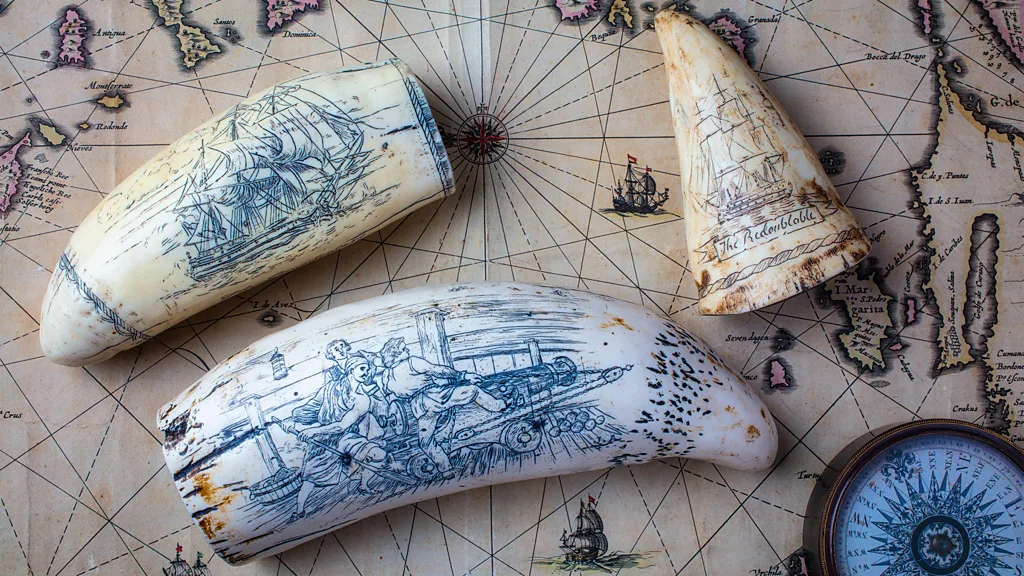
As Moby Dick turns 175, some of the last American scrimshanders grapple with the legacy of maintaining one of the US’s oldest art forms.
Jade Gotauco spent her childhood among the skeletons of giants. Her father, Chet Gotauco, was a scrimshander – an artist who etched images onto the ivory of hunted whales. In pensive moments, she would slip under the arched jaw of a whale in his Rhode Island garden and sit atop a massive vertebra, watching insects scrabble across the porous bone.
“My favourite smell in the world is the sandy aroma of ivory dust,” said Gotauco, now an artist herself. Whale teeth adorn the walls of her studio in New Bedford, Massachusetts; she engraves them with nautical scenes in which sperm whales thrash the ocean to foam and whalers hurl barbed harpoons from minute boats.
Ask Americans about the cultural legacy of whaling, and many will point to Herman Melville’s classic novel Moby Dick, which turns 175 next month. Yet for all the book’s brilliance, it’s scrimshaw – the practice of artistically carving whale teeth and bones, which is considered one of the US’s earliest homegrown art forms – that offers a true insider’s view of the industry.
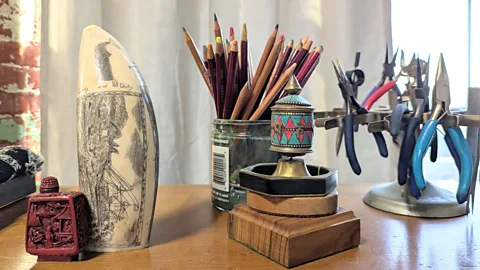
Today, there’s hardly any of those teeth and bones left on the legal market. Some scrimshanders, including Gotauco, believe the art form should disappear with them. “When the ivory is gone, this is over,” she said.
Scrimshaw was developed by sailors whose lives unfolded on whaling grounds around the globe as the industry expanded into a 19th-Century behemoth. They strove to depict a culture that, for a few lucrative decades, made New Bedford North America’s wealthiest city per capita.
Back then, everyone was a scrimshander. Now I’m one of the last – Michael Vienneau
“They saw their experiences as important,” said Marina Wells, an assistant curator at the New Bedford Whaling Museum, which is home to the largest scrimshaw collection is the world. “You see that in their commemoration of whaling scenes, in all their meticulous detail.”
Some of the carvings throb with yearning, depicting homey scenes of faraway families. Others capture sailors rowing fragile, open boats dwarfed by the whales they pursued. They’re communicating “the dangerous, faraway world of whaling”, Wells said. “You have the bloody spouts of the whales after their lungs have been punctured… the intimacy of whalemen interacting with whale bodies that’s really hands-on.”
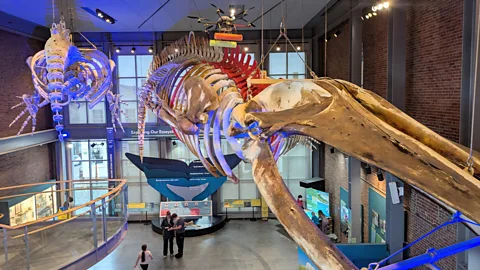
To modern eyes, the scenes evoke the heartbreaking impacts on species hunted to the brink of extinction; yet the whalers, too, were often broken by the industry. At the Seamen’s Bethel, an 1832 mariner’s church located across the street from the museum in New Bedford (and which features in the opening chapters of Moby Dick), such risks are on poignant display. Lining its whitewashed sanctuary are marble cenotaphs commemorating those lost at sea.
“After fastning to a whale, was carried overboard by a line and drowned,” reads the tomb of Captain William Swain. Three sailors from the whaleship Cowper, aged 19, 22 and 24, share another memorial: “All lost by the upsetting of their boat, July 15, 1854, in the Ochotsk Sea.”
They died as American whaling reached a short-lived fever pitch. In 1857, more than 10,000 men worked aboard New Bedford whaleships, half the city’s population at the time. Two years later, petroleum was discovered in Pennsylvania and the ensuing oil rush flooded American cities with kerosene – a comparatively cheap fossil fuel that would eclipse the whale oil used in lamps around the globe.
By the turn of the century, American whaling was all but over.
Scrimshaw lived on, however. The massive scale of the whaling industry produced a glut of teeth and bones, a byproduct that, at the time, had little commercial value. They gathered dust in attics and warehouses.
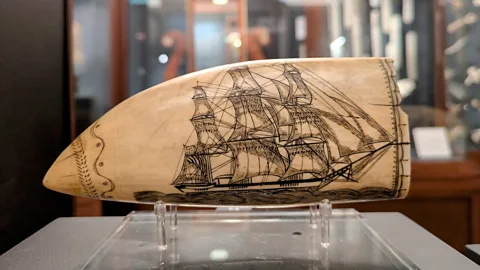
“When I was a kid they had barrels of whale teeth down at the wharves and sold them for a couple of bucks apiece,” recalled Michael Vienneau, a scrimshander on the nearby island of Nantucket, Massachusetts – another onetime whaling hub. Former homes of whaleboat captains surround his small shop, Scrimshander Gallery, in the heart of the island’s historic district. A few blocks away is the Nantucket Whaling Museum, whose own significant scrimshaw collection includes pieces by Nantucket whalemen – and famed scrimshanders – Frederick Myrick and Edward Burdett.
In the 1960s, scrimshawing surged in popularity, part of a folk-craft revival. (It even got a boost from US President John F Kennedy, an avid collector.) That’s when Vienneau got his start, rummaging for cheap whale teeth as a teenager while visiting the island with his family.
“Back then, everyone was a scrimshander,” he said. “Now I’m one of the last.”
In part, that’s because of the 1973 Endangered Species Act, which tightly restricted the sale of marine ivory. Today, scrimshanders engraving whale teeth and bones must work from the dwindling supply of teeth and bones that remain from before the act was passed – Vienneau has a stash in the back of his shop. “You’ll pay several thousand dollars for a raw tooth now,” said Vienneau.
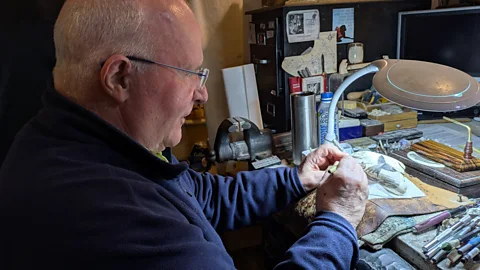
On a recent afternoon, he was sitting at his workstation squinting at a sperm whale tooth he was engraving with a scene of a sailor brandishing a harpoon at the tail of a diving whale. More teeth were piled in a nearby filing cabinet. His dog, Petey, grabbed a tooth and began to chew on it. Vienneau laughed. “Any dog that gnaws on a sperm whale tooth is a scrimshander’s dog,” he said, not getting up.
As whale teeth grew scarce and expensive, some scrimshanders innovated, carving on cow bones and deer antlers. Even comparatively tooth-rich Vienneau experimented. Once, he flew to Alaska on a tip and spent three days digging a 30,000-year-old mammoth tusk out of permafrost near a remote copper mine.
Yet, many purists insist that while such projects are both art and craft, they are not true scrimshaw, since the authentic form relies on the byproducts of historical whaling. Gotauco is one of them. Like some of her peers, she believes this means that scrimshaw is on the brink of extinction.
Gotauco works exclusively on pre-1973 ivory and bones. Nearly a century ago, her grandmother emigrated to Boston from Newfoundland, and among her few belongings was a collection of whale teeth and bones she’d inherited from her family of seal hunters, cod fishermen and whalers. That’s what Gotauco carves in her New Bedford studio, etching images onto the physical remains of her ancestors’ legacy.
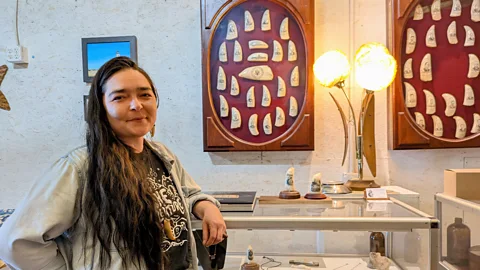
Along with the whale teeth, Gotauco’s grandmother passed along stories of what she said were Mi’kmaq roots. Whales factor into traditional Mi’kmaq stories, and the First Nations community hunted the animals sustainably long before the arrival of Europeans in North America. With her own deep reverence for whales, Gotauco has, at times, felt deeply uneasy about working with ivory.
In the years since she learned how to carve scrimshaw by sitting beside her father in his workshop, Gotauco often wondered about the ethics of using materials pulled from the sea with such violence. Commercial whaling was an environmental disaster and a cruelly dangerous job; the beauty of the art form it spurred still catches at her heart. In the end, she embraced it as a form of remembering, calling it “the best way to honour the whales and whalers”, albeit one that will likely fade in her lifetime.
“When I run out of teeth along with everyone else, I’ll raise a cup to the story’s end,” she said. “May we never get more.”
This News is taken from BBC News


Long-lost Chevalier landscape found in charity shop

Heiress Peggy Guggenheim scandalised high society – and transformed modern art

Israeli attacks have turned Gaza into ‘toxic wasteland’, Oxfam says

New Chapter for Dragon Boating in Punjab and Khyber Pakhtunkhwa Provincial associations officially set up with sights locked on national competitions and international representation.

South Korea’s Yoo Useong Steps Onto the Global Strongman Stage as World Strongman Federation Professional Athlete

A Survey of Mata-E-Zeest


-
 Pakistan News1 month ago
New Chapter for Dragon Boating in Punjab and Khyber Pakhtunkhwa Provincial associations officially set up with sights locked on national competitions and international representation.
-
 Sports5 months ago
South Korea’s Yoo Useong Steps Onto the Global Strongman Stage as World Strongman Federation Professional Athlete
-
 Art & Culture1 year ago
A Survey of Mata-E-Zeest
-

 Europe News2 years ago
Chaos and unproven theories surround Tates’ release from Romania
-

 American News2 years ago
Trump expands exemptions from Canada and Mexico tariffs
-

 Art & Culture2 years ago
Will Snow White be a ‘victim of its moment’? How the Disney remake became 2025’s most divisive film
-

 Pakistan News1 year ago
Comprehensive Analysis Report-The Faranian National Conference on Maritime Affairs-By Kashif Firaz Ahmed
-

 Entertainment2 years ago
Champions Trophy: Pakistan aim to defend coveted title as historic tournament kicks off today