
Pakistan News
Malala Yousafzai returns to Pakistan hometown for first time since she was shot


Malala Yousafzai has returned to her hometown in Pakistan, 13 years after she was shot in the head by the Taliban.
The 27-year-old Nobel Peace Prize winner shared a picture of herself in the stunning landscape of northern Pakistan on social media, saying it was the first time she had been back there since she was brutally attacked at just 15 years old.
She wrote: “As a child, I spent every holiday in Shangla, Pakistan, playing by the river and sharing meals with my extended family. It was such a joy for me to return there today – after 13 long years – to be surrounded by the mountains, dip my hands in the cold river and laugh with my beloved cousins. This place is very dear to my heart and I hope to return again and again.”
In October 2012, Yousafzai was shot in the head by the Taliban while riding a bus home from school. In the days that followed the shocking attack, the teenager was airlifted to hospital in Birmingham, England for life-saving surgery.
She and her family settled in Britain, where she went on to graduate from Oxford University. She has since devoted her working life to campaigning for educational rights for girls and women around the world under the umbrella of the international non-profit organization the Malala Fund.
A police official told CNN that Yousafzai was accompanied on the emotional visit – close to where she was shot – by members of her immediate family.
Umar Rehman, stationed in Shangla, told CNN: “Malala Yousafzai arrived in Shahpur, Shangla, by helicopter for a short visit, accompanied by her father, husband, and brother. She met with close relatives before visiting the Shangla Girls’ High School and College, which was built with support from the Malala Fund.
“At the college, she addressed the students during a special event. She then visited her grandmother’s grave in the family cemetery. After spending about two and a half hours in Shangla, Malala Yousafzai departed for Islamabad via helicopter. Strict security arrangements were in place throughout her visit.”
In her post on Wednesday, Yousafzai went on to reference the ongoing instability in her country of birth. She wrote: “I pray for peace in every corner of our beautiful country. The recent attacks, including in Bannu yesterday, are heartbreaking. I am sending my condolences to the victims and their families and offer my prayers for the safety of every person in my homeland.”
She was referring to an attack earlier this week in Bannu in Khyber Pakhtunkhwa province, in which at least 12 people were killed.
A group affiliated with the Pakistani Taliban claimed responsibility for the attack in the northwestern area of the country in which two suicide bombers breached a wall at a military base, before other attackers stormed the compound.
Taken From CNN
https://edition.cnn.com/2025/03/07/asia/malala-pakistan-hometown-scli-intl/index.html

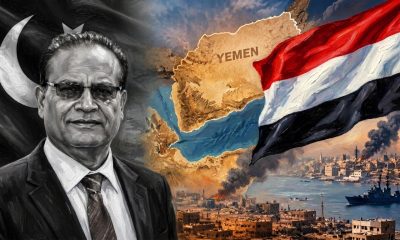


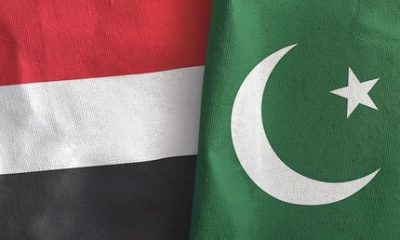


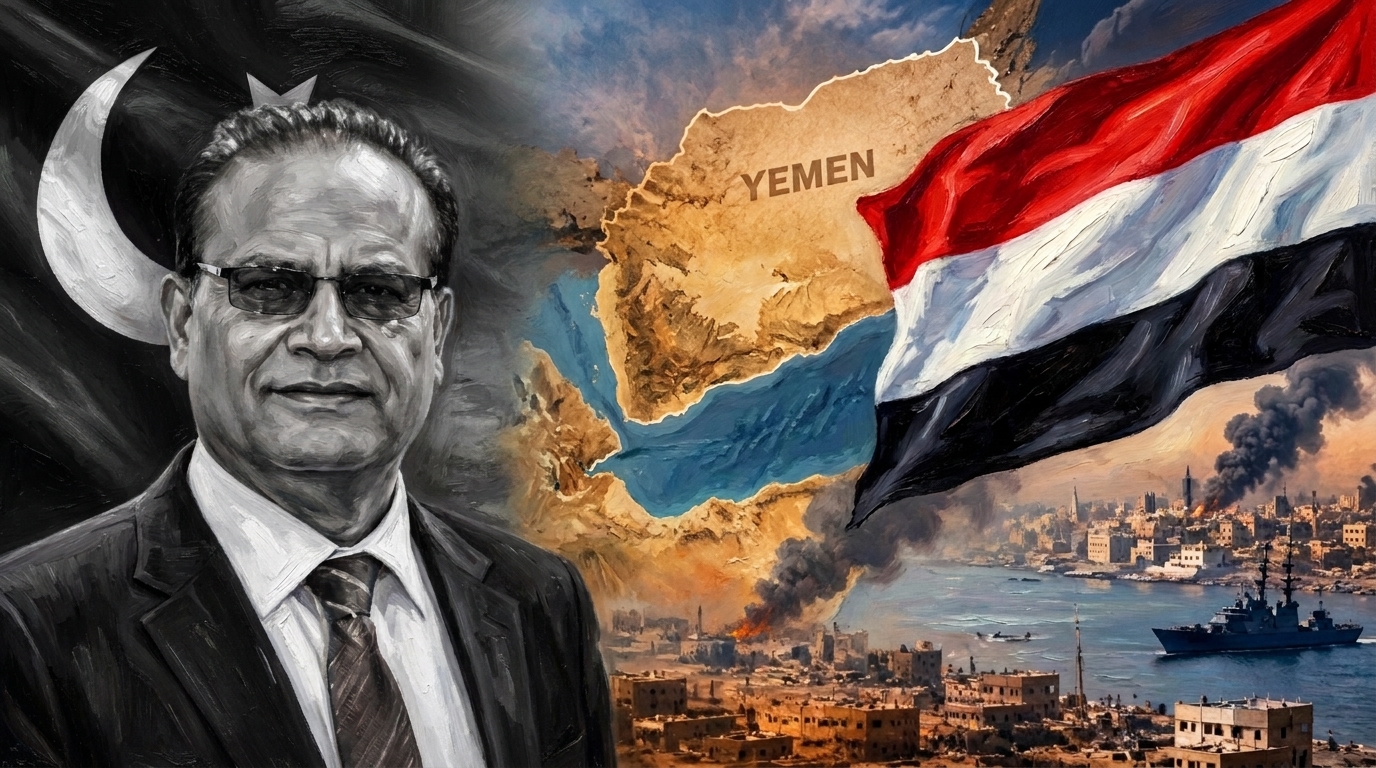
Paris (Imran Y. CHOUDHRY) :- Former Press Secretary to the President, Former Press Minister to the Embassy of Pakistan to France, Former MD, SRBC Mr. Qamar Bashir analysis : Pakistan’s military commitment to Saudi Arabia raises a question that cannot be answered simply by identifying where its soldiers are stationed. Modern warfare allows forces to attack through aircraft, missiles, drones and targeting support without sending infantry across a border. The decisive issue is whether Pakistani personnel and capabilities will participate in hostilities against Yemen’s Houthis—and what consequences could follow.
Scott Ritter, renowned American podcaster, military and geopolitical analyst captures the central danger: Saudi Arabia could obtain through collective defence the Pakistani involvement in Yemen that Islamabad previously resisted. An initially limited commitment could expand through casualties, retaliation and demands for reinforcement, leaving Pakistan responsible for a war whose objectives it does not control.
CNN reported on October 7 that Pakistani troops were already stationed in Saudi Arabia. In the interview, Lieutenant General Ahmed Sharif Chaudhry, director general of Inter-Services Public Relations, declined to disclose their numbers or capabilities. Asked about operations across the Yemeni border, he invoked military confidentiality, explaining that participating countries do not publicly disclose how and where they will employ their forces. His response offered no categorical exclusion of ground operations or offensive action inside Yemen, even as he described Pakistani involvement as defensive.
That distinction matters. Operational secrecy may protect military personnel, but it also leaves the public without clear answers about the mission’s boundaries. The description “defensive” cannot establish those boundaries by itself. Governments routinely invoke defence to justify attacks beyond their territory; the relevant questions concern what forces actually do, whom they target and under whose authority.
Pakistani forces operating from Saudi territory could potentially support or conduct attacks inside Yemen without deploying infantry there. Air operations and targeting assistance could carry substantial consequences. If Pakistani personnel participate in attacks against Houthi positions, Ansarullah could regard Pakistan as belligerent. Tehran could interpret the same activity as participation in a campaign against Iranian regional interests.
The Makkah Joint Defence Agreement, signed by Saudi Arabia, Pakistan and Türkiye on August 7, 2026, reportedly treats an attack against one member as an attack against all three. Its deterrent promise is substantial, but so is the danger of importing one member’s confrontation into the security calculations of the others.
An October 5 statement published by Türkiye’s Foreign Ministry committed the partners to implement collective defence arrangements and rapidly deploy agreed military forces and capabilities to Saudi Arabia, subject to national legislation. Türkiye therefore shares the deployment commitment. However, the evidence reviewed does not establish a Turkish ground combat commitment against the Houthis or an equal distribution of operational risks.
For Islamabad, the unanswered questions are fundamental. Who authorizes Pakistani involvement in cross-border attacks? Can Pakistan refuse a particular operation? Who finances a prolonged deployment, and what conditions permit withdrawal? Confidential operational details need not be published to explain the political mandate governing the use of force.
Pakistan brings potential strengths to the alliance: experienced personnel, established military institutions and longstanding cooperation with Riyadh. Saudi infrastructure and financing could support a substantial deployment. Islamabad’s relationships with both Riyadh and Tehran might also create diplomatic opportunities, provided military involvement does not undermine its credibility as an intermediary.
Yet those strengths do not resolve the weaknesses of an extended campaign. Destroying particular weapons or positions is different from ending an adversary’s ability and determination to fight. Dispersed forces, local networks and adaptation can frustrate superior firepower. Tactical gains could therefore coexist with an expanding mission and an elusive political settlement.
Ritter’s warning is strongest when understood in these terms. Predicting inevitable Pakistani defeat is less useful than asking what victory would require. Protecting defined facilities offers measurable objectives. Permanently eliminating the Houthi threat could entail commitments far beyond what Pakistan initially intended—and costs that additional military capability cannot necessarily overcome.
Saudi financial assistance complicates Islamabad’s freedom of choice. The State Bank of Pakistan confirmed that a $3 billion Saudi deposit maturing in December 2025 was extended for another year. Such support gives Pakistan a substantial interest in maintaining Saudi confidence.
Saudi’s financial influence does not require an explicit threat. A government facing external financing pressures may find it difficult to reject security requests from an important creditor. The danger is that short-term economic reassurance encourages military obligations carrying much greater long-term costs.
Iran introduces a further risk. Pakistani attacks against an Iranian-supported movement could damage relations with a neighbouring country and generate security pressures closer to home. The Houthis also possess their own Yemeni objectives, and attacking them is not automatically equivalent to attacking Iran. Political escalation, however, can advance through perceptions and retaliation before governments agree on legal distinctions.
International law offers no reliable assurance that this confrontation would remain contained. Legal obligations persist, but their enforcement is uneven, and states may invoke self-defence while pursuing military objectives beyond their borders. Pakistan therefore cannot assume that legal distinctions between defending Saudi territory and attacking Houthi positions would restrain retaliation. If Tehran perceives Pakistani operations as threatening its interests, the danger would turn on strategic calculations, perceived threats and the risk of escalation—not simply on competing interpretations of the UN Charter. Shared religion and geographical proximity would offer no dependable protection against that outcome.
Pakistan’s domestic divisions make a widening conflict especially consequential. The supporters of imprisoned former prime minister Imran Khan began marching from Khyber Pakhtunkhwa toward Islamabad on October 4, demanding his release, hospital treatment and family access. An overseas campaign would impose additional demands on resources and political legitimacy amid an already polarized environment.
Parliament’s April 2015 resolution remains relevant. It supported neutrality in Yemen alongside solidarity against threats to Saudi territorial integrity and the holy sites, while urging diplomacy through the United Nations and Organisation of Islamic Cooperation. That distinction deserves renewed parliamentary examination before military commitments overtake political debate.
Pakistan, Saudi Arabia and Türkiye should pursue an emergency OIC initiative linked to UN diplomacy, involving Iran and meaningful Yemeni participation. Reciprocal de-escalation, civilian protection and humanitarian access should take priority. Their collective influence should also sustain action for Palestinian rights rather than dissipate through another prolonged regional confrontation.
The Makkah Pact’s credibility will depend on whether it improves security. Secrecy about military methods cannot replace clarity about political objectives. Before Pakistan’s commitment deepens, its leaders must explain what they are defending, how far that obligation extends and how they intend to prevent it from becoming an open-ended war.
Pakistan News
Pakistan Reaffirms Commitment to Multilateralism, Peace and International Cooperation at the Executive Board of UNESCO
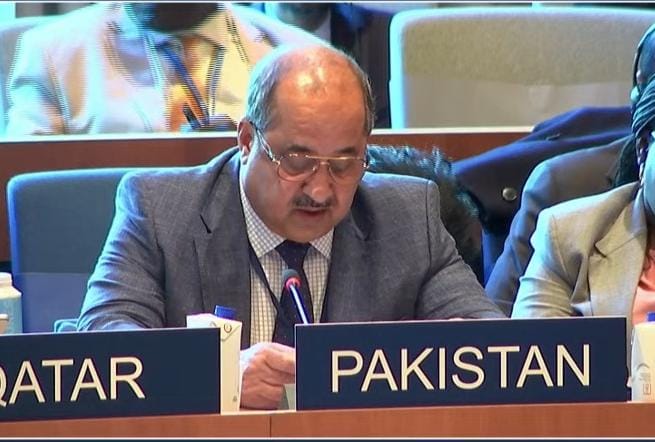
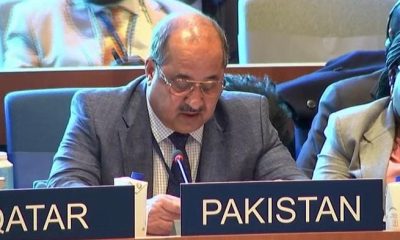
Paris ( Imran Y. CHOUDHRY):- Advisor to the Prime Minister of Pakistan and Representative of Pakistan to UNESCO, Syed Tauqeer Hussain Shah, delivered Pakistan’s national statement at the 225th Session of the UNESCO Executive Board in Paris, France, reaffirming its steadfast commitment to multilateralism, international cooperation and the promotion of peace through dialogue and mutual understanding.
In his statement,
- Underscored Pakistan’s firm support for multilateral institutions, South-South cooperation and collaborative efforts to address global challenges, particularly those confronting developing countries;
- Highlighted the urgent need to protect human life, educational institutions and cultural heritage amid conflicts and crisis, especially in Gaza;
-Called for an international action plan to confront the challenge of out-of-school children;
- Stressed the importance of equitable access to scientific knowledge, international scientific collaboration and reducing technological inequalities;
-Underlined the need to combat racism, misogyny, Islamophobia, disinformation and hate speech, while encouraging responsible and ethical governance of artificial intelligence and emerging technologies; and
- Expressed support for institutional reform of UNESCO to enhance its effectiveness and impact worldwide.
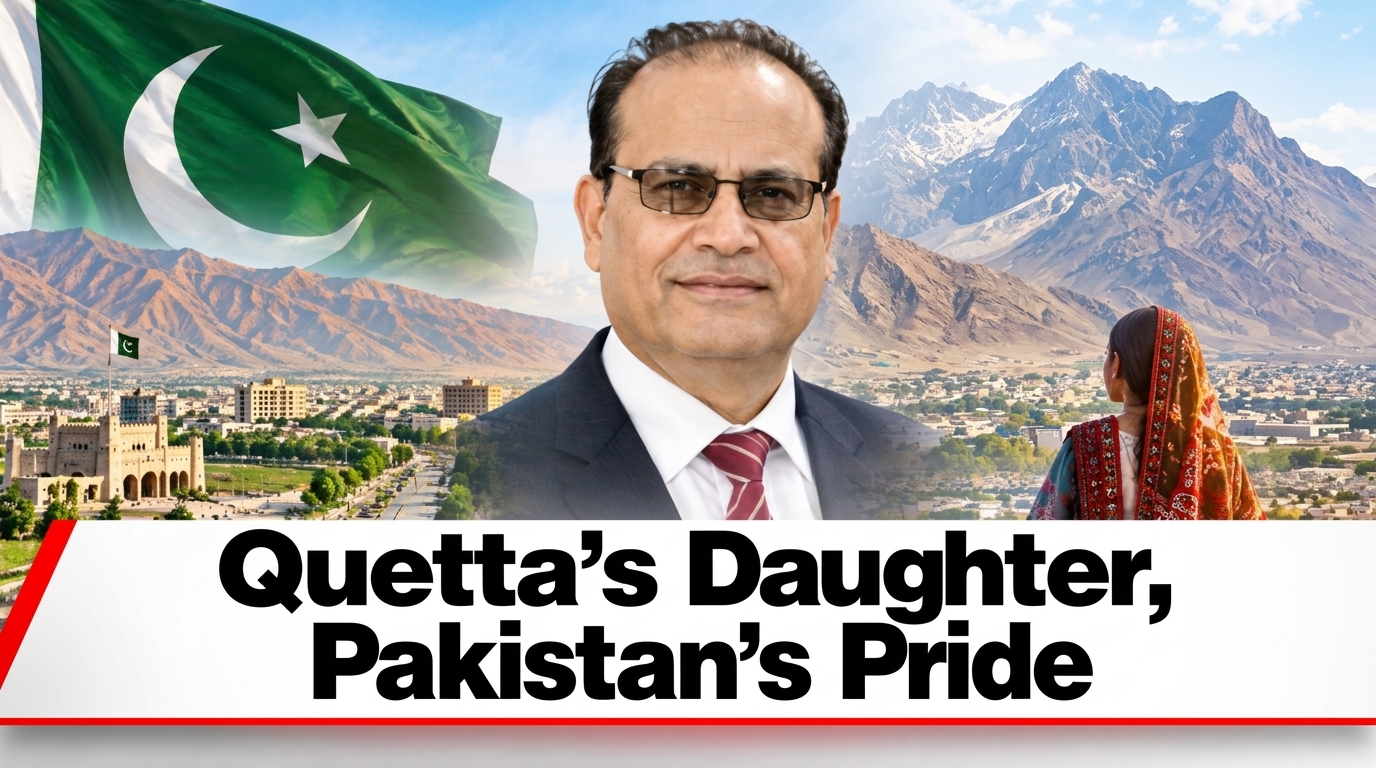
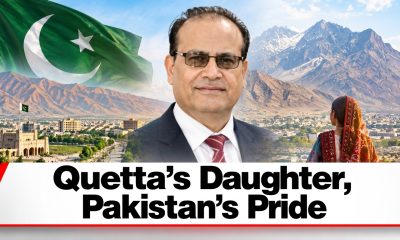
Paris (Imran Y. CHOUDHRY) :- Former Press Secretary to the President, Former Press Minister to the Embassy of Pakistan to France, Former MD, SRBC Mr. Qamar Bashir analysis : While browsing today’s international news, one story stopped me and filled my heart with both pride and anguish: Jalila Haider, a Hazara woman born, raised and educated in my hometown, Quetta, has won the 2026 Right Livelihood Award, announced today, September 30. Presented by the Stockholm-based Right Livelihood Award Foundation, the distinction is widely known as the “Alternative Nobel Prize,”.
This year, just four recipients—two women and two women-led organizations—were selected from 200 nominations across 72 countries. Haider was recognized for challenging ethnic persecution, state repression and discrimination against women through her legal work and activism.
For recipients, such recognition brings international visibility to their struggles and strengthens their ability to rally support; for Pakistan, Haider’s achievement highlights the courage and humanity of citizens defending its most vulnerable communities.
Amid reports of conflict and suffering, here was a Pakistani woman honored for standing beside people whom violence and indifference had pushed into the shadows. The news brought pride, but also anguish over the injustices that made her work necessary—and memories of a city whose humanity I once knew intimately.
Quetta, nestled like a bowl among towering hills, was beautiful for more than its landscape and refreshing weather. During my years of education, from 1970 to 1984, its greatest attraction was the fellowship between its communities. In the Quetta I remember, differences of ethnicity, language and religious tradition did not prevent friendship. We studied, played and visited one another, sharing a city that felt like home to us all.
I watched Hazara families advance through education, commerce, public service and sport. Their businesses grew, their young people distinguished themselves, and their contribution became woven into Quetta’s everyday life. Their achievements enriched the city. Remembering that shared life makes the subsequent persecution especially painful: people who helped build our hometown were increasingly denied the freedom to live safely within it.
I witnessed that atmosphere deteriorate as the Soviet invasion of Afghanistan in 1979 drew our region into confrontation between Moscow and Washington. In my observation, foreign ideological rivalries, money and weapons deepened divisions among people who had lived together. I saw resentment grow around Hazara and Punjabi advancement in commerce and public employment. These memories carry the pain we shared as neighbours: the gradual destruction of trust, followed by violence against familiar families.
The consequences were merciless. Hazaras were attacked in markets, on roads and while travelling to worship. Human Rights Watch recorded that two major bombings in Quetta in January and February 2013 killed at least 180 Hazaras. Such figures describe the scale, but cannot convey the anguish within each household. Every victim left relationships, responsibilities and hopes that no compensation or official condolence could restore.
For me, this tragedy has a familiar face: Abrar Hussain, the celebrated Hazara boxer who trained us during our school and college years. He brought distinction to Pakistan in international competition. When I later served in Quetta as deputy income tax commissioner, I knew him in his sports administration role. In June 2011, he was murdered in the city he had served. A man who strengthened Pakistan’s reputation abroad could not be protected at home.
Fear drove families away from their neighbourhoods, livelihoods and memories. Some sought safety elsewhere in Pakistan; others rebuilt their lives overseas, including in Australia. Those who remained faced restricted movement and shrinking opportunities. The loss extended beyond households. Quetta itself was diminished whenever a family left because it could no longer trust that its children would return safely from school, work or the market.
This was the environment in which Jalila Haider chose to stand her ground. Born in 1984, she lost her father when she was twelve. Her mother raised six children and supported her determination to study law. In 2010, she earned her degree from University Law College, Quetta, becoming the first woman lawyer from Pakistan’s Hazara community. Behind that achievement stood a mother’s resolve and a daughter’s refusal to surrender.
Her legal practice, established in 2011, became a refuge for people whose cases others considered dangerous or unrewarding. According to her award biography, her firm has handled more than 7,000 cases and helped restore freedom of movement to more than 600 political activists and human rights defenders. She has represented women seeking divorce, custody and inheritance rights, alongside refugees, transgender people and those facing wrongful accusations.
The dangers were personal. She survived the 2016 bombing that devastated Balochistan’s legal community. She has endured detention, online harassment and death threats. Nevertheless, she continued appearing for people whose vulnerability often made them easy to abandon. In a setting where professional advancement can reward silence, her willingness to accept difficult cases gave frightened families someone prepared to listen and act.
In 2018, she carried that determination into a seven-day hunger strike against the targeted killing of Hazaras. She demanded direct engagement from the army chief, refusing to accept assurances from officials unable to deliver security. The protest brought negotiations between the military leadership and Hazara women. The award foundation credits it with contributing to a sustained decline in attacks, although the community’s insecurity and displacement remained unresolved.
Her work also recognises that justice requires the means to survive. Through We the Humans, founded in 2015, she has helped more than 400 widows of terrorism victims gain financial independence. Rug weaving, childcare, education and literacy support connect income with dignity. A widow able to support her children acquires something beyond financial relief: greater freedom to make decisions about her family’s future.
As a founding member of the Women’s Democratic Front, Haider also helped pioneer Balochistan’s first Women’s March. Her advocacy reaches women facing forced marriage and honour violence, crossing the boundaries of her own community. That breadth matters. Having experienced persecution, she has refused to make another person’s ethnicity or identity a condition for receiving help.
Pakistan owes women like her more than ceremonial praise. They need protection, functioning courts and institutions that respond before desperation forces a hunger strike. Their work reveals both the courage within our society and the distance between constitutional promises and everyday experience. Supporting them would allow more families to recover the ordinary security that violence has stolen.
Pakistan is too often viewed through an unfavourable lens in the international media, with few stories allowing its humanity and courage to shine. Finding Jalila Haider’s recognition among the day’s top ten world news stories filled my heart with pride, even as it revived the agony of everything our Hazara community has endured.
May this honour bring her greater dignity, respect and protection, and inspire many more Jalila Haiders across Pakistan and the world to join the struggle for justice and freedom. May their courage restore hope to those pushed into the shadows and challenge the label of “illegal” imposed on human beings through no fault of their own, but by systems, borders and laws that fail to recognise their humanity.


Pakistan’s Yemen Dilemma

U.S. Sanctions the International Criminal Court to Shield Netanyahu

Pakistan Reaffirms Commitment to Multilateralism, Peace and International Cooperation at the Executive Board of UNESCO


-
 Sports4 months ago
South Korea’s Yoo Useong Steps Onto the Global Strongman Stage as World Strongman Federation Professional Athlete
-

 Art & Culture1 year ago
A Survey of Mata-E-Zeest
-

 Europe News2 years ago
Chaos and unproven theories surround Tates’ release from Romania
-

 American News2 years ago
Trump expands exemptions from Canada and Mexico tariffs
-

 American News2 years ago
Trump Expels Zelensky from the White House
-

 Art & Culture2 years ago
Will Snow White be a ‘victim of its moment’? How the Disney remake became 2025’s most divisive film
-

 Entertainment2 years ago
Champions Trophy: Pakistan aim to defend coveted title as historic tournament kicks off today
-

 Pakistan News1 year ago
Comprehensive Analysis Report-The Faranian National Conference on Maritime Affairs-By Kashif Firaz Ahmed