
war
Israel PM attacks Qatar probe as ‘witch hunt’ after aides arrested


Israeli Prime Minister Benjamin Netanyahu has denounced an investigation into possible links between his aides and Qatar as a “witch hunt”, after he gave testimony to police.
An adviser and a former spokesman were arrested on Monday over alleged payments from the Gulf Arab state as part of the probe, which has been dubbed “Qatar-gate”. They have denied any wrongdoing.
Netanyahu, who has not been named as a suspect, accused the police of holding the two men as “hostages”, adding: “There is no case.”
A Qatari official also dismissed the probe as a “smear campaign” against Qatar, which has played a key role as a mediator between Israel and Hamas during the war in Gaza.
It comes as Netanyahu faces escalating protests in Israel over his policies, including the resumption of Israel’s offensive against Hamas before securing the release of all the remaining hostages, the dismissal of the director of the Shin Bet internal security agency, and the advancement of a controversial plan to overhaul the judiciary.
On Monday, Israel’s police force announced that two suspects had been detained as part of an investigation into ties between the prime minister’s office and Qatar. It provided no further details, citing a court-imposed gag order on the case.
Israeli media reports subsequently identified them as Yonatan Urich, a very close adviser to Netanyahu, and Eli Feldstein, a former spokesman in the prime minister’s office, and said they were suspected of contact with a foreign agent, money laundering, bribery, fraud, and breach of trust.
Netanyahu later cut short an appearance at his separate trial on corruption charges, which he denies, to provide recorded testimony to police investigating the case at his office in Jerusalem.
After being questioned, Netanyahu posted a video online in which he condemned both the arrests and the wider investigation.
“I understood that it was a political investigation but I didn’t realise how political it was,” he said. “They are holding Jonatan Urich and Eli Feldstein as hostages, making their lives miserable over nothing.”
“There is no case, there is absolutely nothing, just a political witch hunt, nothing else.”
The prime minister’s Likud party also issued a statement accusing the attorney general’s office and the Shin Bet chief of “fabricating” the case and attempting to “terrorise Yonatan Urich in order to extract from him false testimony against the prime minister through blackmail”.
On Tuesday, a judge at Rishon LeZion Magistrates’ Court extended Urich and Feldstein’s detention by three days, saying there were “reasonable suspicions” that required a thorough investigation. The police had requested a nine-day extension.
Judge Menahem Mizrahi said in a decision that investigators suspected that the two men had acted to “promote Qatar in a positive light” and “spread negative messages about Egypt” and its role as another mediator in the Gaza ceasefire talks.
For this purpose, the judge said, a “business and economic connection” was created between a US lobbying firm working for Qatar “through the mediation of [Urich] in return for monetary payments which were passed to [Feldstein]” through an Israeli businessman.
Last week, Israeli media published a recording in which the businessman was heard saying that he had transferred funds to Feldstein on behalf of a US lobbyist working for Qatar.
At the time, Feldstein’s lawyers said the payments were “for strategic and communications services Feldstein provided to the prime minister’s office, not for Qatar”. They also said Feldstein was not aware of any connection between the businessman and other parties, including Qatar. Ulrich’s lawyers said he denied involvement.
A police representative told Judge Mizrahi on Tuesday that Urich was also suspected of passing journalists messages from a source linked to Qatar, which were presented as if they came from senior Israeli political or security officials.
Ulrich’s legal team, which includes Netanyahu’s defence lawyer Amit Hadad, said they would submit a request to lift the gag order on the case to expose “the injustice done to him”. The judge went on to approve the request, saying the gag order had been repeatedly violated.
A Qatari official told the Financial Times: “This is not the first time we have been the subject of a smear campaign by those who do not want to see an end to this conflict [the Gaza war] or the remaining hostages returned to their families.”
Qatar has long championed the Palestinian cause and host political leaders of Hamas, which is proscribed as a terrorist organisation by Israel, the UK, the US and other countries.
Between 2018 and the start of the current war, which was triggered by Hamas’s 7 October 2023 attack on Israel, the Gulf state provided hundreds of millions of dollars of aid for Gaza.
Israeli governments allowed the money to be transferred to pay the wages of civil servants in Gaza’s Hamas-run government, support the poorest families, and fund fuel deliveries for the territory’s sole power plant. However, critics asserted that it was helping Hamas to stay in power and fund its military activities.
Since the war, Qatar has helped, along with the US and Egypt, to broker two ceasefire and hostage release deals between Israel and Hamas.
The most recent lasted between 19 January and 18 March, when Israel renewed its air and ground campaign, blaming Hamas for rejecting a new US proposal for an extension and the release of its 59 remaining hostages. Hamas accused Israel of violating the original deal.
Netanyahu claimed that the “sole purpose” of the Qatar-gate investigation was to prevent the dismissal of the director of the Shin Bet domestic security agency, which has been participating in the probe, and to “topple a right-wing prime minister”.
The government fired Ronen Bar on 21 March, saying it had lost trust in him over the failure to prevent Hamas’s deadly attack on Israel on 7 October 2023, which triggered the war in Gaza.
However, the supreme court suspended the dismissal pending a hearing on 8 April in response to petitions from opposition political parties and a non-governmental organisation, which said the move was made for inappropriate reasons and constituted a severe conflict of interest.
Bar will remain in post until the supreme court rules on the petitions, although the court permitted the prime minister to interview potential replacements in the meantime.
On Tuesday, Netanyahu’s office announced that he had reversed a decision made the previous day to appoint former navy commander Vice Adm Eli Sharvit as the next Shin Bet chief.
“The prime minister thanked Vice Adm Sharvit for his willingness to be called to duty but informed him that, after further consideration, he intends to examine other candidates,” a statement said.
That decision came after Likud officials criticised Sharvit’s participation in the 2023 mass protests against the judicial overhaul.
US Republican Senator Lindsey Graham also described Sharvit’s appointment as “problematic” in response to a recent article criticising President Donald Trump’s policies on climate change.
Taken From BBC News







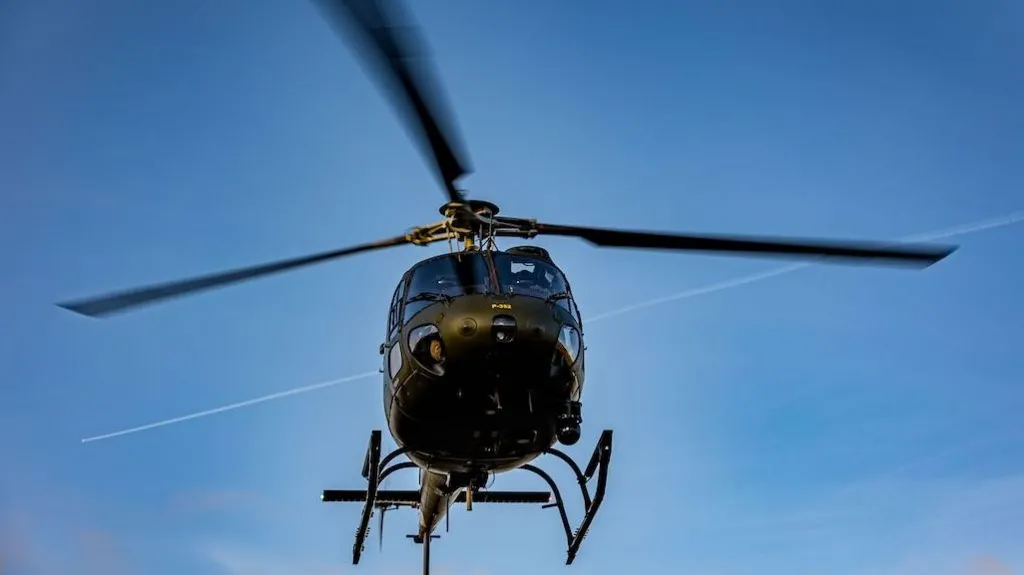
Denmark has accused a Russian warship of firing two emergency flares at one of its helicopters while it was tracking the vessel in the Baltic Sea.
The Danish government has summoned the Russian ambassador over the incident, which it said happened during a “routine” monitoring operation on Monday.
Prime Minister Mette Frederiksen branded the Russian action “reckless” and said it was designed to “intimidate and divide”.
Russia said it would “thoroughly investigate” the incident but accused Danish helicopters of making “dangerous manoeuvres” near Russian warships.
It came on the same day that Nato forces shot down a drone over Lithuania in the latest security scare on the alliance’s eastern flank, where tensions remain high amid Russia’s full-scale invasion of Ukraine.
In a statement detailing the incident in the Baltic Sea, the Danish armed forces said: “One of the air force’s Fennec helicopters was today fired at with flares during a routine photographic operation of a Russian frigate, which was located in international waters off Gedser.”
Of the two flares fired at the helicopter, one passed close to it, the statement added.
The Danish foreign ministry described the incident as “completely unacceptable”.
Danish Foreign Minister Lars Lokke Rasmussen accused Russia of “gradually shifting the boundary for what they consider acceptable behaviour”, adding: “That is something we cannot accept.”
In a statement, Russian ambassador Vladimir Barbin said Moscow would “thoroughly investigate all the circumstances of the incident” but accused the Danish helicopter of carrying out “provocative actions”.
Barbin said this was “not the first time that Danish Air Force helicopters have carried out dangerous manoeuvres near Russian warships”.
He said he had complained about a similar incident last year, adding that the latest event showed that “communication problems lie not with the Russian Navy’s vessels, but with the Danish side”.
Russia’s behaviour was “reckless and dangerous,” the President of the European Commission Ursula von der Leyen said in a post on social media.
This incident – together with the drone over Lithuania – was “part of a broader pattern of Russian aggression and provocation against Europe”, she added.
Danish Defence Minister Jeppe Bruus told Reuters no attempt to make contact with helicopters had been made by the frigate’s crew.

Overnight, Nato fighter pilots shot down a drone that entered Lithuania’s airspace.
Authorities said the drone likely entered southern Lithuania, near the second-largest city of Kaunas, from neighbouring Belarus shortly after midnight on Tuesday.
The origins of the drone have yet to be determined, the Lithuanian national crisis management centre said, but the country’s president pointed to increased Russian aggression in recent months.
President Gitanas Nausėda wrote on X: “With Russia intensifying its aggression against Ukraine, such readiness is vital for our region. Together with our Nato Allies, Lithuania will defend its airspace.”
Lithuania shares a large part of its southern and eastern border with Belarus, a key Russian ally.
Poland also announced there had been “aviation operations” in its airspace on Monday night “due to the activity of Russian Federation’s jet-powered unmanned aerial vehicles conducting strikes on Ukrainian territory”.
It said the overnight operations were of a “preventive nature” and aimed at “securing airspace and its protection, especially in areas adjacent to threatened regions”.
Nato jets have been scrambled several times to shoot down stray Ukrainian drones that have crossed into Baltic countries Estonia and Latvia this year.
Taken From BBC News
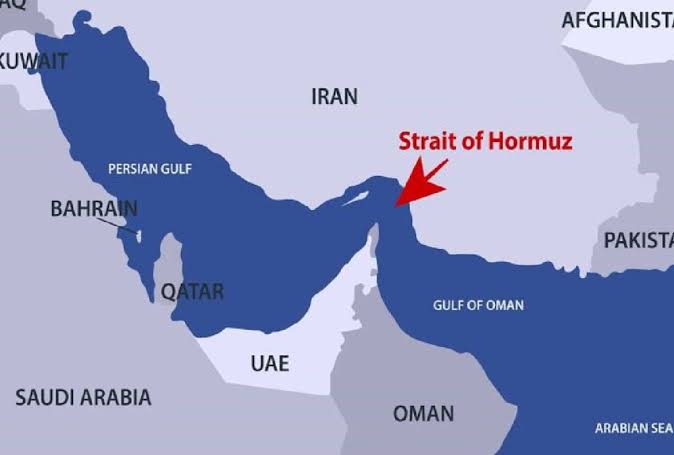
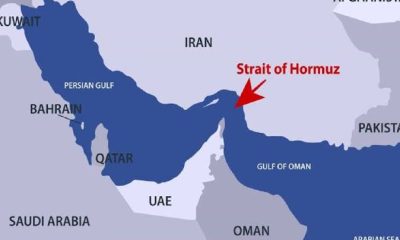
Paris (Imran Y. CHOUDHRY) :- Former Press Secretary to the President, Former Press Minister to the Embassy of Pakistan to France, Former MD, SRBC Mr. Qamar Bashir analysis : The war with Iran is no longer merely a contest of missiles, aircraft and naval power. It has become a struggle over the arteries through which the world’s energy flows. For months, the United States, Israel and regional producers have searched for ways to reduce dependence on the Strait of Hormuz. Israel has proposed pipelines carrying Gulf energy westward to its Mediterranean ports, while other projects envisage moving Iraqi and regional oil toward the Mediterranean. But events of recent days demonstrate a fundamental weakness in this strategy: bypassing one vulnerable chokepoint does not abolish geography. It merely transfers the vulnerability somewhere else.
Israeli Prime Minister Benjamin Netanyahu made his vision explicit in March. He proposed oil and gas pipelines running westward across the Arabian Peninsula to Israeli Mediterranean ports, arguing that such infrastructure could eliminate dependence on maritime chokepoints.
The broader search for alternative corridors has also involved proposals linking Iraqi energy resources with Syria’s Mediterranean coast. These projects potentially create enormous commercial opportunities for transit countries, ports, construction companies and international energy corporations. The contest, therefore, is not simply over oil. It is increasingly over who will build, operate and influence the infrastructure carrying that oil.
Saudi Arabia already possessed the most important working example of the bypass strategy. Its 1,200-kilometre East-West Pipeline, or Petroline, carries crude from the kingdom’s eastern producing regions across the Arabian Peninsula to Yanbu on the Red Sea. As Hormuz became increasingly dangerous, this pipeline became enormously important. Roughly four million barrels per day were moving through the system, allowing Saudi Arabia to export without sending those barrels through Hormuz.
Then came the drones. Saudi authorities say several drones launched from Iraqi territory attacked the East-West Pipeline system in the Riyadh and Madinah regions. The attacks caused injuries and damage and forced authorities to shut the pipeline as a precaution while technical teams assessed its safety. The entire 1,200-kilometre pipeline did not need to be physically destroyed. A sophisticated energy artery depends upon pumping stations, controls and associated infrastructure. Damage at strategically important points can interrupt the entire flow.
The economic consequences could be enormous. Saudi Arabia reportedly has enough exportable crude stored at Yanbu to maintain current flows for only about five to seven days if Petroline remains closed. After that, as much as four percent of global oil supply could be jeopardised.
Repair estimates remain uncertain, ranging from days to weeks. The important strategic lesson is therefore not whether Petroline can eventually be repaired. Of course it can. The lesson is that the principal functioning escape route from Hormuz has itself demonstrated its vulnerability.
This is where Iran’s strategic depth becomes important. Tehran does not require conventional naval supremacy over every kilometre of Hormuz to exercise extraordinary leverage there. Commercial shipping operates according to risk. One successful missile or drone attack can force shipowners, insurers and cargo operators to reconsider whether a voyage remains commercially acceptable.
The same logic increasingly applies at the other end of the Arabian Peninsula. Yemen’s Iran-aligned Houthis have advanced along the Red Sea coast and reached Perim Island, situated inside Bab el-Mandeb—the narrow gateway connecting the Red Sea with the Gulf of Aden. Saudi Arabia’s Petroline may bypass Hormuz by terminating at Yanbu, but tankers sailing from the Red Sea toward Asian markets still confront the geography surrounding Bab el-Mandeb. The alternative route therefore possesses a chokepoint of its own.
This is what I describe as Iran’s strategic checkmate of the Hormuz-bypass concept. I do not use “checkmate” to mean that Iran possesses uncontested sovereignty over two international waterways or has defeated American military power. My argument is economic and strategic. Iran and forces aligned with it possess sufficient capabilities across different theatres to make alternative energy routes vulnerable. In commercial transportation, the ability credibly to threaten passage can sometimes be almost as consequential as physically occupying it.
The deeper story concerns money and power. Every new pipeline creates winners. Construction companies receive contracts. Energy corporations acquire projects. Transit countries collect revenues. Ports gain business. Investors obtain returns. Countries hosting terminals acquire additional strategic importance. Israel’s proposed Mediterranean corridor could enhance its position as an energy bridge. American companies participating in Middle Eastern energy and infrastructure projects can obtain major commercial opportunities. Regional governments, meanwhile, seek diversified routes that reduce their dependence on waterways vulnerable to war.
Yet the cruel paradox is that Middle Eastern oil-producing countries risk carrying a disproportionate share of the immediate damage. Their pipelines become targets. Their export terminals require protection. Their production revenues become vulnerable to interruption. Their cities face missile and drone threats, while insurance and transportation costs rise. Saudi Arabia’s present predicament illustrates the danger: an infrastructure system designed to provide strategic security from Hormuz has itself become exposed to the expanding battlefield.
The widening conflict around Bab el-Mandeb demonstrates another limitation of purely military calculations. A superpower can deploy aircraft carriers, destroyers, missile defences and tens of thousands of personnel, yet commercial shipping requires something more difficult to guarantee: confidence. A shipping company contemplating a billion-dollar vessel and valuable cargo does not ask merely which navy is stronger. It asks whether the ship can complete its voyage safely, whether insurance remains available and whether the potential profit justifies the possibility of catastrophic loss.
That is why geography continues to defeat attempts to declare Hormuz irrelevant. A pipeline across Saudi Arabia substitutes pumping stations and hundreds of kilometres of exposed infrastructure for the strait. A Syrian corridor would traverse another politically sensitive landscape. An Israeli Mediterranean corridor would require enormous investment, security and regional cooperation. And Red Sea exports must still confront the security environment surrounding Bab el-Mandeb. There is no magic line on a map capable of removing geopolitical risk.
The Iran war has consequently evolved into something much larger than the conflict with which it began. It is simultaneously a military confrontation, an energy war and a contest over the future architecture of global petroleum transportation. The question is no longer simply who produces Middle Eastern oil. Increasingly, it is who builds the pipelines, controls the ports, protects the waterways and possesses leverage between the wellhead and the consumer.
The architects of alternative corridors hoped to diminish Iran’s greatest geographical advantage by diminishing Hormuz itself. Instead, the expanding conflict is demonstrating that energy routes cannot simply escape geography. Close one chokepoint and another becomes indispensable. Build a pipeline and the pumping stations become strategic assets. Shift exports toward the Red Sea and Bab el-Mandeb assumes greater importance.
That is the strategic irony of this war. The attempt to make Hormuz irrelevant may instead have demonstrated just how difficult it is to make Iran’s geography irrelevant. The map of the Middle East has not changed. What has changed is the number of places on that map where the world’s energy lifelines can now be threatened.
Paris (Imran Y. CHOUDHRY) :- Former Press Secretary to the President, Former Press Minister to the Embassy of Pakistan to France, Former MD, SRBC Mr. Qamar Bashir analysis : The geopolitical landscape has witnessed few spectacles as paradoxical as the recent confrontation between the coalition of the United States and Israel against the Islamic Republic of Iran. What was predicted by Western military analysts and policymakers to be a swift, decisive campaign—a “shock and awe” reminiscent of the opening salvos of the 2003 Iraq War—has instead morphed into a historical anomaly.
It is a conflict defined not by the victor’s triumph, but by the hubris of the aggressor being dashed upon the rocks of asymmetric resilience. The United States, the sole superpower possessing a military budget exceeding 1.5 Trillion annually—larger than the next 20 countries combined—has been forced into a humiliating strategic retreat.
After failing to achieve a single operational objective, the rhetoric has shifted from “military obliteration” to “economic annihilation.” This pivot from Tomahawks to Treasury sanctions is not a sign of strength; it is the death rattle of a failing hegemonic strategy, a threat as hollow as the bombs that failed to subdue Tehran.
In the lead-up to the conflict, the rhetoric emanating from Washington and Tel Aviv was characterized by a certainty that bordered on the biblical. Officials promised the “degradation of Iran’s military infrastructure to the Stone Age,” invoking imagery of an assault more severe and more comprehensive than the firebombing of Dresden or the atomic strikes on Hiroshima and Nagasaki.
After having failed to achieve even a single declared objective of waging war against Iran, the United States found itself in a position unique in its modern history: it had not lost a war tactically, but it had failed to win strategically. Iranian uranium enrichment, far from being halted, reportedly accelerated in response to the strikes, with the International Atomic Energy Agency (IAEA) confirming that stockpiles of 60% enriched uranium had risen by over 15% during the conflict window. The “daunting military machine” was halted not by Iranian nuclear parity, but by the cost of persistence.
This military failure has profound implications. For three decades, the United States has relied on the specter of its military supremacy to police the global order. The failure to bend Iran—a nation whose military budget is approximately $24.6 billion, a mere fraction of America’s—breaks the spell of invincibility.
It demonstrates that a nation-state can withstand the full kinetic might of the U.S. military if it possesses dispersed infrastructure, a decentralized command structure, and a popular willingness to absorb punishment.
Iran’s successful enforcement of maritime control over the Strait of Hormuz serves as a case study in asymmetric deterrence. Despite the presence of the U.S. Navy’s Fifth Fleet, which includes aircraft carriers and nuclear submarines, Iran’s swarm tactics of fast-attack craft and shore-based anti-ship ballistic missiles effectively checked U.S. freedom of navigation. The sight of Chinese oil tankers transiting the Strait under Iranian escort, unchallenged by the U.S. blockade, was a symbolic dagger in the heart of American naval supremacy.
Having failed on the kinetic battlefield, the United States has pivoted to the economic battlefield. The new executive order announced by the President promises “excruciating economic pain never seen before in the history of humankind.” This is a bold claim.
It is, however, a rhetorical escalation of a campaign that has been running since 1979. Iran has lived under some form of U.S. sanction for over four decades. The “Maximum Pressure” campaign initiated by the first Trump administration in 2018 aimed to drive Iranian oil exports to zero. While it succeeded in plunging exports to around 400,000 barrels per day (bpd) at its peak, it did not collapse the government.
Today, Iran has not only recovered but has adapted. Current estimates place Iranian oil exports at over 1.6 million bpd, with the vast majority flowing to China. The threat now is to extend “secondary sanctions” to any nation buying Iranian oil. However, the efficacy of this threat is undermined by the very structure of the global economy that the United States helped create: the petrodollar system.
The U.S. Treasury’s ability to sanction hinges on the centrality of the Dollar and the SWIFT messaging system. Yet, the infrastructure of evasion is now mature. Iran has spent 30 years perfecting the “black market” of oil. The system described by intelligence analysts—where proceeds never touch a direct Iranian account but are routed through third-party shell companies in Asia, often utilizing Chinese Yuan—has rendered the U.S. financial radar partially blind.
Furthermore, Iran’s strategic integration into the BRICS bloc (Brazil, Russia, India, China, South Africa, and new members like the UAE and Egypt) provides a lifeline. The BRICS New Development Bank and the Contingent Reserve Arrangement are actively working on a unified payment system—the “BRICS Pay”—designed to bypass SWIFT.
China’s Cross-Border Interbank Payment System (CIPS) has seen a 30% year-on-year increase in daily processing volume. When Iran sells oil to China and receives payment in Yuan via CIPS, the transaction bypasses the New York banking system entirely. The “weaponization” of the dollar has simply accelerated the global de-dollarization trend; central banks worldwide currently hold 58% of their reserves in USD, down from 71% two decades ago.
The domestic economic situation in the United States further undermines the credibility of this new sanctions regime. The President’s assertion of a “flourishing economy” rings hollow against the data. The U.S. national debt has surpassed $40 trillion—a staggering figure that is five times the federal government’s annual receipts of approximately $8 trillion.
The Congressional Budget Office (CBO) projects that interest payments on this debt will soon consume 20% of all federal spending, rivaling the defense budget. This fiscal fragility manifests in tangible economic pain: recent data revealed a loss of 27,000 jobs in a single month, and inflation, while moderating, remains above the Federal Reserve’s 2% target, exacerbated by supply chain disruptions caused by the war.
The collapse of Walmart’s stock—an 8% single-day drop that erased nearly $45 billion in market capitalization—is a bellwether. Walmart represents the American consumer base; its decline signals a shift from spending to saving, a precursor to recession. A nation drowning in debt and teetering on a consumer downturn lacks the economic oxygen to sustain a protracted global trade war against nations trading with Iran.
Finally, the geopolitical map renders this new sanction regime diplomatically unsustainable. The nations refusing to align with U.S. economic dictates represent over half of the world’s population.
China and India continue to buy Russian and Iranian energy because it is economically rational. Brazil, led by a leftist government, has no interest in enforcing American secondary sanctions against its own agricultural or industrial sectors.
The global South, observing the humanitarian catastrophe in Gaza and the reckless military gambit in Iran, views the U.S. not as a moral leader but as a destabilizing force. The threat to sanction any nation trading with Iran is an ultimatum the world is no longer willing to accept.
The era of the “American Century” ended not with a bang in the deserts of Iran, but with the realization that economic coercive power, like military power, is finite. The United States has failed to win the war; it is equally likely to fail in winning the peace. The pivot to “economic excruciation” is not a strategy for victory, but a coping mechanism for a superpower struggling to accept the limits of its own waning influence.


CM Murad asks authorities to boost polio vaccination across Sindh

Dealers await answers as fuel subsidy rollout begins

Islamabad, Beijing activate joint border commission


-

 Sports3 months ago
South Korea’s Yoo Useong Steps Onto the Global Strongman Stage as World Strongman Federation Professional Athlete
-

 Art & Culture1 year ago
A Survey of Mata-E-Zeest
-

 Europe News2 years ago
Chaos and unproven theories surround Tates’ release from Romania
-

 American News2 years ago
Trump expands exemptions from Canada and Mexico tariffs
-

 American News2 years ago
Trump Expels Zelensky from the White House
-

 Art & Culture2 years ago
Will Snow White be a ‘victim of its moment’? How the Disney remake became 2025’s most divisive film
-

 Pakistan News1 year ago
Comprehensive Analysis Report-The Faranian National Conference on Maritime Affairs-By Kashif Firaz Ahmed
-

 Entertainment2 years ago
Champions Trophy: Pakistan aim to defend coveted title as historic tournament kicks off today