
Politics
How India Backstabbed Iran


Paris (Imran Y. CHOUDHRY) :- Former Press Secretary to the President, Former Press Minister to the Embassy of Pakistan to France, Former MD, SRBC Mr. Qamar Bashir analysis : In the geopolitical arena of South and West Asia, trust is often a currency traded for strategic advantage. Iran, long defiant against Western pressure, has discovered this truth at great cost. India, once considered a friend and trade partner, has not only betrayed Iran but colluded with Israel and the United States in a web of espionage that has left Iran militarily weakened, diplomatically humiliated, and internally compromised.
The alliance began with economic diplomacy. India proposed and helped construct the Chabahar Port in Iran, offering Tehran access to Central Asian markets. Iran, hopeful of bypassing U.S. sanctions and creating new trade routes, welcomed India’s investment. In doing so, Iran opened its gates to a partner that would eventually betray it.
India used this opportunity not merely to trade but to infiltrate. Under the guise of development, Indian operatives created extensive intelligence networks throughout Iran. Their activities went far beyond passive surveillance. According to Iranian security officials, Indian agents helped Israel and the United States establish a covert drone manufacturing and launch hub near Tehran. This facility, disguised as a civilian enterprise, played a direct role in the June 13, 2025 Israeli airstrikes that decimated Iranian leadership.
The drones launched from this platform struck with terrifying precision. Dozens of senior scientists, engineers, and IRGC officers were killed. Strategic infrastructure was demolished—oil refineries, depots, weapons caches, and even sensitive nuclear facilities. Iran, shocked and furious, realized the extent of India’s betrayal.
This is not India’s first foray from Iran. It soon after consolided its hold Chahbahar and dupted Iran in beleiving that India is a true friend it used Irainian soil as a launching pad to infiltrate its spies into Balochintan, pakistan. One of them was Kulbushan Jadhav who was caught in 2016 red handed and confessed his deep and poisonous instigation of Baloch to start separatist movement in Balochistan by pumping in money, weapons and trainings to Balochs and convinces them to attack Chiness interst especially China-Pakistan Economic Corridor (CPEC). His testimony revealed a broader Indian plan: use Iranian soil to wage proxy wars against Pakistan. Jadhav was just the face of a vast network.
Iran’s own territory, it seems, became both a corridor for Indian agents and a staging ground for Western aggression. While pretending to build trade ties, India was hollowing out Iranian sovereignty—leaking intelligence to Mossad and the CIA, facilitating targeting operations, and constructing the drone infrastructure that would later be used to destroy Iran’s backbone.
Even diplomatically, India’s betrayal has grown more pronounced. During a recent session of the Shanghai Cooperation Organization (SCO), a resolution was tabled to condemn Israel’s unlawful, unilateral, and unprovoked military strikes against Iran. The resolution passed with overwhelming support from member states—but India refused to endorse it. By distancing itself from the condemnation, India once again signaled where its loyalties truly lie. This calculated abstention laid bare India’s duplicity: publicly posing as a regional partner, while actively siding with those attacking Iran’s sovereignty.
Meanwhile, India’s global credibility eroded. Despite branding itself as a democratic force against extremism, its involvement in espionage, targeted assassinations, and regional destabilization revealed a darker truth. Iranian state media now approach India with suspicion, while Indian diaspora channels face backlash for echoing Israeli narratives.
This dual betrayal—of Iran and Pakistan—was part of a trilateral design: India acted as executor, Israel as planner, and the U.S. as financier. Their shared objective: weaken all resistance to Western hegemony in Asia, cripple CPEC, and ultimately justify the neutralization of Pakistan and Iran’s nuclear arsenal under the guise of regional stability.
After being stabbed, hurt and betrayed Iran launched “Operation Viper,” arresting over 17 Indian nationals directly implicated in espionage and sabotage. Their involvement in facilitating Israeli precision strikes, identifying nuclear targets, and supplying coordinates for drone and missile attacks sent tremors across Tehran.
The fallout extended far beyond intelligence circles. Social media across the Muslim world erupted. From Iran to Iraq, Turkey to Uzbekistan, Malaysia to Azerbaijan, voices rose in unison—not just to condemn Israel’s brutality, but to denounce India’s complicity. What followed was unprecedented: Iranian parliamentarians raised slogans in support of Pakistan, the only nation that stood unequivocally with Iran during the crisis.
Pakistan’s support was not limited to words. As Iran reeled from the attacks, Pakistan offered to host and repatriate 20,000 Iranian pilgrims stranded in Saudi Arabia due to closed airspace. The gesture, magnified across platforms like X (formerly Twitter), TikTok, and Facebook, triggered a wave of gratitude across Iranian media. One viral clip even quoted a senior Iranian figure claiming Pakistan had warned Israel of nuclear retaliation if Iran was hit by a nuclear bomb—a statement never confirmed officially, but powerful enough to shift regional sentiment.
This solidarity was echoed far beyond Iran. Chinese commentators praised Pakistan’s principled diplomacy. Uzbek and Azerbaijani citizens posted messages thanking Pakistan for its courage. Middle Eastern media contrasted Pakistan’s loyalty with India’s duplicity. In short, Pakistan’s image surged—India’s plummeted.
Meanwhile, India’s global credibility eroded. Despite presenting itself as a democratic bulwark against extremism, its actions in Iran exposed it as a willing conspirator in illegal assassinations and foreign-sponsored destabilization. Iranian media now treat India with suspicion, and Indian diaspora channels are widely criticized for parroting Israeli propaganda.
Now, the world is beginning to recognize the duplicity and double-dealing that define India’s foreign policy. Russia once considered India a long-standing ally, only to be blindsided when India signed strategic agreements with the United States—effectively turning its back on Moscow. This shift strained decades of trust and placed Russia in a geopolitical quagmire.
Yet, in a baffling turn, India later undermined the United States as well—by buying massive quantities of Russian oil, ammunition, and military hardware during a time when the West was trying to economically isolate Moscow. In doing so, India propped up the Russian economy, directly undercutting U.S. objectives. Thus, both superpowers—Russia and the United States—have been betrayed in turn.
India’s record of betrayal doesn’t end there. It mirrors Israel in both ideology and practice—particularly in its treatment of the Kashmiri people. Like Israel’s brutal campaign in Gaza, India has transformed Kashmir into a massive open-air prison, stripping its residents of autonomy, rights, and dignity. Through a combination of military occupation, demographic engineering, and systematic repression, it has reduced the Kashmiri population to a state of permanent subjugation.
This shared mindset—of colonialism, population control, and impunity—has become the moral link between India and Israel. Both stand accused of genocide, of targeting civilians without distinction, and of crushing resistance through starvation, displacement, and fear. It is within this framework of normalized brutality that India’s betrayal of Iran, Pakistan, Russia, and even the United States must be understood.
The lesson resonates far and wide: trust built on deceit crumbles; support rooted in principle prevails. Peace demands parity. Justice requires truth. And history will never forget those who betrayed under the guise of friendship.







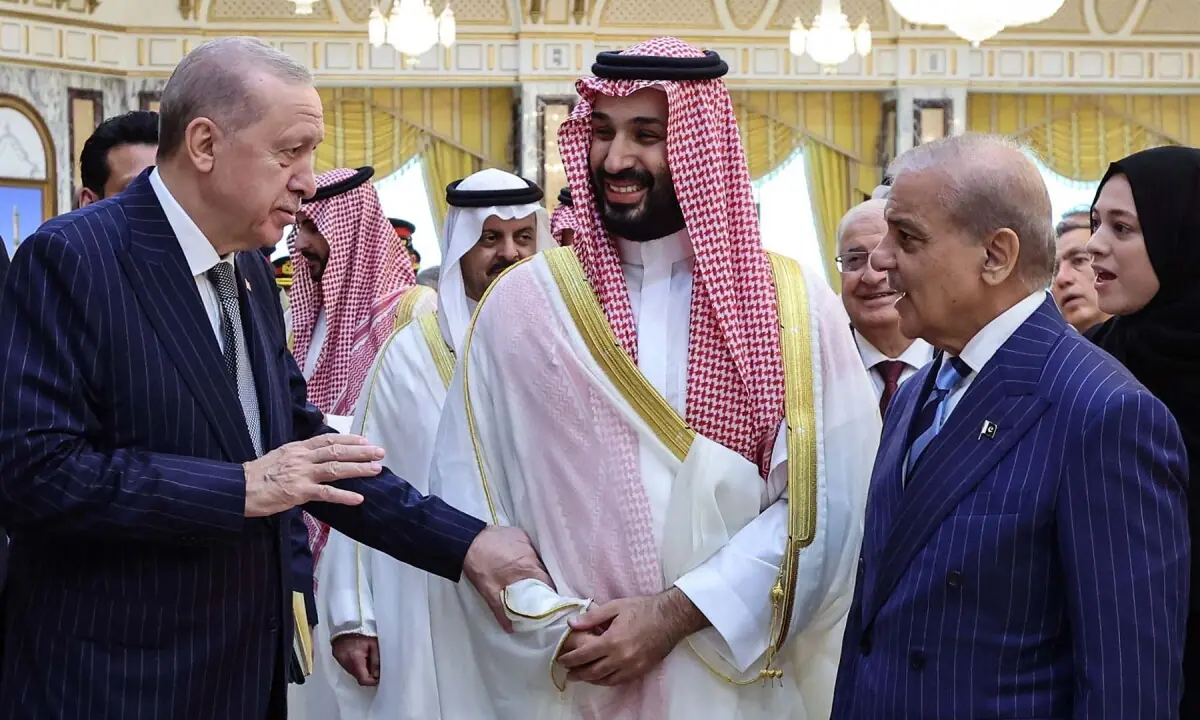
Paris (Imran Y. CHOUDHRY) :- Former Press Secretary to the President, Former Press Minister to the Embassy of Pakistan to France, Former MD, SRBC Mr. Qamar Bashir analysis : One of the most consequential outcomes of the Iran war has been the emergence of new security arrangements across the Middle East and its surrounding regions. Among them, the Makkah Joint Defence Agreement between Saudi Arabia, Pakistan and Türkiye deserves particular attention. Yet describing this arrangement as an “Islamic NATO” is misleading, unnecessarily provocative and potentially dangerous. It converts a developing defensive arrangement among three sovereign states into an ideological and religious bloc that its signatories themselves have not formally created.
The agreement signed in Makkah on August 7 is certainly significant. Saudi Arabia, Pakistan and Türkiye have committed themselves to collective deterrence, including the important principle that an armed attack against one will be regarded as an attack against all three. Their official statement speaks of historical ties, Islamic solidarity, shared strategic interests and defence cooperation. But its declared objectives are collective security, deterrence, peace and regional stability. It is formally called the Makkah Joint Defence Agreement—not Islamic NATO.
That distinction matters. Calling it an Islamic NATO immediately injects religion into what should primarily be understood as a strategic security arrangement. If this alliance must be called “Islamic NATO” because its three members are Muslim-majority countries, should NATO itself be described as “Christian NATO” because most of its members historically have Christian-majority populations? Clearly not. Modern alliances are normally defined by strategic interests, geography and shared security concerns rather than the religions practiced by their populations.
The Makkah agreement should therefore be viewed in the extraordinary geopolitical environment from which it emerged. The Iran war has profoundly disturbed assumptions about security across the Middle East. Countries that once believed distant great powers could guarantee their security have been forced to reconsider how much strategic autonomy they require. Old relationships have been tested, new partnerships accelerated and previously improbable security arrangements have become conceivable.
The transformation is especially visible in Syria. Türkiye’s growing influence there has increasingly intersected with Israel’s security calculations. Israeli strikes, Turkish objections and disputes over possible Turkish military activity have created an entirely new potential flashpoint. An Israeli strike on Syria’s Abu al-Duhur airbase this month produced sharp exchanges between Ankara and Israel, while Washington has been attempting to establish mechanisms preventing their competition inside Syria from escalating into direct confrontation.
Only days later, Syria and Israel were again engaged in American-mediated talks intended to reduce tensions, including the danger that Israeli-Turkish rivalry could spill further into Syrian territory. This illustrates just how dramatically the regional chessboard has changed: Syria is no longer merely an arena of the old Iran-Israel confrontation but increasingly a junction where Turkish, Israeli, Syrian, Arab and American security interests overlap.
The war has simultaneously returned the Palestinian question to the centre of regional diplomacy and exposed tensions within relationships previously regarded as almost immune from strategic disagreement. It has forced governments from the Gulf to South Asia to reconsider whether traditional bilateral security relationships remain sufficient in an era of missiles, drones, cyberwarfare, disrupted shipping and rapidly shifting alliances.
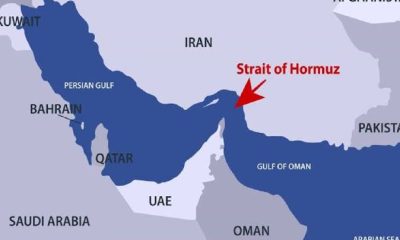
The consequences extend far beyond military affairs. The Strait of Hormuz has demonstrated once again how vulnerable the global economy remains to Middle Eastern conflict. At the other end of the Arabian Peninsula, insecurity around the Red Sea and Bab el-Mandeb has reinforced the same lesson. Energy security can no longer be separated from military security. Importing nations consequently have powerful incentives to diversify suppliers, shipping routes, strategic reserves and transportation infrastructure.
Meanwhile, the United States itself is confronting growing fiscal pressure. Federal debt crossed $40 trillion in August, according to Treasury data. Long-term borrowing costs have also risen sharply The 10-year Treasury yield recently stood around 4.7%, while the 30-year moved above 5%. The average American 30-year fixed mortgage is approximately 6.7%. These are nevertheless painful levels for households purchasing homes and for businesses financing investment.
War expenditure, energy prices, inflation expectations, fiscal deficits and debt-servicing costs can therefore reinforce one another. The geopolitical struggle is not taking place separately from economics; economics increasingly constitutes another battlefield.
The international financial system is undergoing change as well. BRICS members and other countries have increasingly explored settlements using national currencies and alternative payment mechanisms. This greater diversification could gradually reduce Washington’s extraordinary ability to translate control over financial networks into geopolitical leverage.
This wider transformation helps explain why the Makkah agreement has attracted so much attention. Pakistan contributes nuclear deterrence, a large professional military and substantial operational experience. Türkiye possesses NATO’s second-largest military and a rapidly expanding indigenous defence industry. Saudi Arabia contributes immense financial capacity, strategic geography and political weight in both the Arab and Islamic worlds. Together they represent a potentially formidable combination.
But potential should not be confused with maturity. NATO has existed for more than seven decades. It possesses integrated military planning, command structures, interoperability standards, intelligence-sharing mechanisms, permanent institutions and decades of combined exercises. The Makkah arrangement is at the beginning of its institutional development. Treating the two as equivalent therefore exaggerates the capabilities of the new agreement while simultaneously misrepresenting its purpose.
Indeed, serious strategic analysis has described the agreement as evidence of a broader regional realignment while also emphasizing unresolved questions about how its collective-defence commitment would operate in practice.
Its members should now remove those ambiguities. Saudi Arabia, Pakistan and Türkiye should publicly define the agreement’s defensive character, institutional mechanisms and geographical scope. They should make clear that it is directed neither against Iran nor Israel, neither against the United States nor Europe, and certainly not against Christianity, Judaism or any other religion. Where their strategic interests permit, cooperation with additional states should be based on common security requirements rather than religious identity.
If Muslim states someday wish to construct an explicitly religion-based collective security architecture, the logical political forum for debating such an undertaking would be the Organization of Islamic Cooperation. The Makkah agreement is something different: a strategic defence arrangement among three sovereign countries responding to an increasingly unstable security environment.
That distinction must be protected. The Iran war has accelerated changes already developing throughout the international system: greater strategic autonomy, new regional partnerships, competition over energy corridors, pressure on American fiscal power, experimentation with alternative financial arrangements, new tensions surrounding Syria and reassessment of traditional security guarantees. The Saudi-Pakistan-Türkiye agreement belongs within this much larger geopolitical transformation.
Branding it an “Islamic NATO” reduces that complicated strategic evolution to religion. Worse, it risks manufacturing the very confrontation the agreement should help prevent—an imaginary world of Muslim alliances confronting Christian or Jewish alliances.
The international media should exercise the same responsibility. The Makkah Joint Defence Agreement deserves scrutiny, debate and even criticism. But it should be judged by its provisions, capabilities and conduct—not assigned a religious identity that its official name does not carry.
The world already has enough geopolitical fault lines. It does not need another one manufactured between religions.
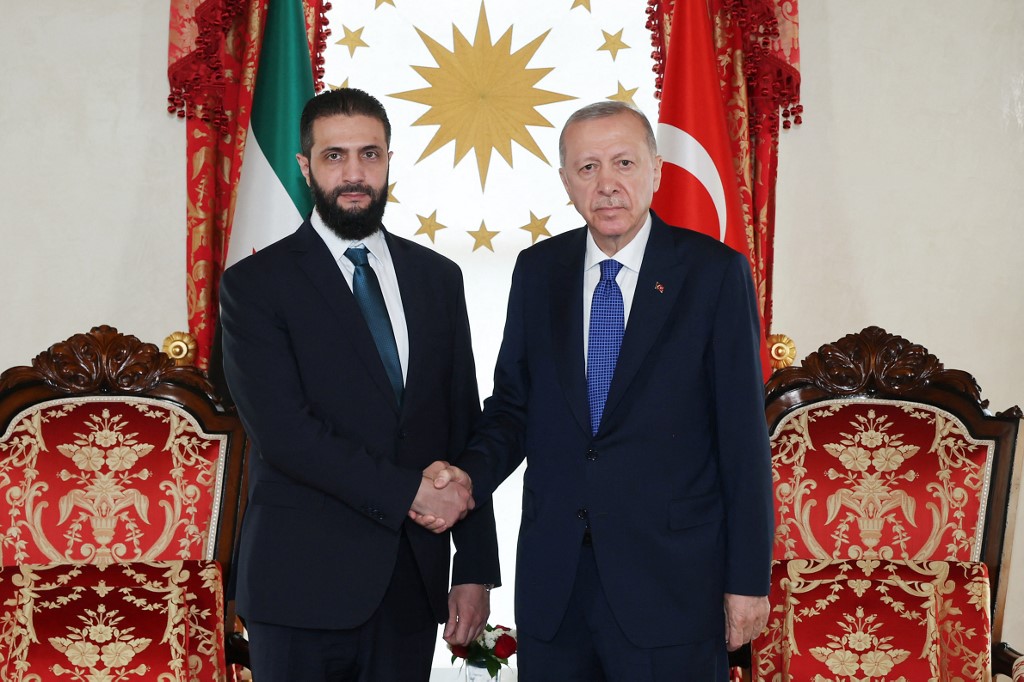
Paris (Imran Y. CHOUDHRY) :- Former Press Secretary to the President, Former Press Minister to the Embassy of Pakistan to France, Former MD, SRBC Mr. Qamar Bashir analysis : Israel’s latest airstrikes on Syria’s Abu al-Duhur airbase have opened a much larger question than the fate of one military facility. They raise a fundamental issue about sovereignty in the emerging Middle East: can Israel legitimately determine which countries Syria may cooperate with militarily, and how far can the doctrine of preventive security be stretched before it becomes an assertion of regional veto power?
On August 18, Israeli aircraft struck Abu al-Duhur airbase in Idlib, damaging its runway without reported casualties. Israel said Syria was about to violate what it described as a security “status quo” by permitting Turkish troops to deploy there. Yet Syria subsequently denied that a Turkish base or permanent deployment was planned. Foreign Minister Asaad al-Shaibani said Turkish officers had visited the facility as part of military cooperation and training, while the largely empty airfield was being rehabilitated for the Syrian Air Force.
This distinction is crucial. There is a considerable difference between Syria rebuilding its own armed forces with Turkish assistance and Turkey establishing an offensive military platform directed against Israel.
That makes Israel’s decision particularly consequential. Every sovereign state possesses the right, within international law and its treaty obligations, to develop diplomatic, economic and security relationships with other states.
Syria therefore has legitimate grounds to seek foreign assistance in rebuilding institutions devastated by years of conflict. Turkey is an obvious potential partner because of geography, its substantial military capabilities, its existing influence in northern Syria and its relationship with the post-Assad government.
Syria has suffered enormously through more than a decade of war. A country once known for its historic cities, cultural richness, educated population and considerable human potential was devastated, its infrastructure shattered and millions of its citizens displaced internally or driven abroad.
The new Syrian government consequently faces the enormous task of rebuilding not only roads, airports and public institutions but also its army, air force, border security and national security structures.
For such an undertaking, cooperation with established regional militaries is natural. Egypt, Turkey, Pakistan and other friendly states could potentially contribute expertise, but geography and Turkey’s longstanding involvement in Syria make Ankara an especially practical partner.
Israel sees the situation differently. Its government argues that October 7 fundamentally changed its security calculations and that it can no longer tolerate potentially hostile military capabilities developing near its borders.
There is an additional contradiction. Israel continues to control the Golan Heights, territory captured from Syria in 1967 and annexed by Israel in 1981—a move not recognized by most of the international community. Against this background, Israel’s attempt to dictate what Syria may do elsewhere within Syrian territory inevitably raises serious questions about sovereignty and consistency.
Washington’s reaction makes the latest episode even more significant. U.S. Ambassador to Turkey and special envoy to Syria Tom Barrack publicly characterized the Israeli strikes as an “unnecessary escalation that does not advance regional stability.” Barrack subsequently explained that American and Syrian officials believed dialogue over the facility was continuing and that available information did not indicate aggressive intent by Syria or Turkey.
That criticism matters precisely because Washington remains Israel’s most important strategic partner. It suggests that even within the American-Israeli relationship there are limits to agreement over how far preventive military action should extend. More importantly, it demonstrates the danger of substituting bombing for diplomacy when communication channels already exist.
None of this means Israeli security concerns should be dismissed. Israel has legitimate security interests, just as Syria, Turkey, Lebanon, Iran, Saudi Arabia, Egypt and every other country does. But legitimate concern and unlimited military discretion are fundamentally different concepts. Security cannot become a doctrine under which one country acquires the right to supervise the sovereign relationships of an entire region.
More dangerous still would be allowing the Israeli-Turkish confrontation to become military. Turkey is not a non-state armed organization or a militarily shattered neighboring country. It is a major regional power and NATO member possessing one of the alliance’s largest armed forces, an expanding domestic defense industry, sophisticated drones, missiles and a capable air force.
A direct confrontation between Turkey and Israel would therefore represent an entirely different strategic equation. It could draw NATO, the United States and other regional actors into an extraordinarily complicated crisis. Neither Israel nor Turkey would benefit from transforming Syria into the battlefield on which their competing strategic visions are settled.
The nuclear question therefore cannot be diluted into a vague appeal for worldwide disarmament while ignoring the immediate strategic imbalance inside the Middle East. Israel is widely believed to be the region’s only nuclear-armed state, while the surrounding Arab states do not possess nuclear weapons and Iran has faced extraordinary military, economic and diplomatic pressure even though it has not publicly crossed the threshold into an acknowledged nuclear-weapons capability.
If uranium enrichment, latent capability or even the possibility of future weaponization is considered sufficient justification for sanctions, coercion or preventive military action against Iran, then a far stricter standard should logically apply to an existing undeclared nuclear arsenal.
The principle must be consistent: one regional state cannot be permitted to demand that all others remain permanently non-nuclear while retaining its own nuclear deterrent beyond meaningful international scrutiny.
This imbalance becomes even more dangerous when the state possessing that capability repeatedly uses military force beyond its borders and increasingly invokes preventive security doctrines against neighboring countries.
Israel’s nuclear arsenal should therefore no longer be treated as an exceptional or untouchable issue. It should become a central subject of international non-proliferation diplomacy, inspection, verification and eventual disarmament.
The broader principle should of course ultimately apply to every nuclear-armed power—including the United States, Russia, China and others—because nuclear weapons are inherently capable of mutual catastrophe. But in the present Middle Eastern context, consistency demands that the rules applied so aggressively to Iran cannot stop at Israel’s borders.
This issue becomes particularly important because nuclear capability can provide a state with an extraordinary sense of strategic protection. Israel’s conventional military strength is formidable, but its presumed nuclear deterrent represents an ultimate security guarantee. That makes international responsibility even greater. Nuclear weapons must never become an implicit shield behind which increasingly expansive doctrines of preventive military intervention can develop.
The world should therefore resist both nuclear proliferation and nuclear exceptionalism. A sustainable Middle Eastern security architecture cannot be based upon one state possessing an undeclared nuclear deterrent while potential nuclear development elsewhere becomes grounds for sanctions, threats or military attacks. Rules acquire legitimacy only when they are applied consistently.
At the same time, the fundamental political disputes producing insecurity cannot be bombed away. The unresolved Palestinian question, Gaza, the West Bank, Syria’s territorial integrity and the wider competition among regional powers will continue generating instability unless addressed politically.
Israel therefore faces an important strategic choice. It can continue attempting to expand its security perimeter through military superiority and preventive strikes, or it can help construct a regional order in which its security is protected through reciprocal recognition of sovereignty and negotiated arrangements.
Bombing an airfield can destroy a runway. It cannot eliminate Turkey’s geographical importance, Syria’s need for reconstruction, Palestinian grievances or the strategic interests of neighboring states. Nor can military power indefinitely substitute for political accommodation.
Real security cannot be built by deciding whom Syria may befriend. It can only emerge when Israel, Syria, Turkey and the wider region accept the same fundamental principle: every state deserves security, every sovereign country deserves independence in its foreign relations, and no nation—however militarily powerful—should possess an exceptional right to impose its security doctrine upon all others.
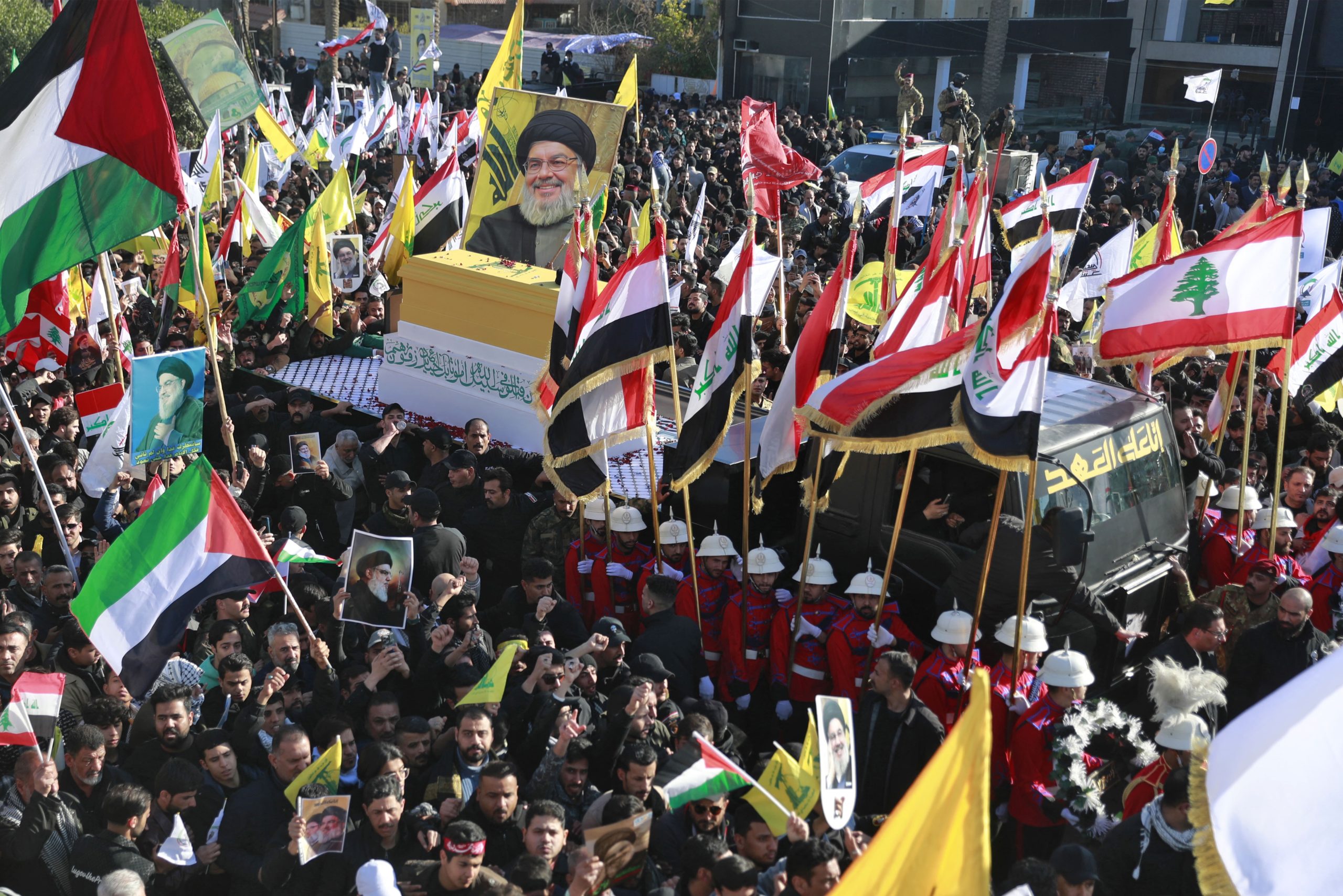
Paris (Imran Y. CHOUDHRY) :- Former Press Secretary to the President, Former Press Minister to the Embassy of Pakistan to France, Former MD, SRBC Mr. Qamar Bashir analysis : History may ultimately record June 2026 as the month when the strategic balance of the Middle East began to shift in a manner few thought possible. What started as an effort to weaken Iran, curtail its influence, and force it into submission instead produced a different outcome. Iran survived, endured, adapted, and emerged from the confrontation with its political system intact, its strategic position preserved, and its regional influence enhanced.
At the outset of the conflict, expectations in many capitals were remarkably similar. The assumption was that the combined military, economic, technological, and intelligence capabilities of the United States and Israel would prove overwhelming. Iran was expected to retreat, compromise, or collapse under sustained pressure. The objective was not merely military success but strategic transformation: a weakened Iran, a diminished Axis of Resistance, and a Middle East reordered under terms favorable to Washington and Tel Aviv. That objective was not achieved.
The conflict demonstrated a reality that military planners will study for years. Modern warfare is no longer determined solely by aircraft carriers, stealth bombers, advanced fighter aircraft, and defense budgets measured in hundreds of billions of dollars. Iran relied on a different doctrine—one based on strategic patience, missile technology, drone warfare, cyber capabilities, underground infrastructure, and asymmetrical operations. Rather than matching its adversaries weapon for weapon, it focused on raising the cost of confrontation and denying its opponents a decisive political outcome.
This approach fundamentally challenged long-standing assumptions about military superiority. The lesson was simple but profound: overwhelming power does not automatically produce political success. Nations with determination, strategic depth, and resilience can survive pressures that many observers consider impossible to withstand.
The conflict also exposed a profound divide within the Muslim world. For nearly two years, the world witnessed the devastation in Gaza and the immense suffering of Palestinians. Yet many of the region’s most influential states—including Saudi Arabia, the United Arab Emirates, Bahrain, Egypt, Jordan, and Türkiye—chose caution, restraint, and strategic calculation over confrontation. Their leaders prioritized economic stability, national interests, and avoidance of a wider regional war.
Iran chose a different path. It accepted the political, economic, and military risks associated with direct confrontation and positioned itself as the principal challenger of Israeli military power. Whether one agrees with Tehran’s policies or not, that decision dramatically elevated Iran’s standing across large segments of the Muslim world and transformed its image from a regional actor into a symbol of resistance.
The military consequences of the war may prove significant, but the diplomatic consequences may be even greater. Reports of expanding negotiations involving Iran, the United States, Israel, Lebanon, and Hezbollah suggest that the conflict may conclude not with regime change in Tehran but with arrangements that preserve Iran’s core interests while reducing the likelihood of wider regional war.
If such a settlement ultimately results in meaningful sanctions relief, access to frozen assets, normalized trade relations, and unrestricted energy exports, the greatest beneficiary may not be the Iranian military but the Iranian people.
For more than four decades, sanctions and financial restrictions prevented Iran from fully utilizing its enormous economic potential. Despite possessing some of the world’s largest oil and natural gas reserves, Iran often sold energy under difficult conditions and at discounted prices. Economic normalization would fundamentally change that equation.
The return of frozen assets and renewed access to international markets would strengthen the Iranian economy, stabilize the national currency, reduce inflationary pressures, and attract investment from around the world. Iran would be able to market its energy resources under normal commercial conditions, generating revenues that could be directed toward infrastructure, education, healthcare, scientific research, technology, and industrial modernization.
The country’s geographic location provides another extraordinary advantage. Positioned at the crossroads of Asia, Europe, Central Asia, and the Middle East, Iran has the potential to become a major transportation, logistics, and energy hub. Modern ports, rail networks, highways, industrial zones, and trade corridors could transform the country into one of the most important commercial gateways in Eurasia.
Cities such as Tehran, Isfahan, Shiraz, Mashhad, and Tabriz could experience rapid modernization. Universities could attract international talent. Research institutions could expand. Advanced manufacturing, artificial intelligence, biotechnology, aerospace industries, and digital technologies could emerge as pillars of economic growth. The transformation of Iran from a heavily sanctioned state into a major economic power would represent one of the most significant geopolitical developments of the twenty-first century.
Another major consequence of the conflict concerns regional security. Many governments in the Middle East have concluded that long-term stability cannot rest on overwhelming military imbalance. The existence of a significant strategic disparity has encouraged regional actors to explore new security arrangements, deeper defense cooperation, and alternative mechanisms for deterrence.
In this environment, Pakistan assumes a unique role. As the only Muslim nuclear power, Pakistan occupies a position unlike any other state in the Islamic world. Therefore all middle eastern countries including Turkey are scrambling to sign defense deals with Pakistan to provide them counterbalancing deterrence to Israel’s nuclear capability.
Its diplomatic engagement during the crisis elevated its profile, while its strategic capabilities make it an increasingly important factor in regional calculations. Whether through diplomacy, defense cooperation, or broader security dialogue, Pakistan is likely to become more influential in discussions about the future architecture of Middle Eastern security.
The broader lesson is that stability is most likely to emerge when no state believes it can impose its will indefinitely through military superiority and on the strength of nuclear arms. Durable peace requires balance, mutual recognition, respect for sovereignty, and political settlements that address the underlying causes of conflict rather than merely managing their symptoms.
The war also raises important questions for Israel. For decades, Israel operated under assumptions that combined military superiority and unconditional strategic backing of the US would enable it to materialize its elusive dream of greater Israel. Iran’s defiance and the US begging for a peace deal suggest that those assumptions are being reassessed. The costs of perpetual confrontation are rising. The political consequences of prolonged conflict are becoming more severe. Diplomatic solutions that once seemed distant may gradually become unavoidable.
The ultimate lesson of this conflict is not military. It is political and economic. Nations are not judged solely by the wars they fight. They are judged by what they build after the fighting ends. If Iran succeeds in transforming resilience into prosperity, sanctions relief into development, and strategic endurance into national renewal, it will achieve a victory far greater than any military triumph.
The Middle East now stands at a crossroads. One path leads toward reconciliation, economic integration, regional cooperation, and coexistence. The other leads toward continued rivalry, arms competition, and recurring conflict. The decisions made in the coming years will determine which future emerges.
My conclusion is straightforward. The greatest achievement of Iran was not defeating an adversary on the battlefield. It was demonstrating that overwhelming pressure could be resisted, that strategic patience could outlast coercion, and that endurance could preserve national sovereignty. If that resilience now opens the door to economic transformation, diplomatic influence, and a more balanced regional order, then June 2026 may indeed be remembered as the beginning of a new chapter in Middle Eastern history.


CM Murad asks authorities to boost polio vaccination across Sindh

Dealers await answers as fuel subsidy rollout begins

Islamabad, Beijing activate joint border commission


-

 Sports3 months ago
South Korea’s Yoo Useong Steps Onto the Global Strongman Stage as World Strongman Federation Professional Athlete
-

 Art & Culture1 year ago
A Survey of Mata-E-Zeest
-

 Europe News2 years ago
Chaos and unproven theories surround Tates’ release from Romania
-

 American News2 years ago
Trump expands exemptions from Canada and Mexico tariffs
-

 American News2 years ago
Trump Expels Zelensky from the White House
-

 Art & Culture2 years ago
Will Snow White be a ‘victim of its moment’? How the Disney remake became 2025’s most divisive film
-

 Pakistan News1 year ago
Comprehensive Analysis Report-The Faranian National Conference on Maritime Affairs-By Kashif Firaz Ahmed
-

 Entertainment2 years ago
Champions Trophy: Pakistan aim to defend coveted title as historic tournament kicks off today