
American News
America’s Iran Strategy in Disarray

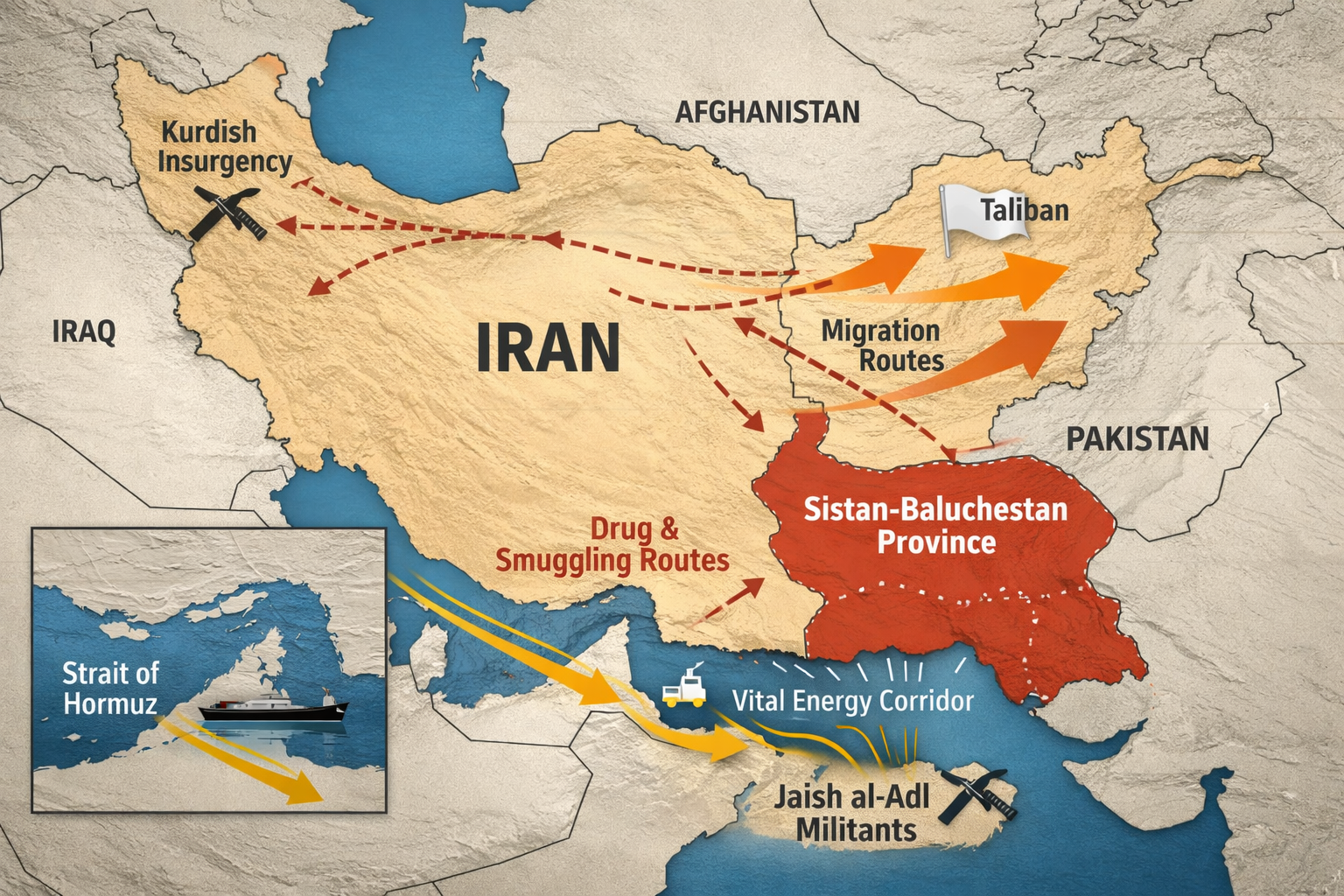
Paris (Imran Y. CHOUDHRY) :- Former Press Secretary to the President, Former Press Minister to the Embassy of Pakistan to France, Former MD, SRBC Mr. Qamar Bashir analysis : The United States’ confrontation with Iran has entered a dangerous and increasingly incoherent phase as after months of military action, diplomacy, renewed bombing and contradictory declarations from Washington, the central question remains unanswered: What, precisely, does the United States seek to achieve?
President Donald Trump had already warned that Iran would be hit hard. Yet, almost in the same breath, he indicated that he did not expect the wider war to restart, that any further action would end quickly and that negotiations involving Steve Witkoff and Jared Kushner could continue.
These are not merely variations in tone. They represent fundamentally different strategic paths: renewed diplomacy, limited punitive strikes, prolonged coercion, comprehensive military defeat or regime change.
A great power can keep its adversary guessing as a deliberate tactic. But unpredictability becomes dangerous when allies, markets, military commanders, diplomats and citizens cannot determine whether the ambiguity is calculated or whether policy itself is being improvised from one crisis to the next.
The original justification for military action centered on the assertion that Iran was approaching nuclear weapons capability and posed an urgent threat to Israel and the United States. However, Vice President J.D. Vance later suggested that Iran remained far from developing an immediate nuclear threat. Such a statement inevitably weakens the urgency that was invoked to justify the war. If the threat was not imminent, why was a large-scale attack necessary? If it was imminent, why has the conflict now narrowed primarily to tankers, tolls and freedom of navigation in the Strait of Hormuz?
The war’s declared goals have repeatedly shifted. Preventing nuclear weaponization was followed by demands to destroy missile and drone infrastructure. The contradiction became especially visible in Washington’s position on transit charges. Secretary of State Marco Rubio stated unequivocally that no country may impose tolls or fees on an international waterway.
President Trump later announced that the United States, acting as the “Guardian of the Hormuz Strait,” would charge a fee equal to 20 percent of the value of cargo moving through the waterway as compensation for American protection. He subsequently reversed that proposal and said Gulf states would instead provide trade and investment commitments to the United States.
The Memorandum of Understanding was supposed to create a pathway back from war. Iran claimed that Washington had breached the agreement through renewed sanctions, attacks in southern Iran and continued support for Israeli military action.
American officials accused Tehran of attacking commercial shipping and violating the spirit of the ceasefire. Rather than serving as a bridge toward a comprehensive settlement, the MOU became another contested document interpreted differently by each side.
The crisis also exposed major differences between Washington and Israel. Vice President Vance accused elements within the Israeli government of attempting to manipulate American public opinion and derail U.S.-Iran diplomacy. He argued that a well-funded influence campaign was designed to keep the war going and shift U.S. policy away from negotiation.
His remarks were extraordinary. Disagreements between American and Israeli governments are not unprecedented, but a sitting vice president publicly alleging that figures within an allied government were attempting to manipulate U.S. political judgment marked a profound rupture. Vance went even further by suggesting that, without Israeli influence, the United States might not have entered the conflict in the same manner.
This raises a question that can no longer be avoided: Is American policy toward Iran being determined primarily by the independent national interests of the United States, or is it being shaped by Israel’s separate strategic objective of permanently weakening Iran?
Israel may consider a fragmented, militarily devastated and politically unstable Iran advantageous because it would remove its strongest regional rival. But such an outcome would impose enormous costs on the United States, Europe and the wider Middle East. Iran is not a small or institutionally hollow state. It has nearly 95 million people, a substantial industrial base, deep historical institutions, strategic geography and a complex society.
Destroying Iran without a credible plan for what follows could produce state fragmentation, insurgency, terrorism, economic collapse, refugee flows and prolonged regional warfare. The consequences would not remain confined to Israel’s immediate security environment. They would affect global energy supplies, European migration, shipping insurance, American military deployments and international markets.
Trump himself now appears trapped between escalation and restraint. Weeks of American and Israeli attacks failed to force Iran into unconditional surrender. The economic reality limits Washington’s freedom of action. A prolonged conflict in the Strait of Hormuz could raise fuel, transportation, manufacturing and food costs across the United States. Trump must therefore reconcile his promise to demonstrate military strength with his domestic political need to avoid another inflationary shock before congressional elections.
The war has never commanded overwhelming public support. Influential conservative voices, including Tucker Carlson and Megyn Kelly, have argued that Trump was manipulated into pursuing Israel’s war. Meanwhile, hawkish conservatives attacked the MOU for conceding too much to Iran and questioned why the conflict had been fought if Washington was ultimately prepared to compromise.
Trump is thus pressured from both directions. Restraint invites criticism from hawks who demand Iran’s defeat. Escalation risks alienating anti-war elements of his political base, increasing oil prices and dragging the country into another open-ended Middle Eastern conflict.
Congress is reflecting this transformation. In July 2026, 103 House Democrats voted to remove approximately $3.3 billion in military assistance to Israel from a spending measure. The amendment failed because almost every Republican and a substantial number of Democrats voted to retain the aid. Nevertheless, it was the first time in modern memory that a majority of House Democrats voting on such an amendment supported eliminating Israel’s military funding.
At the same time, Section 219 of the National Defense Authorization Act, which seeks deeper U.S.-Israel integration in artificial intelligence, quantum technologies, biotechnology, data fusion and defense networks, has generated concerns that Israel could gain excessive access to sensitive American technology and greater influence over U.S. defense policy.
The absence of coherence is now evident across the American leadership. Trump alternates between threats, negotiations, economic demands and talk of decisive victory. Rubio invokes international law against Iranian tolls while serving an administration that briefly proposed its own 20 percent maritime charge. Vance supports diplomacy and publicly accuses Israeli figures of undermining American policy. Congress is divided over aid, technology sharing and the legality of military action.
These are not minor messaging differences. They suggest that competing power centers are pursuing different diagnoses of the conflict, different priorities and different endgames.
The latest reported pause in attacks, following diplomatic intervention involving Pakistan and Field Marshal Asim Munir, may offer another opportunity to return to negotiations. But another temporary pause will not be enough. The United States needs a comprehensive strategy with clearly stated objectives, enforceable obligations, a realistic exit mechanism and a distinction between American and Israeli national interests.
The writing is now on the wall. American society is increasingly skeptical of wars without clear objectives, aid without accountability and alliances that appear to constrain independent policy. Unless Washington restores coherence, the Iran conflict will deepen public distrust, unsettle markets, weaken diplomatic credibility and create lasting psychological and economic costs at home.

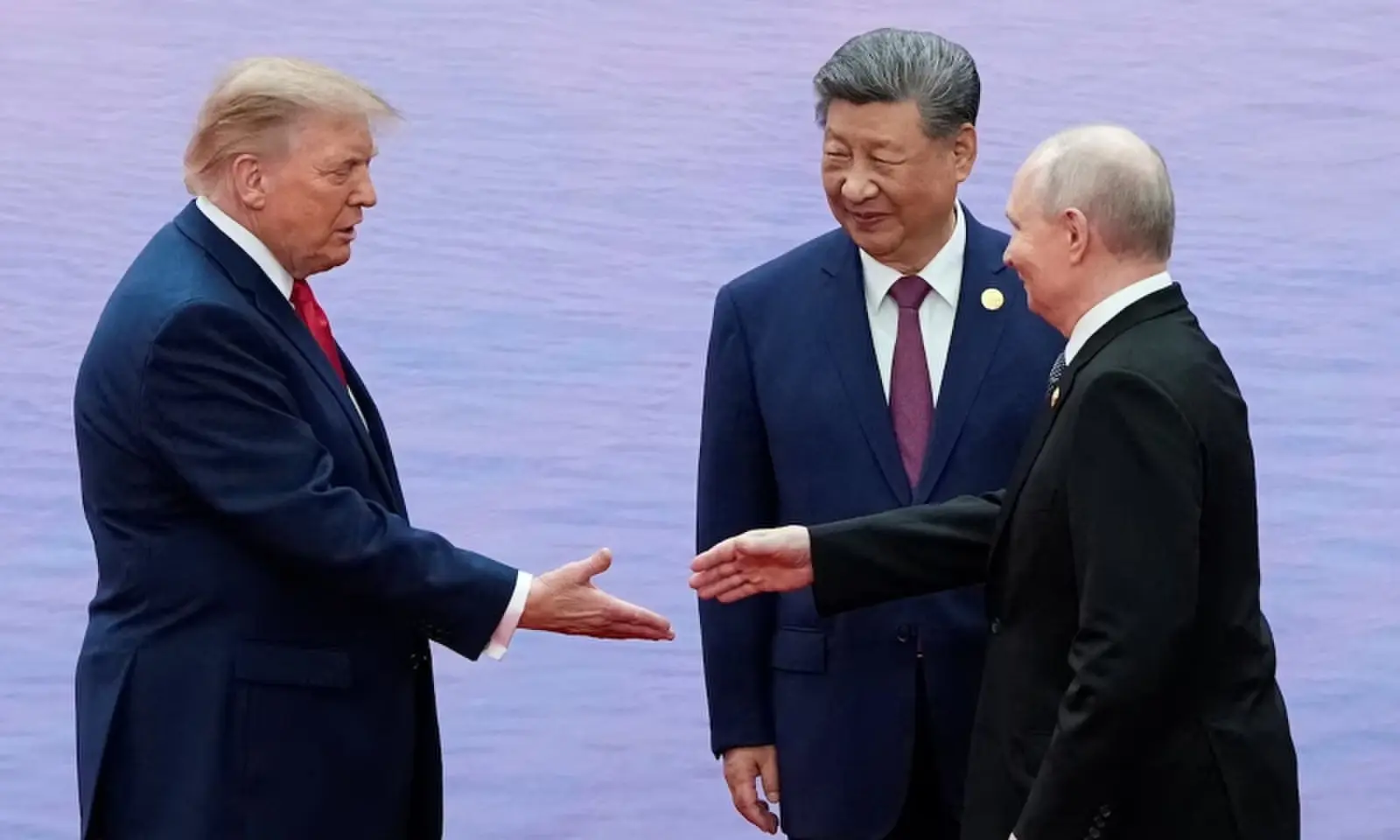
Paris (Imran Y. CHOUDHRY) :- Former Press Secretary to the President, Former Press Minister to the Embassy of Pakistan to France, Former MD, SRBC Mr. Qamar Bashir analysis : The proposed meeting of Presidents Xi Jinping, Vladimir Putin and Donald Trump in China could become a defining moment in shaping the international order for decades. The publicly declared agenda may revolve around global peace, nuclear security, trade, economic cooperation and strategic stability. Beneath these diplomatic priorities, however, lie competing geopolitical ambitions, concealed strategic calculations and opportunities to resolve two devastating wars that have inflicted enormous economic suffering upon the world.
The three leaders approach the negotiating table with vastly different political circumstances. Trump faces the fallout of the midterm elections, the unresolved confrontation with Iran and strained relationships with traditional allies in Europe, Canada and the Middle East. Putin remains deeply embroiled in Ukraine, where prolonged warfare continues to consume Russia’s military, economic and human resources. Xi Jinping, by contrast, faces no comparable military entanglement and commands an expanding network of international economic partnerships.
Each president nevertheless possesses extraordinary geopolitical leverage. The United States remains the world’s largest economy, a dominant consumer market and a formidable military and technological power. Its leadership in artificial intelligence, financial markets and innovation gives Washington enormous international influence. A single presidential statement can shake stock exchanges, influence energy prices and alter diplomatic calculations across continents. American economic sanctions, military capabilities and financial institutions remain powerful instruments of international pressure.
Russia’s strength rests upon its nuclear arsenal, vast territory and immense reserves of oil, natural gas, minerals and other strategic resources. Yet its continuing involvement in Ukraine has restricted its diplomatic flexibility, strained its economy and complicated its relationships with Europe. Ukrainian strikes deep inside Russian territory further demonstrate the mounting costs of prolonged confrontation. Moscow therefore has powerful incentives to seek a settlement that protects its security interests while ending an increasingly expensive conflict.
China possesses a different and potentially more consequential form of leverage. As the manufacturing powerhouse of the world, it commands industrial production, global supply chains, rare-earth processing and permanent magnet manufacturing. Its Belt and Road Initiative connects more than 140 participating countries through infrastructure, trade and investment. Expanding maritime networks, alternative transport corridors, digital connectivity and international financial arrangements further strengthen Beijing’s influence.
China’s growing use of the renminbi in international settlements also represents a long-term challenge to the dollar-dominated financial system. Although the dollar remains the principal global reserve currency, Beijing is steadily developing alternatives that could reduce dependence upon American financial institutions. China’s industrial strength and supply-chain influence provide Xi with considerable negotiating leverage, even without matching America’s worldwide military reach or Russia’s natural-resource abundance.
These contrasting strengths create three distinct negotiating agendas. Trump may seek recognition of American military success against Iran and demand that China and Russia reduce their economic, diplomatic and strategic support for Tehran. Xi may insist that China’s relations with Iran are sovereign bilateral matters beyond Washington’s authority. Putin, meanwhile, may seek American and Chinese recognition of Russia’s security concerns and negotiating position in Ukraine, including concessions that European governments might strongly oppose.
The political atmosphere surrounding such negotiations could also be influenced by intelligence controversies. Allegations involving Nvidia’s Jensen Huang and an alleged Chinese honey-trap operation have generated competing narratives about espionage and political manipulation. The historical use of sexual entrapment and blackmail by intelligence services associated with Britain, the United States, Russia and Israel raises questions about attempts to attribute similar practices to Beijing. If accusations against China are unfounded, their exploitation for diplomatic advantage could backfire against Washington.
Yet beyond these rivalries lies a far greater opportunity. The Ukraine and Iran conflicts have consumed enormous resources, disrupted international trade, threatened energy security and diverted national wealth from development toward destruction. Their consequences reach households, industries and governments far removed from the battlefields. The three presidents possess sufficient collective influence to explore settlements addressing the underlying disputes rather than merely managing their military consequences.
In Ukraine, the central diplomatic bargain could involve denying NATO membership in exchange for Russia’s complete withdrawal from occupied Ukrainian territory. Moscow would receive negotiated security assurances, while Kyiv would recover its internationally recognized borders, independence and territorial integrity. International guarantees, monitoring arrangements and phased sanctions relief could reinforce implementation. Such a settlement would require Ukraine’s agreement and credible protection against renewed aggression.
For Russia, peace would release enormous resources currently consumed by warfare and open possibilities for economic recovery. Ukraine could begin reconstruction, restore productive capacity and facilitate the return of displaced citizens. Europe could reduce the economic burden of confrontation, restore commercial confidence and redirect resources toward industrial development, infrastructure and public welfare. A negotiated security arrangement could replace a destructive military stalemate with a framework for long-term regional stability.
The Middle Eastern conflict demands an equally fundamental political settlement. The unresolved Palestinian question remains a central source of regional hostility. A genuine two-state solution establishing an independent, sovereign and viable Palestine alongside Israel could transform the strategic environment. Palestinian independence, recognized borders and security guarantees for both states could create conditions for reconciliation that decades of military confrontation have failed to achieve.
For Iran, Palestinian liberation has remained a principal declared objective of its regional policy. Establishing a sovereign Palestinian state could satisfy that objective and substantially diminish one of the political foundations of confrontation with Israel and the United States. Washington would then have an opportunity to replace military intervention with diplomacy, while Israel could pursue lasting security through political accommodation rather than recurring warfare.
Ending both conflicts would also serve China’s fundamental economic interests. Secure maritime routes, uninterrupted energy supplies, predictable commodity prices and stable international commerce are indispensable to its manufacturing economy. Reduced threats to the Strait of Hormuz and other strategic waterways could lower shipping risks, stabilize markets and restore confidence throughout global supply chains. Russia and the United States would likewise benefit from reduced military expenditures and expanding economic opportunities.
The decisive question is whether the three leaders will use their immense leverage to extract unilateral concessions or construct mutually acceptable settlements. Washington could encourage Israeli acceptance of Palestinian statehood, Moscow could accept Ukraine’s territorial restoration, and Beijing could facilitate diplomatic guarantees, reconstruction and economic cooperation. Their collective influence could help transform two costly conflicts into opportunities for international reconciliation.
Xi Jinping’s vision that the planet is large enough for all nations to develop and prosper together offers a framework for such cooperation. Rather than pursuing supremacy through military confrontation, economic coercion and strategic rivalry, the three powers could demonstrate that their competing strengths can contribute to collective security and prosperity.
If wisdom prevails, the Xi–Putin–Trump summit could achieve far more than diplomatic declarations. It could initiate two historic settlements, remove major sources of international instability and establish the foundations of an emerging world order in which peace replaces confrontation, cooperation replaces coercion, and shared prosperity triumphs over destructive geopolitical rivalry.
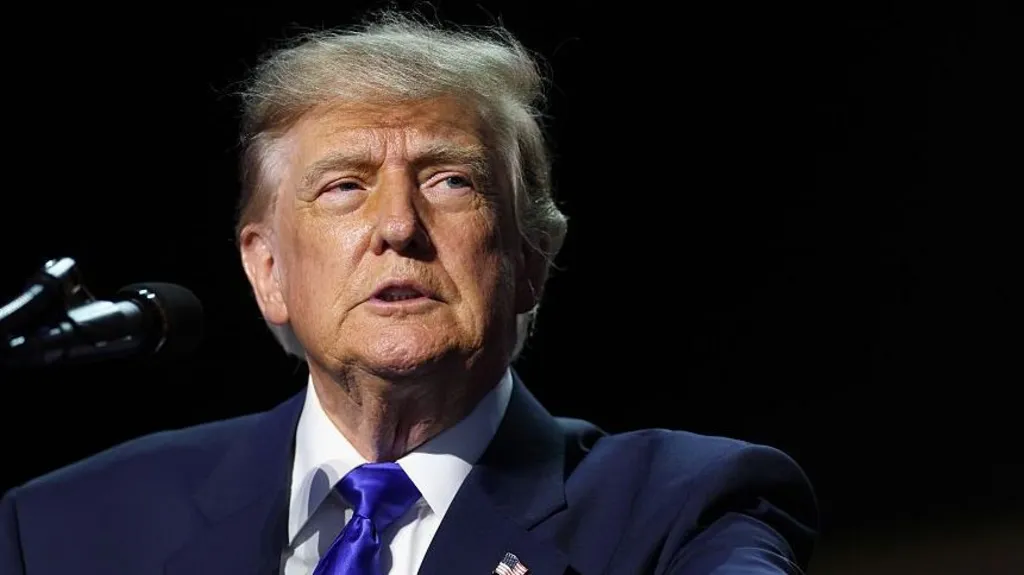
Paris (Imran Y. CHOUDHRY) :- Former Press Secretary to the President, Former Press Minister to the Embassy of Pakistan to France, Former MD, SRBC Mr. Qamar Bashir analysis : President Donald Trump’s war against Iran, launched alongside Israel on February 28, 2026, has become a devastating demonstration of military overreach, economic destruction and political failure. What began with promises of overwhelming American superiority has consumed tens of billions in military expenditure, imposed hundreds of billions in domestic economic losses and potentially inflicted trillions in global damage. The political consequences are equally devastating, threatening leadership in Washington and Tel Aviv while undermining American influence worldwide.
During a congressional hearing, a senator confronted a senior Pentagon official over the naval blockade of Iranian ports. Independent estimates placed its daily cost at $32.5 million, equivalent to $975 million monthly and $11.86 billion annually. The official acknowledged approximately $30 million daily but could not provide comprehensive accounting. An operation intended to economically strangle Iran has instead become a billion-dollar monthly burden on American taxpayers.
Iranian retaliation has compounded the destruction. Strikes against the American naval base in Bahrain, headquarters of the Fifth Fleet, reportedly inflicted at least $400 million in damage. Yet the Pentagon official could not confirm the estimate. The senator cited $47 billion already spent on the conflict, exposing the administration’s inability to explain the mounting costs of military operations, equipment losses and reconstruction.
The opportunity cost is devastating. As the senator argued, $47 billion could eliminate federal student debt for more than two million Americans, finance preschool education for every four-year-old, reduce family health insurance premiums by approximately $200 monthly, or relieve over ten million families of medical debt. Instead, resources essential for education, healthcare, infrastructure and human development have been consumed by destruction. By starving the civilian economy that generates national wealth and sustains military strength, Washington is undermining the foundations of American power.
American households have paid heavily. Estimates cited by the Center for American Progress place the burden at approximately $2,000 per household, representing $260 billion across 130 million households. Broader assessments suggest domestic losses approaching $447 billion through energy inflation, disrupted commerce and declining purchasing power. Gasoline prices exceeding $4.27 per gallon and diesel surpassing $6.31 during peak disruptions intensified pressure on consumers, transportation and manufacturing.
Military replenishment presents another enormous liability. Direct expenditure has been estimated between $37.5 billion and $47.1 billion, while replacing depleted missiles, interceptors, aircraft and drones could require another $29 billion to over $100 billion. Strategic inventories of Tomahawk missiles, Patriot interceptors and precision weapons have been strained. At least 21 American service members have reportedly been killed and 865 wounded, generating additional long-term medical and veterans’ obligations.
Israel has suffered substantial economic and political damage. Military mobilization, missile-defense operations, infrastructure repairs and disrupted commerce have imposed multibillion-dollar burdens. The earlier twelve-day confrontation in 2025 generated combined regional losses estimated at $24 billion to $35 billion. The continuing war has multiplied these liabilities. Netanyahu’s electoral setback and inability to secure a dependable parliamentary majority have exposed the political consequences of his military adventurism.
Iran has endured extensive destruction of military, industrial, energy and civilian infrastructure, with reported fatalities exceeding 6,000. Yet despite enormous human and financial losses, Tehran has sustained resistance and imposed substantial costs upon its adversaries. Washington’s expectation that overwhelming military superiority and economic strangulation would force Iranian submission has failed to deliver its proclaimed objectives.
The wider Middle East has experienced economic and strategic upheaval. More than twenty regional military facilities and infrastructure sites have reportedly suffered damage. Disrupted shipping, higher insurance premiums, damaged energy installations and interrupted investment have generated reconstruction liabilities potentially reaching tens of billions. Gulf governments dependent upon American protection have witnessed the vulnerability of their security arrangements, weakening confidence in Washington’s regional guarantees.
Globally, the economic consequences potentially reach trillions. Brent crude surged more than 54% during acute phases, exceeding $112 per barrel. Disruptions around the Strait of Hormuz increased transportation, manufacturing, fertilizer and food costs across continents. Europe, Asia and developing economies have absorbed inflationary shocks from a confrontation they neither initiated nor controlled. Lost economic output, interrupted investment and disrupted supply chains have multiplied the destruction far beyond the battlefield.
The political costs are equally punishing. Trump’s November midterm setbacks weakened his domestic authority, while Netanyahu’s parliamentary difficulties threatened his political survival. Washington’s diplomatic credibility has deteriorated as governments question whether American military intervention produces security or instability. Iran’s continued resistance has further challenged the assumption that military superiority guarantees political dominance.
America’s domestic infrastructure has simultaneously exposed disturbing vulnerabilities. Disruptions involving Microsoft services, aviation networks, banking operations, communications systems and Apple-related platforms have affected sectors supporting trillions in economic activity. These failures underscore the contradiction of financing military destruction abroad while essential technological and civilian infrastructure at home urgently requires modernization and protection.
Trump’s broader policies reinforce the pattern. Tariff confrontations generated economic uncertainty, immigration restrictions disrupted labor markets, territorial ambitions concerning Greenland and Canada encountered resistance, and intervention in Venezuela raised questions about sovereignty and control over national resources. The Iranian war represents the most expensive manifestation of a foreign policy increasingly dependent upon coercion rather than diplomacy.
Congress now confronts the question of accountability. The hearing exposed the administration’s failure to justify $47 billion in expenditure while Americans struggle with education, healthcare and household expenses. Congressional authority over appropriations provides a powerful mechanism to deny further funding, halt military escalation and redirect national resources toward productive investment and public welfare.
Accountability must extend beyond Washington. Iran, Lebanon and neighboring countries have suffered enormous destruction, displacement and civilian casualties. Reported deaths in Lebanon have exceeded 7,000, while millions across the region have faced disruption. Reconstruction, lost economic output and damaged infrastructure represent substantial financial claims requiring consideration in any eventual settlement.
Trump promised military victory, restored deterrence and strengthened American supremacy. Instead, America confronts $47 billion in cited war expenditure, potentially $100 billion in additional military replenishment, hundreds of billions in domestic losses and worldwide disruption potentially reaching trillions. Israel faces political instability, Gulf governments are reassessing their dependencies, and Iran remains resistant.
The ultimate reckoning will concern more than squandered billions. It will encompass shattered economies, weakened political leadership, diminished American credibility and opportunities stolen from future generations. Trump launched a war to demonstrate American supremacy; instead, he has exposed the economic and political foundations of that supremacy to unprecedented strain. The financial losses are staggering, the political consequences potentially irreversible, and responsibility leads directly to the president who chose the war.

Paris (Imran Y. CHOUDHRY) :- Former Press Secretary to the President, Former Press Minister to the Embassy of Pakistan to France, Former MD, SRBC Mr. Qamar Bashir analysis : America is entering an extraordinary era in which perceived threats, institutional breakdowns and technological vulnerabilities are becoming instruments for transferring enormous public wealth into corporate hands. Every hypothetical catastrophe produces another multibillion-dollar expenditure, while corporations entrusted with preventing these emergencies become richer. The proposed $1.5 trillion defense budget, aviation modernization demands exceeding $30 billion, and hundreds of billions spent annually on financial technology illustrate an economic system increasingly organized around expensive crises rather than public welfare.
The Pentagon’s FORTRESS America initiative provides a revealing example. Military planners envision a catastrophic global war that could destroy electricity networks, interrupt communications and isolate military installations from civilian infrastructure. Consequently, American bases are reportedly being instructed to prepare for 90 days of independent operation. Although the Pentagon has not published an overall cost estimate, outside assessments suggest expenditures ranging from tens of billions to potentially hundreds of billions of dollars. An extraordinary financial commitment is therefore emerging against a hypothetical catastrophe whose occurrence remains uncertain.
The proposed preparations involve portable nuclear reactors, independent electrical microgrids, battery storage, fuel reserves, ammunition stockpiles, communications networks and alternative manufacturing arrangements. Already, the Army has announced nuclear microreactor awards worth up to $2.2 billion for five military installations. Extending comparable resilience arrangements across hundreds of bases could create enormous opportunities for defense contractors, energy corporations and technology suppliers. The enemy remains hypothetical, but the contracts, expenditures and corporate beneficiaries are becoming increasingly tangible.
The broader military budget reveals the magnitude of this transformation. The administration’s proposed $1.5 trillion defense allocation for fiscal year 2027 represents an extraordinary concentration of national resources in military preparedness. Its proposed financing includes approximately $1.15 trillion in base funding and another $350 billion through reconciliation. Simultaneously, the administration has proposed a 10 percent reduction in nondefense discretionary expenditure. America is therefore contemplating unprecedented military spending while demanding sacrifices from institutions responsible for improving ordinary citizens’ lives.
Civil aviation presents another illustration. Following nationwide flight disruptions attributed to technological problems, the Federal Aviation Administration renewed demands for massive modernization expenditure. The proposed Modern Skies Act would provide approximately $30 billion, supplementing $12.5 billion previously approved. Transportation officials have placed the broader modernization requirement near $50 billion. What began as technological failure has consequently become the justification for another enormous public spending program, potentially benefiting aviation contractors, telecommunications suppliers, engineering companies and technology manufacturers.
The proposed aviation allocation includes approximately $10 billion for digital architecture, telecommunications and air traffic management, another $10 billion for airport infrastructure, and $10 billion for major terminal development. These investments may address genuine deficiencies, but the question remains why deterioration was allowed to reach a point where taxpayers must suddenly finance such extraordinary reconstruction. Institutional neglect becomes an emergency, the emergency becomes a financial demand, and the resulting contracts become lucrative corporate opportunities.
American banking demonstrates an equally troubling pattern. Recent disruptions affecting JPMorgan Chase, Bank of America, Wells Fargo and other institutions prevented customers from accessing accounts or completing transactions. Although no coordinated cyberattack was established, the incidents intensified demands for technological resilience. Industry estimates cited for banking technology expenditure approach $495 billion annually across the broader financial sector. This is not a single American modernization bill, but it demonstrates the enormous financial ecosystem surrounding digital banking infrastructure.
The banking sector controls trillions of dollars in assets and earns substantial revenues from lending, payment processing and financial services. Nevertheless, technological modernization expenses can ultimately reach customers through account charges, transaction fees, interest margins and other costs. Visa and Mastercard, whose payment networks generate exceptionally high operating margins, illustrate the profitability of financial intermediation. Consumers pay for accessing their own money, transferring funds and participating in an increasingly cashless economy.
Microsoft’s recent service disruptions have similarly exposed vulnerabilities in digital infrastructure supporting businesses, government departments and communication networks. Companies already spend billions annually on cloud services, cybersecurity, software licensing and subscriptions. Each additional failure strengthens the commercial argument for purchasing more sophisticated protection from the same technological ecosystem. The corporations responsible for providing digital reliability can consequently benefit financially from the anxieties created when reliability collapses.
The combined financial implications are staggering. A $1.5 trillion proposed defense budget, approximately $42.5 billion in approved and proposed aviation modernization funding, potentially hundreds of billions in military-base resilience expenditure, and an estimated $495 billion in annual banking technology spending collectively demonstrate the immense scale of the security and modernization economy. These figures represent different expenditure categories and timeframes, not one consolidated government bill, but they reveal how trillions circulate around threats, vulnerabilities and institutional dependence.
Meanwhile, proposed reductions in domestic expenditure threaten programs directly affecting American households. The administration’s fiscal proposals include approximately $2.3 billion in reductions to education funding, a $5.6 billion reduction for NASA, and substantial cuts affecting scientific research, community development and social assistance. Proposals involving food assistance and energy support further illustrate the competing priorities. Money appears readily available for preparing against hypothetical destruction, while funding essential human development becomes a subject of austerity.
The economic opportunity cost is equally disturbing. Research associated with Brown University’s Costs of War project indicates that $1 million invested in education can generate approximately 13 jobs, compared with nine in healthcare and five in defense. Redirecting merely $100 billion from military expenditure toward education could therefore support substantially more employment. Yet the political establishment continues prioritizing military contracts and corporate procurement over the productive potential of ordinary Americans.
This pattern extends throughout corporate America. Nvidia, Microsoft, Apple, Alphabet, Meta, Tesla, SpaceX, major insurers and mortgage institutions occupy commanding positions in technology, finance and essential services. Their combined valuations run into trillions of dollars, while their executives and shareholders accumulate extraordinary wealth. Meanwhile, ordinary families confront rising insurance premiums, mortgage payments, medical expenses and educational costs. The economic system increasingly concentrates rewards at the top while distributing financial burdens across society.
The political consequences are becoming visible. Figures such as Zohran Mamdani and Abdul El-Sayed represent growing demands for affordable housing, universal access to healthcare, economic fairness and stronger public services. Their political appeal challenges the assumption that corporate profitability automatically translates into public prosperity. Americans increasingly want national wealth directed toward their daily needs rather than consumed by endless military preparations and expensive institutional failures.
China offers a contrasting approach through stronger state direction of infrastructure, industrial development and strategic investment. Its experience raises an important question about whether national resources should principally support private accumulation or coordinated public development. America possesses sufficient wealth and technological capacity to provide exceptional education, healthcare, housing and infrastructure. The obstacle is increasingly one of political priorities and economic distribution.
The writing is on the wall. A system that manufactures anxieties, monetizes institutional failures and repeatedly transfers public resources toward powerful corporations cannot command unquestioning public confidence indefinitely. America’s greatest doomsday may never arrive through Russian missiles, Chinese cyberattacks or Iranian drones. It may emerge from within, when trillions are spent preparing for imaginary catastrophes while the real economic suffering of ordinary Americans remains neglected.
The FORTRESS cost range is an outside estimate, not a Pentagon appropriation; the $30 billion aviation figure is proposed additional funding, and the $495 billion banking figure is a broader industry estimate rather than a verified U.S.-only upgrade requirement. The relevant reporting and the Department of Transportation’s funding breakdown support those distinctions.


Long-lost Chevalier landscape found in charity shop

Heiress Peggy Guggenheim scandalised high society – and transformed modern art

Israeli attacks have turned Gaza into ‘toxic wasteland’, Oxfam says

New Chapter for Dragon Boating in Punjab and Khyber Pakhtunkhwa Provincial associations officially set up with sights locked on national competitions and international representation.

South Korea’s Yoo Useong Steps Onto the Global Strongman Stage as World Strongman Federation Professional Athlete

A Survey of Mata-E-Zeest


-
 Pakistan News1 month ago
New Chapter for Dragon Boating in Punjab and Khyber Pakhtunkhwa Provincial associations officially set up with sights locked on national competitions and international representation.
-
 Sports5 months ago
South Korea’s Yoo Useong Steps Onto the Global Strongman Stage as World Strongman Federation Professional Athlete
-
 Art & Culture1 year ago
A Survey of Mata-E-Zeest
-

 Europe News2 years ago
Chaos and unproven theories surround Tates’ release from Romania
-

 American News2 years ago
Trump expands exemptions from Canada and Mexico tariffs
-

 Art & Culture2 years ago
Will Snow White be a ‘victim of its moment’? How the Disney remake became 2025’s most divisive film
-

 Pakistan News1 year ago
Comprehensive Analysis Report-The Faranian National Conference on Maritime Affairs-By Kashif Firaz Ahmed
-

 Entertainment2 years ago
Champions Trophy: Pakistan aim to defend coveted title as historic tournament kicks off today