
Weather
Amazon forest felled to build road for climate summit


A new four-lane highway cutting through tens of thousands of acres of protected Amazon rainforest is being built for the COP30 climate summit in the Brazilian city of Belém.
It aims to ease traffic to the city, which will host more than 50,000 people – including world leaders – at the conference in November.
The state government touts the highway’s “sustainable” credentials, but some locals and conservationists are outraged at the environmental impact.
The Amazon plays a vital role in absorbing carbon for the world and providing biodiversity, and many say this deforestation contradicts the very purpose of a climate summit.
Along the partially built road, lush rainforest towers on either side – a reminder of what was once there. Logs are piled high in the cleared land which stretches more than 13km (8 miles) through the rainforest into Belém.
Diggers and machines carve through the forest floor, paving over wetland to surface the road which will cut through a protected area.

Claudio Verequete lives about 200m from where the road will be. He used to make an income from harvesting açaí berries from trees that once occupied the space.
“Everything was destroyed,” he says, gesturing at the clearing.
“Our harvest has already been cut down. We no longer have that income to support our family.”
He says he has received no compensation from the state government and is currently relying on savings.
He worries the construction of this road will lead to more deforestation in the future, now that the area is more accessible for businesses.
“Our fear is that one day someone will come here and say: ‘Here’s some money. We need this area to build a gas station, or to build a warehouse.’ And then we’ll have to leave.
“We were born and raised here in the community. Where are we going to go?”
His community won’t be connected to the road, given its walls on either side.
“For us who live on the side of the highway, there will be no benefits. There will be benefits for the trucks that will pass through. If someone gets sick, and needs to go to the centre of Belém, we won’t be able to use it.”
The road leaves two disconnected areas of protected forest. Scientists are concerned it will fragment the ecosystem and disrupt the movement of wildlife.
Prof Silvia Sardinha is a wildlife vet and researcher at a university animal hospital that overlooks the site of the new highway.
She and her team rehabilitate wild animals with injuries, predominantly caused by humans or vehicles.

Once healed, they release them back into the wild – something she says will be harder if there is a highway on their doorstep.
“From the moment of deforestation, there is a loss.
“We are going to lose an area to release these animals back into the wild, the natural environment of these species,” she said.
“Land animals will no longer be able to cross to the other side too, reducing the areas where they can live and breed.”
The Brazilian president and environment minister say this will be a historic summit because it is “a COP in the Amazon, not a COP about the Amazon”.
The president says the meeting will provide an opportunity to focus on the needs of the Amazon, show the forest to the world, and present what the federal government has done to protect it.
But Prof Sardinha says that while these conversations will happen “at a very high level, among business people and government officials”, those living in the Amazon are “not being heard”.

The state government of Pará had touted the idea of this highway, known as Avenida Liberdade, as early as 2012, but it had repeatedly been shelved because of environmental concerns.
Now a host of infrastructure projects have been resurrected or approved to prepare the city for the COP summit.
Adler Silveira, the state government’s infrastructure secretary, listed this highway as one of 30 projects happening in the city to “prepare” and “modernise” it, so “we can have a legacy for the population and, more importantly, serve people for COP30 in the best possible way”.
Speaking to the BBC, he said it was a “sustainable highway” and an “important mobility intervention”.
He added it would have wildlife crossings for animals to pass over, bike lanes and solar lighting. New hotels are also being built and the port is being redeveloped so cruise ships can dock there to accommodate excess visitors.
Brazil’s federal government is investing more than $81m (£62m) to expand the airport capacity from “seven to 14 million passengers”. A new 500,000 sq-m city park, Parque da Cidade, is under construction. It will include green spaces, restaurants, a sports complex and other facilities for the public to use afterwards.

Some business owners in the city’s vast open-air Ver-o-peso market agree that this development will bring opportunities for the city.
“The city as a whole is being improved, it is being repaired and a lot of people are visiting from other places. It means I can sell more and earn more,” says Dalci Cardoso da Silva, who runs a leather shoe stall.
He says this is necessary because when he was young, Belém was “beautiful, well-kept, well cared for”, but it has since been “abandoned” and “neglected” with “little interest from the ruling class”.
João Alexandre Trindade da Silva, who sells Amazonian herbal medicines in the market, acknowledges that all construction work can cause problems, but he felt the future impact would be worth it.
“We hope the discussions aren’t just on paper and become real actions. And the measures, the decisions taken, really are put into practice so that the planet can breathe a little better, so that the population in the future will have a little cleaner air.”
That will be the hope of world leaders too who choose to attend the COP30 summit.
Scrutiny is growing over whether flying thousands of them across the world, and the infrastructure required to host them, is undermining the cause.
Taken From BBC News


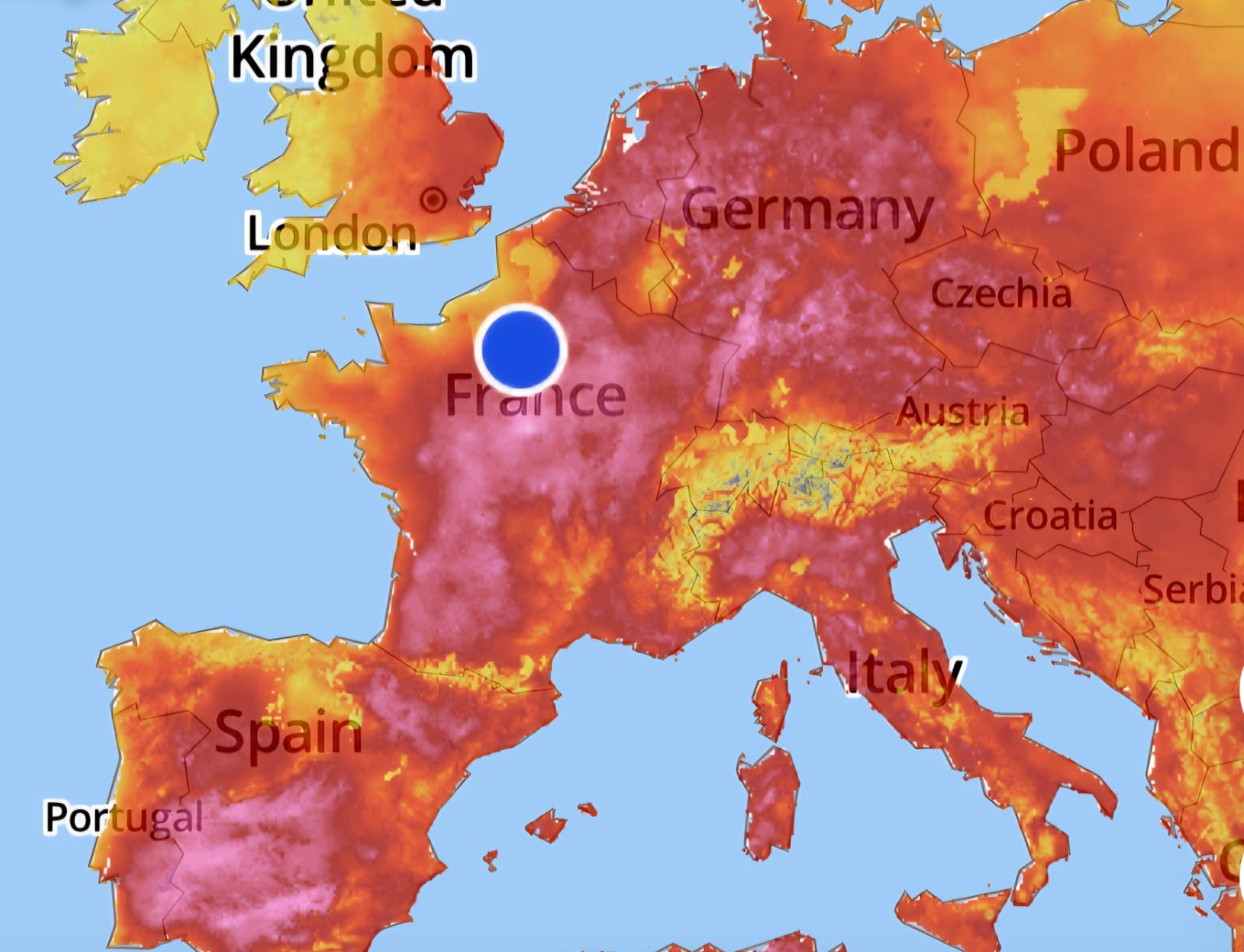
Paris( Imran Y. CHOUDHRY):- Europe has faced repeated heat waves in recent decades, and scientists warn that human-caused climate change is making them more frequent and more intense. Burning gasoline, oil and coal, along with deforestation, wildfires and many industrial processes, releases heat-trapping gases that drive climate change and increase the risk of extreme heat and drought.
While new data links June’s extreme heat to a sharp rise in excess deaths across Europe. A third heat wave in just weeks is continuing to batter large parts of Europe, fueling major wildfires in several regions and deepening concern over the human toll of extreme heat. In Spain, at least 13 people were killed over the weekend in the country’s deadliest wildfire in more than 40 years. In France, firefighters are now battling a major blaze near Paris, close to one of the country’s most famous historical sites.
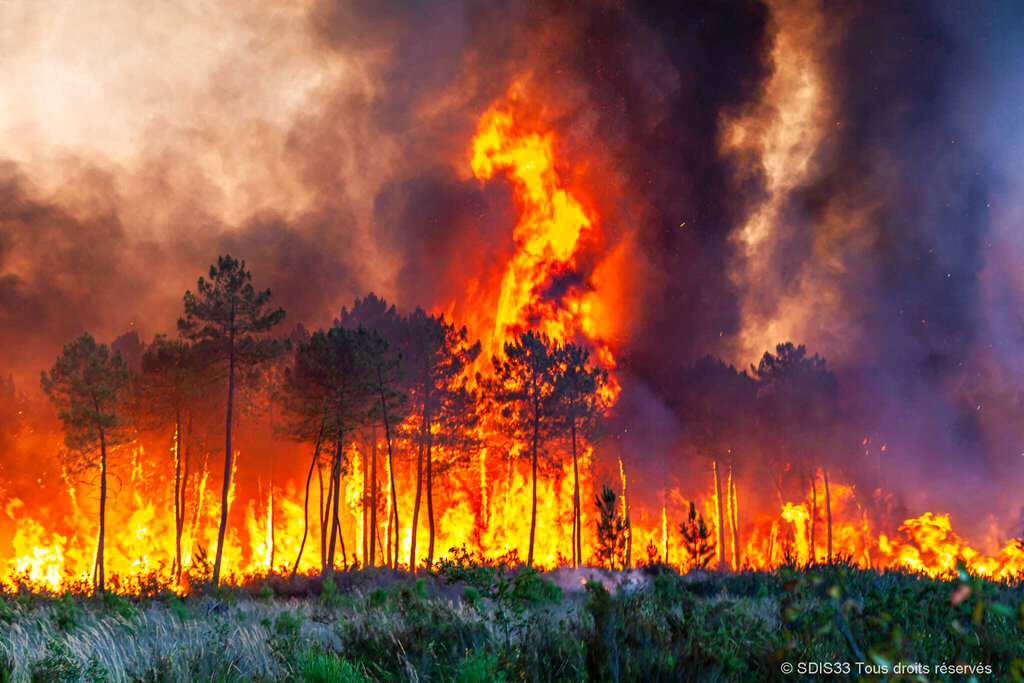
The French fire broke out in the Fontainebleau forest, about 70 kilometers from Paris, an unusually close location to the capital for a wildfire of such scale. The area is home to the Palace of Fontainebleau, a UNESCO World Heritage Site that served as a residence for French rulers from Francis I to Napoleon III.
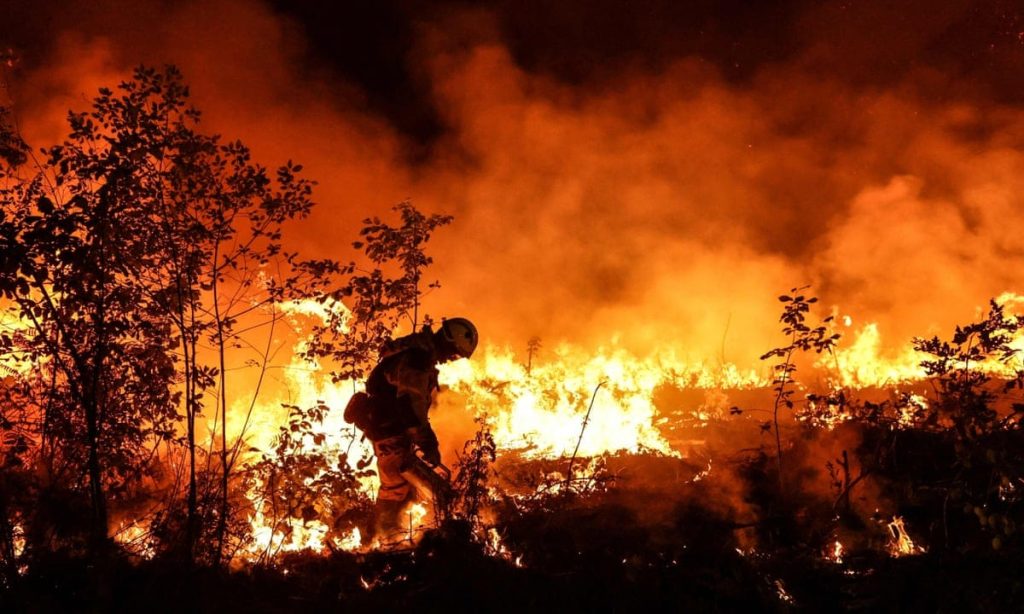
Around 500 hundreds of firefighters are battling the flames. For the first time ever in the greater Paris region, firefighting aircraft were sent to support crews from the air. The blaze forced authorities to evacuate about 900 residents from their homes, and the A6 highway linking Paris and Lyon was closed to traffic.
President Emmanuel Macron said all necessary resources were being directed to fight the fire, which he described as “exceptional in scale.” By the end of the day, most of the fire fronts had been brought under control, but authorities said strong winds in the area were making the operation extremely difficult. Authorities are investigating the cause of the blaze. Interior Minister Laurent Nuñez said the circumstances were suspicious. “There were about 10 points where the fire started, within a radius of 1,000 meters, which means it may have been deliberate,” he said.
The fire near Paris is only one of several major blazes burning, mainly in southern France, where fires have consumed vast areas since last week. Since the beginning of the year, wildfires in France have burned around 350 square kilometers,
The fires are raging as France and large parts of Europe endure another severe heat wave. The first heat wave struck western Europe before the official start of summer, in late May, and a second, especially extreme wave broke records across the continent in late June.
In the current wave, France has seen temperatures of up to 41 degrees Celsius in the west and center of the country, while the Paris region recorded about 39 degrees. Some 26 million people remain under a red alert in France, including in the Paris area, and forecasters expect the heat wave to continue until midweek.
The intense heat, combined with severe dryness, is also feeding fires in neighboring Spain. At least 13 people were killed over the weekend in a huge blaze in the Los Gallardos area of Almería province.
Another 10 people remain missing, raising fears that the toll could climb further. According to reports, at least four of the victims were trapped in their cars. Seven others died after abandoning their vehicles and trying to escape the flames on foot.
Antonio Sanz, the health and emergency minister in Andalusia’s regional government, said they had chosen an alternative route instead of the evacuation route ordered by emergency services. That decision, he said, became a “death trap.”
Alongside the wildfires, which scientists say are becoming more frequent and more intense because of human-caused climate change, Europe’s heat waves are taking a growing toll on a continent where most homes still do not have air conditioning.
Several countries have already reported grim figures showing a sharp rise in deaths during the extreme heat wave at the end of June. New data published, a monitoring body supported by the European Centre for Disease Prevention and Control and the World Health Organization, now shows more than 10,000 excess deaths across 27 European countries during that heat wave.
The vast majority, more than 9,000, were among adults aged 65 and over, who are especially vulnerable during extreme heat events. Such heat can cause deaths directly through heatstroke, or indirectly by worsening cardiovascular and respiratory diseases.
The figures cover excess deaths from all causes, not only heat-related deaths, during the week of 22-28th June, when the heat wave peaked in France, Spain, UK, Belgium and other countries. Researchers noted, however, that there were no other known major factors, such as an epidemic outbreak, that could explain the sharp rise.
“To see such an excess at this time of year is unusual. It is very high,” Lasse Vestergaard, chief physician at Denmark’s Statens Serum Institut, where EuroMOMO is based, told Reuters. “It is difficult to explain this high excess mortality by anything other than the extreme heat,” he added.
According to World Health Organization estimates, more than 200,000 people have died across Europe in the past four years from heat-related causes, most of them preventable.
Copernicus, the European Union’s climate monitoring service, says Europe is the fastest-warming continent in the world, with temperatures rising at twice the global average since the 1980s. The agency found that 2024 was the hottest year ever recorded in Europe and worldwide, and that the continent experienced its second-highest number of heat-stress days on record.
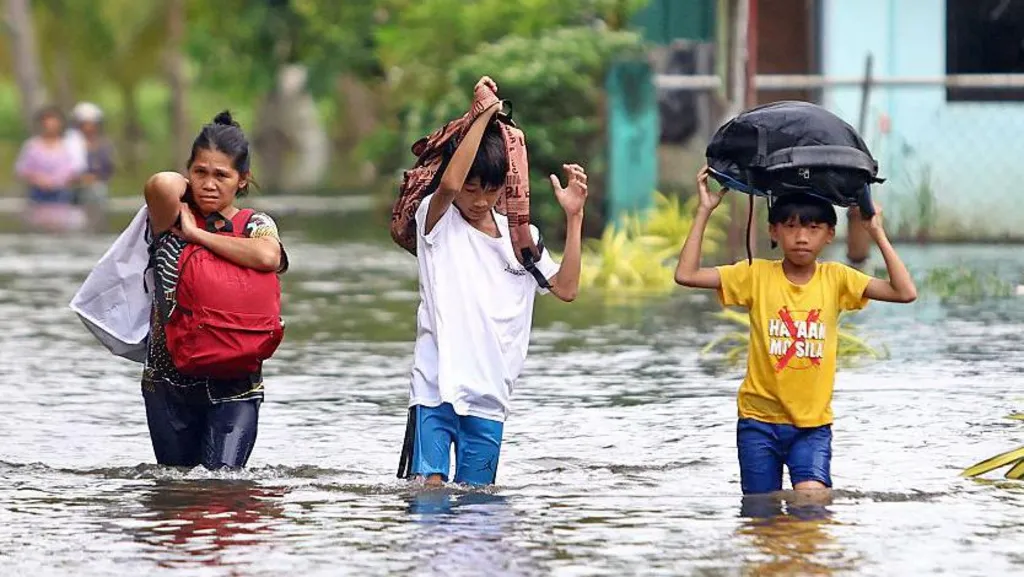
The Philippines is bracing for the arrival of another potentially devastating typhoon, less than a week after a different storm killed at least 200 people and left a trail of destruction.
Fung-wong, known locally as Uwan, is forecast to intensify to a super typhoon – with sustained winds of at least 185km/h (115mph) – before making landfall on the island of Luzon on Sunday evening local time at the earliest.
Officials say Typhoon Fung-wong could be even stronger than its predecessor, Kalmaegi, which hit the country on Tuesday.
The storm will also bring heavy rain and the risk of life-threatening storm surges, according to the Philippine meteorological service (Pagasa).
Several schools have either cancelled classes on Monday or moved them online, while Philippine Airlines has cancelled a number of local flights ahead of its arrival.
Typhoon Fung-wong is expected to weaken rapidly once it makes landfall but will likely remain a typhoon as it travels over Luzon.
Eastern parts of the Philippines have already begun experiencing heavy rains and winds, a Pagasa official said in a briefing on Saturday evening local time.
While much of the country is expected to be impacted, there are particular concerns about those areas that could take a direct hit – including the small island of Catanduanes, which lies off the coast of southern Luzon.
Residents there, as well as in other low-lying and coastal areas, have been urged to move to higher ground ahead of the storm’s arrival.
A civil defence spokesman said evacuations had to be carried out by Sunday morning at the latest and should not be attempted during heavy rain and strong winds.
Typhoon Fung-wong has also forced the suspension of rescue operations following the passage of Kalmaegi, one of the strongest typhoons this year.
Heavy rainfall sent torrents of mud down hillsides and into residential areas. Some poorer neighbourhoods were obliterated by the fast-moving flash floods.
At least 204 people are now known to have died in the Philippines as a result of the earlier storm, while more than 100 are still missing.
Five people also died in Vietnam, where strong winds uprooted trees, tore off roofs, and smashed large windows.

The recent rapid retreat of an Antarctic glacier could be unprecedented, a new study suggests, a finding which could have major implications for future sea-level rise.
The researchers found that Hektoria Glacier retreated by more than 8km (5 miles) in just two months in late 2022.
The authors believe it could be the first modern example of a process where the front of a glacier resting on the seabed rapidly destabilises.
But other scientists argue that this part of the glacier was actually floating in the ocean – so while the changes are impressive, they are not so unusual.
Floating tongues of glaciers extending into the sea – called ice shelves – are much more prone to breaking up than glacier fronts resting on the seabed.
That’s because they can be more easily eaten away by warm water underneath.
Solving the ‘whodunnit’
That Hektoria has undergone huge change is not contested. Its front retreated by about 25km (16 miles) between January 2022 and March 2023, satellite data shows.
But unravelling the causes is like a “whodunnit” mystery, according to study lead author Naomi Ochwat, research affiliate at the University of Colorado Boulder and post-doctoral researcher at the University of Innsbruck.
The case began way back in 2002 with the extraordinary collapse of an ice shelf called Larsen B in the eastern Antarctic Peninsula. About 3250 sq km (1250 sq miles) of ice shelf was lost, roughly the size of Cambridgeshire or Gloucestershire.
Larsen B had been effectively holding Hektoria Glacier back. Without it, Hektoria’s movement sped up and the glacier thinned.
But the bay vacated by the ice shelf was eventually filled with sea-ice “fastened” to the seabed, helping to partly stabilise Hektoria.
That was until early 2022, when the sea-ice broke up.

What followed was further loss of floating ice from the front of Hektoria, as large, flat-topped icebergs broke off or “calved”, and the ice behind sped up and thinned.
That is not unusual. Iceberg calving is a natural part of ice sheet behaviour, even though human-caused climate change makes the loss of ice shelves much more likely.
What was unprecedented, the authors argue, was what happened in late 2022, when they suggest the front of the glacier was “grounded” – resting on the seabed – rather than floating.
In just two months, Hektoria retreated by 8.2km. That would be nearly ten times faster than any grounded glacier recorded before, according to the study, published in Nature Geoscience.

This extraordinary change, the authors say, could be thanks to an ice plain – a relatively flat area of bedrock on which the glacier lightly rests.
Upward forces from the ocean water could “lift” the thinning ice essentially all at once, they argue – causing icebergs to break off and the glacier to retreat in quick time.
“Glaciers don’t usually retreat this fast,” said co-author Adrian Luckman, professor of geography at Swansea University.
“The circumstances may be a little particular, but this rapid retreat shows us what may happen elsewhere in Antarctica where glaciers are lightly grounded, and sea-ice loses its grip,” he added.

What makes this idea even more tantalising is that this process has never been observed in the modern world, the authors say. But markings on the seafloor suggest it may have triggered rapid ice loss into the ocean in the Earth’s past.
“What we see at Hektoria is a small glacier, but if something like that were to happen in other areas of Antarctica, it could play a much larger role in the rate of sea-level rise,” said Dr Ochwat.
That could include Thwaites – the so-called “doomsday” glacier because it holds enough ice to raise global sea-levels by 65cm (26in) if it melted entirely.
“It’s really important to understand whether or not there are other ice plain areas that would be susceptible to this kind of retreat and calving,” Dr Ochwat added.
Other scientists unconvinced
But other researchers have contested the study’s findings.
The controversy surrounds the position of the “grounding line” or “grounding zone” – where the glacier loses contact with the seabed and starts to float in the ocean.
“This new study offers a tantalising glimpse into what could be the fastest rate of retreat ever observed in modern-day Antarctica,” said Dr Frazer Christie, glaciologist and senior Earth observation specialist at Airbus Defence and Space.
“But there is significant disagreement within the glaciological community about the precise location of Hektoria Glacier’s grounding line because it’s so difficult to get accurate records from radar satellites in this fast-flowing region,” he added.
The location of the grounding line may sound trivial, but it is crucial to determine whether the change was truly unprecedented.
“If this section of the ice sheet was in fact floating [rather than resting on the seabed], the punchline would instead be that icebergs calved from an ice shelf, which is much less unusual behaviour,” said Dr Christine Batchelor, senior lecturer in physical geography at Newcastle University.
“I think the mechanism and rate of retreat proposed are plausible in Antarctic ice plain settings, but because of uncertainty about where the grounding zone was located at Hektoria, I am not fully convinced that this has been observed here,” she added.
But where there is little debate is that the fragile white continent – once thought largely immune from the impacts of global warming – is now changing before our eyes.
“While we disagree about the process driving this change at Hektoria, we are in absolute agreement that the changes in the polar regions are scarily rapid, quicker than we expected even a decade ago,” said Anna Hogg, professor of Earth observation at the University of Leeds.
“We must collect more data from satellites, so that we can better monitor and understand why these changes are occurring and what their implications are [for sea-level rise].”
Additional reporting by the Visual Journalism team


Quetta’s Daughter, Pakistan’s Pride

Why is Trump a Dictator?

America Must Rebuild Within


-

 Sports4 months ago
South Korea’s Yoo Useong Steps Onto the Global Strongman Stage as World Strongman Federation Professional Athlete
-

 Art & Culture1 year ago
A Survey of Mata-E-Zeest
-

 Europe News2 years ago
Chaos and unproven theories surround Tates’ release from Romania
-

 American News2 years ago
Trump expands exemptions from Canada and Mexico tariffs
-

 American News2 years ago
Trump Expels Zelensky from the White House
-

 Art & Culture2 years ago
Will Snow White be a ‘victim of its moment’? How the Disney remake became 2025’s most divisive film
-

 Entertainment2 years ago
Champions Trophy: Pakistan aim to defend coveted title as historic tournament kicks off today
-

 Pakistan News1 year ago
Comprehensive Analysis Report-The Faranian National Conference on Maritime Affairs-By Kashif Firaz Ahmed