
Tech
When Technology Brings a Superpower to Its Knees

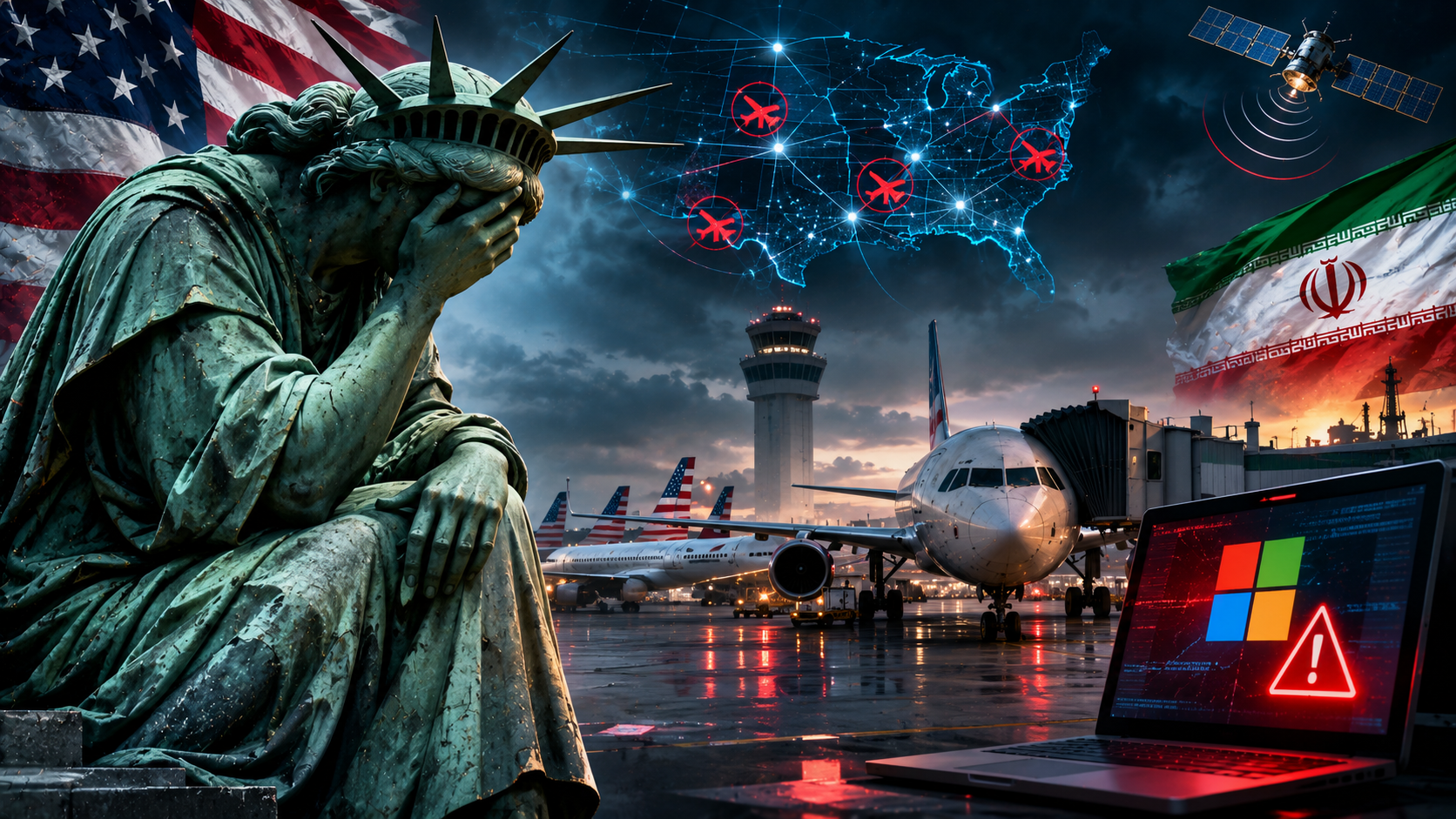
Paris (Imran Y. CHOUDHRY) :- Former Press Secretary to the President, Former Press Minister to the Embassy of Pakistan to France, Former MD, SRBC Mr. Qamar Bashir analysis : The United States, which has sought to cripple Iran through military confrontation, economic strangulation and sweeping aviation sanctions, witnessed an extraordinary demonstration of its own technological vulnerability on November 13, 2026. A nationwide aviation ground stop brought departing aircraft to a halt as communications failures disrupted the Federal Aviation Administration’s air traffic control network. Almost simultaneously, a widespread Microsoft outage exposed the dependence of businesses, governments and essential services on interconnected digital infrastructure. The two incidents have not been established as connected, nor has sabotage been demonstrated. Nevertheless, their convergence delivered a powerful warning: even the world’s most technologically advanced superpower can be brought to a standstill without a single missile being fired.
The FAA’s unprecedented decision to suspend departures across American airports affected an aviation network that handles thousands of flights daily. Communications problems involving 22 regional air traffic control centres forced authorities to prioritise safety over operations. Aircraft remained grounded, passengers were stranded, commercial schedules were disrupted and international connections faced uncertainty. It was only the second nationwide ground stop since the September 11, 2001 attacks, following another major disruption in January 2023. The economic consequences of such paralysis extend far beyond airlines, reaching tourism, cargo transportation, manufacturing, hospitality and businesses dependent on the timely movement of people and goods. AP News
The Microsoft disruption added another dimension to this technological predicament. Microsoft 365 services experienced widespread interruptions affecting users across more than 70 countries. Government institutions, commercial enterprises, communications networks and international businesses struggled with essential digital functions. The incident demonstrated how concentrating critical operations within a limited number of technological platforms creates systemic vulnerabilities. A technical malfunction in one major network can produce cascading consequences across institutions that appear geographically dispersed but remain digitally interconnected. The Wall Street Journal
The irony becomes particularly striking when these developments are examined against Washington’s recent campaign to isolate Iranian aviation. On September 8, the United States Treasury announced sweeping sanctions against Iran’s remaining commercial airlines under Operation Economic Outcast. Twenty-seven Iranian carriers were designated, while foreign airports, service providers, financial intermediaries and businesses were warned against supporting sanctioned operations. The declared objective was to deprive Iran of aviation services and isolate its commercial aircraft from international transportation networks. GovDelivery
Against this background, the sudden paralysis of American aviation presents a remarkable historical contrast. The country that sought to restrict another nation’s access to international skies found its own aircraft unable to depart because of failures within its domestic technological infrastructure. This was not demonstrated retaliation, and investigators have reported no indication of malicious interference. Nevertheless, the episode exposes a fundamental contradiction in contemporary power politics: a nation capable of imposing extraordinary restrictions on others remains profoundly dependent upon systems that can fail without warning. GeekWire +1
The broader confrontation involving Iran, Israel and the United States has already illustrated the limitations of relying exclusively upon military and economic coercion. Despite military pressure and extensive sanctions, Iran has continued to resist the political outcomes sought by its adversaries. The attempt to translate military superiority into unconditional political submission has encountered determined resistance. Meanwhile, the economic repercussions of regional confrontation have extended beyond Iran, affecting transportation, energy markets, trade and neighbouring economies.
Modern warfare, however, is entering an even more dangerous phase. Conventional military confrontation involves missiles, aircraft, drones, tanks and armed forces. Economic warfare targets commerce, investment, industrial production and international trade. Financial warfare seeks to restrict banking access, international payments, foreign reserves and monetary transactions. Information technology warfare introduces another battlefield, potentially reaching the operational foundations of an entire nation.
A country may possess thousands of missiles, sophisticated fighter aircraft, nuclear weapons and overwhelming conventional military capabilities, yet remain vulnerable if its essential digital infrastructure becomes dysfunctional. Airports depend upon communications and navigation systems. Banks depend upon electronic transactions. Hospitals rely upon digital records and connected equipment. Electricity grids, telecommunications networks, ports, railways, satellites and emergency services increasingly operate through complex technological platforms.
A severe disruption across these interconnected systems could produce consequences exceeding those of many conventional military operations. Aircraft might remain grounded, financial transactions could become inaccessible, commercial deliveries might stop, and essential services could struggle to function. The damage would not necessarily arise from physical destruction but from the inability of institutions to perform the functions upon which modern civilisation depends.
This technological vulnerability also raises the spectre of asymmetric cyberwarfare. State-sponsored actors, independent hackers, criminal networks and unidentified groups possess varying capacities to disrupt digital services. The underground digital economy provides opportunities for cybercrime, illicit transactions and the circulation of malicious tools. Although the darknet should not be confused with the entirety of criminal activity, its existence demonstrates the difficulty of policing digital threats across national boundaries.
Whether the American aviation disruption resulted from equipment failure, telecommunications malfunction or another technical weakness remains a matter for investigation. Speculation concerning Iranian, Israeli or other hackers cannot substitute for evidence. The strategic significance of the incident does not depend upon proving sabotage. An accidental systems failure can reveal vulnerabilities that hostile actors might seek to exploit during future confrontations.
The lesson extends equally to every major power. Any country contemplating military aggression against another nation, whether large or small, must recognise that retaliation need not remain confined to conventional battlefields. Military coercion may invite asymmetric resistance. Economic sanctions may provoke countermeasures. Financial restrictions can encourage alternative arrangements. Technological confrontation, if unleashed, could threaten the infrastructure supporting the aggressor’s own prosperity and security.
The world therefore requires a comprehensive international framework capable of preventing military aggression, restraining coercive economic warfare and protecting civilian technological infrastructure. International institutions must strengthen mechanisms for peaceful dispute resolution, establish enforceable safeguards against attacks on essential digital systems, and develop cooperative arrangements for cybersecurity, satellite communications, aviation safety and financial stability.
Such a framework must recognise that civilian infrastructure cannot become an unrestricted battlefield merely because political disagreements remain unresolved. Hospitals, electricity networks, passenger aviation, communications systems and financial services sustain human life and economic activity regardless of national boundaries. Their deliberate disruption could produce humanitarian consequences extending far beyond the countries directly involved in a confrontation.
The events of November 13 should therefore be understood as a warning rather than an occasion for celebration. The paralysis of American aviation illustrates the fragility of technological civilisation, just as restrictions upon Iranian aviation demonstrate the human consequences of economic coercion. Neither experience offers a sustainable model for international relations.
The ultimate lesson is unmistakable. A nation no longer needs to be devastated by missiles, drones, tanks or fighter aircraft to experience national paralysis. The disruption of information technology, communications, financial networks and satellite-dependent infrastructure can inflict enormous damage without physically destroying its cities. The future of warfare threatens to become more pervasive, less predictable and potentially more destructive than conventional confrontation.
Humanity must therefore establish an international order in which military aggression is prevented, economic strangulation is rejected as an instrument of domination, and technological infrastructure is protected from becoming the next battlefield. Otherwise, the world risks entering an era in which nations possess unprecedented military strength but remain dangerously exposed to the failure or deliberate disruption of the invisible systems sustaining their existence.










Paris (Imran Y. CHOUDHRY) :- Former Press Secretary to the President, Former Press Minister to the Embassy of Pakistan to France, Former MD, SRBC Mr. Qamar Bashir analysis : The geopolitical chess game between great powers is seldom confined to what the world can see. Behind diplomatic handshakes, official statements and carefully choreographed summits lie intricate networks of intelligence gathering, strategic calculations and political manoeuvring, often conceived long before their consequences become visible. The controversy surrounding Nvidia chief Jensen Huang, allegations involving Alice Huang and suspected Chinese intelligence connections raises a disturbing question: could a personal relationship have been transformed into a geopolitical weapon to influence Washington’s confrontation with Beijing?
The existence of powerful intelligence establishments and permanent national security bureaucracies is undeniable. Their influence extends across administrations, political parties, corporations and international boundaries. What is commonly described as the deep state represents the enduring institutional machinery capable of anticipating developments, shaping policy and protecting strategic interests regardless of changes in elected leadership. Its roots penetrate deeply into government, while its influence stretches across the technological, financial and diplomatic architecture of international power.
The timing of the allegations surrounding Huang deserves particular scrutiny. Their emergence amid intensifying disagreements over semiconductor exports and preparations for high-level American-Chinese diplomacy invites questions about political motives. Whether the disclosures resulted from legitimate security concerns, internal institutional rivalries or a calculated effort to influence negotiations remains unresolved. Nevertheless, the possibility of strategic manipulation cannot simply be dismissed when the stakes involve technological supremacy and the balance of global power.
Huang occupies an extraordinary position in the American economy. Nvidia has emerged as a central pillar of the artificial intelligence revolution, supplying advanced processors that power data centres, scientific research, industrial automation and emerging technologies. Its commercial success generates enormous revenues, supports American technological leadership and strengthens Washington’s influence over the global semiconductor industry.
China represents both a major commercial opportunity and a strategic competitor. Restrictions on advanced semiconductor exports have therefore created a fundamental contradiction between America’s economic interests and its national security objectives. Selling chips strengthens American companies, generates revenue and preserves technological influence. Restricting those sales seeks to prevent competitors from acquiring capabilities considered essential to future military and economic power.
Huang has consistently advocated maintaining commercial engagement with international markets, including China. His position reflects the argument that American technological dominance is strengthened when global customers remain dependent upon American innovation. National security hardliners, however, fear that sophisticated processors could accelerate China’s military modernisation and undermine America’s strategic advantage.
It is within this struggle that the controversy acquires geopolitical significance. Allegations concerning Huang’s private relationships and possible connections to Chinese intelligence have introduced personal conduct into an already contentious debate over national security. Yet an allegation is not evidence, suspicion is not conviction, and political controversy cannot substitute for judicial determination.
The comparison with former President Bill Clinton is particularly instructive. Clinton’s relationship with Monica Lewinsky became a major national scandal, resulting in impeachment by the House of Representatives. Nevertheless, he was acquitted by the Senate and completed his presidential term. His conduct was subjected to public scrutiny, political accountability and constitutional proceedings without automatically terminating his presidency.
If a sitting American president could complete his term following such a scandal, the proportionality of severe professional consequences imposed upon a corporate executive over allegations of private misconduct deserves examination. The relevant distinction must be whether credible evidence establishes criminal behaviour, compromised national security or violations of corporate obligations, rather than whether the individual’s private life attracts public disapproval.
The allegations involving Alice Huang require precisely this distinction. Claims of espionage, intelligence manipulation or unlawful diversion of restricted semiconductor technology cannot be treated as established merely because they circulate through intelligence disclosures or media reporting. Any credible accusation demands independent investigation, admissible evidence and appropriate legal scrutiny.
The same principle applies to allegations that advanced Nvidia processors were diverted through intermediaries to China. Semiconductor export controls are legitimate subjects of investigation, and deliberate violations can carry serious consequences. However, the existence of suspicious commercial transactions does not automatically establish the personal involvement of Nvidia’s leadership or prove a foreign intelligence conspiracy.
Equally important is the question of timing. Why would potentially damaging information become public at a moment when American-Chinese technological negotiations carry enormous diplomatic and commercial consequences? Was the disclosure motivated by genuine security concerns, bureaucratic frustration, commercial rivalry or an effort to weaken advocates of a more accommodating semiconductor policy?
These questions become especially consequential when viewed against the wider struggle for diplomatic leverage. In great-power negotiations, perceptions of strength, credibility and moral authority can influence the atmosphere in which concessions are demanded. A controversy linking a prominent American technology executive to alleged Chinese intelligence activity could embarrass Beijing while strengthening Washington’s negotiating position.
Such an outcome would not necessarily establish that the controversy was deliberately manufactured. Nevertheless, the possibility that strategically timed disclosures could be exploited for diplomatic advantage illustrates how intelligence information may become an instrument of political warfare.
China, however, is no longer a country prepared to accept every American accusation without resistance. Its growing economic strength, technological capabilities and international partnerships provide substantial opportunities for countermeasures. Beijing could respond through diplomatic protests, commercial restrictions, regulatory investigations or accelerated efforts to reduce dependence upon American semiconductor technology.
An escalation of accusations and retaliatory measures would damage both countries. American businesses could lose access to valuable markets, Chinese industries could face additional technological restrictions, and international supply chains could experience renewed uncertainty. The consequences would extend far beyond Nvidia, affecting investors, manufacturers, consumers and the global artificial intelligence industry.
The greater danger is that a personal controversy could become another instrument in an increasingly confrontational relationship between two economic superpowers. When intelligence allegations are deployed without transparent evidence, they risk undermining public confidence in legal institutions while intensifying international suspicion.
The appropriate response must therefore be governed by justice rather than geopolitical expediency. If Huang has been removed from his leadership position primarily because of unproven allegations, his professional standing deserves reconsideration through an independent corporate process. Any credible evidence of espionage, unlawful technology transfers or other criminal conduct should be examined through transparent judicial proceedings.
Neither commercial success nor personal prominence should confer immunity from investigation. Equally, neither political pressure nor intelligence suspicion should justify punishment without sufficient evidence. The presumption of innocence and the requirement of due process must apply regardless of the nationality, influence or economic importance of the individual concerned.
Washington must also recognise the danger of transforming every commercial disagreement with China into an intelligence confrontation. Semiconductor competition is already reshaping global economic relationships. Injecting allegations of personal misconduct and espionage into sensitive diplomacy without demonstrable proof risks replacing negotiation with humiliation and cooperation with retaliation.
The ultimate question is not merely whether Huang’s private conduct was appropriate. It is whether the immense power of intelligence institutions, political establishments and national security bureaucracies can be exercised without adequate accountability.
If the geopolitical chessboard becomes a theatre where reputations are destroyed, corporations destabilised and international relationships poisoned through allegations rather than proven wrongdoing, the greatest casualty will be justice itself. America would serve its economic interests, constitutional principles and diplomatic credibility far better by allowing evidence to determine guilt, restoring professional fairness wherever warranted, and refusing to turn an unresolved personal controversy into another weapon against China.

Paris (Imran Y. CHOUDHRY) :- Former Press Secretary to the President, Former Press Minister to the Embassy of Pakistan to France, Former MD, SRBC Mr. Qamar Bashir analysis : The controversy surrounding Nvidia chief executive Jensen Huang, involving allegations of an extramarital relationship with a woman suspected by American intelligence agencies of working for China, has unleashed a political and technological storm with implications extending far beyond personal conduct. At stake is not merely the reputation of one of America’s most influential technology executives, but the future of American semiconductor supremacy, China’s technological independence, and the increasingly complex balance of economic leverage between Washington and Beijing.
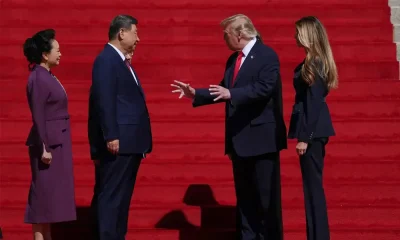
The allegations have emerged at a particularly sensitive moment when President Donald Trump and Chinese President Xi Jinping are attempting to manage their strategic rivalry through diplomacy, trade negotiations and selective economic cooperation. Advanced artificial intelligence processors have become one of Washington’s most powerful instruments of technological influence, while China continues to strengthen its position in rare-earth minerals, permanent magnets and critical industrial supply chains.
At the centre of the controversy is Alice Huang, a Chinese national associated with Singapore-based technology company Megaspeed. American media reports, citing intelligence assessments, have alleged that she maintained a relationship with Jensen Huang while working on behalf of Chinese intelligence. Huang has acknowledged an extramarital relationship and apologised to his family, while Nvidia has maintained that it has no reason to believe its corporate secrets or American national security were compromised.
Beijing has categorically rejected the espionage allegations, describing them as groundless speculation intended to malign China. Foreign Ministry spokesperson Guo Jiakun has challenged the accusations, while the controversy has nevertheless intensified scrutiny of Nvidia’s commercial relationships, international customers and the movement of advanced semiconductor technology through Southeast Asian markets.
The significance of this episode extends beyond the alleged relationship. American investigators have been examining whether Singapore-based intermediaries, subsidiaries and corporate networks facilitated the movement of restricted Nvidia processors into China. Megaspeed’s purchases of advanced computing equipment, its business connections and the ultimate destinations of sophisticated AI hardware have consequently attracted considerable attention.
Reports of unusually large semiconductor purchases, questionable end-user documentation and equipment remaining unpacked inside data centres have reinforced suspicions that some international supply chains may have been exploited to circumvent American export restrictions. Such findings warrant investigation, although allegations concerning particular companies and individuals must remain distinct from proven violations.
The FBI, American export-control authorities and Singaporean investigators have been examining aspects of the broader semiconductor supply chain. Nvidia’s independent inquiry adds another dimension to the controversy, particularly because the company’s products occupy such a strategically sensitive position in the global technology industry.
For Washington, Nvidia represents considerably more than an exceptionally profitable corporation. Its processors underpin artificial intelligence research, advanced computing, cloud infrastructure, scientific modelling and emerging military technologies. American leadership in these fields generates enormous commercial returns, supports technological innovation and strengthens Washington’s influence over countries seeking access to sophisticated computing capabilities.
Controlling the export of these processors consequently provides the United States with leverage over China’s technological development. Restrictions on advanced chips can delay Chinese access to high-performance computing, increase development costs and complicate efforts to train increasingly sophisticated artificial intelligence models.
Yet this strategy contains an extraordinary contradiction. The more aggressively Washington restricts China’s access to American technology, the greater the incentive for Beijing to eliminate its dependence on American suppliers altogether.
China has already demonstrated remarkable determination in developing indigenous alternatives. Huawei’s Ascend processors, alongside products developed by Cambricon, Biren and other Chinese semiconductor enterprises, represent substantial progress towards creating a domestic artificial intelligence computing ecosystem.
Although Chinese processors continue to face limitations in manufacturing efficiency, software compatibility and individual-chip performance compared with Nvidia’s most advanced products, Chinese engineers have developed innovative methods of compensating for these disadvantages.
Huawei’s CloudMatrix architecture illustrates this approach. By connecting hundreds of domestic processors through high-speed interconnections, Chinese engineers can assemble computing systems capable of delivering enormous aggregate processing power. Such configurations may require substantially more electricity and hardware than comparable American systems, but they demonstrate China’s ability to overcome individual technological limitations through engineering innovation and large-scale deployment.
This achievement reflects a broader national strategy involving government investment, university research, industrial coordination, domestic manufacturing and the recruitment of specialised engineering talent. China is simultaneously developing alternative software platforms, improving semiconductor fabrication capabilities and expanding its indigenous supply chains.
The immediate availability of Nvidia’s most advanced processors would undoubtedly benefit Chinese artificial intelligence companies. Superior computing efficiency, established software infrastructure and reduced energy consumption could accelerate research, commercial applications and industrial productivity.
However, dependence on American processors would also preserve Washington’s strategic influence. Every Chinese company relying heavily on Nvidia hardware would remain exposed to American export regulations, licensing decisions and potential restrictions imposed during future diplomatic confrontations.
This technological dependence could become particularly valuable during negotiations involving tariffs, market access, industrial competition and broader geopolitical disagreements.
China, however, possesses substantial countervailing leverage through its dominant position in rare-earth processing and the production of powerful permanent magnets essential to electric vehicles, aerospace equipment, advanced manufacturing and defence technologies.
The resulting relationship is therefore not one of unilateral American superiority, but of competing technological dependencies in which both countries possess instruments capable of imposing considerable economic costs upon the other.
If Washington transforms the Nvidia controversy into a wider campaign of restrictions, investigations and punitive measures against semiconductor intermediaries, it may unintentionally accelerate the very Chinese technological independence that American policymakers seek to prevent.
Beijing could respond by dramatically expanding investment in domestic semiconductor manufacturing, recruiting experienced American, European and Asian engineers, strengthening research institutions and directing additional financial resources towards overcoming existing production bottlenecks.
China’s enormous industrial base, engineering workforce, domestic market and capacity for coordinated technological development provide formidable foundations for such an undertaking.
The historical experience of Iran offers a compelling illustration of how sustained external pressure can transform technological dependence into a powerful incentive for national self-reliance.
Decades of American sanctions, restrictions on military equipment and barriers to international technology transfers compelled Tehran to develop indigenous missile systems, drones, uranium enrichment capabilities and space technologies. Iran’s expanding strategic capabilities have subsequently challenged American and Israeli military calculations, demonstrating the limitations of attempting to suppress technological development through coercion.
China possesses industrial, financial and scientific resources vastly exceeding those available to Iran. If Tehran could develop formidable indigenous capabilities under prolonged sanctions, Beijing has considerably greater potential to transform American semiconductor restrictions into an opportunity for technological advancement.
The Nvidia controversy may therefore produce consequences directly opposite to those anticipated by advocates of tighter export controls. Instead of permanently preserving American technological supremacy, restrictions could encourage China to establish a comprehensive semiconductor ecosystem capable of competing internationally.
The ultimate irony would be unmistakable. Processors that Washington currently fears may reach China through unauthorised intermediaries could eventually be manufactured by Chinese companies and offered competitively in American and international markets.
America must therefore confront a fundamental strategic choice: maintain commercial engagement that preserves technological influence, or pursue increasingly restrictive policies that accelerate the emergence of an independent Chinese competitor.
The future of artificial intelligence will not be determined by espionage allegations, corporate scandals or export prohibitions alone. It will ultimately be shaped by scientific innovation, industrial investment and the ability of nations to overcome technological barriers.
Washington may discover that every attempt to deny China access to advanced processors strengthens Beijing’s determination to manufacture superior alternatives. The greatest consequence of the Nvidia spy storm may not be the downfall of an American technology executive, but the creation of a Chinese semiconductor giant capable of challenging, surpassing and eventually exporting its technology to the very country that attempted to deny it.

Paris (Imran Y. CHOUDHRY) :- Former Press Secretary to the President, Former Press Minister to the Embassy of Pakistan to France, Former MD, SRBC Mr. Qamar Bashir analysis : The greatest financial robbery of the digital age unfolded without a single gunshot, masked robber, armored vehicle or broken vault. In a breathtaking operation reportedly lasting barely twenty minutes, cybercriminals penetrated the digital defenses of Binance, the world’s largest cryptocurrency exchange, and transferred $6.3 billion across a maze of electronic networks.
By the time alarm bells sounded, billions had vanished into a financial wilderness where money moves at lightning speed, identities hide behind encrypted addresses, and international borders offer little resistance. The robbery was so audacious that investigators described it as potentially the largest financial heist in human history.
The trail reportedly began with something astonishingly ordinary: an engineer’s compromised laptop. Behind that seemingly insignificant breach lay a sophisticated operation capable of penetrating digital wallets, manipulating access privileges and transferring enormous fortunes across multiple blockchain networks. The suspected attackers did not need to physically enter a bank or overpower security guards. They needed access to the right digital credentials. Once inside, the financial equivalent of a vault containing billions could allegedly be emptied before conventional human intervention could catch up.
As investigators followed the electronic footprints, suspicion reportedly converged on TraderTraitor, a notorious hacking organization associated with North Korea. Blockchain intelligence specialists identified similarities with earlier cryptocurrency thefts attributed to Pyongyang, including the spectacular $1.5 billion Bybit robbery in 2025. Yet the identity of the perpetrators remained an investigative assessment rather than a conclusively established fact. President Donald Trump himself acknowledged that Washington was examining the incident without confirming North Korean responsibility. The criminals’ identities remained uncertain, but the vulnerability exposed by the reported attack was impossible to ignore.
The immediate aftermath resembled a financial thriller unfolding across continents. Binance suspended withdrawals, cybersecurity specialists mobilized, stablecoin issuers rushed to freeze suspicious assets, and investigators pursued transactions through interconnected digital networks. Approximately $2.8 billion was reportedly immobilized, while billions more remained outside immediate recovery. The company promised to compensate customers, but the extraordinary spectacle raised a terrifying question: if billions could escape through a compromised access point, what protection could ordinary investors realistically expect from an industry entrusted with enormous private fortunes?
The tremors quickly reached cryptocurrency markets. Bitcoin reportedly plunged below $80,000, Ethereum weakened, and crypto-related companies faced renewed selling pressure. Investors who had been encouraged to regard digital currencies as the future of money suddenly confronted an uncomfortable possibility: the same technology that promises instant global financial freedom can also accelerate the disappearance of stolen wealth. The reported heist threatened something far more valuable than the missing billions. It threatened confidence in the architecture of an emerging financial system.
But behind this spectacular robbery lies another story, one involving the White House, enormous private fortunes, politically connected investors and a president who transformed himself from cryptocurrency skeptic into its most influential political champion. Donald Trump once dismissed Bitcoin as potentially fraudulent and dangerous. Yet his second presidency embraced cryptocurrency with extraordinary enthusiasm, promising to establish the United States as the global capital of digital assets. What had once been portrayed as a speculative financial experiment became an instrument of national economic ambition, presidential promotion and substantial private commercial opportunity.
The transformation was accompanied by a profound political contradiction. While the administration encouraged the expansion of cryptocurrency and adopted a more industry-friendly enforcement approach, the president’s own family developed extensive commercial interests in the same financial ecosystem. According to the financial disclosures described in BBC reporting, Trump’s cryptocurrency-related income for 2025 exceeded $1.4 billion, including hundreds of millions from token royalties and World Liberty Financial. The president promoting the digital financial revolution was therefore closely connected, through family enterprises and disclosed income, to its commercial rewards.
A conventional international financial transfer may encounter banks, compliance officers, suspicious-activity monitoring and opportunities for intervention. Cryptocurrency transactions can travel through automated networks around the clock, sometimes becoming effectively irreversible within minutes. Criminals exploiting stolen credentials may disperse assets among numerous wallets, exchange them across networks and convert them into forms that are increasingly difficult to freeze. The very efficiency that attracts legitimate investors can become an extraordinary advantage for technologically sophisticated thieves.
The geopolitical implications are chilling. Governments spend billions protecting military installations, financial institutions and strategic infrastructure, yet a compromised laptop or stolen credential may provide access to digital fortunes of comparable strategic importance.
The political implications for Trump are equally uncomfortable. His administration cannot credibly champion cryptocurrency as the foundation of American financial leadership while overlooking the necessity of strong investor protections and enforceable cybersecurity standards. Nor can public concerns about conflicts of interest simply be dismissed when the president’s family has substantial financial exposure to the industry affected by government policy.
The White House maintains that the president’s business interests are independently managed and that official decisions serve the national interest. Such assurances deserve scrutiny through transparent oversight rather than acceptance or rejection of political loyalty alone.
The most disturbing possibility is that the Binance episode may be remembered not as an isolated technological failure but as a warning about the consequences of allowing financial innovation, political promotion and private profit to advance without equally ambitious safeguards.
Cryptocurrency enthusiasts may rightly argue that digital assets offer genuine advantages in settlement, accessibility and financial competition. But investors cannot live on technological promises alone. They require enforceable security standards, reliable custodians, credible supervision and meaningful protection when those entrusted with their assets fail.
Whether this reported heist becomes cryptocurrency’s death knell remains uncertain. Digital currencies have survived spectacular collapses, criminal scandals, exchange failures and previous billion-dollar thefts. The industry’s resilience should not be underestimated.
Nevertheless, every financial revolution ultimately confronts the same uncompromising test: whether ordinary people can trust it with their savings. If that trust deteriorates, political endorsements, technological sophistication and promises of extraordinary returns may prove insufficient to prevent a sustained exodus of investors.
The final revelation in this extraordinary financial detective story may therefore be more consequential than the identity of the hackers. The alleged disappearance of $6.3 billion has exposed the dangerous convergence of digital vulnerability, geopolitical criminality, political influence and immense private financial interests.
The suspected thieves may eventually be identified, some assets may be recovered, and customers may receive compensation. But one question will continue to haunt Washington and the cryptocurrency industry: when a financial system allows billions to move beyond immediate recovery in minutes, who is truly in control—the investors, the regulators, the political promoters, or the criminals who have learned to exploit its weaknesses?
The reported Binance heist may not destroy cryptocurrency, but it could destroy the comforting illusion that financial freedom can exist indefinitely without financial discipline. And if political leaders continue celebrating the profits of the digital revolution while underestimating its dangers, the next catastrophe may not merely empty electronic wallets. It may empty the public’s faith in the entire financial revolution—and expose the enormous price of allowing private fortunes to flourish faster than public safeguards.


Xi–Putin–Trump Summit: A Turning Point in the Global Order

Trump’s Iran War: Trillions Lost and Accountability Looms

America’s Manufactured Doomsdays

New Chapter for Dragon Boating in Punjab and Khyber Pakhtunkhwa Provincial associations officially set up with sights locked on national competitions and international representation.

South Korea’s Yoo Useong Steps Onto the Global Strongman Stage as World Strongman Federation Professional Athlete

A Survey of Mata-E-Zeest


-
 Pakistan News1 month ago
New Chapter for Dragon Boating in Punjab and Khyber Pakhtunkhwa Provincial associations officially set up with sights locked on national competitions and international representation.
-
 Sports5 months ago
South Korea’s Yoo Useong Steps Onto the Global Strongman Stage as World Strongman Federation Professional Athlete
-
 Art & Culture1 year ago
A Survey of Mata-E-Zeest
-

 Europe News2 years ago
Chaos and unproven theories surround Tates’ release from Romania
-

 American News2 years ago
Trump expands exemptions from Canada and Mexico tariffs
-

 Art & Culture2 years ago
Will Snow White be a ‘victim of its moment’? How the Disney remake became 2025’s most divisive film
-

 Pakistan News1 year ago
Comprehensive Analysis Report-The Faranian National Conference on Maritime Affairs-By Kashif Firaz Ahmed
-

 Entertainment2 years ago
Champions Trophy: Pakistan aim to defend coveted title as historic tournament kicks off today