
Sports
How the 2026 World Cup Mirrors a Shifting Planet

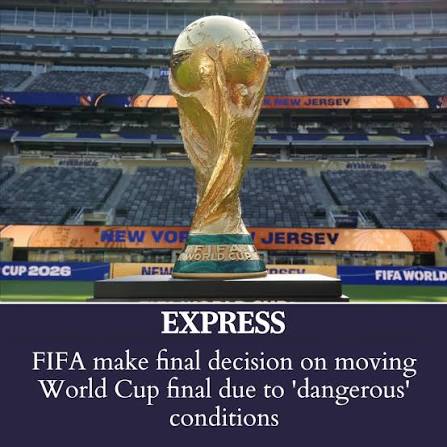
Paris (Imran Y. CHOUDHRY) :- Former Press Secretary to the President, Former Press Minister to the Embassy of Pakistan to France, Former MD, SRBC Mr. Qamar Bashir analysis : Football is not merely a game. It is the most universal emotional language on earth. No other sport commands the same depth of passion, the same river of tears, the same roar of hope, and the same national longing. It belongs to streets, villages, capitals, stadiums, television screens, migrant communities, rich clubs, poor neighborhoods and entire continents. A football match can become a national festival, a public tragedy, a diplomatic signal and a cultural declaration all at once.
The FIFA World Cup sits at the center of this global emotion. The 2026 World Cup is the biggest edition in history: 48 teams compete across 104 matches in Canada, Mexico and the United States. FIFA presents this tournament as the largest and most ambitious World Cup ever staged. But the real importance of 2026 is not only its size. Its deeper meaning is that football power is becoming more democratic. The old monopoly of Europe and South America is visibly under pressure.
The tournament is now in the Round of 32, and the evidence is on the field. African teams are not present as decoration; they are present as serious competitors. Morocco eliminates the Netherlands on penalties and reaches the last 16. Morocco beats the Dutch 3–2 in a shootout after a 1–1 draw and now faces Canada in the Round of 16. Paraguay eliminates Germany on penalties. Brazil survives Japan only by a narrow 2–1 margin. France defeats Sweden, but the old European aura of automatic superiority is weaker.
In the Round of 32 field, Africa is strongly represented by Morocco, South Africa, Ivory Coast, DR Congo, Senegal, Algeria, Egypt, Cape Verde and Ghana. Asia and the wider AFC zone are represented by Japan and Australia, while Middle Eastern and North African football is present through Morocco, Algeria and Egypt, with the broader regional rise visible in the growing investment of Saudi Arabia, Qatar and other Gulf states.
For decades after the Second World War, South America carried the soul of football. Brazil, Argentina and Uruguay give the world beauty, rhythm, improvisation and artistry. Brazil’s five World Cup titles remain the highest by any country. Argentina and Uruguay add their own legendary chapters. South American football is not only about tactics; it is about imagination. It teaches the world that the ball can be danced with, not merely kicked.
Then Europe rises. Germany brings discipline. Italy brings defensive intelligence. France brings athletic diversity and tactical balance. Spain brings possession football. England, the Netherlands, Belgium and Portugal become central to the modern football economy. European clubs become the richest and strongest institutions in the game. They attract the best players from Africa, South America and Asia. Europe becomes the training ground, marketplace and tactical laboratory of world football.
But 2026 shows that the old football map is changing. Europe still has money, clubs, academies and history, but fear is disappearing. African and Asian teams no longer enter the pitch with inferiority. They press, attack, organize, counterattack and take penalties with belief. Morocco’s victory over the Netherlands is not only a result; it is a message. Japan’s narrow loss to Brazil is not failure; it is proof that Asia can push the five-time champions to the edge. African teams reaching the knockout stage in large numbers shows that the continent is no longer waiting outside the palace. It is already inside.
Africa appears to be the next great football frontier. It has youth, speed, hunger, physical power and a huge talent base. African players already shape European leagues. The missing piece has often been national organization, federation stability, coaching continuity and infrastructure. But Morocco’s 2022 semifinal run and its 2026 continuation show that when African talent is organized properly, it can challenge anyone. Senegal, Ghana, Nigeria, Ivory Coast, Algeria, Egypt, DR Congo and South Africa all represent different dimensions of this rise.
Asia’s rise is different but equally important. Japan and South Korea build through discipline, school systems, domestic leagues and technical education. Japan now plays with confidence against the strongest nations. South Korea has already shown in past tournaments that Asian football can reach deep stages. Iran, Saudi Arabia, Qatar, Iraq and other West Asian nations add another layer: physical courage, tactical compactness and growing investment.
The Middle East is becoming a football investment zone. Qatar hosts the 2022 World Cup. Saudi Arabia is preparing to host the 2034 World Cup. Gulf states are buying clubs, attracting stars, building academies and placing football inside national development strategies. Money alone cannot produce greatness, but money combined with youth development, coaching, facilities and football culture can accelerate history.
This shift in football also resembles a wider shift in the world. The old global order is no longer as fixed as it once appeared. Power is moving from a narrow Western center toward a more complex, multipolar world. China is rising economically and strategically. India is growing. Turkey, Saudi Arabia, Iran, Pakistan and other regional powers are asserting themselves more visibly. The comparison is not exact — football results do not prove military, economic or diplomatic supremacy — but football does reflect confidence, investment, identity and the psychology of nations.
That is why the 2026 World Cup feels larger than sport. When Morocco defeats the Netherlands, when Paraguay removes Germany, when Japan pushes Brazil, when African teams fill the knockout stage, the message is clear: history is no longer owned by the same few countries. The world is becoming more competitive, and football is one of the most visible arenas where this change is seen.
Europe and South America remain giants. Brazil, Argentina, France, Spain, Portugal, England and others are still elite. But the gap is narrowing. The next twenty years may not produce the complete fall of Europe or South America, but they are likely to produce a new football order. Quarterfinals and semifinals will increasingly include African and Asian teams. The first World Cup champion from outside Europe and South America is no longer impossible. Africa appears the strongest candidate to break that wall first, followed by Japan or South Korea from Asia.
The 2026 World Cup is therefore a turning point. It is not only expanding the number of teams; it is expanding belief. It is giving the global South, Africa, Asia and the Middle East a larger stage. And these teams are not merely filling spaces. They are creating shocks, rewriting assumptions and forcing the old powers to sweat.
Football’s power map begins with South American genius, moves into European organization, and now enters the age of global redistribution. The ball is moving from old centers to new frontiers. The World Cup is no longer only a contest between Europe and South America. It is becoming a world parliament of talent, emotion, money, identity and ambition.
The beautiful game is telling us something profound: the world is changing, and the football field is changing with it.


Sports
South Korea’s Yoo Useong Steps Onto the Global Strongman Stage as World Strongman Federation Professional Athlete
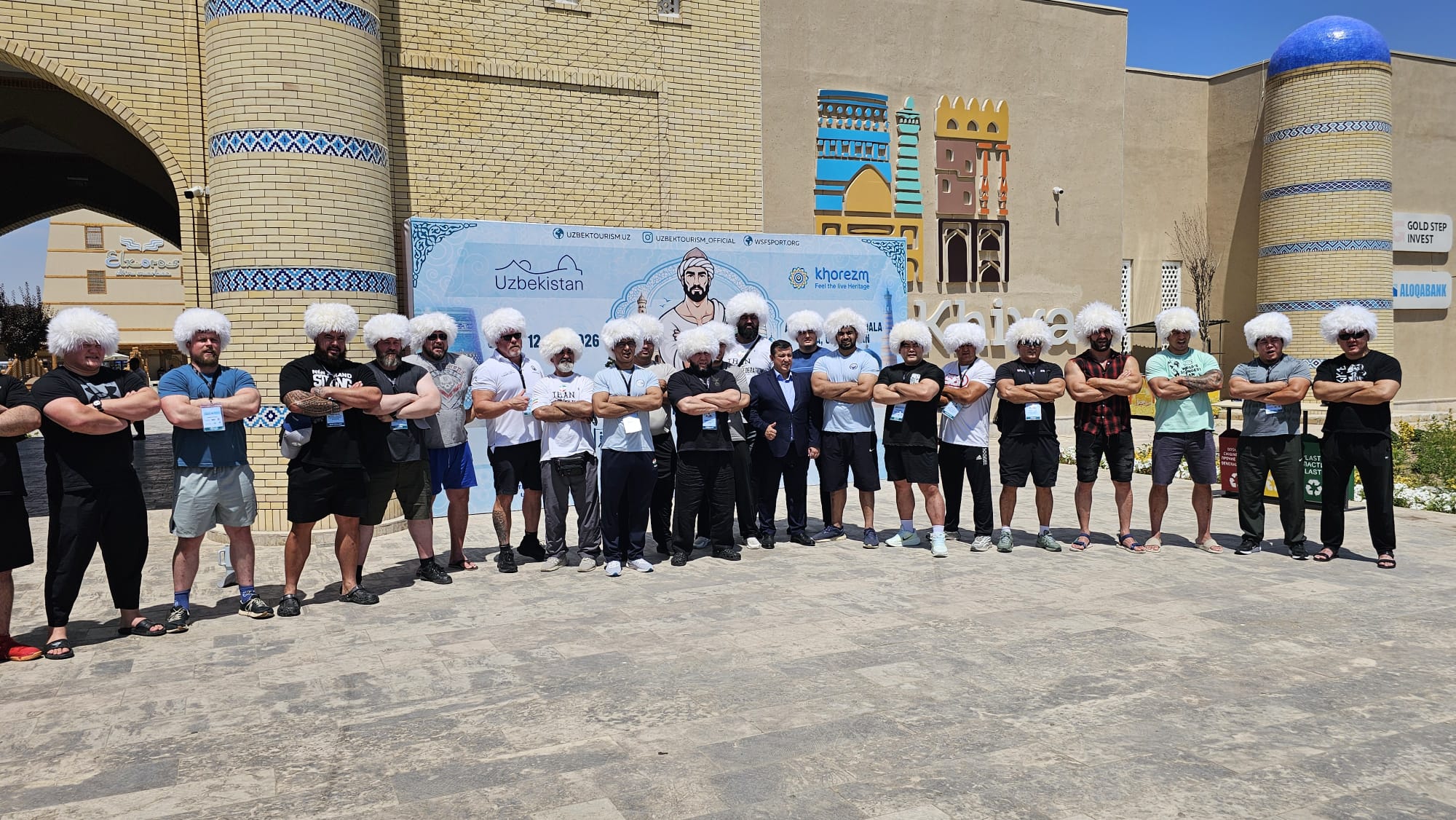
Korean Strength Sports Enter a New Era as the Nation Eyes Hosting the 2027 World Strongman Games
KHIVA, UZBEKISTAN / SEOUL, SOUTH KOREA
Writer ; MD.Moon hyungsuk
A new chapter in the history of Korean strength sports is being written on the international stage.
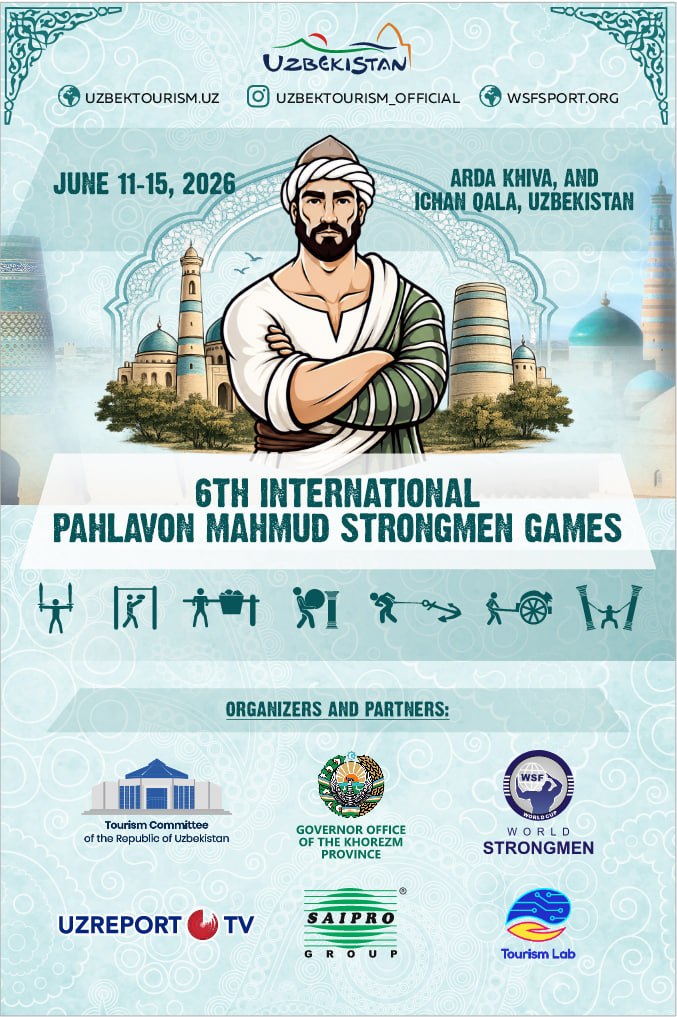
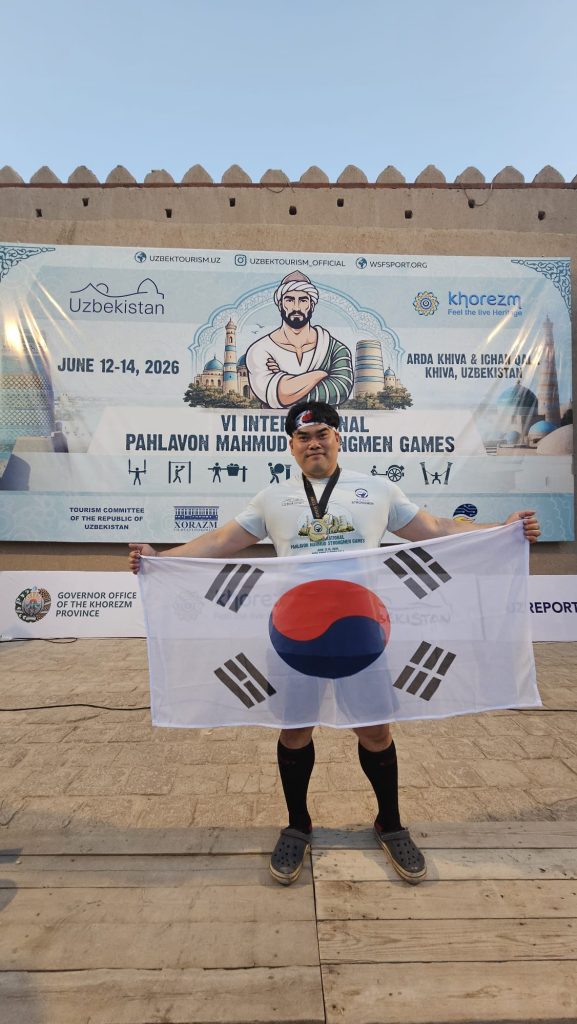
Yoo Useong, one of South Korea’s most accomplished heavyweight powerlifters and strength athletes, has been officially invited to represent the Republic of Korea at two of the most prestigious international strongman events in Central Asia: the VI International Pahlavon Mahmud Strongmen Games and the Farhad Challenge 2026, both organised under the auspices of the World Strongman Federation (WSF) in cooperation with the Government of Uzbekistan.
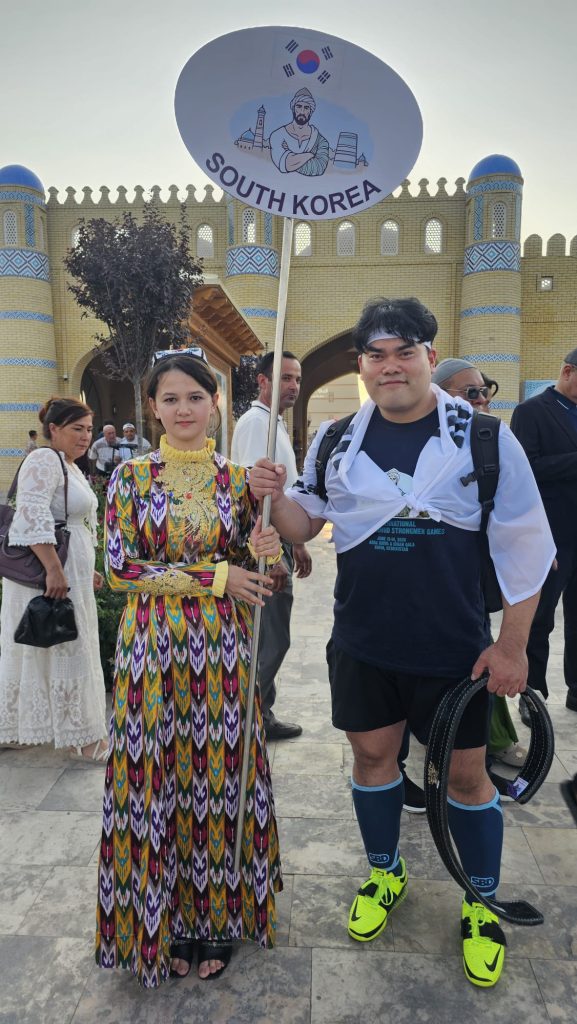
Held in the historic Silk Road city of Khiva and the mountainous resort region of Oqtosh, these competitions bring together many of the world’s most formidable professional strongmen from Europe, the Middle East, Asia and Oceania.
More significantly, the events serve as an important gateway into the World Strongman Federation’s international professional athlete system. Yoo’s participation therefore represents far more than a national team appearance; it marks his formal emergence as a recognised professional athlete within the global WSF circuit.
Competing Among the World’s Elite
The 2026 edition features an exceptional field of athletes representing more than fifteen nations, including Iceland, Iran, Ukraine, Pakistan, New Zealand, Mongolia, Turkey, Lithuania, Georgia and the Czech Republic.
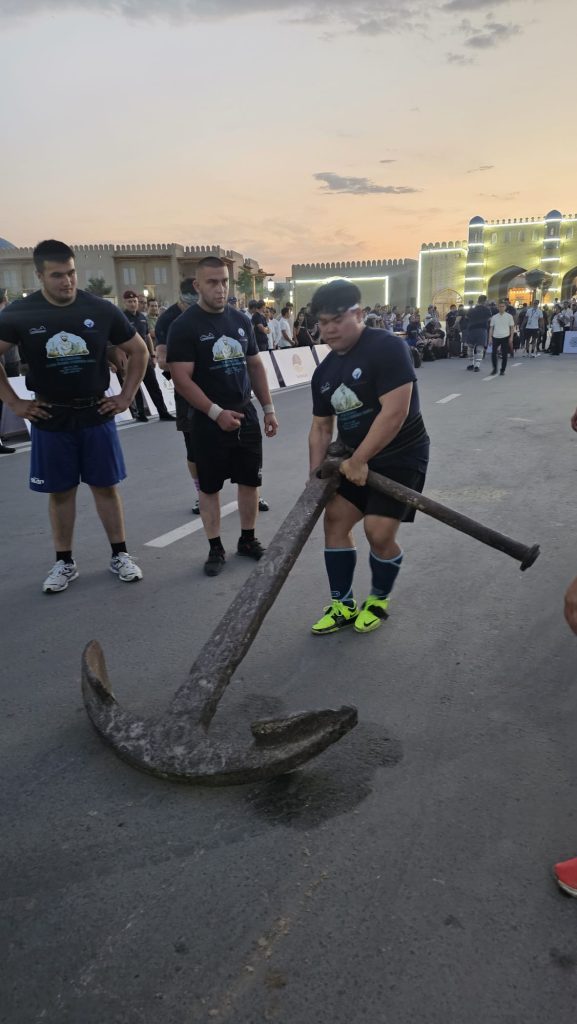
Several competitors arrive with international reputations already firmly established.
Among them is Reza Gheitasi of Iran, widely regarded as one of Asia’s strongest men and a veteran of numerous international strongman championships. Renowned for his immense pulling power and extraordinary physical stature, he has long been recognised as one of the dominant figures of Middle Eastern strength sports.
Muhammad Nooh Dastgir Butt of Pakistan, Commonwealth Games Gold Medallist and one of the most successful strength athletes in Pakistan’s sporting history, also enters the competition as a serious contender. His achievements have earned him international acclaim across multiple professional strongman circuits.
Representing Ukraine is Ivan Myskovets, a distinguished competitor on the European Strongman Series, recognised for his performances in traditional strongman disciplines including vehicle pulls, Atlas Stones and log presses.
From Iceland arrives Gudnason Birgir Mar, carrying the legacy of a nation synonymous with strongman excellence. Iceland has produced legends such as Hafþór Björnsson and Magnús Ver Magnússon, and Gudnason is viewed as a worthy representative of that celebrated Nordic tradition.
Yoo Useong: The Pride of Korean Strength Sports
Standing among these internationally recognised competitors is South Korea’s own Yoo Useong, whose credentials are equally impressive.
A former representative weightlifter for Jeollanam-do Province, Yoo has dedicated more than two decades to strength sports and has successfully established himself as one of South Korea’s premier heavyweight athletes.
Throughout his career he has accumulated numerous national titles and records across powerlifting and weightlifting disciplines. His personal bests include:
- Squat: 302.5 kg
- Deadlift: 307.5 kg
- Competition Total: 850 kg
These figures rank among the strongest performances ever recorded in Korean powerlifting history.
Having secured championships under the IPF, WPC and AWPC banners, Yoo has consistently represented Korea in international competition while contributing to the sport as a certified referee, coach and educator.
Yet his greatest asset may not be raw power alone.
Modern strongman competition demands a unique combination of maximal strength, endurance, mobility, resilience and tactical intelligence. Events frequently require athletes to carry, pull, lift, throw and support enormous loads under extreme conditions.
Yoo’s combination of elite squatting and deadlifting strength, cardiovascular conditioning and athletic mobility has led many observers to identify him as a genuine dark horse within the international field.
Backed by Korean Powerlifting Leadership
Yoo’s participation in Uzbekistan was strongly supported by Lee Yong-soo, President of the Korea Powerlifting Association, who has long advocated for greater Korean representation within international strength sports.
According to Korean sporting officials, Lee viewed Yoo as the ideal athlete to showcase Korea’s growing strength sports movement and actively recommended his participation to international organisers.
Many within the Korean sporting community regard this appearance as a symbolic milestone, signalling the country’s transition from domestic success to meaningful engagement within the global professional strongman arena.
South Korea Eyes the 2027 World Strongman Games
Perhaps the most intriguing development emerging from the Uzbekistan gathering is South Korea’s growing ambition to host the World Strongman Games in 2027.
Discussions involving WSF officials, Korean sports administrators and representatives from the powerlifting and recreational sports sectors have reportedly intensified during the current events.
Should a Korean bid succeed, the country could welcome athletes, officials and spectators from more than thirty nations, generating substantial benefits for sports tourism, regional economic development and international sporting diplomacy.
Industry observers believe that a Korean-hosted World Strongman Games could create a unique model that combines elite strength sport with the global cultural influence of contemporary Korea, often referred to internationally as the “K-Culture phenomenon.”
The Beginning of a Korean Strongman Era
For Yoo Useong, this journey is about far more than individual achievement.
His participation symbolises the emergence of Korean strength sports onto the world stage and reflects a broader aspiration for South Korea to become a future hub of international strongman competition.
As some of the strongest men on earth gather in Uzbekistan to test the limits of human power and endurance, Yoo carries not only the Korean flag but also the hopes of a sporting community eager to establish its place among the world’s elite.
The outcome remains to be seen.
What is already clear, however, is that Korean strength sports have entered a new era.
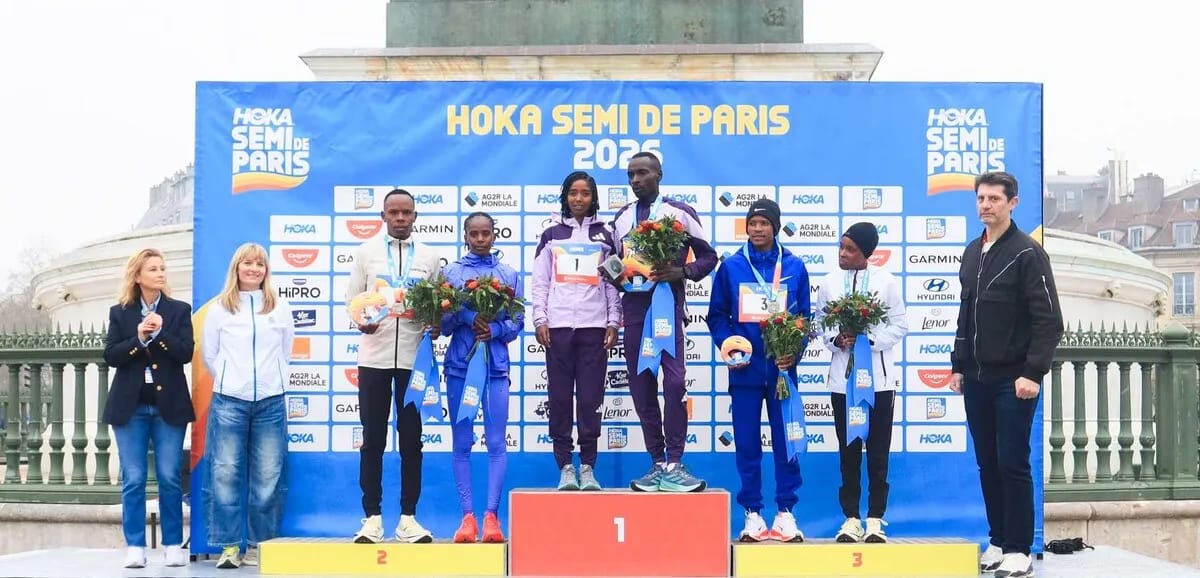
Paris ( Imran Y. CHOUDHRY):- The HOKA Paris Half Marathon hold on yesterday in Paris, France. Record number of participants 50,000 runners from around the world, consolidating its position as the largest half marathon in the world. This 21.097 km race, organized by Amaury Sport Organisation (ASO). Near parity with 46% women, with 23,000 female runners at the start.
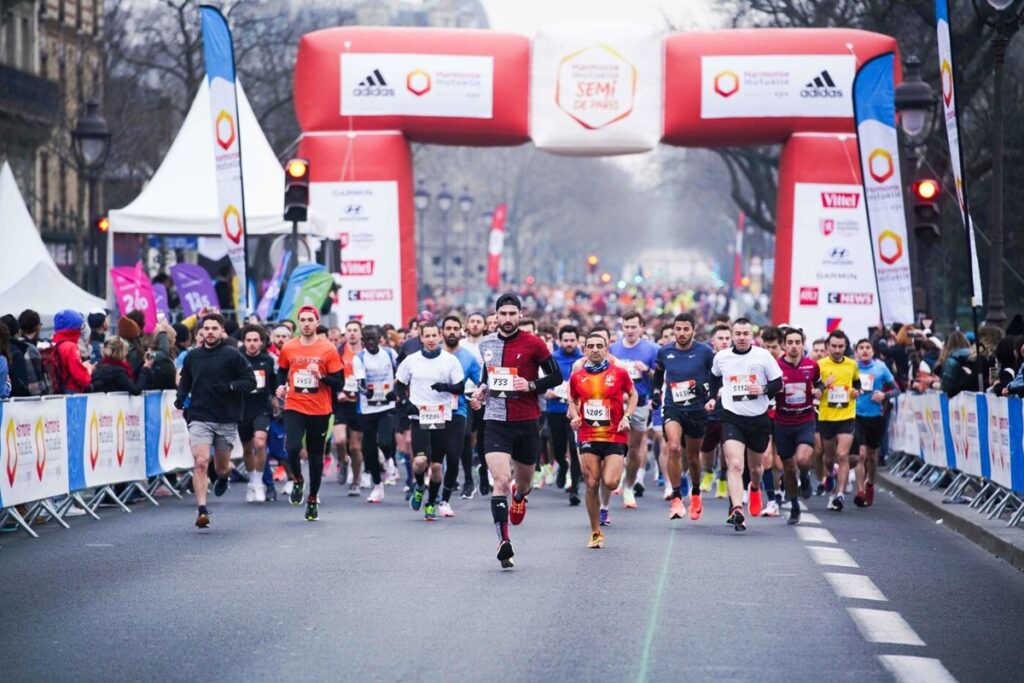
The top three finishers were athletes from four African countries: Kenya, Ethiopia, Uganda, and South Africa.
In the men’s race, Kennedy Kimutai took first place (1:00:11). The 35-year-old Kenyan won the Paris Half Marathon for the second consecutive time. He was followed, thirty seconds later, by his compatriot Timothy Misoi (1:00:41). South African Thabang Mosiako completed the men’s podium in third place (1:00:42). Victor Moreau was the first French man, finishing 9th in 1:03:14.
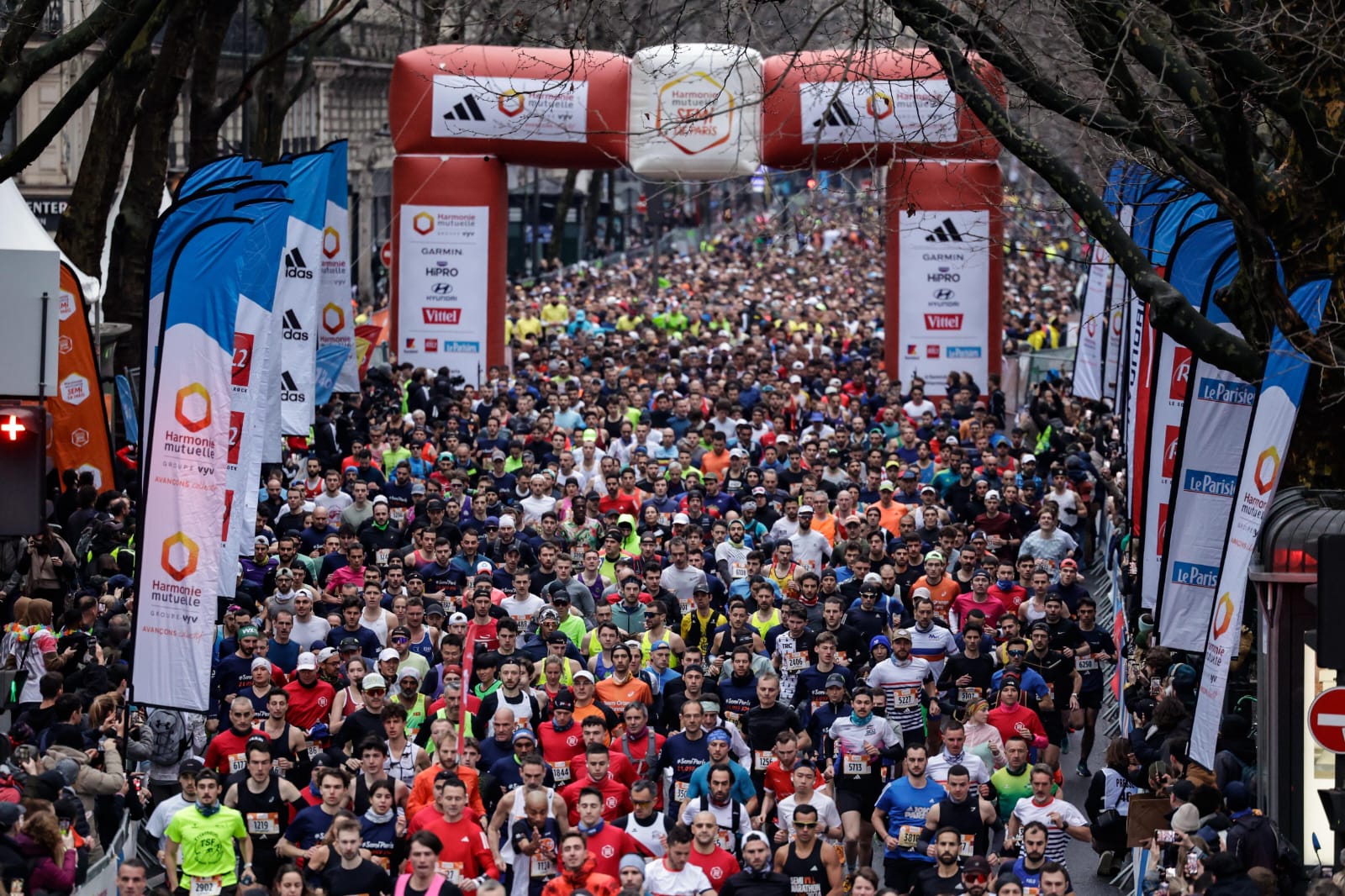
On this International Women’s Rights Day, Ethiopia’s Ftaw Zeray delivered an outstanding performance by winning the HOKA Semi de Paris 2026 in 1:05:12, setting a new women’s course record. She breaks the previous mark held by Kenya’s Sheila Chepkurui, who ran 1:06:01 in 2023. On the podium, Uganda’s Sarah Chelangat finished second, while Kenya’s Mercy Chepwogen completed the top three. The first French finisher women, Katia Raoult, placed 11th in 1:15:33.
Stories that inspire, from elites to amateur runners, each participant turned the effort into a personal challenge and a moment of sharing.
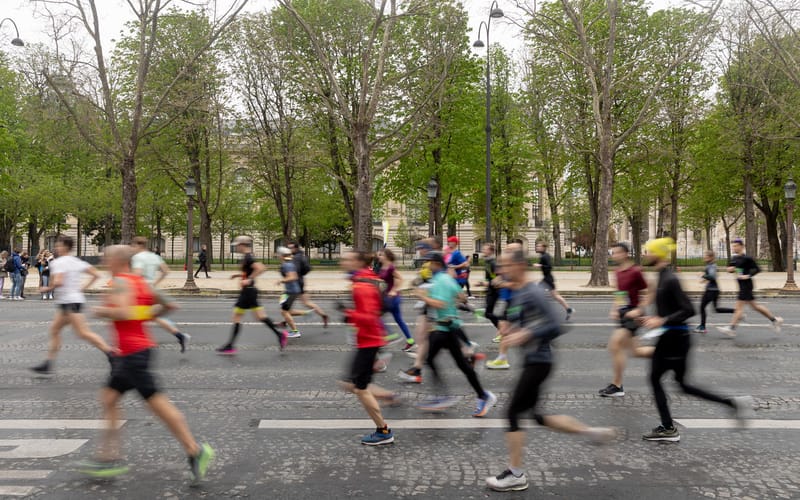
Beyond the times, it was thousands of individual journeys that defined the day. A first half marathon, a comeback after illness, a personal challenge, a symbolic birthday or a promise kept — every bib carried a story.
The event will lead to major traffic restrictions and heavy crowds in central Paris. Due to numerous road closures within Paris city limits, the most reliable means are public transport, cycling, and walking. The route passes through very busy central areas and the consequences are multiple: street closures early in the morning, major bus diversions, traffic difficulties by car in central Paris and traffic being diverted to peripheral routes.

Paris ( Imran Y. CHOUDHRY):- Full of color, energy, and unforgettable moments in the biggest marathon on Earth. The Paris Marathon 2025 saw an immense sea of runners descend upon the world’s most beautiful avenue Champs-Elysees in the French capital and broke the world record, with 56,950 participants completing the course. That’s almost 1,000 more finishers than the London Marathon.


Only a month ago, we heard the news that the London Marathon was aspiring to become the largest marathon held anywhere in the world, ever. To surpass the existing world record of 55,646 finishers, set by the New York City Marathon in November 2024.
Runners set off from the legendary Champs-Élysées, marking the start of a spectacular route through Paris. Despite the somewhat gloomy weather, the route offered a real immersion in the heart of the capital , passing through such iconic landmarks as the Place de la Concorde, theOpéra Garnier and the Place de la Bastille.
The peloton continued towards the Bois de Vincennes, bringing a breath of nature to this urban route. It was here that they discovered the only new feature of the edition: a passage through the Nation district, recently added to the route.
At the end of the race, participants skirted the Seine to greet the majestic Eiffel Tower, before concluding their effort in style onAvenue Foch, the traditional finishing point of the Paris marathon.
According to the Schneider Electric Paris Marathon, just over half of the participants were first-time marathon runners. This alone shows the growing appeal of the 42.195-km distance across nations, with a 33% of the finisher field comprising international runners. More women are now running the Paris Marathon, Just under a third of finishers 31% in 2025 were women, which is up from 28% in 2024 and 26% in 2023.
African runners once again dominated the Schneider Electric Marathon de Paris. Nine men reached km 30 in the lead group, but the Kenyan Benard Biwott, a few weeks shy of his 23rd birthday, unleashed a devastating acceleration at km 33 that blew the group to smithereens. He opened up a decisive gap in no time and cruised home in 2:05:25, just 54 seconds off the course record still held by fellow Kenyan Elisha Rotich, who had to settle for twelfth this time in 2025. “I’m really happy with the win”, beamed the victor. “I pushed hard all the way and I’m really pleased with my time. It was very tough, but I gave it everything I had.” He succeeded the Ethiopian Mulugeta Uma as champion and delivered the sixteenth win for Kenya in the streets of Paris. The Djiboutian Ibrahim Hassan put in a stellar run to take second in 2:06:13, with another Kenyan, Sila Kiptoo rounding out the podium in 2:06:21.


On the French side, Hassan Chahdi, 20th at the last Olympic Games, spent a long time in the lead group, only to throw in the towel shortly after the halfway points. Jason Pointeau was the best French performer in fifteenth place. His time of 2:13:36 put him just ahead of Florian Caro and Yohan Durand. “Being the top French runner means a lot to me”, said Pointeau. “It wasn’t even on my radar because Hassan Chahdi was on the start list. I was hoping to be the top French entrant… after him. I deduced from the cheers of the crowds that I was in that position, so I held on to that thought. I felt rubbish from the first couple of strides. I told myself I had to hang on in there. In the end, the last 15 K were not that bad. I’m pleased because I managed to finish on a high note.”
After a cautious first half of the women’s race, four runners broke free going into the final 10 kilometres. On the run-in towards Avenue Foch, the Ethiopian Bedatu Hirpa —who will soon turn 25 and took the Dubai Marathon in a personal best of 2:18:27 back in January, fellow Ethiopian Dera Dida, to cross the finish line with a time of 2:20:45 and secure the second Ethiopian triumph in Paris. She succeeded her countrywoman Mestawut Fikir. “I roared as I went over the finish line because I really wanted to win the Marathon de Paris. I was over the moon and wanted to express just how happy I was. It was a tough race, but victory washes away the suffering.” Dera Dida was the best of the rest at 4 seconds. The Kenyan Angela Tanui (2:21:07) took the bottom step of the podium. After flirting with the course record (2:19:48, set in 2022 by the Kenyan Judith Keptum, eighth today) for most of the race, the lead group faded somewhat in the final kilometres. Loréna Meningand’s metronomic consistency made her the top French runner, twelfth overall with a time of 2:36:33.
Photos @ Imran Y. CHOUDHRY


Why a new Pakistan-China border pact has irked India

How Trump Ditched Saudi Arabia?

EU Enacts Strict Laws on Social Media Use by Minors


-

 Sports3 months ago
South Korea’s Yoo Useong Steps Onto the Global Strongman Stage as World Strongman Federation Professional Athlete
-

 Art & Culture1 year ago
A Survey of Mata-E-Zeest
-

 Europe News2 years ago
Chaos and unproven theories surround Tates’ release from Romania
-

 American News2 years ago
Trump expands exemptions from Canada and Mexico tariffs
-

 American News2 years ago
Trump Expels Zelensky from the White House
-

 Art & Culture2 years ago
Will Snow White be a ‘victim of its moment’? How the Disney remake became 2025’s most divisive film
-

 Entertainment2 years ago
Champions Trophy: Pakistan aim to defend coveted title as historic tournament kicks off today
-

 Pakistan News1 year ago
Comprehensive Analysis Report-The Faranian National Conference on Maritime Affairs-By Kashif Firaz Ahmed