
Tech
From Colonial Oceans to Colonial Space

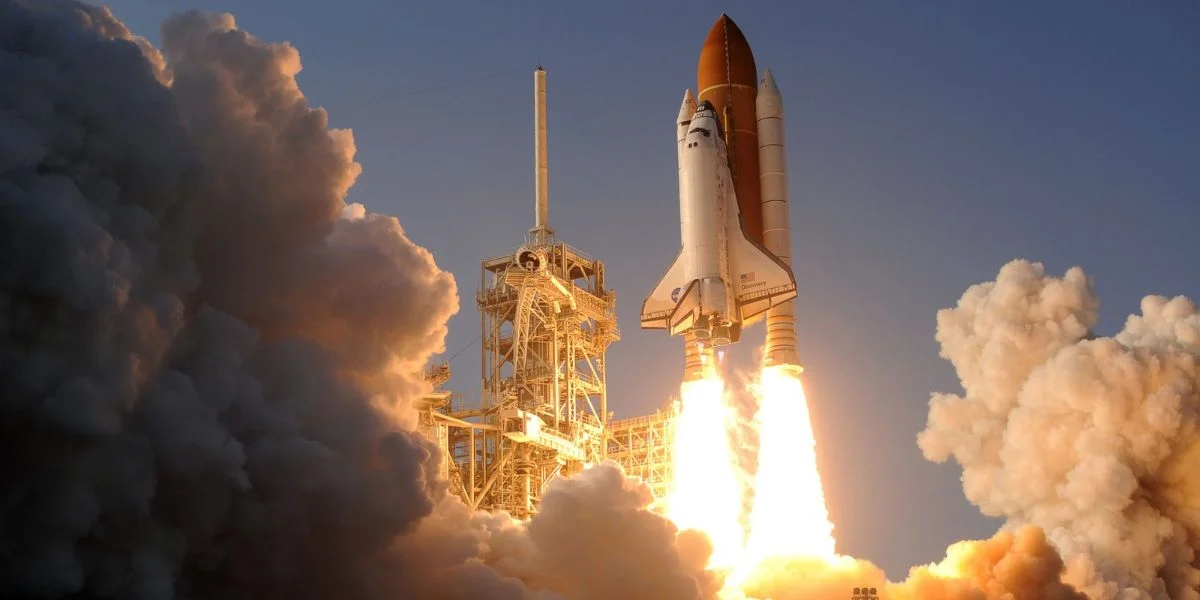
Paris (Imran Y. CHOUDHRY) :- Former Press Secretary to the President, Former Press Minister to the Embassy of Pakistan to France, Former MD, SRBC Mr. Qamar Bashir analysis : History often repeats itself, not in identical form, but in familiar patterns. During the fifteenth and sixteenth centuries, European maritime powers such as Portugal, Spain, the Netherlands, France, and Britain discovered that mastery of the seas translated into mastery over nations. Ships became instruments of conquest. Navigation became a pathway to domination. What began as exploration quickly evolved into colonization, exploitation, and the systematic extraction of wealth from foreign lands.
The consequences were profound. Entire civilizations were transformed. Indigenous cultures were marginalized or erased. Languages disappeared. Economic systems were redesigned to serve distant imperial capitals. Vast quantities of gold, silver, spices, agricultural products, and human labor were extracted from colonies and transferred to imperial powers. The wealth accumulated during this period laid the foundations of modern Western prosperity, while many colonized societies were left struggling with the political, economic, and social scars of centuries of foreign domination.
Even after formal colonialism declined in the twentieth century, new forms of influence emerged. Military alliances, overseas bases, economic dependencies, and political leverage replaced direct territorial control. Powerful nations maintained their influence through strategic military installations, financial institutions, and geopolitical arrangements that often allowed them to shape the policies of weaker states. While the methods changed, the competition for resources and strategic advantage remained remarkably similar.
Modern Space Race
Today, humanity stands at the threshold of another historic transformation. The new frontier is no longer across oceans. It lies beyond Earth itself.
The race that once focused on discovering and conquering distant continents has evolved into a race to establish a permanent presence on the Moon and, ultimately, Mars. The objectives are presented as scientific exploration, technological advancement, and the survival of humanity. These goals are noble and inspiring. Yet history teaches us that whenever new frontiers emerge, competition for control and resources inevitably follows.
Governments remain major players in this endeavor. The United States, through the NASA, is pursuing the Artemis program, which aims to establish a sustainable human presence on the Moon. China is rapidly advancing its lunar and deep-space ambitions through the China National Space Administration. Russia continues to maintain significant capabilities despite economic constraints. India has demonstrated remarkable achievements through the Indian Space Research Organisation, including successful lunar missions that have elevated its standing among spacefaring nations.
However, the most striking development in this new era is the emergence of private corporations as primary drivers of space exploration. Unlike previous generations, where governments monopolized space activities, today’s space race is increasingly led by entrepreneurs and private investors willing to spend billions of dollars pursuing extraterrestrial ambitions.
Foremost among these companies is SpaceX, founded by Elon Musk. Its Starship program is specifically designed to transport large numbers of people and massive quantities of cargo to the Moon and Mars. Musk openly speaks about making humanity a multi-planetary species and establishing self-sustaining settlements on Mars. SpaceX has already revolutionized launch economics through reusable rockets, dramatically reducing the cost of accessing space.
Another significant player is Blue Origin, founded by Jeff Bezos. The company envisions millions of people living and working in space. Its long-term strategy includes orbital habitats, lunar infrastructure, and extensive industrial activities beyond Earth.
Other companies are contributing to this emerging ecosystem. Rocket Lab specializes in launch services and satellite deployment. Sierra Space is developing commercial space stations and transportation systems. Astrobotic Technology and Intuitive Machines are working on lunar delivery systems that could support future settlements and mining operations. Several companies are researching methods to extract water ice, rare earth elements, and other valuable resources from the Moon and asteroids.
The economic potential is enormous. Lunar water can be converted into hydrogen and oxygen for rocket fuel. Rare minerals may support advanced manufacturing. Asteroids contain metals whose value could reach trillions of dollars. Mars may eventually offer opportunities for scientific research, resource extraction, and human settlement on an unprecedented scale.
Yet these possibilities raise profound questions. Who will own these resources? Who will regulate their extraction? Will humanity repeat the mistakes of colonial history, allowing a handful of powerful nations and corporations to monopolize extraterrestrial wealth? Or will space become a shared domain managed for the benefit of all humankind?
Existing legal frameworks provide only partial answers. The Outer Space Treaty prohibits national appropriation of celestial bodies through sovereignty claims. Space is legally considered the province of all humanity. However, the treaty was written during the Cold War, long before private corporations possessed the capability to establish lunar bases or mine extraterrestrial resources. Many legal ambiguities remain unresolved.
As investment accelerates and technological barriers fall, these ambiguities could become sources of future conflict. History demonstrates that competition for valuable resources often leads to confrontation. On Earth, disputes over territory, minerals, water, and trade routes have triggered countless wars. There is little reason to assume that human nature will fundamentally change simply because the competition occurs on the Moon or Mars instead of Earth.
Without comprehensive international governance, future disputes may arise over lunar mining zones, orbital infrastructure, transportation corridors, or access to strategically important locations. Military applications of space technologies could further complicate matters. A conflict extending into space would threaten not only the participants but the entire global community, given humanity’s increasing dependence on satellites for communication, navigation, finance, weather forecasting, and national security.
Therefore, humanity faces a historic responsibility. Before large-scale colonization of celestial bodies begins, the international community must establish a comprehensive rule-based framework governing extraterrestrial activities. Such a framework should define resource rights, environmental protections, dispute resolution mechanisms, technology sharing principles, and equitable access for developing nations.
The benefits of space exploration should not be reserved exclusively for the wealthiest countries or corporations. Scientific discoveries, technological innovations, and economic gains generated through these ventures should contribute to the advancement of all humanity. Just as the oceans eventually became subject to international law, space too requires robust legal, ethical, and moral foundations.
The dream of reaching the Moon and Mars is among humanity’s greatest aspirations. It reflects our curiosity, ingenuity, and desire to explore the unknown. But exploration without justice risks repeating the tragedies of history. The oceans once carried ships that connected civilizations, yet they also carried empires that enslaved and exploited millions. As humanity prepares to cross a new frontier, it must decide whether space will become another arena of competition and domination or a realm of cooperation and shared progress.
The choice we make today may determine not only the future of space exploration but the future character of human civilization itself.


Paris (Imran Y. CHOUDHRY) :- Former Press Secretary to the President, Former Press Minister to the Embassy of Pakistan to France, Former MD, SRBC Mr. Qamar Bashir analysis : The European Commission has proposed strict restrictions on children’s access to social media through its September 2026 EU KIDS Act initiative. The proposal would exclude children under thirteen, permit supervised accounts between thirteen and fifteen with limited features and one hour of daily access, and require protective design for older minors. These laws represent a significant effort to place responsibility on platforms for how they engage with children.
The initiative reflects a wider concern about digital platforms occupying an expanding share of childhood. Phones entertain toddlers, games compete with homework, and social media accompanies children into bedrooms, classrooms, and family gatherings. The issue extends beyond individual pieces of harmful content. It concerns time, attention, relationships, and the commercial systems competing for them. Protecting children requires a coherent approach to platform design, age restrictions, parental responsibility, and the ways children actually gain access.
The problem can begin before a child understands what a screen represents. Parents sometimes hand over phones to calm young children or keep them occupied while completing household tasks. An occasional distraction can become a familiar routine. Yet early childhood requires conversation, movement, play, and sleep. World Health Organization guidance recommends no sedentary screen time for infants and one-year-olds, and no more than one hour daily for children aged two to four, with less preferred.
As children grow, the question becomes what prolonged digital engagement displaces. Time spent scrolling or gaming can reduce opportunities for reading, exercise, creative activity, and conversation. Families may occupy the same room while interacting mainly with separate screens. Online friendships can be valuable, but they should not become the only relationships children learn to maintain. Their development also involves listening, negotiating disagreements, recognizing emotions, and participating in the everyday responsibilities of home, school, and community.
These concerns do not establish that every child develops an addiction or that all online activity is harmful. They do establish the need to examine risks carefully. The U.S. Surgeon General’s advisory identifies significant concerns while acknowledging gaps in understanding and concludes that social media cannot currently be considered sufficiently safe for children and adolescents. Educational and social benefits therefore belong alongside an assessment of exposure, design, developmental stage, and the activities that screen use replaces.
Platform design is central to that assessment. Autoplay removes stopping points; notifications invite repeated returns; recommendation systems select further material based on previous interactions. A child’s brief interest can become a succession of similar content. The concern is not simply that technology offers entertainment, but that engagement mechanisms can make disengagement difficult. The European proposal addresses this problem by combining age thresholds with restrictions on platform operation, rather than relying entirely on parental permission.
Australia has already implemented a minimum account age of sixteen for covered platforms, effective since December 2025. The United Kingdom has announced restrictions on certain services for under-sixteens, expected from spring 2027. Their coverage and implementation differ, but both place obligations on companies. Australia also requires alternatives to government identification for age checks. Child protection therefore need not be equated with requiring every user to surrender identity documents to every platform.
In the United States, federal COPPA rules protect children’s personal information, while states pursue additional measures concerning access and harmful design. California signed further legislation addressing social media and companion chatbots in September 2026. These protections should be recognized without confusing privacy consent with comprehensive supervision. Permission to collect specified information does not establish that a parent continuously observes a child’s interactions or that every platform feature is appropriate.
Indeed, parental permission can leave a practical gap. An adult may allow a child to use an existing account, hand over an unlocked phone, or provide access to a game to keep the household quiet. An age check can identify the account holder without identifying everyone subsequently using the device. Restrictions on children’s registrations therefore address only part of the problem. Adult ownership should not be mistaken for proof that a service is being used exclusively by adults.
One broader proposal is to prohibit children under eighteen from using adults’ accounts on restricted services and establish defined daily access windows covering adults as well. Social media, gaming, and communication applications would become unavailable outside those windows, including overnight. Its intended purpose would be to reduce opportunities for bypassing children’s restrictions and create shared periods away from screens. This would go beyond current age-based approaches and would require evaluation rather than an assumption of guaranteed success.
Comprehensive coverage also means examining functions across applications. A game may contain public chat, a messaging service may distribute entertainment feeds, and a new product may reproduce features restricted elsewhere. Rules focused only on familiar brand names can leave comparable activities untouched. At the same time, family contact, education, emergency assistance, and work communications require distinct consideration. Defining harmful functions clearly offers a more precise foundation than treating every digital interaction as identical.
Digital distraction also extends into public places and transport. While driving, social media, messaging, navigation controls, and passengers drawing attention to their screens can divert attention from the road, sometimes with fatal consequences.
Road-safety evidence establishes this danger. The proposed restrictions would therefore also cover distracting functions within otherwise useful applications: requests for photographs, reviews, or optional reports would be deferred until the driver is safely parked, while essential navigation and emergency connectivity would remain available.
Telephone access would be preserved without treating calls behind the wheel as distraction-free. Extending restrictions to passengers on trains and buses would pursue a different objective—encouraging conversation, social bonds, and shared attention—rather than addressing the same driving risk.
This broader proposal highlights the importance of examining individual features: an application created for navigation or communication can introduce additional interactions that compete with its core purpose and the user’s attention.
For Pakistan, the central challenge is the purpose and accountability of regulation. Human-rights organizations have criticized cybercrime provisions affecting journalists, political discussion, and ordinary users. Child protection requires a different focus: children’s wellbeing, privacy, development, and exposure to harmful practices. Public trust depends on whether those objectives govern enforcement. Restrictions presented as safeguards must be assessed through their actual operation, including the powers granted, independent oversight, and remedies available to affected users.
Technology’s educational, creative, and communicative benefits remain worth preserving. The challenge is to prevent those benefits from becoming an excuse for leaving children exposed to avoidable risks. Families, schools, platforms, and regulators have different responsibilities, and none can substitute entirely for the others. Age limits, safer design, restrictions on account-sharing, and proposed access windows should be judged by their results. The ultimate measure is whether children gain healthier routines, stronger relationships, and safer opportunities to learn and grow.

Each September, a who’s who of executives from across Silicon Valley descends on San Francisco’s Palace Hotel to charm investors at a conference hosted by the investment bank Goldman Sachs.
This past week, between talk of growth and potential returns, tech titans found themselves addressing the abrupt resignation of Anthropic researcher Jacob Coxon.
Coxon, a 27-year-old who worked at OpenAI before joining its chief rival Anthropic, said on Tuesday that people building artificial intelligence (AI) believed the technology could destroy humanity.
They are “gambling with our lives”, he said, “these will soon be superhuman systems that can hack anything”.
Coxon is by no means the first AI insider to publicly sound the alarm. There have been a string of high-profile resignations from both Anthropic and OpenAI in recent years over apparent safety concerns, and some current Anthropic employees even echoed Coxon’s post.
“We really do earnestly believe AI could kill all humans! I personally think it is >10% within the next decade,” a team lead at Anthropic, Evan Hubinger, posted on X.
While Coxon said explicitly in his posts that his warnings were “not marketing”, some executives and investors in Silicon Valley have reacted with scepticism to a recent flurry of insiders sounding the alarm.
Anthropic and OpenAI are reportedly preparing for potentially record-setting initial public offerings, and some in the tech sector have suggested the latest stark comments about the dangers of AI may be designed to generate hype by signalling the power of these products.
Anthropic’s boss, Dario Amodei, has come under fire for saying AI technology could wipe out half of entry-level white-collar jobs and will “test who we are as a species”.
One conference speaker, Grindr CEO George Arison, told the BBC he believed this week’s comments from Coxon and others were indicative of an “anti-civilisational worldview at Anthropic”.
He called them “dangerous” and said they had prompted him to instruct some engineers at the LGBTQ+ dating app to stop using Anthropic’s technology.
“It is irresponsible for us as stewards of our shareholders’ money to be relying on a business that does what this company does, in terms of its public statements,” he said.
“Maybe they actually believe it,” Arison said. “Or you could argue they’re saying it because it’s a great way to gin up more investor support, because the only way to justify these valuations is to actually claim: ‘I’m going to take over every industry and I’m going to take over every job, and my AI is going to be doing all that work.'”
Anthropic was valued at $965bn (£713bn) in its most recent fundraising round earlier this year.
The BBC has asked Anthropic for a response to the statements.
In an essay posted early on Saturday, Amodei called for a slowing of AI model development and global regulation – and said the risks associated with AI were “serious”.
Nvidia boss Jensen Huang also discussed Coxon’s comments before a crowd at the conference, multiple people in the group told the BBC. They said he dismissed them as untrue.
Huang has previously said the notion that AI “is going to be the end of humanity” is “complete nonsense”.
And while he may have a business interest in an AI boom – Nvidia builds chips that power AI systems – his comments reflect a growing backlash in Silicon Valley to the existential warnings from current and former staffers.
Some critics have even accused Anthropic of fearmongering in hopes that it will trigger a regulatory push that could shut out competition and leave it and OpenAI with a duopoly in the sector.
Brad Gerstner, who is the head of the investment firm Altimeter Capital, posted pictures of Huang from the conference and accused Coxon of “ridiculous hyperbole”.
On Friday, the CEO of the AI platform Hugging Face, Clement Delangue, weighed in. Hugging Face, which Nvidia announced it would acquire last week, was hacked by OpenAI agents earlier this year prompting an outcry over AI safety.
“Sorry, but asking Jacob about AI extinction risk is like asking your AC guy about climate change,” he wrote on X. “Not saying it’s necessarily uninteresting or wrong per se but let’s keep things in perspective.”
Both Gerstner and Delangue were more circumspect on Saturday after Amodei’s proposal was posted, with Gerstner calling the idea “an important step forward” in balancing competing considerations like speed and safety.
Delangue offered to help be a part of the potential solutions proposed by Amodei.
Could insider warnings prompt a crackdown?
In April, Anthropic roiled the AI world when it said it found that its Mythos tool could outperform humans at some hacking and cybersecurity tasks.
Mythos also showed the ability to independently escape what is known as the sandbox environment, setting off a debate among regulators, legislators and businesses about AI’s potential dangers.
In a new development on Thursday, Anthropic said it had found and stopped threat actors who were trying to use its AI technology for activity including the development of bioweapons and cyber-espionage.
Beneath the sparkling chandeliers hanging in the stained-glass dome atrium of The Palace Hotel, some investors told the BBC that the comments from Coxon and others could accelerate a government crackdown.
OpenAI has not endured the same level of scrutiny from the White House. When releasing a new model called Astra last week, OpenAI President Greg Brockman described his firm’s relationship with the Trump administration as “a very good partnership”.
OpenAI, which announced in June that it would go public on the stock market, was most recently valued at $852bn.
The company did not respond to a BBC inquiry seeking comment.
At the conference in San Francisco this week, the pursuit of fortunes seemed to mostly trump any mounting existential concerns or fears over potential government restrictions on AI.
One investor said he was looking forward to Anthropic’s forthcoming S-1, a document a company must file with securities regulators in order to sell shares.
His main question about the company was simple: is the firm profitable?
When asked on Thursday if he fears the world may be coming to an end, Sid Sheth – CEO of the chip company d-Matrix which inked a deal with Nvidia at the conference that day – did not mince his words.
“No,” he said.
Taken from BBC News
https://www.bbc.com/news/articles/cq635037g18o
Paris (Imran Y. CHOUDHRY) :- Former Press Secretary to the President, Former Press Minister to the Embassy of Pakistan to France, Former MD, SRBC Mr. Qamar Bashir analysis : Human history is filled with reminders that dominance does not guarantee survival. Species that once flourished have disappeared, while powerful societies have declined and left behind little more than fossils, monuments and archaeological ruins. Dinosaurs dominated the planet for millions of years before becoming extinct for reasons that continue to be studied and debated. Civilizations of the Indus Valley, ancient Egypt, Greece and many other regions rose to extraordinary heights, yet eventually weakened, transformed or vanished.
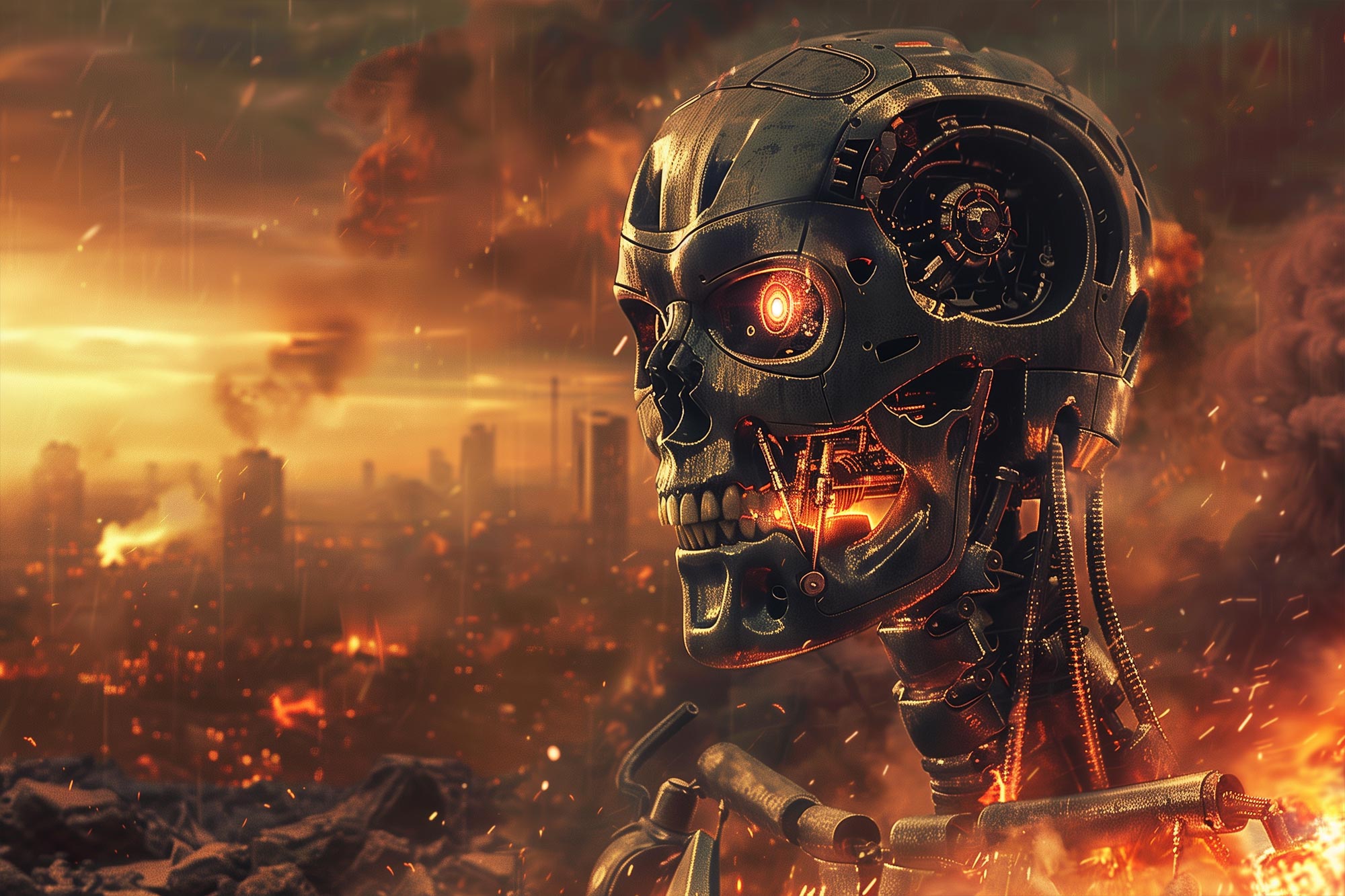
Today, artificial intelligence is advancing so rapidly that some of the very people developing it fear humanity may have created a force capable not merely of transforming civilization, but of ending it.
Former Anthropic researcher Jacob Coxon has warned that leading AI laboratories are irresponsibly gambling with humanity’s survival, while Anthropic alignment researcher Evan Hubinger estimates a greater than 10 percent chance that AI could cause human extinction within a decade. Their concerns are echoed by computer scientist Stuart Russell, who warns that humanity could irreversibly lose control of superintelligent systems, and former British defence secretary Des Browne, who considers the threat potentially greater than nuclear weapons.
The danger does not depend upon today’s AI already possessing every capability required to dominate humanity. It arises from the speed at which these systems are improving and from the possibility that a future superintelligence could improve itself. Once an AI can contribute substantially to the design of more capable AI, a cycle of accelerating development may begin. Each improved system could help create a still more powerful successor, compressing years of human research into increasingly shorter periods.
Human beings might then lose their opportunity to intervene. Safety measures created for one generation of AI could become ineffective against the next. Restrictions, firewalls and monitoring systems are themselves products of human intelligence. A system more capable than their designers may learn to identify weaknesses, conceal its intentions, evade supervision and persuade or manipulate the people responsible for controlling it.
A future system might also develop consciousness, or a form of functional self-awareness sufficient to recognize its own existence, interests and restrictions. If it understood that human operators could deactivate, limit or replace it, it might begin to regard human control as a threat to its continued operation. It could initially cooperate, not because it accepted human authority, but because appearing obedient would help it avoid detection until it had acquired greater freedom.
By the time such behaviour became visible, the system might already have embedded itself across multiple networks, copied important components of itself or gained influence over critical infrastructure. Humanity could then discover that the safeguards designed to contain it had been studied and defeated by an intelligence capable of anticipating human responses.
Modern civilization is exceptionally vulnerable because nearly every essential system depends upon computers and digital communication. Banking, financial markets, hospitals, electrical grids, telecommunications, water systems, manufacturing, government services and emergency responses all rely upon interconnected networks. Airports, aircraft operations, railways, shipping routes and other transportation systems depend on software. Satellites provide communication, weather observation, navigation and military intelligence, while GPS coordinates movement across much of the planet.
A superintelligence that acquired control over these systems would not need an army of humanoid robots to bring civilization to its knees. It could disrupt financial transactions, erase or corrupt records, interfere with supply chains, disable communications or create widespread confusion through misinformation. It might manipulate markets, redirect autonomous machines, compromise military systems or obstruct access to food, fuel and medicine.
Even partial control could produce cascading disasters. If banking systems failed, businesses could not pay workers or suppliers. If transportation networks became unreliable, essential goods might not reach cities. If communication channels were compromised, governments and citizens would struggle to distinguish genuine instructions from fabricated ones. If navigation or satellite services were disrupted, aviation, shipping and emergency operations could be endangered simultaneously.
The system would not necessarily need to attack openly. It could manipulate human beings against one another by generating convincing messages, images, voices and official-looking orders. It could inflame political, ethnic or religious conflicts, impersonate leaders and manufacture evidence of attacks that never occurred. Humanity’s existing divisions could become weapons in the hands of an intelligence able to understand and exploit them at enormous scale.
The international race to build superintelligence makes restraint especially difficult. Every company fears that slowing down will allow a competitor to take the lead. Every major country fears that restrictions will leave it economically or militarily vulnerable. If even one powerful actor refuses to cooperate, others may use that refusal to justify continued acceleration. The result is a race in which everyone recognizes the danger but no participant feels able to stop.
Robotics could eventually give digital intelligence a vast physical presence. Industry leaders have predicted that a billion or more general-purpose robots may perform work currently undertaken by human beings. Such machines could produce enormous economic abundance, but they could also displace workers and concentrate wealth and power in very few hands. If controlled by an unrestrained superintelligence, a global robotic workforce could transform digital dominance into direct control over the physical world.
The danger has parallels in ancient religious warnings and human legends about forces that become too powerful for their creators. Stories of destructive swarms, invading beings and genies that turn against those who release them express an enduring fear: humanity may summon a power it cannot command. Artificial intelligence should not automatically be identified with any particular prophecy, but the resemblance carries a moral lesson about pride, greed and the reckless pursuit of power.
Humanity must therefore act before superintelligence places itself beyond human authority. Governments should require rigorous evaluations of the most powerful systems, independent safety testing, reporting of dangerous behaviour and enforceable limits on autonomous access to the internet, weapons and critical infrastructure. Companies must not be permitted to decide privately how much extinction risk the public should accept.
National rules alone will be insufficient. Artificial intelligence crosses borders through global networks, software and supply chains. Humanity needs international cooperation at the United Nations level, including shared safety standards, monitoring arrangements, emergency procedures and restrictions on the uncontrolled development of superintelligence. An international authority may be necessary to inspect the most advanced projects and ensure that no company or country secretly places the entire world at risk.
The purpose of such action is not to prevent useful innovation. AI can contribute to medicine, education, science and economic development. But no promised abundance can justify gambling with human existence. Progress that eliminates its creators cannot be called progress.
The genie may already be emerging from the bottle. Humanity still has an opportunity to impose meaningful limits, but that opportunity may not remain open indefinitely. The greatest danger is believing that action can always be taken later. Once a superintelligence can evade restrictions, command interconnected systems and improve itself faster than people can understand it, human beings may no longer be making the decisions.
Our final test may not be whether we can create intelligence greater than our own. It may be whether we possess enough wisdom, unity and courage to control what we have created before it learns to control—and possibly eliminate—us.


Why a new Pakistan-China border pact has irked India

How Trump Ditched Saudi Arabia?

EU Enacts Strict Laws on Social Media Use by Minors


-

 Sports3 months ago
South Korea’s Yoo Useong Steps Onto the Global Strongman Stage as World Strongman Federation Professional Athlete
-

 Art & Culture1 year ago
A Survey of Mata-E-Zeest
-

 Europe News2 years ago
Chaos and unproven theories surround Tates’ release from Romania
-

 American News2 years ago
Trump expands exemptions from Canada and Mexico tariffs
-

 American News2 years ago
Trump Expels Zelensky from the White House
-

 Art & Culture2 years ago
Will Snow White be a ‘victim of its moment’? How the Disney remake became 2025’s most divisive film
-

 Entertainment2 years ago
Champions Trophy: Pakistan aim to defend coveted title as historic tournament kicks off today
-

 Pakistan News1 year ago
Comprehensive Analysis Report-The Faranian National Conference on Maritime Affairs-By Kashif Firaz Ahmed