
American News
South Carolina man to be executed in US by firing squad


A South Carolina prison inmate convicted of killing his ex-girlfriend’s parents with a baseball bat will be the first person in the US to be executed by firing squad in 15 years.
If Brad Sigmon’s execution proceeds on Friday at 18:00 local time (23:00 GMT), three volunteers standing behind a curtain will simultaneously fire rifles at his chest with specially designed bullets.
The state’s procedure requires that those put to death by firing squad be strapped to a chair when they enter the execution chamber. The inmate then has a target placed on his heart and a bag put over his head.
Sigmon, 67, was convicted of murdering David and Gladys Larke in 2001 before kidnapping his ex-girlfriend at gunpoint. She later escaped as he shot at her.
Offered the alternatives of death by electric chair or lethal injection, Sigmon’s lawyers said he chose the more violent process because of his concerns about the effectiveness of the other two methods.
He will be the first person to be executed by firing squad in the US since 2010, and only the fourth since the country reintroduced the death penalty in 1976.
The case
Sigmon was charged with murder in 2001 after investigators said he killed his ex-girlfriend’s parents in their home in Greenville County by alternately beating them with a bat.
He also told detectives that he planned to harm his ex-girlfriend before she escaped.
“I couldn’t have her. I wasn’t going to let anybody else have her,” he told them.
The South Carolina Supreme Court this week rejected a request from Sigmon’s lawyers to intervene. They wanted more time to learn about the drug South Carolina uses in lethal injections and questioned whether his 2002 legal representation was adequate.
That is expected to be his final appeal ahead of Friday’s planned execution.
No South Carolina governor has granted clemency to an inmate facing execution since the US legalised the death penalty again in 1976, according to the Death Penalty Information Center.

How the execution works
Execution by firing squad is complex.
Sigmon will be strapped in a chair with a basin built below it to catch his blood. A target will be placed on his chest and a bag over his head.
Three volunteers hidden behind a curtain will then fire at him from 15ft (4.6m) away.
The bullets used are designed to break apart on impact and cause maximum damage. Medical experts have debated the amount of pain caused by their use.
After the shots are fired, a doctor will confirm Sigmon’s death.
The state allows witnesses to observe the death from behind bulletproof glass, but the executioners will be hidden from view to protect their identities.
South Carolina passed a law in 2023 requiring that the the identities of the execution team members remain secret. It also forbids the publication of information regarding the procurement of lethal injection drugs, as a growing number of pharmaceutical companies have declined to provide them for state executions.
The American Civil Liberties Union (ACLU) filed a lawsuit challenging the state law in January.
How common is death by firing squad in South Carolina?
South Carolina spent $54,000 (£41,841) constructing its firing squad area in 2022 as suppliers refused to provide prison officials with the lethal chemicals required for death by injection.
The 2023 law now shields many details about the lethal injection procedure, as well, including the names of suppliers and the exact contents.
Most inmates sentenced to death in the state are electrocuted, but the three most recent executions were by injections that included pentobarbital. The three men were declared dead 20 minutes after being given the injection, though they appeared to stop breathing after a few minutes.
The lack of information about these executions has attracted criticism for its lack of transparency.
“This ban not only further departs from the state’s history of making execution-related information publicly available but criminalizes the disclosure of this information by anyone for any reason,” The ACLU argued in its legal complaint.
“It thus silences the scientists, doctors, journalists, former correctional officials, lawyers, and citizens who have scrutinized the safety, efficacy, morality, and legality of South Carolina’s use of lethal injection.”
Sigmon has expressed concern about the effectiveness of lethal injection.
South Carolina has released only one of two available autopsies from these deaths, which Sigmon’s lawyer say show unusual amounts of fluid in the person’s lungs.
Speaking about the decision not to die by injection, his attorney told AP: “He does not wish to inflict that pain on his family, the witnesses, or the execution team. But, given South Carolina’s unnecessary and unconscionable secrecy, Brad is choosing as best he can.”
Nationally, only three people have died by firing squad since 1976.
Taken From BBC News

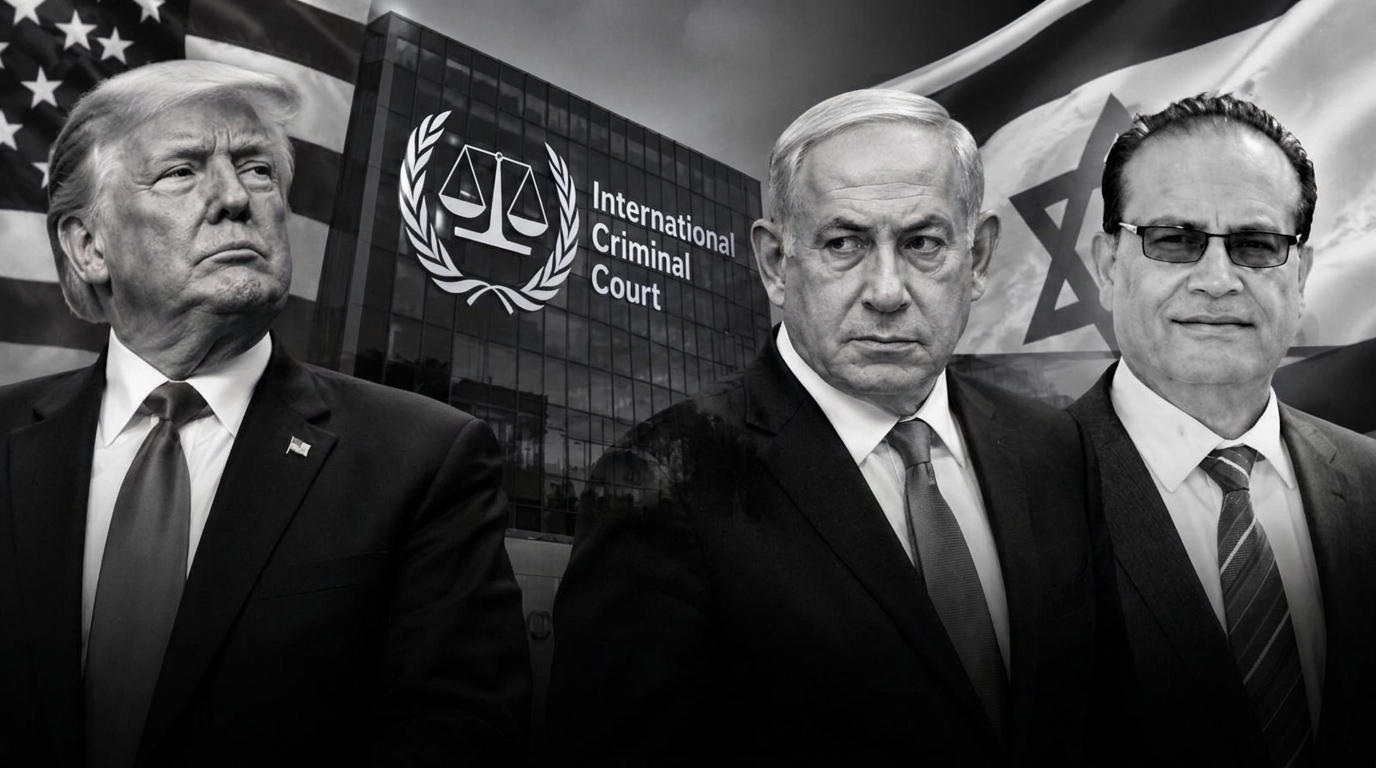
Paris (Imran Y. CHOUDHRY) :- Former Press Secretary to the President, Former Press Minister to the Embassy of Pakistan to France, Former MD, SRBC Mr. Qamar Bashir analysis : On October 9, 2026, two decisions exposed a profound conflict over the future of international justice. The Norwegian Nobel Committee awarded the Peace Prize to Navanethem “Navi” Pillay for promoting peace and international law. Washington imposed sanctions on the International Criminal Court as an institution. While one decision honoured the pursuit of accountability, the other threatened its machinery. At stake is whether powerful governments and their allies must answer to law, or whether political protection can place them beyond scrutiny.
Pillay’s career embodies the principle Washington is undermining. From defending rights under apartheid to serving on the International Criminal Tribunal for Rwanda, the ICC and as UN High Commissioner for Human Rights, she helped strengthen institutions confronting atrocities. She also chaired the UN Independent International Commission of Inquiry on the Occupied Palestinian Territory, including East Jerusalem, and Israel. Her Nobel recognition affirms that peace requires more than diplomatic agreements: it requires justice for people whose suffering powerful states would prefer to disregard.
The commission’s findings deserve a distinct and central place in this debate. In September 2025, it concluded that Israel was responsible for genocide in Gaza. It identified four acts under the Genocide Convention: killing Palestinians, causing serious bodily or mental harm, deliberately imposing conditions calculated to destroy the group, and imposing measures intended to prevent births. Examining official statements alongside patterns of military conduct, it found evidence establishing genocidal intent. These were findings of an independent UN investigative commission, demanding accountability and preventive action.
Israel rejected the commission’s conclusions and condemned Pillay’s Nobel award. Yet denunciation cannot erase evidence or discharge legal obligations. A government accused of grave crimes should answer the findings through credible investigation, cooperation and legal argument. Attacking the investigator’s legitimacy instead shifts attention from the victims to the discomfort of those facing scrutiny. Honouring Pillay does not threaten Israel’s population or legitimate security; it challenges the proposition that security can excuse unlimited violence against another people.
Washington’s sanctions extend that confrontation from rhetoric to institutional coercion. Secretary of State Marco Rubio announced measures against the ICC itself, following earlier sanctions on individual court officials. The court rejected the move as an assault on the rule of law. Financial restrictions can obstruct banking, services and cooperation essential to judicial work. Their impact reaches beyond judges and prosecutors to witnesses, victims and investigations across multiple countries. Weakening the institution threatens justice far beyond the Israeli cases that helped provoke Washington’s hostility.
The court issued arrest warrants on November 21, 2024, for Prime Minister Benjamin Netanyahu and former defence minister Yoav Gallant over alleged war crimes and crimes against humanity. The allegations included starvation as a method of warfare. These warrants were judicial steps toward determining individual criminal responsibility, not convictions. Pillay, a former ICC judge, did not issue them. The distinction between her commission’s genocide findings and the ICC proceedings clarifies how separate institutions have confronted different dimensions of the same catastrophe.
The jurisdictional objection cannot simply be settled by declaring that Israel and the United States are not ICC members. Palestine is a party to the Rome Statute. In 2021, the ICC determined that its territorial jurisdiction in the Palestine situation extended to Gaza and the West Bank, including East Jerusalem. Alleged crimes within that jurisdiction do not automatically escape examination because suspects hold the nationality of a non-member state. Challenges must be addressed through legal procedures, rather than financial pressure against the judges considering them.
The sanctions also reflect Washington’s opposition to investigations involving Americans, including the Afghanistan situation. That wider hostility reinforces the central problem: the administration seeks protection from external accountability for itself and its allies. The Nobel announcement and sanctions arrived on the same day, creating a powerful symbolic contrast. Whatever their scheduling, the political message is unmistakable. International justice is celebrated when distant adversaries face scrutiny, but treated as intolerable when investigations approach politically protected leaders.
Gaza’s devastation makes this double standard impossible to dismiss as an abstract dispute. Civilian deaths, killed children, displaced families, shattered medical services and attacks affecting humanitarian personnel demand investigation. Israel’s obligation to protect civilians survives every invocation of military necessity. Crimes by Hamas likewise require accountability; they cannot cancel Palestinian rights or authorize collective punishment. The test of international law is precisely whether it restrains violence when governments insist that their objectives justify exceptional measures.
American citizens have reasons to question this policy beyond its moral consequences. War with Iran has imposed military costs and additional energy burdens, with Brown University researchers documenting increased gasoline and diesel expenses for American consumers. Overseas deployments consume public resources and expose service members to danger. A government claiming to put America first must explain why shielding an ally from judicial scrutiny deserves diplomatic confrontation while households absorb the costs of regional escalation. Alliance commitments cannot replace independent judgment about the national interest.
Domestic law offers an instructive parallel. In February 2026, the Supreme Court rejected the administration’s asserted authority to impose tariffs under the International Emergency Economic Powers Act. The judgment demonstrated that presidential power remains subject to legal limits. International institutions serve a comparable purpose within their mandates: preventing power from becoming its own justification. Washington damages its credibility when it expects courts to constrain others while attempting to disable institutions whose scrutiny it finds inconvenient.
The response from American allies shows that this concern extends beyond Washington’s usual critics. Canada, Denmark, Germany, France, Italy, Japan, the Netherlands and the United Kingdom jointly opposed the sanctions. UN Secretary-General António Guterres also condemned them. Such disagreement should become practical commitment: sustained funding, protection for lawful cooperation and support for judicial independence. Expressions of concern alone will not keep institutions functioning when financial pressure threatens their everyday operations.
Defending the court is therefore a defence of every society’s protection against atrocity. If sanctions can silence judges today, other governments will learn to intimidate investigators tomorrow. The precedent rewards obstruction, encourages impunity and tells survivors that their access to justice depends on the political influence of their persecutors.
The international community must use the United Nations, the ICC’s Assembly of States Parties and national institutions to defend accountability. Governments should uphold applicable cooperation obligations, support investigations and resist coercion against judicial personnel.
Washington should withdraw the sanctions and pursue objections through established law. The choice is between an international order governed by common standards and one in which power purchases exemption. Protecting Netanyahu at the expense of independent justice sacrifices American credibility and weakens safeguards for everyone. Pillay’s Nobel Prize affirms the principle that must prevail: peace cannot endure when the powerful demand immunity and victims are denied justice.

Paris (Imran Y. CHOUDHRY) :- Former Press Secretary to the President, Former Press Minister to the Embassy of Pakistan to France, Former MD, SRBC Mr. Qamar Bashir analysis : When does an immigrant stop being an immigrant? For some British citizens, apparently never. They may have been born in Britain, educated in British schools, worked, paid taxes and raised families there. Their parents and grandparents may have done the same. Yet racial nationalists still describe them as outsiders.
Behind arguments about integration lies a disturbing proposition: however deeply they belong, their appearance disqualifies them. Citizenship becomes conditional, while whiteness becomes an imagined passport to permanent acceptance.
Debating immigration levels, asylum procedures, housing or public services is legitimate. Demanding that citizens leave because of their ancestry is racial exclusion. A British Muslim, Hindu, Christian or atheist does not become less British because their family originated in Somalia, India, Pakistan, Bangladesh or Iraq. For someone whose home and life are British, being told to return to an ancestral country denies their actual belonging.
The supremacist narrative insists that ancestry outranks citizenship, that minority success threatens rightful white ownership, and that assimilation can never overcome colour. Its opponents answer that Britain belongs equally to its citizens: belonging rests on shared civic rights, responsibilities and institutions, while peaceful resistance rejects racial hierarchy and defends everyone’s right to call Britain their home.
The consequences extend beyond offensive speech. In England and Wales, excluding the Metropolitan Police, police recorded 115,990 hate crimes in the year ending March 2025, up 2%. Racial hate crimes increased 6%, religious hate crimes 3%, and religious hate crimes targeting Muslims 19%. Reporting and recording practices affect these figures, but they document substantial harm. Social media compounds the danger when individual crimes become accusations against communities and religious differences become supposed evidence of disloyalty.
Britain’s imperial history makes racial exclusion particularly contradictory. Britain, France, Portugal and the Netherlands established overseas empires that extracted wealth, reorganized economies and imposed authority. They also spread their languages, institutions and cultural practices. Connections between Europe and formerly colonized societies were neither accidental nor created solely by recent migrants. Imperial powers helped construct the relationships and inequalities along which later migration developed.
The military contribution deserves recognition. More than 2.5 million people served in the British Indian Army during the Second World War, helping defeat the Axis powers. Colonial service occurred within unequal systems and reflected varied motivations. Nevertheless, remembering these soldiers as indispensable while imagining their descendants as permanently foreign exposes a profound contradiction. Postwar migrants likewise helped rebuild Britain, often encountering discrimination while supplying labour its economy needed.
Here lies the economic question: are minorities accepted more readily as workers serving others than as equals competing for influence? Migrants have performed essential work in cleaning, transport, hospitality, construction and care. These occupations deserve respect. The injustice lies in expecting particular communities to remain confined to them, as though their presence is acceptable only when accompanied by low wages, limited authority and restricted ambition.
Their children and grandchildren understandably seek advancement as professionals, entrepreneurs, academics and public representatives. For those who associate authority with racial inheritance, this mobility can feel like displacement. Economic resentment may therefore reinforce hostility presented as concern about culture. It does not explain every objection to immigration, however. Economic insecurity, cultural anxiety, prejudice and political opportunism can interact. Housing shortages and strained services require investment and competent government, rather than collective blame.
The legal principle must remain clear. Magna Carta is not a modern racial equality charter. The Universal Declaration of Human Rights affirms equal dignity, nondiscrimination and protection against arbitrary deprivation of nationality. British law permits citizenship deprivation on specified grounds, subject to legal conditions; ancestry or appearance alone is not such a ground. Minority citizens should never have to earn equality by remaining subordinate or invisible.
But defending citizenship addresses only part of the problem. The larger question is why people must leave their homes at all. When war destroys houses, hospitals, schools, businesses and essential infrastructure, families lose the foundations of ordinary life. When economic restrictions deepen shortages or obstruct livelihoods, survival becomes harder. People facing these conditions may seek safety or employment abroad, sometimes through dangerous routes because accessible alternatives are absent.
Iran illustrates this danger with particular force. Since the United States reimposed sweeping sanctions in 2018, Iranians have faced eight years of renewed economic restrictions, intensified by further measures in 2026. Alongside this pressure, United Nations reporting has documented airstrikes causing civilian casualties, displacement and damage to homes, schools and health facilities. For a population of roughly 90 million, the combination threatens both physical security and the means of earning a living. When economic coercion deprives ordinary families of livelihoods and essential goods, it becomes collective punishment in its human consequences, whatever justification governments offer. Families unable to find safety, work or food may seek opportunities abroad; migration then becomes a response to deprivation, rather than simply a preference.
Syria, Afghanistan and Iraq offer different histories of conflict, repression and displacement. Colonial legacies also shape opportunities across South Asia and Africa, alongside domestic governance, inequality and other pressures. These countries cannot be reduced to one explanation or described as uniformly destitute. Nevertheless, governments whose interventions contribute to destruction must confront the consequences. Condemning migration while helping destroy the possibility of remaining safely at home is a morally indefensible contradiction.
Governments whose military actions and economic restrictions contribute to that desperation should bear a corresponding responsibility: protect those displaced, share the costs of receiving them, and help restore the homes, institutions and productive economy that make remaining—or voluntarily returning—possible. They cannot credibly condemn migration while disregarding their own contribution to the conditions that drive it.
The long-term solution is to invest where people already live: rebuild schools and hospitals, train teachers and technicians, support universities, create reliable infrastructure and expand productive employment. Political stability must rest on accountable institutions and public participation, alongside economic opportunity and cultural freedom. The Gulf’s development, including Dubai, Qatar and Saudi Arabia, illustrates how investment and expanding industries can attract workers internationally. Its circumstances are distinctive, but opportunity clearly influences migration.
This is also a practical answer to public anxiety in destination countries. Money spent restoring livelihoods can address displacement more constructively than rhetoric promising racial exclusion. Partnerships should be designed with the people affected, offer fair trading opportunities, and support businesses that retain value locally. Their purpose should be to expand people’s choices, so that staying becomes viable and leaving remains a decision rather than a necessity.
Such cooperation must respect sovereignty, empower local communities and prevent reconstruction from becoming another system of dependency. The test of Western commitment is whether it supports prosperity and independence even when these strengthen competitors.
No development programme will end migration, which also reflects choice and aspiration. It can, however, reduce the desperation that forces departure. A just response combines equal citizenship, peaceful resistance to racism and sustained investment in people’s ability to build secure, dignified lives at home.
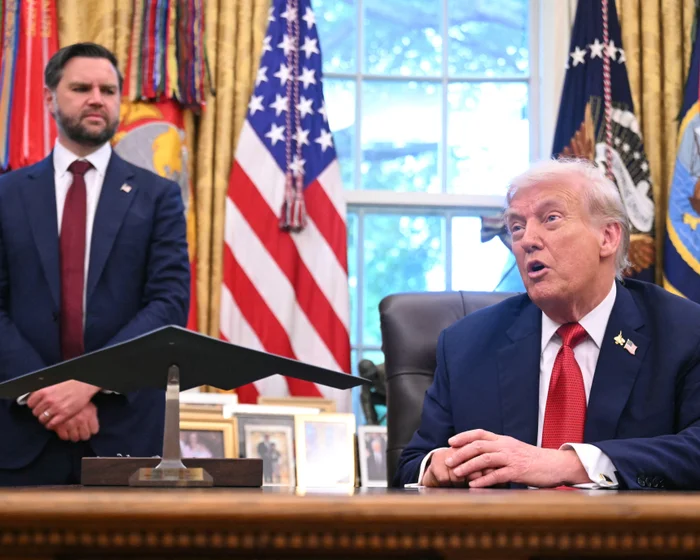
Paris (Imran Y. CHOUDHRY) :- Former Press Secretary to the President, Former Press Minister to the Embassy of Pakistan to France, Former MD, SRBC Mr. Qamar Bashir analysis : The United States is a wonderful country with enduring traditions, powerful institutions and a strong practical constitution. Yet that system contains a dangerous contradiction. It gives one individual command of the world’s most powerful military and sole authority to authorize nuclear force, but demands almost nothing about physical, mental or moral fitness beyond age, citizenship and residency.
The president is the face of the nation and an example whom millions admire, imitate and defend. Conduct affecting only a few people when committed by an ordinary citizen can reshape national standards when excused in the White House. If dishonesty, sexual misconduct or contempt for law is tolerated in the president, followers may conclude that the same behaviour is acceptable.
Bill Clinton’s relationship with White House intern Monica Lewinsky demonstrated this danger. The issue was not confined to whether a relationship between adults was criminal. The president conducted it with a young subordinate inside the institution representing American dignity, then gave false and misleading testimony in the Paula Jones lawsuit.
Clinton was impeached but acquitted and completed his term. He was later held in civil contempt, accepted a five-year suspension of his law licence and paid financial penalties. An ordinary citizen who lied under oath or obstructed justice could face prosecution and imprisonment; presidential power converted Clinton’s misconduct into a partisan argument over removal.
Donald Trump presents a broader test. His social relationship with Jeffrey Epstein is documented through photographs, statements and travel records. A prosecutor’s email released by the Justice Department said Trump flew on Epstein’s aircraft eight times during the 1990s. The releases also contain grave allegations that Trump denies and that remain unproven. Appearance in a file is not proof of crime, but it does not end the constitutional question.
When allegations concern the president, agencies holding the evidence are led by his appointees within an executive branch he controls. Even honest officials operate under an unavoidable conflict of interest, while citizens may fear that evidence can be delayed, discredited or withheld. The answer is neither automatic conviction nor blind acceptance of presidential denials, but investigation structurally independent of the president.
Trump’s adjudicated cases make the problem clearer. A civil jury found him liable for sexually abusing and defaming E. Jean Carroll. A New York jury convicted him on 34 felony counts of falsifying business records, although his appeal continues. He nevertheless returned to the presidency.
Richard Nixon participated in the Watergate cover-up, resigned and received a pardon preventing federal prosecution. Warren Harding’s affairs and hush-money arrangements became public while corruption surrounded his administration. These cases show how party loyalty and executive power separate presidential consequences from those confronting ordinary citizens.
Physical and mental incapacity reveal the same institutional weakness. James Garfield performed almost no official work for 79 days after being shot, while the government operated largely on autopilot.
Grover Cleveland secretly underwent cancer surgery without informing his vice president or most of his Cabinet. Woodrow Wilson remained president after a devastating stroke left him partially paralyzed and isolated, while his wife, physician and secretary controlled access to him. Franklin Roosevelt’s grave cardiovascular condition was concealed while he sought a fourth term.
The Twenty-Fifth Amendment improved the Constitution but did not eliminate the conflict. Its involuntary mechanism depends upon the vice president and Cabinet—political associates and appointees—declaring the president unable to serve.
Section Four has never been invoked. Joe Biden’s visible decline became politically undeniable during the 2024 campaign, yet party pressure, not an independent examination, ended his campaign. Trump’s rambling speeches about Iranian “drug factories” and Iran “taking out” Los Angeles and San Diego similarly demand transparent examination rather than reassurance from his staff.
The impeachment mechanism is equally vulnerable to party loyalty. Removal requires a two-thirds Senate vote. Andrew Johnson escaped conviction by one vote. Clinton was acquitted. Trump was impeached twice and acquitted twice, even when 57 senators supported conviction after January 6. A president protected by a sufficiently loyal party can therefore survive evidence or conduct that would end the career of almost any ordinary public employee.
Trump’s references to a third term must be treated seriously. Extraordinary ideas are often introduced as jokes or trial balloons, then repeated until resistance weakens. If Republicans hypothetically secured two-thirds of both houses, Trump would not hesitate to propose an amendment creating a third-term route, perhaps by distinguishing consecutive from nonconsecutive terms. Ratification by three-fourths of the states would remain necessary, but the Twenty-Second Amendment must be actively defended.
America’s system also displays great strength. Local democracy can protect an amplified azan under the same rules governing church bells and other religious announcements. Voters can elect leaders such as New York Mayor Zohran Mamdani and nominate Michigan Senate candidate Abdul El-Sayed despite intense religious and political opposition. Administrations can reverse policies through elections, allowing democratic correction far more quickly than a hereditary monarchy. These achievements demonstrate that reforming presidential accountability would strengthen, not weaken, the constitutional order.
The country needs an independent Presidential Integrity and Capacity Commission established by constitutional amendment. Its existence, authority and independence must derive directly from the Constitution, with protected funding, secure tenure and enforceable investigative powers. Neither the president nor a congressional majority should be able to dissolve it, dismiss its investigators or prevent it from carrying out its constitutional duties.
The commission should include judges, physicians and constitutional experts, selected through a balanced appointment process that prevents domination by any president or political party. Its mandate should cover presidential capacity, serious dishonesty under oath, corruption and abuse of office, and serious criminal misconduct, including sexual abuse and obstruction of justice. It should conduct regular assessments of capacity and investigate credible, evidence-supported allegations within these defined areas. It must not become a morality police empowered to punish unpopular opinions, political disagreements or ordinary human failings.
The commission should preserve evidence, publish substantiated findings with appropriate protections for victims and sensitive information, and submit its evidence to the House of Representatives and the Senate. The House would determine whether to impeach, and the Senate would determine whether to convict and remove. Findings of incapacity should follow a separately defined constitutional procedure, because inability to perform presidential duties is distinct from impeachable misconduct.
Yet independent evidence gathering alone cannot resolve the danger of partisan protection. A congressional majority may refuse to act even when compelling evidence exists. If the proposed reform is intended to prevent that failure from leaving a president beyond effective accountability, the amendment must expressly establish an additional, narrowly defined judicial mechanism.
That mechanism should permit an independent constitutional tribunal to hear qualifying cases and order the remedies—including suspension or removal—specifically authorized by the amendment, under rigorous evidentiary standards and with a right of review. Such authority cannot be assumed merely because the commission operates under judicial oversight.
At the same time, the amendment must prohibit presidential interference with investigators, destruction or suppression of records, and self-pardons for conduct under examination. Presidential power must never become a shield that prevents evidence from being discovered or accountability from taking place.
The presidency magnifies character. A president’s words and conduct influence the ethical atmosphere of the entire country, legitimize behaviour for followers and shape how the world understands America. This higher standard is not an attack on democratic choice; it protects voters from deception and prevents temporary occupants of office from using public power to conceal private wrongdoing or incapacity. The republic therefore cannot demand less integrity from its most powerful citizen than it demands from everyone else. The president must be not only legally qualified to occupy the office, but physically capable, mentally sound and morally worthy of the example the office inevitably creates.


Pakistan’s Yemen Dilemma

U.S. Sanctions the International Criminal Court to Shield Netanyahu

Pakistan Reaffirms Commitment to Multilateralism, Peace and International Cooperation at the Executive Board of UNESCO


-

 Sports4 months ago
South Korea’s Yoo Useong Steps Onto the Global Strongman Stage as World Strongman Federation Professional Athlete
-

 Art & Culture1 year ago
A Survey of Mata-E-Zeest
-

 Europe News2 years ago
Chaos and unproven theories surround Tates’ release from Romania
-

 American News2 years ago
Trump expands exemptions from Canada and Mexico tariffs
-

 American News2 years ago
Trump Expels Zelensky from the White House
-

 Art & Culture2 years ago
Will Snow White be a ‘victim of its moment’? How the Disney remake became 2025’s most divisive film
-

 Entertainment2 years ago
Champions Trophy: Pakistan aim to defend coveted title as historic tournament kicks off today
-

 Pakistan News1 year ago
Comprehensive Analysis Report-The Faranian National Conference on Maritime Affairs-By Kashif Firaz Ahmed