
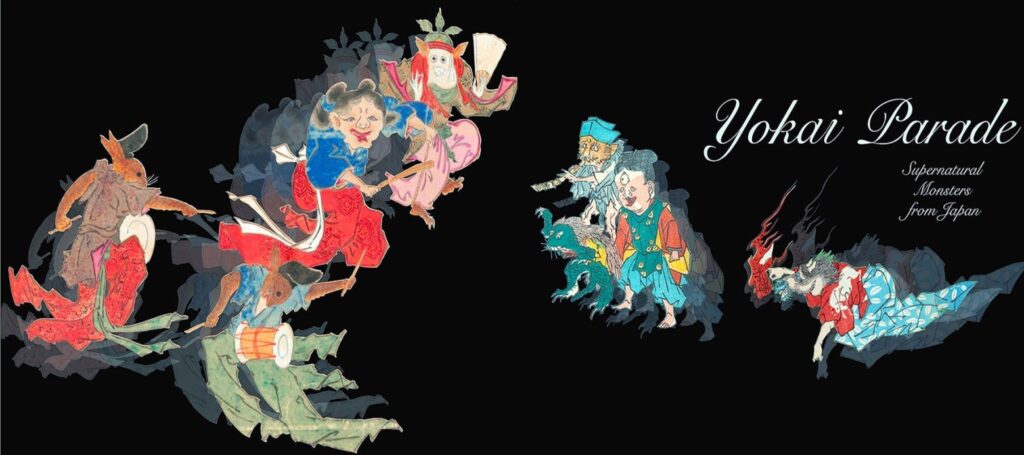
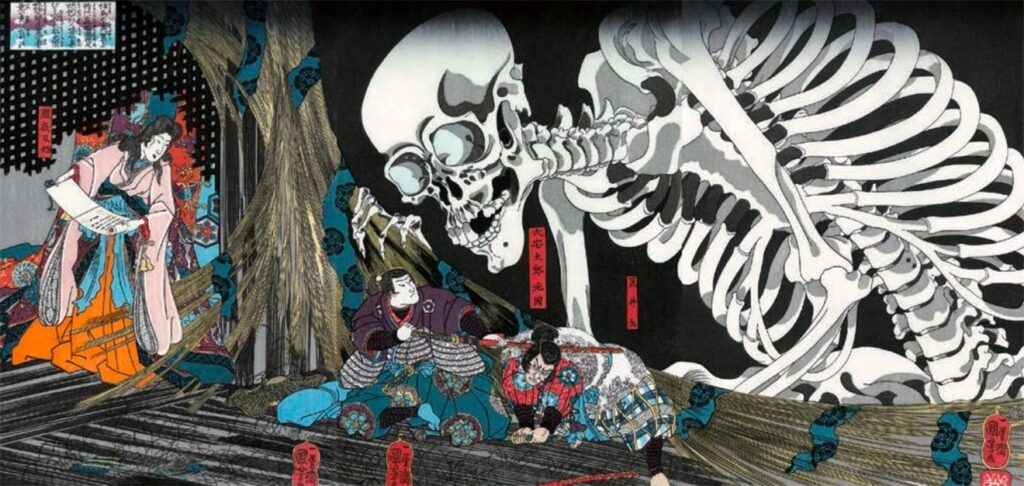
Lahore (Bilal Javaid):- The Embassy of Japan collaboration with the Lahore Arts Council (Alhamra) and Pakistan-Japan Cultural Association, Lahore, organized an exhibition of Japanese illustrated tales of folklore called Yokai Parade – Supernatural Monsters from Japan, at Alhamra in Ustad Allah Bukhsh Art Gallery, highlighting the enigmatic and sibylline creatures known as Yokai – mysterious supernatural beings that have captivated people imaginations for ancient time.
This traveling exhibition, based on historical tales popular among the Japanese people for centuries, brings immense delight and knowledge of Japanese folklore to the discerning eyes of art and cultural lovers, developing and fostering mutual understanding, harmony, trust, friendship, and ties between the people of Japan, Pakistan, and the world.
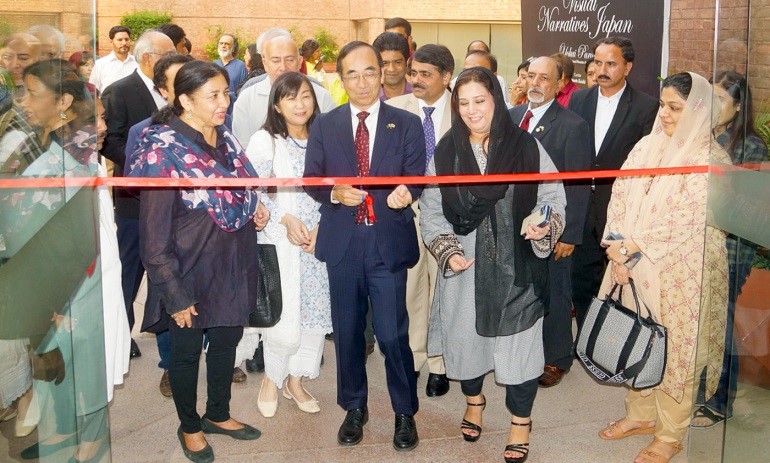
H.E. Mitsuhiro Wada, Ambassador of Japan to Pakistan, inaugurated the exhibition in the presence of the honorable Shazia Rizwan, Parliamentary Secretary for Information and Culture, Punjab, Pakistan.
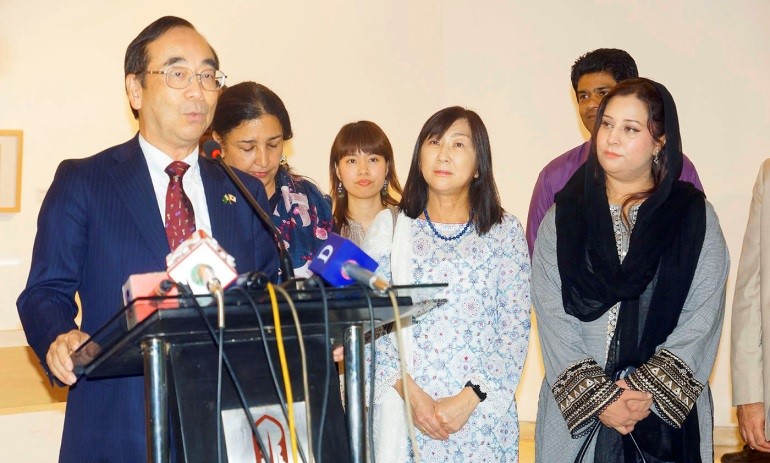
The Executive Director Alhamra, Sarah Rashid, welcomes all notable figures and guests to express her views on hosting such a gracious event of an exotic exhibition from Japan under the cultural exchange program. She further expounds that we are also pleased to welcome the esteemed Ambassador of Japan, H.E. and Mrs. Mitsuhiro Wada, and our distinguished guests. Alhamra stands as a beacon of diverse cultural activities and programs, and the current exhibition offers the Pakistani audience a unique opportunity to explore the rich and imaginative realm of Japanese folklore and artwork.
The Ambassador, H.E. Mitsuhiro Wada, thanked the Alhamra and the Government Administration for their enthusiastic assistance and support. The Ambassador also stated that this exhibition strengthens Pakistan-Japan bilateral relations through a cultural discourse. He encouraged people to look for similarities in folklore, such as the presence of spirits and ghosts in the folklore of both societies.
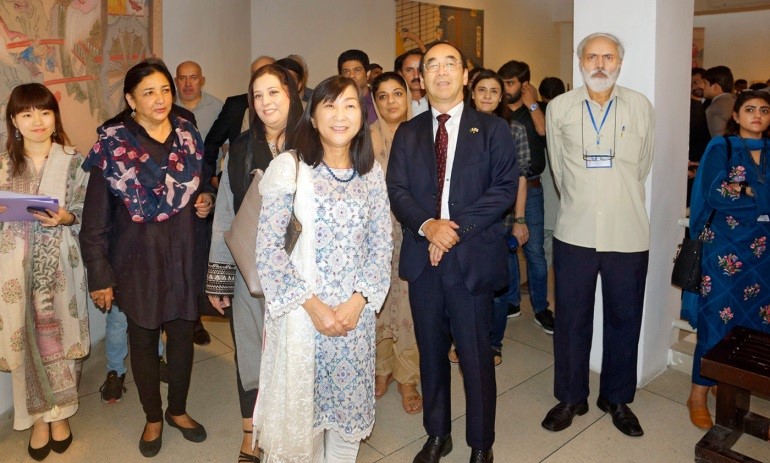
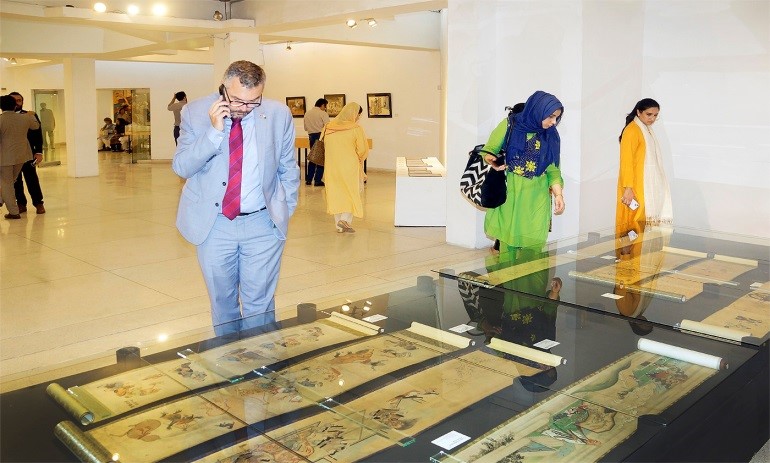

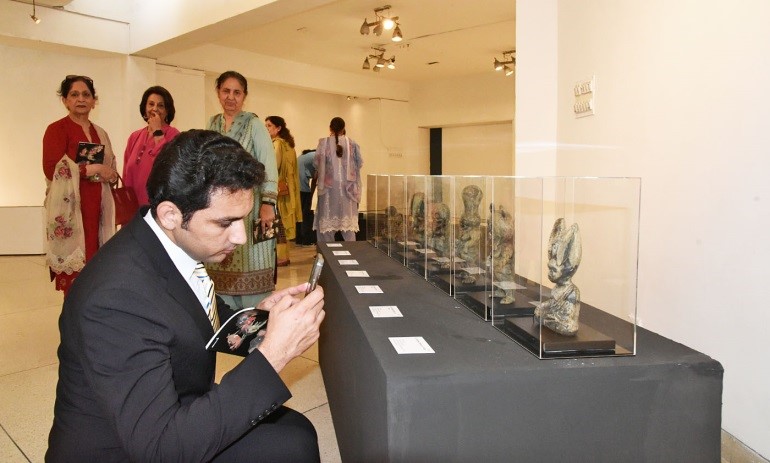
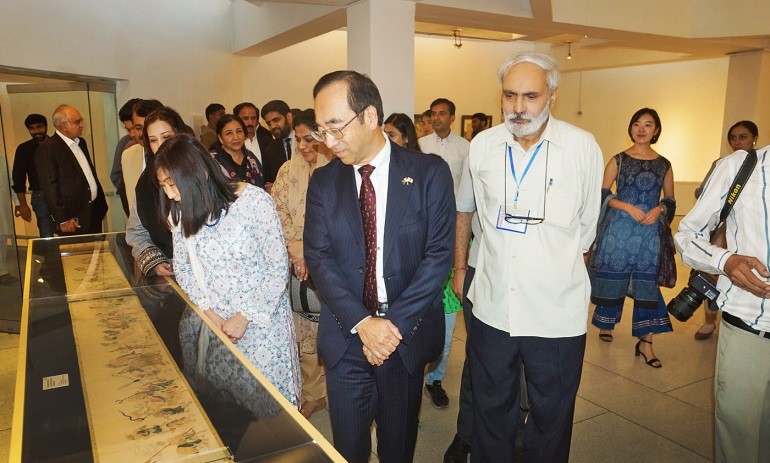
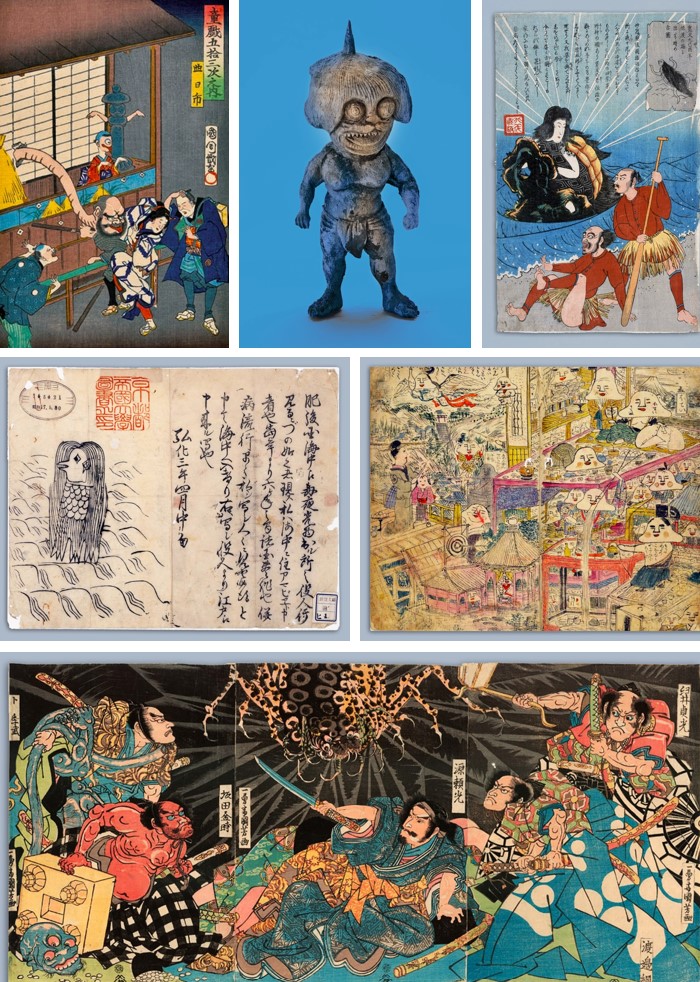
Yumoto Koichi coordinated the exhibition, which featured 84 Yokai artworks that ranged from traditional Japanese woodblock prints, known as Nishiki-e (a technique of multicolored Japanese woodblock printing) and picture scrolls to contemporary reproductions in multimedia formats, including documentaries, films, and toys. Yokai, ghosts that were once symbols of fear, have evolved into endearing figures in popular culture, such as Manga and Anime, including Demon Slayer and Pokémon. No doubt, the progression of this exhibition will attract the public interest.
Japanese Yokai has appeared in various stories as entities with supernatural abilities, serving to surprise and terrify people. New science and technology have altered public lives. Nowadays, Yokai has become less of a source of terror and fear, and tales have grown more attractive and welcoming presence.
In Japan, Yokai tales remain popular and customary among people who enjoy Kaidan (ghost stories) throughout the summer; Yokai films and dramas dominate television and theater screens. This exhibition explores the “popularization” of these Yokai and invites visitors to explore their extensive world of mystery.


Interesting Points and Notes for the Students and Visitors;
1. Most exhibition exhibits are fine-quality replicas created for the traveling exhibition. Those marked with a white star (☆) are based on originals in the collection of the Yumoto Koichi Memorial JAPAN YOKAI MUSEUM (Miyoshi Mononoke Museum). Catalog photographs show the originals
2. In principle, Japanese names appear in this exhibition in Japanese order, that is, with the family name first.
3. Macrons have been used in the transliteration of Japanese words to designate long vowels, except in cases where the word has become well known in the West without them or in which a nonstandard transliteration has become the norm.
4. Periods of Japanese history that are depicted in this exhibition, as mentioned in the list below. This convention has been adopted in light of current scholarship and has acknowledged that advances in archaeology and historical studies inevitably bring about changes.
Heian period: 794 -1185, Kamakura period: 1185 – 1333, Muromachi period: 1336 – 1573, Momoyama period: 1573 – 1615, Edo period: 1615 – 1868, Meiji era: 1868 – 1912, Taishō era: 1912 – 26, Shōwa era: 1926 – 89, Heisei era: 1989 – 2019, Reiwa era: 2019 –
Further, it is acknowledged that;
* The Japan Foundation is the only nstitution dedicated to carrying out comprehensive international cultural exchange programs worldwide and following the mission of cultivating friendship and ties between Japan and the world.
* This exhibition’s work comprises fine-quality replicas created from the originals for a long-term traveling exhibition possible.
* The exhibition is held in collaboration between the Japan Foundation, the Lahore Arts Council (Alhamra), and the Lahore Arts Foundation Trust.
* Special thanks to Mr. Adnan Yousaf (Photo Journalist) for his contribution to event photography.
* Photo Credits: Bilal Javaid, Adnan Yousaf
- The exhibition is open for visitors from September 24 to October 3, 2024.
- There is no entry fee for visiting the exhibition show.