
Paris (Imran Y. CHOUDHRY) :- Former Press Secretary to the President, Former Press Minister to the Embassy of Pakistan to France, Former MD, SRBC Mr. Qamar Bashir analysis : President Xi Jinping’s development vision extends beyond China’s national transformation to a broader framework of international connectivity, cooperation and shared prosperity. This vision took institutional shape in 2013 with the launch of the Belt and Road Initiative (BRI), one of the largest international development and economic-cooperation programmes of the modern era.
In Xi Jinping’s Belt and Road Initiative seeks to address one of the greatest impediments confronting developing countries: inadequate infrastructure. Weak transportation networks, unreliable energy supplies, high logistics costs and limited digital connectivity have historically constrained investment, trade and industrialization across Asia, Africa, Europe and Latin America. By improving physical, commercial, financial and digital connectivity, the BRI aims to help participating countries expand trade, attract investment, create employment and accelerate modernization.
The financial scale of the initiative demonstrates the breadth of President Xi’s vision. The cumulative Chinese engagement in BRI countries between 2013 and 2025 reached approximately $1.399 trillion. This consisted of around $837 billion in construction contracts and $561 billion in non-financial investments.
The year 2025 alone recorded approximately $213.5 billion in Chinese BRI engagement, including $128.4 billion in construction contracts and $85.2 billion in investments. Energy-related engagement reached about $93.9 billion, while metals and mining accounted for approximately $32.6 billion and technology and manufacturing reached nearly $28.7 billion.
The BRI now encompasses 150 participating countries and has expanded into the Digital Silk Road, Green Silk Road and Health Silk Road, together with cooperation in renewable energy, science, innovation, education and sustainable development.
For Pakistan, President Xi’s global vision found its most consequential expression in the China-Pakistan Economic Corridor (CPEC), widely regarded as a flagship project of the BRI. CPEC is also one of the six principal economic corridors envisioned under the initiative. Although commonly described as a network linking Kashgar in China’s Xinjiang region with Gwadar on Pakistan’s Arabian Sea coast, it is considerably broader. It covers transportation, energy, Gwadar Port, industrial cooperation, Special Economic Zones, agriculture, mining, digital connectivity, science, education, healthcare and socioeconomic development.
CPEC was initially announced in 2015 with projects worth approximately $46 billion, while its projected portfolio was subsequently reported to have expanded to around $62 billion. According to Pakistan’s official CPEC Secretariat, approximately 43 projects worth about $25 billion have been completed, while nearly 9,000 megawatts of electricity-generation capacity have been added under the corridor.
Major connectivity projects included the Havelian–Thakot section of the Karakoram Highway, the Multan–Sukkur Motorway, the Lahore Orange Line Metro Train and the cross-border optical-fibre cable connecting Khunjerab with Rawalpindi. These projects improved national connectivity, reduced travel times, facilitated freight movement and strengthened Pakistan’s communications infrastructure.
Energy projects became the financial and operational backbone of CPEC’s first phase. Major plants at Sahiwal, Port Qasim and Hub, together with Thar coal, Karot hydropower, Suki Kinari hydropower and several wind and solar facilities, added substantial generation capacity to Pakistan’s electricity system. According to the 2025 global BRI engagement assessment, Pakistan has received more than $41.5 billion in cumulative Chinese energy-sector engagement since 2013, the highest recorded for any BRI country under that dataset.
CPEC financing, however, is not uniform. Its portfolio includes government-to-government concessional and commercial loans, grants, construction contracts, equity investment and independent power projects financed through combinations of sponsor equity and borrowing from Chinese financial institutions. Therefore, it would be misleading to describe the entire $62 billion portfolio either as Chinese direct investment or as sovereign debt owed by Pakistan. Each project must be evaluated according to its own financing structure, repayment obligations, guarantees and expected economic returns.
Gwadar occupies a central position in CPEC’s long-term vision. The Eastbay Expressway has improved the port’s connection with Pakistan’s highway network, while the New Gwadar International Airport is intended to strengthen regional access. The Gwadar Free Zone and Smart Port City Master Plan provide foundations for future commercial, industrial and urban development.
Gwadar could eventually provide western China with a shorter potential route to the Arabian Sea and reduce dependence on longer maritime routes passing through the Strait of Malacca. However, this strategic possibility should not be mistaken for a fully operational alternative at present. It requires efficient port utilization, modern logistics, upgraded road and rail links, viable energy-transit infrastructure and sustained commercial demand.
Social projects—including the Pak-China Friendship Hospital, the Technical and Vocational Institute, desalination and drinking-water schemes, schools, fisheries assistance and community-development programmes—demonstrate that CPEC is gradually moving beyond physical infrastructure. Its ultimate test will be whether development produces visible employment, skills and business opportunities for the people of Gwadar and Balochistan.
CPEC 2.0 must therefore concentrate on industrialization and productive investment. Infrastructure creates opportunities, but factories create wealth. Special Economic Zones at Rashakai, Allama Iqbal Industrial City, Dhabeji and Bostan are intended to attract manufacturing, promote technology transfer, create employment and integrate Pakistan into regional and global supply chains. Their success will depend upon reliable energy, policy continuity, simplified regulations, skilled labour and an export-oriented strategy.
Pakistan must encourage Chinese companies to establish manufacturing facilities and joint ventures rather than limiting cooperation to construction and imports. Greater local sourcing, technology transfer and participation by Pakistani small and medium-sized enterprises would distribute CPEC’s benefits more widely.
Agriculture presents another promising frontier. Modern irrigation, improved seeds, mechanization, livestock development, food processing and cold-chain logistics could raise productivity, reduce post-harvest losses and increase rural incomes. Digital cooperation in artificial intelligence, cloud computing, e-commerce, smart cities and information technology could similarly help Pakistan’s young population participate in the knowledge economy.
CPEC must consequently be treated not as an end in itself but as a platform for national transformation. This principle is consistent with the people-centred development philosophy presented in President Xi’s Up and Out of Poverty: governments can create opportunities and improve infrastructure, but communities must build productive capacity and become active participants in development.
China’s experience offers Pakistan several enduring lessons: policy continuity, disciplined implementation, capable institutions, accountability, investment in education and research, merit-based governance and sustained action against corruption. Above all, development must remain people-centred so that economic growth improves ordinary lives rather than enriching only a narrow section of society.
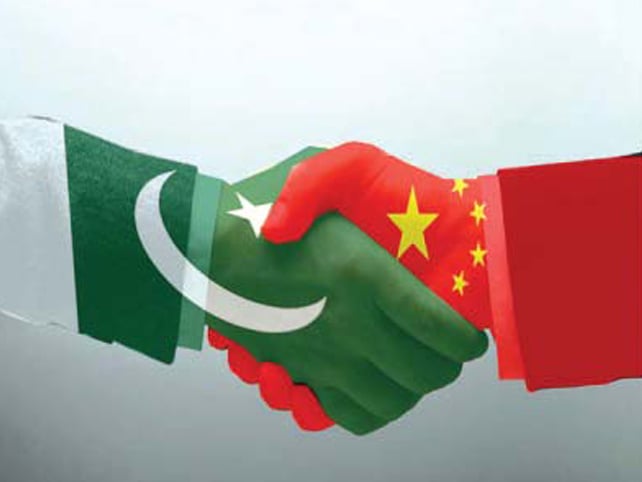
As Pakistan and China celebrate 75 years of diplomatic relations, established on 21 May 1951, their partnership remains one of the most enduring relationships in contemporary international affairs. It has survived wars, geopolitical realignments and leadership transitions because it rests upon mutual trust, sovereign equality and support for each other’s core interests.
CPEC-2.0 is aimed at extending beyond conventional infrastructure into renewable energy, artificial intelligence, biotechnology, climate resilience, advanced manufacturing, mineral processing, healthcare, higher education and scientific research. This would transform the relationship from one centred primarily on connectivity into a partnership driven by knowledge, innovation and productive capacity.
For Pakistan, the most meaningful tribute to 75 years of friendship would go beyond commemorative ceremonies and official declarations. It would be a national commitment to policy continuity, institutional reform, human-capital development and disciplined implementation. By combining China’s cooperation with Pakistan’s own resolve, CPEC can transform its estimated $62 billion vision into a sustainable pathway towards industrial strength, regional connectivity and shared prosperity.
Xi’s BRI, CPEC and the Enduring Pakistan–China Bond
Xi’s BRI, CPEC and the Enduring Pakistan–China Bond