
Paris (Imran Y. CHOUDHRY) :- Former Press Secretary to the President, Former Press Minister to the Embassy of Pakistan to France, Former MD, SRBC Mr. Qamar Bashir analysis : On October 9, 2026, two decisions exposed a profound conflict over the future of international justice. The Norwegian Nobel Committee awarded the Peace Prize to Navanethem “Navi” Pillay for promoting peace and international law. Washington imposed sanctions on the International Criminal Court as an institution. While one decision honoured the pursuit of accountability, the other threatened its machinery. At stake is whether powerful governments and their allies must answer to law, or whether political protection can place them beyond scrutiny.
Pillay’s career embodies the principle Washington is undermining. From defending rights under apartheid to serving on the International Criminal Tribunal for Rwanda, the ICC and as UN High Commissioner for Human Rights, she helped strengthen institutions confronting atrocities. She also chaired the UN Independent International Commission of Inquiry on the Occupied Palestinian Territory, including East Jerusalem, and Israel. Her Nobel recognition affirms that peace requires more than diplomatic agreements: it requires justice for people whose suffering powerful states would prefer to disregard.
The commission’s findings deserve a distinct and central place in this debate. In September 2025, it concluded that Israel was responsible for genocide in Gaza. It identified four acts under the Genocide Convention: killing Palestinians, causing serious bodily or mental harm, deliberately imposing conditions calculated to destroy the group, and imposing measures intended to prevent births. Examining official statements alongside patterns of military conduct, it found evidence establishing genocidal intent. These were findings of an independent UN investigative commission, demanding accountability and preventive action.
Israel rejected the commission’s conclusions and condemned Pillay’s Nobel award. Yet denunciation cannot erase evidence or discharge legal obligations. A government accused of grave crimes should answer the findings through credible investigation, cooperation and legal argument. Attacking the investigator’s legitimacy instead shifts attention from the victims to the discomfort of those facing scrutiny. Honouring Pillay does not threaten Israel’s population or legitimate security; it challenges the proposition that security can excuse unlimited violence against another people.
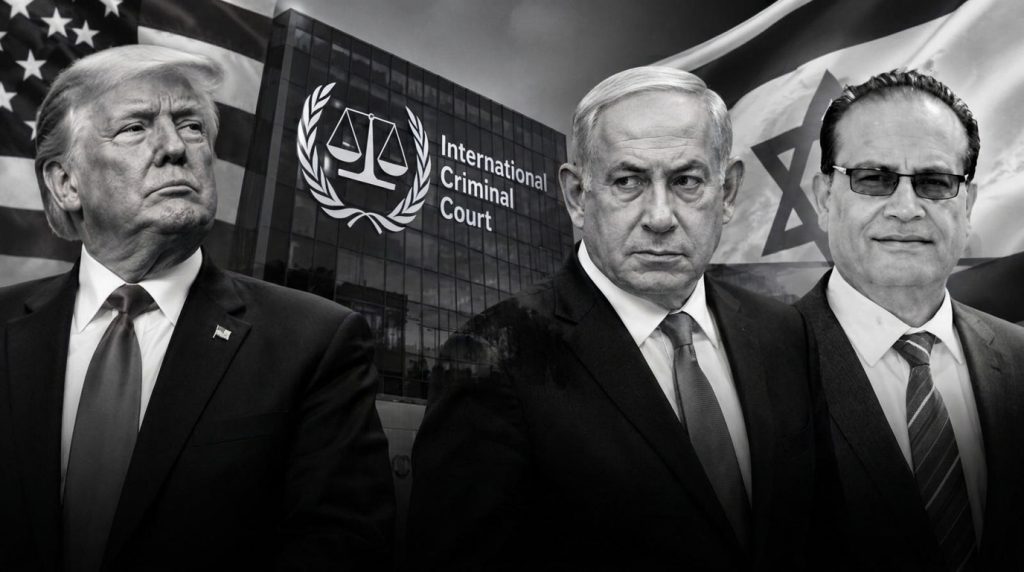
Washington’s sanctions extend that confrontation from rhetoric to institutional coercion. Secretary of State Marco Rubio announced measures against the ICC itself, following earlier sanctions on individual court officials. The court rejected the move as an assault on the rule of law. Financial restrictions can obstruct banking, services and cooperation essential to judicial work. Their impact reaches beyond judges and prosecutors to witnesses, victims and investigations across multiple countries. Weakening the institution threatens justice far beyond the Israeli cases that helped provoke Washington’s hostility.
The court issued arrest warrants on November 21, 2024, for Prime Minister Benjamin Netanyahu and former defence minister Yoav Gallant over alleged war crimes and crimes against humanity. The allegations included starvation as a method of warfare. These warrants were judicial steps toward determining individual criminal responsibility, not convictions. Pillay, a former ICC judge, did not issue them. The distinction between her commission’s genocide findings and the ICC proceedings clarifies how separate institutions have confronted different dimensions of the same catastrophe.
The jurisdictional objection cannot simply be settled by declaring that Israel and the United States are not ICC members. Palestine is a party to the Rome Statute. In 2021, the ICC determined that its territorial jurisdiction in the Palestine situation extended to Gaza and the West Bank, including East Jerusalem. Alleged crimes within that jurisdiction do not automatically escape examination because suspects hold the nationality of a non-member state. Challenges must be addressed through legal procedures, rather than financial pressure against the judges considering them.
The sanctions also reflect Washington’s opposition to investigations involving Americans, including the Afghanistan situation. That wider hostility reinforces the central problem: the administration seeks protection from external accountability for itself and its allies. The Nobel announcement and sanctions arrived on the same day, creating a powerful symbolic contrast. Whatever their scheduling, the political message is unmistakable. International justice is celebrated when distant adversaries face scrutiny, but treated as intolerable when investigations approach politically protected leaders.
Gaza’s devastation makes this double standard impossible to dismiss as an abstract dispute. Civilian deaths, killed children, displaced families, shattered medical services and attacks affecting humanitarian personnel demand investigation. Israel’s obligation to protect civilians survives every invocation of military necessity. Crimes by Hamas likewise require accountability; they cannot cancel Palestinian rights or authorize collective punishment. The test of international law is precisely whether it restrains violence when governments insist that their objectives justify exceptional measures.
American citizens have reasons to question this policy beyond its moral consequences. War with Iran has imposed military costs and additional energy burdens, with Brown University researchers documenting increased gasoline and diesel expenses for American consumers. Overseas deployments consume public resources and expose service members to danger. A government claiming to put America first must explain why shielding an ally from judicial scrutiny deserves diplomatic confrontation while households absorb the costs of regional escalation. Alliance commitments cannot replace independent judgment about the national interest.
Domestic law offers an instructive parallel. In February 2026, the Supreme Court rejected the administration’s asserted authority to impose tariffs under the International Emergency Economic Powers Act. The judgment demonstrated that presidential power remains subject to legal limits. International institutions serve a comparable purpose within their mandates: preventing power from becoming its own justification. Washington damages its credibility when it expects courts to constrain others while attempting to disable institutions whose scrutiny it finds inconvenient.
The response from American allies shows that this concern extends beyond Washington’s usual critics. Canada, Denmark, Germany, France, Italy, Japan, the Netherlands and the United Kingdom jointly opposed the sanctions. UN Secretary-General António Guterres also condemned them. Such disagreement should become practical commitment: sustained funding, protection for lawful cooperation and support for judicial independence. Expressions of concern alone will not keep institutions functioning when financial pressure threatens their everyday operations.
Defending the court is therefore a defence of every society’s protection against atrocity. If sanctions can silence judges today, other governments will learn to intimidate investigators tomorrow. The precedent rewards obstruction, encourages impunity and tells survivors that their access to justice depends on the political influence of their persecutors.
The international community must use the United Nations, the ICC’s Assembly of States Parties and national institutions to defend accountability. Governments should uphold applicable cooperation obligations, support investigations and resist coercion against judicial personnel.
Washington should withdraw the sanctions and pursue objections through established law. The choice is between an international order governed by common standards and one in which power purchases exemption. Protecting Netanyahu at the expense of independent justice sacrifices American credibility and weakens safeguards for everyone. Pillay’s Nobel Prize affirms the principle that must prevail: peace cannot endure when the powerful demand immunity and victims are denied justice.
U.S. Sanctions the International Criminal Court to Shield Netanyahu
U.S. Sanctions the International Criminal Court to Shield Netanyahu