
Paris (Imran Y. CHOUDHRY) :- Former Press Secretary to the President, Former Press Minister to the Embassy of Pakistan to France, Former MD, SRBC Mr. Qamar Bashir analysis : For nearly two weeks, the United States has presented the renewed air campaign against Iran as a demonstration of overwhelming military superiority. President Donald Trump, Defense Secretary Pete Hegseth and Chairman of the Joint Chiefs of Staff Gen. Dan Caine have described relentless attacks involving hundreds of aircraft, cruise missiles, drones and precision-guided weapons.
Judged exclusively through Western briefings, one might conclude that Iran should already have been rendered militarily helpless. Yet the battlefield is producing a different picture. Iran has neither capitulated nor accepted Washington’s political conditions. It continues launching missiles and drones, threatening American bases and challenging shipping arrangements in the Strait of Hormuz.
Iran has now offered its own account of the campaign. Iranian military officials claim that their objective is to “blind” the American war machine by attacking the systems that enable it to detect, interpret and respond. They list command-and-control centers, satellite communications, early-warning radars, Patriot-associated systems, maintenance installations, aircraft hangars, fuel tanks, missile depots and logistical facilities among the targets struck. Tehran also claims to have destroyed an Amazon Web Services facility in Bahrain, which it describes as an important data-processing and intelligence-support center.
The vulnerability of U.S. deployments has also emerged in Washington. During a tense congressional exchange, Representative Pat Ryan cited surviving soldiers who said their position lacked meaningful counter-drone, counter-rocket and overhead protection despite earlier requests for stronger defenses. The contradiction between official assurances and accounts attributed to survivors has intensified questions about force protection and command accountability.
The argument that every American position is heavily fortified has consequently become difficult to sustain. Advanced systems such as Patriot and THAAD are formidable, but they are neither unlimited nor impenetrable. They can be strained by saturation attacks, maneuvering warheads, decoys and the economics of firing costly interceptors against comparatively inexpensive drones.
Trump has acknowledged meetings with major manufacturers—including Lockheed Martin, Boeing, Raytheon and Northrop Grumman—to accelerate or even quadruple production. These concerns over munitions stocks formed part of the background to the latest bombing pause, although the administration presents that pause as an opportunity for diplomacy.
However, Tehran suspects that previous ceasefires and negotiations allowed the United States to reorganize, replenish and attack again. Washington says talks are progressing; Iran denies that direct negotiations are underway and remains deeply skeptical. Trump has simultaneously offered diplomacy and threatened renewed “strong military action” if no agreement is reached.
This distrust is now the conflict’s most dangerous force. At its center lies the Strait of Hormuz. Political scientist Robert Pape argues that Iran’s ability to selectively control passage—without permanently sealing the waterway—could elevate it into a fourth center of global power alongside the United States, China and Russia. Ships and governments prepared to accommodate Tehran may receive passage, while those supporting military action against it face delay, diversion or attack. Geography thereby becomes political leverage.
Pape’s description of Iran as an emerging world power is not a provocative thesis but increasingly supported by the war’s strategic outcome. Iran cannot yet match the United States, China or Russia in economic size, worldwide military reach or nuclear capacity. But power must also be measured by a state’s ability to resist coercion, impose costs and compel other governments to alter their behavior.
By surviving the combined military pressure of the United States and Israel, continuing its retaliation and helping force Washington into another pause amid reported pressure on targets and munitions, Iran has frustrated the objectives of a superpower and its most capable regional ally.
Iran’s ability to withstand superior forces, disrupt global energy flows and influence the calculations of states far beyond the Middle East supports Pape’s central thesis: the war intended to reduce Iran may instead be accelerating its emergence as the world’s fourth major power.
The conflict is also expanding dangerously. Iran has accused Ukraine of attacking an Iranian-flagged vessel in the Caspian Sea, while Kyiv maintains that the targeted ships were carrying military cargo connected to Russia.
Iran has promised consequences. Interestingly, Ukraine has risks opening another front while Kyiv remains heavily engaged against Russia. Iran also possesses economic leverage as Kyiv is highly dependent on imported fuel.
Ukraine already has defense-for-fuel arrangements with Saudi Arabia, Qatar and the UAE, with additional agreements reportedly being pursued with Oman, Kuwait and Bahrain.
Much of the Gulf-origin crude or petroleum products leave the Gulf through Hormuz before reaching Ukraine. Iran could therefore delay, restrict or threaten Ukraine-linked cargoes, increasing shipping and insurance costs and aggravating Ukrainian fuel shortages. Such sustained disruption at Hormuz would give Tehran a potent means of inflicting economic and logistical pressure on Kyiv.
Moreover, Tehran has already demonstrated its ability to launch missiles at Diego Garcia, approximately 4,000 kilometres, or 2,500 miles, from Iran, whereas, Kyiv is closer to Iranian territory and could therefore fall within the range of Iran’s longer-range systems.
If Tehran joined Moscow in attacking Ukrainian military or energy infrastructure, Kyiv could face coordinated pressure from Russia in the north and east and Iran from the south, further stretching Ukraine’s limited air-defence interceptors. That would not necessarily mean the “end of Ukraine,” but it could seriously worsen its already precarious military and economic position.
Kyiv therefore has a compelling strategic interest in repairing relations with Tehran, explaining or limiting its Caspian operations and avoiding actions that could transform one formidable adversary into two.
Against this background, Israeli Prime Minister Benjamin Netanyahu is again in Washington today (July 27) with Iran at the top of his talks with Trump. Netanyahu continues to frame the desired outcome in terms of ending Iran’s nuclear ambitions and fundamentally weakening its governing system. Yet almost five months of war have shown that bombing may destroy facilities without compelling political surrender.
Iran has absorbed enormous punishment, but it has also demonstrated that it can impose costs on the United States, Israel and their regional partners. It demonstrates something strategically more important: superior firepower has not produced submission.
The war intended to reduce Iran to weakness may instead be teaching the world how much leverage Iran possesses. Peace will not emerge from another tactical pause designed merely to reload. It requires credible negotiations, reciprocal security guarantees and faithful implementation of whatever is agreed.
Otherwise, every pause will become preparation for the next round—and the war meant to contain Iran may continue expanding both Iran’s influence and the battlefield itself.
Trump’s Unilateral Pause, as Ukraine Enters the Iran War
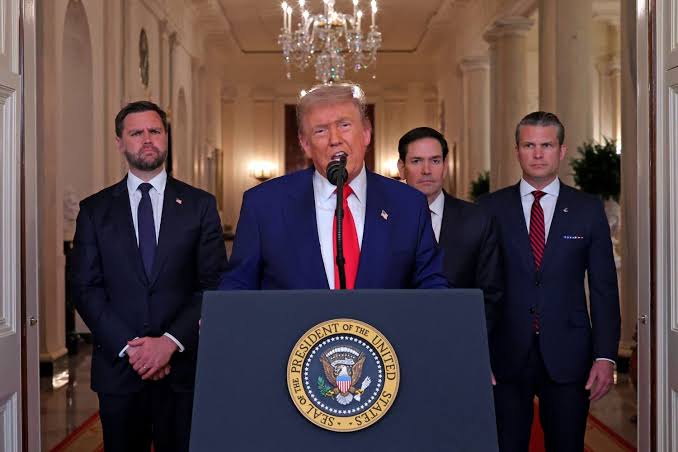
Trump’s Unilateral Pause, as Ukraine Enters the Iran War