
Paris (Imran Y. CHOUDHRY) :- Former Press Secretary to the President, Former Press Minister to the Embassy of Pakistan to France, Former MD, SRBC Mr. Qamar Bashir analysis : The Gaza peace plan, unveiled by President Donald Trump in September 2025 and later endorsed by the United Nations through Security Council Resolution 2803, was hailed as the most ambitious attempt yet to end the cycle of devastation in the Strip. It promised a structured ceasefire, a phased Israeli withdrawal, the release of hostages, the demilitarization of Gaza, and the creation of a transitional governing body capable of stabilizing the enclave after one of the deadliest wars in its modern history. For a moment, it appeared the international community had finally constructed a serious pathway toward peace.
Yet, as of 2 December 2025, the plan is facing its gravest crisis. Both major actors—Israel and Hamas—have violated core commitments, raising deep concerns that the fragile framework could unravel. The UN-mandated International Stabilization Force (ISF), meant to secure Gaza during the transition, has yet to take shape because governments are reluctant to contribute troops. And the Board of Peace, the body authorized to govern Gaza during the transitional phase, is struggling to form, weighed down by political tensions, regional mistrust, and operational uncertainty. The promise of stability is buckling under the pressure of reality.
The peace plan began with a hopeful breakthrough. After months of war, a ceasefire took effect on 10 October. Hamas released several of the remaining living hostages, while Israel freed groups of Palestinian detainees. Humanitarian aid began flowing into Gaza more steadily, offering a lifeline to a population battered by bombardment, displacement, hunger, and disease. The ceasefire was imperfect but held long enough to persuade the United Nations Security Council to endorse Trump’s 20-point plan in a rare consensus vote. Resolution 2803 gave the plan legal standing, international legitimacy, and a mandate for intervention.
But optimistic diplomacy has collided with deteriorating conditions on the ground. Despite the agreement, both Israel and Hamas have continued actions that violate core pillars of the plan. Israel has carried out repeated airstrikes in Gaza, claiming to target “remaining Hamas infrastructure,” but killing civilians in the process and stoking resentment among the very population the peace plan aims to stabilize. Even more alarming are recent Israeli military raids in the occupied West Bank, particularly around Tubas and Tammun, which many diplomats warn could destabilize the entire ceasefire architecture. These operations—completely outside Gaza—signal that Israel continues to act with near-total impunity, unconstrained by the spirit of de-escalation the plan requires.
At the heart of the plan is the commitment by Israel to withdraw its forces from Gaza in agreed phases. This has not happened. Israel argues that Hamas remains armed, entrenched, and capable of renewed attacks. Without full demilitarization—another part of the agreement—Israel insists it cannot risk a full withdrawal. Critics counter that Israel is using security concerns as justification for indefinite control, effectively hollowing out the plan’s political foundation. The United Nations has repeatedly urged Israel to comply with withdrawal commitments, but those calls have gone unheeded.
Hamas, for its part, has accepted the ceasefire but rejected the plan’s requirement for complete disarmament. While it has cooperated on prisoner exchanges and the return of some remains of deceased hostages, it refuses to surrender its weapons or submit to what it calls “foreign guardianship” of Gaza.
Caught between these violations is the United Nations, tasked with constructing the International Stabilization Force (ISF) that would take over security responsibilities as Israel withdraws. But weeks after Resolution 2803 passed, not a single major country has committed significant combat troops. Many governments express support for the idea in principle but fear the political and operational risks involved. Participating in the ISF means deploying soldiers into a volatile war zone where they could face attacks from militant groups opposed to foreign presence, hostility from parts of the population traumatized by war, and unpredictability from Israeli forces still conducting operations in and around Gaza.
Arab and Muslim-majority states—initially mentioned as potential contributors—have pulled back, wary of being perceived as legitimizing an arrangement that could be interpreted as internationalizing or fragmenting Palestinian territory. Turkey has been excluded by Israel from the ISF, despite offering involvement. Egypt, perhaps the most natural candidate to lead the force, has remained cautious, demanding clear rules of engagement and guarantees that it would not be forced into direct conflict with any Palestinian faction. Even Western nations, including close U.S. allies, fear getting drawn into a long and politically costly mission.
The ISF was meant to be the backbone of the peace plan. Without it, the entire architecture collapses: Israel refuses to withdraw without a credible stabilizing force; Hamas refuses to demilitarize under Israeli guns; and the United Nations cannot supervise reconstruction or transitional governance without secure conditions.
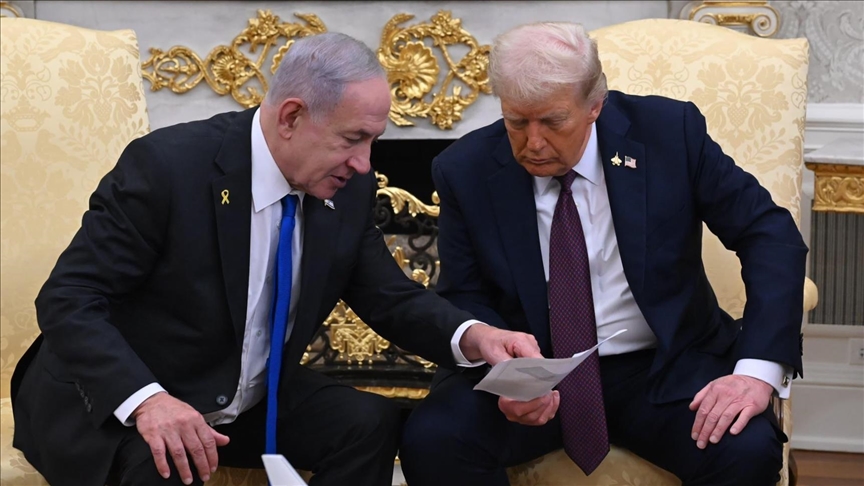
A similar paralysis haunts the Board of Peace—the temporary governing authority endorsed by the UN. It is intended to administer Gaza, manage aid distribution, coordinate reconstruction, and oversee the transition toward self-governance. President Trump is designated as the chair of this board, a unique arrangement that places a former U.S. president at the helm of an international civilian authority. But the Board has struggled to form. Key member states argue over representation, mandates, and mechanisms of accountability. Palestinians fear that the Board could become a substitute for sovereignty. Israel doubts it will be strong enough to prevent Hamas from re-emerging politically or militarily. Many countries remain uncertain whether Trump’s political involvement will provide anchor or instability, given U.S. domestic polarization and the global controversies surrounding his leadership style.
The failure to assemble the Board of Peace quickly has immediate consequences: without it, Gaza’s civil administration remains fragmented and under strain; aid agencies cannot fully coordinate reconstruction; and there is no credible neutral actor to mediate compliance between the two sides.
The cumulative effect of these failures is bleak. The peace plan is neither dead nor alive—it is suspended in a fragile limbo. Every violation, from rocket fire to airstrikes, chips away at the credibility of the agreement. Every delay in ISF formation erodes confidence in global commitments. Every political dispute over the Board of Peace deepens the vacuum of authority on the ground.
If both Hamas and Israel continue to treat the ceasefire as flexible rather than binding, the peace plan risks collapsing entirely. Diplomats warn that once trust is lost, even the most meticulously crafted architecture becomes unworkable. The success of Trump’s Gaza plan requires more than signatures on a resolution—it demands sustained restraint, credible enforcement, and international political will. For now, all three remain dangerously weak.
Whether this plan becomes a turning point or another addition to the long archive of broken peace proposals will depend entirely on whether both sides—and the world—choose to honor their commitments. At this moment, Gaza stands at the edge of both possibility and peril. The next few weeks may determine which path prevails.
Trump’s Gaza Peace Plan in Jeopardy
Peace Plan in Jeopardy