
Paris (Imran Y. CHOUDHRY) :- Former Press Secretary to the President, Former Press Minister to the Embassy of Pakistan to France, Former MD, SRBC Mr. Qamar Bashir analysis : The decline of great powers is rarely sudden, but it becomes unmistakable when leadership choices accelerate existing weaknesses. Under the leadership of Donald J. Trump, the United States has not strengthened its global position—it has exposed its limits. What was once the most dominant economic, military, and financial power in modern history is now visibly losing ground across every major arena. This is not speculation. It is unfolding in real time.
For decades, the United States controlled the global system. It shaped institutions like the United Nations, dominated financial bodies such as the International Monetary Fund and the World Bank, and ensured that the dollar became the backbone of global trade. This dominance worked because the U.S. was seen as stable, predictable, and powerful. That perception is now cracking.
The first major failure came in the confrontation with China. The expectation in Washington was simple: impose tariffs, restrict trade, and China would fold. That did not happen. Instead, China hit back where it hurts most. It controls nearly 90% of the world’s rare earth processing—materials essential for electronics, defense systems, and advanced manufacturing. When China restricted exports of key minerals, U.S. industries felt the shock immediately. Supply chains slowed, costs increased, and the strategy backfired.
This was not a minor setback—it was a clear demonstration that the United States is no longer in control of global production systems. Instead of weakening China, the pressure forced the U.S. to quietly adjust its tone. The shift from confrontation to cautious engagement was not strategic brilliance—it was forced by reality. China proved it could not be bullied.
The second major failure came in Europe. The idea of taking control of Greenland from Denmark was not just unrealistic—it exposed a complete misunderstanding of modern alliances. Europe pushed back firmly. This was not the Europe of the past that followed Washington’s lead. It is now building its own military capability and reducing dependence on the United States. Defense spending across European countries has surged, and serious discussions are underway about strengthening Europe’s role within or even beyond NATO.
This is a direct consequence of U.S. unpredictability. Allies no longer trust Washington to act in a consistent or rational manner. When trust is gone, leadership collapses.
In the Western Hemisphere, the situation is no better. Aggressive actions toward Venezuela and pressure on Cuba have not strengthened U.S. influence—they have pushed these countries, and others in the region, toward alternative partners. China’s economic footprint in Latin America has expanded rapidly, while U.S. influence has declined. The region is no longer under American control.
But the most serious exposure of U.S. weakness is happening in the Middle East. The conflict involving Iran has shattered the long-standing myth of American military dominance. The expectation was a quick and decisive outcome. That did not happen. Instead, the conflict has dragged on, and Iran has demonstrated that it can resist, retaliate, and sustain pressure.
Despite superior technology, the United States has not been able to impose control. Iran’s use of missiles, drones, and decentralized warfare has neutralized many traditional advantages. U.S. bases in the region have been targeted, and allies have been drawn into a conflict that they did not want. The promise of a quick victory turned into a prolonged struggle.
The economic consequences are severe. The Strait of Hormuz, through which about 20% of global oil flows, has become a pressure point. Oil prices have surged above $110 per barrel. Shipping costs have increased. Insurance premiums have risen sharply. These costs are not being absorbed by the United States—they are being passed on to allies and global markets. Instead of controlling the situation, the U.S. is contributing to global instability.
At the same time, the financial system that supports U.S. power is weakening. The expansion of BRICS is not symbolic—it is practical. Countries are actively reducing their reliance on the dollar. Trade is increasingly being conducted in local currencies. New financial arrangements are being built to bypass U.S.-controlled systems.
The message is clear: countries no longer trust the United States to act fairly. They see the dollar system as a tool of pressure and control. As a result, they are creating alternatives. This directly threatens one of the strongest pillars of U.S. power.
Domestically, the situation makes this even worse. The United States is carrying over $34 trillion in national debt. Political divisions are deep. Policy direction changes with every administration. Infrastructure is aging. Social systems are under strain. These internal weaknesses limit the country’s ability to project power abroad.
The gap between what the United States claims to be and what it can actually do is growing wider. This gap is now visible to the entire world.
The most damaging aspect of Trump’s policies is not just the mistakes themselves—it is the exposure of American limits. By pushing aggressively against China, Europe, Latin America, and Iran at the same time, the administration has tested the system from every angle. The result is clear: the system cannot sustain that level of pressure.
Instead of forcing others to submit, the United States has triggered resistance everywhere. China pushed back economically. Europe pushed back politically. Iran pushed back militarily. Even smaller nations are now acting with greater independence.
This is how power declines—not in one dramatic سقوط, but through repeated failures that reduce credibility, weaken alliances, and expose limitations.
The world is no longer unipolar. Power is spreading across multiple regions. Countries are building their own systems, forming new alliances, and reducing dependence on the United States. This is not theory—it is happening now.
The United States still has significant strengths. It remains a major economy. It still leads in technology and innovation. Its military is still powerful. But these strengths are no longer enough to dominate the world.
The reality is simple and direct: the United States is no longer able to control global outcomes the way it once did.
Trump’s approach did not reverse decline—it accelerated it. By relying on pressure, threats, and force instead of strategy, cooperation, and long-term planning, his policies have pushed the world away from the United States.
The lesson is unavoidable. Power today depends on partnerships, stability, and adaptability. The United States has shown weakness in all three areas.
If it does not change course, the decline will continue—not because others are attacking it, but because it is undermining itself.
Trump’s Fast-Tracking of America’s Decline
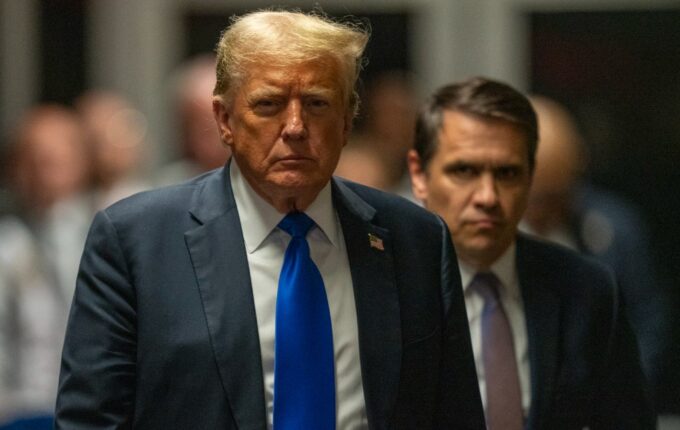
Trump’s Fast-Tracking of America’s Decline