
Paris (Imran Y. CHOUDHRY) :- Former Press Secretary to the President, Former Press Minister to the Embassy of Pakistan to France, Former MD, SRBC Mr. Qamar Bashir analysis : When President Donald Trump agreed to extend the Iran ceasefire for another sixty days and reopened the path toward a negotiated settlement, many observers viewed it merely as another tactical pause in a dangerous conflict. In reality, it represented something far deeper: the moment a president who had long been surrounded by war advocates, political pressure groups, strategic alliances, media influence, and ideological expectations finally realized that continuing the war could destroy not only the Middle East, but also America’s global standing, economic stability, and military prestige.
Trump’s dilemma was unlike any faced by previous American presidents. On one side stood Israel and its vast network of political influence inside Washington. On the other stood the growing realization that the war with Iran was becoming economically unbearable, militarily risky, diplomatically isolating, and strategically unwinnable.
The relationship between Trump’s inner circle and Israel has long attracted public attention. His eldest daughter, Ivanka Trump, converted to Orthodox Judaism before marrying Jared Kushner in 2009. Kushner comes from a deeply connected and influential Orthodox Jewish family with longstanding ties to Israeli political leadership, including Benjamin Netanyahu. Throughout Trump’s political rise, Kushner became one of the most trusted figures in the White House and played a central role in Middle East diplomacy.
For critics of Israeli influence in American politics, this relationship symbolized something larger: the ability of powerful lobbying networks to build close personal, financial, and ideological relationships with rising American politicians and business elites. The perception — whether exaggerated or real — is that influence in Washington is often shaped not merely through diplomacy, but through campaign financing, media support, elite networking, think tanks, and strategic political alliances that gradually align American policy with Israeli strategic objectives.
Trump entered office already surrounded by many foreign policy hawks who strongly favored Israel’s security agenda. Over time, many of those voices pushed the United States toward confrontation with Iran, arguing that Tehran’s regional influence and nuclear ambitions posed an existential threat to Israel and Western interests. When Israel launched aggressive military operations against Iranian assets and the regional crisis escalated, the United States was gradually pulled into direct confrontation.
Yet the war did not unfold as many in Washington had predicted.
Instead of collapsing internally, Iran absorbed enormous punishment while maintaining national cohesion. Rather than triggering regime change, the conflict strengthened Iranian nationalism and hardened resistance across the region. American bases across the Middle East suddenly became vulnerable targets. Countries hosting U.S. military installations realized that those bases were not shields protecting them, but magnets attracting retaliation.
The economic consequences became devastating. Oil infrastructure across the region suffered repeated disruption. Shipping through the Strait of Hormuz became severely restricted, paralyzing global trade routes and energy supplies. Oil prices surged dramatically. Inflation spread worldwide. Every family purchasing fuel, food, transportation, or consumer goods began paying the hidden tax of war.
For ordinary Americans, the crisis became deeply personal. Gasoline prices climbed sharply. Markets turned volatile. Insurance costs rose. Supply chains weakened. Investors feared a prolonged global recession. The world economy, already fragile after years of geopolitical instability, stood dangerously close to another financial meltdown.
At the same time, Trump began confronting another uncomfortable reality: America’s military supremacy was no longer unquestioned.
The war exposed the enormous consumption of precision-guided ammunition, missile interceptors, naval deployments, and air-defense systems. Strategic stockpiles were being depleted at alarming speed. Prolonged warfare risked exposing vulnerabilities that American military planners had long tried to conceal. The myth of unlimited American military endurance was beginning to crack.
Trump also witnessed a dramatic geopolitical shift unfolding before his eyes. For decades, world leaders traveled to Washington seeking approval, protection, and partnership. But increasingly, major European, Asian, African, and Middle Eastern leaders were now turning toward Xi Jinping and China as an alternative center of global economic gravity. Beijing was emerging not only as an economic powerhouse but also as a diplomatic magnet.
The Iran conflict accelerated that transformation. Many countries viewed the war as another example of destructive interventionism that destabilized entire regions while delivering little strategic success. America’s allies in the Gulf began reconsidering their dependence on Washington. They realized that hosting American bases could expose them to catastrophic retaliation while offering limited actual protection.
Trump, known for his unpredictability, ultimately recognized that continuing the war could sink his presidency and permanently damage America’s global influence. The ceasefire, therefore, was not merely a retreat from conflict. It was an acknowledgment of reality.
In choosing diplomacy over escalation, Trump effectively turned against many of the forces that had once surrounded him. He angered powerful war advocates. He frustrated hardline Israeli leadership. He disappointed sections of the American media establishment that had continuously demanded stronger military action against Iran. He upset defense contractors, energy speculators, and financial actors profiting from wartime instability.
Even within his own political and personal circles, the decision carried enormous risk. But Trump appeared to conclude that preserving global stability and preventing economic catastrophe outweighed the political cost of defying entrenched interests.
Perhaps the most remarkable aspect of the ceasefire was that it represented not military victory, but political survival through restraint.
Trump understood that wars are easier to start than to end. Leaders surrounded by nationalism, lobbying pressure, media campaigns, and ideological expectations often become prisoners of escalation. History is filled with rulers who continued disastrous wars simply because retreat appeared politically humiliating. Trump, however controversial, chose a different path.
He realized that the Middle East was approaching total chaos. Continued escalation could have devastated global energy markets, collapsed already weakened economies, triggered wider regional wars, and possibly drawn major powers into direct confrontation. The economic suffering would not have remained confined to Iran, Israel, or the Gulf states. It would have reached every household on Earth.
By extending the ceasefire and reopening negotiations, Trump may not have won the war, but he may have won something far more important: peace.
That peace came at immense political cost. It required him to resist pressure from influential allies, political donors, ideological supporters, media narratives, and even elements close to his own family circle. It required him to acknowledge changing global realities and accept that military force alone could no longer dictate world order.
The decision also reflected a broader truth emerging in global politics: the era of unilateral domination is fading. Military superiority without economic resilience, diplomatic legitimacy, and international trust is becoming increasingly unsustainable.
Trump’s ceasefire with Iran may therefore be remembered not simply as a temporary pause in conflict, but as the moment when America itself confronted the limits of power in a rapidly changing world.
Trump Lost the War but Won the Peace
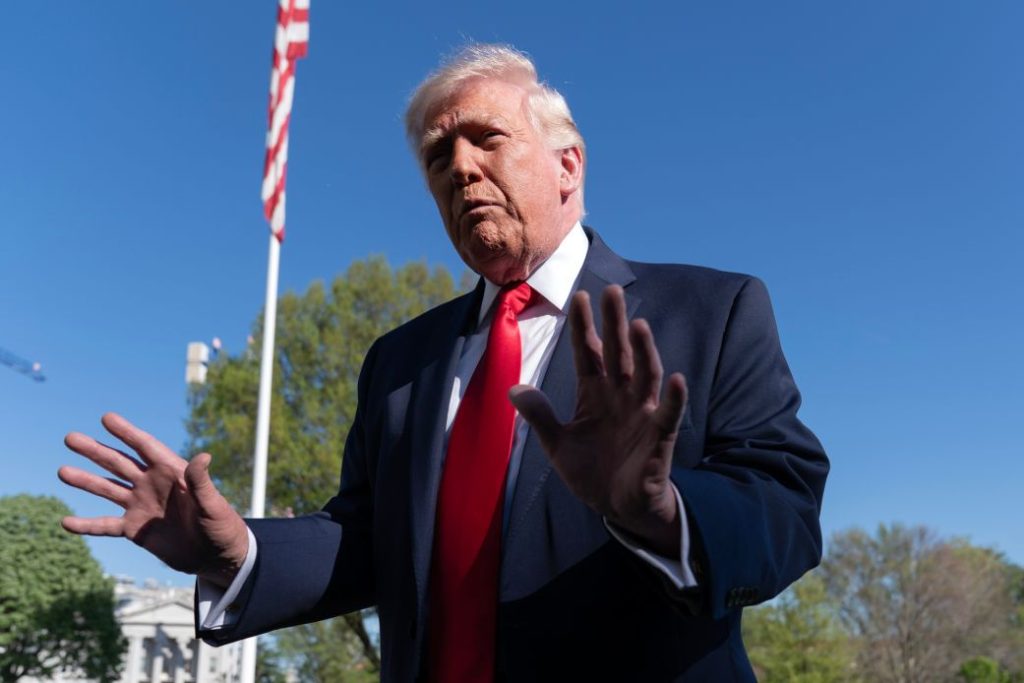
Trump Lost the War but Won the Peace