
Paris (Imran Y. CHOUDHRY) :- Former Press Secretary to the President, Former Press Minister to the Embassy of Pakistan to France, Former MD, SRBC Mr. Qamar Bashir analysis : When a thief is caught and punished, justice has been done in that case. It does not follow that every theft has been detected or every thief punished. This distinction becomes consequential when powerful states cite a handful of military prosecutions as evidence that their overseas operations function within an effective system of accountability.
The arrest of a U.S. Marine in Okinawa on suspicion of robbery and murder brings that distinction into focus in Oct 2026. The allegation remains unproven, but the public anger surrounding it reflects earlier crimes, including the 1995 assault of a schoolgirl by American servicemen and the 2016 rape and murder committed by a former Marine working as a base contractor.
America presents its military power as a shield for freedom, democracy, and international order. Israeli officials likewise invoke military morality. Such declarations invite examination against conduct. A victim’s family cannot measure ethical standards through speeches, recruiting slogans, or the existence of disciplinary regulations. Its concern is whether the person responsible will answer for what happened.
Prosecutions establish that particular offenders were held accountable. They cannot reveal how many offenses escaped detection, how many complaints were abandoned, or how many victims lacked the means to pursue justice. The unseen total cannot responsibly be invented. Neither can it be assumed away because a government produces several examples of punishment.
Military contracting makes this problem more complicated. Private companies perform legitimate tasks, including transport, maintenance, construction, and protection. But when public operations pass through commercial contracts, responsibility can become dispersed among commanders, officials, corporations, and subcontractors. Victims confront an institutional maze while the government retains the benefit of the services it commissioned.
This concern comes from within the American military scholarship itself. Deborah Kidwell’s 2005 study, Public War, Private Fight?, published by the Army’s Combat Studies Institute, described divided authority over contractors and warned that it could obscure responsibility. The author’s views were not official policy, but the publication demonstrates that these structural weaknesses were recognized decades ago.
Kidwell discussed allegations of sexual slavery and illegal weapons purchases involving contractor employees in Bosnia. She also examined contractor interrogation work at Abu Ghraib and difficulties bringing criminal prosecutions. Her study provides grounds for questioning whether outsourcing can weaken accountability precisely where the exercise of power requires the strongest supervision.
Nisour Square illustrates both the possibility and fragility of justice. Blackwater guards killed 14 unarmed civilians in Baghdad in September 2007, according to American prosecutors. Four guards were convicted; Nicholas Slatten eventually received life imprisonment. President Donald Trump pardoned all four in December 2020. Punishment established through judicial proceedings was subsequently removed through political authority.
Those convictions cannot be treated as proof that other contractor abuses were discovered or punished. Nor can the pardons be separated from their wider message. Iraqi families watched the country financing the security operation forgive men convicted over civilian deaths. Legal accountability had existed, but its consequences proved vulnerable to presidential preference.
The regular forces also supply documented examples. Steven Green received life imprisonment for his role in the rape of an Iraqi girl and the murder of her family. Robert Bales received life without parole after murdering 16 Afghan civilians. Calvin Gibbs was convicted following staged killings of Afghan civilians presented as legitimate combat encounters.
These cases expose grave crimes; they do not measure the full extent of misconduct. Haditha offers a different outcome: 24 Iraqi civilians were killed, while the final defendant pleaded guilty to negligent dereliction of duty and received no imprisonment. The distance between human loss and legal consequence deserves examination beyond simply counting convictions.
Corruption further connects uniformed authority with private enterprise. In Afghanistan, soldiers and a contractor employee used fraudulent transport documents to facilitate fuel theft exceeding a million dollars. Their prosecution established responsibility for that scheme. It supplied no basis for concluding that every comparable scheme had been uncovered or that oversight worked consistently.
Remote warfare introduces another distance between power and consequence. Reported signature strikes targeted suspected militants through behavioral patterns without necessarily identifying them by name. Contractors support drone operations, although involvement does not establish independent authority to order killings. The central concern is the reliability of decisions that turn observed association into grounds for lethal force.
Reporting on leaked records from Operation Haymaker described a five-month period during the 2012–2013 Afghanistan campaign when nearly 90 percent of those killed in airstrikes were not the intended targets. This does not establish that all were civilians. It does expose the inadequacy of treating technological accuracy as a guarantee of narrow human consequences.
The human cost becomes unbearable when children are involved. In March 2026, Reuters reported preliminary investigative findings pointing toward likely American responsibility for the February strike on an Iranian girls’ school. Iranian authorities reported 168 children killed. Attribution required investigation; the suffering demanded answers that could withstand independent scrutiny rather than reassurance from those conducting the war.
Leadership shapes the atmosphere in which restraint operates. On April 7, Trump warned that “a whole civilization will die tonight,” before later agreeing to a ceasefire. His administration portrayed the threat as negotiating pressure. Yet the language placed an entire people within a threat of destruction, treating their collective existence as an instrument of coercion.
Pete Hegseth’s dismissal of “stupid rules of engagement” compounds the concern. Rules governing military force help protect civilians and translate legal obligations into operational decisions. When senior officials disparage restraint, their words risk encouraging subordinates to regard caution as weakness. That risk extends across America’s extensive overseas presence and into the relationships troops maintain with host communities.
Watching the Avatar films, I recognized a disturbing metaphor in the colonel’s treatment of another world’s inhabitants as obstacles to domination. Fiction proves nothing about particular operations. It nevertheless dramatizes the intoxication of power: overwhelming capability becoming, in the aggressor’s imagination, sufficient justification for violence. Military superiority then takes the place of moral reasoning.
The danger also returns home. When leaders teach that strength places a nation above rules, they weaken the principle that authority must justify itself. Citizens may then encounter the same reasoning in domestic policing, political disputes, and public administration. Foreign victims experience the immediate consequences, but Americans inherit the institutional habits formed when their government exercises power without sufficient scrutiny or durable corrective consequences.
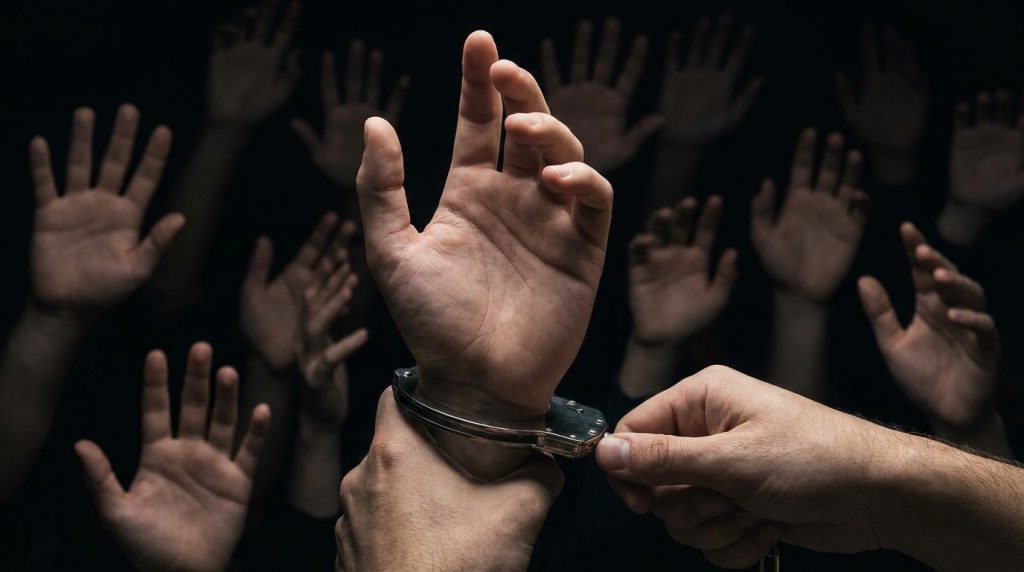
A contract cannot erase responsibility for public power. Accountability requires examination of those who commission, supervise, and authorize operations, alongside those who carry them out. Isolated punishments cannot answer complaints that remain uninvestigated. American citizens can demand disclosure, meaningful independent scrutiny, and consequences that survive political convenience. A country’s ethical standing depends on the restraint it practices, not the innocence it proclaims.
Power Without Accountability
Power Without Accountability