
LONDON (Ruby Hyder) – A major new voice in British foreign policy emerged yesterday with the formal launch of the Eurasia Policy Council (EPC), an independent think tank dedicated to the geopolitics, economics, and environmental security of Central Asia and the wider Eurasian region.
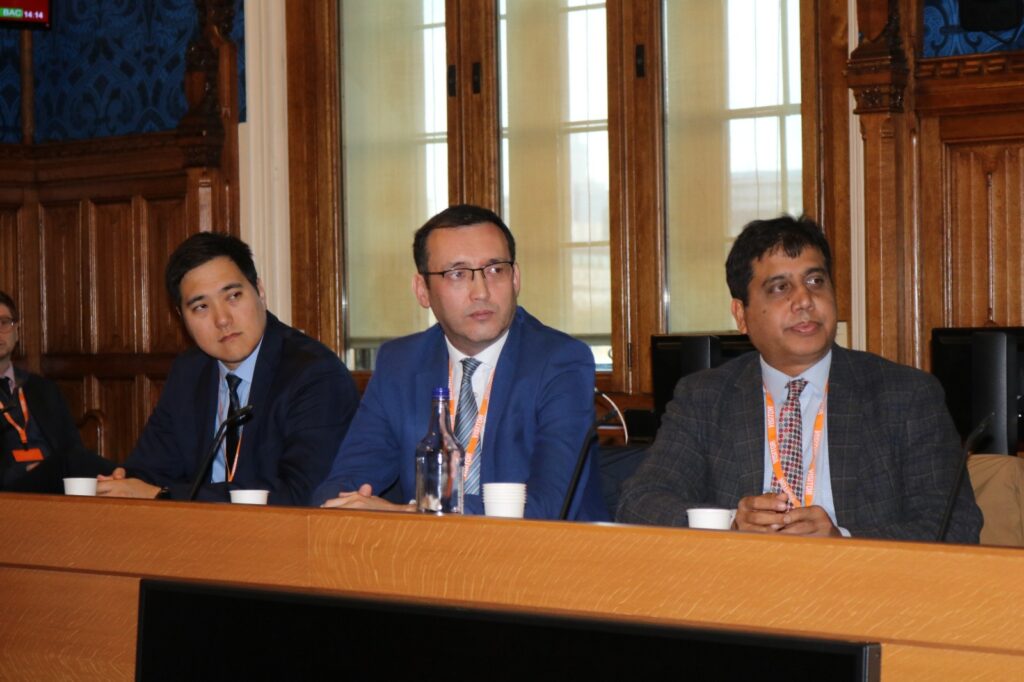
The high-profile inauguration, hosted by the Independent Media Group UK, was held in the historic River Room of the House of Lords under the patronage of Lord Ghorban Hussein. The event drew a distinguished assembly of peers and MPs, serving and former diplomats, leading British academics, and executives from energy, mining, and infrastructure firms. The gathering also featured senior delegations from Türkiye, Azerbaijan, Kazakhstan, Uzbekistan, Kyrgyzstan, Tajikistan, and Iran, signaling the Council’s ambition to act as a genuine bridge between London, Brussels, and the rapidly evolving Eurasian space.


A Platform for a Complex Era
The EPC establishes itself as a non-partisan, evidence-based institution at a time of escalating geopolitical tensions, economic volatility, and accelerating climate impacts. Its mission is to provide rigorous analysis and foster strategic dialogue to address the region’s most pressing challenges.

In his keynote address, Lord Qurban Hussain described Eurasia as “standing at the crossroads of the world’s most acute challenges – from great-power competition and fragile supply chains to the existential threat of climate change.” He praised the EPC for creating “a neutral, expert-led platform that will allow policymakers, scholars and business leaders to confront these issues with intellectual rigour and mutual respect.”

Strategic Pillars and Climate Focus
The Council has outlined a four-pillar strategy to guide its work:
• Rigorous Research: Conducting peer-reviewed analysis on geopolitical and economic trends.
• High-Level Dialogue: Facilitating diplomatic and track-1.5 dialogue between the UK, EU, and Eurasian states.
• Sustainable Investment: Promoting green technology transfer and responsible economic partnerships.
• Climate Resilience: Building stability through a dedicated focus on transboundary water management, renewable energy, and disaster-risk reduction.

Speakers unanimously emphasized that climate change is not a peripheral issue but a central driver of instability and opportunity. Dr. Robert Hamilton, an authority on climate security, stated, “The EPC’s decision to place climate resilience at the heart of its agenda is both courageous and necessary.” He noted that water scarcity in key basins and glacial retreat are already reshaping the region’s geopolitical landscape.

Economic and Strategic Imperatives
The economic potential of Eurasia was a key theme. Afzal Khan MP welcomed the initiative as “timely and essential,” noting the EPC will help Britain build “deeper, more resilient relationships with a region that is vital for energy security, critical minerals, and the future of the rules-based international order.”
Echoing this, strategist Salman Sheikh highlighted that “Eurasia is not only a geopolitical pivot but an emerging hub of green energy, rare-earth elements and sustainable transport corridors.” He affirmed the EPC’s role in championing “evidence-based partnerships that deliver inclusive growth rather than zero-sum competition.”
A Long-Term Commitment
Speaking at the event’s close, Founders of EPC, Raza Syed and Prof.Shabnam Delfine ,announced the launch the beginning of “a long-term British and European commitment to understanding and engaging with Eurasia not as a distant periphery, but as a vital partner in solving shared global challenges.”
The Council has announced an ambitious initial program, with its first major report on water security in Central Asia slated for Spring 2026 and an inaugural annual conference in London next autumn. By positioning itself at the intersection of policy, commerce, and environmental security, the Eurasia Policy Council aims to become an indispensable actor in the UK’s foreign-policy ecosystem, navigating the complexities of a region at the heart of tomorrow’s global challenges.