
By Raza Syed (Tashkent ,Uzbekistan)
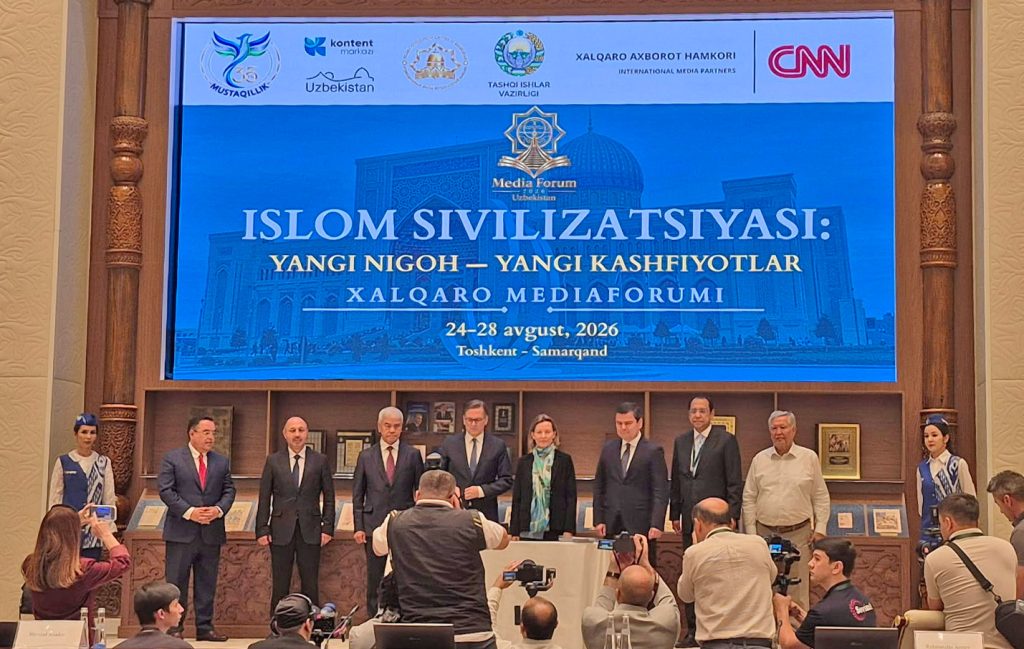
The International Media Forum 2026, organised by the Center for Islamic Civilization in Uzbekistan, comes at a significant moment for international journalism. In a world shaped by instant communication, digital platforms, artificial intelligence and competing narratives, the media has an increasingly important role in determining how countries, cultures and civilisations are understood.
The Tashkent forum brings together journalists, editors, media experts and cultural figures from around the world to explore the relationship between modern media and the rich historical and intellectual heritage of Uzbekistan and Central Asia.

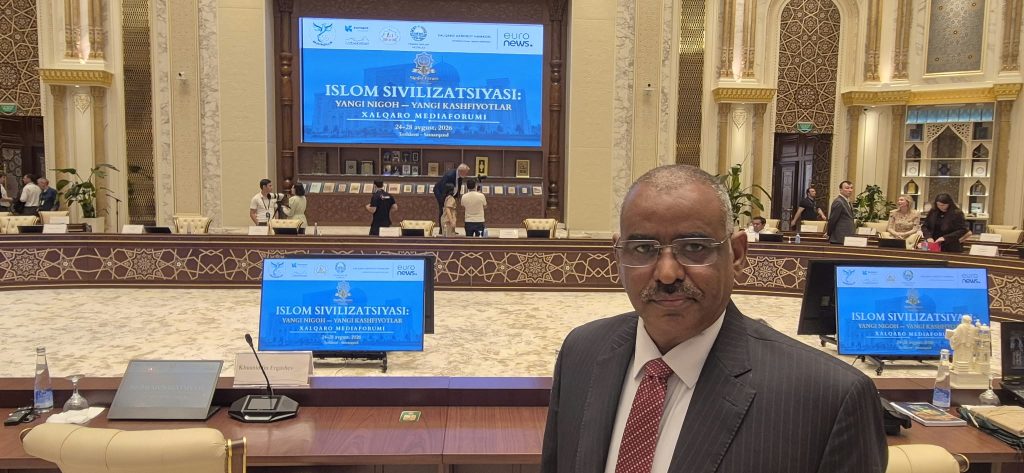
International media is particularly important to this discussion because the achievements of Islamic civilisation belong not to one country or region, but to the shared intellectual heritage of humanity. From medicine and mathematics to astronomy, philosophy and architecture, scholars of the Islamic world made contributions that influenced the development of knowledge across continents. Yet many of these stories remain insufficiently known to international audiences.
The media can help address this gap. Through journalism, documentaries, photography, digital storytelling and new technologies, historical knowledge can reach audiences far beyond museums, libraries and academic institutions. Responsible international journalism can also challenge stereotypes and offer a more balanced understanding of Islamic civilization.
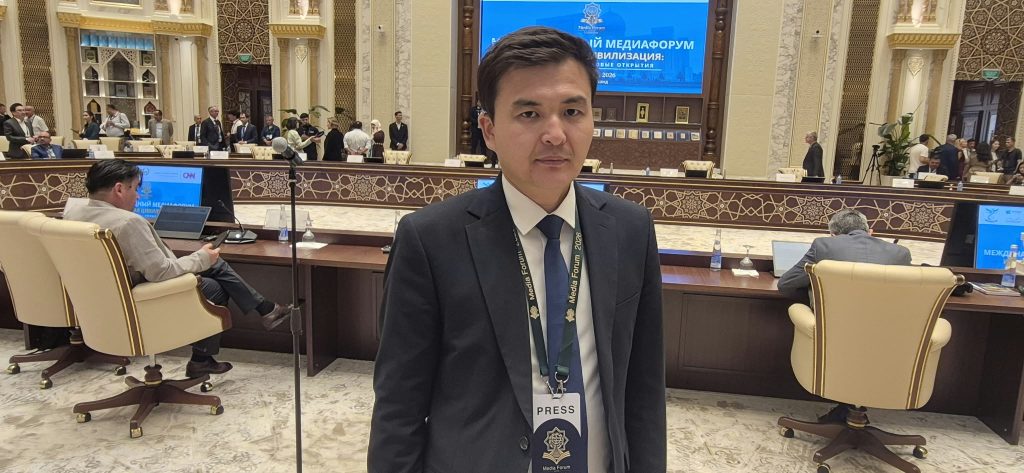
For younger generations, this responsibility is becoming even more important. Their understanding of history is increasingly shaped by social media, video platforms and digital content. The challenge, therefore, is not simply to preserve cultural heritage, but to tell its stories in ways that are credible, engaging and relevant to contemporary audiences.
Uzbekistan provides a particularly appropriate setting for such a discussion. The region has been home to some of the world’s most influential scholars, including Al Khwarizmi, Ibn Sina, Al Biruni, Imam Muhammad al Bukhari, Imam al Tirmidhi and Mirzo Ulugbek. Their intellectual legacy demonstrates the importance of knowledge exchange between cultures and civilisations.
Mohammad Osman, Managing Editor of The Peninsula in Qatar, described the forum as “timely and vital”, particularly given the growing influence of digital and international media in sharing knowledge with global audiences.
Speaking to The London Post, Osman said the forum provides an opportunity to highlight Uzbekistan’s historical heritage and Central Asia’s Islamic legacy while bringing journalists and experts together. He particularly highlighted Imam al Bukhari’s rigorous approach to collecting and authenticating Hadith, describing his methodology as an enduring example of careful research, source verification and intellectual discipline.
Osman said these principles have renewed relevance in the digital age, particularly as journalists confront misinformation and AI generated content. For him, the lesson is clear: accuracy, verification and responsible reporting must remain at the heart of journalism.
Mr Utrik Alimov, Editor of the Uzbekistan National News Agency, also stressed the significance of the gathering, describing it as particularly timely as Uzbekistan approaches the 35th anniversary of its independence.
“With nearly 300 media representatives from 50 countries gathered in Tashkent, this is a powerful statement of our growing role as a crossroads of civilisations,” Aliov told The London Post. He said Uzbekistan’s media environment is changing rapidly, with digital platforms creating new opportunities but also placing greater demands on journalists to maintain professional standards.
Aliov stressed that the forum should go beyond an exchange of information and encourage genuine partnerships capable of building trust between peoples. He also argued that the intellectual heritage of Samarkand and Bukhara should be viewed not simply as history, but as a living resource for contemporary storytellers.
“In this age of instant news, journalism must do more than report. It must preserve and pass on our shared cultural memory,” he said.
This broader purpose gives the Tashkent forum significance beyond its individual sessions. Its success should ultimately be measured by the partnerships, joint media projects, documentaries, professional exchanges and new international narratives that emerge from it.
At a time when misinformation, stereotypes and competing narratives can deepen divisions, international journalism has a choice. It can reinforce misunderstanding or help create greater awareness and dialogue.
The International Media Forum in Tashkent offers an opportunity to choose the latter. By bringing together the credibility of journalism, the depth of historical scholarship and the possibilities offered by modern technology, it can help present Islamic civilisation through a fresh and contemporary lens.
For international journalists attending the forum, the message is simple: come not only to report, but also to discover. Discover the untold stories, explore the intellectual legacy of the region and look beyond familiar narratives.
The real achievement of the forum will be if these stories travel beyond Tashkent and reach audiences around the world, helping a new generation understand that the history of Islamic civilisation is not merely a story of the past, but part of humanity’s continuing conversation about knowledge, culture and shared progress.