
Paris (Imran Y. CHOUDHRY) :- Former Press Secretary to the President, Former Press Minister to the Embassy of Pakistan to France, Former MD, SRBC Mr. Qamar Bashir analysis : The June war between Israel and Iran revealed a frightening new reality of modern warfare: nations are no longer defeated only by armies crossing borders or fighter jets bombing cities. Increasingly, wars are prepared from within. The real battlefield now lies inside societies, intelligence networks, covert safe houses, cyber systems, recruited insiders, and hidden operational bases quietly established years before conflict begins.
What shocked military analysts during the June conflict was not merely the intensity of Israeli airpower, but the astonishing precision with which Iran’s top military commanders, nuclear scientists, IRGC leadership, missile batteries, and strategic facilities were targeted. According to multiple international investigations published by The New York Times, The Wall Street Journal, and The Times of Israel, many of these attacks were enabled through covert Israeli operational networks functioning deep inside Iran itself.
Reports suggest that Mossad had spent years cultivating Iranian dissidents, smugglers, contractors, and covert assets near strategic locations such as Tehran, Natanz, Isfahan, and other sensitive military and nuclear sites. Through these embedded networks, Israeli intelligence reportedly obtained precise coordinates, movement patterns, communication details, and even internal meeting schedules of senior Iranian officials.
The result was devastating. Nuclear scientists were assassinated with pinpoint precision. Missile launchers were neutralized before activation. Air-defense systems were disabled from within. Underground command centers were reportedly identified and struck with astonishing accuracy. Even senior Iranian military gatherings were allegedly tracked through cyber deception operations and internal informants.
Iran later admitted the scale of internal infiltration by launching mass arrests across the country. Thousands were detained on accusations of espionage, treason, and collaboration with foreign intelligence services. Iranian authorities claimed that many individuals had shared coordinates of military sites and strategic locations with Israeli operatives. Tehran’s response reflected a painful realization: much of the war had already been prepared inside Iran long before the first missile was fired. But the most alarming development emerged later.
International media reports revealed that Israel had allegedly established covert operational bases inside Iraq as well. According to these reports, hidden facilities in Iraq’s western desert were used for reconnaissance, logistics, emergency pilot support, intelligence gathering, and preparation for attacks deep inside Iran. Some reports suggested these installations dated back to 2024 and were operational during both the 2025 and 2026 conflicts.
The implications are enormous. If covert Israeli infrastructure could function inside countries openly hostile to Israel, then no regional state can assume immunity from similar penetration.
This is where the danger becomes particularly serious for Pakistan.
Pakistan today faces a highly sensitive strategic environment. The growing convergence between India, Israeli strategic interests, and evolving Taliban-controlled dynamics inside Afghanistan creates a deeply concerning security equation for Islamabad. Afghanistan’s geography alone makes it an ideal staging ground for intelligence operations targeting both Pakistan and Iran. Its porous borders, fragmented governance structures, smuggling networks, militant corridors, refugee movements, and weak centralized intelligence oversight create an operational environment where covert infrastructure can potentially be established with relative ease.
Israel’s operational doctrine, as demonstrated in Iran and Iraq, appears increasingly dependent on first creating hidden operational ecosystems inside or near adversarial states before open conflict begins. Such ecosystems may start as small reconnaissance cells, logistics hubs, communications nodes, safe houses, drone launch sites, cyber relay stations, or intelligence listening posts. Over time, they mature into fully operational covert bases capable of supporting sabotage, surveillance, targeted assassinations, and precision military operations.
This is precisely why Pakistan must now view Afghanistan not merely through the lens of terrorism or border security, but through the broader framework of strategic intelligence warfare.
The danger is compounded by the existing instability in regions like Balochistan and Khyber Pakhtunkhwa. Long-running insurgencies, political polarization, smuggling routes, militant financing channels, ethnic grievances, and cross-border trafficking networks create fertile ground for foreign intelligence agencies seeking recruitment opportunities or covert operational access. Such environments are vulnerable to exploitation by any sophisticated intelligence service capable of leveraging local actors, financial desperation, ideological divisions, or anti-state sentiments.
If covert Israeli networks could allegedly penetrate the heavily monitored security structure of Iran, then Pakistan cannot afford complacency.
The warning is clear and urgent: Pakistan and Iran must immediately strengthen their counterintelligence cooperation regarding Afghanistan. Both countries need to activate deep intelligence monitoring systems capable of detecting even rudimentary efforts to establish covert operational infrastructure near their borders. Intelligence operations can no longer remain reactive. They must become aggressively preemptive.This requires several immediate strategic measures.
First, Pakistan and Iran must significantly expand intelligence penetration inside Afghanistan itself. Monitoring militant networks alone is no longer sufficient. Greater focus must now be placed on suspicious logistics activities, foreign funding channels, unexplained infrastructure projects, covert aviation activity, encrypted communications networks, and unusual movements near sensitive border regions.
Second, Pakistan’s intelligence agencies must intensify scrutiny over recruitment pipelines operating through financial networks, NGOs, smuggling channels, technology firms, cross-border trade routes, and ideological organizations. Modern intelligence warfare rarely begins with soldiers; it begins with local facilitators.
Third, sensitive military, nuclear, communication, and leadership infrastructure inside Pakistan must undergo a complete security reassessment. The Iranian experience demonstrated that covert targeting becomes possible only after years of surveillance, infiltration, and mapping. Preventing such penetration requires constant internal vetting, cyber monitoring, communication discipline, and aggressive counterespionage measures.
Fourth, strategic coordination between Pakistan, Iran, Turkey, and other regional states must expand beyond diplomacy into active intelligence-sharing frameworks focused specifically on covert foreign operational networks.
The reality of modern warfare is brutal. By the time airstrikes begin, the enemy may already have spent years building the battlefield from inside your territory.
This is why the June war should not merely be studied as a military confrontation between Israel and Iran. It should be understood as a case study in how intelligence penetration, covert bases, recruited insiders, cyber deception, and hidden logistics networks can cripple even powerful states from within.
For Pakistan, the lesson is existential. The greatest threat may not come from visible armies massing at the border, but from invisible networks silently embedding themselves within vulnerable spaces long before conflict erupts. Afghanistan’s instability, combined with emerging India-Israel strategic alignment, creates precisely the type of environment where such covert infrastructure could potentially take root.
Time, therefore, is not on the side of complacency. Pakistan, Iran, and other regional powers must act now — before covert operational ecosystems mature into irreversible strategic threats. Once such networks become deeply entrenched, the cost of dismantling them becomes extraordinarily high, and the damage they can inflict may already be beyond repair.
Israel’s Bases in Iran and Iraq and Threat to Pakistan
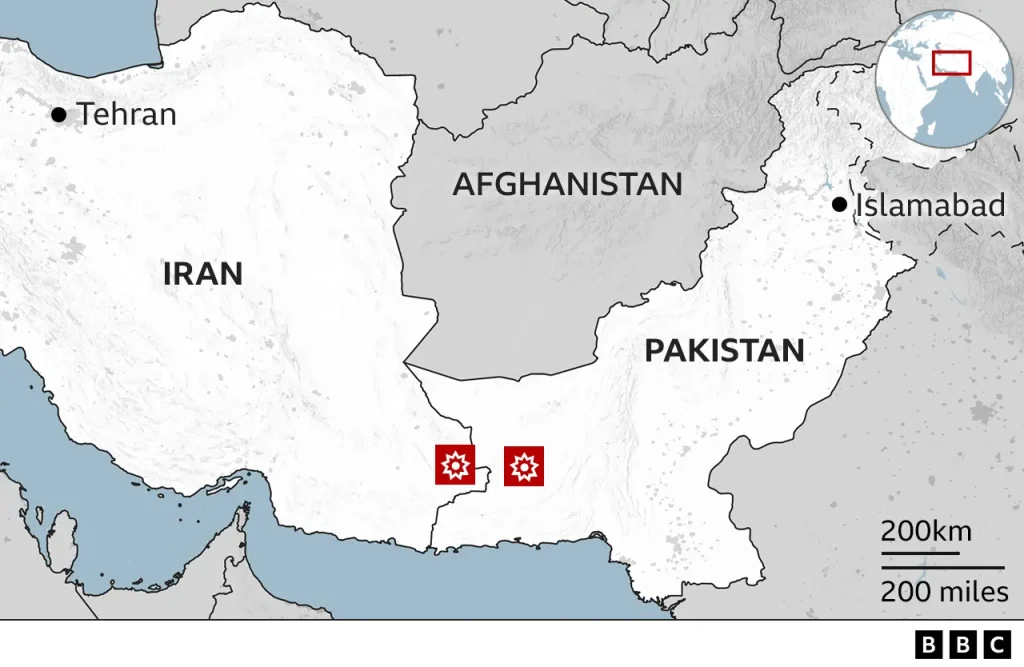
Israel’s Bases in Iran and Iraq and Threat to Pakistan