
Paris (Imran Y. CHOUDHRY) :- Former Press Secretary to the President, Former Press Minister to the Embassy of Pakistan to France, Former MD, SRBC Mr. Qamar Bashir analysis : The meeting between President Donald Trump and New York’s mayor-elect Zohran Mamdani was far more than a routine courtesy call. It became a living testimony to the unusual chemistry that unfolded between the two most powerful figures in the United States. One commands the entire nation — the President of the United States, the de facto king of the world. The other is now the political sovereign of New York City — the financial capital of the planet, a city richer than many countries, and home to more than eight million people who struggle daily with rent, transportation, unaffordable healthcare, groceries, and childcare.
It was these very struggles that Mamdani turned into the core of his campaign. His promises of affordable rent, cheaper living costs, universal accessibility to basic services, and a fairer economic structure energised New Yorkers across all boroughs. Today, in the Oval Office, it became clear that those same promises had resonated with President Trump as well.
From the moment Mamdani walked into the Oval Office, his demeanour radiated calm confidence. There was nothing of the intimidated politician bracing for a clash with Trump’s famously explosive temper. His forehead shone under the lights not with anxiety, but with assurance. When both men sat before the media, Trump leaning comfortably into his chair and Mamdani standing beside him with poise, the visual alone revealed an unexpected harmony. Mamdani looked every inch a leader who believed in his mission — and had just successfully sold it to the most unpredictable president in modern American history.
Trump spoke warmly, enthusiastically, and without restraint. He welcomed Mamdani into his office “with great happiness” and declared, without hesitation, that the new mayor-elect would be “an excellent mayor” for New York. He even went further, saying he now had full confidence that Mamdani possessed the ability, capacity, and commitment to deliver everything he had promised during his campaign. Trump’s tone was not merely courteous — it was admiring.
Journalists, sensing the unusual warmth, immediately tried to provoke the president with pointed, provocative questions. One reporter reminded Trump that Mamdani had once called him a “fascist.” The remark could have triggered an eruption — Trump has unleashed furious tirades for far less. But instead, he smiled. He dismissed the insult, saying he did not feel offended at all and adding that people evolve, learn, and change with time. It was a striking moment of restraint from a man known for his instinctive aggression.
Another reporter attempted to escalate the tension further by pointing out that Mamdani had famously declared he would arrest Benjamin Netanyahu if the Israeli leader ever came to New York City. Again, Trump refused to be baited. He brushed the question aside by explaining that Mamdani, like every new leader, would learn through experience. He even drew a parallel with his own political evolution, candidly admitting that during his first term he himself was naïve and had to adjust, recalibrate, and grow with the responsibilities of office.
This calmness from Trump did not come from political calculation alone—it came from admiration. The president who had once called Mamdani a “communist,” a “danger,” and a “Democratic disaster,” now praised him openly, respecting the clarity of his mission and appreciating the resonance between their agendas. For months, Trump had campaigned on lowering inflation, reducing grocery prices, bringing down soaring mortgages, and dismantling Obamacare in favour of a more affordable system. Today, he recognised that Mamdani was fighting for the same goals within New York. It was this alignment of economic priorities that created a surprising bridge between two men who had once seemed destined to be adversaries.
Trump acknowledged that their missions were not contradictory but complementary — one applying nationally, the other locally. And this recognition brought an unmistakable sense of camaraderie to the room. Both men smiled often. Both radiated assurance. Both appreciated that their philosophies, though different in ideology, converged on the fundamental question of affordability for ordinary people. It was here that Mamdani’s charm proved itself most effective. He didn’t merely communicate policy; he made Trump see himself in the same fight.
Reporters continued probing, trying to extract conflict, but Trump controlled the entire exchange with surprising discipline. When pressed again about his earlier insults toward Mamdani — calling him communist, obnoxious, dangerous, and someone who should be deported — Trump did not retreat into excuses. Instead, he said that after meeting Mamdani, he now believed the mayor-elect would “do extremely good,” calling him good-natured, dedicated, and aligned with his own mission.
The most remarkable moment came when Trump was asked whether he would help Mamdani. Instead of distancing himself, Trump leaned forward and declared: “Not only will we help him — we will help him a lot.” That sentence alone symbolized the complete transformation of a relationship that had begun in hostility and evolved into respect.
This was not merely political politeness. It was evidence of Mamdani’s extraordinary persuasive power. He had managed to win over not just the voters of New York, but the president of the United States — a man known to bend for no one. Mamdani emerged from the meeting not as a subordinate seeking approval, but as a leader who had earned Trump’s admiration through conviction, clarity, confidence, and charm.
What makes Mamdani’s success even more compelling is his promise not to create distance between himself and the people he serves. He has pledged not to hide behind the glass ceiling of officialdom. He will not use the bulletproof mayoral limousine but will continue to ride the same subways, eat in the same restaurants, walk the same streets, and take the same buses as ordinary New Yorkers. He intends to remain accessible, exposed, and connected — experiencing firsthand the delays, the overcrowding, the rent pressures, and the daily hardships that shape the lives of millions. It is this commitment to immersion that will give him constant, unfiltered feedback as he navigates the complexities of the job.
The meeting between Trump and Mamdani ended on a note of rare optimism. A president who was once his critic is now his unexpected ally. A mayor-elect once dismissed as radical is now seen as a capable, persuasive, solutions-driven leader. With the backing of the president and the trust of his constituents, Mamdani now prepares to take office with unprecedented momentum.
If today was any indication, New York City is about to witness a political chapter defined not by confrontation, but by confidence, clarity, and collaboration — led by a mayor who has already demonstrated the rare ability to charm even the most uncharmable man in American politics.
How Zohran Mamdani Charmed Trump
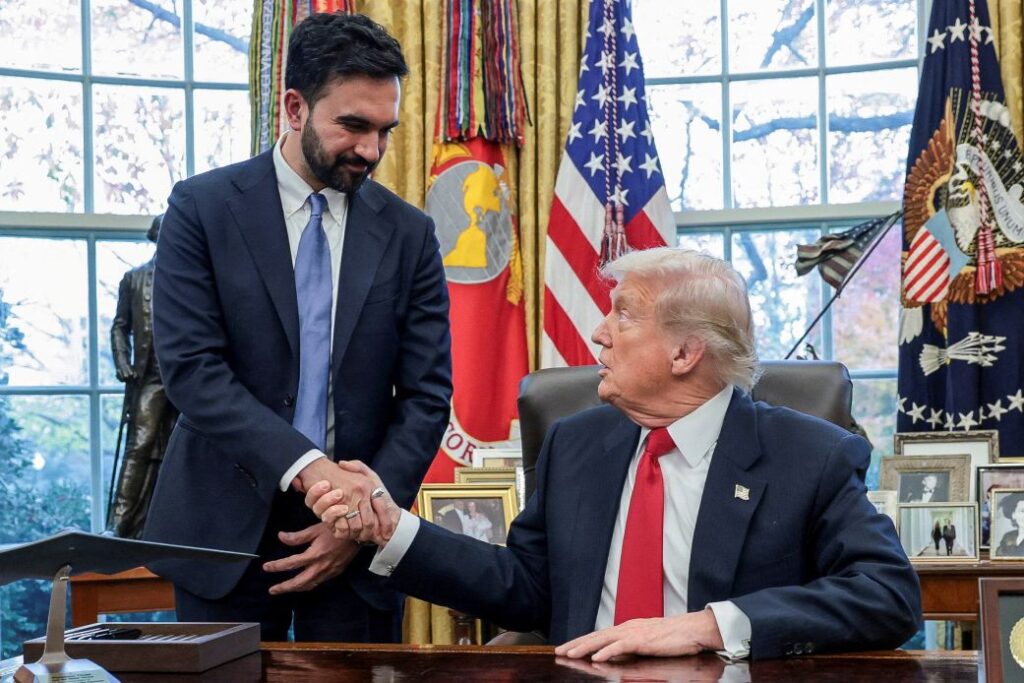
Zohran Mamdani