
By Dilyara Lindsay
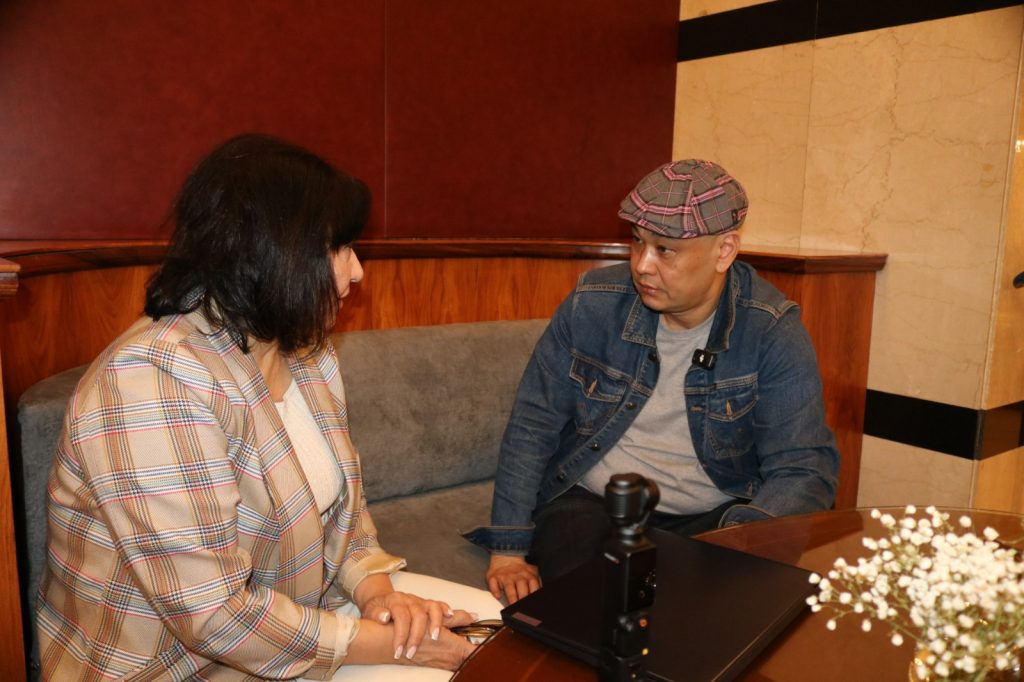
In a remarkable story of transformation from diplomacy to artistic expression, renowned Kazakh musician and songwriter Jantik – whose full name is Zhantemir Baimukhamedov – has opened up about his journey from the corridors of foreign affairs to the international music stage. In an exclusive interview with our Cultural Desk, the former diplomat turned performer discussed his childhood influences, his decision to leave public service for music, and his dream of recording at Abbey Road Studios.

Q: Mr. Baimukhamedov, thank you for speaking with us. Let’s start at the beginning. How did music first enter your life?
A: Music has been part of me since childhood. I was born into a family where music was deeply cherished. My father was a guitarist – he was considered the first Elvis of Almaty and Kazakhstan back in the 1960s. He started in Moscow, living in a dormitory for foreign students, and that’s how he got hold of rare tapes of Western music. Through him, I discovered Elvis Presley, The Beatles, and the sound that shaped my imagination.
Q: You trained formally in music as a child. What did that involve?
A: I attended music school and sang in a choir. But I also pursued academic studies – history with a specialization in English. So music and education went side by side.
Q: Then your path took an unexpected turn toward diplomacy. How did that happen?
A: After the collapse of the Soviet Union in 1992, the Ministry of Foreign Affairs was searching for officers. I was selected for advanced diplomatic studies and was sent to the London Diplomatic Academy in 1993. After completing my studies, I joined Kazakhstan’s Ministry of Foreign Affairs, serving as an interpreter under the attaché. I also worked as an assistant to the Ambassador of Malaysia to Kazakhstan.
Q: Yet the call of music proved stronger. What made you leave diplomacy?
A: Yes, in 1996 I made the bold decision to leave diplomacy and devote myself entirely to the arts. That choice defined the next chapter of my life. Music was not just a hobby – it was my true calling.
Q: What was your professional breakthrough?
A: That same year, I joined the newly opened national television channel Khabar, where I produced a youth entertainment programme called High-Five Front. It was often described as Kazakhstan’s answer to MTV. Since then, I have performed in more than 3,500 live events as both a singer and master of ceremonies. I established my own band, and we have been performing regularly.
Q: You recently achieved a long-held dream: recording at Abbey Road Studios. Tell us about that.
A: Yes, this year we released a 14-track vinyl album recorded at the iconic Abbey Road Studios in London with acclaimed producer Stuart Epps. Recording at Abbey Road was a dream I had carried since my teenage years. To see it become reality is one of the proudest moments of my life.
Q: Your music bears a deep imprint of British musical heritage. Which artists have influenced you most?
A: From The Beatles and The Rolling Stones to Led Zeppelin, Oasis, and Stone Roses – I credit several generations of British artists for shaping my creative language. As a teenager, my friends and I would copy the Beatles, the Animals, The Who, then later Supergrass and Oasis. There were three British invasions: the 60s, the 70s, and the 90s. All of them influenced me. You can hear those sounds in my album.
Q: You’ve described your mission as giving Kazakhstan a place in the global musical conversation. Can you elaborate?
A: Absolutely. While my work draws strongly from British influences, I see my artistic mission as something larger. Using a metaphor: The Beatles planted a great musical tree. Many branches have grown from it. I hope to add a Kazakh branch that will continue to grow and prosper. I am not incorporating traditional folk elements – I am directly engaging with British music culture while bringing my Kazakh voice into that tradition.
Q: Beyond your own career, you are also committed to nurturing young talent. Tell us about your music school.
A: I established a music school for emerging musicians. Talented young people deserve a stage. If I can help create that path for them – including my own daughter, who I believe is very talented – then I feel I am doing something meaningful. I provide practical stage experience. This business is hard. You have to be number one. It took me 30 years. You have to be a maniac towards your target.
Q: How have diplomatic institutions supported your artistic journey?
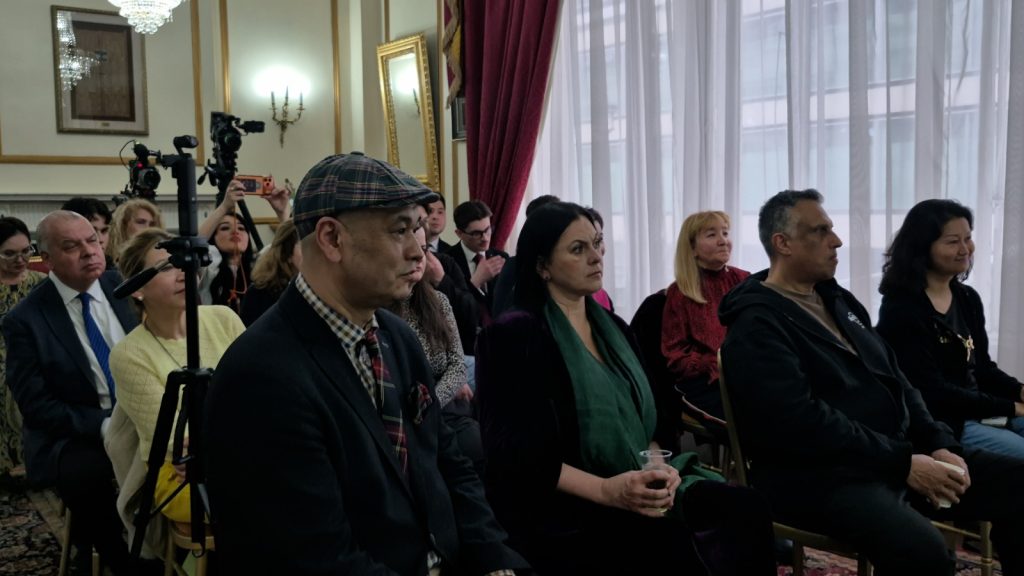
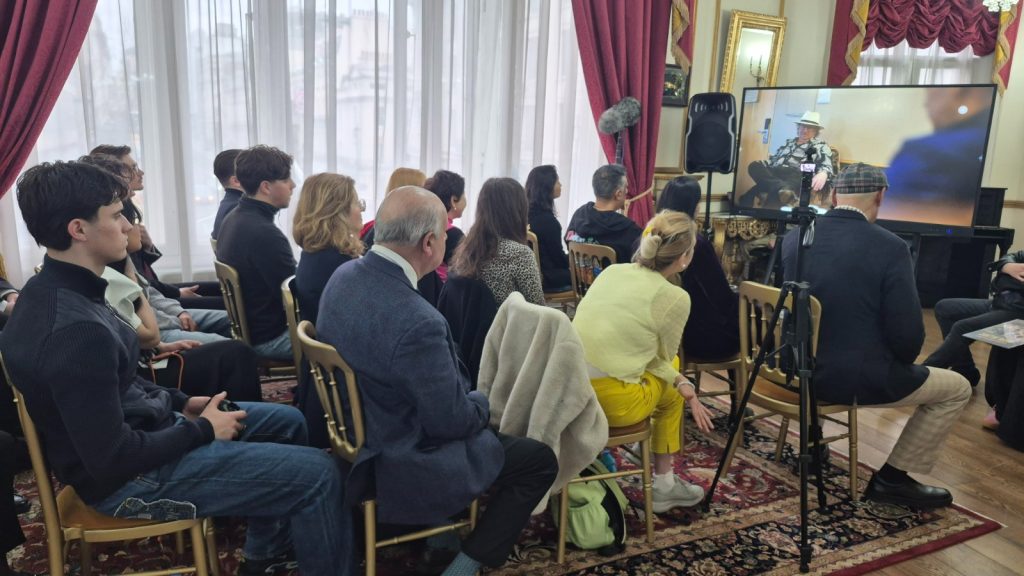
A: I am very grateful to the Kazakh Embassy in London. They helped me greatly and put serious effort into organizing a successful press conference. Diplomats attended, as well as representatives of the Eurasian Creative Guild, where I serve as an ambassador. Special thanks to Marat Akhmedjanov and all the guild members in the UK. They gave me encouragement and power to continue my work.
Q: What are your future ambitions?
A: I want to bring my band to the United Kingdom and fulfill another long-held ambition: performing at the Glastonbury Festival. That has been my dream for more than two decades. Of course, everything depends on funding. I spent a lot on this project – more than a beautiful car. If sponsors exist, I would love to apply to them. If not, I will work hard to make it happen.
Q: Finally, what would you say is your ultimate goal as an artist?
A: My intention is to put Kazakhstan on the world music map. That is what I am doing. For an artist who has already crossed the boundaries between diplomacy and music, the journey appears far from over. And I am just getting started.
ZhantemirBaimukhamedov’s latest vinyl album, recorded at Abbey Road Studios with producer Stuart Epps, is now available. He continues to perform and mentor young musicians through his school in Almaty.